Sunday, April 13, 2025

When Unreasonable Intuition Takes The Initiative

"We've launched a massive testing and research effort that's going to involved hundreds of scientists from around the world."
"By September, we will know what has caused the autism epidemic and we'll be able to eliminate those exposures."
"Our food system, our water, our air, different ways of parenting, all the kind of changes that may have triggered this epidemic."
"We are going to look at vaccines, but we are going to look at everything. Everything is on the table."
Robert F. Kennedy Jr., U.S. Secretary of Health and Human Services 
 
"It would be a great disservice to our families if, despite plentiful and robust evidence to the contrary, the administration announces vaccines cause autism, declares the case closed and stops funding critically needed autism research that is providing valuable information about the true causes." 
Alison Singer, president, Autism Science Foundation 

"There's got to be something artificial out there that's doing this."
"If you can come up with that answer where you stop taking something, you stop eating something, or maybe it's a shot, but something is causing it."
U.S. President Donald Trump
https://s.yimg.com/ny/api/res/1.2/nVe5wsi9DYs1QkUOEVEe9g--/YXBwaWQ9aGlnaGxhbmRlcjt3PTEyNDI7aD04Mjg-/https://media.zenfs.com/en/rolling_stone_news_992/474ecdbf64a85c734cdfdac1db6750cf
A former top federal vaccine official spoke on the danger of Robert F. Kennedy Jr. giving “false hope” to people as the Health and Human Services secretary recently promised to identify the “cause” of autism by September.  Rolling Stone
 
Autism is a complex human condition, a spectrum of disorders inhibiting language and communication, affecting behaviour, that has been studied by scientists for decades. Autism, it is generally held, is caused by genetics and environmental factors even prior to birth; parents for example, conceiving children past reproduction prime; exposure to chemicals during pregnancy -- each contributing to the condition.  Crucial questions abound without answers. Which genes are involved, and how environmental exposure can influence the condition.
 
The Autism Society's response to the stated certainty of these deep scientific biological mysteries suddenly being revealed in several months' time is as skeptical as the premise deserves to be regarded: "We are deeply concerned by the lack of transparency around this effort -- who is leading it, what methods are being used and whether it will meet established scientific standards", stated Christopher Banks, president and chief executive of the organization. 

What do the experts, the scientific community, the parents of children with autism, and the specialized charitable organizations formed to represent their interests know, after all? Surely all it takes is an individual with an ingrained sense of entitlement and a belief in his own intuition fortified by theories outside the scientific realm of medicine, fuelled by suspicion of vaccines meant to save lives which a segment of the population prefers to believe threatens lives -- to arrive at an answer.
 
One that might conclude with a public announcement that repeats that old hyperbolic message of smug "I told  you so!" It is an investigative query of a conclusion searching for validation. Even health officials nominated by Donald Trump as advisers note that the deadline for conclusive resolution of the mystery is overblown rhetoric in which there can be little confidence. The reference of September is a reflection of the research process reaching finalization, and certainly not the analysis and conclusion finalization. 

A multi-million-dollar research program meant to examine the spike in autism diagnoses is underway but yet still in its early stages under the auspices of the National Institutes of Health. Over $300 million has been spent annually in the funding of autism research. Studies examining the roles of genetics and environmental influences have been factored into the study along with the manner in which the condition is diagnosed.
 
Given Mr. Kennedy's previous statements certifying his belief in the role of vaccines in producing autism, and other health theories he subscribes to beyond the pale of real science, medical researchers have sound reason to be concerned that the statements by this man have the purpose of legitimizing the debunked claims of vaccines causing autism, reflecting Mr. Kennedy 'sstanding by the claims for years past.
 
In his confirmation hearings for the post of Secretary of Health, he would not disavow those claims. Worse, under his leadership, David Geier, a discredited researcher and robust proponent of a connection between autism and immunization was hired to conduct a government study on their purported connection. Mr. Kennedy latterly gave short shrift to research that denies a causal link.  

 President Trump is right behind his Secretary of Health, fully in support of his intuitive theory, urging Kennedy and his research team to investigate autism's causes. The mass layoffs under this administration at the Centers of Disease Control which will have a deleterious impact on health research for the nation, did not extend to the autism program at the gutted agency.
 
"It's like saying 'by September we are going to know the cause of cancer'."
"Autism is every bit as complicated as cancer, and that's how it needs to be addressed."
Peter Hotez, pediatrician, author, Vaccines Did Not Cause Rachel's Autism
"It has become clear that truth and transparency are not desired by the Secretary, but rather he wishes subservient confirmation of his misinformation and lies."
"There’s no scientific evidence ruling out genetics [as a cause of autism]."
"There is data that had been published that say that genetics may contribute to autism. There are, obviously, data that… suggest that perhaps environmental factors may. But one has to be incredibly careful, incredibly careful about making associations between environmental factors and autism."
"Autism is an incredibly complicated issue. So, we have the issue of diagnosis bias. We don’t know how many of those cases are true, how much of this is true growth of autism, how much of this is just that we now have diagnostic criteria and we diagnose it more often."
Dr. Peter Marks, former head of the Food and Drug Administration’s Center for Biologics Evaluation and Research
a sign reads 'CDC Centers for Disease Control and Prevention'
The CDC’s headquarters in Atlanta, Ga, USA. Photograph: MIguel Martinez/AP

Labels: , , , , , , ,

Sunday, December 04, 2022

China's Gross COVID Miscalculation

"They've just painted themselves into a corner that's going to be hard to get out of."
"Whatever you do, at some point you will get a pretty scary surge of infections."
"What China has done is frittered away the benefits of the vaccination program."
Dr. Paul Hunter, professor of medicine, University of East Anglia, U.K.
 
"[China faces a] great challenge. If they open up, if they don't stick to the zero-COVID strategy anymore, there will be a huge wave of infection among their population, and it's a big-population country."
"Their health-care facilities or capacity will have to be transformed before encountering that kind of challenge [a need for more medical resources to handle the fallout of a failed policy]."
"I do think they have to have second thoughts about getting away from the zero-COVID strategy."
Yi-Chun Lo, deputy head, Centers for Disease Control, Taiwan
 
"He [Xi] owns the [zero-COVID] policy. It's very difficult for anyone to come to him now and say, 'Sir, we have to change our approach, because this is having a huge impact on the economy'."
Guy Saint-Jacques, former Canadian ambassador to Beijing, 2012 to 2016
 
"China might prove to be the major contributor to global COVID-19 deaths in 2022, perhaps exceeding one million."
"The virus is apolitical and will spread where immunity walls are low."
"In China, ideology now is driving everything."
Dr. Prabhat Jha, executive director, Centre for Global Health Research, St.Michael's Hospital, Toronto
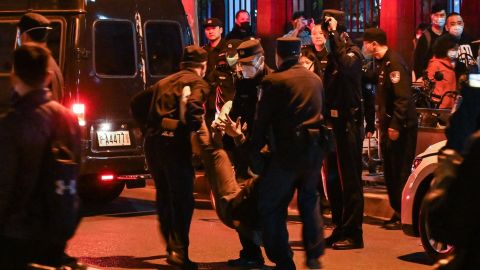
A protester reacts as he is arrested by police during a protest against China's COVID-19 pandemic measures, on a street in Shanghai on Nov. 27. (The Associated Press)

Government authorities in Beijing -- above all China's President Xi Jinping -- have miscalculated. The country teeters on the precipice of pandemic disaster and that is because the manner in which its leaders directed their no-holds-barred campaign to eradicate the SARS-CoV-2 virus is about to backfire. The country's population now engaging in mass protests have shown their political masters in the Chinese Communist Party that people can be pushed only so far. That's the social dimension of the zero-COVID policy.
 
Then there is the inadequate number of vaccinations all carried out with made-in-China-inferior-efficacy vaccines, and the decision that ensuring all senior citizens be adequately vaccinated as a priority was never made. True, the country where the virus originated and where its leaders' reaction was faulted for good reason, has had a low infection rate and death count in comparison to most other countries of the world. Quite an achievement.
 
But its cost is gathering steam and preparing to explode. The lack of widespread infections has led to a lack of natural immunity. And the result of all those issues; low infection rate/no herd immunity; low vaccinations of the elderly, use of an insufficiently effective vaccine. represents a failure to calculate the scientific/medical fallout of that decision-making. 
 
Chinese police officers block access to a site in Shanghai where protesters opposed to China's strict 'zero-COVID' policies had gathered on Nov. 27. (The Associated Press)

It is now assumed that should the country's zero-COVID policy be abruptly called off, a tsunami of coronavirus cases, hospitalizations and death would follow.  There are now two options left to the government; continue the zero-COVID policy whose end is unforeseeable, and risk enraging the public even further and face a crumbling economy, or drop the policy and suffer the consequences of a pathogen run amok with few natural immunity constraints to block its advance.
 
President Xi is proud of the fact that China has suffered so few deaths to this point, particularly in comparison to the massive death count in the United States during the worst waves of the onrushing pandemic, now quelled to a steady-state. Researchers at the University of Toronto, UBC, Johns Hopkins, Oxford and others analyzed previous studies to reach the conclusion that vaccination is effective at serious illness prevention and death.
 
They also concluded that the after-effects to the general population of infections is even more helpful in disease prevention through acquired antibodies while a combination of both; hybrid immunization, represents the most lasting shield against severe COVID-inspired illness. Prior to the gross population wide vaccination, lockdown and mask controls were important.
 
At this point, loosening restrictions, bearing in mind the more transmissible Omicron variants now circulating while broad infections took place, the benefits of hybrid immunity also resulted. Contracting COVID -19 in consideration of widespread vaccinations became less risky to human health. So while China has vaccinated 89 percent of its population, zero-COVID policies remained where large areas saw isolation of people at home or in government facilities -- reflecting a few cases.
 
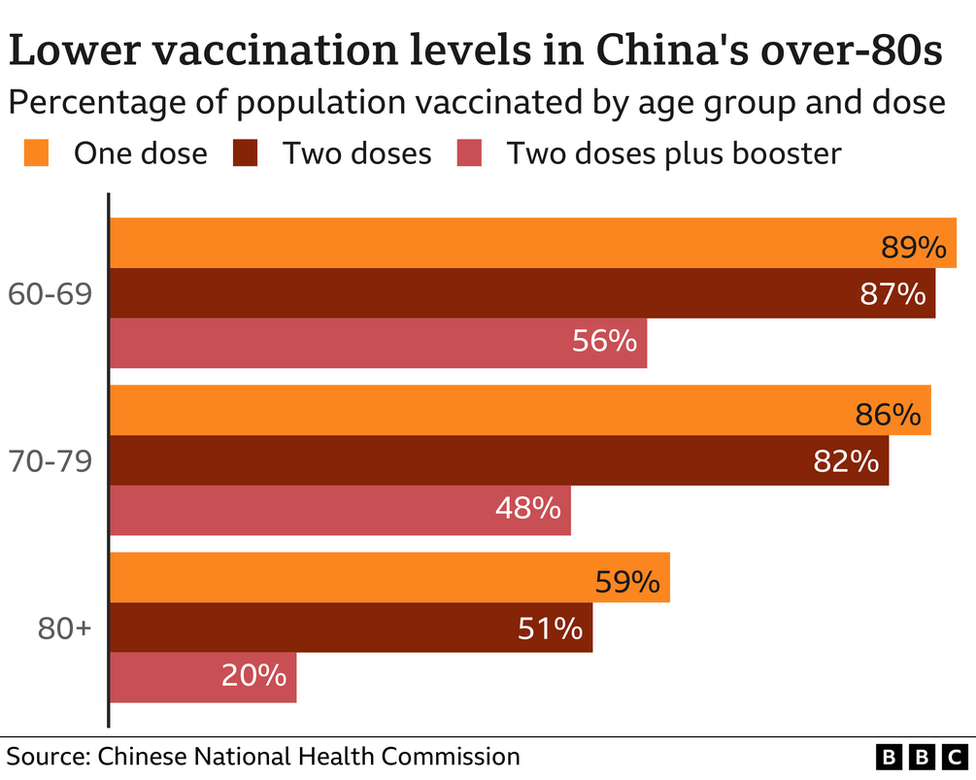
It was working-age adults that Beijing targeted for immunization, leaving older Chinese residents most likely to fill up hospital ICUs or die from COVID largely unvaccinated. Half of the over-80 population in China has been immunized. And then there is the matter of the vaccines, with those most powerful proving their cutting-edge efficacy with the use of mRNA shots as well as adenovirus vaccines. China decided it would not import any of the mRNA vaccines and use only home-produced counterparts with far less proven efficacy.

For all practical purposes a flood of seriously ill COVID patients has the potential to completely overwhelm hospitals in China where there are roughly four intensive-care beds per 100,000 people, compared to 13 in Canada and 34 in Germany. And while Beijing has finally signalled it is is prepared to loosen some restrictions, the potential for a grave fall-out from their past severe and ill-thought-out mandates creates an aura of uncertainty about the possible outcome.
 
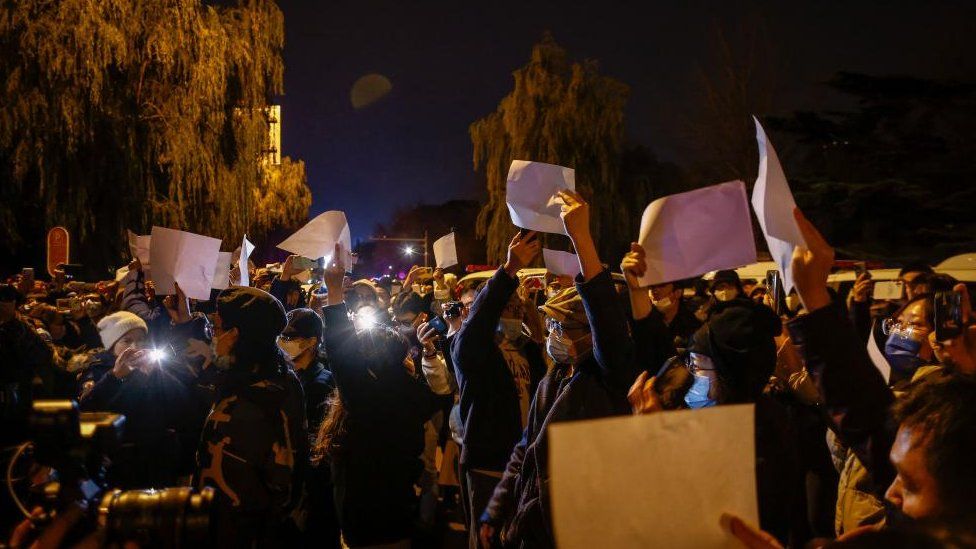
A protester shouts slogans against China's strict 'zero COVID' measures in Beijing on Nov. 28. (Kevin Frayer/Getty Images)


Labels: , , , , ,

Wednesday, November 30, 2022

The Obdurate Autocratic Failings of the Chinese Communist Party on Zero-COVID


"The party and the people are trying to seek a new equilibrium."
"There will be some intsability in the process."
"Without the clear signal of party leader divisions -- I would expect this kind of protest might not last very log."
"[It is] unimaginable [that Xi would back down, and the party is experienced in handling protests]."
Hung Ho-fung, Johns Hopkins University

"[The West's vaccines offer] a major solution [to China's COVID problems."
"[According to health experts zero-COVID is unlikely to be achieved until vaccine uptake among China's elderly sees an improvement]."
"[Efforts are underway to increase coverage but] it's unlikely things will get better for the next  half of the new year."
Xi Chen, associate professor, Yale University
A protester is arrested by police in Shanghai on Sunday night.
A protester is arrested by police in Shanghai on Sunday night. HECTOR RETAMAL/AFP/AFP via Getty Image
 
Local authorities in China, making no allusion to credit the mass protests springing up all over China against the crude lockup methods being employed to stem the rising tide of COVID-19 outbreaks, have begun to ease imposed restrictions reflecting the state's zero-COVID mandate. In Beijing, the city government announced it plans to phase out gating to block access to apartment compounds where infections are diagnosed.

Manufacturing and trade centre Guangzhou, the current hot-spot in the latest wave of infections, announced that selected residents no longer will be required to undergo mass testing. The stringent measures originally in place to minimize deaths at the same time that other countries suffered magnitudes of infections and deaths no longer has the silent consent of the Chinese population.

According to the Chinese Communist Party ruling China, anti-coronavirus measures must continue "targeted and precise", while at the same time the least possible disruption should be caused to people's lives; local officials threatened with their jobs or similar punishments should outbreaks occur, codify their own strategies to match the central government's zero-COVID command-and-control demands.

Their response has been the imposition of quarantines and allied restrictions exceeding what the central government recommends. Hardships imposed on the population appear to be of no concern to the Xi administration, beyond the anodyne recommendations that lockdowns not cause community unrest. Millions of people in Shanghai were placed under strict lockdown in the spring, resulting in food scarcity and access to medical care being restricted.

Despite the ensuing turmoil, Xi loyalist, the city's party secretary, saw appointment to the No.2 position of the Communist Party. On the past weekend, protests were so sweeping in numbers and inclusivity many from among the educated urban middle class of the ethnic Han majority were in full vocal attendance. This is the group the ruling party relies upon to recognize a post-Tiananmen agreement that a better quality of life would accompany autocratic rule.

Following a fire on Thursday that killed at least ten people living in an apartment building in the city of Urumqi, where residents have been locked into their homes for four months, furious protests erupted particularly when the city council suggested those that died were insufficiently motivated to save themselves, prompting an avalanche of angry online questions whether firefighters or people attempting to escape the fire were blocked by locked doors or similar pandemic restrictions.

Foreign governments have suggested to Beijing that it use vaccines developed in the West to improve protection for its people, and once more effective vaccines are widely used the government could reconsider and ratchet back the draconian restrictions of the current zero-COVID policy. Beijing has consistently refused to import the mRNA-based more highly successful vaccines developed by Pfizer-BioNTech and Moderna, insisting its own home-grown vaccines are effective.
Charts of Vaccine rates in China
 
They are not, however. Moreover, the most vulnerable in the population, the elderly, have not received vaccinations in numbers that should satisfy any responsible government. Analysis indicates that millions of unprotected people could perish under current circumstances should zero-COVID be abandoned. The acceptance of Western vaccinations could turn that scenario around.

"Europe and Germany have had very good experience with administering mRNA vaccinations", stated Steffen Hebestreit, adding that Olaf Scholz had "made this clear" to Chinese officials during a visit by the German chancellor to China. China is steadfast in its reliance on its own vaccines based on older technology, failing to offer the same protection as the West's vaccines against severe disease and death.
"'Zero COVID' [was] supposed to demonstrate the superiority of the 'Chinese model', but ended up demonstrating the risk that when authoritarian regimes make mistakes, those mistakes can be colossal."
"But I think the regime has backed itself into a corner and has no way to  yield. It has lots of force, and if necessary, it will use it."
Andrew Nathan, Chinese politics specialist, Columbia University
Protesters wave blank white pieces of paper during a protest triggered by a fire in Urumqi that killed 10 people in Beijing, China, 27 November 2022.
Protesters are fed up with lockdowns, but their government is not budging


Labels: , , , , ,

Sunday, February 14, 2021

Poor Little Canada

Narendra Modi
@narendramodi
Was happy to receive a call from my friend
@JustinTrudeau
. Assured him that India would do its best to facilitate supplies of COVID vaccines sought by Canada. We also agreed to continue collaborating on other important issues like Climate Change and the global economic recovery.
The Serum Institute in India is the world's largest producer of vaccines, located in Pune, Western India. It has a contract with AstraZeneca to supply its COVID-19 vaccines for global distribution, along with supplying its own massive population with the vaccines. AstraZeneca's vaccine has not yet been approved by Health Canada, but the situation in Canada of decreasing numbers of vaccine doses being received has halted its initiative to inoculate its most vulnerable populations before embarking on a general vaccination of the entire population.  
"I can highlight that India has been a great partner in fighting COVID, whether it's helping us with delivery of other pharmaceuticals or whether it's working together on potential vaccines." 
"We're going to continue to build on the strong relationship between Canada and India and ensure that we're looking out for our citizens, while at the same time we're looking to recover the global economy and create opportunities for everyone." 
Prime Minister Justin Trudeau 
Left: Indian Prime Minister Narendra Modi. Right: Prime Minister Justin Trudeau. (Amir Cohen, Blair Gable/Reuters)
 
At the rate of vaccination that Canada currently occupies, it is in about 38th place worldwide, behind Singapore, Turkey, Croatia, Austria, Czech Republic, France, Cyprus, Sweden, Belgium, Portugal, Hungary, Germany, Finland, Greece, Norway, Estonia, Slovakia, Italy, Lithuania, Poland, Slovenia, Spain, Switzerland, Ireland, Iceland, Romania, Maldives, Denmark, Chile, Serbia, Malta, U.S., Bahrain, U.K., UAE, Seychelles, and of course, number one, Israel.

Those over 80 in Canada will likely not be vaccinated until April. Seniors and the health-impaired and their caregivers in long-term care facilities were scheduled to be the first, along with frontline health-care workers, to receive the vaccine doses received from Moderna and Pfizer/BioNTech, and while the undertaking had begun, Canada was advised by both pharmaceutical companies that there would be delays in providing the entire anticipated tranches as scheduled. A setback which has idled the vaccination enterprise.

Canada turned to the UN-inspired COVAX program, meant to provide under-developed and poor nations with vaccines. Not a good look. A wealthy country like Canada which has, albeit tardily, pre-ordered tens of millions of doses of COVID vaccine from a variety of producers, even while it has back-of-the-line status because it took so long to begin its ordering. A wait that occurred as a result of making an ill-fated agreement with CanSino to co-develop a vaccine which Beijing ultimately refused export to Canada.

Leaving a desperate government of Canada, to look elsewhere, anywhere, for vaccines in a world becoming increasingly nation-specific-vaccine-aggressive. Where producing countries are looking, for obvious reasons, to ensure that their own populations are inoculated before allowing vaccines to be shipped elsewhere. In the precarious situation Canada finds itself in, the current government sees its vote-potential for a near election plummeting.

Motivating the government to frantically call upon vaccine manufacturers to come to its aid. India is investing its energy in supplying have-not nations, and along comes Canada to ask for special dispensation. India, a country with which Canada had good relations, but between them now diplomacy has taken a hit. Prime Minister Modi strikes a delicate balance between suspicion of a Canadian prime minister who has quite a few Sikhs in his party and in his Cabinet suspected of sympathy for an independent Sikh homeland, Khalistan, and maintaining friendly relations with Canada.

Moreover, this is a Canadian prime minister who has not hesitated to embarrass his Indian counterpart by commenting critically on interior government matters in India, aside from the fact of an embarrassing state visit a few years back when Justin Trudeau made an absolute ass of himself, as an embarrassment both to Canada and to India; with a lack of diplomatic prudence in bringing along an avowed Khalistani sympathizer and supporter of Mr. Trudeau's Liberal party.

 So far, 3.06 Canadians per 100 people have been vaccinated. The Trudeau government insists that by September all Canadians wishing to be inoculated, will be. A promise that looks highly unlikely to be fulfilled. Most Canadians, keeping abreast of conditions and the lack of vaccine shipments now anticipate that full inoculation will only take place by halfway through 2022, leaving Canada far, far behind its wealthy-nation counterparts. A hugely disappointing performance.  

Labels: , , ,

Thursday, February 11, 2021

COVID in Canada


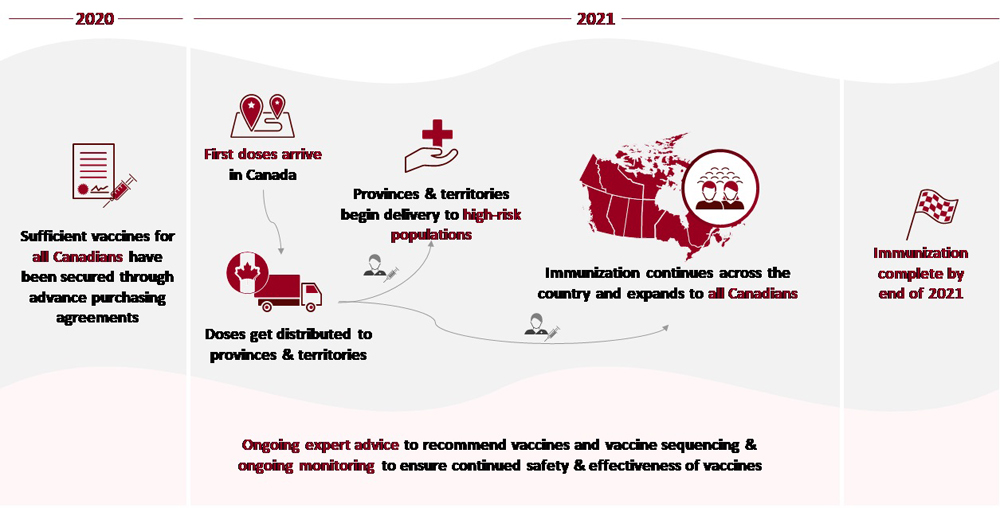
Figure 1. Canada's vaccine rollout 

Canada is preparing to roll out an immunization response, which will provide Canadians with access to safe and effective vaccines to protect against COVID-19. This ambitious plan will be delivered through a principled and evidence-informed approach that puts protecting the health and safety of Canadians first.
Governments recognize that Canadians have made great sacrifices to minimize the harmful effects of COVID-19 on our communities and that many Canadians are anxious to know where, when and how they can receive a vaccine. Extensive work has been done over the last several months to secure strong vaccine options and to have the measures necessary to deliver vaccinations to everyone in Canada. Immunizations will be free to everyone in Canada and available over the course of 2021.
Until extensive immunization is achieved, public health measures will continue to be essential to minimize the spread of COVID-19 in Canada and save lives.
Canada's immunization response involves collaboration between the Government of Canada, provinces, territories, First Nations, Inuit and Métis leaders, municipal governments, public health and logistical experts, manufacturers, and all Canadians.
text description below
Source: Government of Canada

 
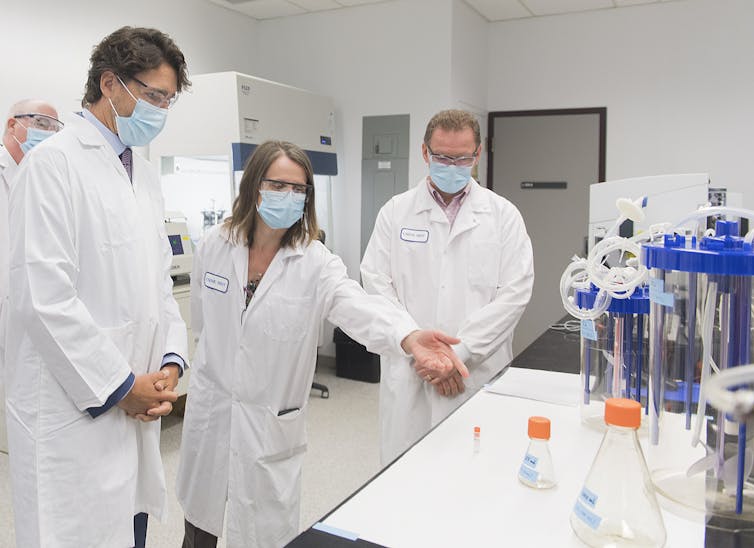
Trudeau and two scientists, all in white lab coats and face masks, in a lab
Justin Trudeau at NRC. CP/Graham Hughes
As of Feb. 5, Canada had administered 2.7 COVID-19 vaccination doses per 100 people compared to 61.7 for Israel and 16.2 for the United Kingdom. By contrast, Canada has signed contracts with seven different companies for a total of 234 million doses with options for tens of millions more.
Canada’s first attempt to ensure domestic production was a deal with the Chinese manufacturer CanSino Biologics  in May 2020. Had that deal gone ahead, it would have involved trials at the Canadian Centre for Vaccinology at Dalhousie University and, if successful, subsequent domestic manufacturing. But within days of the agreement being announced, there were already troubles as the Chinese delayed sending the seed material for the vaccine and, ultimately, it never arrived. 
The failure of the CanSino deal and the delay in building the new NRC facility left Canada reliant on foreign sources of vaccine. The contracts for the vaccine were negotiated based on advice provided by the 18 member COVID-19 Vaccine Task Force  set up by the NRC in June 2020.
On top of having no domestic production and the delays, Canada is facing vaccine nationalism from other countries. U.S. President Joe Biden is sticking to an America-first position and not allowing the Pfizer plant in Michigan or the Moderna plant in New Hampshire to export any of their vaccines to Canada until all Americans have been vaccinated.
The European Union is also threatening to block the export of vaccines possibly affecting exports from Belgium, as it too is confronting delays in being able to vaccinate its citizens
The Conversation
There we have it, the Government of Canada's confident assurance to Canadians that it has the matter of responding to the epidemic in Canada, part and parcel of the global pandemic, well in hand. Canadians can be justified in having confidence in their government, the necessary vaccines have been ordered -- even if at a late date, placing Canada behind all other advanced nations due to the tardiness of the ordering because that same government decided to put all its eggs in the wrong basket initially = signing a contract with CanSino Biologics, a Chinese pharmaceutical company under the direct control of Beijing -- and losing precious time until it looked about in desperation to find other reliable sources.

Two of those sources, the only two vaccines to be approved by Health Canada to date, Pfizer/BioNTech and Moderna, have run into production and delivery delays, leaving Canada in the lurch with a gross insufficiency of vaccine doses and the inability to inoculate the most vulnerable in its population. Canada now stands at a sad 57 in the world of vaccine implementation in its feeble efforts to inoculate its population. When Canadians celebrated in January that vaccines would finally be available, they were brought back to jarring reality when their prime minister promised that every Canadian that wanted to be vaccinated would be, by September of 2021. That far off in time?!

Well, since then that far-off date has been extended to the middle of 2022. And even then, there are no guarantees. While other developed countries have gone about efficiently and purposefully protecting their own, Canada turned in desperation to COVAX -- aUN-sponsored sharing program to ensure that developing and poor nations of the world are able to procure vaccines for themselves -- drawing from their stores and in the process depriving poor nations to the extent that they will have to wait longer. The situation has become cut-throat; every nation for themselves.

Brazil, so hard hit by the SARS-CoV-2 virus causing COVID-19, is now sending out medical teams to the most remote areas of the Amazon basin, using Chinese vaccines to inoculate their vulnerable populations, just as Alaska, a far richer state in a wealthy and powerful country, producing its own vaccines, sends out its medical teams to isolated and hard-to-reach remote indigenous villages. And Canada -- well, bringing up the rear. Because its government has failed to secure timely vaccines to protect its own. One quarter of Israel is fully vaccinated, the U.K. has administered 13 million doses, the U.S. is on track with its vaccination program.

Should Canada fail to address the pathogen's deadly spread which has killed 21,000 to date, that number could well accelerate, and rise to 46,000 by year's end even as some public health researchers feel that left unchecked, COVID could begin to dry up once 66 percent of the population has been infected. Of course by then the most vulnerable; the health-impaired, those with chronic health conditions, and the elderly will have been decimated in numbers. Numbers could rest at 24.8 million cases in total.

The World Health Organization's estimates are that COVID's fatality rate is 0.27 percent, so that simple math tells us that unchecked, COVID-19 could infect 76 percent of a population relating to 67,000 Canadian deaths in total. Pandemic models at the University of Washington forecast Canada to reach under 30,000 deaths by the first of June. Their September projects of Canada's death count happened to be an underestimate. Since March and the first lockdowns Canada-wide, an average of 1,900 people died monthly from the disease.

Economist Christopher Cotton led a Queen's University team to quantify the effect on the
Canadian economy by continued lockdowns, reaching the estimated conclusion that Canada's economy would be hit on a scale of between eight to 14 percent, representing roughly between $176 billion and $308 billion. Put another way -- between $500 million and $850 million in missing revenues daily. Canada has outspent any other country on COVID emergency initiatives, building debt accordingly to astronomical heights.
 
Although the global pandemic has been a year in its destructive predation on the world, it is still early days, a long way from control. And like any virus SARS-CoV-2 has mutated and will continue to mutate; for the most part harmlessly, but as recent variants have proven in the United Kingdom, South Africa and Brazil, in increasingly threatening forms, far more insidiously contagious, and with as-yet unknown qualities with respect to lethality. And with those mutations and more to come until COVID has finally been put to rest, even greater threats will emerge from those variants.

Those mutations and their incipient threats have galvanized governments and health authorities in countries where vaccines are available and being used expeditiously to exert even greater efforts to control the disease's spread and impact. Canada's government will continue to smile and assure its population that it has everything under control and is doing all that can be done to protect them and those they care about. In the meanwhile, of course, the coronavirus raging in Canada has ample opportunity to mutate at leisure.
 
Paramedics transport a resident from Midland Gardens Care Community in Toronto. (Evan Mitsui/CBC)


Labels: , , , ,

Thursday, December 31, 2020

Compehending COVID-19

"Where an epidemic is first detected does not necessarily reflect where it started."
"Research conducted in China and elsewhere since the COVID-19 pandemic began has shown that a range of animals -- including wild and farmed species -- are susceptible to infection, but when and where SARS-CoV-2 spilled over to humans, and from which animal, remains unknown."
World Health Organization report

"Asymptomatic people are probably especially important because from the studies that have been done so far people who have been asymptomatically infected, their antibody levels are lower and they may not be high enough to confer protection [without receiving an inoculating shot]."
"It's very misleading to discuss the overall case fatality rate because there is so much variability between populations and age groups."
"It tends to be the case that viruses that cause really, really high death rates are not well adapted to spread in humans."
Dr.Matthew Miller, associate professor, infectious diseases and immunology, McMaster University, Hamilton

"We should pause to remark that COVID-19 is extraordinarily successful epidemiologically, precisely because it is not extremely lethal."
"[Ebola, by contrast] is a rather stupid virus: It kills its host -- and itself == too quickly to spread far enough to reshape other species' life-ways to cater to its needs."
Dr.Samuel Paul Veissiere, Psychology Today, cognitive scientist, assistant professor of psychiatry, McGill University

There are no longer any reported cases of COVID in the city of 11 million inhabitants, Wuhan, China, where the novel coronavirus first emerged. There, life is resuming a normal pace. While globally the rest of the world struggles with seemingly vain attempts to control the contagion that has taken so many lives worldwide. Globally countries and their cities have experienced several 'waves' of the viral contagion, necessitating lockdowns, while their economies have been shattered, their people demoralized and fearful.
 
There remains two days left in the memorably cursed year of 2020, and when the midnight hour of 31 December arrives ushering in the next year, there will have been 1.8 million deaths worldwide, caused by SARS-CoV-2, and growing day by day. When the initial reports began circulating of a mysterious new respiratory illness, a puzzling, killing pneumonia appearing in hospitals in Wuhan, experts in the field sat up and took notice. China denied there was anything unusual happening, China informed the WHO there was no evidence of person-to-person transmission.
 
Then China closed ingress and egress to Wuhan, effectively locking the city of almost 12 million souls into itself, to contain a disease with frightening potential. Those experts looked on with growing trepidation. The coronavirus had no intention of being locked into Wuhan with its population and soon news coming out of Italy shocked the world as a warning of what was soon to appear on their own unready shores. New York quickly learned what Italy was going through and before long the virus swept the United States.
Chinese President Xi Jinping in Wuhan March 2020
Xie Huanchi Xinhua / eyevine / Redux
"As Washington falters, Beijing is moving quickly and adeptly to take advantage of the opening created by U.S. mistakes, filling the vacuum to position itself as the global leader in pandemic response. It is working to tout its own system, provide material assistance to other countries, and even organize other governments."
"The sheer chutzpah of China’s move is hard to overstate. After all, it was Beijing’s own missteps—especially its efforts at first to cover up the severity and spread of the outbreak—that helped create the very crisis now afflicting much of the world. Yet Beijing understands that if it is seen as leading, and Washington is seen as unable or unwilling to do so, this perception could fundamentally alter the United States’ position in global politics and the contest for leadership in the twenty-first century."
Kurt M. Campbell and Rush Doshi
 Irrespective of the numbers of people whom COVID-19 has affected it is still not as lethal as an infectious disease as we commonly think it to be, given the horrendous number of victims it has taken. If it is any comfort to anyone at all, SARS-1 was far more deadly, with its one-in-three chance of killing those it infected. Even so, it failed to kill as many people as COVID has for the simple reason that the more lethal a virus is, it succeeds in killing their hosts and with it the virus itself, the opportunity to spread denied it as a result of its very virulent deadliness. 
 
COVID is different and it has behaved differently, its strategy is far more successful in that it kills fewer and infects greater numbers. Numbers so great that the kill-rate far outdistances that of the more deadly viruses that have gone before it. COVID thrives in those it infects and because it is less deadly it is more contagiously opportunistic, adept at transmission in a way that SARS-1 failed to be. Given the numbers it infects it demonstrates that though less deadly it has become more lethal simply through strength of numbers. 

The most common symptoms of infection; shortness of breath, loss of taste and smell, cough, fever and tiredness is a giveaway of the virus's presence. Those failing to show any symptoms are still capable of infecting others, even as asymptomatic carriers' impact on infection spread is still an unknown. Roughly one in five people with COVID have no symptoms, representing around 20 percent of all cases. "But researchers are divided about whether asymptomatic infections are acting as a 'silent driver' of the pandemic'", according to a study in the Nature Journal.

And according to the WHO, "The virus can spread from an infected person's mouth or nose in small liquid particles when they cough, sneeze, speak, sing or breathe heavily. These liquid particles are different sizes, ranging from larger 'respiratory droplets' to smaller 'aerosols'." No longer does science believe that surface contamination is the threat it was made out to be at the beginning of the pandemic; transmission is primarily through respiratory droplets and aerosols.
 
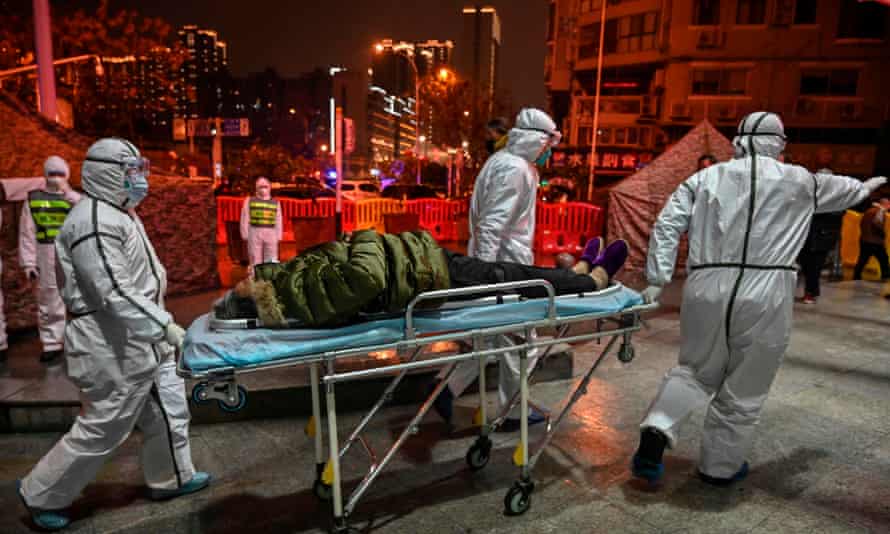
Man with mystery illness brought into Wuhan hospital earlier this year.
A man with what was then a mystery illness is brought into a Wuhan hospital in January this year. Photograph: Héctor Retamal/AFP/Getty Image
 
A study in ScienceMag illustrates that viruses in droplets "can be sprayed like tiny cannonballs onto nearby individuals", with virus-laden aerosols capable of remaining in the air for hours. COVID is able to remain active on a surface for several hours, even days, yet unless that surface is touched, and hands then reach out for eyes, mouth or nose, there is no threat as long as awareness and simple hygiene methods are followed; the use of antibacterials or rigorous handwashing.

There is relief on the horizon. Vaccines which are rolling out and beginning to be distributed since gaining official permission to proceed. Inoculations are taking place targeting the most vulnerable within society with plans to expedite vaccines for distribution and vaccinating entire populations. That may take as long globally as the length of time the world has been coping with trying to contain the outbreaks. Which is good reason to understand that populations must continue to distance themselves physically, wear masks, observe good hygiene and avoid crowded indoor spaces.

In the interim, other treatments of COVID are being explored. As long as the danger of contracting     COVID continues, alternate treatments fill a necessary gap, and may in fact continue to have applications useful to ward off the effects of COVID. Among them convalescent plasma which consists of using blood from people who have recovered from illness to aid others by using their protective antibodies as a new COVID-19 therapeutic protocol.

Canada has instituted a convalescent plasma trial with a need to recruit new blood donors to study whether the proposed therapy actually works as it is meant to do theoretically. Therapeutics such as this are yet to come to market, but what is available is a few drugs that help overcome the most severe cases of COVID: Dexamethasone, a steroid acting as an anti-inflammatory, proven effective on the most ill patients, and remdesivir, an antiviral which is able to prevent the virus from replicating in a person sick with severe infection.

Lastly, there is 'proning', considered effective in hospitals by reducing the high demand for ventilators with the process of turning a sick individual from their back to their stomach for improved oxygenation.

As far as the World Health Organization is concerned, COVID-19 should be considered a test run. A serious virus that has managed to upturn the world as we know it, but not as lethal as a viral pestilence can conceivably become. The WHO has warned and continues to warn of a severely deadly strain of virus that may eventually arrive. That the discoveries made by science in coping with and trying to fully comprehend the SARS-CoV-2 virus causing COVID may better prepare us for the Big One.

"This is coming at the virus from a different way. It's almost boosting the patient's own immune system by giving them additional antibodies [through administering convalescent plasma]. Like a foot soldier to essentially fight off the infection."
"We're 100 percent reliant on people who have had the infection and have recovered to become blood donors."
Dr.Donald Arnold, associate professor of medicine, director, McMaster Centre for Transfusion Research 
Credit: World Bank Group


Labels: , , , , , , , ,

Thursday, October 29, 2020

We're Waiting?!?!

We're Waiting?!?!

"Experts predicting that there's only a 40 percent chance of a negative result, that to me actually sounds pretty optimistic."
"Even if  you have fifty percent protection, we still won't know whether these vaccines actually move the needle on the things we need to move the needle on."
"In medicine we license drugs and vaccines all the time, despite lingering uncertainties regarding impact and safety. [We can't wait for absolute certainty.]"
"The point is to make the best choices we can, given the evidence we have and to continue collecting evidence so that we can revise our choices if the data turn southward."
Jonathan Kimmelman, professor, director, Biomedical Ethics Unit, McGill University
"None of those trials [in Phase III studies] currently under way are designed to detect a reduction in any serious outcome such as hospital admissions, use of intensive care, or death. [Even mild infections could qualify as an] event."
"In Pfizer and Moderna's trials, for example, people with only a cough and a positive laboratory test would bring those trials one event closer to their completion."
Peter Doshi, associate editor BMJ (British Medical Journal)

"We just don't know what to expect. You start asking yourself very practical questions: If something doesn't work fifty percent [of the time], then do we really have something?"
"Maybe we do as an emergency response initially, but a fifty percent level we would have to imagine over time has to get better than that."
Bruce Clark, president, CEO, Medicago
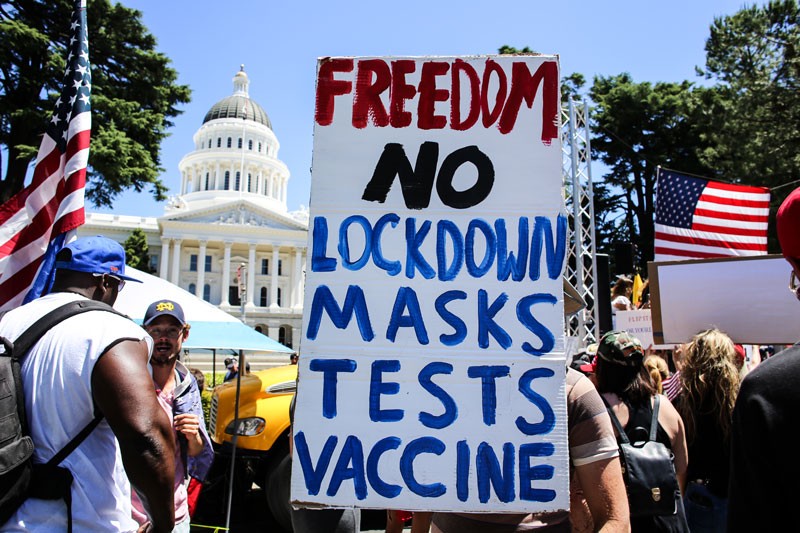
A protester holds a placard that says 'Freedom No Lockdown Masks Tests Vaccine'.

Protesters call for an end to COVID-19-based restrictions in Sacramento, California.   Credit: Stanton Sharpe/SOPA Images/LightRocket/Getty

When might a COVID-19 vaccine be available? When no fewer than 28 experts with a quarter-century each experience in the field were asked their opinion by a team from McGill University, the guess was around June 2021 as a best-case scenario, but more likely to come on stream in the fall of next year. The experts were also of the opinion that a 3-in-10 chance existed that an issue of safety would eventuate after approval was given to the first vaccine, requiring a warning accompany the vaccine. More concerning, that a 4-in-10 chance would arise when the first large field study might project a negative result. As in back to Square One.

Professor Kimmelman of McGill University who was the senior author of the paper points out that fewer than five percent of non-pandemic flu vaccines tested in humans get approved; long odds making him puzzled at the state of confident optimism by public health officials such as U.S. coronavirus chief Dr.Anthony Fauci who states his belief with a decided certainty that an effective and safe vaccine will be available in the near future. A more realistic view, suggests Professor Kimmelman, is that an effective vaccine will evade the near future.

There is no certainty that vaccines reaching Phase III  trials representing the final stage before approval may be given, will deliver normalcy back to the world. Proposed FDA and international standards for such vaccines are being raised; how good would be good enough?, added to which looms the logistical challenge in distribution of a two-dose vaccine, and inoculating the world community, much less persuading the young and individuals at low risk of contracting COVID to be vaccinated to help achieve the longed-for herd immunity effect.

Over two hundred vaccines against the SARS-CoV-2 virus are currently in development, eleven of which are now in Phase III studies -- each one of which involves tens of thousands of volunteers. These are double-blind and placebo-controlled blue-ribbon trials where no one is privy to who is being inoculated with the real vaccine and who a placebo. Designed to conclude after 150 to 160 COVID infections are seen among the study volunteers, a data safety and monitoring board would be set to determine whether fewer infections took place among the vaccinated group.

 
 What is of utmost importance, cautions Dr. Kimmelman, is whether a vaccine will prevent deaths, ICU admissions or hospitalizations. Where the difficulty lies is that hospital admissions and deaths from COVID-19 are uncommon -- so that of necessity it would require a large population over a prolonged period of time to acquire sufficient death numbers to determine the existence of a difference between the vaccine and placebo group.

A minimum target of fifty percent efficacy for a COVID-19 vaccine has been set by the U.S. Food and Drug Administration, so that a vaccine would be expected to be fifty percent superior over a placebo at preventing disease. Moderna's vaccine in an early-stage study produced neutralizing antibodies in 45 healthy 18- to 55-year-olds receiving two vaccinations 28 days apart, as reported in the New England Journal of Medicine. Side effects such as fatigue chills, headache or muscle aches occurred in over half the participants.

While AstraZeneca's vaccine produced an immune response in both the young and old, Reuters reported. It was left uncertain how well an antibody response translates into how well any vaccine can prevent COVID, however. In the same token, even a vaccine that works only half the time, offers an opportunity at keeping the potency of the epidemic at a lower level, particularly should it prevent severe disease and deaths.

And then there is the possibility that vaccines with protection of 30 percent could also have emergency authorization under FDA and international standards, when the debate turns to 'how low can you go?'
"The problem you could create is the following: You push a low-efficacy vaccine out on the grounds it's better than nothing. Right now, you've got zero. Thirty percent protection? Better than zero."
"It's a really difficult question to know at what point do you say, 'it's good enough'."
"What's the ideal? The ideal is we totally understand how this virus works, we get a vaccine, we know that it will stop this pathogen from being able to infect humans and we know that it lasts for a specified time, for example, ten years, and then you get a second vaccine."
"You can't wait until you truly understand the scope of the problem because people are dying."
Francoise Baylis, philosopher, university research professor, Dalhousie University
A technician works in a lab at Sinovac Biotech where the company is producing their potential COVID-19 vaccine CoronaVac during a media tour on Sept. 24, 2020 in Beijing, China. Photo by Kevin Frayer/Getty Images


Labels: , ,

Follow @rheytah Tweet