The Childen's Crusade at the U.S.-Mexico Border
"I heard there was an opportunity to come."
"I heard on the news that mothers with their babies and minors could come."
"[My baby's father?] He abandoned us. We have nothing."
Mayra, 17, Guatemalan refugee
"[It's nonsense that more migrants were coming because I am] a nice guy."
"They come because their circumstance is so bad."
U.S.President Joe Biden
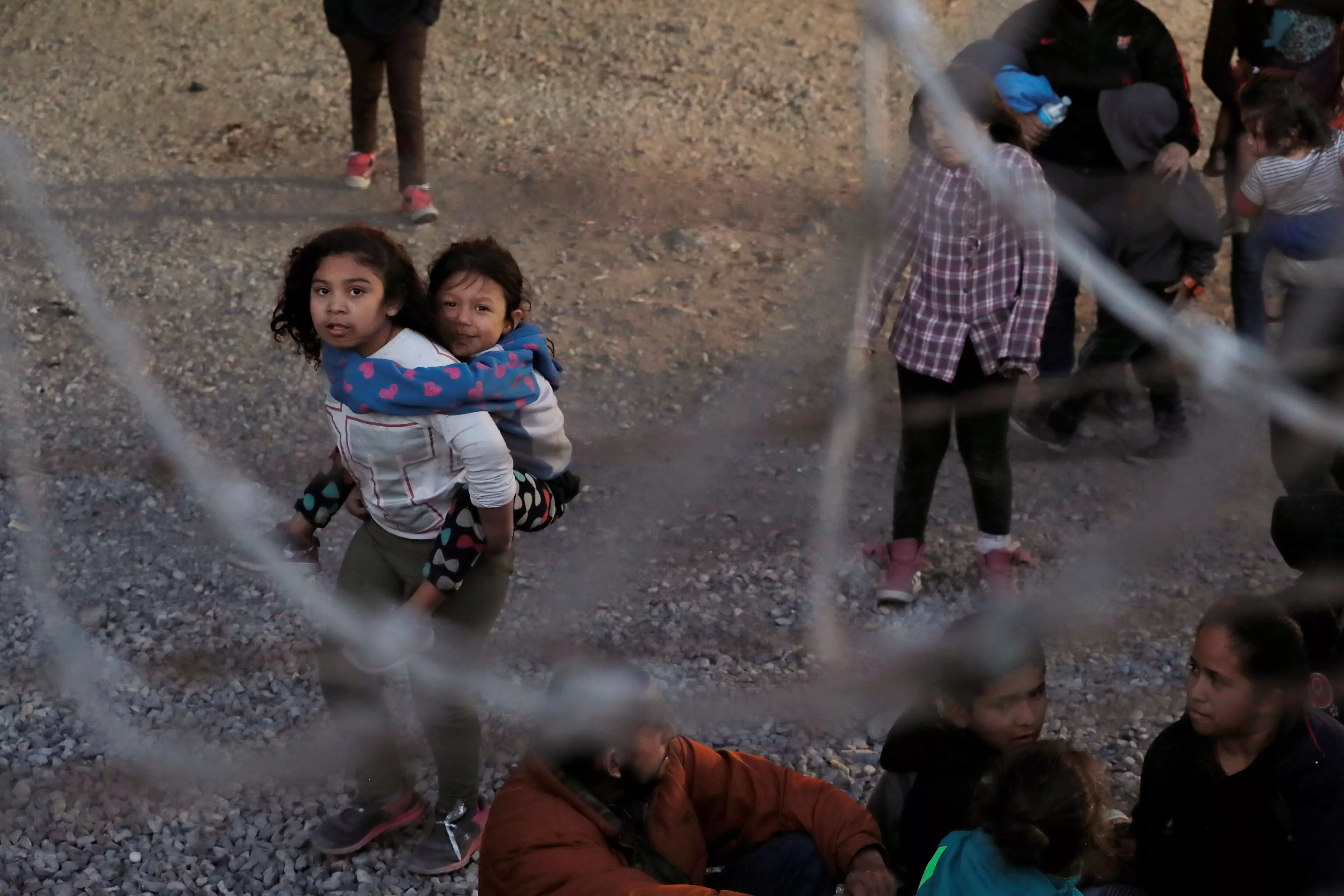 |
| A young girl carries a child inside a U.S. Customs and Border Protection holding area in El Paso, Texas.
Lucas Jackson/Reuters |
Since
October of 2020, roughly two-thirds of unaccompanied minors taken into
custody at the border of Mexico and the U.S. have travelled from
Guatemala, El Salvador and Honduras. The remainder for the most part are
Mexican children. Currently the number in the custody of a
U.S.Department of Health and Human Services (HHS) refugee office
managing a government shelter system stands at 9,200. Most of these
children are in their teens, but there are hundreds under 12 years of
age.
Among
the unaccompanied children many hope to become reunited with family
members. Many others have left their homes to escape violence and
poverty, a fact well understood by immigration experts. Slumping
economies caused by the COVID-19 pandemic has been the cause of many
more migrants leaving their home countries. Hurricanes have recently
battered Central America.
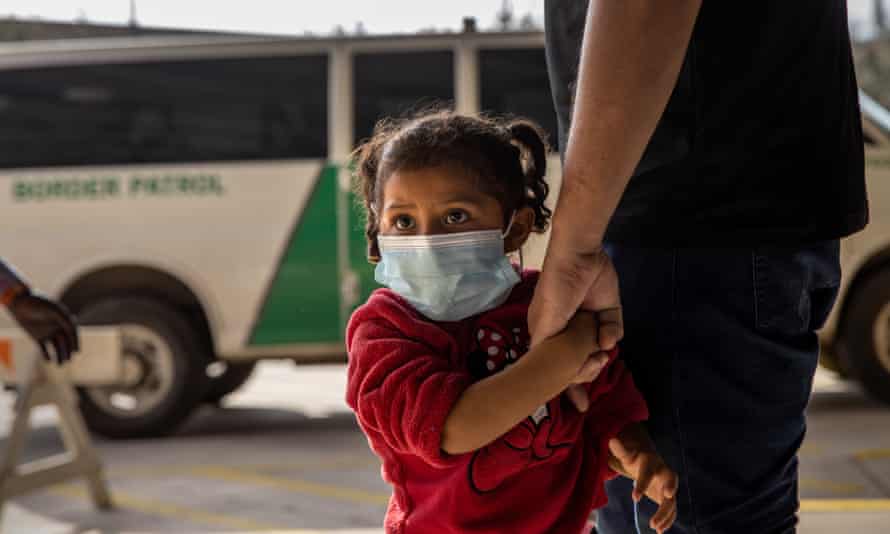 |
| A young asylum seeker
arrives with her family at a bus station after being released by US
border patrol in Brownsville, Texas, on 25 February. Photograph: John Moore/Getty Images |
Under
the new Biden administration, a recent change in policy permits
unaccompanied children into the United States even while single adults
and families crossing illegally continue to be expelled. Under the
previous Trump and Obama administrations in 2019 and 2014, similar
spikes in migrant crossings from Mexico to the U.S. also occurred.
While
the potentially dangerous trip to the border is undertaken by some
children on their own, or through a smuggler, in alternate instances
children travel with older siblings, grandparents or other relatives and
they can be separated by Customs and Border Protection once caught at
the border.
Upon
being taken into custody the children are meant to be transferred out
of Customs and Border Protection to shelters operated by Health and
Human Services within a 72-hour period. With limited shelter space,
however, border detention centres may see children remaining for longer
periods, and this is what is happening at the present time, due to an
influx of greater numbers.
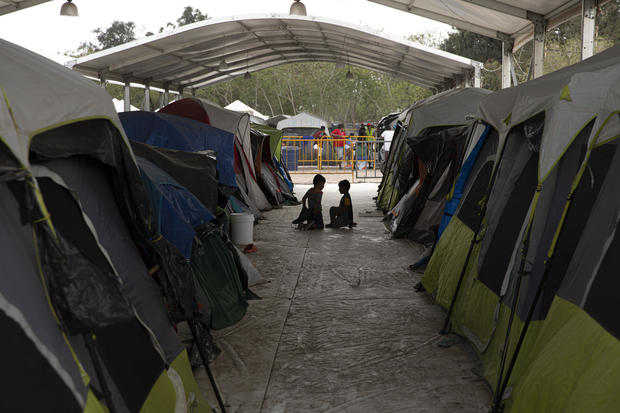 |
| Children play between tents at a makeshift migrant camp in Matamoros, Tamaulipas state, Mexico.
Bloomberg
|
Originally constructed to house adult men for short periods of time, the border stations have the potential to pose COVID-19
health risks to children and staff alike, in overcrowded conditions.
When they gain the shelters, children can be released to parents or
other sponsors or alternately placed in foster care where asylum can be
pursued or alternate ways sought to remain in the U.S. -- other than to
be deported.
Of
the approximately 200,000 unaccompanied children entering the country
from fiscal year 2014 to fiscal year 2019, four percent were removed,
according to U.S. Department of Homeland Security data. Several
emergency shelters for children in Texas have been opened by the
administration, along with plans to utilize the Dallas convention centre
for up to three thousand migrant teen boys to be housed.
Looking
to the longer term, the Biden administration is planning to establish
programs permitting Central Americans to apply for refugee status in the
United States from their home countries, while also making an effort to
improve conditions in those countries. Allied with that effort, a
program has been restarted allowing certain Central American children
with parents living lawfully in the U.S. to apply for a refugee
resettlement from their home countries.
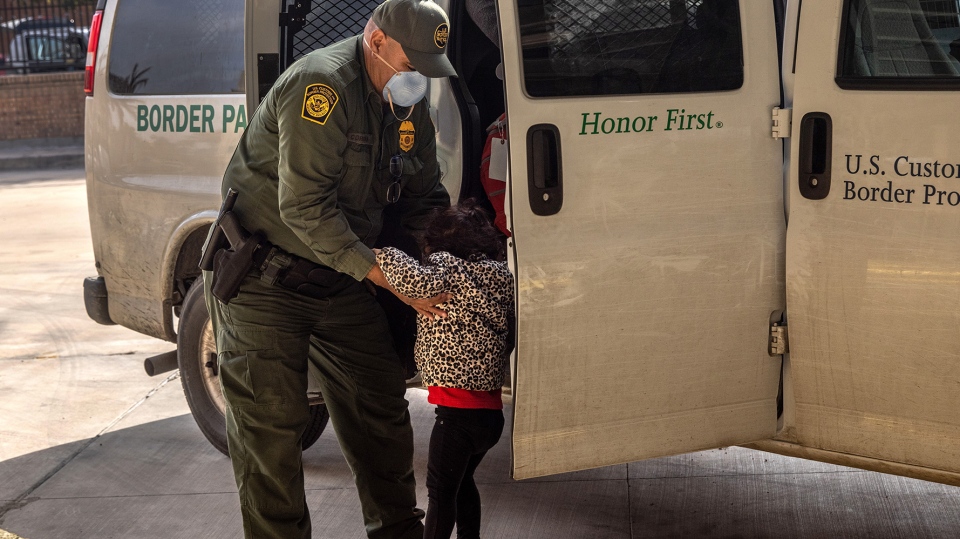 |
| A U.S. Border Patrol agent releases a young asylum seeker with her
family at a bus station on February 25 in Brownsville, Texas. (CNN) |
Labels: Central American Refugees, child Migrants, El Salvador, Guatemala, Honduras, Migrants, United States
National Sovereignty and the Unstoppable Migration
"[The new U.S. policy on migrants remaining in Mexico until their applications for asylum in the U.S. have been vetted] will extremely limit people’s ability to access asylum in the United States."
"How
are people going to have access to due process if they are waiting in
Mexico and their asylum cases are being adjudicated in the United
States?"
"How are they going to have access to lawyers,
translation?"
Gretchen Kuhner, director, Mexico City-based Institute for Women in Migration
"So far it seems as though Mexico is acquiescing to this."
"There will be elements from [Lopez Obrador’s] own party that
say, ‘Why are we giving into the Americans? Why are we doing the
Americans’ dirty work'?"
Duncan
Wood, head, Mexico Institute, Washington, DC-based Wilson
Center
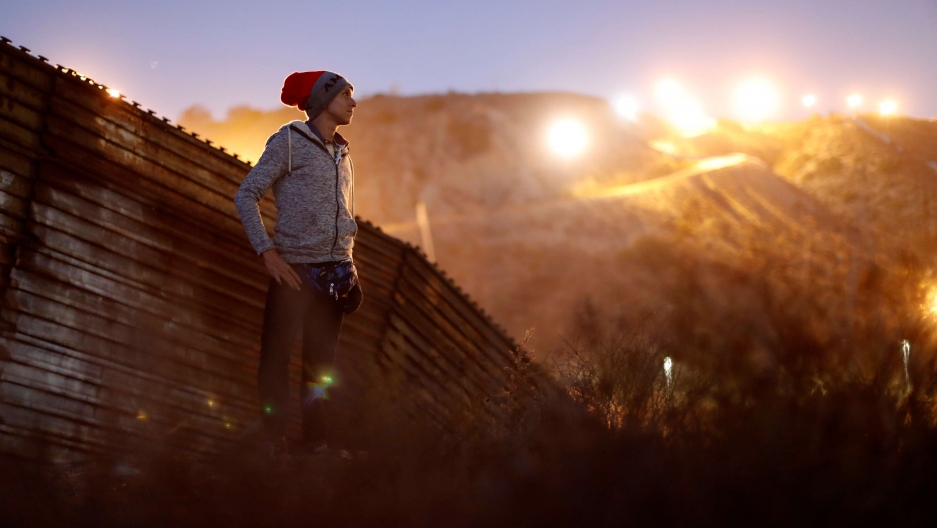 |
A migrant from Honduras, part of a caravan of thousands traveling
from Central America en route to the United States, poses in front of
the border wall between the US and Mexico in Tijuana, Mexico, Nov. 23,
2018.
Credit: Kim Kyung-Hoon/Reuters
|
Mexico's new President, Andres Manuel Lopez Obrador is opening his country to the presence of migrants in lock-step with the U.S. administration hardening its borders. He has taken steps to encourage migrants leaving their poverty- and violence-stricken homelands in Central America to choose to remain in Mexico. It will be easier for them now to acquire visas and work permits for Mexico. Obrador hopes by these means that investments will be promoted and that he can get on with public works projects in the creation of employment.
These new policies have encouraged more migration caravans from Central America to head to Mexico. Another large one, with over 12,000 people is headed to Mexico, many among them claiming their intention to reach Mexico, and remain there. For the time being, in any event. Many are aware that they are leaving their home countries mired in violence and poverty, and heading to another country in which violence and poverty dominate as well. Choosing to overlook that in America too poverty and violence is prevalent.
 |
| Aerial view of Honduran migrants onboard a
truck as they take part in a caravan heading to the US, in the outskirts
of Tapachula, on their way to Huixtla, Chiapas state, Mexico, on
October 22, 2018.
PEDRO PARDO/AFP/Getty Images |
President Obrador's invitation to migrants fits right in with his broader desire in protection of human rights, to reduce inequality and to prioritize the interests of the poor, serving as a counterpoint to the position taken by the White House. His policy, however, will without doubt create even greater strains. Caravans of migrants are responding in part to Mexico's new openness to accepting migrants while the migrants consider the new opportunity to be a temporary stop-gap on their way to the U.S.
"The humanitarian visa that they're giving now is the reason we are here. Later, if possible, we can get to the United States", stated Carlos del Valle, a Guatemalan teacher, applying for the Mexican visa on the bridge that connects his country with Mexico. The issuance of such visas has been expedited from five days rather than the month it has taken up to now, a permanent change in policy. Representing Mr. Obrador's strategic interests in presenting Mexico's immigration policy as more humane.
 |
| Mexican navy personnel hand out food to
Central American migrants stuck in no man’s land on the bridge over the
Suchiate River that is the border between Guatemala and Mexico, near
Ciudad Hidalgo, Mexico, Saturday, Oct. 20, 2018.
Oliver de Ros/AP |
The Trump administration last month announced a new policy to return most asylum-seekers to Mexico arriving at the border by land, intended to discourage Central Americans from planning to migrate to the United States. Petitioners are now required to remain in Mexico while awaiting their case outcomes, thus easing pressure on the overworked U.S. asylum system.
Over 12,000 people arriving at the Guatemala/Mexico border have been encouraged to apply for the humanitarian Mexico visa at Ciudad Hidalgo. A proportion of the migrants state their intention to remain in Mexico to avail themselves of job programs sponsored by the government, but many see safe-passage permits in the visas, to attain Mexico's northern border, and when the time seems right, cross into the United States.
 |
| Aerial view of a Honduran migrant caravan
heading to the US, on the Guatemala-Mexico international border bridge
in Ciudad Hidalgo, Chiapas state, Mexico, on October 20, 2018.
PEDRO PARDO/AFP/Getty Images |
Mexico, citing a labour shortage, is attempting to fill thousands of low-skilled jobs with migrant labour, promoting job creation in southern Mexico with a proposed $30-billion regional development plan, ordering tax cuts in municipalities along the northern border to spur economic development and the creation of jobs. The minimum wage was recently raised by about 16 percent. All of which fails to persuade many caravan participants to remain in Mexico, their hopes still set on the U.S.
"Even though I have to wait five days for the pass to get into Mexico, later I will see how to get to the United States", stated Franklin Caballero, 30, from Honduras, deported from the U.S. as an undocumented immigrant for driving without a license. He plans to pay a smuggler in northern Mexico to sneak him across the border into the United States.
 |
| A Catholic nun gives travel advice to Central
American migrants riding in the bed of a semi-trailer, as they move
toward the U.S. border, in Ixtlán del Rio, Nayarit, Mexico, Tuesday,
Nov. 13, 2018.
Marco Ugarte/AP /
ASSOCIATED PRESS |
Labels: Borders, Guatemala, Honduras, Mexico, Migration, United States
Passion Over Reason
"What we have seen is that no one is getting across the border."
"This forces families, with all the desperation they feel, to go illegally."
Hector Silva, director, migrant center, Reynosa, Mexico
"I honestly don't want to cross illegally, but I don't really have a choice."
"I don't have an option, I can't be there [Honduras]. Our government is totally corrupt, and if the Mexicans or Americans deport me, I'm dead."
Julian Escobar Moreno, 37, Honduran migrant
"Look, we know what the situation is in our country. We don't know what will happen when we cross [into the U.S.]"
"Desperation makes you do crazy things. I don't think anything would stop me. And certainly not a wall."
Osman Noe Guillen, 28, Honduran migrant, Reynosa
 |
| Rio Grande River bordering Mexico and Texas Photograph: Meredith Kohut/The New York Times |
Newly married, Mr. Guillen has decided he belongs not in his country of origin, Honduras, but in the United States, where legendary opportunities to prosper lie. What drives them is what they insist is economic need, and blind faith in a future that lies ahead for them in America, convinced that Honduras is history for them and the U.S. is their future. Now they've arrived in the Mexican town of Reynosa, a border town where they planned to apply for asylum in the U.S.
They can apply for asylum, but to do so they will wait a long time since the U.S. administration has adopted a policy to admit a handful of asylum seekers daily at border crossings where migrants must now wait on the Mexican side of the border for weeks or months before given the opportunity to submit their applications. Delays that make a faster option look promising. And to take advantage of that faster option means engaging the services of a smuggler.
There's no question of desperately searching out a smuggler. Their cartels are everywhere in Reynosa, blatantly advertising their services for hire. And the price keeps rising in lock-step with the border delays. Those waiting focus on just one thing; their anxiety to cross the border separating Reynosa from McAllen, Texas near the banks of the Rio Grande. Reynosa is a border town grim with gun violence. And thousands of Central Americans wait at the border up to Tijuana, for their opportunity.
Although they know of the dangers inherent in illegal crossings, migrants who make that decision will not be dissuaded; they have calculated that they will not return to what they've left, and must by any means be enabled to enter the Paradise of opportunities that they imagine the U.S. to be. Osman Guillen and his wife Lilian Marlene Menendez took a bus from Honduras, looking upon it as a honeymoon adventure.
They chose Reynosa as the closest crossing from Honduras, the least costly to reach. They were aware of the anger expressed in the United States about illegal entrants to the country and the hordes of migrants waiting to rush the border or infiltrate it with the aid of smugglers. They know about deportations, they are aware of long waits at the border. Nothing will serve to turn them away from their destination of choice.
The risks of being smuggled in where polleros
(smugglers) have been known to abandon migrants midway if payment is not given in full, who sometimes kill those they have been contracted to guide to the promised land, who will attempt to extort migrants' families to mortgage homes and pay them more than contracted for, are all stories they are aware of. They were quoted a price of $7,000 each to guide them to the bank across the river on the Texas side.
Already one of the most dangerous cities in Mexico, Renosa mayor Maki Esther Ortiz Dominguez states her concern over the situation:
"This policy could at any moment detonate a new crime wave here". Smugglers are used by Mexicans as well, the price quoted them substantially less. Despite that the migration office in Reynosa recently saw a group of Mexicans waiting to be processed having been deported from the United States.
"For the migration authorities, it is a job. For Mexicans and Central Americans, immigration is a dream. We have something to live for, and that keeps us going", said18-year-old Melvin Gomez from the state of Chiapas, who had just attempted for the fourth time to cross into the U.S. and failed.
Labels: Central America, Honduras, Mexico, Migrants, Texas, United States
Estas en Tu Casa ("This is Your Home")
"Today, Mexico extends you its hand."
"This plan is only for those who comply with Mexican laws,
and it's a first step towards a permanent solution for those who are
granted refugee status in Mexico."Mexican President Peña Nieto
"The majority plan to cross the border. And that's my intention, too."
"Because,
yes, while life here is calmer than at home, it's still not like the U.S.
where it would get better. That's the goal: to have a better life."
Jose Santos, from Honduras
"It's a kind
offer - but it's not the plan that we have, to stay here halfway up."
Anna Lisset Velazquez, from Honduras
"To those in the Caravan, turn around, we are not letting people into the United States illegally."
"I am bringing out the military for this National Emergency."
"They [migrants] will be
stopped!"
U.S. President Donald Trump
 Central
American migrants rest on the steps of a Catholic church in Pijijiapan,
in southern Mexico, as a thousands-strong caravan that is slowly making
its way toward the U.S. border stops for the night Thursday. (Rebecca
Blackwell/AP)
Central
American migrants rest on the steps of a Catholic church in Pijijiapan,
in southern Mexico, as a thousands-strong caravan that is slowly making
its way toward the U.S. border stops for the night Thursday. (Rebecca
Blackwell/AP)
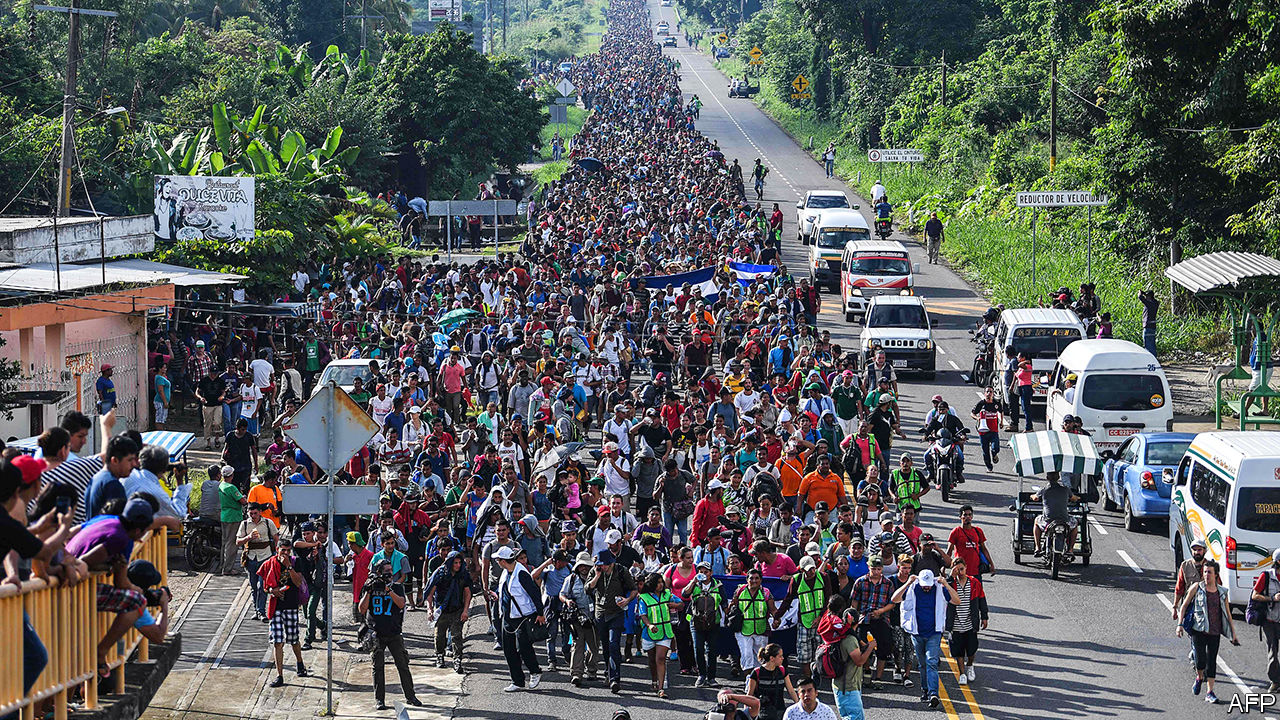
Mexico, which has a problem with its own poverty-stricken, violence-averse population seeping over the border into the U.S. has made a generous offer to the estimated seven thousand marchers intent on crossing the Mexican border into the United States to find new homes for themselves in the land of plenty. Mind, there's plenty of poverty and violence in the United States too. But wherever people live in penury, lacking government support and security, their minds swivel to one place and one place only; the United States of America.
Offering to the law-abiding citizens who are wearily making their way on a long journey of hope to a destination where they will be refused entry, a humanitarian gesture of compassion for people who have opted to make themselves homeless. To those people there will be extended temporary ID cards and work permits, medical care, schooling for their children, and housing in local hostels until such time as those who accept and whom Mexico will accept establish themselves and become independent.
Sounds like a solution, and it would be one, if Mexico was the destination that all those people stream toward, but it is not. For the marchers, it is a border they must cross, a country they must traverse to arrive at the point where another border beckons. But beckon it does not. There are lawful means of entry, to make application, to await consent to enter, and these marchers are deliberately bypassing all of that. The U.S. has a monumental problem as it is, of tens of millions of illegals living there.
And should it decide that the plight of all those seven thousand marchers must be resolved, and they will take a deep breath and permit them entry and begin processing them, it would send a signal to all the other disaffected people in Central America, in Africa, in the Middle East and elsewhere that the U.S. border is easily breached, and the kindhearted people of America will welcome them. The size of the current march will seem minuscule in comparison to the unbridled hordes that will assemble to achieve the goal of living where opportunity beckons.
 |
| The Economist |
Only it doesn't, not for them. For the last hundred years people everywhere, from Europe to Africa, Asia to the Middle East, have yearned to go to America. A hundred years ago the persecuted minorities of Europe spoke of a country where the streets were paved with gold, an allegory that owed its persistence to the knowledge that those who did make it to America wrote home about how successful they had become, how wealthy, how happy with life they were. Everyone wanted to share that. And for a while many did.
Is there any other country in the world where people everywhere else aspire to join? China? Brazil? Egypt? Russia? India? South Africa? France? There are no long marches of desperate people willing to undertake dangerous, long journeys in an effort to find haven and leave the miserable past behind, streaming toward a country promising a future that their current locations do not and cannot and would not offer them. But one country cannot absorb them all, not even a small proportion of those anxious to join it.
And so, for the United States, what the aspiration of so many represents is a
"national emergency"; the very notion of tens of thousands, hundreds of thousands, millions of economic migrants joining the already-established illegal migrants now ensconced in the United States represents a nightmare of administrative and accommodation proportions. Those failed nations governed by despots, by autocrats, by inept and inadequate rulers who despise those living under their heel need the rescue of revolution.
And to inspire them there is always the example of Somalia and Syria.
 Families with small children get truck rides in
Tonala to meet up with the thousands more Honduran migrants and refugees
25km further along up the highway [Sandra Cuffe/Al Jazeera]
Families with small children get truck rides in
Tonala to meet up with the thousands more Honduran migrants and refugees
25km further along up the highway [Sandra Cuffe/Al Jazeera]
Labels: Honduras, Mexico, Migrants, United States


