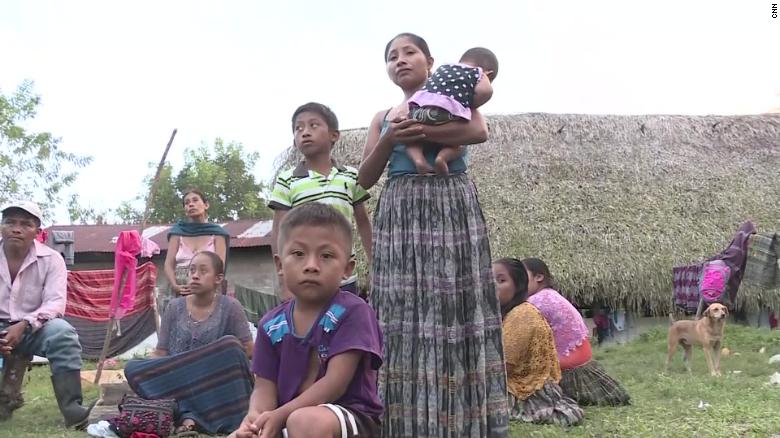
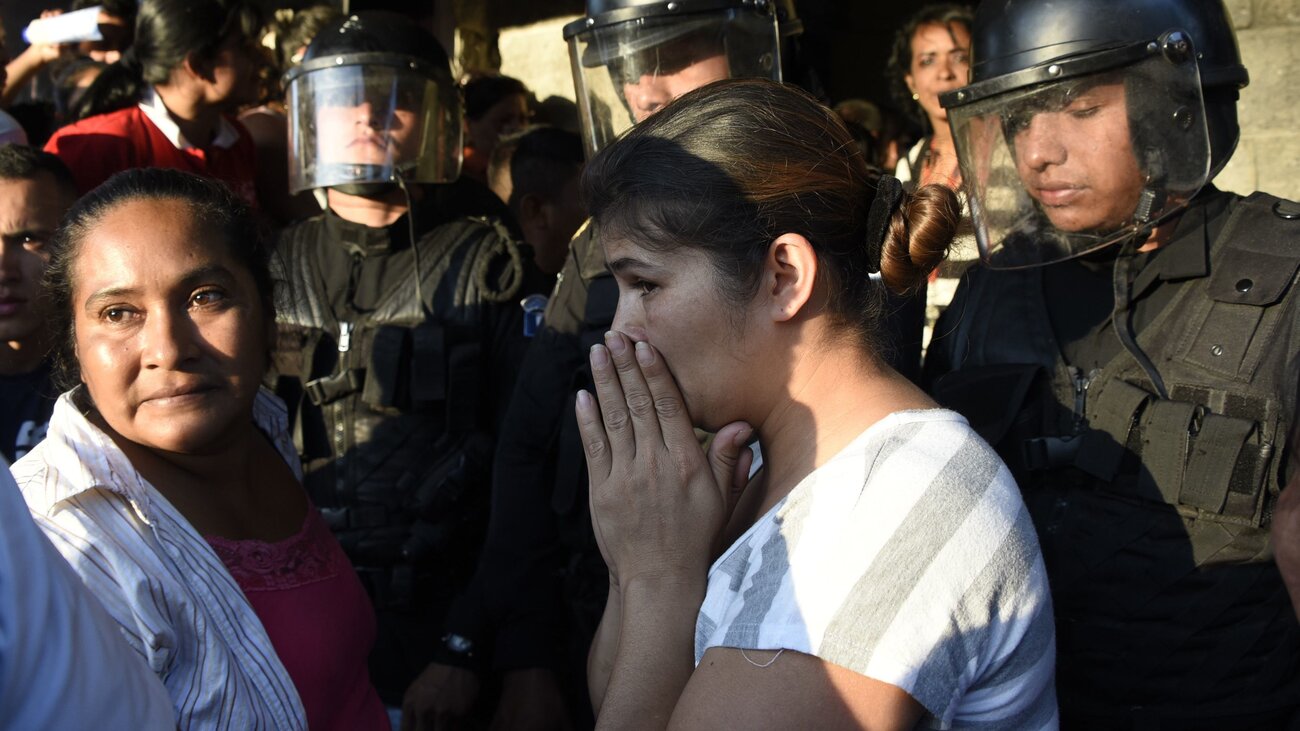
"I heard on the news that mothers with their babies and minors could come."
"[My baby's father?] He abandoned us. We have nothing."
Mayra, 17, Guatemalan refugee
"[It's nonsense that more migrants were coming because I am] a nice guy."
"They come because their circumstance is so bad."
U.S.President Joe Biden
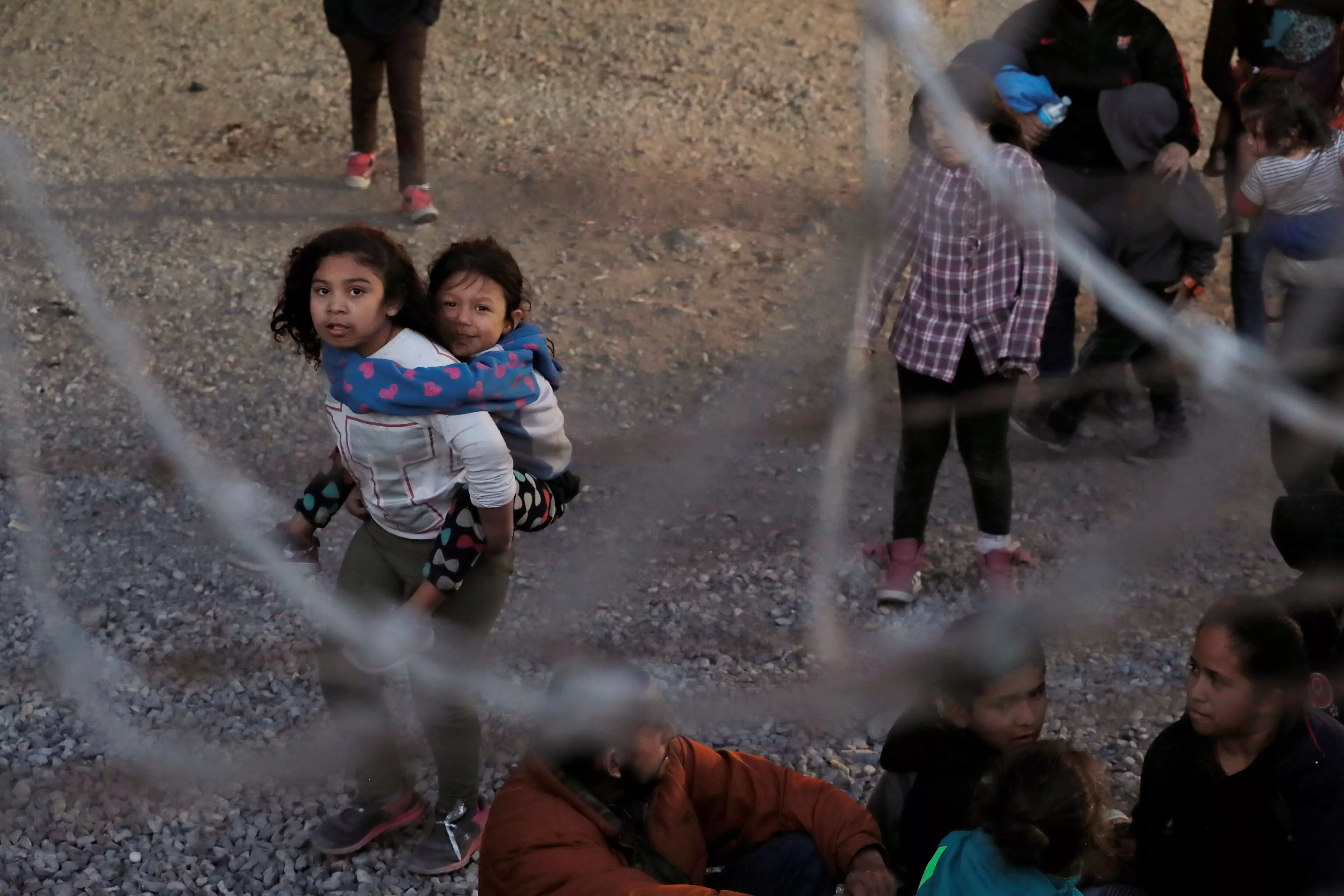
A young girl carries a child inside a U.S. Customs and Border Protection holding area in El Paso, Texas.
Lucas Jackson/Reuters
Since
October of 2020, roughly two-thirds of unaccompanied minors taken into
custody at the border of Mexico and the U.S. have travelled from
Guatemala, El Salvador and Honduras. The remainder for the most part are
Mexican children. Currently the number in the custody of a
U.S.Department of Health and Human Services (HHS) refugee office
managing a government shelter system stands at 9,200. Most of these
children are in their teens, but there are hundreds under 12 years of
age.
Among
the unaccompanied children many hope to become reunited with family
members. Many others have left their homes to escape violence and
poverty, a fact well understood by immigration experts. Slumping
economies caused by the COVID-19 pandemic has been the cause of many
more migrants leaving their home countries. Hurricanes have recently
battered Central America.
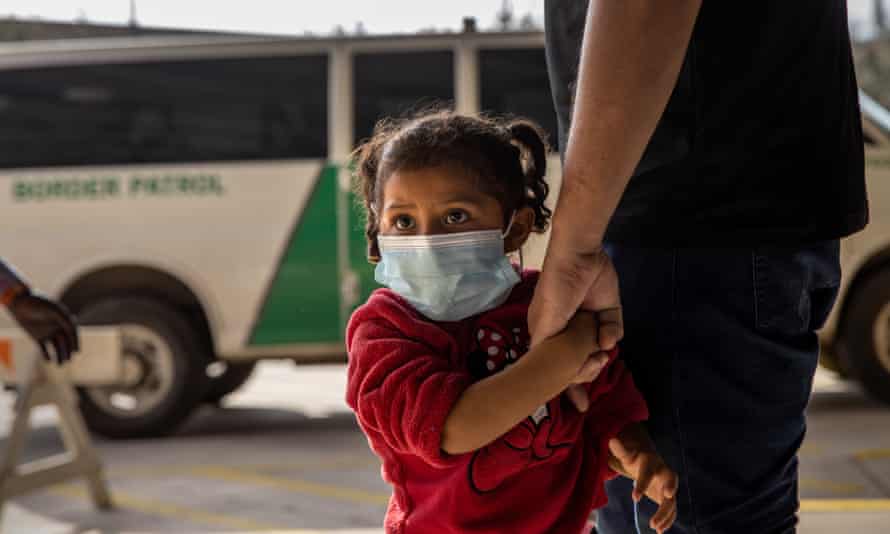
A young asylum seeker
arrives with her family at a bus station after being released by US
border patrol in Brownsville, Texas, on 25 February. Photograph: John Moore/Getty Images
Under
the new Biden administration, a recent change in policy permits
unaccompanied children into the United States even while single adults
and families crossing illegally continue to be expelled. Under the
previous Trump and Obama administrations in 2019 and 2014, similar
spikes in migrant crossings from Mexico to the U.S. also occurred.
While
the potentially dangerous trip to the border is undertaken by some
children on their own, or through a smuggler, in alternate instances
children travel with older siblings, grandparents or other relatives and
they can be separated by Customs and Border Protection once caught at
the border.
Upon
being taken into custody the children are meant to be transferred out
of Customs and Border Protection to shelters operated by Health and
Human Services within a 72-hour period. With limited shelter space,
however, border detention centres may see children remaining for longer
periods, and this is what is happening at the present time, due to an
influx of greater numbers.
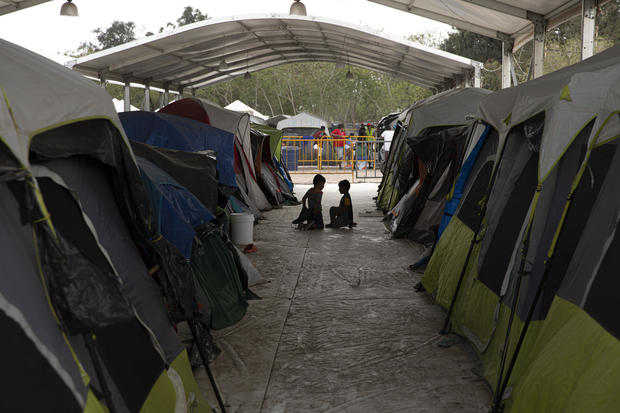
Children play between tents at a makeshift migrant camp in Matamoros, Tamaulipas state, Mexico.Bloomberg
Originally constructed to house adult men for short periods of time, the border stations have the potential to pose COVID-19
health risks to children and staff alike, in overcrowded conditions.
When they gain the shelters, children can be released to parents or
other sponsors or alternately placed in foster care where asylum can be
pursued or alternate ways sought to remain in the U.S. -- other than to
be deported.
Of
the approximately 200,000 unaccompanied children entering the country
from fiscal year 2014 to fiscal year 2019, four percent were removed,
according to U.S. Department of Homeland Security data. Several
emergency shelters for children in Texas have been opened by the
administration, along with plans to utilize the Dallas convention centre
for up to three thousand migrant teen boys to be housed.
Looking
to the longer term, the Biden administration is planning to establish
programs permitting Central Americans to apply for refugee status in the
United States from their home countries, while also making an effort to
improve conditions in those countries. Allied with that effort, a
program has been restarted allowing certain Central American children
with parents living lawfully in the U.S. to apply for a refugee
resettlement from their home countries.
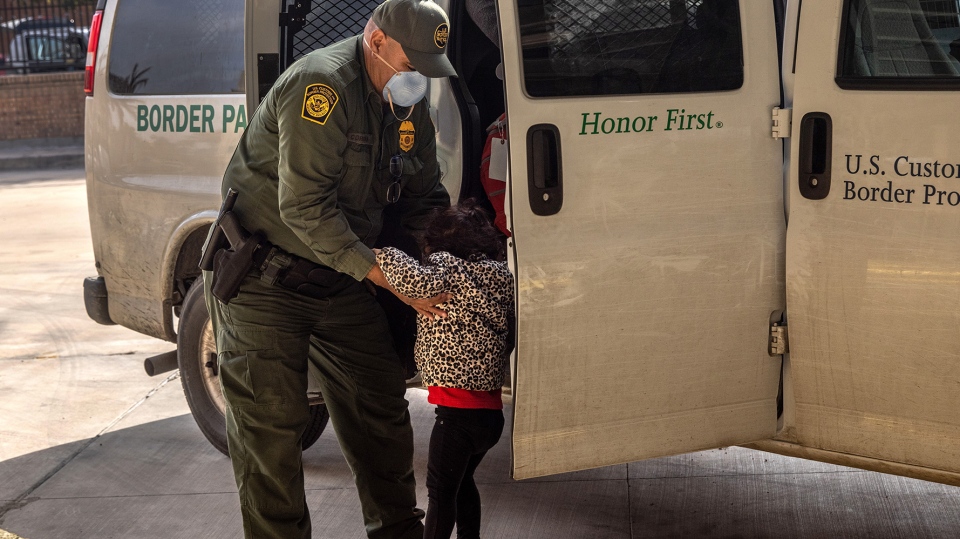
A U.S. Border Patrol agent releases a young asylum seeker with her
family at a bus station on February 25 in Brownsville, Texas. (CNN)
Drug Cartels Destroying a Guatemalan National Park
"We are talking about an industry that has enough money to abandon million-dollar planes in the jungle." "Their resources are infinite, and we are just trying to keep up." Guatemalan Army Colonel Juan de la Paz
"Colombian and Venezuelan drug trafficking organizations often partner with Mexican cartels for significant cocaine shipments." "The cocaine shipment is most often destined for Guatemala." "Guatemalan smuggling groups control a vast array of clandestine airstrips, and they can adjust or redirect landings as needed." "It does not appear that one cartel controls one airstrip." Michael Miller, spokesman, U.S.Drug Enforcement Agency
"This [Laguna del Tigre, Mirador Basin] was New York City at the time of Jesus Christ." "Demand for cocaine in the Northern Hemisphere leaves a trail of wreckage across the Americas. The ecological devastation of Laguna del Tigre is just one example." "Farther south, other Mesoamerican protected areas face similar challenges." Roan McNab, Guatemala program director, Wildlife Conservation Society, New York
The Peten jungle is seen in this aerial picture near the border with Belize on Nov. 23, 2007.
Credit: Daniel LeClair /Reuters
Initially, drug cartels used submarines and fishing boats moving through the Pacific Ocean to move their drugs. That route became hazardous as a result of U.S. Coast Guard vessels policing the ocean route. That was also the time when cocaine-loaded jets flew to Mexico and Honduras, no longer feasible since those countries developed their own aerial interdictions. Guatemala's norther border, on the other hand, a no-man's land wildlife reserve, has been transformed with the latest routes now running through Central America's largest rainforest; an area historically the cradle of Mayan civilization.
The country's security forces found fifty abandoned narco jets last year, with dozens more landing, then flying off, according to authorities. Guatemala has become the route-source of ninety percent of the cocaine that Americans crave. Closed borders resulting from the coronavirus pandemic has impacted drug trafficking to a degree, with an increased difficulty in moving product across locked-down borders, impacting the price of coca leaf in South America.
In the Laguna del Tigre National Park of Guatemala, a geographic area largely undefended, planes keep arriving, according to authorities. In a clearing in the jungle a twin turboprop was discovered on June 21. The torched remnants of a jet set on fire by traffickers once the drugs had been removed, discovered on June 19. South of the Laguna del Tigre in April, thousands of pounds of cocaine wrapped in tight bricks were found in the brush, detritus from an April plane crash.
Members of the antidrug squad of Guatemala's
Civil National Police, transport at the Air Force base in Guatemala City
around a ton of cocaine, seized in Peten, a department on the border
with Mexico. AFP PHOTO/Orlando SIERRA (Photo
credit ORLANDO SIERRA/AFP/Getty Images)
Over a dozen large-scale fires have been set by drug traffickers, burning tracts of jungle so they can build "illicit landing strips for the transportation of drugs", as President Alejandro Giammattei put it. A group of armed men captured a team of firefighters in the park this month. While acknowledging the protected land of a National Park was being transformed into a drug trafficking corridor, security forces find themselves mired in a hopeless task.
Invaders in Laguna del Tigre burn the jungle. Photo:Max Radwin/Mongabay
Simply put, the security forces are convinced on the evidence that the criminal drug-trafficking cartels outmatch them in resources, from costly jet planes to technologically advanced armaments. Over a dozen landing strips were counted across the vast area of the National Park, with several jets sitting on their tarmacs, seen on an inspection flight over Laguna del Tigre earlier in the year.
Many of those jets are from Venezuela. Cocaine moving through Guatemala rose by 57 percent between 2012 and 2017, according to the U.S. government's consolidated counterdrug database. Venezuela's President Nicolas Maduro was charged by the U.S. Justice Department with narcoterrorism this year, yet nothing stops the cocaine coming from Colombia and Ecuador.
Navy and Coast Guard ships were sent to the Caribbean this year by the Pentagon in a deployment to confront the drug trade. "Our pressure has led to an attempt for an air route out of Central America", as a result, admitted Attorney General William Barr. And it is precisely that air route that has presented the most difficult intervention challenge yet seen in the joint, connected efforts to stall the thriving drug trade.
Firefighter in scorched field, Laguna del Tigre. Photo:Max Radwin/Mongabay.
Its concerns over the threat of aerial trafficking convinced the United States to donate six helicopters to beef up Guatemala's "Air interdiction fleet" in 2013. Three years later the fleet was grounded as a result of poor maintenance, leaving Guatemala unable to confront the narco jets, even while they were being tracked by U.S. intelligence. A brigade of 1,200 soldiers protects the 15,000-square-mile department of Peten, with no air support available to them. Once soldiers manage to bushwhack through the jungle, the planes have long since departed, or have alternately been deliberately destroyed.
"It's an impossible task. We hear the planes fly in and we just say, 'There goes another one'," commented a soldier. Laguna del Tigre was the cradle of the Mayan civilization thousands of years ago where a road network linked hundreds of Mayan cities in a jungle metropolis. Archaeologists with the Wildlife Conservation Society based in New York, are busy uncovering signs of one of the world's most sophisticated ancient civilizations. Where a pyramid larger than the Egyptian pyramid of Giza sits revealed in the jungle.
National Sovereignty and the Unstoppable Migration
"[The new U.S. policy on migrants remaining in Mexico until their applications for asylum in the U.S. have been vetted] will extremely limit people’s ability to access asylum in the United States."
"How
are people going to have access to due process if they are waiting in
Mexico and their asylum cases are being adjudicated in the United
States?"
"How are they going to have access to lawyers,
translation?"
Gretchen Kuhner, director, Mexico City-based Institute for Women in Migration
"So far it seems as though Mexico is acquiescing to this." "There will be elements from [Lopez Obrador’s] own party that
say, ‘Why are we giving into the Americans? Why are we doing the
Americans’ dirty work'?" Duncan
Wood, head, Mexico Institute, Washington, DC-based Wilson
Center
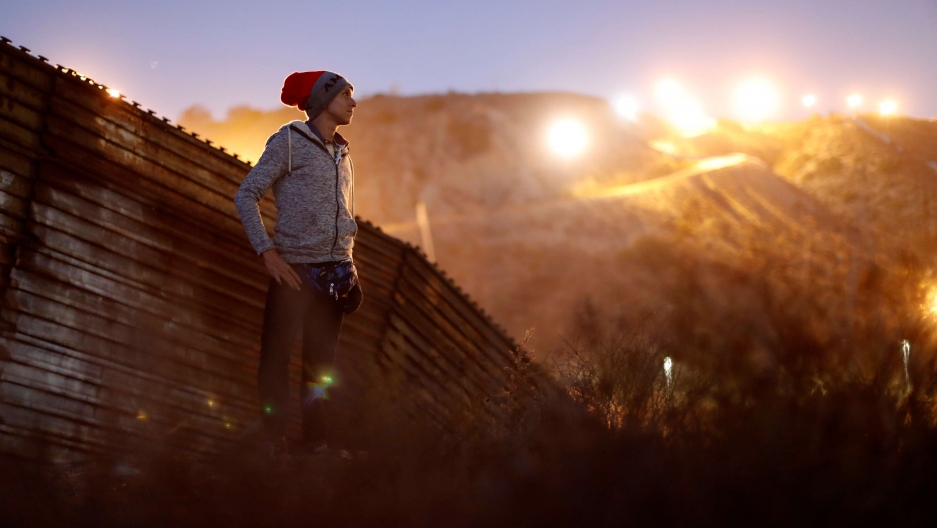
A migrant from Honduras, part of a caravan of thousands traveling
from Central America en route to the United States, poses in front of
the border wall between the US and Mexico in Tijuana, Mexico, Nov. 23,
2018.
Credit: Kim Kyung-Hoon/Reuters
Mexico's new President, Andres Manuel Lopez Obrador is opening his country to the presence of migrants in lock-step with the U.S. administration hardening its borders. He has taken steps to encourage migrants leaving their poverty- and violence-stricken homelands in Central America to choose to remain in Mexico. It will be easier for them now to acquire visas and work permits for Mexico. Obrador hopes by these means that investments will be promoted and that he can get on with public works projects in the creation of employment.
These new policies have encouraged more migration caravans from Central America to head to Mexico. Another large one, with over 12,000 people is headed to Mexico, many among them claiming their intention to reach Mexico, and remain there. For the time being, in any event. Many are aware that they are leaving their home countries mired in violence and poverty, and heading to another country in which violence and poverty dominate as well. Choosing to overlook that in America too poverty and violence is prevalent.
Aerial view of Honduran migrants onboard a
truck as they take part in a caravan heading to the US, in the outskirts
of Tapachula, on their way to Huixtla, Chiapas state, Mexico, on
October 22, 2018.PEDRO PARDO/AFP/Getty Images
President Obrador's invitation to migrants fits right in with his broader desire in protection of human rights, to reduce inequality and to prioritize the interests of the poor, serving as a counterpoint to the position taken by the White House. His policy, however, will without doubt create even greater strains. Caravans of migrants are responding in part to Mexico's new openness to accepting migrants while the migrants consider the new opportunity to be a temporary stop-gap on their way to the U.S.
"The humanitarian visa that they're giving now is the reason we are here. Later, if possible, we can get to the United States", stated Carlos del Valle, a Guatemalan teacher, applying for the Mexican visa on the bridge that connects his country with Mexico. The issuance of such visas has been expedited from five days rather than the month it has taken up to now, a permanent change in policy. Representing Mr. Obrador's strategic interests in presenting Mexico's immigration policy as more humane.
Mexican navy personnel hand out food to
Central American migrants stuck in no man’s land on the bridge over the
Suchiate River that is the border between Guatemala and Mexico, near
Ciudad Hidalgo, Mexico, Saturday, Oct. 20, 2018.Oliver de Ros/AP
The Trump administration last month announced a new policy to return most asylum-seekers to Mexico arriving at the border by land, intended to discourage Central Americans from planning to migrate to the United States. Petitioners are now required to remain in Mexico while awaiting their case outcomes, thus easing pressure on the overworked U.S. asylum system.
Over 12,000 people arriving at the Guatemala/Mexico border have been encouraged to apply for the humanitarian Mexico visa at Ciudad Hidalgo. A proportion of the migrants state their intention to remain in Mexico to avail themselves of job programs sponsored by the government, but many see safe-passage permits in the visas, to attain Mexico's northern border, and when the time seems right, cross into the United States.
Aerial view of a Honduran migrant caravan
heading to the US, on the Guatemala-Mexico international border bridge
in Ciudad Hidalgo, Chiapas state, Mexico, on October 20, 2018.PEDRO PARDO/AFP/Getty Images
Mexico, citing a labour shortage, is attempting to fill thousands of low-skilled jobs with migrant labour, promoting job creation in southern Mexico with a proposed $30-billion regional development plan, ordering tax cuts in municipalities along the northern border to spur economic development and the creation of jobs. The minimum wage was recently raised by about 16 percent. All of which fails to persuade many caravan participants to remain in Mexico, their hopes still set on the U.S.
"Even though I have to wait five days for the pass to get into Mexico, later I will see how to get to the United States", stated Franklin Caballero, 30, from Honduras, deported from the U.S. as an undocumented immigrant for driving without a license. He plans to pay a smuggler in northern Mexico to sneak him across the border into the United States.
A Catholic nun gives travel advice to Central
American migrants riding in the bed of a semi-trailer, as they move
toward the U.S. border, in Ixtlán del Rio, Nayarit, Mexico, Tuesday,
Nov. 13, 2018.Marco Ugarte/AP /
ASSOCIATED PRESS
"I am living with a deep sadness since I learned of my daughter's death." "But there are no jobs, and this caused the decision to leave [Guatemala for the United States]." Claudia Maquin, 27, San Antonio Secortez, Raxruha, Guatemala
"Somebody came and tricked people and told them, 'I will get you political asylum -- and take a child with you." Cesar Castro, mayor, San Antonio, Secortez, Raxruha
Friends and family carry a coffin with the remains of Jakelin Caal, a
7-year-old girl who handed herself in to US border agents earlier this
month and died in the custody of US Customs and Border Protection.
Claudia Maquin's 29-year-old husband, Nery Caal, decided to leave their
small village to find his future and a hoped-for change-of-fortune by
claiming himself to be a refugee and entering the United States where
opportunities presumably abound. With little formal education, the small
family lived on a parcel of land that they felt was too small to
provide for their needs. He aspired to better things and had no trust
that their lot would be improved by remaining where he was.
He and his wife had four children aged from 9, to 7, 5 years of age, and
an infant of six months. Mr. Caal decided to take a long and perilous
journey and that his seven-year-old daughter Jakelin would accompany
him. For, he was informed, anyone seeking to be welcomed by the United
States would induce sympathy with the presence of a child. Either the
smuggler he paid to get them to the border between Mexico and the U.S.
or others who had made the same trip persuaded him his chances of
remaining would be immeasurably improved with the presence of a child.
According to the town's mayor, Mr. Castro, Mr. Caal's venture was not
unusual. On average, ten, twenty or thirty people abandon the village
monthly to strike out on a journey for which they pay smugglers
handsomely. The same smugglers that tell convincing stories of great
success, of welcome committees at the border, of the opportunities to
live well that will open to them in the United States; they have just to
pay and to leave; preferably in the company of a child, which evokes
empathy.
In the community of San Antonio Secortez, where the Caal family lives,
corn and beans are grown by families who also raise goats, chickens and
pigs. The Caal family's patriarch said the fields are no longer as
fertile as they once were but he is uncertain whether it is a decline in
soil quality or changing weather patterns, or some other undefined
reason that is responsible for the decline in agricultural output.
There are fewer wild deer and boar to hunt and the river fish that once
teemed allowing large catches have dwindled, resulting from the forest
to the north of the town being cleared by oil palm plantations.
Evidently, in relation to the size of the Guatemala economy the
government collects a smaller share of tax revenues than any other
country in the world, according to the World Bank.
Guatemala is not poor according to the World Bank which classifies it as
an upper-middle income nation. One, however, with notable inequalities
stemming from centuries of racism and powerful groups controlling the
economy, resisting efforts to address discrimination, so Guatemalans
have always thought of migration as an escape from these divisions.
Despite that it is well known that apprehensions are taking place at the
border between Mexico and the United States, nothing appears to
convince Guatemalans that they will not, in actual fact, be welcomed
into the country they aspire to travel toward and enter to become
entitled to benefits their own country fails to provide for them.
Elvira Choc, grandmother of Jakelin Caal, during the funeral service.
Mr. Caal is now at a migrant shelter in Texas. His seven-year-old
daughter Jakelin, although deemed by U.S. border agents to be in sound
health, died without seeming cause once they crossed the border and were
in the care of the system that evaluates refugee claims. The little
girl's mother, grieving the death of one of her four children, insists
her husband must remain in the U.S., not rejoin her in Guatemala.
Border Patrol agents in whose custody the child had died, stated the
girl hadn't eaten or been hydrated for days during her trip with her
father across the border. The implication that the parents failed to
care properly for their daughter infuriates Jakelin's mother. Entering
the U.S. is their route out of poverty, made all the more acute by the
estimated $5,000 to $10,000 they paid to the smuggler, according to the
town's mayor.
Jakelin died in a hospital in El Paso, Texas, on Dec. 8, two nights
after her father, Nery Caal, turned himself and his daughter in to the
custody of U.S.
Border Patrol. Cause of death was dehydration and shock after running
a high fever. Clearly, the child's most basic human needs were
neglected by those most responsible for her well-being; her parents in
search of a higher-order of priorities.
Local residents attend the funeral of Jakelin Caal at her home village of San Antonio Secortez, in Guatemala.
"This family chose to cross illegally." "We'll continue to look into the situation, but, again, I cannot stress enough how dangerous this journey [is] when migrant choose to come here illegally." "They were about 90 miles away from where we could process them. They came in
such a large crowd, it took our border patrol folks a couple times to
get them all. We gave immediate care, we'll continue to look into the
situation, but again I cannot stress how dangerous this journey is when
migrants choose to come here illegally." U.S. Homeland Security Secretary Kirstjen Nielsen
"Our agents are almost always outnumbered in the middle of the night." "There is no indication that it was a lack of
attention that resulted in this. The questions were asked. The
observations were made and there was no indication that she had any
health conditions." Border Patron official
"Border Patrol Agents, including trained
Emergency Medical Technicians did everything in their power to provide
emergency medical assistance for Jakelin Caal Maquin immediately after
her father notified the agents of her distress."
"The
agents involved are deeply affected and empathize with the father over
the loss of his daughter... We cannot stress enough the dangers posed by
traveling long distances, in crowded transportation, or in the natural
elements through remote desert areas without food, water and other
supplies."
CBP Commissioner Kevin
McAleenan
Guatemalan child, 7, entered illegally along with her father in company of a large group crossing into New Mexico. Washington Post
Increasing numbers of children and families continue to forge ahead trekking north from Central America toward the United States planning to cross illegally into a country that has no need for their presence to add to the millions of illegals already living there. The dangerous trip that lies ahead of the migrants when they set out appears not to immoderately faze them, fully expecting that when they arrive at the border it will be open and welcoming; they choose to believe this fantasy fed to them by conspirators inciting them to make the trip, the reward of inclusion in a wealthy country theirs to be had.
None of them appear aware or even interested in knowing the truth, that every country has its poverty stricken, its ghettos, its violent crime, its drug-possessed and its gangs, or that it is the internationally-recognized right of every sovereign state to close its borders to all but those whom they invite entry to; those who have made formal application to immigrate and whose profiles fit the receiving country's image of those who will make good citizens for the future.
It was inevitable that eventually a child would come to harm resulting from the physical privations suffered by those pilgrims to destiny; not the finalization of their trip and its imagined rewards, but the disappointment and long journey to return whence they came. Many have died in the process. The natural causes of thirst and hunger, lack of shelter and isolation wreaking havoc, much less deliberate attacks and suspected killings have taken their toll.
Now, it is the life of a 7-year-old child whose father's decision to risk his life and that of his dependent that has been forfeited. If fault is to be apportioned, it is there.
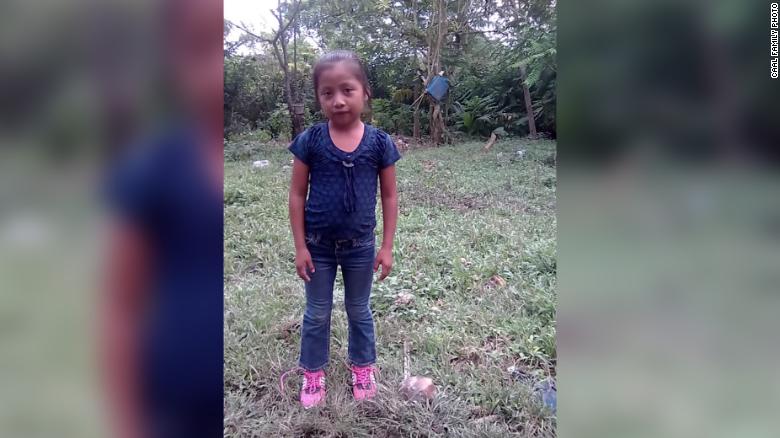
Jakelin Caal Maquin, 7, in a family photo, shortly before her journey north from Guatemala
Border Patrol agents completed a form indicating no signs obvious to them of illness in the little girl who stood before them. Her father attested to her physical well-being himself. She was not visibly sweating, suffered no tremors, nor was visible trauma detected. The mentally alert child warranted the notation: "claims good health" which the girl's father signed. Hours afterward travelling on a bus to an official immigration centre, she began to vomit.
On arrival at a Border Patrol station she was no longer breathing -- but emergency medical personnel managed to revive the child and to have her flown to an El Paso, Texas hospital. There she was diagnosed with swelling in her brain, and with liver failure. Too late to save her, according to medical authorities there. And there is where she died, with an autopsy scheduled to take place to determine cause of death.
Guatemala's foreign ministry identified the child as Jackeline Caal, her father as 29-year-old Nery Caal. Driven to El Paso, the father, not held in custody, was at the hospital when his little girl died. They had been with a group of 153 people in remote New Mexico, about 145 kilometres from the closest Border Patrol station.
"We have to create better opportunities for people so they can stay home." "We also have to work on countering smugglers who have convinced people that their best opportunities to be successful lie in the [United] States." Victor Manuel Asturias Cordon, head, National Competitiveness Program, Guatemala
"No one will turn them in [report smugglers to the government, even for rewards], because within the community they are not seen as bad people." "But everyone knows who they are." Dora Alonzo, Quetzaltenango anti-migration group
Over the period of time, Immigrants have discovered many illegal routes of Immigrating to USAThe government of Guatemala is keenly aware it has a problem of smugglers persuading Guatemalans to leave their country to find work elsewhere; and that elsewhere is invariably the United States. It has set aside $1.3-million for a messaging campaign to attempt to persuade people not to listen to the smugglers, to remain in Guatemala with their children and to strive to achieve some measure of income security through business endeavours at home.
As for the United States, while it is doing its best to discourage migrants from illegally entering the United States for underground work, it is also planning to invest over $200-million on projects over the next few years in the western highlands of the country to ideally create jobs and reduce endemic poverty. Few people interviewed in Quetzaltenango, the largest city in the Guatemalan highlands claim to have seen or heard the warnings.
Even had they seen them, many of those interviewed stated baldly those efforts would be wasted in persuading them to remain in Guatemala, convinced that opportunity, good employment and prosperity awaits them on entry to the United States. Residents of the city do see advertisements by the smugglers, on the other hand, and at least one community radio station in the city helps promote the smugglers' offer to transport and aid in financing northbound travel.
In the past year alone, 42,737 Guatemalans chose to travel as family units only to be apprehended or stopped at the border between the U.S. and Mexico, according to U.S. Customs and Border Protection. That number represents close to fifty percent of all migrants seeking entry to the United States with their relatives for that period. In Concepcion Chiquirichapa, a town where about ten thousand people live, everyone has family or contacts in the United States.
And the residents explain that the extreme poverty they live with is their sole motivation where about 75 percent of the population lives an impoverished life and where 67 percent of children under five suffer chronic malnutrition, the U.S. Agency for International Development figures attest. In the country, over a million people in rural areas have no access to electricity and many earn scant profit from coffee, corn, beans and other produce they grow.
And nor are their lives immune from the deleterious effects of drug trafficking, widespread corruption through local government and gang extortion, all of which aggravations, dangers and fears associated with them, conspire to influence their decisions to leave. Once that decision is made, people face a 1,900-kilometer journey to reach the U.S. For some, failures leading to return, only makes them determined to make the same attempt time and again until they succeed.
Despite the experience of facing countless dangers such as unscrupulous smugglers, fraught desert crossings and the possibility of being kidnapped by members of the deadly Mexican drug cartels. What propels them are the feelings of hopelessness in remaining in Guatemala where opportunities for a decent living wage are scarce and safety and security never a guarantee.
The billboards, radio and television warnings by the U.S. and Guatemalan governments alerting people against the dangerous journey to reach the United States go unheeded, if they are seen at all. Thousands determined to seek work and the prospect of a better life continue to flee the western highlands of Guatemala, their remote, rural, impoverished homes.
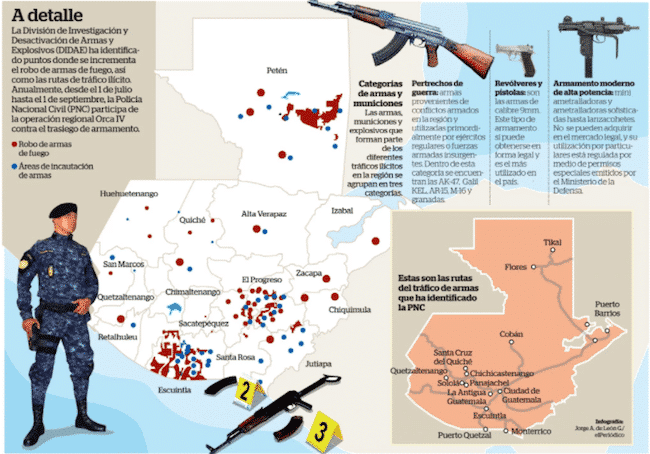
And to complicate things even further, there are smuggling routes into Guatemala where guns and drugs are being run. In the opposite direction, into Guatemala. Not into the rural areas where people are fleeing from, but into the centre of the country, its largest cities where criminal gangs tend to operate. A scourge that has contaminated the quality of life in most Central American countries.
Beneath the Jungle in Guatemala ... a Maya Fortress
Canuto & Auld-Thomas, PACUNAM via AP
This digital 3D image provided by Guatemala’s Mayan Heritage and
Nature Foundation, PACUNAM, shows a depiction of the Mayan
archaeological site at Tikal in Guatemala created using LiDAR aerial
mapping technology. Researchers announced Thursday, Feb. 1, 2018, that
using a high-tech aerial mapping technique they have found tens of
thousands of previously undetected Mayan houses, buildings, defense
works and roads in the dense jungle of Guatemala’s Peten region.
"Their agriculture is much more intensive and therefore sustainable than we thought, and they were cultivating every inch of the land." Francisco Estrade-Beli, research assistant professor, Tulane University, New Orleans, USA
"There's state involvement here, because we see large canals being dug that are redirecting natural water flows." "I found it [a road revealed by LiDAR data], but if I had not had the LiDAR and known that that's what it was, I would have walked right over it, because of how dense the jungle is." "In this the jungle, which has hindered us in our discovery efforts for so long, has actually worked as this great preservative tool of the impact the culture had across the landscape." "It's this hill-top citadel that has these ditch and rampart systems ... when I went there, one of these things is nine meters tall." Thomas Garrison, assistant professor of anthropology, Ithaca College, New York
"As soon as we saw this, we all felt a little sheepish, because these were things [the ancient structures] that we had been walking over all the time." "That is two to three times more [inhabitants] than people were saying there were [revealed through their discoveries]." Marcello A. Canuto, professor of anthropology, Tulane University
A LiDAR image from Tikal, the most important Maya city.
PACUNAM/Marcello Canuto & Luke Auld-Thomas
A mapping technique identified as LiDAR was used by researchers from the United States, Europe and Guatemala, working with Guatemala's Mayan Heritage and Nature Foundation, which made it possible to reveal an immense area in the Maya Lowlands comprised of various buildings and agricultural fields over a 2,100 square kilometre area previously unknown to exist and dating back between approximately 1,000 BC to 900 AD.
The mapping system revealed the presence of about 60,000 individual structures, among them four major Mayan ceremonial centres complete with plazas and pyramids. The high-tech aerial mapping system found tens of thousands of houses, buildings, defence works and pyramids buried deep within the dense jungle of Guatemala's Peten region. Making it obvious to the anthropologists involved in the revelation that millions more people inhabited the area, well over what the population was previously thought to have been.
It is an astonishing finding, inclusive of vast agricultural fiends and irrigation canals. According to the study, the revised estimate of the population of the area is that about ten million people may have been residents of the lowlands, and with that supposition comes the natural corollary that a massive agricultural effort would have had to be undertaken to produce sufficient food for all those people, on an organized and industrial scale of successful farming.
The LiDAR technique: Light Detection And Ranging system, bounces pulsed laser light off the ground, in the process revealing hidden contours well covered by the dense foliage of the Mayan jungle. Images were revealed indicating that the Maya were capable of altering their landscape prodigiously, well beyond what had previously been considered possible or likely. Fully 95 percent of available arable land was under cultivation.
The ancient Maya were obviously proficient food growers. They partially drained swampy portions of the area at their time of existence, long since abandoned to farming. They built extensive fences for defensive purposes, comprised of ditch-and-rampart systems, alongside irrigation canals, all work obviously accomplished by a skilled and organized workforce. The area uncovered goes far to expand known areas intensively occupied by this ancient civilization whose descendants still live in the region.
Unlike other ancient cultures, where fields, roads and outbuilding have been transformed over time through succeeding generations of farming, the Mayan jungle grew over the abandoned Maya fields and structures, effectively hiding, but also preserving them, as pointed out by Dr. Garrison who specializes in the city of El Zotz, near Tikal.
Not
far from the sites tourists already know, such as Tikal, laser
technology has uncovered about 60,000 homes, palaces, tombs, and even
highways, archeologists announced last week. Justin Lane/New York Times/file 2018
"On International Women's Day, these young women died due to the state's lack of action." "It's a situation as grave as this one that draws the attention to what needs to change, to what Guatemalan children are living [through]." Abner David Paredes Cruz, youth advocate, Guatemala Human Rights
"Children from the street, children who had been in gangs, children with disabilities, it was a mix of many populations with many difficulties." "By the time the room was unlocked, it was too late." Leonel Dubon, director, Guatemala child advocacy group
Relatives gather outside the Virgin of the Assumption
Safe House near Guatemala City, Guatemala. Dozens of girls died after a
fire broke out at the youth shelter on Wednesday.Johan Ordonez/AFP/Getty Images
The Virgen de la Asuncion Safe Home in San Jose Pinula, Guatemala is a complex of multiple buildings and dormitories surrounded by a ten-metre-high wall, and trees. It was designed to hold 500 residents, to serve as a shelter for young people who had served criminal sentences, with no families or homes to return to. Former convicted felons were placed where children recovering from sexual abuse or suffering from mental illnesses were also housed.
Residents of the "safe home" had little opportunity to take advantage of proper hygiene, they had few possessions such as clothing and shoes, and nor did they all have proper beds, with many sleeping on worn mats laid on the floors, reported a November 2015 human rights report. The boys and girls in this "safe home" represented the nation's most vulnerable. Their backgrounds were of broken families and troubled homes. Some suffered from mental illness, abandonment and abuse.
A woman lights a candle during a vigil in remembrance of the victims of a
fire at a children's shelter, outside the morgue where the bodies are
being identified in Guatemala City on Wednesday. (Moises Castillo / The Associated Press)
Because they had nowhere else to go, they were unfailingly sent to the sprawling complex in the town of San Jose Pinula. And there, according to reports, they were sexually violated, shoved into overcrowded areas and poor quality food given them in scarce quantities. The children had complained of the unspeakable conditions they were forced to live in, and the abuse heaped upon them, but there were never any responses.
On Tuesday night dozens of the young people attempted to storm the gates of their unconscionable prison in a mass escape, to which riot police responded, returning many of the children back to the facility. There, supervisors locked them into their dormitories. And in one of those dorms a teen-age girl set her mattress on fire while others ate their breakfasts on Wednesday morning. She was heard to scream she was prepared to sacrifice herself "so that everyone would know what they were living inside".
The fire spread throughout the dormitory. Nineteen girls, from age 13 to 17 died at the site, bodies so burned families were unable to identify them without a struggle. Another 40 girls were taken to hospitals where some later died. A few months earlier a judge had ordered that the facility transfer its residents back to their families and to other alternate shelters and close its facilities to further use.
Despite that order, the shelter remained open and operational.
A woman who lives near the shelter informed a local newspaper that three of the girls had once asked for her help to commit suicide. "Give me pills, a knife or something", they pleaded with her. "We don't want to live here".
Activist Julia Silvestre tapes a sign to the front gate of Presidential
House with a message that reads in Spanish: "Guatemala is not a safe
home" in remembrance of the victims of a fire at a youth shelter. (Luis Soto)
This represents a general opinion site for its author. It also offers a space for the author to record her experiences and perceptions,both personal and public. This is rendered obvious by the content contained in the blog, but the space is here inviting me to write. And so I do.