Saturday, September 19, 2020

The Case for COVID Mask-Wearing


"SARS-CoV-2 has the protean ability to cause myriad clinical manifestations, ranging from a complete lack of symptoms to pneumonia, acute respiratory distress syndrome, and death. Recent virologic, epidemiologic, and ecologic data have led to the hypothesis that facial masking may also reduce the severity of disease among people who do become infected. This possibility is consistent with a long-standing theory of viral pathogenesis, which holds that the severity of disease is proportionate to the viral inoculum received. Since 1938, researchers have explored, primarily in animal models, the concept of the lethal dose of a virus — or the dose at which 50% of exposed hosts die (LD50). With viral infections in which host immune responses play a predominant role in viral pathogenesis, such as SARS-CoV-2, high doses of viral inoculum can overwhelm and dysregulate innate immune defenses, increasing the severity of disease. Indeed, down-regulating immunopathology is one mechanism by which dexamethasone improves outcomes in severe Covid-19 infection. As proof of concept of viral inocula influencing disease manifestations, higher doses of administered virus led to more severe manifestations of Covid-19 in a Syrian hamster model of SARS-CoV-2 infection."
Monica Gandhi, M.D., M.P.H., George W. Rutherford, M.D. The New England Journal of Medicine
Law enforcement trainees wearing protective face masks as they take notes while being trained on how to handle civil disputes during class at San Bernardino County Sheriff’s Frank Bland Regional Training Center in San Bernardino on Wednesday, July 29, 2020. (Photo by Watchara Phomicinda, The Press-Enterprise/SCNG)
"If facial coverings decrease the amount of virus a person is infected with, they can provide a way of tilting towards infections that result in minimal or no symptoms, yet induce some degree of immunity."
Dr. Amesh Adalja, infectious disease expert, senior scholar, Johns Hopkins Center for Health Security, Baltimore
 
"If this theory bears out, population-wide masking, with any type of mask that increases acceptability and adherence, might contribute to increasing the proportion of SARS-CoV-2 infections that are asymptomatic."
Dr. Monica Gandhi, Dr. George Rutherford, University of California, San Francisco
 
"Covering mouths and noses with filtering materials serves 2 purposes: personal protection against inhalation of harmful pathogens and particulates, and source control to prevent exposing others to infectious microbes that may be expelled during respiration. When asked to wear face coverings, many people think in terms of personal protection. But face coverings are also widely and routinely used as source control. For instance, if given the choice between having surgery performed by a team not wearing some covering over their mouths and noses vs a team that does, almost all patients would reject the former. This option seems absurd because it is known that use of face coverings under these circumstances reduces the risk of surgical site infection caused by microbes generated during the surgical team’s conversations or breathing. Face coverings do the same in blocking transmission of SARS-CoV-2."
John T.Brooks, M.D., Jay C.Butler, M.D., Robert R.Redfield, M.D. Jama 
Masks -- the public is informed by authorities urging the use of facial coverings in this time of SARS-
CoV-2 disease roiling the world order -- are essential to protect others in the event you harbour the virus and have not displayed symptoms of COVID-19. There is also, health experts inform us, a good measure of protection for the mask-wearer from contracting the virus. On the other hand, a recent paper reflecting research published in The New England Journal of Medicine posits that mask wearing may have another residual and very important outcome.

Within communities where infection is widespread and many have yet to be diagnosed while shedding infectious droplets, mask-wearing which cannot entirely prevent some degree of infection penetration, by allowing a small amount of the virus to infect in essence acts as a vaccine. Allowing one's immune system to respond to trace amounts of infection without becoming overwhelmed by a large dose of infection. This is called variolation and its effect on a broad scale is to produce a kind of community 'herd effect'.

Masks, by limiting the amount of viral particles reaching tissues of those newly infected are then serving to inoculate more than massively infecting. In virology, the authors of this new paper explain, there is a tradition called the "LD-50" of a virus; the amount of an infection scaled to body mass that will produce great harm to those exposed to a full load. Viral disease toxicity may be dependent on "dose"; the lesser the dose the lesser the damage, enhancing opportunity for the body's immune system to adapt and fight the intruder.

Verification through research and observation appears as indirect evidence that SARS-CoV-2 doses if moderated through the preventive use of masks could produce a far less harmful outcome. A Japanese-led study that found "higher doses of administered virus led to more severe manifestations of COVID-19 in a Syrian hamster model of SARS-CoV-2 infection", appears to bear out the two authors' contentions.
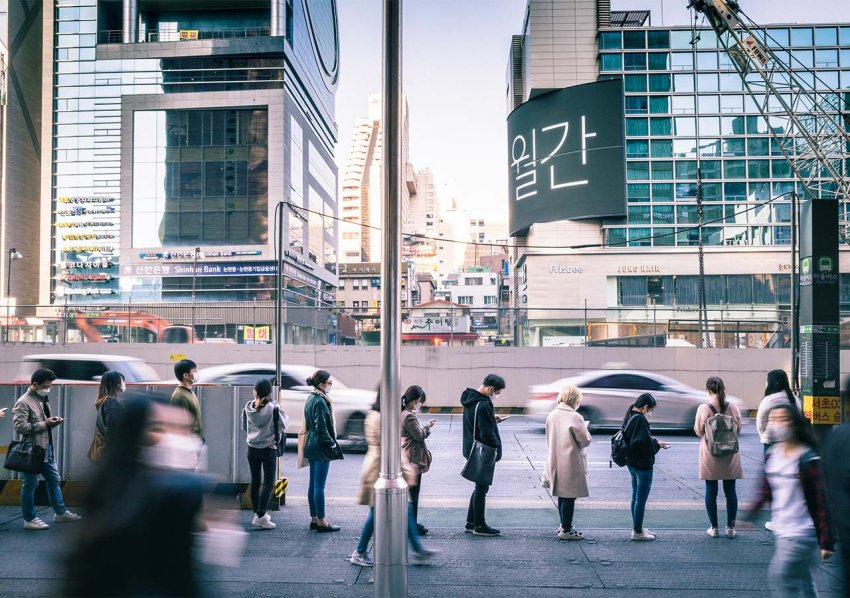
On a busy street in a city in South Korea, people stand in line, several feet apart, with masks on, going about their daily lives.
Mask-wearing is now the norm in South Korea.Photo: Wonseok Jang 

Countries practising high-masking compliance are seen to have considerably lower rates of severe COVID-19 and consequent death numbers while resulting in fewer hospital admissions. The authors suggest that since being taken up as a first line of defence, (social isolation and mask-wearing), the result has been a mass protocol of "mask variolation". The original method of vaccination where fluids from smallpox patients were collected, to expose the non-infected to harmless amounts of diseased matter to induce mild infection providing immunity; hence variolation.

Health authorities early in the first wave of COVID believed that non-symptomatic people would not significantly shed as an infection source, until experience proved otherwise and then there arose an urgency to cope with the reality that asymptomatic carriers of the virus were indeed shedding infectious particles to the same degree as those infected with the virus who exhibited a wide range of symptoms. 

The message that the latest published research is delivering is that the eventual agreement that mask-wearing represented an integral approach to prevention ended up making far more of an impression in avoidance than might have been anticipated. The wearing of masks has proven successful in shielding the wearer from heavy infection doses, while the small amount of viral infection that did penetrate the shields has proven to have far-reaching consequences in making the wider public less susceptible to serious infections requiring hospitalization, while serving to reduce the death rate.
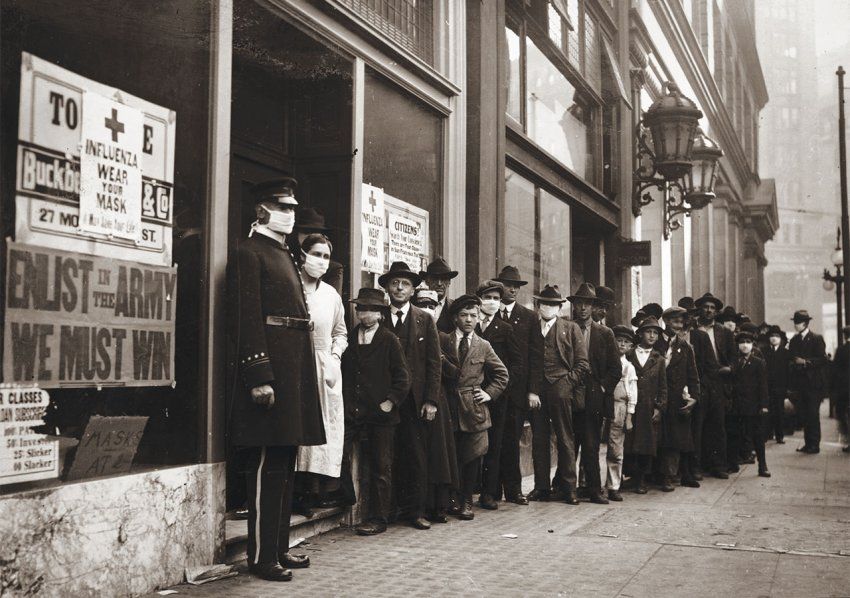
 
Line of people waiting for flu masks at 30 Montgomery Street, San Francisco, 1918. The man in uniform and the nurse in the doorway are wearing masks, as are a few of those in line. A sign on the window bearing the Red Cross logo reads: “Influenza. Wear Your Mask.” A sign underneath reads: “Enlist in the Army. We Must Win.”
A line of people on Montgomery Street in San Francisco waits to get masks during the 1918 flu pandemic. Failure to wear a mask was punishable by imprisonment or a fine. Photo courtesy of the California History Room, California State Library, Sacramento.


Labels: , , , , , ,

Wednesday, July 15, 2020

United States : Runaway Virus Transmission Cases

"The most outrageous lies are the ones about COVID-19."
"Everyone is lying. The CDC, media, Democrats, our doctors, not all but most, that we are told to trust."
Chuck Woolery, former American game show host

"The virus remains public enemy number one."
"If basics are not followed, the only way this pandemic is going to go, it is going to get worse and worse and worse." 
"But it does not have to be this way."
World Health Organization chief Tedros Adhanom Ghebreyesus
10 times Dr. Fauci has refuted Trump's Covid-19 statements

Over 3.5 million Americans have been diagnosed infected with the SARS-CoV-2 virus; of that number 137,800 American deaths have resulted. Representing a staggering number of infections and an even more unbelievable number of COVID-related deaths. American President Donald Trump is in a permanent state of disbelief. Disbelief that the infection is as serious as science has described it, disbelief that a simple malaria drug is not being recognized for its vaccinating qualities; disbelief that the American economy has taken a swift and deep downturn even as he faces a November election.

As a demonstration of just how skeptical Mr. Trump is about the dire warnings of opening up the U.S. economy too soon and its consequences, already more than adequately being observed in the swift rise of cases and deaths, he retweeted the spurious charges made by Chuck Woolery; as good as a complete supporting endorsement of the conspiracy theory being espoused. President Trump has clout among the easily lead in America, with his 83 million Twitter followers.

In his considered opinion, government health officials and their opening-up guidelines threaten the shutdown easing across the country. Taking direct aim at the Centres for Disease Control, the nation's leading health advocacy and statistical-research tool, President Trump claimed to feel the CDC guidelines for reopening the nation's schools were too difficult, impractical and expensive. What expenses should be directed toward ensuring safety for a nation's children?

Another Woolery charge is that Dr.Anthony Fauci, the country's top infectious diseases authority,  foresees a requirement for "an ID card to go shopping", interpreting Dr.Fauci's observation of the possibility that the U.S. could issue a certification of immunity in the future. Dr.Fauci distinguished himself throughout White House coronavirus briefings when he candidly spoke to the public of the viral threat the country was facing, sugar-coating nothing, treating his audience as responsible adults.

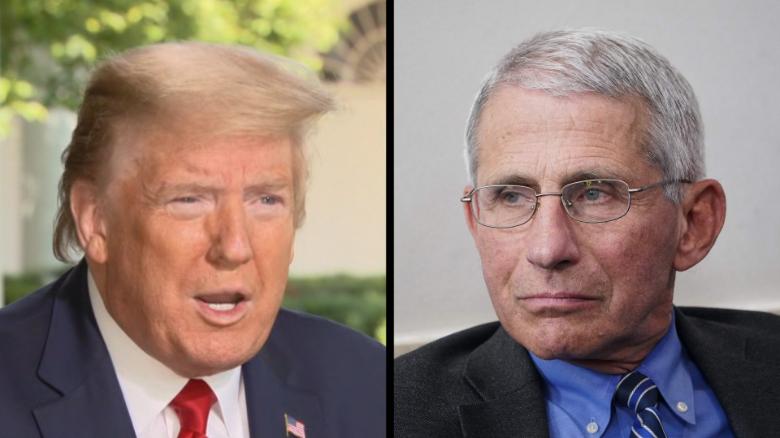
Dr Anthony Fauci looks on as Donald Trump speaks in Washington DC, on 15 May.

Increasingly, as time went on, tensions arose between President Trump and Dr.Fauci, as they invariably do any time anyone invested with an earned authority disputes or contradicts any random thoughts that Mr.Trump expresses.  

"Dr.Fauci is a nice man, but he's made a lot of mistakes", President Trump casually remarked in an interview, of the man from whom he has not taken a briefing in several months.

Ever so  helpfully, the Trump White House distributed lists of statements that Dr. Fauci had committed to, early in the pandemic that he would later correct, as more data on understanding the trajectory of the disease develop. Infections are in the process of rapidly rising in Florida, Arizona, Texas and another 35 states, while the CDC and health officials plead with the public to wear face masks to limit the virus spread, even as Trump supporters, following his lead, reject masks.

When the first cases were hesitantly reported in China in January, three months later the infection globally reached the one million cases mark. It took a mere five days for total numbers to climb to 13 million -- a rise of a million from the 12 million cases recorded on July 8. India alone since early July has registered an average of 23,000 new infections daily.

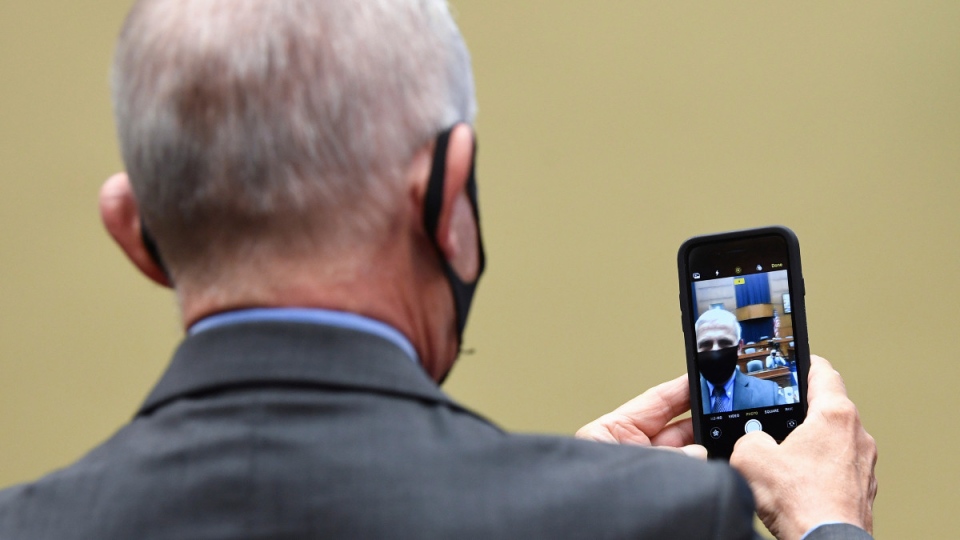
Dr. Anthony Fauci takes a selfie
Director of the National Institute of Allergy and Infectious Diseases Dr. Anthony Fauci takes a selfie before a House Committee on Energy and Commerce on the Trump administration's response to the COVID-19 pandemic on Capitol Hill in Washington on June 23, 2020. (Kevin Dietsch / Pool via AP)

Labels: , , , ,

Sunday, July 12, 2020

Awaiting COVID's Second Wave With Bated Breath

"That [testing fewer symptomatic people] should not be confused with having a less severe disease present in the community."
"[A pandemic reveals society's nature]. It either exacerbates the disparities or it highlights the strengths."
"[Canadians, more than Americans] have embraced this ethic of communal responsibility. For the most part, people are on board with protecting other people, with wearing masks, with doing what's right for the community."
"That's not a message you see coming out of the U.S.A."
"It tells me we have the tools to contain this well."
"As long as the virus exists in the environment], it's going to find purchase and attempt to reassert itself. That's the way these things work."
Dr.Raywat Deonandan, epidemiologist, University of Ottawa

"This infection messes with me."
"Those I expect to do worse do well and those without traditional risk factors get admitted to ICU."
Dr.Jeff Powis, infectious disease physician, Toronto
Experts say lifting lockdown measures without a clear picture of where new cases are coming from, as Ontario and Quebec are doing, is cause for concern. (Evan Mitsui/CBC)

The SARS-CoV-2 virus in Canada is now recognized as being largely under control. That couldn't have been declared only two weeks ago, when doctors were run ragged attempting to save people who were presenting in "advanced respiratory failure", placing them on extra corporeal membrane oxygen machines the most extreme form of life support. "We've seen a dramatic drop off in the number of severe cases in the Toronto region", advised Dr. Niall Ferguson, head, critical care medicine, University Health Network, Toronto.

Still, Canada has lost close to 8,800 people. At present, however, the daily reported case and deaths have markedly diminished as has the numbers of individuals hospitalized. ICU admissions have been on the decline since the epidemic peaked in April. There has been a steep diminishing of transmission rates among the older demographic -- a slower decline in the 20- to 39-year olds, and with a corresponding rise in outbreaks in long-term care homes and among migrant workers.

This, while new infections are seen on a roll across the southern and western United States, where new daily records for deaths keep rising. According to epidemiologists this is a situation that was entirely predictable in the U.S. In Canada, the Deputy Chief Public Health Officer warns that should society slump into a relaxed attitude precipitately, the epidemic "will most likely rebound with explosive growth".
"Just because the fatality rate is incredibly high in people who are in their 80s or 90s does not mean the fatality rate is zero in their 40s, 50s and 60s."
"The overall story I see is that Canada has the resources and expertise to both contain COVID-19 and re-open schools and workplaces a the same time."
"I have a hard time with numbers, everybody has a hard time with numbers. It's hard o get your head around concepts like 0.5 percent of exponential growth at 1.1 -- what do these things mean?"
"Ninety-nine-point-five percent sounds pretty safe. But really, would you take a one-in-200 chance of dying? I wouldn't."
"It's very clear now, four months into the pandemic, that this is a serious illness that has resulted in great loss of life."
"In some ways [smaller incidence of infection among the elderly] that's unsurprising, because many older people know that they are especially vulnerable and so they're taking extra precautions."
Dr.Irfan Dhalla, general internist, vice-president Unity Health, Toronto

"In my opinion, the chance of transmission through inanimate surfaces is very small, and only in instances where an infected person coughs or sneezes on the surface and someone else touches that surface soon after the cough or sneeze [within one or two hours]."
Dr.Emanuel Goldman, professor of microbiology, biochemistry and molecular genetics, Rutgers University
A medical worker performs a mouth swab on a patient to test for Covid-19 coronavirus, in tent extension of the Rigshospitalet Hospital, in Copenhagen, Denmark, Thursday, April 2, 2020. THE CANADIAN PRESS/AP-Niels Christian Vilmann/Ritzau Scanpix via AP

The first wave of the global pandemic has struck and is now receding, as countries once desperately coping with an inrush of cases, seeing their hospital system begin to collapse under the sheer weight, now breathe a sigh of relief as the number of cases wane and ICU attendants catch their breath. On the other hand, expectations are high that another, second wave, is waiting in the wings. And perhaps another after that, and another yet.

The SARS-CoV-2 virus has amply demonstrated its lethal nature; in blood clots, sudden cardiac arrest, multi-organ failure on some affected people, while others have been infected and having exhibited none of the classic symptoms, go on to infect others. How to know, how to react if you don't know? Unknown to medical science is what increases risk of death.

A study of over 17 million people in England published in Nature this week verified that old age, and maleness are all hazards for COVID infection. Blacks and South Asians are two times likelier to suffer death related to COVID than are their white counterparts, and the reasons are as yet unknown. As with all other viral illnesses and conditions that sweep through communities, socio-economic underdogs are 1.8 times more likely to die from COVID than the least deprived.

Those suffering from diabetes, severe asthma, obesity, chronic heart or liver disease, dementia, reduced kidney function and autoimmune diseases like rheumatoid arthritis, lupus or psoriasis are as well linked with higher risk of death. COVID-19 disproportionately affects the vulnerable; those living in racialized groups, in poverty, in multi-generational families who live in cramped housing; those with low-paying essential-service employment.

People over age 60 represent 96 percent of deaths in Canada; age and  underlying health problems identified as risk factors. One drug only has been shown to keep people from dying from COVID; a steroid, called dexametasone that keeps the body's immune response to a foreign system circulating in the body from extreme reactions, with the steroid slashing ventilator-assisted patient deaths by one-third.


More people are surviving admission to ICUs and being placed on respirators. "They [China] were reporting  crazy things, like 90 percent mortality for people on ventilators", stated Dr.Ferguson. "We were able to rescue patients with ECMO when we needed to." No decisions required over which patients to route to ICU and who to leave to cope on their own were required, after all.

A recent paper published in the Canadian Medical Association Journal gave an estimate of less than 50 percent as representing the case rate for COVID-19 resulting in a fatality rate of around 1.6 percent. While the journal Nature reports a growing number of studies from various regions placing the infection fatality rate between 0.5 and one percent; five to ten people for every 1,000 infected, to die. The seasonal flu rate comes out to 0.1 to 0.2, identifying COVID as deadlier  and more infectious.

A favourable finding is that transmission by fomites (contaminated surfaces and objects) do not, after all, appear as serious a threat as first thought. A commentary published in the Lancet a week ago suggests most studies show large amounts of virus in excess of real-life scenarios must be present for infection to occur.

Labels: , , ,

Thursday, April 30, 2020

Britain's COVID-19 Death Count

"The United Kingdom is going to be right up there among the worst-hit nations in the initial surge."
"With the most optimistic views of the amount of immunity that might be being generated, it would still not be close to having enough to be able to return to normal." 
Bill Hanage, associate professor of epidemiology, Harvard T.H.Chan School of Public Health

"It is plausible that there are now as many COVID-labelled deaths occurring out of hospital as there are in hospital in England."
David Spiegelhalter, professor of the public understanding of risk, University of Cambridge
In Glasgow, Scotland, on Tuesday, a man walks past a message of support to the U.K.'s National Health Service following the outbreak of COVID-19. Data released Tuesday suggests that the country's death toll is far higher than reported. (Russell Cheyne/Reuters)

In Britain data published on Tuesday indicated that nationwide fatalities exceeded 24,000 from the epidemic of COVID-19, ten days earlier. This release of such a staggering death toll followed hard on Prime Minister Boris Johnson's address speaking of British success in dealing with the novel coronavirus. The newly released figures put another perspective entirely on how Britain is managing; the week ending April 17 turned out to be Britain's deadliest since such records began in 1993.

By April 17, according to the Office for National Statistics, 21,284 people had died in England; their death certificates reflecting mention of COVID-19. Figures out of Scotland, Wales and North Ireland included, brings the total United Kingdom death toll to at least 24,000, and realization of the new reality.  Hospital death tolls announced daily by the government have not previously included deaths in community settings such as care homes where fatalities have tripled in a matter of weeks.

Henceforth, assured Health Secretary Matt Hancock, daily figures for deaths in the community would be published in updates. Tuesday figures for COVID deaths in England and Wales overall up to April 17 were greater than 40 percent steeper than  he daily toll for recorded deaths in hospitals that were initially announced by government. The scale of the challenge facing the country as Mr. Johnson returns to work after his recovery from COVID-19 is reflected in those newly released figures.

On Monday, Britain's Prime Minister Boris Johnson warned it is still too early to relax social-distancing measures. Johnson returned to Downing Street this week after recovering from COVID-19 (Stefan Rousseau/AFP/Getty Images)

The Prime Minister gave public warning that relaxing stringent measures would be too early and too steep a step at the present for fear of a second deadly outbreak, despite the havoc being wrought to the nation's economy. The revelation of over 24,000 COVID deaths places the United Kingdom among the worst-hit nations in Europe, exceeding even France which has experienced around 5,000 deaths in care homes at the same point.

Spain's death toll is likely to represent the true comparison to where Britain is now heading; even Italy, ranking a truly unfortunate number one as Europe's worst-affected country by the COVID menace. Britain's health ministry releasing its latest daily figures for COVID-19 saw the death toll taking place in hospitals as a result of the novel coronavirus hit 21,678.

A member of the public jogs past a display of signs erected by a local artists on Tuesday in London. As social-distancing measures continue, data suggests that Britain's death toll is close to Spain or Italy, the worst-affected countries in Europe. (Dan Kitwood/Getty Images)

Labels: , , ,

Saturday, April 04, 2020

Quebec, Canada's Novel Coronavirus Hot-Spot

"All the travel happened before the World Health Organization ever declared the pandemic and the travel restrictions came in."
"For us, the damage was already done. Travellers going back to school or work on the 9th [of March] did so unknowingly."
"What you see happening in Montreal now is partly due to that."
Dr.Nathalie Auger, epidemiologist, School of Public Health, University of Montreal

"Today, I am going to allow myself to be more direct."
"Montreal is the epicentre of the pandemic [in Canada]. Understand that we are now in the upward curve of the pandemic."
"[Nonetheless] a minority [of Montrealers and Quebecers are ignoring orders to keep a distance of two metres, and avoiding gatherings of over five people in public."
Dr.Mylene Drouin, regional director, public health, Montreal
Two women ignore social distancing as they walk at Lafontaine park in Montreal on April 1, 2020. Pierre Obendrauf/Postmedia

"Today, I sent a message to police officers for the Surete du Quebec and municipal police services to be less tolerant."
"I don't think we can accept that a vast majority of people are making an effort to fight the virus, and those efforts are annihilated by a few others who aren't taking it seriously."
"Police will hand out more fines."
Quebec Premier Francois Legault

"For the past 14 days, we have been focused on spreading awareness.When we saw groups that didn't respect public health orders, we went and warned them to break it up. Now, if a group is caught red-handed, we're going to write them up."
"Our police officers have told us that people that they warn on one day have to be warned again the next day. So at one point, we have to act."
"There is no one who can say they don't know about public health rules any more."
Inspector Andre Durocher, Montreal Police Force (SPVM)
Montreal police stand near George-Etienne Cartier monument to keep watch for social distancing on April 2, 2020. Pierre Obendrauf/Postmedia
Two disparate issues appear to be at play in having set Quebec and the City of Montreal apart from the rest of Canada to make it action central for novel coronavirus transmission. First, March break in Quebec took place the first week of the month, whereas elsewhere in Canada March break came in on the second or third week of the month. At that time, COVID-19 had not yet wrought its havoc in Canada. It was, in fact, British Columbia where the first incident of the coronavirus was identified.

Yet, given that Quebecers had fanned out to take holiday time at the beginning of March, and then returned, unknowingly bringing back with them infections that were then transmitted internally before the alarm was raised, made for an extremely high infectious rate, still rising ominously, to make the province the highest-infection hot-spot in the country. So much so that Quebec has closed its borders to all external traffic.

The high identified rate of infection in comparison to that of Ontario which has the second highest number of cases in the country can also be attributed to Quebec's rapid response where it has initiated COVID-19 testing at a pace unseen elsewhere in the country. Presumptive cases are included in the province's daily tally as well. Still, the fact is community transmission has been identified as a driving force spurring the rapid spread of the virus.

And nowhere is the rise in cases more notable than in the Hasidic Jewish community, where internal action to dramatically reduce the numbers attending synagogue came too late, and finally police were dispatched to persuade the community to put an end altogether for the time being to religious events drawing large numbers of worshippers. Another Hasidic group in Boisbriand placed their community into self-quarantine to slow the spread of the virus.

As well, a wedding in Westmount that took place on March 12 saw hundreds of people attending, despite the growing threat of virus transmission. Another, smaller wedding took place in Cote St-Luc where guests from New York City attended, bringing with them the virus that would later develop to the point where at present, New York has become the epicentre of novel corinavirus transmission in the United States, with an alarming death toll.

Even with all these occurrences and public concerns, Quebec media reported over the last few weeks a plethora of public gatherings taking place, from events occurring in the city's parks to privately-arranged celebratory groups, acting as though there was no threat of virus transmission. Now, because people appear to be incapable of taking warnings to disperse and to dispense with gatherings of any type, much less maintaining a safe social distance, fines are being imposed on those continuing to flout common-sense rules.

For individuals disregarding physical distancing orders, fines between $1,000 and $6,000 will be levied -- and any business conducting 'non-essential' services can be fined between $3,000 to $5,000, emphasizing the seriousness of the situation. Throughout the province, police forces have been authorized  to act on the over 7,000 tips that they receive, of people ignoring public health orders.

Valerie Plante, Montreal's mayor, reiterated a threat she has committed to, that the city's parks will be shut down to residents should people continue to ignore social distancing requirements. To that end, the city police force is set to increase its patrols in the city parks. Quebec doesn't find itself in an enviable position, to be hosting fully one-quarter of all COVID-19 cases in the country.


Labels: , , ,

Follow @rheytah Tweet