Fine-Tuning The Mgration Crisis
"I will ... say very clearly that our security forces are mobilized day and night. Maximum mobilization [of French forces with reservists and drones will be watching the coast].""But above all, we need to seriously strengthen cooperation -- with Belgium, the Netherlands, Britain and the European Commission."French President Emmanuel Macron"Yesterday is sad and it is scary [the drowning of 31 migrants attempting to cross the Channel in an overloaded dinghy that deflated], but we have to go by boat, there is no other way.""Maybe it's dangerous, maybe we die, but maybe it will be safe. We have to try our chance. It's a risk, we already know it is a risk."Manzar, 28-year-old Kurd from Iran
 |
| Fire trucks arrive at Calais harbour Wednesday after at least 31 migrants died in the sinking of their boat off the coast of Calais. |
When
questioned why they would risk their lives on such a dangerous venture,
some of the young men opting to leave Kurdistan (Iraq) in hopes of
reaching the United Kingdom, speak of their disappointment of their
country of origin. The large unemployment figures, the lack of
opportunity, the corruption at high level, blaming prominent clans for
their role in leading the autonomous region, the inequities and the
misery they face in a geography rich with natural resources.
Their
anger at their leaders and their determination to seek out
opportunities for their futures elsewhere made them ripe for
exploitation as human victims to ideological disparities and the ire
felt by the president of Belarus at the condemnation heaped upon him,
along with sanctions for the role he played in violating the voting and
human rights of his population many of whom took to the streets in
protest against a sham election returning him to power.
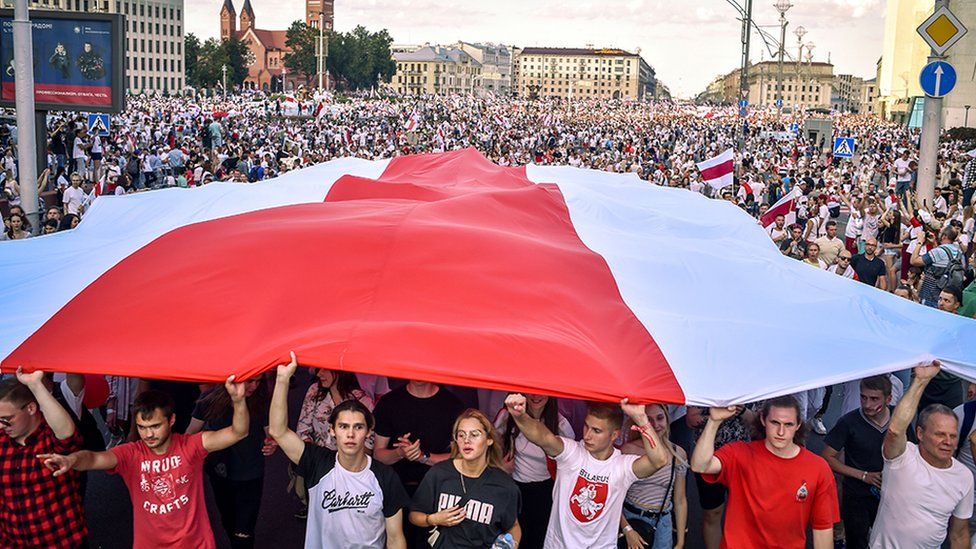 |
| Mass protests over the discredited election led to a government crackdown, with people sent to prison or exiled Getty Images |
Belarusian
President Lukashenko promised those anxious to cross into Europe that
if they travelled to Minsk, a way could be found. That way was to bus
them in their hundreds to the border between Belarus and Poland, where
they were encouraged to cut through the wire fencing and make their way
through. The migrants made it clear their destination was not Poland,
but the United Kingdom. Not just anywhere in Europe would do; the UK was
their choice.
What
resulted was a humanitarian tragedy, as all such movements of mass
migration end up, with their destination country closing its borders to
the masses of humanity camping out beyond their borders hoping for a
miracle to transpire, that they would be welcomed, housed, fed, found
employment and prosper, leaving their pasts of yearning for such
opportunities behind in a fantasy reality that achieved all they had
dreamed of.
The
scene shifts from that catastrophe with its loss of lives and hopes and
collapsed dreams, to the English Channel where for years, migrants from
the Middle East, Africa and elsewhere gather with the determination to
puncture Europe's defences and gain entry to the opportunities they are
convinced awaits their arrival. The same spirit of hope and defiance
that people from failed Central American states, Africans and Haitians
bring with them when they gather at the border between Mexico and the
United States.
France
has pledged once again to increase its surveillance of its northern
shores to ensure that migrants fail in their attempts to cross the
Channel to Britain, their preferred destination. The migrants are
unimpressed. Huddling in their makeshift camps they vow that no measure
of security to keep them from realizing their aspirations will defeat
them. And nor would fear of the venture before them, crossing a waterway
full of commercial traffic nor weathering conditions at sea in small
inflatable dinghies.
These
are watercraft meant to carry no more than ten people, and double and
triple that number are ushered into the boats at a time by unscrupulous
people smugglers doing their brisk business with no inconvenient
thoughts of placing people in dire danger disturbing the more important
thoughts of their extortionate fees. Desperate people leaving behind
poverty and war in Afghanistan, Iraq and elsewhere in the world of
Islamic social incompetence, corruption and violence view the potential
dangers of a sea crossing as nothing compared to the miseries of life
they have endured.
When
the 31 men, women and children drowned in their failed crossing,
relations between France and Britain, already strained, took a deeper
dive of anger and resentment; no one likes to take credit for the deaths
of vulnerable people fleeing misery and finding death. Prime Minister
Johnson feels France to be at fault, while President Macron understands
the responsibility for the situation to be entirely Britain's. Finally
it seems to have occurred to them that cooperation might achieve more.
Britain has set out five steps for the two countries to embark upon in an effort to ensure there are no further migrant deaths.
- Joint patrols to prevent more boats from leaving French beaches;
- The use of sensors and radar;
- Immediate work on a returns agreement with France;
- A similar deal with the European Union.
Having
left the EU in Brexit, Britain was no longer part of the bloc's system
of returning migrants to the first member-state that was entered.
"My
thoughts and sympathies are, first of all with the victims and their
families, and it's an appalling thing that they have suffered."
"But
I also want to say that this disaster underscores how dangerous it is
to cross the Channel in this way. And it also shows how vital it is that
we now step up our efforts to break the business model of the gangsters
who are sending people to sea in this way, and that's why it's so
important that we accelerate if we possibly can all the measures
contained in our borders ... so that we distinguish between people who
come here legally, and people who come here illegally."
"[Authorities would] leave no stone unturned to the
business proposition of the human traffickers and the gangsters ... who
are literally getting away with murder."
"[It was time for Britain, France and Europe to] step up [and work
together]."
British Prime Minister Boris Johnson
 |
| A boat from a French volunteer sea rescue organization, Societe Nationale de Sauvetage en Mer, arrives Wednesday at Calais harbour carrying the bodies of migrants. |
Labels: Belarus, Britain, Desperate Afghans, France, Hopeless Kurds, Mexico, Migrant Camps, Poland, United States, World Migration
posted by Pieface @ Saturday, November 27, 2021


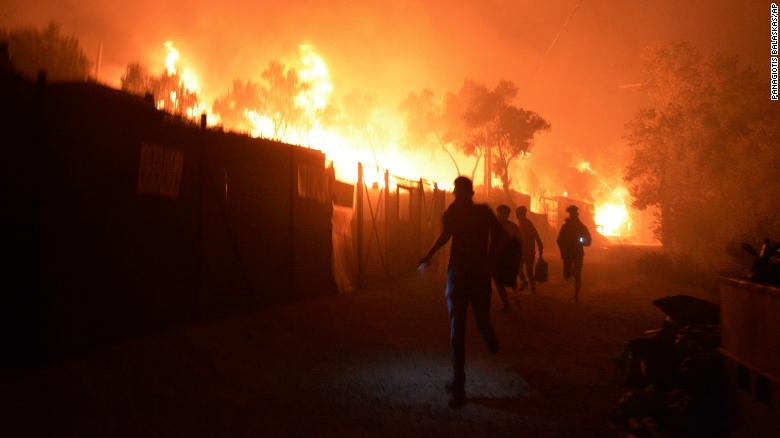
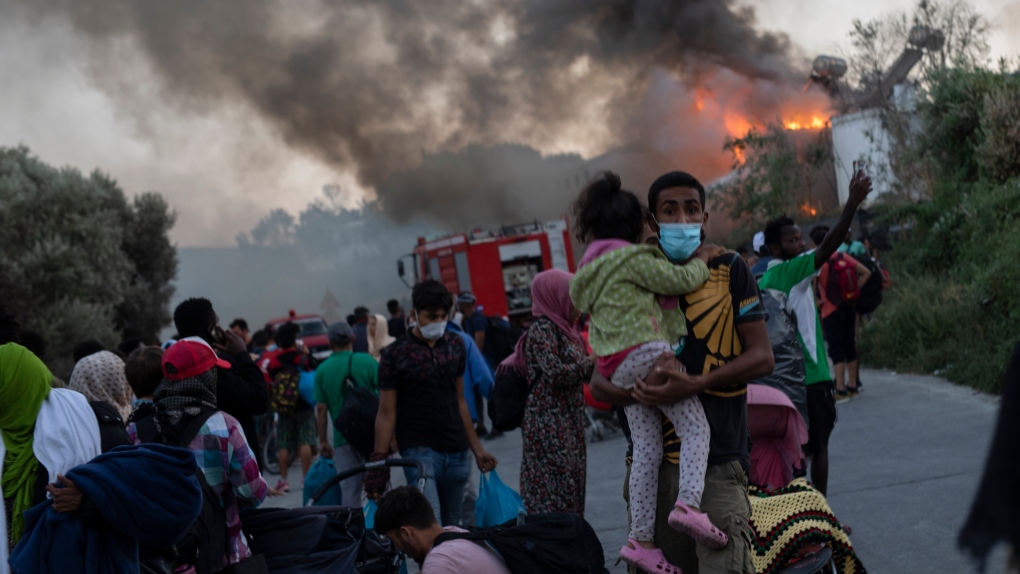
 Some,
like Germany, the destination of many of the migrants who knew of
German Chancellor Angela Merkel's willing absorption of a million
migrants was their target, but the state, under growing pressure from
alarmed German citizens along with violent incidents emanating from a
proportion of the migrants, reversed its earlier stance. Countries of
the European Union mandated to accept a share of the migrants to relieve
the burden on Italy and Greece, finally felt they had reached the
limits of their absorption capacity and balked at accepting additional
migrants.
Some,
like Germany, the destination of many of the migrants who knew of
German Chancellor Angela Merkel's willing absorption of a million
migrants was their target, but the state, under growing pressure from
alarmed German citizens along with violent incidents emanating from a
proportion of the migrants, reversed its earlier stance. Countries of
the European Union mandated to accept a share of the migrants to relieve
the burden on Italy and Greece, finally felt they had reached the
limits of their absorption capacity and balked at accepting additional
migrants.