Shipping Piracy in the Gulf of Guinea, West Africa
"The emphasis is now on the kidnapping of multiple crew members, with the attacks taking place much further out to sea and against all types of shipping.""The risk-reward ratio is very heavily in the favour of the pirates, and it has become a lucrative business model that must be broken. It is a huge sea area to police, and right now, if vessels call for help, there isn't really a timely and effective response.""The pirates are operating with near impunity and this is an unacceptable situation for innocent crew to be subjected to."Michael Howlett, director, International Maritime bureau, London
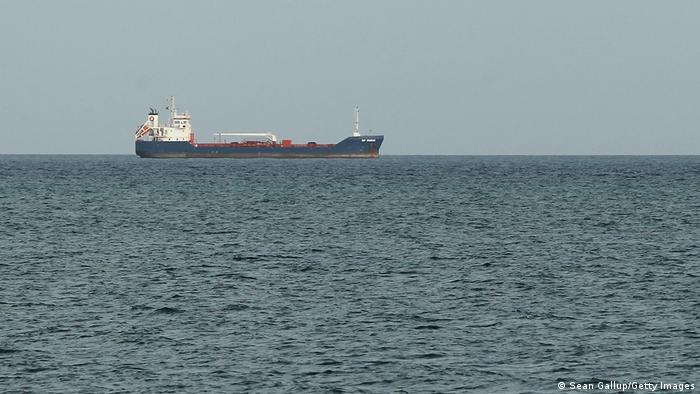 |
| The ship was sailing through the most dangerous sea in the world for piracy when it was attacked |
In the Gulf of Guinea, a huge stretch of ocean from Senegal to Angola in West Africa, vessels have been increasingly threatened by violent attacks launched by gangs operating with near impunity in the poorly policed waters. At one time these gangs' oceanic territory was mostly confined to robbing ships sailing close to shore. Now, however, they have branched out ranging hundreds of miles out to sea. Entire crews are taken hostage for weeks to force shipping companies to surrender large ransoms in exchange for their freedom.
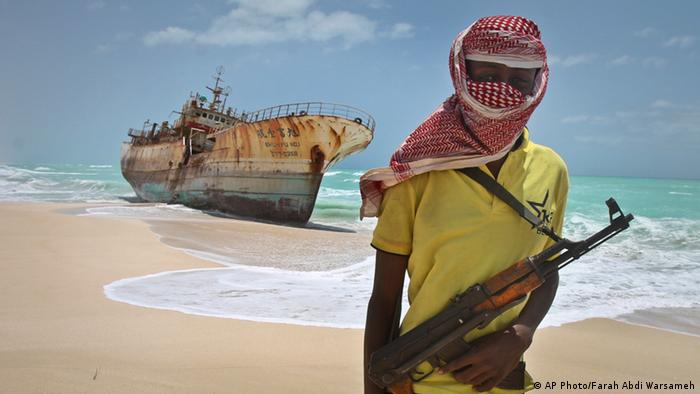
A decade earlier it was the coast of Somalia where the piracy crisis was taking place. During that time over 150 ships had been taken hostage the end result of which was that an estimated total of $500 million in ransom was paid out to the pirates. The European Union and NATO finally launched an international anti-piracy force operating off the Somalia coast to put a stop to the piracy. Matters have since quieted down in that area.
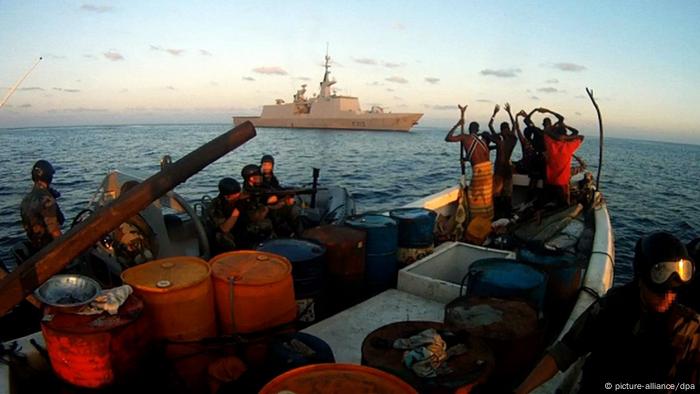 |
| Pirate attacks along the Horn of Africa have decreased since the international naval presence there was bolstered. In 2012, 35 ships were attacked by pirates off the coast of Somalia, compared with 163 in 2009. In former piracy hotspots, locals are more concerned about fishing than capturing cargo ships. |
Clearly, a similar type of international deterrence is overdue for the West African coast to deter reward-ravenous gangs for whom piracy has become a lucrative lifestyle. For a similar defence to be launched in that area however, would require full cooperation of West African states, but the general consensus is that they would be averse to welcoming the presence of foreign navies in their oceanic territory.
Which leaves vessels in the Gulf of Guinea unprotected by pirates whose tactics have been worrisome for shipping companies while making the gangs prosperous as they hound and terrorize ships' crews. The latest hijacking was that of a Turkish container ship 300 kilometres off the coast of Nigeria with 15 Turkish sailors taken as hostages. The pirates had clambered over rolls of barbed wire, using an angle grinder to cut through the steel door of a safe room.
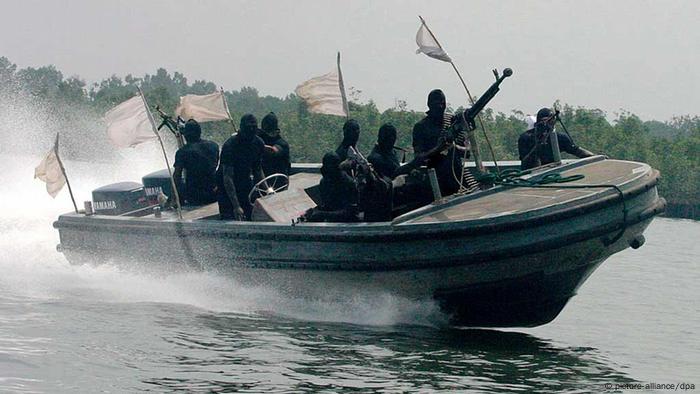 |
| West African pirates' methods can be more violent than those off the Horn of Africa. While Somali pirates know they will forfeit ransom if their hostages come to harm, pirates in the west are mainly interested in the oil or valuable cargo on board and less concerned about the people. Their hijacking methods are similar - approaching large vessels out at sea in small craft. |
The crew of the Turkish container ship Mozart might have felt their hiding place was impregnable, but it proved not to be. The ship's chief engineer Suha Tatligul, described the hijackers as having "worked to break the doors for six to seven hours". So confident that they wouldn't be interrupted, that speed was no problem in gaining entrance to the 'safe room'. When they finally broke through and entered the room they opened fire. One sailor was killed, three others were injured.
In total to date there have been sixteen attacks or attempted attacks this year alone in the Gulf of Guinea identified by Dryad Global, a maritime security consultancy based in Britain. In 2020 there were 130 sailors who experienced the feeling of being held hostage for a hefty fee by their employers. Those kidnappings represented 95 percent of criminal acts at sea. Most are criminal gangs based in the Delta region of Nigeria, a haunt for militant groups engaged in crime mostly targeting the country's oil wealth.
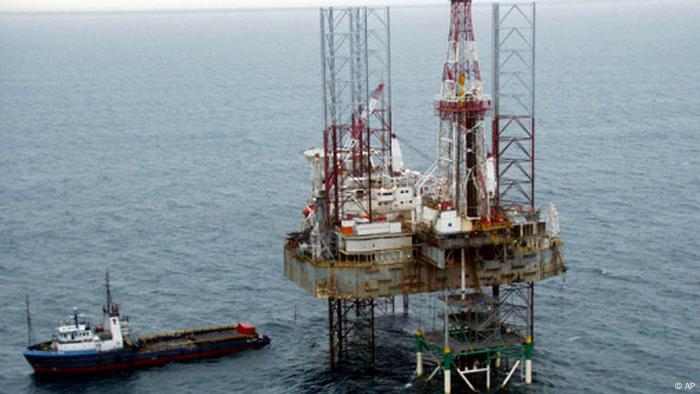 |
| In the West, Nigeria has been exporting oil for the past 20 years, but most of its people have not benefited from the extensive revenues. Almost two-thirds of Nigeria's population lives below the poverty line. To those without livelihoods, the risks of piracy can seem worth it. Political instability and social conflict have left room for pirate gangs to consolidate in the Gulf of Guinea. |
Earlier, the gangs specialized in illegal tapping of oil pipelines and the theft of ships' oil, until the collapse in world oil prices since 2014 hardly made the effort worthwhile financially. They were forced by circumstances to discover other, more profitable ventures, to diversify and expand their endeavours. The "hostage camps" the gangs operate are located in islets in the Delta's dense forests, mostly accessible only by boat, and difficult to navigate for outsiders.
The Danish shipping giant Maersk called for tough action when two attempted piracy attacks occurred on its ships since December. "The risk has reached a level where effective military capacity needs to be deployed", stated Maersk's head of marine standards.
Labels: Crews Abducted, Nigeria, Pirates, Ransom Demands, Terrorism at Sea
posted by Pieface @ Sunday, March 14, 2021


