Women Athletes Play Their Sport -- Don't Sport Bikinis
"We are athletes who just want to be playing our sport."
"I don't understand why we have to wear these kinds of clothes when it takes all the focus away from the sport that we love."
"You have to be running, doing gymnastic moves [harder when you're wearing a bikini]."
"We never get attention for our medals or how well we do. In the media, it's all about the panties."
Elisabeth Hammerstad, Norwegian women's handball team
"I'm VERY proud of the Norwegian female beach handball team FOR PROTESTING THE VERY SEXIST RULES ABOUT THEIR 'uniform'."
"The European handball federation SHOULD BE FINED FOR SEXISM."
"Good on ya, ladies I'll be happy to pay your fines for you. Keep it up."
Pink, girl group Choice, American singer, songwriter
"I can confirm that the EHF [European Handball Federation] will do all it can to ensure that a change of athlete uniform regulations can be implemented."
"Significant efforts will be made in order to further promote the sport in the best way possible for everyone, regardless of gender."
Michael Wiederer president, European Handball Federation
 |
| Norway team line up during 2018 Women's Beach Handball World Cup final against Greece on July 29, 2018 in Kazan, Russia. (Epsilon/Getty Images) |
Elisabeth Hammerstad of the Norwegian women's handball team does in actual fact, know quite well why the official uniform required of women playing her sport includes a bikini bottom. Her team, after all, has been advocating for the last fifteen years for different uniforms. Male players, they have long pointed out, compete in a uniform comprised of tank tops and shorts. And it's just what the women themselves would prefer to compete in.
It's harder, she points out, to concentrate on the sport, wearing a bikini. The uniform could conceivably slip out of place when the wearer is so energetically playing the game. Leaving a photographer with a pictorial scoop, capturing an embarrassing, unflattering or revealing picture, actually a photograph encapsulating all of these inconvenient details to the chagrin of the wearer. And it is patently unfair, when the women want to be able to concentrate on their game.
Games that women excel at leave the impression that they're less exciting, less skill involved; while endurance, strength and competence is required equal to men's games. Injecting a little more photogenic interest by having women wear a uniform that exposes and features women in revealing, skimpy outfits adds a special zing appreciated by male onlookers, not necessarily the women who tune in to view women excelling at physical endeavours.
The Olympic Games remain a man's world to command, even as women compete at a level comparable to men given the differences in their physical endowments. The German women's gymnastics team cut out bikini-cut leotards favouring instead full-body versions stretching to the ankles, with the German Gymnastics Federation stating the outfits represent a statement rejecting "sexualization in gymnastics".
Sport codes in athletic sports like beach volleyball, beach handball and gymnastics reflect men's preferences not women's. "It's about patriarchy and sexism. Let's be real here", stated Cheryl Cooky, a professor of American studies at Purdue University, specializing in gender and athletics. It has "a very strong foothold".
Current rules mandate that female athletes must don bikini bottoms "with a close fit and cut on an upper angle toward the top of the leg", while men are allowed to wear shorts as long as 10 centimetres above their knees, as long as they aren't "too baggy". The women determined it was time for a a rebellion. And for doing just that, setting aside the bikini bottoms for shorts, the Norwegian women's team was fined 1,400 euros each player by the International Handball Federation.
The rejected outfits are a measure forcing athletes to "better align with our cultural expectations for women". Women playing on national athletic teams are "powerful and dominant, strong and competitive", explained Cheryl Cooky, qualities that defy traditional norms of femininity. Forcing women to play handball while wearing bikinis is symbolic of the view that women and men are fundamentally at variance even at the highest levels of athletic competition.
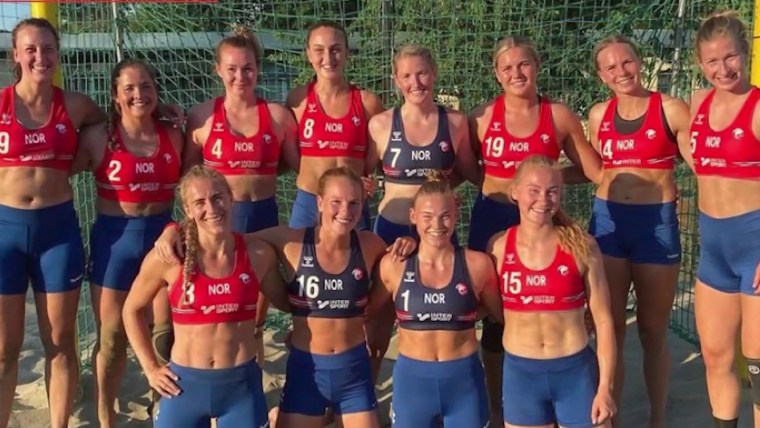 |
Norway's beach handball players were each fined 150 euros for wearing shorts rather than t he required bikini bottoms. The team wore thigh-length elastic shorts in their bronze-medal match Sunday to protest the regulation bikini-bottom design. Norwegian Handball Federation via ABACAPress.com
|
Labels: Bikini Bottoms, Norwegian Women's Beach Handball Players, Olympic Games, Rebellion
Truth Concealed, Revealed : Malaysia Airlines Flight 17
"We now have proof Russia was involved in this tragedy, this crime."
"One day after 17 July they were in a position to tell us exactly what happened. They knew."
"The Buk [missile] was used in eastern Ukraine and they know this. They didn't give us this information."
"These suspects are seen to have played an important role in the
death of 298 innocent civilians."
"Although they did not push the button themselves, we
suspect them of close co-operation to get the [missile launcher] where
it was, with the aim to shoot down an airplane."
"[Investigators had] evidence showing that Russia provided the missile launcher."
Fred Westerbeke, chief prosecutor, Netherlands
"[I hope] those who
are guilty of this brazen murder [shooting down of Malaysia Airlines Flight 17] of innocent children, woman and men
will be put in the dock."
Ukrainian President Volodymyr Zelensky
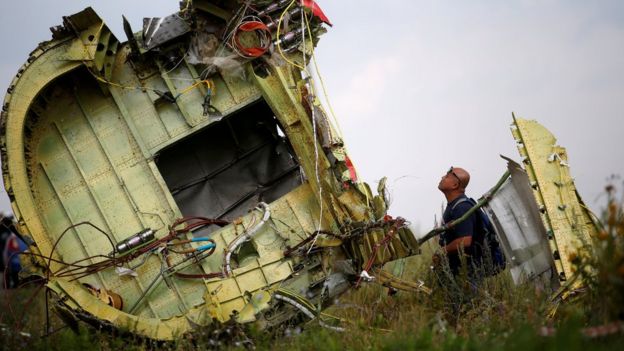 |
| An investigator inspects the wreckage of Malaysia Airlines Flight MH17 Reuters |
"You know our position on this investigation. Russia had no chance to
take part in it, even though from the very start -- the first days of
this tragedy -- Russia... tried to be part of the investigation into
this terrible catastrophe."
"So our position on this investigation is very
well known."
Kremlin spokesman Dmitry Peskov
Actually, yes. Moscow's position on the tragedy was well known; while denying any involvement whatsoever, the Kremlin accused Ukraine of shooting down the Malaysian Airlines passenger jet. The missile launcher, they asserted, came out of Ukraine's armoury. As for cooperation with the Joint Investigation Team, according to the Dutch authorities, there was no cooperation from Russia as their investigation wended its long way to a conclusion.
The team of investigators -- comprised of detectives and prosecutors from the Netherlands
(as the nation that suffered the greatest loss of innocent lives); Malaysia
(whose passenger jet it was); Ukraine
(in whose airspace the plane was shot down and on whose soil the shattered plane and its murdered passengers came to rest), along with Australia and Belgium -- stated their conviction that the Buk missile system involved in shooting down flight MH17 belonged to the Russian army's 53rd Anti-Aircraft Missile brigade, based in Kursk, Russian Republic.
The investigation now concluded, murder charges were announced by the international prosecutors on June 19 against three Russian citizens and one Ukrainian. When Malaysia Airlines Flight 17 was shot out of the sky five years ago, 298 people lost their lives. The dead passengers and crew represented 193 Dutch nationals, 43 Malaysians, 27 Australians, 12
Indonesians, 10 Britons, four Belgians, four Germans, three Philippine
nationals, one New Zealander and one Canadian.
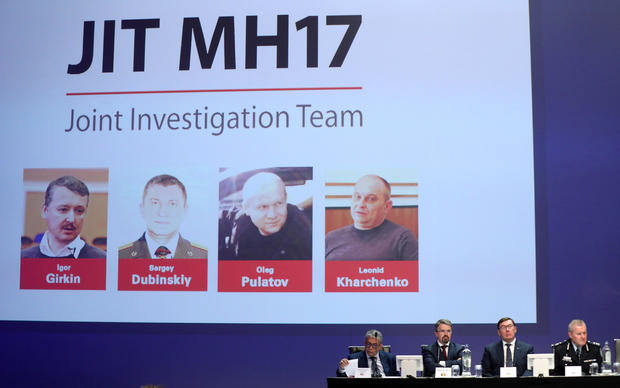 |
| International investigators present their
latest findings in the downing of Malaysia Airlines flight MH17, nearly
five years after the crash that killed 298 passengers and crew, in
Nieuwegein, Netherlands, June 19, 2019.
REUTERS
|
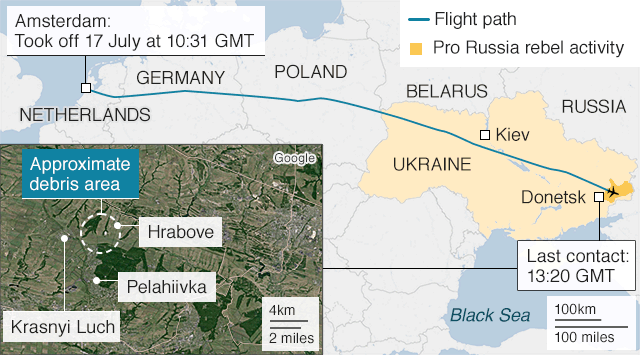
The day following the shooting down of MH17 over the eastern provinces of Ukraine in 2014, the government of the United States had concluded a Russian-made surface-to-air missile launched from territory in eastern Ukraine held by ethnic Russian rebels brought the passenger jet down, killing all those aboard. The team of prosecutors from Ukraine and four other nations as well as private agencies subsequently documented the passage of a missile launcher from an active Russian military unit driven into eastern Ukraine.
Ukrainian separatists were aiming to target Ukrainian government aircraft at lower altitudes than what commercial jetliners are accustomed to use. And they fired a Buk missile with the use of the Russian missile launcher at the passenger jet, bringing it down, committing a criminal act of major international injury. Now actual names and faces have been linked to that lethally destructive and deliberately murderous crash.
Acting on orders from Moscow according to the investigative conclusion, in Russia's proxy military conflict with its former satellite whose geographic sovereignty Russia was intent on purloining, the four named malefactors are to stand trial in a Dutch court in a trial to commence on March 9, 2020; a trial set to take place in the Netherlands in recognition of the fact that 193 of the 283 passengers -- aside from the 15 crew members -- were Dutch.
International arrest warrants have been issued. Intercepted telephone calls where the men discuss moving the missile launcher and the firing of the missile directly implicates them. Igor Girkin was a colonel in Russia's F.S.B. spy service; Sergey Dubinsky and Oleg Putatov served with the G.R.U. military intelligence agency and Leonid Kharchenko a Ukrainian leader of a rebel combat group in Donetsk. While none named fired the missile they
"formed a chain" that linked the
"Donetsk People's Republic" directly with Russia.
They brought the Russian missile system into eastern Ukraine making them criminally responsible for the murder of 298 people. And that criminal responsibility certainly extends to the source of the orders they were obeying -- Russia.
Labels: Donetsk, Mass Murder, MH17, Rebellion, Russia, Ukraine
Hollowing Out Syrian Rebellion
"Moscow wants Ankara to reconcile with the Assad regime."
"Turkey's reliance on Russia to protect itself from the [Kurdish separatists] and prevent a new surge of refugees, this time from Idlib, may therefore force it into an accommodation with Damascus that it has successfully resisted until now."
Joost Hiltermann, International Crisis Group
"Idlib's fate now rests with Turkey and Russia."
"Although on opposite sides of the conflict -- Ankara supports the rebels and Moscow is one of Assad's major allies -- the two powers share an interest in averting a humanitarian catastrophe."
"Their diplomacy on the matter is likely to culminate September 7 when they meet in the Kazakh capital, Astana, along with Iran."
Louisa Loveluck, journalist,Washington Post Beirut bureau
"We can't go back because of [the risk of] neighbours' petty revenge."
"They snitch on you and call you a traitor and the next thing you know you're languishing in prison, for nothing."
"My town is filled with regime forces and thugs. How do they expect me to return?"
Syrian refugee in Lebanon
"A Syria with ten million trustworthy people obedient to the leadership is better than a Syria with 30 million vandals."
"[The country's] cancerous cells [of resistance will be] removed completely."
Maj.Gen. Jamal al-Hassan, senior Syrian military official
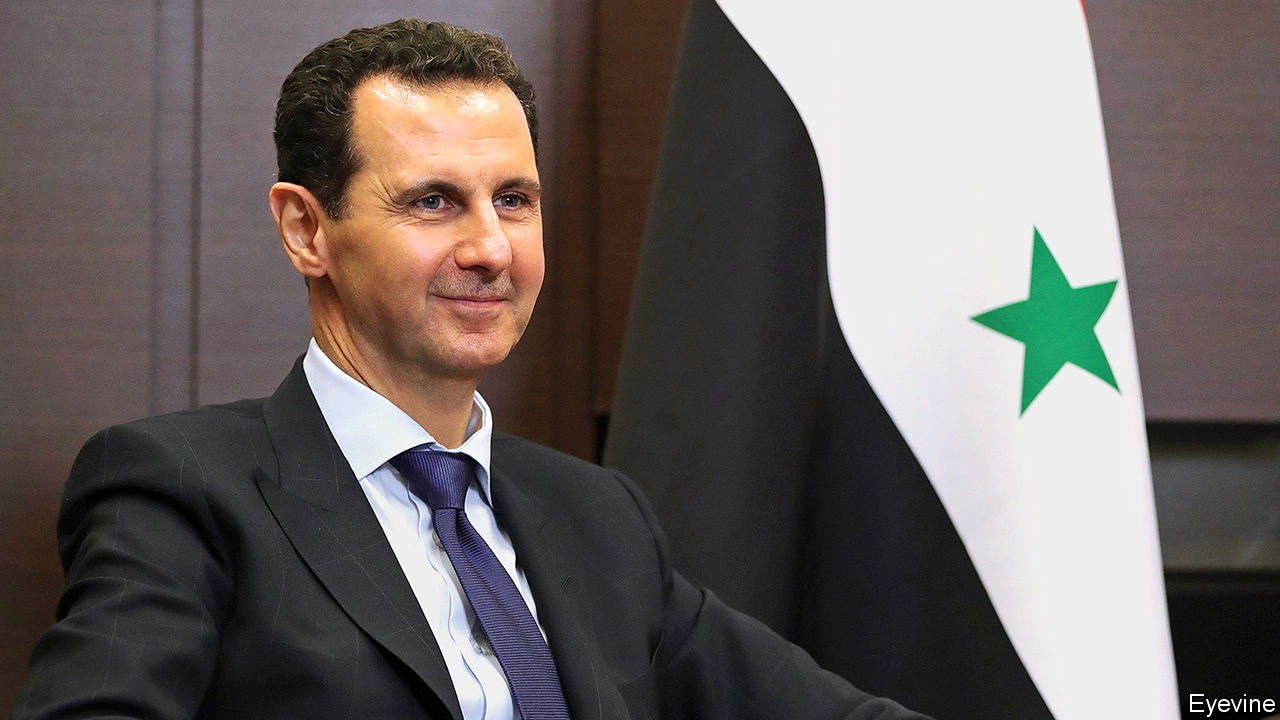 |
| Bashar the destroyer |
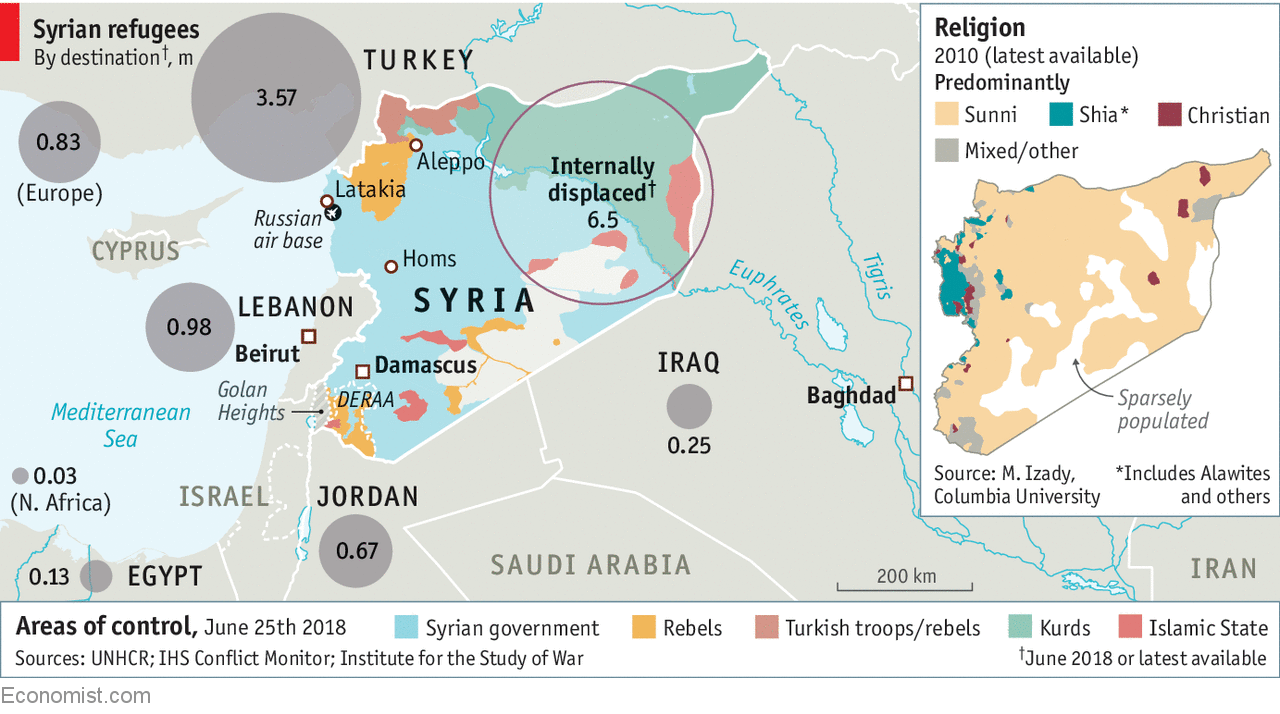
Bashar al Assad is preparing to confront and oust the last of the Syrian Sunni rebels who have for the past seven years, attempted to remove him from his power base. Syrian Sunnis represent a majority population in the sectarian-riven country that is barely a nation, while Assad rules with the support of the Shiite Alawite minority. He was hanging on to a slender strip of Syria with the rebels having succeeded in occupying a good portion of territory, the Sunni terrorist Islamic State of Iraq and the Levant holding a major portion, when Russia stepped in as his salvation.
Even with the considerable assistance of the Iranian Republican Guard al Quds special forces, augmented ferociously by Shiite Islamist groups loyal to Iran, along with combat-seasoned Hezbollah forces, Syria's president was hard put to sustain himself -- even ordering his military to use inhumane and internationally illegal chemical weapons, along with barrel bombs, siege and starvation to target Syrian civilians living in the Sunni areas alongside the rebel groups.
When, with the help of Russian bomber jets, the Syrian military attacked rebel-held and ISIL strongholds, civil infrastructure was totally destroyed and with it the countless lives of civilians unable to protect themselves from the military might of Russian air power and Syrian determination to slaughter the opposition all of whom were named 'terrorists' irrespective of age, health, non-combatant realities -- amid condemnation by the United Nations.
Now all that is left to be reclaimed is Idlib province; rural, neighbouring the Turkish border. And when that order for the Syrian military and its allies comes to rampage through Idlib, the catastrophic blood-letting and-shedding that characterized the disarming, exodus, and slaughter of those caught in the fray in Homs, Aleppo, the suburbs of Damascus and countless towns and villages, will be repeated in the onslaught of Idlib:
"There is a perfect storm coming up in front of our eyes", as Staffan de Mistura, United Nations' envoy to Syria put it.
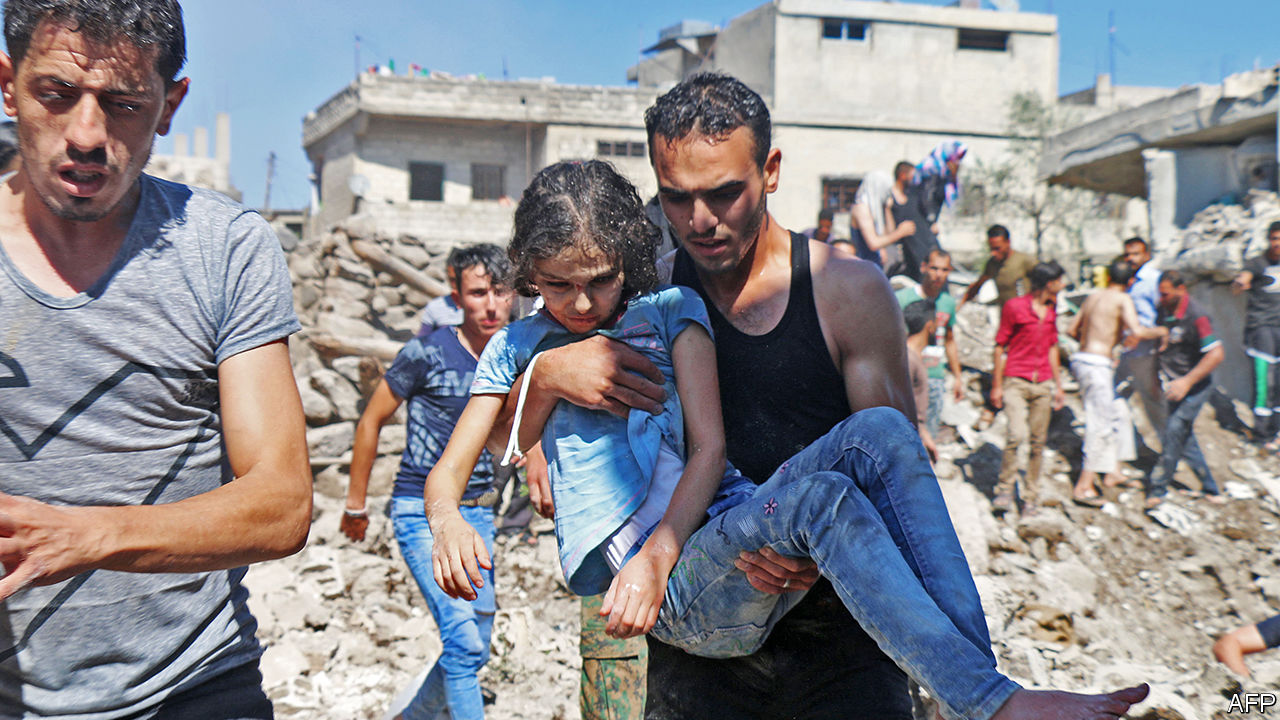 |
| Are they the next to leave? |
To be sure, it is not only the remnants of the Syrian Sunni rebels that will be mopped up and destroyed as 'terrorists', but Islamist 'militant' factions as well, some of which are recognized as formerly affiliated with al-Qaeda, just as ISIL was; Hayat Tahrir al-Sham, for one, a terrorist group that never hesitated, like the regime, to slaughter civilians. But it is the huge refugee camps teeming with displaced Syrians living in endemic poverty whose presence is so seriously threatened where up to 1.6 million people are reliant on international food aid.
Turkey, unwilling despite its border proximity to Idlib, to accept any more than the three million Syrians it still houses, leaves a situation where displaced Syrians are being told to return to their homes. Homes which for the most part, no longer exist in destroyed towns and villages where an influx of Shiites await their presence and all the sinister connotations that comes with that reality. The creation of a humanitarian corridor where the displaced could gather was considered and rejected.
The regime speaks of
"liberation" of Idlib from the thousands of
"terrorists" held to be holding their own there still. Leaflets dropped by the Syrian army targeting rebels and their supporters urge their surrender:
"Until when will you and your families live in fear and anxiety?";
"How long will your children remain without hope of future?", they read. As for Russia, Foreign Minister Sergei Lavroy speaks of the militants as
"festering abscesses" to be
"liquidated".
The Russian navy is scheduled for a major exercise in the Mediterranean, possibly for the purpose of offensive preparation by Syrian government forces. However, interpreted by
Reuters as
"aimed at deterring the West from carrying out strikes on Syrian government forces". As if. Civil society in the West is bored with the atrocities carried out in Syria against unfortunate civilians; so commonplace even as they are horrendous and deplored with passion.
Labels: Atrocities, Civil War, Rebellion, Russia, Slaughter, Syria
Siege, Starve and Surrender
"On the streets of Damascus, there was jubilation as government supporters realized that a more expansive assault would not materialize."
The Washington Post
"I am so proud now it feels
like a long time in the war, but now we are safe I wish peace prevails
all of Syria so that everyone can sense the priceless feeling of peace."
"The U.S. should stop meddling in other country's affairs
they need to leave us alone we can solve our problems on our own, we
didn't call for them to be a global police force that has gone rogue
anyway."
Tamer Shaban, state employee, Damascus
"Today we are here to celebrate
our army forces, which brought back peace and security to the capital
after years of rebels attacks, and also confronted foreign military
strikes so it's about time we celebrate in this square without fear."
Jamal Salem, 22, university student, Damascus
/cdn.vox-cdn.com/uploads/chorus_asset/file/10660391/GettyImages_946888762.jpg) |
|
Syrians rally in Damascus’s Umayyad Square on April 16, 2018, in support of President Bashar al-Assad.
Stringer/AFP/Getty Images
|
"The response is very weak in my judgement."
"It should have been decisive, it should have been consequential."
Ret.Gen.Jack Keane, former vice-chief of staff. U.S. Army
"This was more about the Western allies making sure their red lines were
addressed rather than trying to seriously damage the Assad regime,
prevent the further killing of civilians or reduce the capacity of the
Assad regime to keep fighting."
"From Assad's perspective, this
was a big win. He must be thinking, this is good, I came out on top, I
gained much more than I lost."
Associate Professor Amr al-Azm, Middle East history, Shawnee University, Ohio
It was a response, after all, planned to target chemical production and storage installations, as a symbol of the moral outrage emanating from the great Western powers of the United States, France and England, teaching Russia, Syria and Iran an object lesson in the moral responsibility to react, inherent in the social-political fabric of democratic states. As punishment, however, there was little cost to the target, rather relief that the suspense was finally over and the Syrian regime could go on to other matters.
There were no human casualties. Anything of real value as far as materiel assets were concerned was removed well prior to the attack, since ample warning was given it was forthcoming. The trio knew that Russia had ordered the withdrawal of its vulnerable assets while those of Bashar al-Assad were speedily moved, to shelter them from destruction. The real estate that was targeted was hit and all three installations rendered inoperative.
/cdn.vox-cdn.com/uploads/chorus_asset/file/10661119/GettyImages_941877752.jpg) |
|
Iran’s President Hassan Rouhani, Turkey’s President
Recep Tayyip Erdogan, and Russia’s President Vladimir Putin shake hands
after a joint press conference as part of a tripartite summit on Syria,
in Ankara, on April 4, 2018.
Adem Altan/AFP/Getty Images |
Gloating 'mission accomplished' in a self-congratulatory hug was ingloriously interrupted by a former Syrian commander who had turned against the regime, explaining that the major chemical producing installation was left untouched. What a triumph of military might in a demonstration that world powers do not take lightly the barbaric butchery undertaken by one of the world's most rabid killers of his own civilians! A far cry from the Israeli strike that preceded it, unannounced, targeted and deadly.
While happy to demonstrate Western values of acknowledgement of right and wrong and the measures that can be taken to punish those who commit to wrongs in so peerlessly atrocious a manner, the avengers appear to have misplaced the reality of the honour and conquest values of those being taught the lesson. That strikes which accomplish nothing represent an obvious weakness in the armour of the powerful, revealing them to be vulnerable and rather incapable.
It reveals weakness, not strength, and it is only the committed strength of those whom abuse of humanity is as nothing in the greater quest of domination that has any value. So that "muscular" response accomplished not an awful lot in a geography of the Middle East where success and respect is measured by the grim toll of vengeance meted out to those with the unmitigated gall to think they can upset the dominion of an unreconstructed tyrant, paying for their arrogance with lives forfeit.
In the Middle East if one possesses a hammer it is used to strike, unequivocally, finally and with maximum impact.
/cdn.vox-cdn.com/uploads/chorus_asset/file/10660725/GettyImages_925048952.jpg) |
|
Smoke rises after the Assad regime carried out an airstrike on Sifoniye town of Eastern Ghouta, Damascus, on February 27, 2018. Ammar Al Bushy /Anadolu Agency/Getty Images |
Labels: Atrocities, Britain, Chemical Weapons, Conflict, France, Iran, Rebellion, Russia, Syria, United States


