World Health Organization Unresponsive to Queries on COVID Recommendations and Timelines
"We haven't any alternative pitched to us [from the World Health Organization] at all. There could be perhaps an alternative pitch, which we would consider."
We asked for him [Canadian Dr.Bruce Aylward, WHO senior advisor] just to show up for an hour knowing that his time is valuable, but just one hour knowing that we would work around his time zone."
Canadian Member of Parliament Matt Jeneroux
"WHO has stated its strong commitment to a timely review of the global response in a transparent, independent and comprehensive manner."
"We are in the initial phase of the most complex and time-sensitive public health response in the history of the organization and our single-minded focus is thus on working with countries in the fight against the [global SARS-CoV-2] pandemic."
Canadian House of Commons Committee letter to WHO
"To me this is not about politics. I am not there [on the committee] to delve into the politics of the WHO. I am purely interested in their information and the way they responded to the COVID-19 crisis."
"I don't understand the difference. If he is prepared to come forward and on the record answer questions, why wouldn't he want to do that with our committee."
Member of Parliament Don Davies
 |
| Bruce Aylward of the World Health Organisation (WHO) attends a news conference of the WHO-China Joint Mission about its investigation of the coronavirus outbreak in Beijing, China, Feb. 24, 2020. |
The World Health Organization has been criticized for giving the impression by its actions and statements clearly in favour of the Chinese response to the novel coronavirus, that its behaviour toward the Chinese Communist Party leadership is simply too deferential when its mandate is meant to be strictly objectively scientific in orientation, ensuring its guidance and advice to the world's nations is without bias, based strictly on medical science and factual evidence.
Not only has its chief, Tedros Adhanom Ghebreyesus, come under suspicion for the perceived unctuousness he displays toward China's Xi Jinping but that suspicion has now extended toward the former assistant director general of the World Health Organization who led an expert group examining the coronavirus' emergence in China. Dr.Aylward, in an interview with a television station out of Hong Kong where the issue of Taiwan was raised, terminated the interview rather than respond.
And because the WHO through Dr.Tedros initially praised the Chinese response and parroted its findings on human-to-human transmission, and played down the impending seriousness of the growing infection and death rate just as China did, leading to the international community being lulled into a state of complacency when a state of immediate alert should have been mandated, many countries' authorities have questions they would like answers to from the WHO.
 |
| Resident doctor Kelvin Lou puts a CVC line into a patient in a COVID suspect room in the COVID-19 intensive care unit at St. Paul's hospital in downtown Vancouver, Tuesday, April 21, 2020. (THE CANADIAN PRESS / Jonathan Hayward) |
To that end, the Canadian House of Commons committee looking into the issue had twice invited Dr. Aylward to come before them to respond to a number of queries relating to the novel coronavirus. To each of those invitations, Dr.Aylward responded in the negative. Had he recommended the presence of a senor aid to represent him, who would answer those questions, the committee would have accepted that as a reasonable alternative, but no such offer was forthcoming.
The UN agency's legal counsel responded to the committee by letter following the first invitation when counsel Derek Walton advised the agency is prepared for its decisions to undergo a full review, but not at the present. To which the head of the parliamentary committee, MP Jeneroux pointed out that Dr.Aylward has given time for media interviews, and as such it appears reasonable for him to spare time for an appearance before the committee representing his own government as a citizen of Canada.
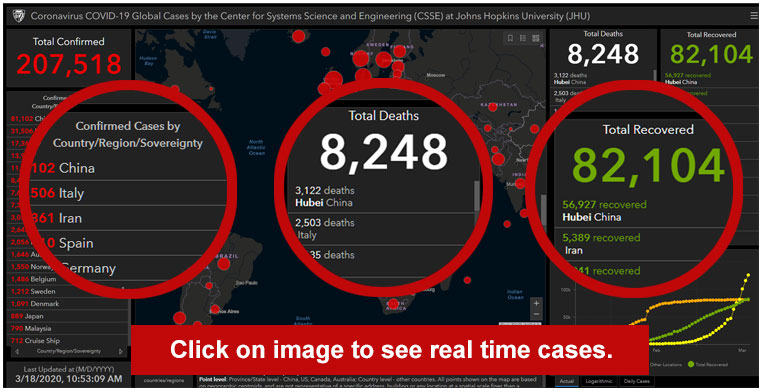
That, since the Canadian response to the crisis of this global pandemic that has impacted so heavily around the world as an infectious disease afflicting over a million people worldwide with steadily growing numbers, while 244,000 people have died so far from its complications, the issues are of monumental importance. All the more so that the crisis and its response, driven by recommendations from the WHO, makes it incumbent on that body to be responsible for itself to the very audience so dependent on its guidance.
 |
| Dr. Theresa Tam, Canada’s chief public health officer, |
The World Health Organization had been unequivocal, recommending against travel restrictions and border closings initially, with a side note that it would be 'racist' to close borders to China. They also advised against the use of protective masks by the public. Recommendations which Canada's chief public health officer, Dr.Theresa Tam, was guided by as she agreed with the WHO's recommendations before eventually changing her opinion over those issues.
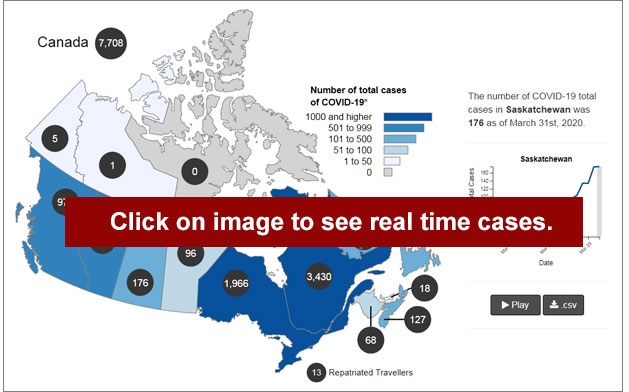 |
| Provided by: Public Health Agency of Canada |
Labels: Canadian HoC Committee, Chna, Deaths, Dr.Bruce Aylward, Global Pandemic, Infections, Novel Coronavirus, Recommendations, World Health Organization, Wuhan
posted by Pieface @ Sunday, May 03, 2020