Tuesday, April 04, 2023

How've You Been, Canada?


A woman in her 20s has been stabbed multiple times on a Toronto streetcar on Tuesday, Jan. 24, 2023. A suspect was arrested and the victim taken to hospital with what police say are “life altering” injuries.
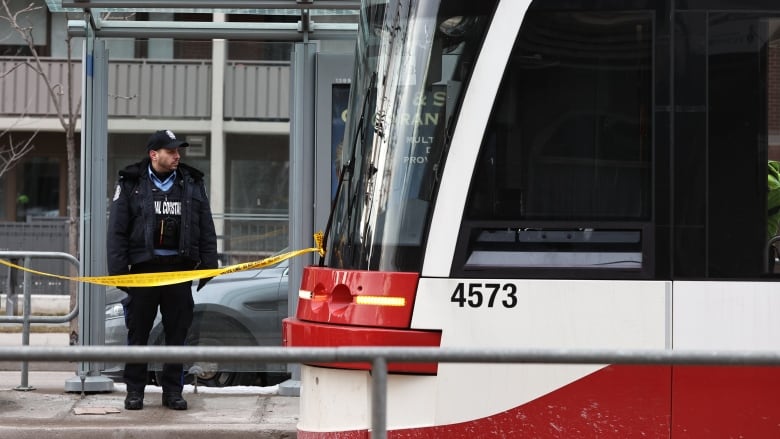
A Toronto police officer walks alongside a TTC streetcar after a woman, 23, was stabbed several times on the vehicle late last month. Another woman, 43, was arrested and charged with attempted murder, among other offences, in connection with the attack. (Evan Mitsui/CBC)
"That Canadians have a right to feel safe in their own cities should go without saying."
"Yet it needs to be said, because too many judges, politicians and left-wing voters have leaned so far into the soft-on-crime, defund-the-police rhetoric,they fail to see that the lack of deterrence in our justice system is contributing to a culture of lawlessness on our streets." 
"Declining public safety and heightened dissatisfaction in a justice system that is seen as being too soft on crime, led to a major swing during last fall's municipal elections in British Columbia, which were dominated by law-and-order candidates, including Mayor Sim, who ran on a platform of hiring 100 additional police officers."
"Given the heightened fear and growing awareness of the inadequacies of our police forces and criminal justice system, there is now a significant opportunity for a political party to pull a similar feat at the federal level."
Editorial, National Post
The rise in the Canadian homicide rate can almost exclusively be blamed on gang-related killings, which represented 23 per cent of all murders.
When the Liberal government of Justin Trudeau resumed power after an unusually long period of Conservative rule under former Prime Minister Stephen Harper, much changed in Canada. For one thing, many of the initiatives taken by the Harper administration to amend some of Canada's lax criminal justice laws on minimum sentences, on bail, and other issues were tightened. It took no time for the new administration under Prime Minister Justin Trudeau to reverse all these changes and the results have not been impressive.
 
A 22-year-old homeless man with a long rap sheet in Newfoundland and Ontario was involved a week ago in a spontaneous, unprovoked attack on a teen, Gabriel Magalhaes, who was siting quietly on a bench at a Toronto subway station. He was stabbed in the chest three times, killing the 16-year-old. The attacker, Jordan O'Brien-Tobin, had an outstanding arrest warrant for the past two years in Newfoundland. 

Despite which, during those two years when he moved to Ontario, he committed a series of crimes for which he was convicted -- of sexual assault, attacking someone with scissors, assaulting a man with a boxcutter, and breaching release conditions. A 150-day sentence was the most he received. Time after time the justice system deemed O'Brien-Tobin's mental health and addiction took priority over removing him as a danger to the community.
 
Toronto Transit Commission signage is pictured on Jan. 26, 2023. Police will increase their presence on public transit after a surge of violent incidents on the TTC.
An ambulance is pictured here parked near a TTC sign late last month. (Evan Mitsui/CBC)
 
This death was not in the realm of isolated incidents. A Toronto Transit Commission report recently released highlighted 1,058 violent incidents on the city's public transit system in 2022 representing a 60 percent rise over the 2018's 666 recorded incidents, at a time when ridership has been reduced to 60 percent of pre-pandemic levels.  Incidents of random violence include physical and sexual assaults, robbery, harassment and indecent exposure. And then there are the more fearsome attacks where TTC passengers and employees were stabbed and assaulted.

The report measuring last year's violent assaults on Toronto's public transportation system included a student who was shot, a woman pushed onto the tracks, another set on fire, and a homeless man killed in a swarming attack; this one by a group of teen-age girls. A recent poll verified that fully 40 percent of TTC users consider the system to be unsafe. 

"Nobody should ever feel unsafe walking around [our] city", Vancouver Mayor Ken Sim tweeted following a stabbing a week ago when a man was stabbed to death in the company of his fiancee and three-year-old daughter outside a Starbucks in the downtown. The stabbed man had requested of another man that he not vape in close proximity to his three-year-old child. The general consensus in Vancouver is in agreement that particular areas of the city are seeing a steep decline in public safety.
 
The casket of South Simcoe Police Service Const. Morgan Russell is carried into a joint funeral service in Barrie, Ont., Thursday, Oct. 20, 2022. Russell and fellow SSPS constable Devon Northrup were killed in a shooting in Innisfil, Ont. (Nathan Denette/The Canadian Press)
 
Close to nine of ten people surveyed walking along Granville Street, a major downtown thoroughfare, responded to a survey that they felt unsafe in the area. A 2022 poll found province-wide that over half of respondents feel British Columbia's cities' downtown cores are in decline; 98 percent cited increased crime. The Vancouver Police Department show statistics of violent crime increasing 4.1 percent year-over-year to 2022's rise of 12.1 percent in comparison to the pre-pandemic average from 2017-19.

Toronto police data point to major crimes increasing 18 percent between 2021 and 2022. The number of major crimes reported to police for 2023 rose by 21 percent over 2022. Police too have been the recipients of violent crime, with nine police officers dying in the line of service since September. A week ago, Sgt. Maureen Breau, mother of two, was stabbed to death while making an arrest in Louiseville, Quebec. 

The man who murdered her has a long line of violent crimes, dating back ten years, while for various reasons he was not kept behind bars in the country's catch-and-release justice system. Between 1991 and 2014 there was a distinct downward trend in per capita crime rates. The last seven years have been spent by the federal Liberal government and the courts dismantling the criminal justice reforms instituted by the Harper government. Many mandatory minimum sentences were trashed.
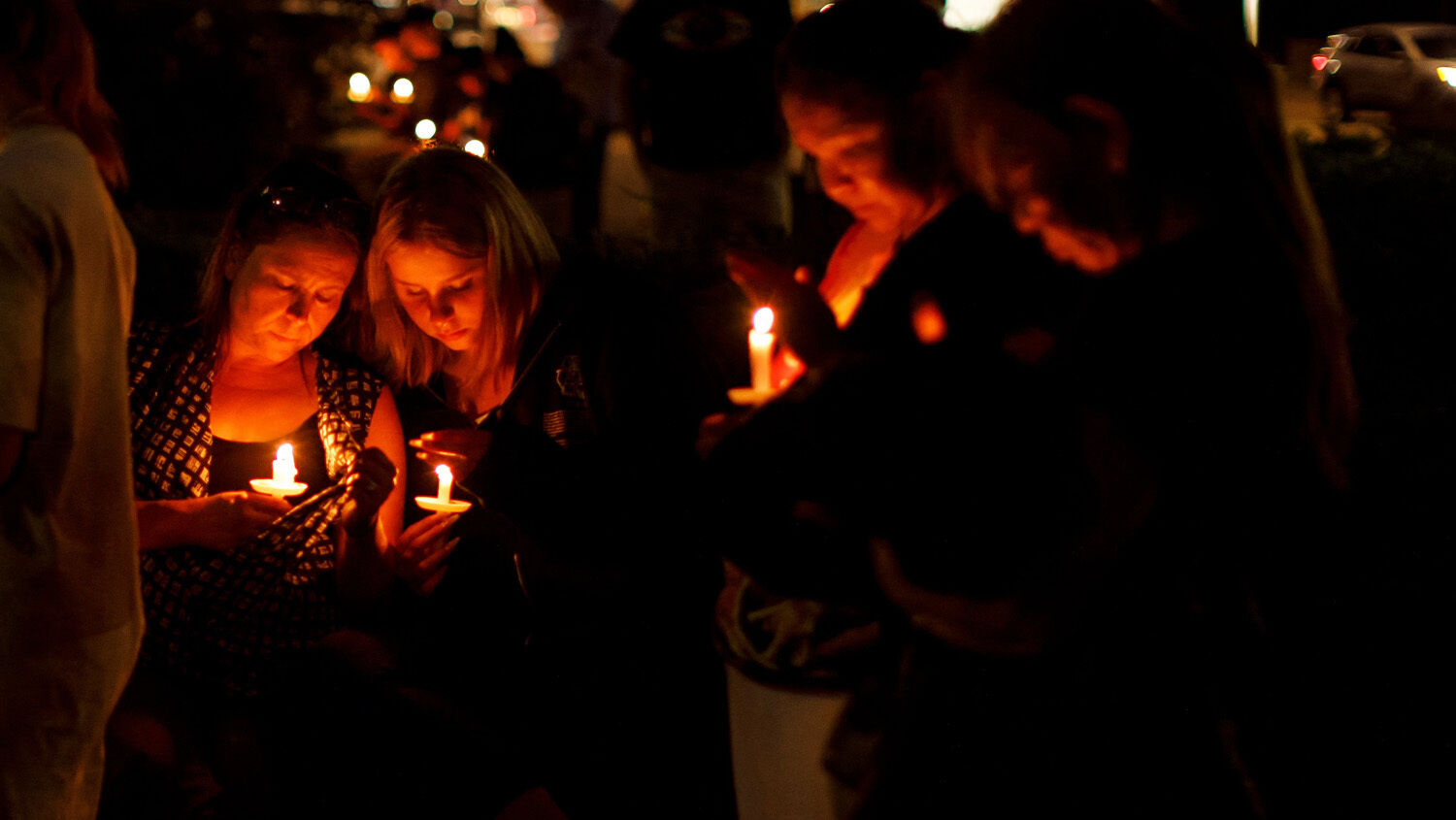
People light candles during a vigil in honour of the victims of the nearby community of James Smith Cree Nation’s series of stabbings, in Saskatoon, Saskatchewan, Canada,


Labels: , , , , , , , , ,

Monday, February 06, 2023

Toronto The Good


"I feel like a TTC [Toronto Transit Commission] ambassador. The city needs to do something for the homeless and the shelters."
"I've felt the increase of police in the last two weeks. Probably every hour I see a cop going by at every station I play at. Great. That's better than nothing."
"In my personal opinion they did this too late. They waited for all of these horrific incidents to happen before they acted on it. They should have acted on this ten years ago."
"People are freaking out. They don't want to take the subways. A lot of people don't want to ride it because of all those incidents."
Leo Zhang, cellist, 25-year experience as a subway busker, Toronto 

"I also want, as Chief of Police, to remind people that we live in a safe city."
Myron Demkiw

"I know many people who use the TC, the passengers, are anxious and even scared and they must know that we are doing everything we can that will be helpful to address their concerns."
Toronto Mayor John Tory
A woman in her 20s has been stabbed multiple times on a Toronto streetcar on Tuesday, Jan. 24, 2023. A suspect was arrested and the victim taken to hospital with what police say are “life altering” injuries.
Toronto's police chief says upwards of 80 police officers will be in place throughout the TTC every day in an effort to enhance public safety. (Evan Mitsui/CBC)
 
Toronto is gripped in an aura of public fear over the state of growing insecurity, random attacks on unsuspecting people, and sudden deaths occurring in an ever-growing metropolis, the largest city in Canada, where new immigrants settle in with older generations of immigrants and their offspring hailing from countries all over the world. Minority groups representing ethnic, religious, cultural and geographical migrants, refugees and immigrants from everywhere. There are more foreign languages spoken in Toronto than any other North American community.

Much of the public violence seems now to have gravitated to the city's extensive subway system, odd, spontaneous attacks on people going about their business. Some committed by another community, that of the homeless who find respite and haven from the cold in subway stations. Many of them suffering from mental illness, drug addiction, resentment against a society that looks past their homeless plight. Toronto's mayor, its chief of police and others in municipal authority have reason to be concerned. This is not the Toronto of yore.

Social media is abuzz over this new Toronto. Expressions of disbelief over the dangers inherent in venturing onto the subway system that carries millions of people to daily destinations all over the sprawling city. "Arm the TTC workers", one comment; "It's no longer Florida man, now it's Toronto man because every day on the TTC you be fighting for your life"; comments of trepidation and fear, stoking a broad undercurrent of panic.
"These recent incidents at the TTC, impacting both our employees and customers, are incredibly worrisome to me and the entire TTC organization."
"We know the TTC really is a microcosm of what's happening around the city right now and we recognize that there is a bigger society and systemic issue at play here and that these issues are complex, and the solutions aren't always easy."
TTC CEO Rick Leary
ATU Local 113 president Marvin Alfred says that while extra police patrols will help keep Toronto transit a safe place for employees and passengers, that alone will not solve the true cause of the problems they face.
 
The TTC Authority forced buskers to leave its property as a result of pandemic restrictions. Their absence saw homeless people filling the vacuum. Now, post-pandemic, riders have returned and so have the musicians, and the homeless balk at leaving. And dangerous incidents keep occurring. Like the woman who died after being set on fire on a bus. Another woman knifed to death. Outside a station a man shot dead. People shoved onto the tracks. Passengers and staff stabbed, slashed, punched, chased, robbed, threatened and swarmed.

With the recent meeting of authorities, the announcement of another 80 police officers tasked with high-visibility TTC patrols. TTC supervisors to be more visible; cameras added; Streets to Homes workers brought in. Another $50 million added to the $1.36 billion police budget. Why the subway system? Because they are gathering places. Ordinary people launching themselves off to work during work rush-hours, rubbing elbows with poverty and privilege, racism, aggression, entitlement, anxiety and fear.

Toronto, the massive Ontario people-hub, has many problems that are common to all other areas of the nation, but exacerbated by size and population level. Endemic poverty, a frail economic outlook, expensive housing, rising cost-of-living costs, an opioid crisis, mental health issues, rising crime rate, and a universal health system struggling to meet the needs of the population, brought to its knees by the influx of severe health issues courtesy of the coronavirus pandemic.
"If it drifts up for a few years, I don't know that's need for panic [slight rise in major crime]. I think you've got to think carefully about what is happening and what's going on."
"Most people aren't going to do something criminal right in front of a police officer, but you might have just pushed it elsewhere. Hot-spot policing tends to just relocate things. It's not addressing the problem."
"You need long-term thinking about how you keep society safe generally. You need to fund prevention programs really well and the thing is, you're not going to see results from these things within an election cycle."
"There is no political gain for doing this, so no one wants to. They can't claim credit for it in their election cycle. But if you shove money at police or change a law, then it is something you can point to, and people momentarily feel safe."
"You need to care about violence even in years of decline. You can't just not care and leave it and then suddenly care."
"The fear is real. But how can it not be? Every day you're being told of everything that happened on a TTC ground across the city."
"There have been warning signs for years."
Jane Sprott, professor of criminology, Toronto Metropolitan University
A grey police SUV is parked in front of a red and white streetcar with police tape on it.
The Toronto Transit Commission announced late Friday that additional management staff will be "highly visible" and rotate through the subway network during peak service hours. (Arlyn McAdorey/The Canadian Press)


Labels: , , , ,

Follow @rheytah Tweet