"Pakistan
is facing a triple crisis. It's facing a threat from the Pakistani
Taliban. A collapsing economy; And, polarization and political chaos on
the street."
"Pakistani
leaders seem woefully unprepared for tackling the challenge and
continue to fight each other rather than finding solutions for the
country"
Farahnaz Ispahani, former Pakistan parliamentarian
"Looking
at the seven years from FY16 to FU22. Pakistan's cumulative current
account deficit was $74.5 billion, while the State Bank's forex reserves
fell by $3.6 billion during this period."
"This means Pakistan needed financing of $70.9 billion, and borrowed $65 billion."
"Foreign investment barely financed the external deficit, so the government just kept borrowing."
"Since foreign creditors are reluctant to continue lending, Pakistan's external sector has become unsustainable."
Dawn, Pakistan's leading English language newspaper
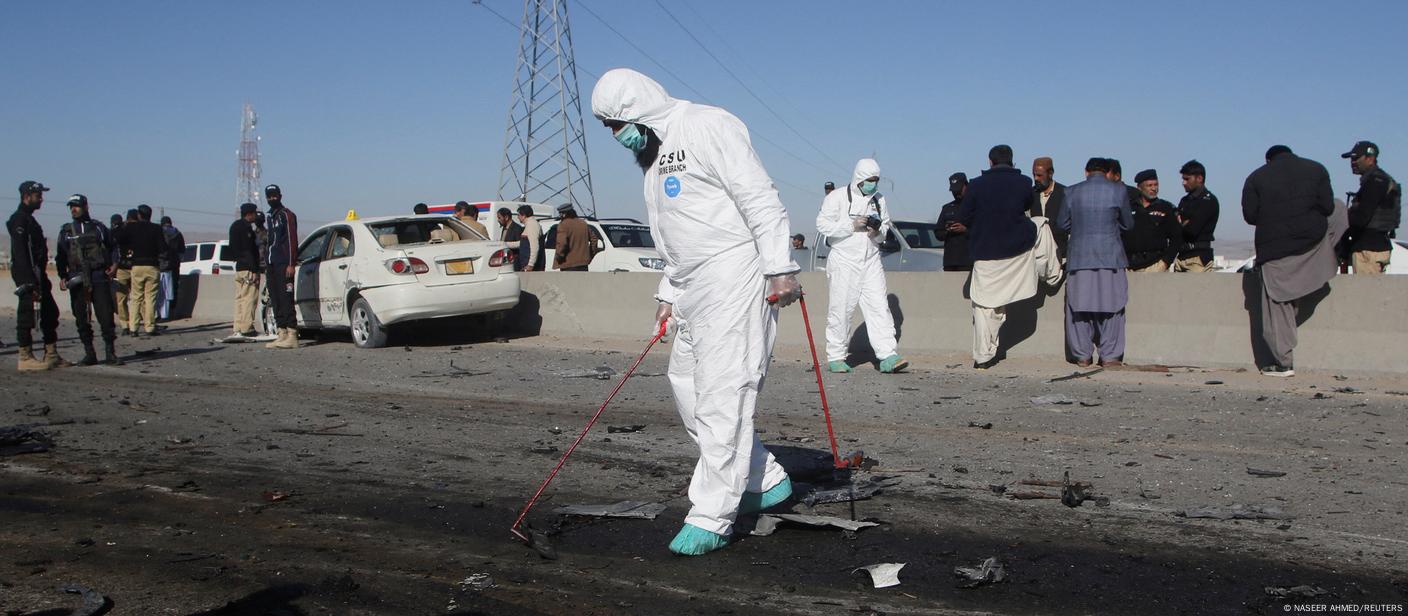
The banned militant group Tehreek-e-Taliban Pakistan (TTP) has ended a
cease-fire agreement with the government, and vowed to launch attacks
across Pakistan. What will this mean for the country's economy? DW.com
Pakistan,
one does best to recall, is a seething cauldron of backward Islamists.
Violence and uninhibited threats percolate on the streets of Pakistan's
cities when fiery-throated Islamists go about preaching jihad while
deploring the presence of western-style shops selling music, and where
male and female friends congregate together in restaurants. A country
where the minority Christian population is threatened and persecuted
when haters can accuse Christians of denigrating the Prophet Mohammad
and face a death penalty.
The
successive governments of Pakistan plotted against Afghanistan, anxious
their neighbour not form an alliance with India. Pakistan invested
itself in forming, training and arming the Afghan Taliban, giving its
leaders haven at a time that US. forces led an international, UN-NATO
force to dislodge the Taliban and al-Qaeda's Osama bin Laden who took
credit for planning the aerial attacks against the World Trade Center in
New York, the Pentagon in Washington.
Osama
bin Laden himself had sanctuary in Pakistan where his family compound
was discovered in Abbottabad, not far from an elite military academy. A
Pakistani doctor whose own home was next to the bin Laden compound, a
secret location for an 'unknown' occupant, helped the CIA identify that
unknown occupant whom Navy Seals subsequently dispatched. The Pakistani
doctor was arrested, held responsible as a traitor, and incarcerated.
Pakistan's
military with its embedded Intelligence Agency, was well infiltrated by
their own Taliban, as radical a group of hardcore Islamists as the
Afghan Taliban. As a nuclear nation the very prospect of these
terrorists potentially having access to Pakistan's nuclear arsenal is
mind-boggling. The Taliban threat that Pakistan now faces is one that
emerged many years ago, its growth to the point where it challenges the
government of Pakistan, just as Afghanistan experienced with the
viperous group Pakistan bequeathed to its neighbour.
Now,
the Islamic Republic of Pakistan with its immense population of close
to 233 million. occupying a land mass of 881,913 square kilometres faces
an existential crisis brought about by its own incapacity to govern
itself wisely and well. Its focus on its hostility with India from which
it broke away in 1947 following British rule leading to a cataclysmic
separation and the retaliatory deaths of countless Muslims and Hindus
has kept the threat of resurgent conflict alive, over the mutually
contested Kashmir.
Pakistan's
army has been the traditional fount of emerging leaders. Since its
independence there have been three military coups and four military
rulers. One of its non-military rulers, Benazir Bhutto, was assassinated
by raging fanatical Islamists. Pakistan is currently in a state of
political and financial collapse. Former prime minister Imran Khan whose
tenure came to a forced halt in April 2022 through a non-confidence
parliamentary vote imprisoned other politicians including one of his
predecessors, Nawaz Sharif, along with Maryan Nawaz Sharif, the
daughter.
Now
presiding as Prime Minister of Pakistan is younger brother Shehbaz
Sharif. A turf war between Khan's Pakistan Tehreek-e-Insaf political
party and a coalition of opposition parties, the Pakistan Democratic
Movement, has Pakistan at a political standstill. The Pakistani army
sides with the U.S. State Department, and Khan was leading the country
into a Russia-Chinese camp. Unseated from power he encourages supporters
to violent encounters with the law.
Inadequately
governed, Pakistan's institutions are collapsing; educational
institutions in particular. High unemployment, poverty and an increase
in the Consumer Price Index of 31.5 percent has sent more families into
poverty. What the country desperately needs is guidance from a
secular-minded, seriously capable leader who can lead it toward
normalization with India and the establishment of diplomatic relations
with Israel.
And
what the world needs from Pakistan, is the accepted presence of an
internationally designated body of specialists to manage Pakistan's
nuclear arms in the assurance that should its condition further
destabilize those nuclear arms will not be seized by the fanatics
crawling about in huge disruptively threatening numbers in Pakistan.
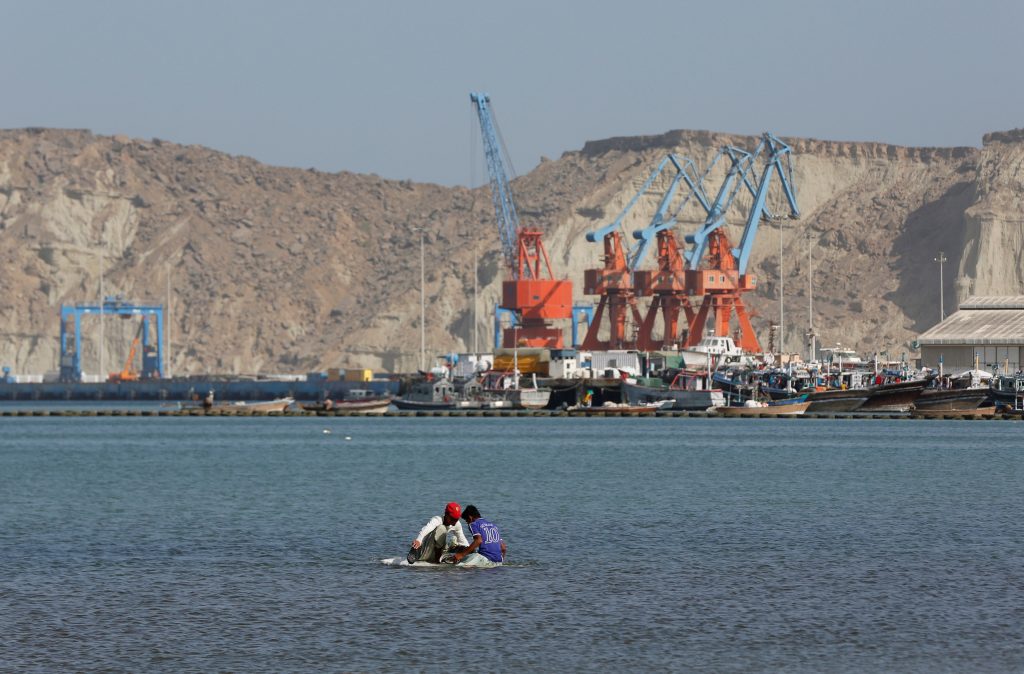
In the midst of yet another economic crisis, Pakistan is currently
facing significant upheaval in the political, economic, and security
domains. Amplified by near-historic polarization among ruling elites,
the rapidly deteriorating situation has significant implications on
near- and long-term Chinese influence in the country. Atlantic Council
Former
Haitian Senate President Youri Latortue arrives to the court house in
Port-au-Prince on July 12, 2021. Prosecutors have requested that
high-profile politicians meet officials for questioning as part of the
investigation into the assassination of President Jovenel Moïse. Joseph Odelyn/The Associated Press
Gang leaders, the Haitian Senate, an appointed prime minister not yet formally inducted, along with the man who took formal charge on the death of the Haitian president are all competing for his recently-vacated position. This is not a solemn, structured and democratic transition of general agreement, but a grab-fest of authority-competition, each claiming legitimacy over the other. In other words, to an outsider it appears simply business as usual in Haiti; as near as perfect dysfunction.
How functional can any country be to begin with, when a large part of its governance is that of the authority meted out by violent gangs? The leader of the most powerful gang has surfaced to insist that the mystery surrounding the assassination of Haitian president Jovenal Moise last week must be solved, calling his members to get out to the streets in protest demanding "light be shed on the president's assassination".
Light indeed. Why would a Haitian president be murdered in his home by Colombian 'commandos', a unit dispatched to 'arrest' President Moise, arrest warrant in hand. Colombia 'arresting' a Haitian president? For drug running? Invading another country to settle an external illegal narcotics problem? No fewer than 26 Colombians on a convoy approaching the Haitian president's private home intending to arrest him, but on arrival finding him very dead.
President Moise's wife has described her husband having been taken by surprise, attacked so suddenly he was unable to utter one word, even 'what?!', before his body was riddled, she said, with bullets, and she injured. If not the work of the Colombian commandos, then who? Any of his competitors for the office? Disaffected gang lords? Who would have shouted in clear English that what was going down was a DEA raid?
An American 'technical team' is en route to straighten out the tangled mess of could-bes, might-bes, possibilities. President Moise's replacement, acting prime minister Claude Joseph is internationally recognized as the new legitimate head of interim government. But he must contend with the Haitian Senate's president, Joseph Lambert who sees himself as acting president. Not to mention Ariel Henry who Moise appointed prime minister before his death.
Haiti's interim Prime Minister Claude Joseph speaks to media
in Port-au-Prince on Thursday. Joseph is currently leading Haiti with
the help of the police and military, but he faces mounting challenges to
his power. (Estailove St-Val/Reuters)
Claude Joseph has asked both the United Nations and the United States to step in and send troops to Haiti to prevent violent street riots. No word yet from the UN whether it might consider that option, but the U.S. while helping to assess Haiti's requirements for ongoing security and stability is definitely not prepared to commit to a sustained military presence on half the island of Hispaniola.
Haitian 'authorities' insist President Moise's death represented a contract killing. Two Haitian-Americans accompanying the 26 Colombians bearing their arrest warrant explained they were there as interpreters. Haiti is an impoverished state ruled by an economic elite lording it over a population living in the dignity of poverty yearning to be elsewhere, where economic opportunities exist and state welfare is active.
Arrested men: The
U.S. has sent teams to Haiti to assess the situation on the ground as
the country remains in turmoil following the assassination of President
Jovenel Moïse
Now, the 30 gangs that make their home in Haiti see themselves free to express themselves through an "unprecedented" escalation of violence, rival gangs claiming control of the capital while police retain the right to maintain order, but cannot in an atmosphere of political instability. "We tell all bases to mobilize, to mobilize and take to the streets for light to be shed on the president's assassination", former policeman and head of the G9 gang, colloquially named "Barbecue" ordered.
Barbecue just incidentally accused by witnesses of aiding in the slaughter of some 59 men, women and children in the neighbourhood of La Saline a year ago, an accusation he denies as he plans to transition from gang lord to political figure. His G9 gang now a revolutionary force planning to save Haiti from the opposition, the government and the Haitian bourgeoisie. And then there is this little mystery ... confused yet?
"He [Christian Emmanuel Sanon, the Florida-based doctor accused of ordering
28 commandos to storm Mr. Moïse’s private home], was only a middleman
between the killing’s real masterminds and the gunmen who carried it
out. He was paid by certain local people here."
"Very soon, the police and the investigation will tell the
truth about it. He hired the mercenaries to execute the task."
"Moïse has been fighting what he called the oligarchs. He was trying to
remove control from some powerful groups of interests in this country,
and give more power to the government."
"I think the
assassination of the president was the result of his belief and his
ideology, and those who were fighting him were in a position to put an
end to his life."
Elections Minister Mathias Pierre, Port-au-Prince suburb,
Pétion-Ville
Leon Charles, head of Haiti's National Police, speaks during a news
conference in Port-au-Prince on Sunday. Charles announced Sunday that
officers have arrested a Haitian man accused of flying into the country
on a private jet and working with the masterminds and alleged assassins
behind the killing of President Jovenel Moïse. (Ricardo Arduengo/Reuters)
This represents a general opinion site for its author. It also offers a space for the author to record her experiences and perceptions,both personal and public. This is rendered obvious by the content contained in the blog, but the space is here inviting me to write. And so I do.