Former
Haitian Senate President Youri Latortue arrives to the court house in
Port-au-Prince on July 12, 2021. Prosecutors have requested that
high-profile politicians meet officials for questioning as part of the
investigation into the assassination of President Jovenel Moïse. Joseph Odelyn/The Associated Press
Gang leaders, the Haitian Senate, an appointed prime minister not yet formally inducted, along with the man who took formal charge on the death of the Haitian president are all competing for his recently-vacated position. This is not a solemn, structured and democratic transition of general agreement, but a grab-fest of authority-competition, each claiming legitimacy over the other. In other words, to an outsider it appears simply business as usual in Haiti; as near as perfect dysfunction.
How functional can any country be to begin with, when a large part of its governance is that of the authority meted out by violent gangs? The leader of the most powerful gang has surfaced to insist that the mystery surrounding the assassination of Haitian president Jovenal Moise last week must be solved, calling his members to get out to the streets in protest demanding "light be shed on the president's assassination".
Light indeed. Why would a Haitian president be murdered in his home by Colombian 'commandos', a unit dispatched to 'arrest' President Moise, arrest warrant in hand. Colombia 'arresting' a Haitian president? For drug running? Invading another country to settle an external illegal narcotics problem? No fewer than 26 Colombians on a convoy approaching the Haitian president's private home intending to arrest him, but on arrival finding him very dead.
President Moise's wife has described her husband having been taken by surprise, attacked so suddenly he was unable to utter one word, even 'what?!', before his body was riddled, she said, with bullets, and she injured. If not the work of the Colombian commandos, then who? Any of his competitors for the office? Disaffected gang lords? Who would have shouted in clear English that what was going down was a DEA raid?
An American 'technical team' is en route to straighten out the tangled mess of could-bes, might-bes, possibilities. President Moise's replacement, acting prime minister Claude Joseph is internationally recognized as the new legitimate head of interim government. But he must contend with the Haitian Senate's president, Joseph Lambert who sees himself as acting president. Not to mention Ariel Henry who Moise appointed prime minister before his death.
Haiti's interim Prime Minister Claude Joseph speaks to media
in Port-au-Prince on Thursday. Joseph is currently leading Haiti with
the help of the police and military, but he faces mounting challenges to
his power. (Estailove St-Val/Reuters)
Claude Joseph has asked both the United Nations and the United States to step in and send troops to Haiti to prevent violent street riots. No word yet from the UN whether it might consider that option, but the U.S. while helping to assess Haiti's requirements for ongoing security and stability is definitely not prepared to commit to a sustained military presence on half the island of Hispaniola.
Haitian 'authorities' insist President Moise's death represented a contract killing. Two Haitian-Americans accompanying the 26 Colombians bearing their arrest warrant explained they were there as interpreters. Haiti is an impoverished state ruled by an economic elite lording it over a population living in the dignity of poverty yearning to be elsewhere, where economic opportunities exist and state welfare is active.
Arrested men: The
U.S. has sent teams to Haiti to assess the situation on the ground as
the country remains in turmoil following the assassination of President
Jovenel Moïse
Now, the 30 gangs that make their home in Haiti see themselves free to express themselves through an "unprecedented" escalation of violence, rival gangs claiming control of the capital while police retain the right to maintain order, but cannot in an atmosphere of political instability. "We tell all bases to mobilize, to mobilize and take to the streets for light to be shed on the president's assassination", former policeman and head of the G9 gang, colloquially named "Barbecue" ordered.
Barbecue just incidentally accused by witnesses of aiding in the slaughter of some 59 men, women and children in the neighbourhood of La Saline a year ago, an accusation he denies as he plans to transition from gang lord to political figure. His G9 gang now a revolutionary force planning to save Haiti from the opposition, the government and the Haitian bourgeoisie. And then there is this little mystery ... confused yet?
"He [Christian Emmanuel Sanon, the Florida-based doctor accused of ordering
28 commandos to storm Mr. Moïse’s private home], was only a middleman
between the killing’s real masterminds and the gunmen who carried it
out. He was paid by certain local people here."
"Very soon, the police and the investigation will tell the
truth about it. He hired the mercenaries to execute the task."
"Moïse has been fighting what he called the oligarchs. He was trying to
remove control from some powerful groups of interests in this country,
and give more power to the government."
"I think the
assassination of the president was the result of his belief and his
ideology, and those who were fighting him were in a position to put an
end to his life."
Elections Minister Mathias Pierre, Port-au-Prince suburb,
Pétion-Ville
Leon Charles, head of Haiti's National Police, speaks during a news
conference in Port-au-Prince on Sunday. Charles announced Sunday that
officers have arrested a Haitian man accused of flying into the country
on a private jet and working with the masterminds and alleged assassins
behind the killing of President Jovenel Moïse. (Ricardo Arduengo/Reuters)
"The following is a list of exhibits that were seized from 1215-2020 Jasmine Crescent in the city of Ottawa as a result of a search warrant on the 7th of October 2020."
"33.6 grams of heroin and 86.2 grams of fentanyl were seized. A money counter, a] Voodoo AR-15 Style BB gun, [two Ziploc bags of] buff [weighing about 598 grams (buff defined as a substance added to drugs to dilute potency and increase volume). Clear plastic packaging material, [a] sentry safe, digital scale, [and] rubber bands [were seized]."
"[A] large amount of Canadian currency [also seized and] to be counted by the asset forfeiture unit."
"Accused is now deceased; no charges laid. SIU investigation currently ongoing."
"[All of the seized items were ordered to] be detained in the custody of the Ottawa Police Service until 8 January 2021."
Report to a Justice : Police Document
Black man falls to death after Ottawa police conduct no-knock raid
Black Lives Matter sprang into action as they do every time a black man falls afoul of the law and is injured or dies, as they claim that blacks receive harsher, brutal treatment from police, are stopped far more frequently in their vehicles than white men, and are the victims of police homicides while undertaking arrests of blameless blacks going about their business. Society is condemned for the fact that blacks are disproportionately represented in the prison system. That blacks are disproportionate to their presence in society at large, involved in gangs, guns, drugs and smuggling appears irrelevant.
"I was mad. Whatever they were trying to do, it was wrong.
There was no justification in the whole situation. There's way too many
officers. It's a 12th-floor apartment. There's no due diligence there."
"I knew I had to get this story
out. There's most likely countless other stories of this happening that
are unreported and way more abuses of power."
"Another black man died today.... If they're truly working for
the public, this wouldn't have happened. They treated him like he wasn't
a human, but everyone makes mistakes and that's the point of being
human."
"You have to learn from your mistakes. He didn't get the chance."
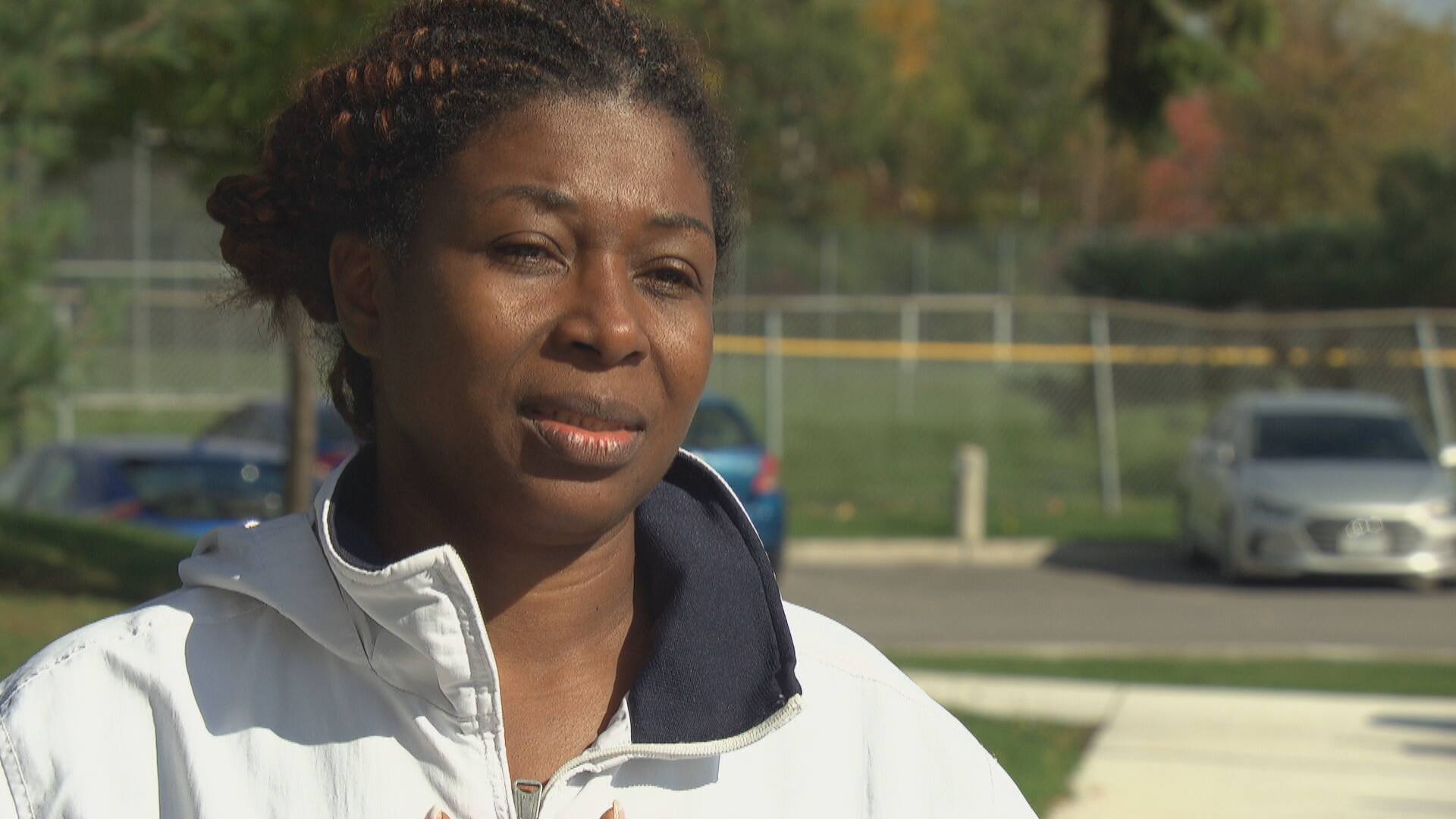
Raymond Aust, 20, Queen's University student, Anthony's brother
Mother says son who fell from balcony 'didn't have time to live'
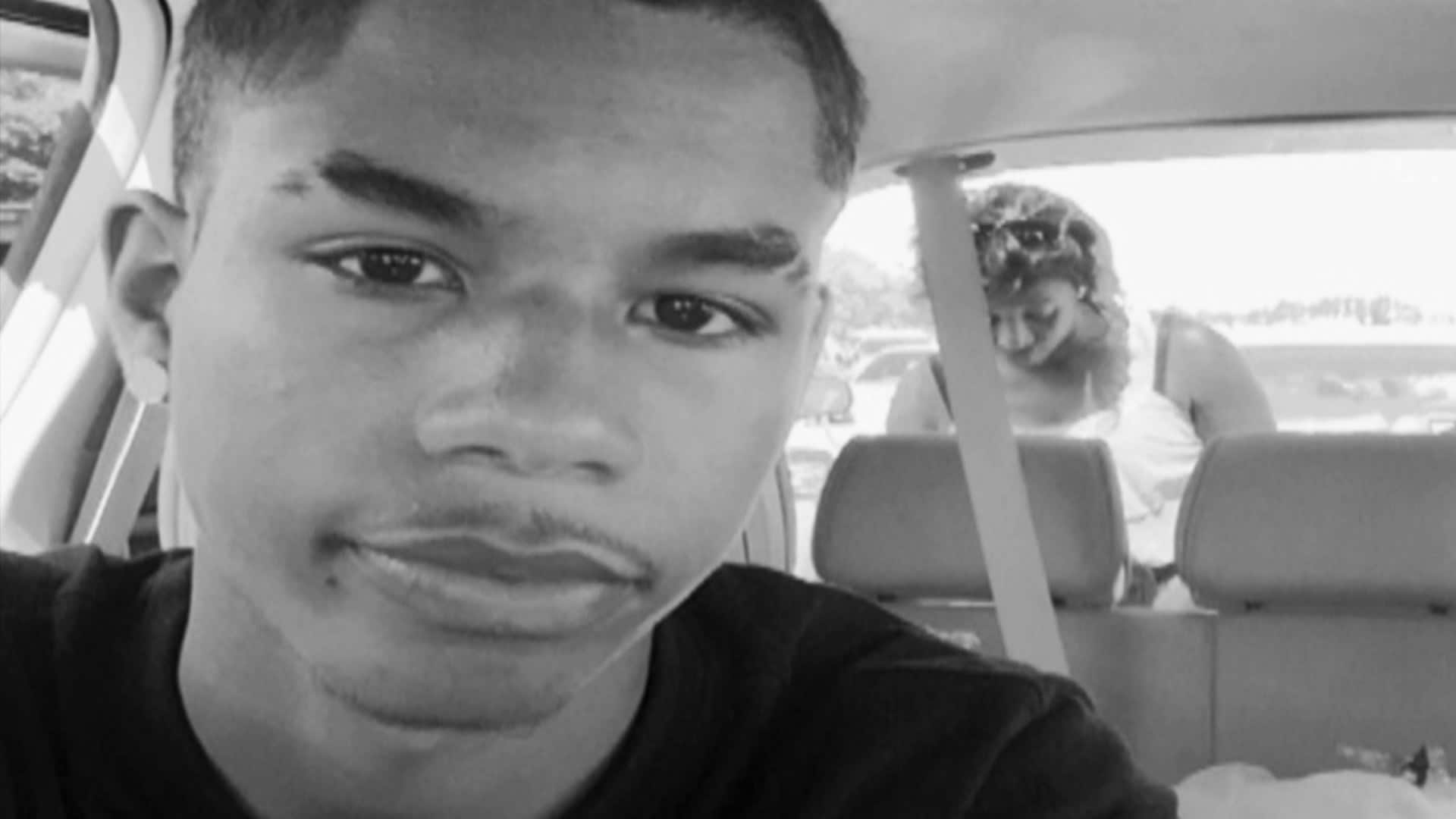
One such case in question was that of a 23-year-old resident of Ottawa who leaped to his death from his bedroom window moments following a police drug raid at his family's Ottawa east-end apartment building, initiated by the Ottawa police tactical unit. Police have been accused of causing the death of Anthony Aust, and his family and the black community are demanding answers, demanding that Ottawa's black police chief undertake an investigation, and hold those involved accountable for the man's death.
The Aust family has hired a lawyer. At the same time, the Special Investigations Unit is undertaking a probe of exactly what had occurred the morning of October 7 when video surveillance footage from within the 12th-flooor apartment showed armed tactical officers breaking down the apartment door, throwing through it into the apartment a flash grenade and making use of a "dynamic entry". All of which tactics have been contested by the family as outrageously unnecessary.
Anthony Aust was, at the time, out on bail, his activities monitored by police and by the courts. He was awaiting trial fir firearm and drug offences, charges that were laid in January following a traffic stop. As part of the bail plan he was wearing a GPS-monitoring ankle bracelet. Video surveillance cameras were installed in the apartment, also part of the bail plan. The criminal charges against the young man were drug possession for the purpose of trafficking, firearm possession and breaking conditions.
All criminal charges which despite that he was out on bail awaiting a hearing, he simply continued to indulge in. That he was doing so, that he was in possession of quantities of hard drugs meant to be trafficked, and devices to enable that trafficking, appears to have evaded the notice of his family. All of which appears to be of no account as well to those accusing the police of causing the man's death by their very presence. A man who chose to evade accountability by momentarily forgetting people cannot fly.
Dynamic entry is a practise used by tactical police squads when they have a founded concern that evidence could be destroyed or that a risk exists to the public and to officers. That all of this took place at all, has resulted in a coalition of black community groups asking police Chief Peter Sloly for a meeting to discuss the raid, where Nhora Aust, Anthony's mother, was informed by police they were looking for a gun and cocaine as they searched her home.
Police have not divulged as public information what was found in the apartment when they searched the home where Anthony Aust flung himself out of a bedroom window of his family's 12th floor apartment. However, when a search warrant is issued police must afterward submit a "report to a justice" under the Criminal Code of Canada, a document that lists an itemized account of what was seized. The justice of the peace who had signed a warrant expects the document to be completed and returned to him within 30 days.
"[Dynamic entries are the] bread and butter [of tactical officers because of how common they are]. We conduct hundreds of them a year in Ontario."
"There are demands from the court system, the judicial system.
They like it much better when the accused is in possession of the
evidence."
"Narcotics are generally considered disposable evidence, much
like child pornography."
Jeff Kilcollins, retired, formerly a duty inspector, Ottawa police force, 20-year SWAT team member
"You see the conditions they live in? This is an armed revolution. We will put guns in the hands of every child if we have to." "The bourgeoisie, the opposition the government, they are the problem." "They call us gangs -- they are the gangs! We're defending the ghetto. It's live or die here." Jimmy (Barbecue) Cherizier, Port-au-Prince, Haiti
"We prioritize dialogue, even in our fight with bandits and gangs." "I am the president of all Haitians, the good and the bad."President Jovenel Moise, Haiti
"The government has said nothing about [Cherizier's rise], and the international community has turned a blind eye." "There is no rule of law anymore. The gangs are the new Macoutes. It feels like there is a manifest will to install a new dictatorship."Pierre Esperance, director, National Human Rights Defense Network, Haiti
"Coronavirus is the perfect excuse for a power grab and authoritarian measures to crack down on political opponents." "This is a regionwide trend, but the consequences are worse in the countries already facing the most dire situations."Michael Shifter, president, Inter-American Dialogue, Washington
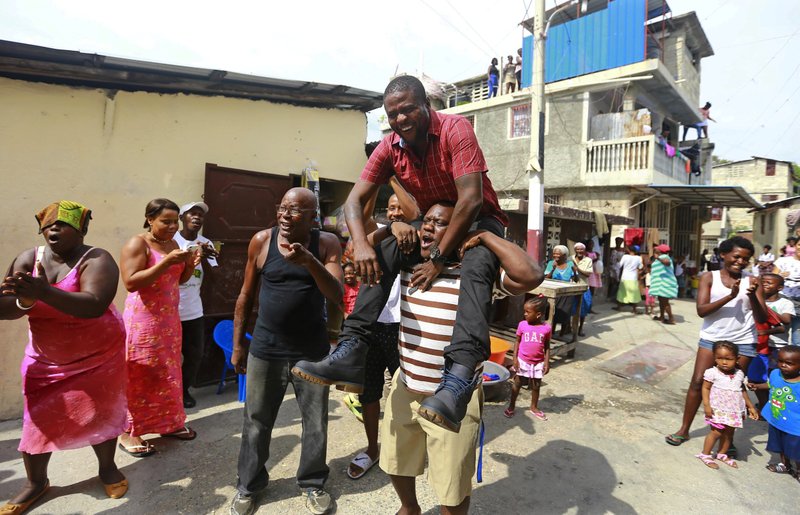
In this May 24, 2019, photo, Barbecue, whose real name is Jimmy
Cherizier, is carried by a resident in his neighborhood in Lower Delmas,
a district of Port-au-Prince, Haiti. He’s a former policeman, a suspect
in the massacre of dozens of men, women and children and a hero in his
neighborhood, followed by crowds of adoring residents who consider him
their protector. (AP Photo/Dieu Nalio Chery)
The 52 year-old former business executive, Jovenel Moise won the 2017 presidential election with a thin base of support amid allegations of government corruption. Last year protests by students and opposition groups led to a Peyi Lok [country shutdown] that lasted three months during which time businesses were torched, hotels and restaurants shuttered while thousands of Haitians were left without employment. Eventually the national police joined the protests burning their own vehicles and blocking traffic in Port-au-Prince's major arteries.
"There's no possibility of holding elections while he's in power", Andrew Michel, spokesman for an alliance of opposition parties stated, as legislative elections have been postponed indefinitely. Haiti is the poorest of poor nations in the Western Hemisphere and as dysfunctional as can possibly be conceived. All the international assistance that has been poured into the country has failed to result in positive changes. When Poppa Doc Duvalier ran the country as his personal estate and his dread police the Tonton Macoutes ran amok, that was rock bottom.
And Haiti is now experiencing a renaissance of rock bottom. A coalition, improbable as it sounds, of violent gangs, has arisen under the command of Jimmy Cherizier whose nickname of 'Barbecue' resulted in memory of his mother's locally popular barbecue chicken. Cherizier and his consolidated gang are busy extorting businesses, hijacking fuel trucks, kidnapping professionals and business owners for ransoms up to $1 million. He terrorizes poor neighbourhoods whose residents deeply oppose President Moise.
Barbecue now controls all of the downtown and critical cross sections, north and south in the opposition-dominated Cite Soleil slum, now living a reign of terror fuelled by gang violence. Victims and human rights groups say Cherizier's G9 gang members loot and burn down shacks and market stalls, rape women, kill randomly and dismember or torch bodies. Moise denies any connection whatever to Cherizier, and Cherizier denies any alliance with Moise. But onlookers put two-and-two together.
Witnesses insist they've seen the gangs in the same armoured vehicles the national police and special security forces use. Cherizier, in fact, was a member of the national police, but was dismissed. Justice Minister Lucmane Delile denounced the gangs, ordering the national police to pursue them. Leading to his swift firing by President Moise. Still, the president denies ties to the gangs. A standing warrant exists against Cherizier for possession of illegal arms and failure to report for duty which had caused his dismissal.
There's a stark resemblance between Cherizier's G9 gang and the horrors visited on the people of Haiti by the Tontons Macoutes paramilitaries used to terrorize Haiti under its former dictator Duvalier and his son Jean Claude. The international aid that came to Haiti's rescue in the wake of the 2010 earthquake where over 200,000 Haitians were killed and leaving 1.5 million Haitians homeless, promised transformation, but most of the international charitable groups that had converged on Haiti have since departed, leaving it to its own devices.
And this is what its own devices have devised. While Haitians were under lockdown under the coronavirus Cherizier took the opportunity to unify disparate street gangs to produce his current mega-gang terrifying the population in the nation's capital. And despite denials on the part of both the president and this champion of gang violence posing as a defender of the poor, it seems obvious there is collusion, and a return to a violent dictatorship.
People walk and shop near Petion Ville’s civil state court. credit Garry Pierre-Pierre
Soaring South African Murder Rates via Criminal Gangs
"As soon as the army leaves, a lot of these gangs are going to uncover their weapons and drugs and go back to business as usual." John Stupart, military analyst
"This is what we need [the intervention of armoured military trucks patrolling the township]." The people are shooting here every night." "This is how we're living [gangsters murdering people at will, spraying bullets at homes]." "For us, this is normal." Nasser Myburgh, radio technician, Cape Town, South Africa
"The gangs still feed on state neglect and social dysfunction." "But the territorial control, the profits and the violence are vastly greater than they have ever been before." Simone Haysom, Global Initiative Against Transnational Organized Crime
Members of the South African Police Services (SAPS) are shown in
November 2018 after the launch of a new SAPS anti-gang unit in the Cape
Town suburb of Hanover Park. Now the country's Defence Ministry has
approved a battalion to deal with the city's crime spike. (Rodger Bosch/AFP/Getty Images)
"Everybody was elated when they heard the news that the army was going
to come in because the situation was so dire that anything to improve
the situation would have helped." "[People had expected a roll-out of large-scale lockdowns with specific
targeting of well-known criminal hot spots and gang leaders, but ] there’s been none of this."
"The people aren’t seeing any major changes or improvements in the area." Kader Jacobs, head,
community policing forum, Manenberg township
"They send in the army but the army can’t do anything."
"The army is here but I don’t know how far they can go to minimize the killings on the Cape Flats." Sally-Anne Jacobs, 50, mourning son and cousin to gang violence
Cape Town, South Africa Picture: Matthew Jordaan/African News Agency (ANA) Archives
Police recorded over 2,800 murders in 2018 in Cape Town, making it one of the most dangerous cities in the world, approaching numbers seen in the most violent cities in Latin America. Escalating turf battles between gangs trafficking in drugs, weapons, illicit goods like abalone, prized by poachers, are cited as the precipitating points. On July 12 South Africa's President Cyril Ramaphosa, in recognition of the crisis, ordered military intervention to try to put a halt to the escalating murder rates.
He was warned that the military could accomplish little when the underlying issues of corruption and unemployment that spurred gang affiliations to reign over the townships remain unsolved and unaltered. The Cape Flats, an expanse on the border of the city where black and mixed-race people during the apartheid era were forcibly moved, represents one of the worst-hit areas for violence. The neighbourhood is divided into gangs.
The very presence of military patrols on the first weekend of action resulted in a noticeable drop in the murder rate on the Cape Flats where the Hustlers, Rude Boys, Ghetto Kids, Spoilt Brats, Hard Livings and Americans all vie for gang territory. On the weekend that followed, 46 people were murdered, and a few weeks afterward bloodshed had returned to its normal pace.
Mitchells Plain saw killings less than 48 hours after a military patrol had vacated the area. A young man who lived in a Hard Living area visited his girlfriend and their son on the turf of the Americans gang, and was shot to death while walking between the two homes. Nyanga, also in the Cape Flats, had 308 murders, as the police precinct with the highest number of killings in South Africa.
According to the mayoral committee member for security, the last year, the murder rate was "about twice as bad as what we've seen before" with officials claiming the military deployment named Operation Prosper would help stabilize Cape Town's ten most dangerous neighbourhoods. There are supporters of Operation Prosper who are members of local community policing forums, happy that the central government is taking their concerns under serious consideration.
Mr. Myburgh locks his family indoors each evening, taking as his cue gangsters spraying a nearby house with bullets the night before the military arrived. The gangs began their appearance in the 1960s and 70s, when families in their thousands were evicted to make way for whites in neighbourhoods so designated. Now, in Mitchells Plain, fewer than 37 percent of the population is employed.
Following apartheid, gangs morphed into crime enterprises, consolidating their power structures. "You know how it is, you hurt me, I hurt you back", said Ronald Hermanus, 28, whose brother's funeral took place on a recent Saturday only a few hundred meters from where the funeral of another man belonging to another gang other than his brother's took place.
President Cyril Ramaphosa sent soldiers to patrol areas where gang violence has surged. Joao Silva, The New York Times
"Whereas the Falconer report, Roots of Youth Violence, recommended more caring adults in schools such as social workers, child and youth workers, hall monitors ..." Preamble, Falconer report
"Jordan's death led to the commissioning of a report on violence in
schools. The 2008 Falconer report concluded that there are firearms and
weapons in "non-trivial" numbers at some Toronto schools. The findings
of the report contributed to the formation of the School Resource
Officer program which placed Toronto police officers in some schools
around the city." The Globe and Mail
The Toronto District School Board has decided to suspend a program that
put armed police officers in 36 of its 75 schools. (Nathan
Denette/Canadian Press)
Racial profiling has such reprehensible connotations. To identify someone as suspicious because their appearance links them to menacing behaviours on the surface seems brutally uncivilized and certainly unfair, quite beyond discriminatory. That's the emotional, empathetic reaction to the fact that certain ethnic groups are routinely -- despite denials to the contrary -- linked to violence. On the other hand, how to react to the reality that within those typecast groups there are those, disproportionate to their presence within the larger society, who do pose as threats, who do engage in violent and threatening behaviour?
Little wonder that it's difficult to suspend vigilance while attempting to forestall threats recognized in the criminal activity that blacks, for example, are prone to in great numbers among the young, and the virulent, vicious nature of terrorism exemplified by Muslims who gravitate toward groups promoting jihad, prepared to launch bloodthirsty attacks in honour of the sacred screed that holds jihad the responsibility of all believers in Islam. Some groups in society such as First Nations peoples struggle with issues of alcoholism and drug dependency.
Those groups, engaging in petty criminal activities, in dealing drugs, in thefts, again disproportionate to their numbers in society, are over-represented in prisons. All of this represents issues of ethnic or religious profiling. But how could it be otherwise for alert authorities hoping through the vigilance of their intelligence agencies and policing agencies to forestall criminal activities, gang action, and terrorist threats? To do otherwise is to ignore the obvious and in so doing fail in the prevention of ongoing crime and threats to the stability of the country and security of its people.
Because Blacks, young black men in particular, are so given to petty crimes, drug dealing, gang activities, violence, threats and terrorizing those from within their own communities come from those communities, when crimes are committed witnesses refuse to come forward to assist police in stemming the threats and the violence. In Toronto, when a 15-year-old black student was shot to death by two 17-year-old students attending a high school in the Jane/Finch corridor known for its Black-on-Black violence, it became urgent to do something.
Toronto police services and the Toronto school board worked out an arrangement that would see police trained in dealing with youth regularly going into the schools to interact with students in an effort to persuade them that the police were not to be feared, distrusted or loathed in a civil society. And the program appeared to be getting its message across; the police learning to understand what drives young men to reject societal norms, and the young students being accustomed to regard police as arbiters of public safety and security.
And then came the entry of an aggressive Black counterprogram rejecting the advances made between civic authorities and the troubled Black community. Black Lives Matter may have had a point in lashing out against the vulnerability of young black men viewed in the aggregate as trouble-prone and dangerous. But their influence in a society that is anxious to atone for past sins against people of colour by excusing their excesses in the present has had and continues to have a deleterious effect in relations between Blacks and their other counterparts.
Now black activists decry the presence of police in schools through the program that has operated successfully for years in acquainting black youth with police, with the intention of instilling trust mutually and a sense of civil cooperation between the two. Their agitation has succeeded in persuading the Toronto District School Board to summarily halt the program, leading the situation back to square one.
Where consideration was given to the practicality of installing weapons detectors in schools, and bringing in gun-sniffing dog teams, and conducting random sweeps of student lockers at all city schools. Where sexual assaults might take place in random events. Where students and teachers struggled to cope with violence, drugs, guns and assorted weapons, and where gangs roamed the schools where they were students. And left school before graduation, finally graduating into the prison system.
The School Resource Officer program began in the 2008-2009 school year
after the tragic death of Jordan Manners at C.W. Jeffreys C.I. the year
before. (Pawel Dwulit/Toronto Star file photo / Toronto Star)
BlackLivesMatter TO@BLM_TOAug 31
Children do not need to be surveilled by cops in schools. What they need more of are Child and Youth Workers, guidance... #NoMoreSROs
BlackLivesMatter TO@BLM_TOAug 31
While this is not a full victory, it is a result of yrs of organising by parents, & students who have said "no cops in schools" #NoMoreSROs
BlackLivesMatter TO@BLM_TOAug 31
Police in schools don't make kids safer.https://tinyurl.com/y88kc6qv#NoMoreSROs#EducationNotIncarceration
This represents a general opinion site for its author. It also offers a space for the author to record her experiences and perceptions,both personal and public. This is rendered obvious by the content contained in the blog, but the space is here inviting me to write. And so I do.
/cloudfront-us-east-1.images.arcpublishing.com/tgam/TLPR77DGYVL5DKVSIG7TQ3XPX4.jpg)