Wednesday, February 10, 2021

The Chinese Communist Party Industrial and Military Espionage Modus Operandi ... Naive and Foolish Canada

"The National Research Council retains the intellectual property related to the cell line, while CanSino, in turn, owns all intellectual property rights for the vaccines it develops."
then-Industry Minister Navdeep Bains, August 
"Under this agreement, CanSino was to provide candidate vaccine doses and transfer their vaccine technology, free of charge, for Phase 1 and 2 clinical trials in Canada, and grant the NRC a non-exclusive right to use, produce, and reproduce the vaccine for emergency pandemic use [NRC in  response to a question in the House of Commons]." 
Question raised by Conservative Health critic Michelle Rempel Garner
The Chinese embassy in Ottawa (Jolson Lim/iPolitics)
 
This, of a contractual agreement signed by the Canadian government with a Chinese pharmaceutical company whose founder and CEO had ties with Canada, having attended university and received his doctorate in Canada, and worked for a large Canadian pharmaceutical company before returning to China and launching his own business, linked to the People's Republic of China's military laboratories. 

This has a familiar ring. Canada's hugely successful communications giant Nortel, employed Chinese IT personnel, some of whom managed to infiltrate its highest echelons of executive management to secure trade secrets which made their way back to China as competitors to Nortel. A scenario that led to the company's demise while Huawei, where many of the former Nortel employees were then employed, began to rise becoming China's premier communications giant.

Infiltration by Chinese nationals who studied in Canada and became employed at Canadian companies securing classified data later transferred to China is not exactly new; industrial and military espionage is an acknowledged Chinese Communist Party specialty. Two years ago at Canada's National Microbiology Laboratory in Winnipeg, Xiangguo Qiu, then head of the vaccine development and antiviral therapies section, along with her husband also employed there, and a Chinese student in microbiology were escorted out of the facility.

They had somehow managed to send to China Canadian formulas not meant to leave the country much less fall into the hands of any entity outside the Microbiology Laboratory in Winnipeg. An investigation was launched by the RCMP after they were removed from their positions for "policy breaches" linked to a laboratory in Wuhan, China known to conduct research into deadly pathogens. The background of the situation and the findings of the investigation were never made public.

Yet despite these sinister and blatant events at purloining trade and industrial secrets from other countries that China is infamous for, the Canadian government under Justin Trudeau chose to sign a contract with another Chinese company for the critical development of a vaccine to inoculate against a global pandemic. The vaccine, once developed, was to be tested at laboratories at Dalhousie University in Halifax.

The National Research Council was to begin producing the vaccine in Canada. Bearing in mind that the NCC transferred Canadian intellectual property for use by CanSino to enable it to create the vaccine for Ebola and SARS-CoV-2. The final product was to have been delivered to Canada, but it never passed Chinese customs to arrive in Canada. Although the product was sent on to Pakistan, Russia, Mexico and Chile for trials, simply not to Canada.
"Due to lengthy delays in the shipment of the vaccine doses to Canada, the fact that CanSino’s candidate had already entered advanced testing in other countries, and the new clinical-trial data that had emerged from other jurisdictions, it was decided in late August that the opportunity to conduct clinical trials in Canada for Ad5-nCoV had passed, and the government decided to focus on more promising candidates."
National Research Council
That setback meant that Canada had no recourse to any vaccines in development and completing their trials, so at that later date in August of 2020 the Trudeau government hurriedly began making deals with U.S. and British pharmaceuticals for vaccine doses, long after most G7 countries had already made their arrangements, sending Canada to the back of the line. The result of which is that Canada has received scant few vaccine doses while other countries which either produce their own or signed contracts to keep them well supplied are inoculating their populations at a rate Canadians can only envy.

Canada, it would seem, from its then-minister of industry, 'owns' the intellectual property relating to the CanSino Biologics vaccine, but cannot access it (punishment courtesy of the CCP for having the effrontery to detain Huawei's CEO on an extradition warrant from the U.S.) because China 'owns' the vaccine now in use by the Chinese military and sent abroad elsewhere.

Canada had, it seems, also seen fit to sign the contract with CanSino that contains the proviso that: "Canada cannot claim any revenue if the vaccine proves successful". At the time of the contract signing, CanSino was trading at HK$87.45 in the Hong Kong Exchange. At the present time CanSino stock is trading at an all-time high of HK$365. Clearly, Prime Minister Justin Trudeau neglected to read former U.S.President's "Art of the Deal".
 
Faisal Sultan
@fslsltn
Feb 8, 2021
Clinical trial data (phase-3) of a one-dose Ad5-nCoV vaccine for Covid (Cansino Bio) received. Interim analysis by the Independent Data Monitoring Committee shows 65.7% efficacy at preventing symptomatic cases and 90.98% at preventing severe disease (multicountry analysis).
Faisal Sultan
@fslsltn
In the Pakistani subset, efficacy at preventing symptomatic cases is 74.8% & 100% at preventing severe disease. The IDMC didn't report any serious safety concerns. Data incld 30,000 participants & 101 virologically confmd COVID cases Well done Pak team for conducting this trial


Labels: , , ,

Wednesday, January 27, 2021

China's Contractual Obligations

Immunogenicity and safety of a recombinant adenovirus type-5-vectored COVID-19 vaccine in healthy adults aged 18 years or older: a randomised, double-blind, placebo-controlled, phase 2 trial
This randomised, double-blind, placebo-controlled, phase 2 trial of the Ad5-vectored COVID-19 vaccine was done in a single centre in Wuhan, China. Healthy adults aged 18 years or older, who were HIV-negative and previous severe acute respiratory syndrome coronavirus 2 (SARS-CoV-2) infection-free, were eligible to participate and were randomly assigned to receive the vaccine at a dose of 1 × 1011 viral particles per mL or 5 × 1010 viral particles per mL, or placebo. Investigators allocated participants at a ratio of 2:1:1 to receive a single injection intramuscularly in the arm. The randomisation list (block size 4) was generated by an independent statistician. Participants, investigators, and staff undertaking laboratory analyses were masked to group allocation. The primary endpoints for immunogenicity were the geometric mean titres (GMTs) of specific ELISA antibody responses to the receptor binding domain (RBD) and neutralising antibody responses at day 28. The primary endpoint for safety evaluation was the incidence of adverse reactions within 14 days. All recruited participants who received at least one dose were included in the primary and safety analyses. This study is registered with ClinicalTrials.gov, NCT04341389.
CanSino Biologics, China   The Lancet
Courtesy of CanSino Biologics

China-based CanSino Biologics is the brainchild of Yu Xuefeng, who studied in Canada and earned his doctorate at McGill University. He later was in the employ of Sanofi Pharmaceutical based in Toronto and eventually returned to China where he launched his vaccine business. His links to Canada gained him an insider status. The National Research Council agreed to allow the use of a Canadian-created cell line to aid in the development of a vaccine first for Ebola and following that, SARS-CoV-2. 

For reasons known only to Canada's prime minister an agreement was signed with CanSino for collaboration in the development of a COVID vaccine, at a time when relations with Beijing were beyond  strained and bad faith was redolent and in full view when the Chinese Communist Party launched its hostage diplomacy initiative by arresting and charging two Canadians in China with security breaches endangering China, and then initiating a trade war. 
 
Canada been burned in the past when dealing with China when Chinese technologists were hired to work for Canada's then-telecommunications giant Nortel Networks attaining positions of trust enabling them to lift trade secrets for their own, and Chinese hackers infiltrated and gained access to Nortel's top executive accounts spiriting away additional Nortel data which eventually helped lead to the company's demise but gaining China's telecommunications industry through Huawei where former Nortel employees worked, the edge they looked for, linked with China's military.

Once again the trusting Canadian government of Prime Minister Justin Trudeau who was personally transfixed with the notion that Canada would benefit hugely by association with China, in lucrative trade deals and investment, laid itself open to expropriation of Canadian technical and scientific expertise, signing a contract with CanSino to test their vaccine at Dalhousie University in conjunction with the National Research Council, which could produce samples of the vaccine. A vaccine which never arrived in Canada, as per the agreement.
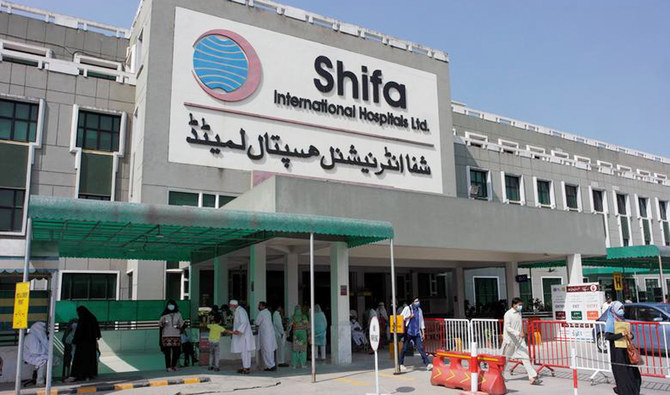
Inside the CanSino Phase 3 COVID-19 vaccine trial at Pakistan’s Shifa Hospital
A general view of Shifa International Hospital in Islamabad, Pakistan where a Phase 3 trial of CanSino's COVID-19 vaccine is undergoing trials. (Reuters)
 
A vaccine that Beijing refused to allow entry to Canada, while shipping it off elsewhere for testing. "In June, the vaccine (based on the Canadian cell line) was approved for use by Chinese military forces. As for the rights to the cell-line, a comment to Global News from Innovation, Science and Industry Minister Navdeep Bains was 'The NRC (National Research Council) retains the intellectual property related to the cell line, while CanSino in turn owns all intellectual property rights for the vaccines it develops.' Canada cannot claim any revenue if the vaccine proves successful", wrote Radio Canada International journalist Mark Montgomery.

"What exactly motivated Canada to enter into such an unstable partnership in the first place given the dire state of Canada-China relations and the scandalous history of China's vaccine industry?" questioned science writer Iris Kulbatski in the health-care journal Healthy Debate. She quoted Margaret McCuaig-Johnston, former assistant deputy minister in charge of Canada's vaccine collaboration with Beijing, that China's history of creating customs 'obstacles' in any trade disagreements, as leverage was well known.

"McCuaig-Johnston further said that 'China's success in vaccines is standing on the back of Canadian researchers and scientists. Over the years we helped China develop its capacity. But China is no longer a reliable partner." There is, in fact, nothing new about China's penchant for infiltration, sabotage and subterfuge along with the stealth mining of technological and scientific data originating elsewhere, than the ill-gotten gains used by China to further its own interests. 
 
This is merely one more instance in a long history of unprincipled looting of other nations' research and development. With China taking the short-cut route to using others' intellectual property, parading it as their own, and reaping the financial benefits thereof. The question remains: why would this Canadian government see fit, all this being well known, to engage in a contractual agreement with a country that cannot be trusted, with a pharmaceutical company that has direct links to the People's Republic of China's Military?

https://static.reuters.com/resources/r/?m=02&d=20201221&t=2&i=1545302862&r=LYNXMPEGBK0Y0&w=1600
Vials of a COVID-19 vaccine candidate, a recombinant adenovirus vaccine named Ad5-nCoV, co-developed by Chinese biopharmaceutical firm CanSino Biologics Inc and a team led by Chinese military infectious disease expert, are pictured in Wuhan, Hubei province, China. China Daily via REUTERS


Labels: , , , ,

Follow @rheytah Tweet