Canadian Justice -- Canted to Serve the Interests of Indigenous Exceptionalism
"The
appellant [who was 20 at the time] thought he could hear Mr. Stone
yelling at his mother. Thinking that she was in danger, he rushed to the
scene of the accident."
"On
arrival, he spoke to his mother and then confronted Mr. Stone who was
hurrying toward his mother, having just come from a store where he had
purchased cigarettes for her."
"Although
Ms. Davis tried to stop her son, he walked briskly toward Mr. Stone and
punched him in t he middle of his forehead, causing him to fall to the
ground unconscious."
Partial text of British Columbia Court of Appeal decision
"The
specific question to be addressed in this case is whether Mr. Davis, as
an Indigenous offender, should be sentenced differently from the way a
non-Indigenous offender would be sentenced for an aggravated assault of
this nature. In my view, the answer to that question must be 'yes'."
"Significant
weight should be placed on the lessened moral culpability of the
offender given his circumstances as an Indigenous person."
"Mr.
Davis has been incarcerated since November 2024. By operation of law,
the time served in custody will be counted as part of the 24-month
conditional sentence order. The remainder of the first 18 months of the
conditional sentence is to be served under house arrest."
"[While
the sentencing judge] was alive to the importance of Gladue factors, he
found these factors had a 'lesser impact', in part of Mr. Davis's
'success in life' as demonstrated by the fact that he had graduated from
high school, was employed, had no negative peer associations, no
addiction issues, and no criminal history."
"Reports filed at sentencing confirmed that his father abused his mother and sexually abused his cousin."
"Mr. Davis's circumstances provide the necessary context for understanding his actions on the day of the offence."
"[While
it isn't] necessary to establish a direct causal link between systemic
and background factors and the offence at issue, Mr. Davis's
circumstances provide the necessary context for understanding his
actions on the day of the offence."
Justice Lauri Ann Fenlon, B.C. Court of Appeal majority decision
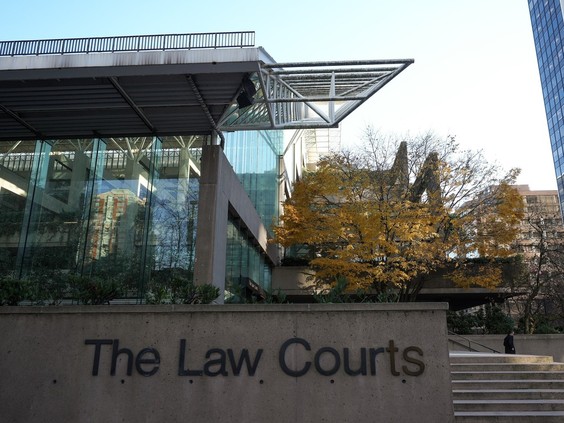
The B.C. Appeal Court has sentenced an Indigenous
offender to house arrest instead of jail for an unprovoked attack that
left his victim permanently injured, citing the goal of reducing the
disproportionate number of Indigenous offenders in Canadian jails.Photo by Corgarashu /Fotolia
The
Gladue principle referred to is the generously forgiving
infantalization of Indigenous Canadians who are held, due to
environmental circumstances beyond their control, to be less capable
than any other Canadian citizens in controlling their emotional,
criminal impulses. Indigenous Canadians have the misfortune of being
over-represented as a criminal class incarcerated for committing crimes
in Canada. Canada's criminal justice system maintains that this is the
result of colonization, of European settlers foisting their standards of
civil behaviour on native Canadians.
That
the colonial mentality was dismissive of the humanity of the Indigenous
peoples who were found to be inhabiting North America at the time of
European arrivals searching for prospective new territory for
settlement. Considering themselves superior to the 'savages' they found
throughout North America, a paternalistic attitude prevailed which made
an effort at times to respect Native culture and values while at the
same time maligning them. The establishment of Residential Schools for
Indigenous children to receive the kind of formal education that would
prepare theme for life in urban centres was meant to help them integrate
and to be exposed to basic life skills alongside literacy and numeracy.
Those
educational establishments were condemned in later years as a prime
symbol of European arrogance, exposing Indigenous children to sub-par
conditions injurious to their sense of pride, culture and heritage.
Quite bypassing the fact that most children did receive a useful
education, enabling them to go on to pursue further avenues of higher
education in situations not entirely unlike the boarding schools that
the elite in the United Kingdom sent their children to, where some
children there too suffered ill treatment yet because it was the
prevailing system of the monied class, managed to prevail toward normal
adulthood.
In
Canada, the Gladue principle prevails in the sentencing of Aboriginal
Canadians, whereby lesser sentences are given to criminal offenders,
taking their cue from the concept of a state where vulnerable children
were raised in underdeveloped circumstances which hampered their sense
of right and wrong. In fact, in Aboriginal communities there tends to be
gender-based violence in excess of what prevails elsewhere. Minor
criminal activities are common and many within the Native communities
struggle to find their place within society. Alcohol addiction, illegal
drug activity, and neglect of children's needs are rife.
That
Indigenous Canadians have faced blatant discrimination is undeniable.
That they are generally considered to be less capable at endeavours to
shape a decent life for themselves outside of gangs and prostitution is a
problem within the community. Yet among them have arisen those who
pursued an education that would prepare them for pursuit of the
professions of politics, law, education, medicine, mercantilism and
academia, just as those from other walks of life have achieved.
In
the face of which the failure to hold violence committed by Canadian
citizens of Indigenous background remains an anomaly whereby they are
held to inferior standards than that of other Canadians. In the case of
Isaac Harrison Davis, found guilty of aggravated assault against another
young man whom he believed to be abusing his mother, applying the
Gladue principle which should long since have been retired from Canadian
law, fails to do justice to his victim. Davis's mother happened to have
been in a car accident while on the phone with her son; the other drive
was Andrew Stone.
When
Davis rushed to the scene of the accident, he confronted Mr. Stone and
without warning struck him a blow severe enough that Mr. Stone fell
unconscious, vomiting and bleeding, never having been given an
opportunity to speak or to defend himself. His skull was fractured in
the blow. Multiple surgeries followed. He was three weeks in a coma,
paralyzed for two weeks. The result of which he suffered from speech
aphasia, memory loss and cognitive deficiencies. He now must take speech
therapy, and requires the use of a hearing aid.
A
member of the K'omoks First Nation, Mr. Davis had originally been
sentenced to 21 months in prison, reflecting the fact that he had caused
another man a severe brain injury. The Court of Appeal for British
Columbia has now ruled that having failed to give due consideration to
the Gladue principles; the sentencing judge, Justice Paul Riley, having
taken into consideration the normalcy of his having completed high
school, secure employment and no record of criminal activity; the
original sentence was set aside.
Despite
that Justice Paul Riley had concluded that the 21-month jail term
approached the low end of the sentencing range, taking into account the
effect of Gladue principles on the degree of moral culpability by the
offender; for he had considered when he originally sentenced Mr. Davis,
all the other mitigating circumstances. The reversal of this judge's
carefully considered opinion leading to the sentence, represents a
miscarriage of Canadian justice.
B.C.'s top court has set aside a 21-month jail
sentence handed down last fall to Isaac Harrison Davis, a member of the
K'ómoks First Nation, for punching another man, fracturing his skull and
causing a severe brain injury.Photo by DARRYL DYCK /THE CANADIAN PRESS
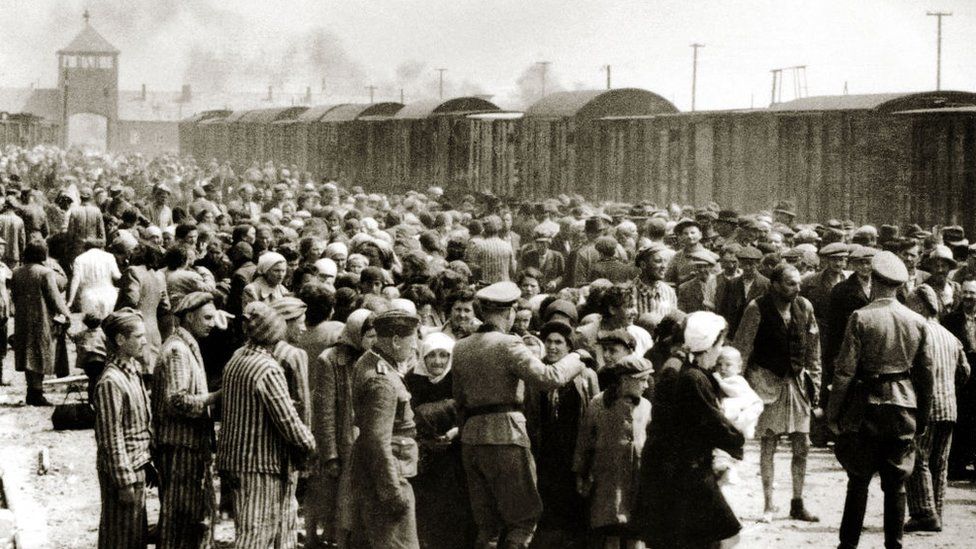
So many Hungarian Jewish people were killed in such a short time that
victims' bodies were dropped in pits near the camp and burned Getty Images
"Although we are by no means unmindful of the dangers involved in playing around with a Gestapo general, we also believe, on the heels of the information now in our possession, that Huber might be profitably used by this organization."
1953 CIA memorandum
"[Beginning in 1938 SS General Franz Josef Huber gave orders] to arrest immediately undesirable, particularly criminally motivated Jews and transfer them to the concentration camp Dachau."
Huber (far left) with Heinrich Himmler (centre) Credit: ullstein bild via Getty Images
He was personally responsible for promulgating orders that would send tens of thousands of Jews to death camps. A war criminal of the first order. In 1945 he was arrested by American forces and held for over two years. His extradition to Austria, where his status was that of a wanted war criminal, was prevented by U.S. military intelligence. Who made arrangements for the Nazi war criminal to be given lenient treatment when he was handed over to the West German authorities.
He was fined in 1948 and released from prison with a suspended sentence in the wake of being placed through a "denazification" procedure. He joined the Gehlen Organization in 1955, which was an intelligence service with West Germany, approved and supported by the U.S. as a countermeasure to the Soviets. The organization was operated by former Nazis, its founder and leader was Reinhard Gehlen, former head of Nazi military intelligence on the Eastern Front.
At the Nuremberg trials in 1948 Huber claimed innocence when investigators interrogated him as a potential witness. He had no idea the Holocaust even existed. It wasn't until 1944 that he heard hints of such a monstrous process of Jewish extermination. The orders he meted out for Jewish 'criminals' to be rounded up and sent to the Dachau death camp gave him no hint whatever of the camp inmates' future.
Franz Josef Huber, front row center, holding gloves, and his Vienna Gestapo team in an undated photograph.Credit...National Archives of Slovenia
SS General Franz Josef Huber was Gestapo head in Vienna and much of Austria after the Nazi occupation. He was a colleague of the notorious Adolf Eichmann, the architect of Hitler's 'Final Solution', with whom he worked closely to ensure that the Holocaust was the success it was meant to be == as Austrian Jews were deported en masse to concentration and death camps.
How differently their futures unfolded, post-war. Adolf Eichmann was spirited to Israel in a famous abduction, to stand trial for genocidal execution in service to Nazi Germany and its Fuhrer. Contrastingly, General Huber was released following the war to spend the rest of his life as a free man in his home town of Munich, as an employee with a local business.
A conspiracy that was hatched between the U.S. military and West German intelligence to hide SS General Huber's active participation in the execution of tens of thousands of people of all ages and backgrounds, innocent of anything but being Jewish, considered on its own to represent a crime against humanity which the Third Reich intended to rectify.
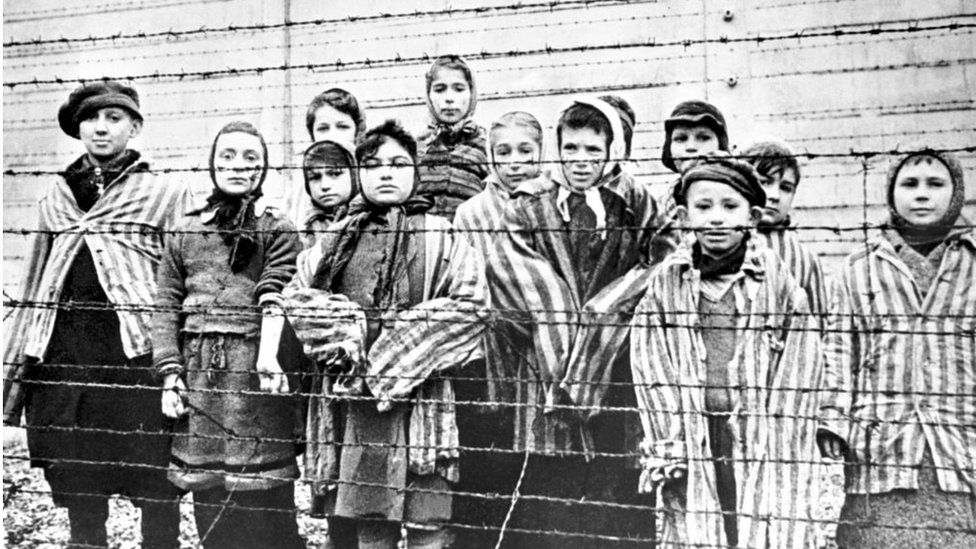
A group of child survivors behind a barbed wire fence at the Nazi concentration camp at Auschwitz Getty Images
"We were really surprised when the president came out to announce it [list of officials charged with involvement in illegal drug trade]." "First, our defence is the truth. If you are not guilty, why should you be afraid?" Samsudin Dimaukom mayor, Datu Saudi-Ampatuan, Philippines
"How are the lists being prepared? Who are the sources?" "If they have evidence, they should file charges, and that's the only time they should disclose the name [of those the new government asserts are involved in the drug trade]." "He's now a runaway train. It's very revolting to me. So far, the victims of the summary killings are the lowly ones, the powerless, who cannot afford lawyers, who cannot seek audiences with the president." Senator Leila de Lima, former chairwoman, Philippine Commission on Human Rights
"He's doing what he [President Rodrigo Duterte] promised. He's not surprising anybody." "People like him because he is an action man." Ramon Casiple, executive director, Institute for Political and Electoral Reform
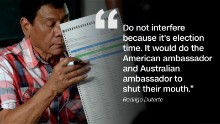
"Please, don't order me. [Do not create a crisis] because I will order everybody in the executive department not to honour you [Chief Justice Maria Lourdes Sereno, Philippine Supreme Court]." I'm not a fool. If this continues, you're trying to stop me, I might lose my cool. Or would you rather I declare martial law?" Philippine President Rodrigo Duterte
President Duterte, in his fresh new role from mayor to president, prepared to launch on the entire country the controlled police and vigilante anarchy that he imposed upon a once-drug-ridden, violent city transforming it into a rigid bastion of law and order, is undertaking a similar sweep of the entire country, to rid it of its drug-and-criminal-gang underclass and its reputation for being one of the most violence-driven countries in the world.
He is embarking on that ambitious aspiration through imposing his own brand of violence, crediting it with his past successes in tamping down crime. In the process a lot of people are being killed, most of them poor and defenceless, the vulnerable among the population who have no defences against the machinery of a state. The chief justice of the Philippine Supreme Court had the unmitigated gall to uphold institutional law and order in defiance of the president's decrees.
She instructed the seven justices appearing on a list that President Duterte produced naming one hundred and fifty high-placed officials involved, he claims, in the illegal drug trade, not to submit to arrest as ordered by the president, without a warrant. Chief Justice Maria Lourdes Sereno also announced her intention to investigate any allegations of the judges' connection to the drug trade.
"To safeguard the role of the judges as the protector of constitutional rights, I would caution them very strongly against 'surrendering' or making themselves physically accountable to any police officer in the absence of any duly issued warrant of arrest", wrote the chief justice, clearly at odds with the presidential order that all 150 named individuals turn themselves in to authorities within 24 hours, or they would be hunted down.
Shock and fear inspired over 600,000 drug users and dealers who had legitimate fears for their lives to respond by turning themselves in to authorities. Most were returned to their homes after police took their statements, with the understanding that they will face investigation at some later date. Since President Duterte called for the killing of drug dealers, an estimated 800 people have been killed by police or vigilantes in the few months since taking up his position.
Many of these unfortunates were gunned down in the street, a cardboard sign left beside the bodies identifying them as drug pushers. Many whose names had appeared among the 150 officials released by the government and read aloud one by one on public television last Sunday by President Duterte declare their innocence, and their support for the president's program to wipe out drugs and dealers.
The announcement of the names represents an invitation to a free-for-all from vigilante groups more than eager to go out on the streets and do their duty to the government. President Duterte's careful reading out of the 150 names on television is widely regarded as an invitation to kill by a man who states he is himself prepared to embark on such killing sprees to rid the country of drug dealers.
According to a Pulse Asia poll, Duterte received a 39 percent vote on election day. More recently, with his clean-sweep plans stated before the election took place now being implemented, his popularity has soared to 91 percent.
"As a British officer who had more than his share of fighting in Afghanistan,
Iraq and the Balkans, it pains me greatly to see words and actions from the
United Nations that can only provoke further violence and loss of life. The
United Nations Human Rights Council report on last summer’s conflict in Gaza,
prepared by Judge Mary McGowan Davis, and published on Monday, will do just
that." "The report starts by attributing responsibility for the
conflict to Israel’s “protracted occupation of the West Bank and the Gaza
Strip,” as well as the blockade of Gaza. Israel withdrew from Gaza 10 years ago.
In 2007 it imposed a selective blockade only in response to attacks by Hamas and
the import of munitions and military matériel from Iran. The conflict last
summer, which began with a dramatic escalation in rocket attacks targeting
Israeli civilians, was a continuation of Hamas’s war of aggression." "In an unusual concession, the report suggests that Hamas
may have been guilty of war crimes, but it still legitimizes Hamas’s rocket and
tunnel attacks and even sympathizes with the geographical challenges in
launching rockets at Israeli civilians: “Gaza’s small size and its population
density make it particularly difficult for armed groups always to comply” with
the requirement not to launch attacks from civilian areas." Col. Richard Kemp, former commander of British forces in Afghanistan
"Hamas training and doctrinal materials ... attest to Hamas's intentional efforts to draw the IDF into combat in densely populated areas and to actively use the civilian population in order to obstruct the IDF's military operations." "Hamas also actively encouraged and even coerced civilians to remain in areas of hostilities in order to impede IDF attack and shield military activities." Israeli Ministry of Foreign Affairs report
Source: United Nations
A morally bankrupt United Nations is once again condemning a member-state for its effrontery in attempting to defend itself from violent criminal attacks by terrorist groups bordering its state and targeting innocent civilians. The UN's Human Rights Council has issued its report on the 2014 conflict in Gaza, when Israel's forbearance in the face of constant rocket attacks from Gaza into Israel finally ebbed to the point of rallying a much-needed defence.
Hamas, a terrorist group noted as such by countries in the West and declared a terrorist group by countries in the Middle East, an offshoot of the notoriously Islamist Muslim Brotherhood, whose charter calls for the destruction of the State of Israel, takes its funding orders from enemy-states of Israel, Iran and Qatar. The funding and the incitement help, but Hamas's dedication to jihad and the view that Israel must be driven into the sea and its citizens slaughtered, needs no incentive from other sources.
The kind of resourcefulness that Hamas operatives display in building underground tunnels to enable it to enter Israel undetected and to perform the function of a protective underground haven for Hamas leaders is concrete-costly and time-absorbing. Resources that should go toward building civic infrastructure in Gaza are redirected to well-designed and -equipped tunnels under Gaza City where Hamas leaders can find tranquil protection from IDF attacks in response to those that Hamas launches from civilian enclaves.
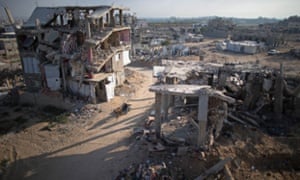
A donkey pulls a cart among bombed buildings in Gaza City. Many homes
are yet to be demolished or rebuilt nearly a year after the conflict.
Photograph: Christopher Furlong/Getty Images
Hamas terrorist guerrillas pass through tunnels under the borders of both Gaza and Israel in hopes of killing or capturing Israeli soldiers, but entering the confines of Israeli towns and kibbutzim to abduct or slaughter innocent Israelis is just as valuable in contributing to the Hamas cause of terror. All the nations that support blaming Israel for Palestinian deaths in Gaza are sanctimoniously averse to Israel defending its own, though none would tolerate for one day, let alone for years, the presence of such threats on their own borders.
Israel was forced yet again to militarily engage with an enemy which prides itself on elusiveness. While the terrorist fighters launch attacks from the vicinity of schools, apartments, hospitals in full knowledge of and anticipation that responding attacks will be expected, to destroy those launch sites, Israel in defending itself is accused of war crimes. No advance warning is extended by Hamas and other terrorist groups before rockets are sent careening into Israel, but Israel continually warns Gazans to clear out before an area attack takes place.
This kind of unequal war footing is unique to Israel, always mindful to the best of its ability to attempt to reduce civilian casualties and deaths to a minimum, but pressed to the limit by the schemes of Hamas to extract public relations points from the international community, portraying Israel as the aggressor and the slaughterer of Arab women and children. Those same Arab women and children are given treatment when feasible, for their wounds in Israeli hospitals.
What other country would take care to provide medicines and food to civilians of belligerent terrorist enclaves while fighting off the attacks by the terrorists who purport to represent the interests of the civilians suffering privation, fear and live-and-present mortal danger? Some four thousand rockets were launched by Hamas into Israel and roughly 250 of those rockets fell short of their targets, landing within Gaza, causing in some instances additional casualties there.
The UN Human Rights Council equating the self-protective actions of a legitimate and peaceful state with those of an attacking, war-mongering quasi-state of terrorists is the last word in hateful hypocrisy. As though comparing a country whose laws protect civilians from harm to a territory whose rulers casually use their populace as shields to enable the terrorists to escape the consequences of their actions in provoking war, is a legitimate tool of justice.
What other country of the world would restrain itself in responding to deadly attacks because the eyes of the world swivel in swift condemnation any time those responses take their inevitable toll on civilians, and then because of international censure ceases its fire leaving itself as a result vulnerable to ongoing repeated attacks leading to new confrontations?
This represents a general opinion site for its author. It also offers a space for the author to record her experiences and perceptions,both personal and public. This is rendered obvious by the content contained in the blog, but the space is here inviting me to write. And so I do.