Sunday, June 21, 2026

A Victory of American Might And Capitulation

"Having failed to achieve his goals in the joint U.S.-Israel war on Iran, Trump is now attempting to disguise the setback as a victory."-Israeli military aggression."
"Enemy forces failed to attain any of their stated objectives and did not approach Iranian territorial waters."
Tehran Times 
 
"[The] immediate and permanent [end to military operations on all fronts, including Lebanon, paving the way to a] final deal [in the next 60 days] extendable with mutual consent."
"[The U.S. Treasury to waive sanctions on Iranian oil exports and the two countries to] refrain from interfering in each other's internal affairs."
Memorandum of Understanding 
https://ichef.bbci.co.uk/news/1024/cpsprodpb/529e/live/47941ef0-6b3e-11f1-bc34-19faf070d2ff.jpg.webp
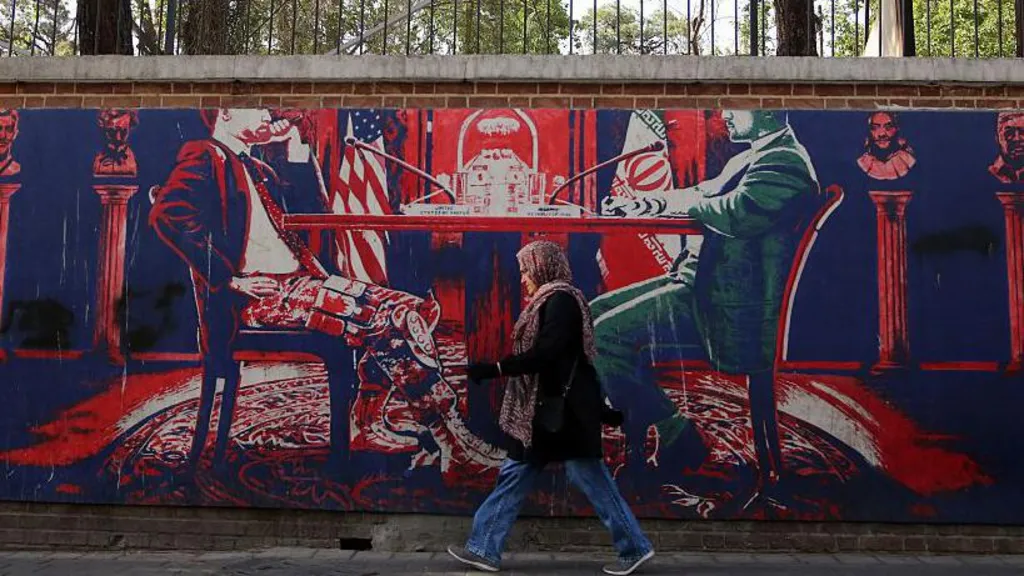
A mural in Tehran depicting negotiators, Anadolu via Getty
 
The Iranian regime is ecstatic; their not-without-reason interpretation of the Memorandum of Understanding is a surrender by the United States to the greater bargaining power and wisdom of the Islamic Republic whose tactical brilliance in closing the Strait of Hormuz sent U.S. President Donald Trump's triumphant self-congratulatory messages to the world in a tail-spin of second-think. "Oil-down" this master negotiator acknowledged as he became complicit with the Iranian regime's inexorable hold on power.
 
Sinking the Iranian navy, bombing its air defences and nuclear and missile sites was a clear military victory advantaging the United States over an obdurate, resilient enemy. The death of the totalitarian mastermind Ayatollah Ali Khamenei was a triumph of decapitation, or it would have been in any ordinary theocracy that was not backed by an Islamist-obsessed Republican Guard Corps, having at its service men schooled in a death cult subservient to a hidden Mahdi soon to arrive and demolish undeserving humanity.
 
Then came the blockage of the Strait of Hormuz, the attacks on Gulf oligarchies and the West reeling under an economic shock and rising energy prices, and the game suddenly turned sideways. Hesitating to invade and destroy the Islamic Revolutionary Guard Corps and the remnants of the regime's senior figures the American President held out the white flag of surrender while declaring its military victory, and its reconsideration over replacing the regime to release the Iranian people from its totalitarian bondage.
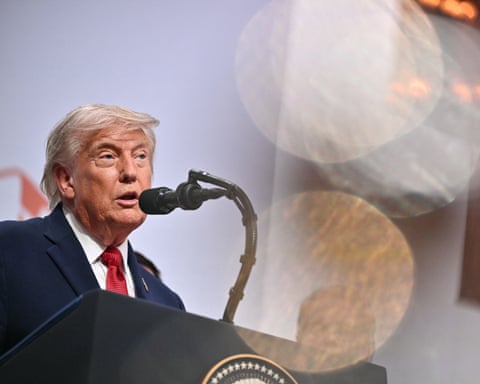
 
Donald Trump addresses the media at the G7 summit in Evian, France, 17 June 2026.
Donald Trump addresses the media at the G7 summit in Evian, France, 17 June 2026. Photograph: Mandel Ngan/AFP/Getty Images
 
The vaunted Memorandum of Understanding which excluded Israel from the partnership between the United States and the Jewish state in reality unleashed Israel from the unbreakable bond of mutual trust, friendship and comradely military functionality. Israel lacks the appeal of wealthy Gulf states whose gilded pomp and oil production figure so large in world prosperity. All the more so when one such as Qatar can bedazzle the U.S. President with its generous shower of lucre and impressive gift-giving.
 
The MOU's "the Islamic Republic of Iran reaffirms that it shall not procure or develop nuclear weapons", and "the disposition of stockpiled enriched material" will be resolved by the International Atomic Energy supervising the process need not be questioned for the surface relief it promises, with the Islamic Republic whose word of honour has become a metaphor for conniving, threatening psychopathy. 
 
"The Islamic Republic of Iran will maintain the current status quo of its nuclear program, and the United States of America will not impose any new sanctions and will not deploy additional forces in the region", according to the Memorandum of Understanding. Why would anyone dare question the reliability of such grandiloquent promises, unless they have had the misfortune of being on the receiving end of Tehran's ballistic missiles?
 
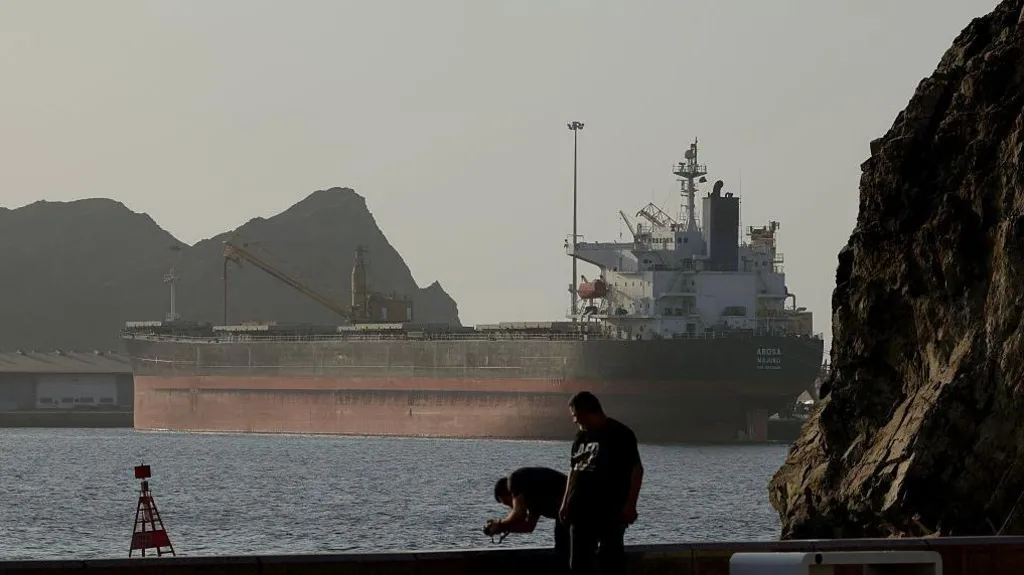
As a reward for its "compliance", the U.S. is prepared to develop a $300-billion plan for "the reconstruction and economic development of the Islamic Republic of Iran" and it will "terminate all types of sanctions", unfreeze Iran's bank accounts, and allow Iranian oil to flow, relinquishing control of the Strait of Hormuz to Iran and Oman.  Truly a victory for the ages.
 
https://ichef.bbci.co.uk/news/1024/cpsprodpb/5277/live/e2c02aa0-6b01-11f1-8317-e1f912f75a64.jpg.webp
Shipping in the Strait of Hormuz on Wednesday, Anadolu via Getty


Labels: , , , , , ,

Wednesday, March 04, 2026

The Best Laid Plans of Iranian Succession : Confusion and Chaos

"The martyrdom of the Supreme Leader at the  hands of Israel and the criminal America was a great disaster for our country."
"With the power of God, we will continue the path of the Imam, the path of the dear leader, and the path of all those who seek justice in the world with power." 
Iranian President Masoud Pezeshkian
 
"Irrespective of what the guidelines say and what the politics may have been, it was always going to be improvisational."
"Under the circumstances of an existential conflict, the succession process is going to be very much dictated by the context of the moment."
Suzanne Maloney, vice-president, Brookings Institution
 
"The structure of the Islamic Revolution has been designed in such a way that after the martyrdom of any commander, at any rank or level, qualified and capable individuals immediately replace them."
Fars News Agency
 
"The succession process is not key in the short term because they're going to try and fight on."
"Firing off missiles does not require a supreme leader." 
Alex Vatanka, Iran analyst, Middle East Institute
https://i.cbc.ca/ais/cb68e99b-0a10-4c4b-b552-67804be00d3e,1772462712616/full/max/0/default.jpg?im=Crop%2Crect%3D%28454%2C0%2C5333%2C3999%29%3BResize%3D796
Plumes of smoke from two simultaneous strikes rise over Tehran on Monday. (Mohsen Ganji/The Associated Press)
 
The first step in a process of succession in the aftermath of confirmation  of the death of Supreme Leader Ayatollah Ali Khamenei resulting from an Israeli aerial attack on his compound containing the Ayatollah's offices, was announced. That a commission of three experts as called for in Iran's constitution, would meet to select the next supreme leader. Unfortunately, while the experts and others around them were in close consultation the building they were in was bombed to smithereens.
 
Evidently, before that happened, the decision was promulgated. Although Ayatollah Khamenei was said to have spurned the idea of  succession, even though rumour had it that he was grooming his oldest son to succeed him, the panel of experts had decided on elevating that son to the now-empty position of Grand Ayatollah. That, despite that the son did not have the required scholarship credentials to obtain that role. 
 
Image
Iran International reports the Assembly of Experts has elected Ali Khamenei’s son, Mojtaba Khamenei, as his father’s successor.
 
According to President Pezeshkian, an interim leadership council was struck to begin the process of overseeing the country locked in war with the  attack of its government institutions by the combined military forces of the United States and Israel. Moreover, it was latterly reported that the building housing the deliberating council was bombed: "Following the decapitation of 88 Members of the Islamic Supreme Council, which was set to choose the Ayatollah regime's next "Supreme Leader"; Mossad announced: "It doesn't matter who is chosen today; his fate has been decreed. Only the Iranian nation will choose their future leader."
 
https://i.cbc.ca/ais/beb3ef45-2594-4c1d-b105-ea98507ec56f,1772547031609/full/max/0/default.jpg?im=Crop%2Crect%3D%28225%2C0%2C5333%2C3999%29%3BResize%3D796
Following the U.S.-Israeli attack that began on Saturday, Iran retaliated by firing waves of missiles and drones at Israel and targeted U.S. allies in the region. Here, boys watch as a tall smoke plume billows following an explosion in the Fujairah industrial zone in the U.A.E. (Fadel Senna/AFP/Getty Images)
 
With the elimination of many contenders and in the current regime instability various rivals and factions are certain to emerge, each claiming their right to assume wartime power in the face of questionable support from the country'[s military establishment. The solution to which may be a decision to retain the temporary council, but then the fact is the temporary council is now rather unavailable, given that blast that destroyed the building they were meeting in. 
 
Even though Mojtaba Khamenei was widely expected to be favoured as his father's successor, Grand Ayatollah Ali Khamenei resisted the transfer of the supreme position along hereditary lines. Such a move would smack too greatly of the ruling system of the Pahlavi dynasty, when the Shah was replaced by the Islamic Republic under Ayatollah Ruhollah Khomeini, the founder of the Islamic Republic. 
 
In Iran the supreme leader is a high-placed religious figure considered to be a representative of God, while also being the head of state. During the 37 years that Ali Khamenei served, he expanded his power and the scope of his rule over the civilian government which itself was elected under a quasi-democratic rule. As such the Grand Ayatollah had the power to wield final decision-making on all manner of regime initiatives, even as he also consulted.
 
What the Iranian Shiite regime -- or what is left of it -- has failed to take into account is its future presence in the Middle East where it has succeeded through its violently hostile actions toward its Sunni Arab neighbours by sending endless streams of missiles and deadly drones into their territory, attacking both oil extraction sites and civilian infrastructure and in so doing inciting deadly enmity from those same neighbours, is the future consequences. Saudi Arabia, the UAE and others will never now countenance a continuation of the Islamic Republic. 
 
https://i.cbc.ca/ais/4c96b5ed-0aea-4147-b67a-151e0a826c6a,1772548863341/full/max/0/default.jpg?im=Crop%2Crect%3D%28182%2C0%2C3200%2C2400%29%3BResize%3D796
The U.S. and Israel launched a new wave of attacks on Iran on Tuesday, as the conflict entered its fourth day. Here, plumes of smoke rise following reported explosions in Tehran early Tuesday. (Atta Kenare/AFP/Getty Images)


Labels: , , ,

Sunday, July 10, 2022

Canada, Leaving Afghans in the Lurch of Taliban Vengeance

"In Afghanistan, there is the risk of detention and prosecution for those who want to get a passport under the Taliban."
"Those who worked for the Canadian government and international partners -- the risk is always there."
"We wish and we hope there will be a more flexible approach when it comes to documentation inside Afghanistan and also the paperwork that is required in terms of bringing people to 
Canada."
"Women are being gradually but systematically erased from public life. They are denied access to education, they are not able to work, they cannot protest — it means they gradually become invisible." 
"Afghanistan is the only country in the world where girls are denied a secondary education."
"I am very much hopeful that the outcome will help with a kind of solution that will help with the humanitarian aid to Afghanistan, without helping the Taliban consolidate their power, without legitimizing the Taliban."
"[he Taliban are becoming increasingly hard-line and  not a moderate or more inclusive version of the previous regime; they are] the same old Taliban — they have not changed."
Hassan Soroosh, Afghan Ambassador to Canada 
20220708130756-72615691cd2c6fd6235b7a259c0b6605301387259d5e8b38050e7abcc72962db
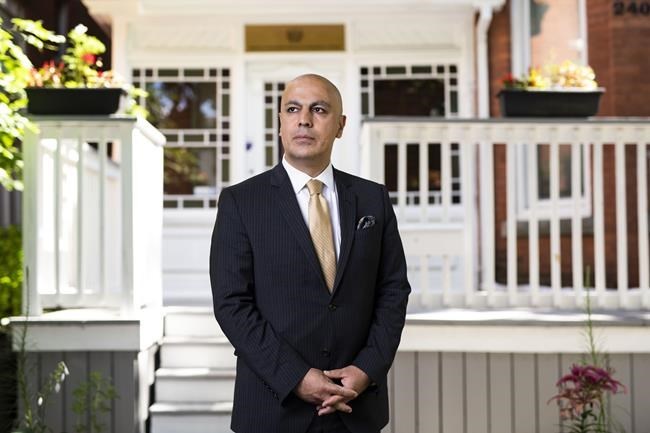
Ambassador of Afghanistan to Canada Hassan Soroosh stands outside the Embassy of The Islamic Republic of Afghanistan in Ottawa, on Thursday, July 7, 2022. THE CANADIAN PRESS/Justin Tang

Clearly this fearless man is not speaking on behalf of the current government of the Islamic Republic of Afghanistan, but is reflecting the sensibilities of the previous Afghan government which gave him his appointment to represent the country in Canada. He dare not himself return to his country of origin as long as the Taliban remain in power, but his concerns are for fellow Afghan civilians and those whose lives are in danger under the present regime. His office continues to represent the interests of Afghan citizens outside Afghanistan requiring consular assistance.

And he is extremely concerned over the plight of people whom the government of Canada pledged it would extend security to as a recompense for their services to the Canadian diplomat corps, Canadian servicemen and Canadian charitable groups as translators and office workers while Canada deployed its troops along with other NATO countries in the U.S.-led mission to the country in an effort to ward off the Taliban, combat members of al-Qaeda and help the country modernize itself toward democracy and the upgrades of civic installations.
 
Taliban fighters stand guard at the site of an explosion in front of a Sikh temple in Kabul, Afghanistan on June 18. (Ebrahim Noroozi/The Associated Press)
 
Canada is one of the few countries involved in Afghanistan that has failed to honour its promise to withdraw vulnerable Afghans from the repressive threatening searches of the Taliban for people who they claimed 'betrayed' Islamic values by befriending and assisting foreign countries that invaded Afghanistan to free it from the first restrictive and oppressively violent Taliban rule. While other countries devised ways to extract those who gave aid to their military, those awaiting Canada's promise to be fulfilled remain in danger.

Canadian veterans' groups who worked with Afghan volunteers and workers as well as Canadian humanitarian charitable groups and members of the Canadian political opposition have all called upon the ruling Liberal government of Prime Minister Justin Trudeau to live up to Canada's obligations, to no avail. Complex paperwork must be completed, and special visas approved in a long, drawn-out process that leaves vulnerable people in danger. The year that has passed since the pullout of Western countries leaving the population of Afghanistan at the mercy of the Taliban has failed to convince the Canadian government of the urgency for it to act.
 
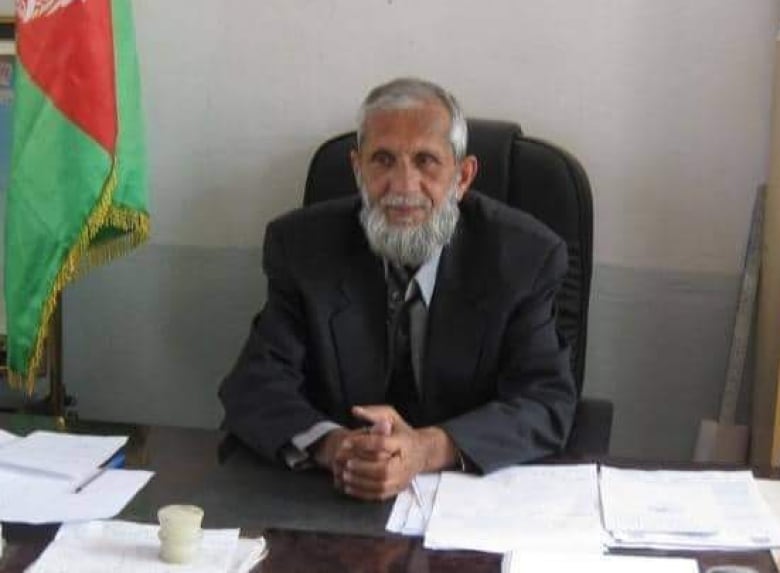
Painda Mohammad Noori, a former schoolmaster, died of a heart attack in Pakistan while his family waited for news in Islamabad about when they might be able to travel to Canada. (Submitted/Jamil Ahmad Noori )
 
Ambassador Soroosh emphasizes that those Afghans who committed to helping Canada prior to the Taliban's return have been left in a state of "high vulnerability", calling on Canada to widen the eligibility criteria for arrival to Canada under a humanitarian program meant to expedite vulnerable Afghans to Canada who face Taliban persecution. A need also exists, he emphasized, to provide Canadian charities aiding Afghans with needed paperwork to enable them to get on with their work.

Some Afghans awaiting final paperwork to enable them to board flights to Canada were able to leave Afghanistan to take up temporary haven in Pakistan on visas that have now expired. Leaving them at real risk of being involuntarily returned to Afghanistan and Taliban reprisals. Aidan Strickland, a spokeswoman for Canada's Immigration Minister, gave assurances that her department "can help facilitate travel to Pakistan", but not, unfortunately 'facilitate travel to Canada'.

A group of Afghans seeking to come to Canada on special immigration measures for former employees of the government and their families, hold a protest over travel delays in Islamabad on Canadian consular grounds in early May. (Submitted/Asad Ali Afghan )


Labels: , , , ,

Follow @rheytah Tweet