"Strong combat broke out in numerous areas of the 2,600-kilometer
Durand Line in early October 2025, especially in the vicinity of Kunar,
Spin Boldak–Chaman and the Kurram tribal region. While Kabul denounced
Pakistan’s retaliatory airstrikes in Kandahar and Paktika as flagrant
violations of sovereignty, Pakistan accused
the Taliban government of providing sanctuary to Tehrik-e-Taliban
Pakistan (TTP) militants responsible for deadly raids inside Khyber
Pakhtunkhwa and Balochistan. Numerous people were killed in the
fighting, which also blocked important commerce routes and interfered
with humanitarian supplies."
"After the two regimes declared an emergency ceasefire
on October 19, Qatar and Turkey mediated the conflict in Doha. Both
governments promised to stop the attacks, restore communication
channels, and set up verification processes. Although the truce provided
temporary respite, it revealed underlying structural divisions,
especially in relation to Pakistan regime’s demand that Taliban regime
stop TTP activities and the Taliban’s insistence that Pakistan respect
Afghan territorial integrity."
Australian Institute of International Affairs
The
U.S.-led invasion of Afghanistan in 2001 under UN approval in the wake
of 9/11, saw a multitude of countries joining Operation Enduring
Freedom, mostly NATO members. At that time Pakistan aligned itself on
the surface with the U.S.declaring itself part of a coalition fighting
terrorism. While in actual fact, the Taliban was given haven in
Pakistan, as was Osama bin Laden, living at Abbottabad not far from a
Pakistan military base. Pakistan's own Taliban was just getting started,
inspired no doubt, by the Afghan Taliban.
Fast
forward to the present, and Afghanistan now governed by the
fundamentalist Taliban. Pakistan's designs on controlling Afghanistan,
and keeping India out of the country have rather soured now that the
Taliban for better or for worse -- and as it happens, much worse -- is
in power and Pakistan now struggling against its very own terrorist
Taliban, blames the government in Afghanistan with sheltering
Tehreek-e-Taliban Pakistan, and for its troubles having Pakistan
penalize it by cutting off a vital trade route.
One
of the largest, once-bustling markets in Peshawar where thousands of
shops owned by Afghans selling a wide variety of consumer goods is now a
wan image of itself with the closure of hundreds of Afghan shops. A
deep chasm has resulted between Afghanistan and Pakistan with their
traditional trade routes impacted with cross-border trade having been
cut by Pakistan as punishment for the Taliban administration failing to
cooperate with Pakistan's demands it stop giving haven to the terrorists
that have attacked and killed members of Pakistan's military.
Millions
of farmers, traders and communities in both countries have been
impacted by the suspension of trade. Trucks carrying coal, cement,
pomegranates, cotton, medicine and other goods valued to $2 billion in
bilateral trade have been held up for months. Pakistan's 250 million
population represented a plentiful consumer base for Afghanistan. But
they and access to India -- vital to the Afghan economy -- have been hit
a powerful blow for the Taliban government, already suffering from the
forced return of over 2.5 million of its nationals from neighbouring
countries, and the damage inflicted by two deadly earthquakes.
Hundreds of trucks and trailers have been standing idle since October 11
near the busiest border crossing between Pakistan and Afghanistan,
after deadly clashes resulted in suspension of trade |Photo: Reuters
Hundreds
of trailer trucks have been parked along the road running through the
border near Peshawar, since October 11. Most crossings have been barred
by Pakistani border guards, with the exception of Afghan nationals
returning home. "When they stopped us here, it was still summer. Now winter is right upon us",
moaned Abdul Wakeel at the Torkham border crossing. Although the
Taliban denied supporting Pakistani Taliban, Pakistan expelled over a
million Afghans and carried out strikes on Kabul and Kandahar, resulting
in the deaths of dozens of soldiers on both sides.
Over
half of Afghanistan's 42 million people require humanitarian
assistance, while containers brimming with aid stand blocked at the
border. Pakistan itself faces a rising poverty rate of 25 percent; the
trade standoff benefits neither country. Peshawar, about 48 kilometers
from the border with a sizeable Afghan population among its two million
residents, has been struck particularly brutally by the situation. "We're caught in between the politics of two countries", observed Syed Naqeeb Badshah, president of a lobby group representing Afghan traders in Pakistan, resignedly.
These trucks are loaded with the belongings of Afghans attempting to
return to their country after Pakistan closed border crossings with
Afghanistan. They were pictured at the border crossing
in Chaman, Pakistan, on Oct. 16. Reuters
"[Afghans
endured hardships and sacrifices for fifty years so that Islamic law
[Sharia] could be established to save people from] corruption,
oppression, usurpation, drugs, theft, robbery and plunder."
"These
are great divine blessings that our people should not forget and,
during the commemoration of Victory Day [August 15], express great
gratitude to Allah Almighty so that the blessings will increase."
"If,
against God's will, we fail to express gratitude for blessings and are
ungrateful for them, we will be subjected to the severe punishment of
Allah Almighty."
"[The
Kabul Municipality must build more mosques and focus on identifying
means to] further consolidate and fortify [the Islamic government of
Afghanistan]."
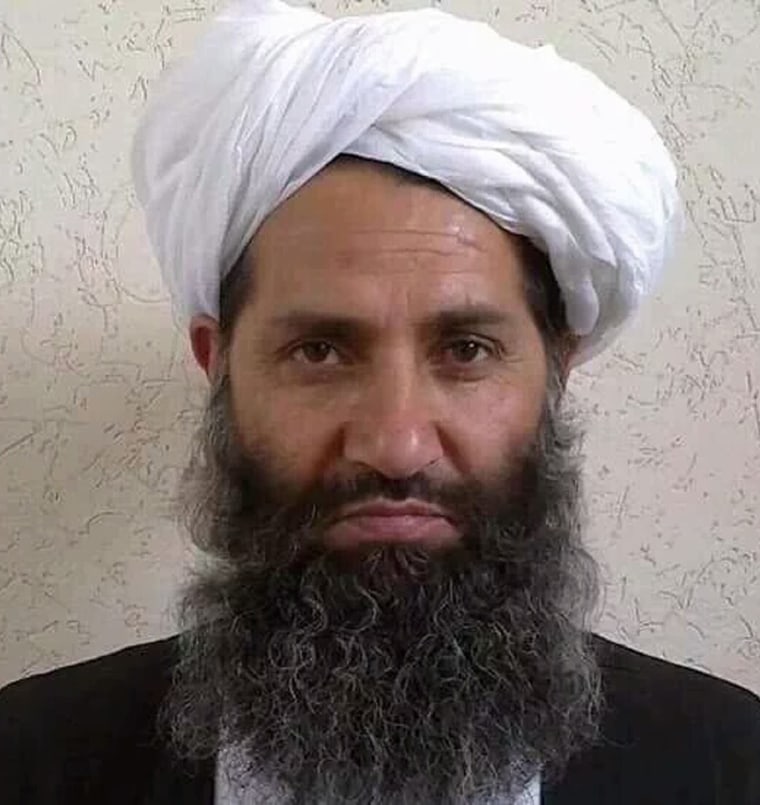
Taliban leader Hibatullah Akhundzada
"This day marked the beginning of a black domination that excluded women from work, education, and social life."
"We, the protesting women, remember this day not as a memory, but as an
open wound of history, a wound that has not yet healed."
"The fall of
Afghanistan was not the fall of our will. We stand, even in the
darkness."
"Forgiving the Taliban is an act of enmity against humanity. August 15th is a dark day."
United Afghan Women's Movement for Freedom
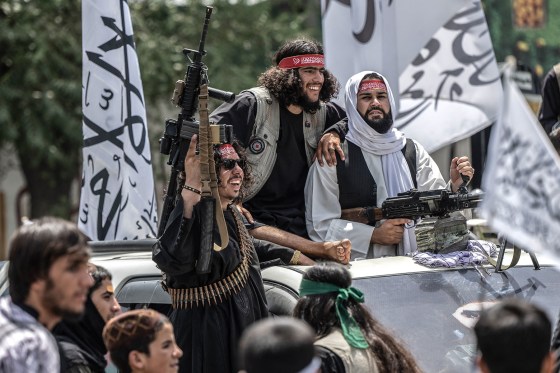
A convoy of Taliban security personnel celebrates the fourth anniversary of the Taliban takeover in Kabul on Friday. Wakil Kohsar / AFP - Getty Images
"It's not a good thing [deportation from Qatar to Afghanistan]. The possibility of being killed is really high."
"We believe that with the education and kindness, we can build a brighter future."
We are going to make everyone proud."
Parissa Ahmadi, graduate, American University of Afghanistan business program, Qatar
"It's a death sentence for them if they are sent back [to Afghanistan]."
"I
can't even imagine them returning. Everybody's terrified. These were
the writers and the most educated women in Afghanistan who wanted to
have freedom, democracy, human rights, formal education before they
fled."
"I went to school, I got my degree and now I have my own business here. I don't take a second of my life in Canada for granted."
"They
can't even land at the Kabul International Airport. Because as soon as
they land, the Taliban will ask them: 'Where is your [male chaperone]?'
Friba Rezayee, founder, Women Leaders of Tomorrow, Vancouver
Among
30 female students from Afghanistan who were evacuated from their home
country after the Taliban took over the country four years ago, is
23-year-old Parissa Ahmadi. The University of Regina along with an
advocacy group is raising funds to help relocate these 30 women to
Saskatchewan where they can continue their education. Their scholarship
funding in Qatar had been interrupted when the U.S. government stopped
its program for international aid.
So
far, said Friba Rezayee, about $140,000 of the required $500,000 needed
by the University of Regina to cover their tuition has been raised. The
president and vice-chancellor of the University of Regina, Jeff Keshen,
assured the space to provide the women with free housing meals is
there, if the tuition is successfully raised. The university is prepared
to expedite offer letters for the women since they are already
qualified students of law, business and computer science.
Sign at the University of Regina.Photo by TROY FLEECE /Regina Leader-Post
A
problem has arisen due to the student visas being delayed in respect of
a cap placed on international students last year by the federal
government. "They're
not just going back to an area where their education is going to be
denied, but their hopes and dreams are going to be dashed", commented Mr. Keshen. "It's tragic."
The
university reached out to the federal government expressing its
willingness to accept the women, informing the immigration ministry that
student visas will be required as soon as the funds are raised. "Canada has welcomed over 59,000 Afghans since the fall of Kabul in August 2021", responded a spokeswoman or the ministry, and the department continues to process eligible applications: "Visa applications are considered on a case-by-case basis".
Meanwhile,
the university in Qatar has informed the Afghan students that they must
leave the country by the end of August. Rezayee herself moved to
Vancouver as a refugee in 2001. She was one of Afghanistan's first
female Olympians, competing in judo. Afghanistan, she explained, is the
only country on the globe to ban education for women.
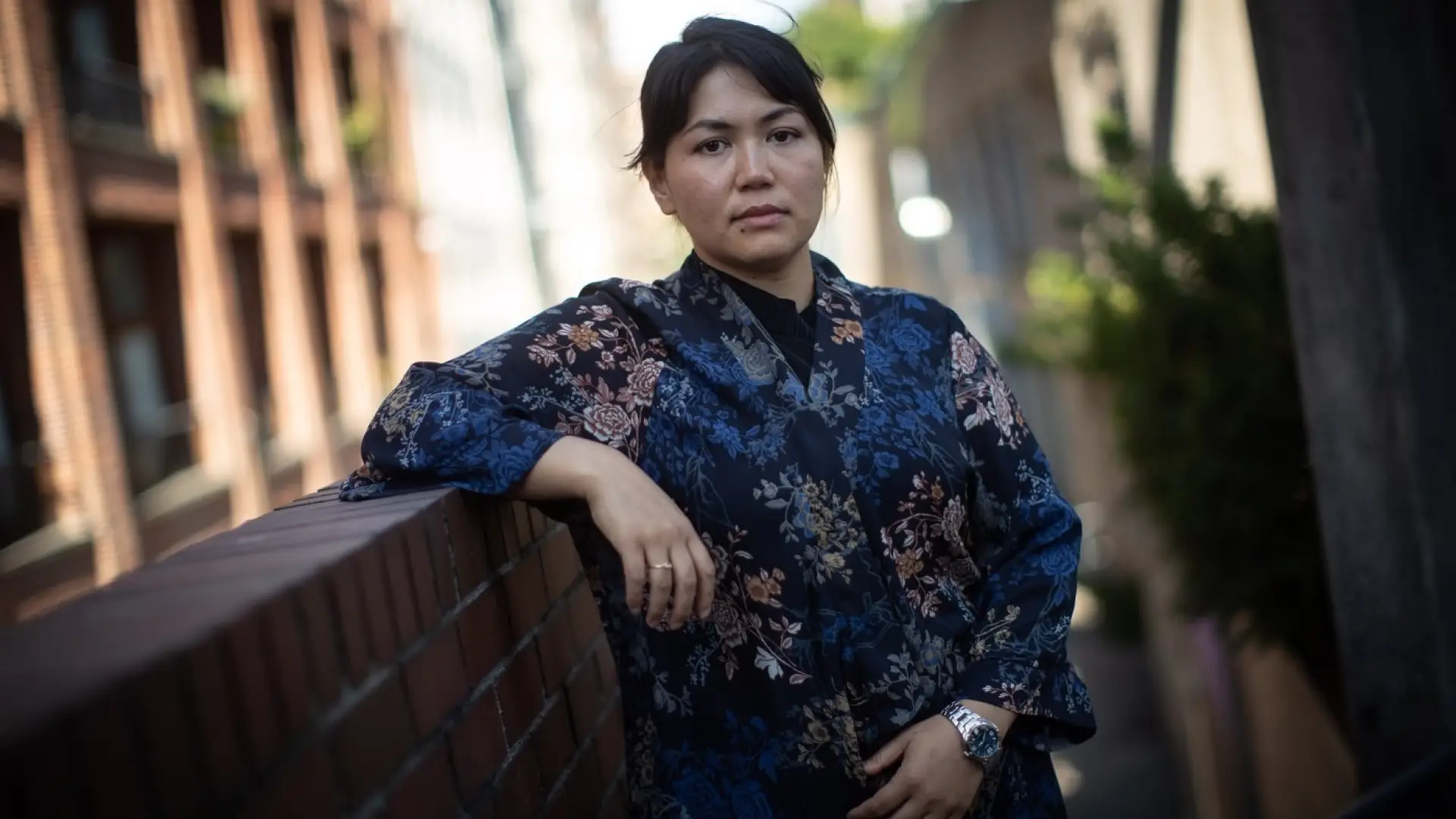
Parissa
Ahmadi related that members of the Taliban had interrogated her and
taken passport photos as she left Afghanistan for Pakistan then boarded a
plane for Qatar. She worked at a Qatari immigration office while
obtaining her degree. Her earnings were sent to her sisters and brothers
in Afghanistan as the family's sole provider. She is determined, given
the opportunity, to pursue more education at the University of Regina.
Parissa Ahmadi is seen in this undated handout photo. THE CANADIAN PRESS/Handout
"Our analysis shows that by 2026, the impact of leaving 1.1 million girls out of school and 100,000 women out of university correlates to an increase in early child-bearing by 45 percent and an increase in maternal mortality by up to 50 percent."
Alison Davidian, Country Representative, UN Women in Afghanistan
"Women like us, who fought against the Taliban and their ideology, need to be in safety."
"The Taliban shut down and destroyed everything I had in my facility [small farm where she kept animals as an animal-rights activist]. They're also against keeping pets. "
"With such routine [being virtually a prisoner in her own house] life becomes meaningless as you cannot do what you want outside your home."
"There were days I couldn't get out of bed [deep in depression]."
Negin, former UNICEF worker from Mazar-e-Sharif, Afghanistan
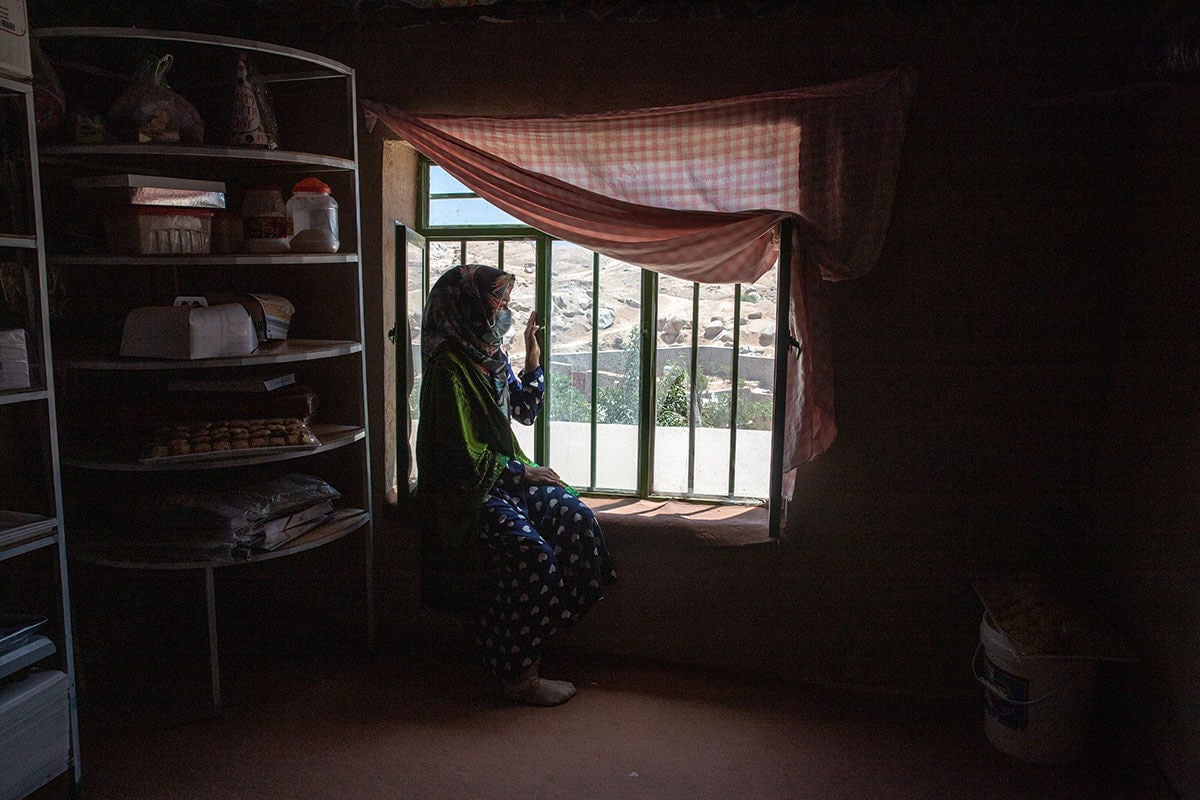
A 31-year-old woman sits by the window. She used to be an entrepreneur
before the Taliban takeover. Photo: UN Women/Sayed Habib Bidell.
Up to four years ago, under the auspices of the U.S.-led international forces that dispelled Taliban rule and searched for the leader of al-Qaeda, Osama bin Laden, the eminence grise behind the deadly New York/Washington/Pennsylvania aerial suicide attacks of September 11, 2001, Afghanistan had its re-introduction to democracy and women were freed of the restrictive talons of the Taliban imposed upon them since 1989 following the Soviet Union's departure from Afghanistan after its failed invasion.
In the presence of the Western coalition -- the twenty years from 2001 to 2021 introduced the war-torn country to sweeping social and economic changes. Afghans become involved in sports which both genders participated in, as well as music concerts with male and female singers. Cafes and restaurants served both men and women, after the Taliban years when women were not seen in public, confined to their homes, and permitted outside fully covered only in the company of male relatives.
Women could not be treated by male doctors, nor could they attend hospitals meant for men only. Female surgeons in women-only hospitals served in operating room surgical procedures fully garbed in burqas.Women wee lashed in public squares, stoned in sports stadiums and punished for lack of adherence should they refuse to wear the hijab.
In contrast to the situation that prevailed under the U.S.-led coalition, when four million girls were enrolled in school from Grades 1 to 12 in the years 2002 to 2021. There were over 80,000 female teachers in over 18,000 schools while 100,000 Afghan women attended universities. The Afghan parliament had 63 elected female MPs, fully one-third of the total legislators; female journalists and media workers challenged male-dominated officialdom. Women served as cabinet ministers, mayors, governors of provinces, while women also operated small businesses, unlike the Taliban years when women were not permitted to work outside of their homes.
Until the Taliban succeeded on August 15, 2021 when the Afghan capital Kabul was captured by the resurgent Taliban. Ashraf Ghani, president of the Republic of Afghanistan, backed by the Western coalition fled to the United Arab Emirates and the nation was in chaos, as the United States withdrew all its troops and diplomatic officials in a 'peace deal' with the Taliban, and the allied nations under UN auspices departed, along with the U.S., leaving the country's population in the hands of the Taliban once again.
Many Afghan women and girls are forced into unwanted marriages. Photo: UN Women/Sayed Habib Bidell.
"I cried out loud when I got engaged. I felt helpless and found
myself in a situation where I had no say in my decisions. I was in my
second year of university, studying law and political science, and I
aspired to work in the judicial system to protect women’s rights in our
country. Unfortunately, my dreams were shattered after the return of the
Taliban."
"Many of my friends have faced similar fates, giving up their hopes
and marrying against their will. For all girls who have been unable to
complete their education, marriage is not a choice but a forced
reality."
Mahnaz, from Farah, former university student
Although the Taliban leadership promised the West, in a bid for acceptance and badly needed investment by the West in economically starved Afghanistan, for international investment, and recognition by global bodies, that women's rights would be observed, that the rights of minority groups in Afghanistan would be protected, they soon returned to the former strictures imposed upon women and girls where both could be punished for not adhering to the Taliban's dress code.
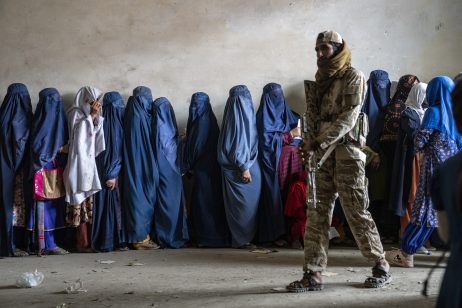
Once again afghan women could appear in public only covered from head to toe by all-enveloping burqas which also covered their faces. Beyond Grade 6, girls could no longer attend school, and university education for women was banned. No offices and workplaces could accept female employees. Women are banned from public places, parks, and nor may they travel long distances in the absence of a male guardian. Medical training as nurses or midwives no longer is permitted.
Ebrahim Naroozi, AP
"Several times I was thinking of committing suicide because there was no hope and future for me. Women cannot laugh with one another in public. Women cannot go to parks. Women cannot work and study. Do you see hope for yourself?" Of course not, and it makes you think of ending your life."
"Whenever she sees a Talib, she [her twelve-year-old daughter] is scared of them. That's why she always stays at home and cannot go out. She is depressed all the time."
"Whenever she sees girls going to school and living freely in the West [watching television or on social media], she asks me 'Why don't I have such a life and freedom?' Her question stabs my heart like a dagger."
"The most painful part is that I can't do anything for her."
"In exchange for a peace deal with the Taliban, the world traded Afghan women and their future."
"Small and big Taliban commanders were coming to my office and asking,
‘How can I get a mine?’"
"I was asking them, ‘Do you have any
experience in mining?’ ‘I don’t.’"
"Do you have a partner?’ ‘I don’t.’
‘Do you have money?’ ‘I don’t.’"
Rahimullah Samandar, former chief executive, Afghanistan Chamber of Industries and Mines
"When the people of Afghanistan are facing poverty and unemployment,
it’s needed that we tap our natural resources."
"We welcome investment
from foreign countries in the mining sector."
Muhail Shaheen,
head of the Taliban’s political office in Doha
"Afghanistan is likely to be looking at trying to maximize the
revenue and not only maximize it but get it as soon as possible."
"So they’re liable to
look the other way, which is going to come back and bite them."
"If they’re really going to make money in the long run, they need to do it on a much bigger and more professional scale."
David Chambers, founder of the Center for Science in Public
Participation
"[Afghanistan is] an important partner."
"China encourages Chinese companies to invest and
start businesses in Afghanistan . . . [and] supports Afghanistan in
making full use of its natural endowment of rich mineral resources."
Chinese Ministry of Foreign Affairs
Provincial officials inspecting an emerald at auction in Bazarak, capital of Panjshir Province. Elise Blanchard/The New York Times
Rich in minerals; copper, gold, zinc, chromite, cobalt, lithium, industrial minerals and precious and semi-precious gemstones such as emeralds, rubies, sapphires, garnets and lapis lazuili, Afghanistan is seriously exploring all avenues to enrich itself through mining investments primarily from countries like China, Iran and Russia. In the past four years agreements have been signed with scores of investors. The country's feeble economy is badly in need of income, and exploiting its natural resources appears the economic remedy to its need for operating funds.
In Afghanistan investments, China has become the primary investor with Russian and Iranians close behind, signing mining licenses. Rare earth elements, according to the Office of the Special Inspector General for Afghanistan Reconstruction (U.S.), are also there in abundance; altogether its resources have been valued to at least $1trillion in mining resources. Rare earth elements sought after by both the United States and China for their use in mobile phones, laptops and electric vehicles.
During its 20-year occupation of Afghanistan, fighting the Taliban and al-Qaeda, the U.S. government shed close to a billion dollars in developing mining projects in the country. According to the special inspector general, a U.S. agency, however, "tangible progress was negligible and not sustained". Much of which was due to a lack of security, poor infrastructure and endemic corruption. In the wake of the U.S./NATO withdrawal from Afghanistan and the loss of aid funding, the Taliban are desperate for a revenue stream.
The U.S. provided about $143 billion for development and humanitarian assistance to Afghanistan, which supported the U.S.-aligned government of the day. Even with the Taliban now governing the country, the U.S. provided $2.6 billion in development and humanitarian aid. Over the past two years, according to the World Bank, the Afghan economy shrank by 26 percent thanks to a sharp decline in international aid leaving the country "without any internal engines of growth".
An old four-story building on a busy commercial street in Kabul serves as a gemstone market, housing dozens of cell-like shops. The New York Times
Opium production which funded the Taliban while it was attacking NATO and U.S. troops during the occupation, has now been banned. With farmers no longer growing poppies for the opium trade, the country has experienced a loss of 8 percent of its gross domestic product since land under poppy cultivation was reduced by 95 percent. Now Afghan authorities have placed their hope in mining as a replacement for poppies as a steady revenue stream.
Uzbek companies have agreements to extract oil in northern Afghanistan, while Turkey, Qatar, China and Iran have placed their investments in iron, copper, gold and cement mines. The government issued 560 emerald licenses in Panjshir Province, with licenses granted as well to mine rubies in Panjshir and Kabul provinces.
Many existing mines are hampered by poor infrastructure and a dire lack of experienced engineers and technical experts. Similar to the situation that prevailed in Saudi Arabia when it first began extracting oil from its vast resources, when it was Western knowledge, experience, and technicians who pumped and refined the oil and retained most of the profits. Hamayoon Afghan of the Ministry of Mines and Petroleum sees to it that foreign investors are obliged to employ and train Afghans.
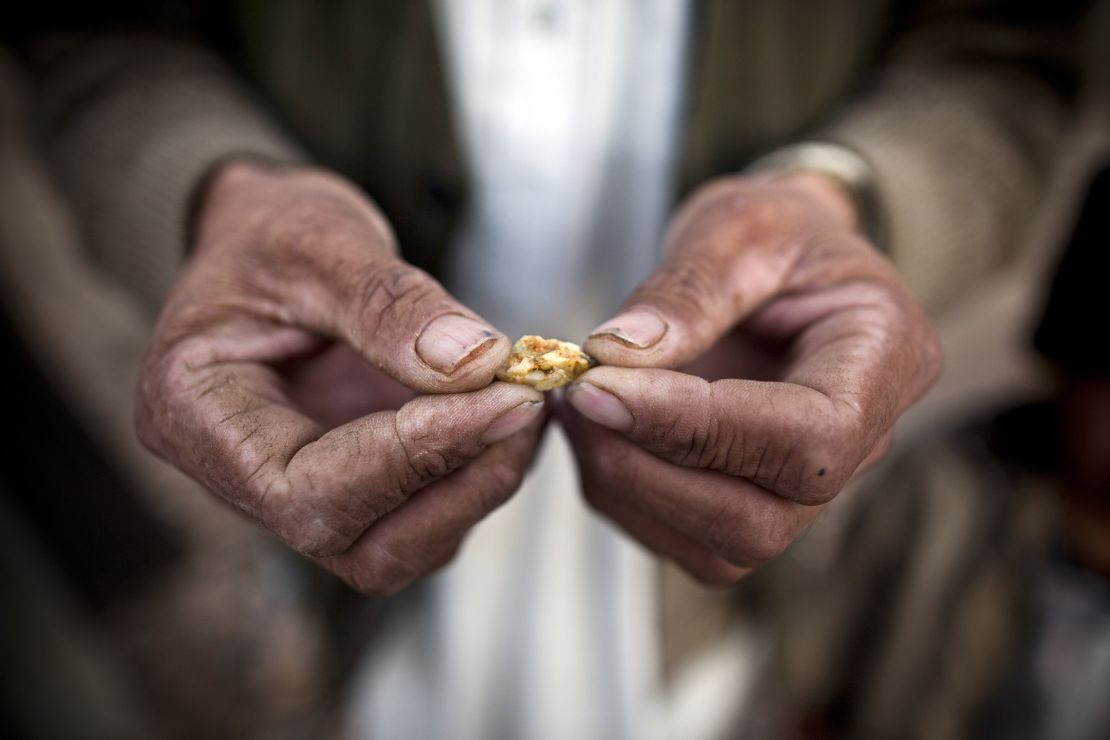
An Afghan man holds a small piece of gold, prospected from the site of a proposed Qara Zaghan mine. Benjamin Lowy/Getty Images
Taxes from the sales at auction of emeralds are already being collected. Previously, warlords and politically connected dealers dominated the emerald trade, and tax collection was far from government-organized. Now, however, the Taliban government with its weekly emerald auctions controls and taxes all sales.
"The government needs the money to develop the country [so I don't mind paying the tax]."
"The question is: Will they spend it on helping the Afghan people?"
"Even when an adult female prays and another female passes by, she must not pray loudly enough for them to hear."
"How could they be allowed to sing if they aren’t even permitted to
hear [each other’s] voices while praying, let alone for anything else."
"[These are] new rules and will be gradually implemented, and God will be helping us in each step we take."
Afghan Minister of Vice and Virtue, Mohammed Khalid Hanafi
Taliban minister Khalid Hanafi said: “God will be helping us in each step we take”
Credit: AHMAD SAHEL ARMAN/AFP VIA GETTY IMAGES
"Whatever he says is a form of mental torture for us."
"Living
in Afghanistan is incredibly painful for us as women. Afghanistan is
forgotten, and that’s why they are suppressing us – they are torturing
us on a daily basis."
"They say we cannot hear other women’s voices, and I do not understand where these views come from."
Afghan woman, Kabul
The Afghan regime has banned women from working outside the home or attending school and university
Credit: MOHSEN KARIMI/AFP VIA GETTY IMAGES
Women
and girls in Afghanistan have suffered yet another blow to their human
rights. There does not appear to be anything left of their civic,
civilian and feminine rights as human beings to be withdrawn from them.
The Taliban minister of vice and virtue (shades of the Islamic Republic of Iran)
issued a directive in the last week. Women must now no longer recite
the Qur'an aloud in the presence of other women, for it is haram for
their voices to be heard. "If a woman is not permitted to perform Takbit (reading from the Islamic holy book), then how could she be allowed to sing?" So singing is out as well.
According
to strict Islam, the voice of a woman is considered awrah; that which
must be covered and should not be heard in public, not heard even by
other women, according to Minister Mohammad Khalid Hanafi. Known for his
Islamist piety in the West, Hanafi is blacklisted by the United Nations
(for what that's worth) and sanctioned by the European Union (which is doubtless of zero concern to the man, attuned to the sub-humanity of females).
From
August 2021 when Western powers decamped from Afghanistan with their
diplomats, their militaries and their human rights groups, and the
Taliban moved from the hinterlands of Afghanistan into governing control
of the entire country, a series of restrictions have been restored in
reflection of how the Taliban ruled that poverty-stricken, benighted,
backward country before 2001. Afghan girls are once again barred from
attending middle and high schools and universities. They may not work in
government and international non-governmental organizations, since
2021.
Social
restrictions have been imposed such as the closure of beauty salons;
women are prohibited from leaving their homes other than in the presence
of a male guardian. When they do exit their home, they must cover their
entire bodies and faces.
"They [the Taliban] are waging an all-out war against us, and we have no one in the world to hear our voices."
"The
world has abandoned us. They left us to the Taliban, and whatever
happens to us now is a result of Western government policies."
"I
feel depressed. The world is advancing in technology and having fun
with their lives, but here we cannot even hear each other’s voices."
"They want us not to exist at all, and there’s nothing we can do about it."
"They may succeed at some point, as many are taking their lives due to the pressure."
"They think ruling Afghanistan is only about suppressing women – we didn’t commit a crime by being born as women."
Former female civil servant under previous Western-supported Afghan government
An Afghan woman searches for recyclable materials at a garbage dump on the outskirts of Mazar-i-Sharif
Credit: ATIF ARYAN/AFP VIA GETTY IMAGES
Taliban
restrictions intensified in the past two months, recounted Samira, a
midwife who traditionally goes by one name. Working in remote villages
in western Herat province for eight years, she said female health
workers are now forbidden by the Taliban from meeting with the male
companions of female patients, complicating health services. "They
don't even allow us to speak at checkpoints when we go to work. And in
the clinics, we're told not to discuss medical maters with male
relatives."
The
United Nations special rapporteur of human rights in Afghanistan
released a new report where the human rights situation in Afghanistan
for women, children and minorities is detailed. A litany of edicts,
rules and policies have been imposed, restricting virtually all aspects
of women's and girls' lives. They are prevented from exercising
fundamental rights; freedom of movement, education, work, health care,
freedom of expression and access to justice.
"Other provisions further cement Taliban control over the lives, bodies and behaviour of women and girls."
"Women
can be punished for singing or speaking outside their homes, while
Muslim women are instructed to cover themselves in front of
'non-believing' women."
"Adult women and men who are not related are forbidden from looking at each other's bodies and faces."
Report, Richard Bennet, UN Special Rapporteur on Human Rights in Afghanistan
Armed Taliban security personnel ride motorcycles during a street patrol Credit: AFP/GETTY IMAGES
"The rising instability and militant attacks provide a window to all
militant organizations, including ISKP [branch of Islamic State centred in Afghanistan], to ramp up their attacks."
"These attacks on police, political rallies and security forces
have ended the brief illusion of peace in Pakistan."
Zahid Hussain, political analyst
"People were chanting 'God is Great' as the leaders arrived."
"[I was standing outside the tent] and that was when I heard the deafening sound of the bomb."
Khan Mohammad, local resident
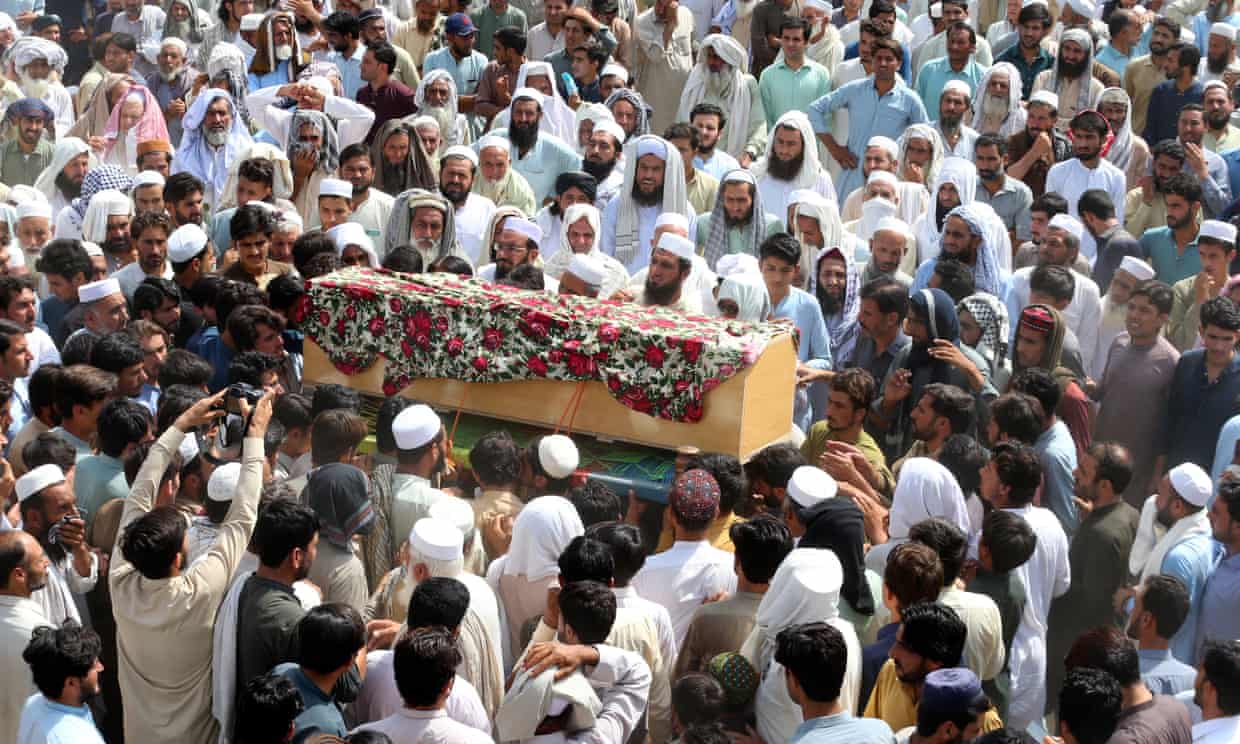
Relatives and mourners carry the casket of a victim killed in Sunday's suicide bombing in Khyber Pakhtunkhwa, Pakistan.Photograph: Mohammad Sajjad/AP
Violent
Islamists have long made a comfortable home for themselves in Pakistan.
It is where Osama bin Laden, the leader of al-Qaeda was given safe
haven at Abbottabad, when U.S. troops in Afghanistan were searching for
his whereabouts after the mastermind of the 9/11 events publicly
celebrated its success. Masquerading as a 'partner' with the West in the
campaign against terrorism, Pakistan's military and its Inter-Services
Intelligence agency founded, trained and equipped the Afghanistan
Taliban, recognized universally as a terrorist group.
Pakistan's
leaders appear to have overlooked the growing militancy of its own
Taliban in the process of supporting one that would eventually misrule
its neighbour. The tribal villages in the mountains between Afghanistan
and Pakistan are a never-ending source of vibrant, violent extremism,
and a threat to Pakistan itself necessitating that the Pakistan military
engage in battles as the tribal extremists made an effort to extend
their territory, endangering nearby nuclear weapons depots.
From
Pakistan, a terrorist group of extremist Islamists infiltrated and
attacked Indian Mumbai in a bloody four-day assault and massacre that
succeeded in killing over 160 people, by Lashkar-e-Taiba (LeT) or Army
of the Pure, in November of 2008. The country is a breeding ground for
terrorist groups. And now the Islamic State has claimed responsibility
for the latest suicide bombing that killed 56 people attending an
election rally for a pro-Taliban cleric.
The
bombing took place in Bajur, wounding close to two hundred people,
killing at least five children. A reflection of tribal/sectarian
antipathies between Islamist groups, present in Kyber Pakhtunkhwa
province, bordering Afghanistan. The ISIL group targeted the Jamiat
Ulema Islam party whose chief is cleric and politician Fazlur Rehman,
with ties to both the Afghan and Pakistani Taliban.
An
estimated thousand people were crowded within a tent near a market, for
a rally preparatory to fall elections. Khan Mohammad, a local resident
who stood outside the tent and witnessed the aftereffects of the bomb
blast, stated later that he had heard people crying for help. Minutes
afterward, ambulances arrived to begin evacuating the hundreds of
wounded people.
An ambulance is set to transport injured people after a bomb explosion
in the Bajur district of Pakistan's Khyber Pakhtunkhwa province on
Sunday. (Rescue 1122 emergency service/The Associated Press)
Investigating
police knew well before the statement implicating the Islamic State in
the carnage, that an initial investigation led them to believe that the
regional affiliate of Islamic State, a Taliban rival, would be the
likeliest source to have been involved. This, despite that a Pakistani
security analyst pointed to factions that had broken off from the
Pakistani Taliban as possible suspects, instead. Pakistan does not lack
for any number of viral, vicious Islamist terror groups; they find their
natural home there.
By
Monday funerals were taking place for the dead. Local customs mandate
that female relatives and children at their family homes, cry out loudly
in their grief, while beating their chests in anguish. Hundreds of men
gathered around to follow caskets to mosques and open areas for funeral
prayers and then to trek into the hills for burial services in rituals
as old as time itself.
Those
that could be treated for relatively light wounds sustained in the
blast were released from hospital while the critically wounded were
transported to the provincial capital of Peshawar by army helicopters.
Some critically wounded people died while in hospital and it is expected
that the death count may yet climb again as more succumb to their
grievous wounds.
A worker inspects the scene of the explosion in the Bajur district of northwest Pakistan on Sunday. (Rescue 1122 emergency service/The Associated Press)
Intelligence, Action and Rescue Failure in Afghanistan
"While a major assault on the capital is not expected in the near term, officials are monitoring key enablers that are essential to sustaining operations, such as access to medical care, airport services, key infrastructure and fuel."
"The embassy is running at reduced capacity and is currently at a 72-hour 'ready to move'[ posture."
"Attacks on these cities could begin as early as July 23 [the end of Eid], but more likely after September 11, the official completion date for the drawdown of international forces."
"The Afghan government is in a far more precarious state than it was even a month ago and there is now speculation that it could fall in a matter of months."
Canadian Intelligence assessment memorandum
Taliban fighters taking over in Kabul, the capital of Aghanistan.Credit...Jim Huylebroek for The New York Times
Before the fall of Afghanistan last year intelligence assessments presented to the Liberal government claimed it would be months before the Taliban took Kabul and in all likelihood, weeks before fighting would resume. Those predictions as is well known, proved catastrophic for Afghans whose position being allied with foreign troops and embassies marked them out for special treatment by the Taliban and who were consequently anxious to escape the country to take advantage of promises given them by the foreign governments they worked for in many capacities, primarily as translators.
Access to information gave journalists the opportunity to request a memo circulating weeks before the Taliban marched into Kabul. Intelligence suggested to Canadian officials that the situation, though dire, could take awhile to resolve, while the Afghan army held on to their positions, challenging the Taliban advance in protection of the current government and the capital city. How wrong they were. And why it should have been a surprise that the Afghan National Army capitulated, withdrew as the Taliban advanced should have been no mystery.
While foreign troops were busy for months on end training enlisted Afghan servicemen, reports of the training were replete with sudden desertions, with a stunning disinterest evinced by the trainees, by the casual attitude of the soldiers being trained to a commitment in defence of their country. Foreign trainers of Afghan troops must have been puzzled at the lack of interest and enthusiasm of those they spent their time introducing to modern military methodology. Did no one ask their opinion of the potential collapse of the Afghan military in the face of an advancing enemy whose experience in warfare was formidable?
As the memo stated, the Canadian Embassy was monitoring the situation as it evolved, but officials harboured expectations the embassy would remain operational, while they prepared for the worst-case scenario. The Taliban had already gained control over an estimated 85 percent of the country even while the U.S. and other NATO troops pulled out of the country. Even so, the intelligence report suggested Taliban fighters would wait until September to finalize their advance.
Ahmad Malgarai, second from right, says he risked his life for the
Canadian military in Afghanistan. His family is now in danger, but
Canada has turned its back on him, he says. (Submitted by Ahmad Malgarai)
Some Canadian immigration programs were underway to ensure that former interpreters and other Afghans who had assisted Canada's mission in Afghanistan, were brought to safety. The memo noted those plans might have to be expanded to accommodate civil society leaders who might also wish to leave impending danger reflecting the Taliban plans to avenge themselves on Afghan collaborators with the West.
In case of an emergency evacuation of the embassy, Canadian Armed Forces held a small team on the ground to facilitate the withdrawal. An evacuation flight for refugees as early as August 14 was targeted by the Canadian Forces, but the Taliban had taken over Kabul by that date. By August 20 Canada managed a first flight, at a time the Kabul airport was chaotic, with thousands of desperate Afghan refugees being left behind' thoroughly bungled.
Most of Canada's allies, other intelligence agencies and analysts including retired Maj-Gen Denis Thompson, believed the Afghan Army would hold the cities for longer than in the final analysis it managed to. The rapid collapse represented a function of leadership failure, a situation that would have been difficult to predict, he says. While the intelligence failure was no one's fault, he and two other former generals, writes Thompson, warned the Liberal government, encouraging it to step up evacuation efforts.
Just over 15,000 Afghans applied under Canada's program for people who helped with its mission, and slightly over 10,000 were approved, while 7,310 have arrived in Canada. Under a special refugee program, the Liberal government pledged to bring 40,000 Afghans to Canada, 17,000 of whom have so far made it to Canada. While others have been disappointed at the lax efforts of immigration officials to speed up the process to rescue their family members languishing in fear back in Kabul.
A file photo shows former Afghan interpreters who started a September
2021 hunger strike on Parliament Hill, demanding the federal government
move faster to resettle their family members in Canada. Now, four former
Afghan language and culture advisers are also asking for help, saying
the Taliban is persecuting their families. (Giacomo Panico/CBC)
"They [Canadian intelligence agencies] would have been totally reliant on what the allies were producing and they would have trusted it just as we have trusted in the past."
"The rapid collapse was a surprise to everybody, particularly when you consider how much time and effort we spent in capacity building of the Afghan National Army."
"What happened here was a complete failure of the institutional leadership of the Afghan National Army. Something that I don't think any of us would have foreseen."
"It's pretty frustrating from our standpoint, because there's still a large number of people there. And we've managed to get about 3,000 people out of Afghanistan, which are those that worked for Canada and their de facto families."
"But there's at least well over 10,000 still remaining in the country."
Retired Maj.-Gen Denis Thompson, fellow, Canadian Global Affairs Institute
"[American intelligence spent] weeks, if not several months, of making sure that we had the right guy."
"Once
we knew that we had an effective pattern of life and opportunities that
could be taken, it was really down to stitching together how you were
going to take that opportunity and with what."
John Kirby, U.S. National Security Council
Undated photo of former Qaeda leaders Ayman al-Zawahiri (right) and Osama bin Laden.
Visual News/Getty Images
When
U.S. Special Operations flew in to Abbottabad to rappel down to the
secret bin Laden family compound a short distance from a Pakistani
officer corps installation, they had the estimable assistance of a
Pakistani doctor whose house lay in close proximity to the bin Laden
compound. He had agreed to work with the CIA in identifying the
mysterious resident who seemed never to venture outside the compound. He
now languishes in a Pakistani prison, accused of treason.
Whether
or not a local Afghan committed to giving insider information to U.S.
Intelligence may never be known. Although, strangely enough, a
high-placed member of the Taliban was quoted as having stated that
someone like Ayman al-Zawahiri, Osama bin Laden's replacement as head of
al Qaeda should never have been given haven in Afghanistan, it isn't
likely he would risk that kind of public statement if he had been so
involved.
The
Taliban, after all, are known for their practise of searching out
Afghans who had worked for foreign embassies or as translators for
foreign military groups -- when U.S. forces and NATO-associated allies
occupied Afghanistan to roust out al-Qaeda and their patrons, the
Taliban -- for reprisals for betraying Islamist values by aligning
themselves with the West.
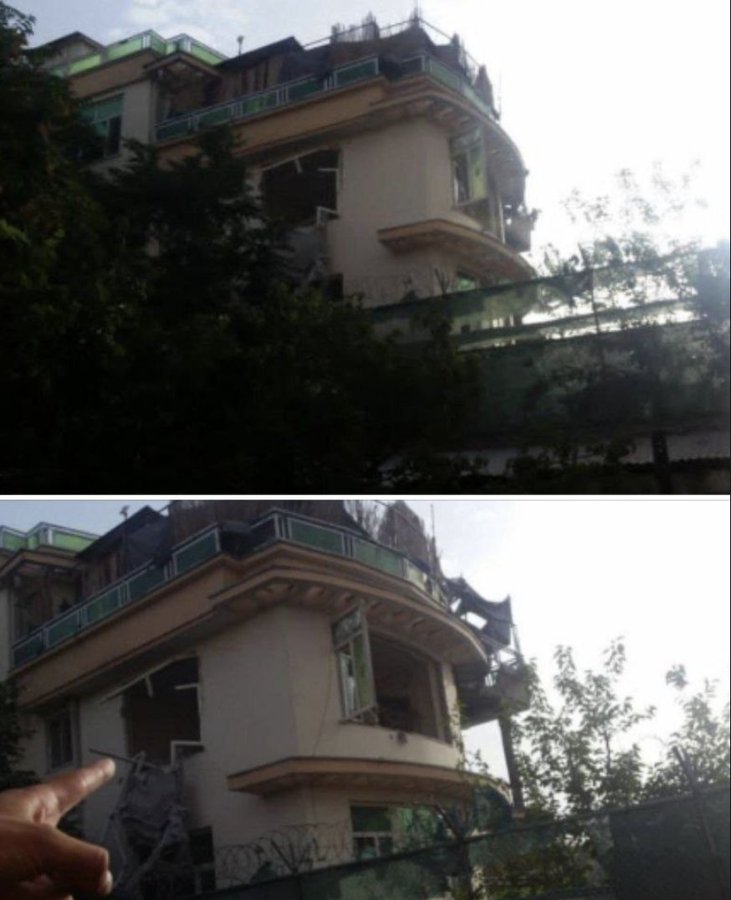
This is reportedly an image from the scene of the strike, in Kabul's Sherpur neighborhood. Charles Lister
Pakistan
fostered the Taliban. Portraying themselves as 'partners in the war
against terrorism', the country notoriously guided, helped form, trained
and equipped the Taliban and al Qaeda along with the CIA who meant them
to counter Soviet forces who then occupied Afghanistan to install their
puppet, Moscow-chosen leader. The Pakistan Inter-Agency Intelligence
group, al Qaeda and the Taliban were bonded.
Hardly
surprising that the Taliban, despite their 'pledge' to the outgoing
Americans last summer who left Afghanistan along with their Western
allies, to fend for itself under the re-established rule of the Taliban
that they would never again give haven to terrorist groups, would do so
again. Not only is al Qaeda quite at home in Afghanistan, so too is the
Islamic State group.
Ayman
al-Zawahiri, as one of the 9-11 masterminds, and the planner behind
many other mass atrocities aimed at the West and specifically U.S.
military was by now a figurehead, an icon of Islamist terrorism. The
Egyptian medical man from a prosperous, elite background viewed himself
as a dedicated Islamist revolutionary, determined to destroy the effete
West and replace it with an Islamic Caliphate.
The
West he so passionately targeted turned the tables and targeted him.
Not necessarily to prevent any more atrocities planned by this master
strategist but as revenge for those he had helped perpetrate. He had
been watched for months to determine both his identity and his habits.
It is habit that becomes so integral a part of daily life that helped
take his life.
He
was known to spend a few moments every morning of restful contemplation
in the fresh air of the balcony on the third floor of the apartment he
lived in with his family in an upscale part of Kabul, where once an
international coterie of diplomatic missions under the occupation forces
were ensconced in a protected area of the city. Embassies now
abandoned, he was ensconced in a 'safe house' owned by a senior Taliban.
Morning
prayers finished, it was time for him to depart this mortal coil. High
above where he stood on his balcony just after six in the morning, flew a
drone. Two R9X 'ninja' Hellfires were fired from the drone. No
explosives, instead hyper-accurate missiles with unfolding razor-like
blades, six of them which hit their target and no one else, ripping the
man to shreds. Much as the explosives and the planes he sent on missions
ripped innocent peoples' lives from them.
American
intelligence operatives witnessed the Haqqani Taliban network close off
access to the safe house, take possession of the remnants of the
corpse, move his family elsewhere, removing all evidence that the
Taliban had accommodated Ayman al-Zawahiri, hiding him from the
relentless American search for the whereabouts of the al Qaeda atrocity
mastermind.
"The
president made it very clear when he made the decision [to proceed with
the assassination] that he wanted to make sure we avoided civilian
casualties, and we know we did from a series of intelligence and other
sources that we have available to us."
Canada, Leaving Afghans in the Lurch of Taliban Vengeance
"In Afghanistan, there is the risk of detention and prosecution for those who want to get a passport under the Taliban."
"Those who worked for the Canadian government and international partners -- the risk is always there."
"We
wish and we hope there will be a more flexible approach when it comes
to documentation inside Afghanistan and also the paperwork that is
required in terms of bringing people to
Canada."
"Women are being gradually but systematically erased from public
life. They are denied access to education, they are not
able to work, they cannot protest — it means they gradually become
invisible."
"Afghanistan is the only country in the world where girls are denied a secondary education."
"I am very much hopeful that the outcome will help with a kind of
solution that will help with the humanitarian aid to Afghanistan,
without helping the Taliban consolidate their power, without
legitimizing the Taliban."
"[he
Taliban are becoming increasingly hard-line and not a moderate or more
inclusive version of the previous regime; they are] the same old
Taliban — they have not changed."
Hassan Soroosh, Afghan Ambassador to Canada
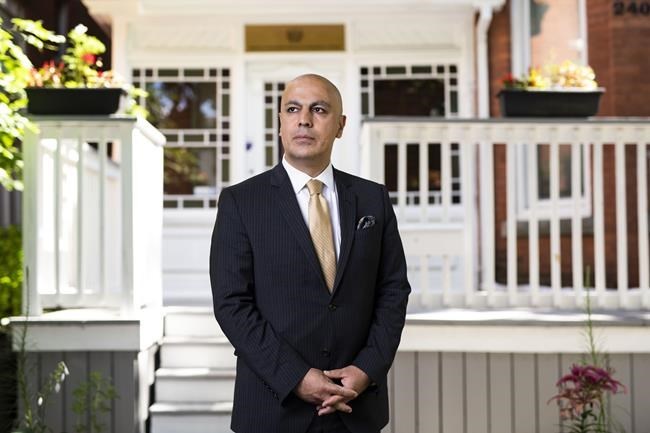
Ambassador of Afghanistan to Canada Hassan Soroosh stands outside the
Embassy of The Islamic Republic of Afghanistan in Ottawa, on Thursday,
July 7, 2022. THE CANADIAN PRESS/Justin Tang
Clearly
this fearless man is not speaking on behalf of the current government
of the Islamic Republic of Afghanistan, but is reflecting the
sensibilities of the previous Afghan government which gave him his
appointment to represent the country in Canada. He dare not himself
return to his country of origin as long as the Taliban remain in power,
but his concerns are for fellow Afghan civilians and those whose lives
are in danger under the present regime. His office continues to
represent the interests of Afghan citizens outside Afghanistan requiring
consular assistance.
And
he is extremely concerned over the plight of people whom the government
of Canada pledged it would extend security to as a recompense for their
services to the Canadian diplomat corps, Canadian servicemen and
Canadian charitable groups as translators and office workers while
Canada deployed its troops along with other NATO countries in the
U.S.-led mission to the country in an effort to ward off the Taliban,
combat members of al-Qaeda and help the country modernize itself toward
democracy and the upgrades of civic installations.
Taliban fighters stand guard at the site of an explosion in front of a Sikh temple in Kabul, Afghanistan on June 18. (Ebrahim Noroozi/The Associated Press)
Canada
is one of the few countries involved in Afghanistan that has failed to
honour its promise to withdraw vulnerable Afghans from the repressive
threatening searches of the Taliban for people who they claimed
'betrayed' Islamic values by befriending and assisting foreign countries
that invaded Afghanistan to free it from the first restrictive and
oppressively violent Taliban rule. While other countries devised ways to
extract those who gave aid to their military, those awaiting Canada's
promise to be fulfilled remain in danger.
Canadian
veterans' groups who worked with Afghan volunteers and workers as well
as Canadian humanitarian charitable groups and members of the Canadian
political opposition have all called upon the ruling Liberal government
of Prime Minister Justin Trudeau to live up to Canada's obligations, to
no avail. Complex paperwork must be completed, and special visas
approved in a long, drawn-out process that leaves vulnerable people in
danger. The year that has passed since the pullout of Western countries
leaving the population of Afghanistan at the mercy of the Taliban has
failed to convince the Canadian government of the urgency for it to act.
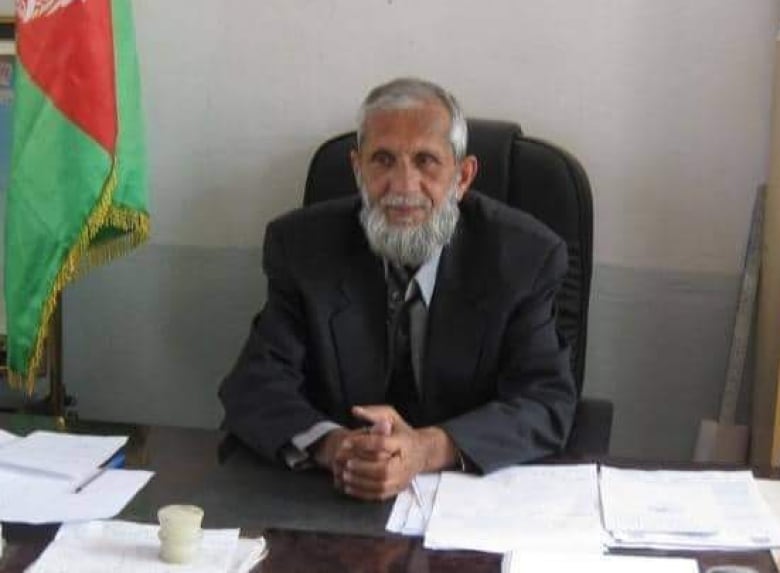
Painda Mohammad Noori, a former schoolmaster, died of a heart attack in
Pakistan while his family waited for news in Islamabad about when they
might be able to travel to Canada. (Submitted/Jamil Ahmad Noori )
Ambassador
Soroosh emphasizes that those Afghans who committed to helping Canada
prior to the Taliban's return have been left in a state of "high
vulnerability", calling on Canada to widen the eligibility criteria for
arrival to Canada under a humanitarian program meant to expedite
vulnerable Afghans to Canada who face Taliban persecution. A need also
exists, he emphasized, to provide Canadian charities aiding Afghans with
needed paperwork to enable them to get on with their work.
Some
Afghans awaiting final paperwork to enable them to board flights to
Canada were able to leave Afghanistan to take up temporary haven in
Pakistan on visas that have now expired. Leaving them at real risk of
being involuntarily returned to Afghanistan and Taliban reprisals. Aidan
Strickland, a spokeswoman for Canada's Immigration Minister, gave
assurances that her department "can help facilitate travel to Pakistan", but not, unfortunately 'facilitate travel to Canada'.
A group of Afghans seeking to come to Canada on special immigration
measures for former employees of the government and their families, hold
a protest over travel delays in Islamabad on Canadian consular grounds
in early May. (Submitted/Asad Ali Afghan )
"There's a lot of good people here. Engineers, doctors, educated people."
"But they have problems with drugs. The problem is getting worse, day by day."
Drug addict, Pul-e-Sukhta underpass, Kabul, Afghanistan
"I was a graduate from school and I prepared for college and loved a girl and I was unsuccessful. The family did not approve."
"After that, there was no chance for me, so I just used heroin to calm myself."
"When I came out [of Kabul's Ibn Sina rehabilitation hospital], what could I do? There was still no work."
"I have been to the hospital, but I became addicted again when I left."
Syed Ramin, 32, drug addict, Kabul
"By order of our supreme leader, Haibatullah, there has been a decision to reduce the problem."
"Nowadays there has come a reduction of our drug problem."
Abdul Nasir Munqad, Taliban leader appointee, hospital director
"Our
problem is different to European countries, where people take drugs for
pleasure. If we ask our patients, they have no jobs, they have no
income."
"We
started our religious classes because our country is a religious
country and it has a good effect. It is our experience that we can root
out this problem with religious classes."
Dr. Atiq Azimi, secretary to the Ibn Sima rehabilitation hospital director
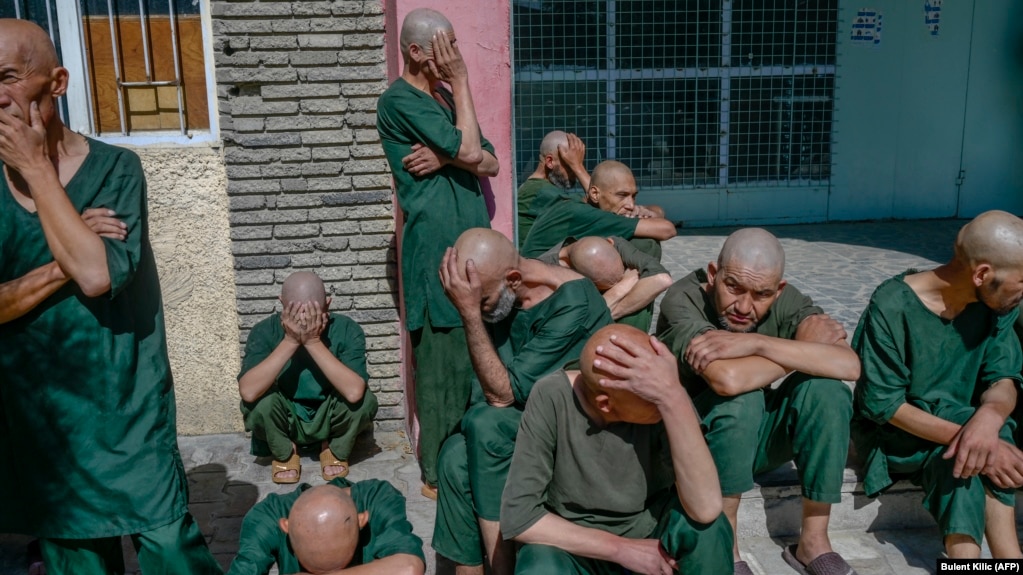
Drug
addicts rounded up by the Taliban and forced to shave their heads brace
for 45 days of withdrawal at the Avicenna Medical Hospital for Drug
Treatment in Kabul. Many others have been sent to prisons that lack any
drug treatment
Afghanistan
is held to have one of the highest proportions of opium or opiate use
within its population, in the world. In a nation of 39 million people,
the country has an estimated 1.9 to 2.3 million regular drug users,
according to a survey undertaken in 2015. The situation has become worse
since then with the economic collapse that struck the country when
international aid that supported many of Afghanistan's institutions
disappeared with the return of the Taliban.
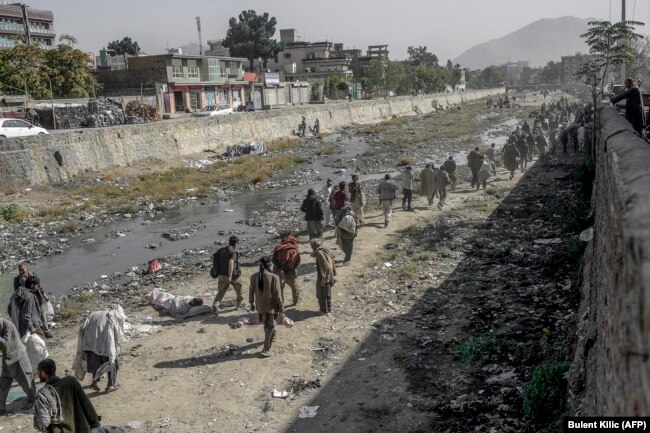
In
one place along the outskirts of the capital Kabul, there are nearly a
thousand drug addicts who shelter under a bridge in a western
neighbourhood of the city. People stumble about, barely conscious of
their surroundings, skeletal, disinterested in anything, focusing on
drugs. To the curious onlooker many of those who exist within this area
appear to be close to death. Yet among the living corpses, tradespeople
selling tea move about.
Above
the bridge underpass a regular stream of traffic moves, its noise
barely noticed by those of the living dead below. All efforts to put a
stop to the country's drug trade have failed. There is a burgeoning new
trade in methamphetamine, exacerbating the situation where traditionally
opiates ruled the market. Most of the addicts living under the bridge
relate their stories of addiction to heroin or meth; some explain their
addictions began as migrant workers in Iran.
Others
speak of the dangers of grinding tours of the southern provinces while
with the Afghan military, fighting the Taliban, which led them to drug
use. When the Taliban resumed power in August of 2021 one of the
initiatives it spoke of was to solve the country's addiction problem.
They took to rounding up thousands of addicts off the streets, to force
them into the Ibn Sina rehabilitation hospital.
Taliban fighters round up drug addicts in Kabul.
There
are a thousand beds in the hospital and following the Taliban raids
such crowding occurred as to see three patients in each of those beds.
Overcrowding led to violence and conditions where little prospect of
weaning addicts away from drugs seemed possible. Hospital doctors
persuaded the Taliban to stop funneling addicts into the hospital. Many
were taken to prisons instead. The hospital, now administered by a
former prisoner of Bagram high-security prison, houses far fewer
patients now.
Each of those patients undergoes a 45-day program to
help with drug withdrawal where the firs 14 days are devoted to
detoxification, followed by rehabilitation. Since enforced roundups were
stopped almost all patients are 'voluntary'. Brought by their families
to the hospital they cannot leave during treatment in a situation which
houses them like inmates. Some of the patients try to escape their
confinement. There are frequent clashes between patients and staff and
violence occasionally breaks out.
"There are big differences between treating drug addicts in prisons and
proper addiction-treatment centers. If
patients think they are being forced to quit addiction...they will never
accept treatment."
"No one can quit drugs if they are not ready to. The only
way a drug addict can quit is to satisfy himself and prepare himself
psychologically, which is not possible in prison."
Salem Sadid, local psychologist, Farah, Afghanistan
"Definitely
when there are economic hardships, when the population is displaced,
they want to seek mechanisms to cope with their hardships."
"That definitely makes people vulnerable to more regular drug use."
Kamran Niaz, Office on Drugs and Crime, United Nations
This represents a general opinion site for its author. It also offers a space for the author to record her experiences and perceptions,both personal and public. This is rendered obvious by the content contained in the blog, but the space is here inviting me to write. And so I do.

 "Hundreds of trucks and trailers have been standing idle since October 11 near the busiest border crossing between Pakistan and Afghanistan, after deadly clashes resulted in suspension of trade")