Not Criminally Responsible? "I Just Floored the Pedal"
"[My client's] state of mind at the relevant time and in the days, weeks and months leading up to April 23, 2018, are expected to be the central issues at trial."
Boris Bytensky, lawyer, Alek Minassian pretrial material
"You look at the interview which happened reasonably quickly after the incident -- and he appears to be oriented as to time and space, he is not thought-disorganized, he doesn't appear to be suffering from a break with reality."
"He clearly had the ability to plan this and he had the ability to drive, which in itself indicates you're fairly well oriented. And his motivation -- although it is very difficult for us to understand it -- is not one that suggests he is suffering from voices in his head telling him to drive down the sidewalk."
"He was surprisingly lucid when he was answering questions. He does not fit in any of the classical understandings of having the most usual major mental disorder that people have when found to be NCR, which is schizophrenia."
"Of course, we don't know everything at this point. We don't know his psychological antecedents."
"What I saw there is somebody that is very angry at the world and that is not a defence in law."
"It's a responsible step to take to explore that option, because if indeed he is not criminally responsible he would not belong in the correctional system."
"I can't predict the future, but whatever facility he is in, whether it's a correctional one or a mental health one, he is going to be spending a long, long time there."
Ian Scott, Toronto defence lawyer, law professor, Western University
"It is a very snapshot moment in time [when the crime was being committed]. It is about what was going through the mind of the accused at a specific moment."
"The court has to weigh how that information relates temporally and otherwise to the mental state of the person at the time of the commission of the offence -- not how they may present at the time of the interview."
"It is a high threshold."
"The result of an NCR designation, at the end of the day, is not an acquittal. There is a very common public misunderstanding that the NCR designation is a get-out-of-jail-free card. That is not what happens."
Anita Szigeti, Toronto lawyer, president, Law and Mental Disorder Association
 |
| The 10 people killed in the attack were, from top left: Sohe Chung, 22, Renuka Amarasingha, 45, Andrea Bradden, 33, Dorothy Sewell, 80, Geraldine Brady, 83; from bottom left, Munir Najjar, 85, Anne Marie D'Amico, 30, Ji Hun Kim, 22, Betty Forsyth, 94, and Chul Min (Eddie) Kang, 45. (Ben Shannon/CBC) |
He outright killed ten people, by ramming them with a lethal weapon, a rental van. Another sixteen people were injured in last year's van attack. Alek Minassian planned the attack, and meant to kill as many people as he could manage to. He was angry, angry with the world, angry with women who failed to appreciate his gentlemanly qualities, angry with the stupid men that those women who ignored him flocked to. He had online contacts with other men who were similarly angry that they too were unable to attract the attention of young women. They named themselves the 'incels'.
And they planned their revenge on a world where women chose men other than themselves, ignoble men, as opposed to the gentleman-like behaviour of the 'involuntary celibates' group like themselves. They would take their revenge by selecting a random group of victims to pay the price of their psychological agony created by a baffling biological selection system where women are attracted to certain types of men with typical masculine attributes, while leaving the intellectually choice and female-respecting men in high dudgeon, deprived of the emotional and physical comfort of partnerships.
Above all, stressed Alek Minassian, he was a 'gentleman'. That gentleman is a destroyer of lives. Deliberately targeting strangers to pacify his inner rage at being left behind. So he rented a van for the specific purpose of using it as a battering ram, targeting a busy street crowded with pedestrians. He is proud of his exploit, satisfied that he succeeded in what he set out to do. He would have preferred, however, to have taken a greater toll. Regret? certainly not! Any compunction over killing people? Perish the thought.
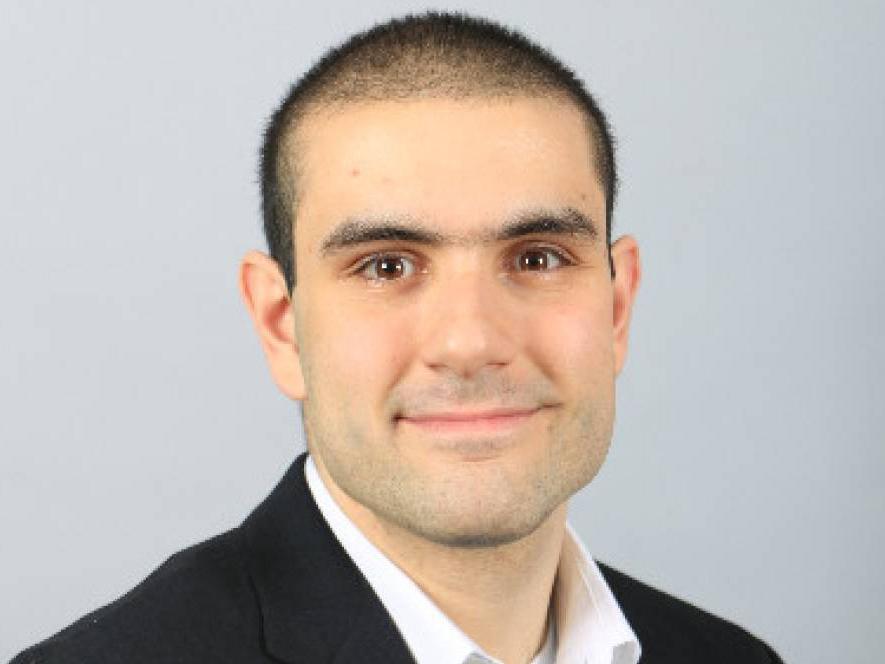 |
Alek Minassian, 25, of Richmond Hill, arrested after he drove a van into pedestrians.
LinkedIn
|
He had what he felt was a good reason for committing what society considers a shocking atrocity and what he feels is due vengeance on that society condemning him. And he may yet get the last laugh. In an interview with police directly after the dreadful event, he was clear in informing his interrogator that the result of the van-ramming pleased him greatly. "I feel like I accomplished my mission", he responded when asked how he felt afterward. Oh, and just incidentally, he is pleading "not guilty", and will so declare in February of 2020 when the trial is scheduled to commence.
As for guilty or not, trial judge Ontario Superior Court Justice Anne Molloy's pretrial ruling noted that the identity of Minassian as the van driver in the attack is not at issue, and nor has the man's lawyer disputed the admissibility into evidence at trial of his client's detailed confession to police. He killed and wanted to kill greater numbers, but is pleased with the outcome, and would do it all again given the opportunity. But guilty? Why would he be seen to be guilty of committing an act killing perfect strangers nominated by him to represent the very society that had so horribly harmed him?
Last week the video of his interrogation was released. It was seen and weighed by experts in the field of criminal law and psychiatry. Minassian had informed Detective Rob Thomas that the van attack was planned by him and committed as part of a larger, "incel rebellion". Video statements, personal history and psychiatric assessments -- according to Anita Szigeti who focuses on mental health and the law, and who spoke in a general scope -- can all be useful in guiding the court to decide whether the accused in such a case qualifies to be designated NCR.
It would be difficult to argue, using the same logic and viewing the calm statements from the accused, that anyone sufficiently aroused in anger and planning to exact revenge, can claim to be themselves not criminally responsible, since the state of rage rendered them incapable of viewing their intention as a grievous assault on public safety and security. All crimes of passion, then, could be absorbed into the NCR net. How high is that threshold?
And oh, that other little factoid, that accused held not criminally responsible are confined in psychiatric wards and hospitals, placed on drug protocols to control their mental illness, and invariably remain incarcerated for far shorter periods to protect the public, than those found guilty of crimes they commit and imprisoned. Even though psychiatrist reports deem them likely to re-offend should they not commit to their medications or other causes, they are given early release back into society. And society must live with that.
 |
| Minassian carried out the attack in a busy area of Yonge Street on April 23, 2018. (Aaron Vincent Elkaim/The Canadian Press) |
Labels: Justice, Mental Illness, Trial, Vehicular Homicide
posted by Pieface @ Friday, October 04, 2019


