Tuesday, July 27, 2021

The African Continent in Islamist Disorder

"It happens like this. When they catch men, they behead them. they kidnap children. They take women to the bush. When they catch old people, they beat them."
"My house was burned down. I don't know where my mother is, or where my father is."
"Tanzania does not want Mozambican people. We don't know why."
Heka Amisse, refugee from Palma, Cabo Delgado, Mozambique

"Those pushed back from Tanzania end up in a dire situation at the border."
"UNHCR reiterates its call for those fleeing the conflict to have access to territory and asylum, and [for] the principle of nonrefoulement [no forced return] to be respected."
"Refugees must not be forced back into danger."
UNHCR spokesman
 
"Tanzania used to be a world leader on refugees. In the '60s and '70s it not only let them in and let them stay indefinitely but it had pathways to citizenship, it had laws on inclusion into health systems, education, labour markets."
"That allows richer countries and countries farther away from conflict countries to essentially do nothing, or do the minimal, and leave all the burden to neighbouring countries."
"And the neighbouring countries, like Tanzania, are very understandably not pleased with this situation."
Leah Zamore, Centre on International Cooperation, New York University
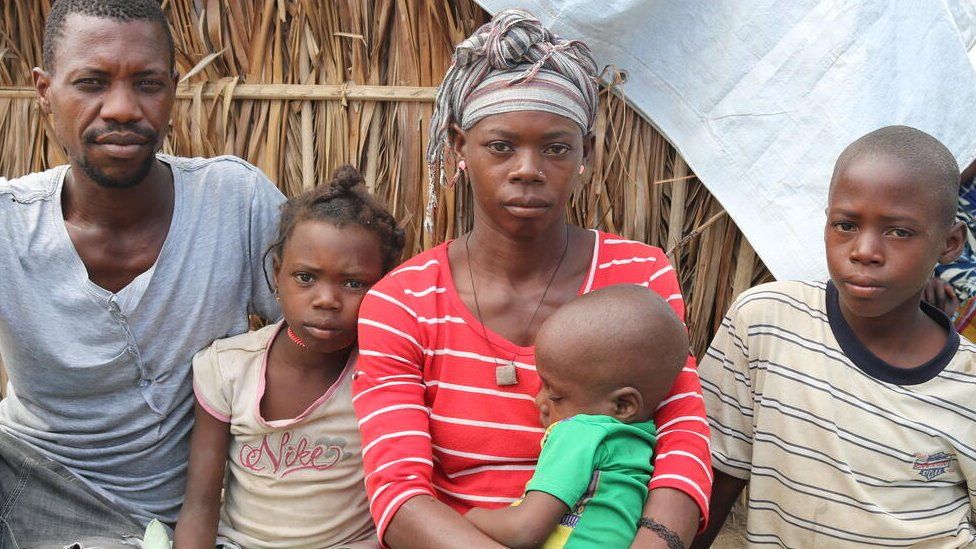
Displaced women with their children wait for assistance at a building used by refugees as shelter in Pemba, Mozambique, after they fled attacks in Palma in Northern Mozambique, April 19, 2021.
Displaced women and children wait at a building used as shelter after they fled attacks in Palma, Mozambique

Islamists again. Islamists everywhere. Wreaking havoc, destroying towns and villages, creating hundreds of thousands of desperate refugees fleeing mass murder, kidnapping and slavery. Africa is overrun with Islamist terrorists. Refugees like Heka Amisse streamed out of their city of Palma located in the northernmost province of Mozambique bordering Tanzania. Increasing violence in the region brought the refugees for haven to neighbouring Tanzania.
 
And Tanzania is responding by enacting a program of return in direct contravention of international agreements, by returning these displaced people to the very country they fled in terror. Rwandan and South African troops have been sent to quell the violence along the border between the two countries where civilians are caught in the conflict pitting Mozambican forces against the Islamist terrorist hordes aligned with Islamic State's vicious ideology. 

This is an escalating insurgency in Cabo Delgado, ongoing since 2017 where the Islamic State-affiliated terroristts have slaughtered some three thousand, forcing another 800,000 to flee for refuge. The recent discovery of great quantities of liquefied natural gas offshore of Palma has seen it become a hot spot of the conflict where French oil giant Total Energies has been stopped by the increasing attacks in Palma.

Heka Amisse and her husband, like thousands of other Mozambican citizens, were returned by the Tanzanian military to Negomano, a border town in Mozambique. The refugees are being forcibly returned to the country they fled. Over 9,600 people looking for haven in Tanzania were returned through the Negomano border since January. In a two-day period in June close to 1,000 people were forced back into the country they fled.

When Rwandans and people from Burundi and the Democratic Republic of Congo desperately sought refuge, Tanzania had responded by helping them in offering asylum. Tanzania was recognized in 2019 by Filippe Grandi, agency head of UNHCR as "one of the most important refugee asylum countries in Africa". That refugee asylum country with its outstanding humanitarian record is bitter about its recognition as a host country.

Lacking international financial support to assist them in integrating refugees into host communities, it groans under the weight of a responsibility left to it alone. Systems working with refugees fail to distribute responsibility of hosting fairly or evenly among nations, leaving the refugees to be coped with by a small number of developing countries where the refugees are concentrated in countries neighbouring those embroiled in conflict.
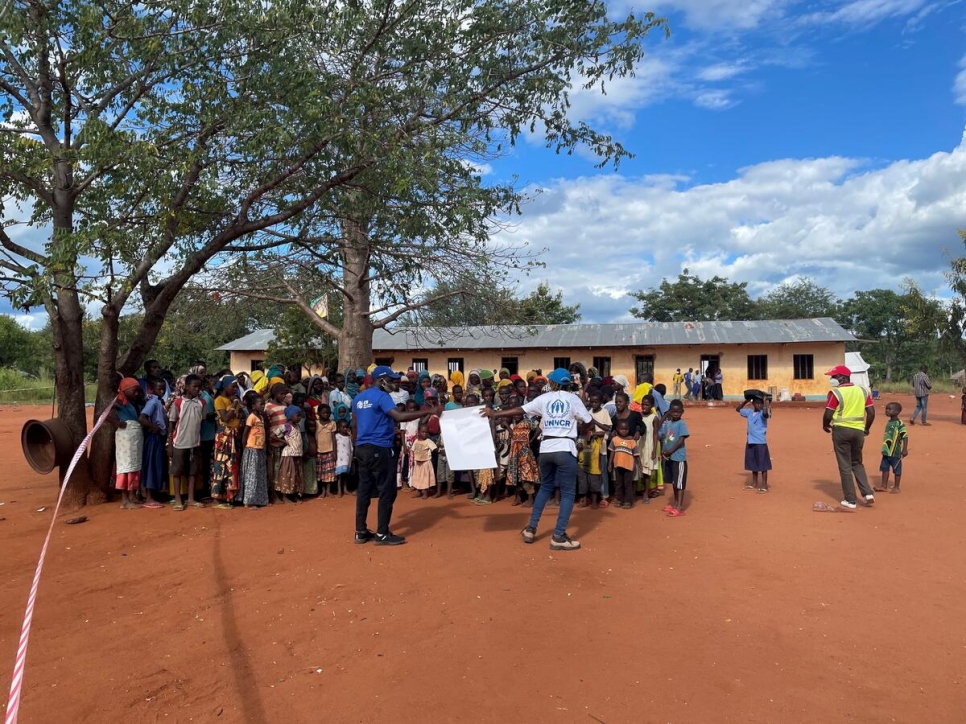
Mozambique. Forced return of Mozambican asylum seekers from Tanzania.
Displaced Mozambicans gather at Negomano Border point after being forcibly returned from Tanzania.   UNHCR/Eduardo Burmeister

Labels: , , , , ,

Monday, April 05, 2021

What Islam Has Wrought

"These guys are different. What they do to the people they capture and kill I have never seen anywhere in Africa, and I have been in a lot of places in Africa."
"When you mutilate people after you kill them, you cut their bodies in half, you skin them, you cut their heads off and then you cut their limbs off ... the brutality is unbelievable."
"The locals have been bullied by all kinds of people. So I think you need a concerted effort to clear an area, control it, and put in schools, hospitals, police stations, all those things you need."
"And hold them -- don't just put them there and desert them."
Lionel Dyck, Zimbabwean mercenary

"Nine percent of them are probably local recruits, around a very small hard core of real committed Islamists."
"Why was Palma a target? There are not many rich targets left, and loot and food and redistribution of goodies is important because I am sure religion is not the primary motivation for many of their fighters."
"It is about dialogue, so you have to accept that some of these insurgents you have to talk to."
Alex Vines, head, Africa program, Chatham House
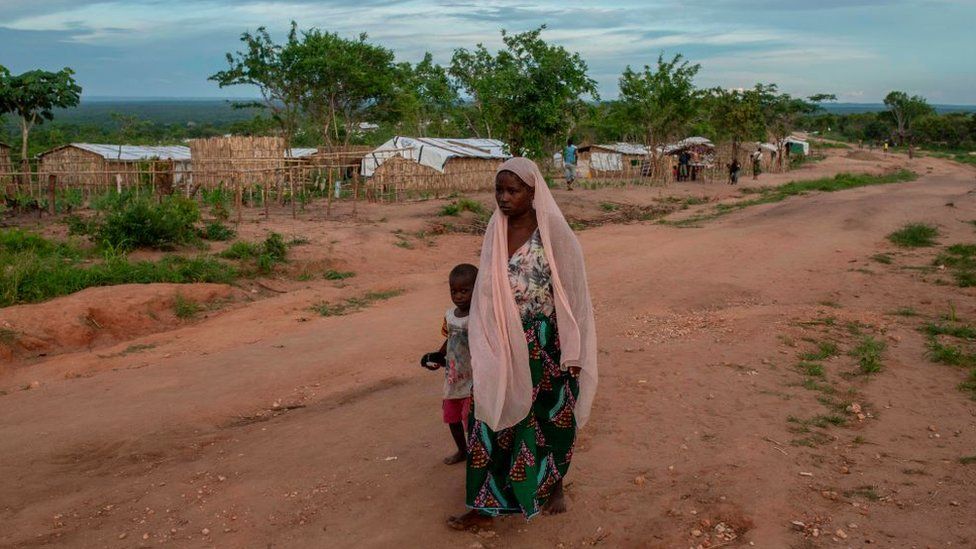
A woman, called Elsa by UK-based aid group Save the Children, walks with a child in a displacement camp in the northern Mozambique province of Cabo Delgado on January 26, 2021.
A woman, called Elsa by UK-based aid group Save the Children, walks with a child in a displacement camp in the northern Mozambique province of Cabo Delgado on January 26, 2021. © Rui Mutemba/Save the Children/REUTERS
Last week the Mozambican town of Palma was assaulted by Islamist terrorists in an attack of appalling inhumanity, reports of which shocked the world community. Hundreds of well-armed terrorists took possession of the entire town, there is no longer any vestiges of law and order, civilians who manage to evade being murdered and dismembered are on their own to protect themselves and their families, even as the psychopathic attackers gorge themselves on slaughter, knowing there is no authority to bring an end to their atrocities.

This is in the nature of Islamist insurgencies, but this one in particular has distinguished itself by the level of its ghoulish brutality. The insurgency has managed to grow in strength for close to four years, despite government tasking the country's military forces to counter and combat it. The government signed a contract with a mercenary outfit, a private security firm hired to help the military quell the insurgency. The level of bloodthirsty atrocities encountered by the mercenaries has shocked even its experienced head, Lionel Dyck.

In Mozambique's remote Cabo Delgado province locals refer to the insurgents as "mysterious", as "Islamist", or "Islamic State-linked". They have, in fact, identified themselves as having adopted the principles and the ideology and the methodology of the Islamic State of Iraq and the Levant. And ISIL has returned the compliment, hailing itself as the benefactor and command-control of the insurgency, voluntarily linking its goals to that of ISIL.
 
The United States named one individual as a controlling member of the group which it officially labelled a terrorist organization on March 10; Abu Yassir Hassan, considered to be the leader of the movement, and a Tanzanian cleric. This is an uprising destabilizing Mozambique quite unlike similar insurrections occurring in other countries of Africa facing guerrilla war outbreaks. In October of 2017 30 youths armed with machetes surrounded the Mocimboa da Praia police station, where they slaughtered those within, ordering Sharia law on the locals.

The movement has been identified by academics as having had its genesis a decade earlier when a sect emerged that clashed with the local Sufis and Gulf-funded Wahabbi Muslim area leaders. The origins of the sect has been traced to a preacher called Sualehe Rafayel. Eric Morier-Genoud of Queen's University Belfast, writes that in 2007 Sualehe Rafavel returned to Cabo Delgada having spent several years in neighbouring Tanzania.

He founded a group that set about establishing mosques across the region, gaining a reputation for spurning the secular state and over the years to follow, Muslim leaders and the state grew increasingly tense relations in the wake of government efforts to suppress the activities of the sect. Access to manpower, money and weapons was extended by allying with miners, illicit traders and organized crime groups around 2016, who were forced out of business, evicted from a rich ruby field in favour of a legal mine.

Following that era, the group expanded steadily to attain an arsenal of weapons, raiding Mozambican police and military units and looting their weaponry. Rocket-propelled grenades and mortars have also recently come into their possession. Evidence exists that some members were trained in the Congo and in Somalia. South African extremists joined the group, which in 2019 declared its allegiance to Islamic State. 

An estimated 700,000 people have now been displaced by the ongoing conflict, fleeing their homes in a desperate search for refuge from the violence. The increasingly emptying countryside has resulted in surging food shortages and attacks against army-escorted supply convoys, while a severe lack of potable water has contributed to an outbreak of cholera. Amnesty International last month accused the insurgents, the Mozambican government, and the Dyck Advisory Group of war crimes.

The insurgency can no longer use Tanzania as a rear area base, since a clampdown by Tanzanian security forces last year. The militants were pushed back from threatening the provincial capital of Pemba by Col.Dyck's force of 18 helicopter-borne mercenaries deployed by contract a year ago. Mozambique president Filipe Nyusi has offered amnesty to Islamist insurgents who have surrendered. 
 
And it is Col.Dyck's experienced impression that re-establishing order in the province can be achieved only through dialogue, attributing many of the more recent members of the insurgent group to impoverished locals joining up, whose needs the central government has seen fit to ignore.
"On March 10, the State Department announced the designation of the Islamic State of Iraq and Syria-Mozambique (ISIS-Mozambique) and the Islamic State of Iraq and Syria-Democratic Republic of the Congo (ISIS-DRC) as Foreign Terrorist Organizations (FTOs) while also designating respective leaders of those organizations, Abu Yasir Hassan and Seka Musa Baluku, as Specially Designated Global Terrorists (SDGTs)."
"In the case of Mozambique, this decision is a response to the growing threat posed by Ahlu Sunna wa Jama (ASWJ), known as ISIS-Mozambique in U.S. government circles, which operates in Mozambique’s Cabo Delgado province. Violence escalated dramatically in 2020; the Armed Conflict Location & Event Data Project (ACLED) reported more than 570 violent attacks, including attacks in Tanzania. There have been widespread allegations of human rights abuses by ASWJ, Mozambican forces, and private military contractors (PMCs) operating at the behest of the Mozambican government. The violence has led to the displacement of over 670,000 people, caused major food shortages and market disruptions, and led to a pervasive sense of insecurity. Nearly 700,000 people in Cabo Delgado are in need of some form of basic assistance."
CSIS - Center for Strategic and International Studies
https://csis-website-prod.s3.amazonaws.com/s3fs-public/styles/csis_banner/public/publication/GettyImages-1231369788.jpg?cVipZpIQx4HGJpar5WdNztd_MndXmNUS&itok=2Cn87Uh4


Labels: , , , , ,

Thursday, March 18, 2021

Mutilating a Population, Islamists Beheading Children

"That night our village was attacked and houses were burned."
"When it all started, I was at  home with my four children. We tried to escape to the woods, but they took my eldest son [12-year-old son] and beheaded him."
"We couldn't do anything because we would be killed, too."
Elsa, 28, Cabo Delgado province, Mozambique

"[Reports of violence against children in Cabo Delgado] sicken us to our core."
"While the world was focused on COVID-19, the Cabo Delgado crisis ballooned but has been grossly overlooked."
Chance Briggs, country director in Mozambique, Save the Children
A couple who fled militants in northern Mozambique with their three children - their eldest son was beheaded
This couple fled their village after their oldest son was beheaded by jihadists    Rui Mutemba/Save the Children
 
In the northeast corner of Mozambique the conflict in Cabo Delgado, an area rich in oil and gas, intensified in the last year. The worst violence has emanated from al-Shabab, a local Islamist group with no known links to the more infamous Somali terrorist militias with the same name. Concern has been voiced by security experts relating to the arrival of foreign fighters using methods similar to those in conflicts in Syria, Afghanistan and Iraq.

The news that children as young as 11 years of age were being beheaded by terrorists in the Cabo Delgado province of Mozambique, part of a local Islamist insurgency battling against government forces, has been a discovery of horror to Save the Children aid group who have interviewed village families for witness accounts of the unspeakable atrocities reminiscent of the glory days of Islamic State of Iraq and the Levant.

Displaced families gave their testimonies of young children killed by the local group of terrorists who refer to themselves as al-Shabab. A 29-year-old displaced woman whose name was offered as Amelia informed the interviewers that her son was beheaded. "After my 11-year-old son was killed, we understood that it was no longer safe to stay in my village", she informed the group. In fleeing the village, she said, they were unable to spare the time to properly bury her child.
 
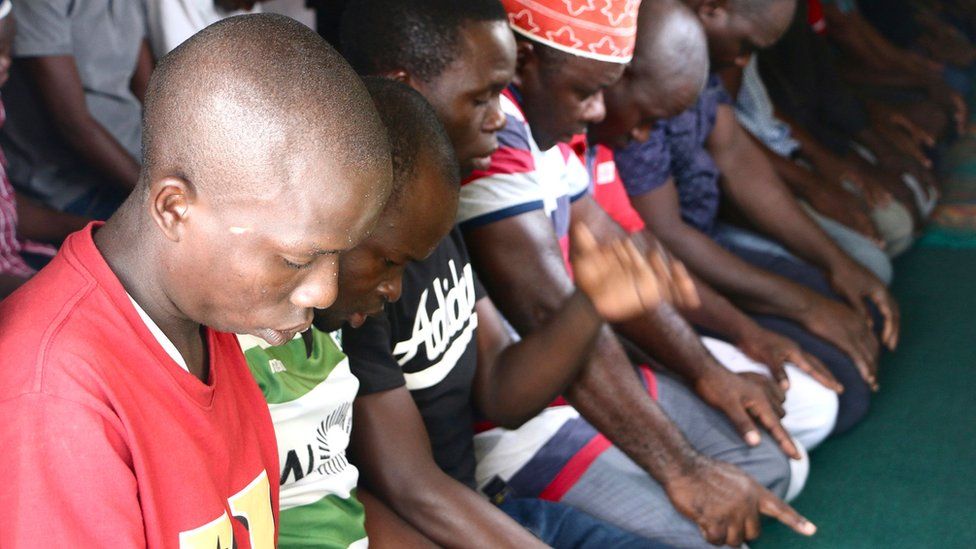
Muslims praying in a mosque in Mocimboa da Praia
Mozambique has a Muslim population of about 18%    AFP
 
Police Commander Bernardine Rafael last November recounted that at least fifty people had been decapitated in the first half of the month, adding to reports of beheading in the conflict in Cabo Delgado. Last year American officials revealed that the core Islamic State militant group has sent fighters to Mozambique to train the locals, formally adopting al-Shabab as the Mozambican wing of its Central Africa Province.

A woman and her child walk in the community of Ntocota, Matuge District in Pemba, Cabo Delgado Province on February 22, 2021
Thousands in Cabo Delgado have been forced to flee their homes   AFP

Labels: , , , ,

Saturday, March 23, 2019

Monumental Mozambique Misery

"They [the estimated number of dead and humanitarian needs] are nowhere near the scale and magnitude of the problem. And I fear we will be seeing more in the weeks and months ahead, and we should brace ourselves."
"The situation is simply horrendous, there is no other way to describe it. Three thousand people who are living in a school that has 15 classrooms and six, only six, toilets. You can imagine how much we are sitting on a water and sanitation ticking bomb."
Elhadj As Sy, secretary-general, International Federation of Rd Cross and Red Crescent Societies

"Yesterday [we] did a reconnaissance and we found another [inland] lake."
"So we are still very early in the phase of identifying what the scope of this is, for who is affected and how many are lost."
Emma Batey, coordinator, Oxfam, CARE, Save the Children consortium

"[What rescuers are seeing is] sometimes it's just a hut completely surrounded by water."
"If islands are big enough, we can even see smoke coming out, meaning that they're cooking."
"[It remains] super difficult [to estimate a death toll let alone the numbers missing]."
Pedro Matos, emergency co-ordinator, World Food Program

"I've never seen anything like this. We were not warned. Suddenly the roof flew away."
"[She and neighbours herded children away but] we lost some of them."
"[They have received nothing from aid groups or the government] not even bread."
Marta Ben, 30, mother of five
More than 65,000 people are already in shelters in central Mozambique [Enock Muchinjo/Al Jazeera]

Parts of Mozambique are finally seeing flood waters recede as the estimated number of deaths rises above a thousand, the number the country's president predicted earlier in the week. Thousands of dazed and fearful survivors are slowly making their pilgrimage toward Beira, the city where 90 percent of its infrastructure has been destroyed. Despite which, it has become a centre for rescue efforts for the entire region.

People have made their cautious way along roads heavily carved by the raging floods days ago, while others were rescued as part of a local effort by fisherman plucking stranded people from small islands, to bring them to safety. Despite the rain, helicopters take off to search for people clinging to rooftops and branches of trees. Water-borne diseases threaten as a result of water and sanitation systems being destroyed.

In the centres, children absent parents, separated in the chaos or newly orphaned wait to be tended to, confused and fearful. Women stake out places for themselves and their children on sidewalks with nowhere else to go, awaiting aid that hasn't yet reached them. They sit there, barefoot, nursing cooking pots, minding their children and begging those passing by for help.

In Zimbabwe, school children and their headmasters are missing. Miners operating illegally looking for gold and diamonds, have been swept into the raging rivers. In the worst-affected part of Zimbabwe, a woman who had left Chimanimani for the diamond fields to search for her son-in-law, who mined illegally, buried and mourned him.

"There are no jobs and all he wanted was to feed his family. He was with his colleagues. They thought it would be easier to mine since the rains would keep the guards and the police away from patrolling", said Maina Chisirlirwa of her son-in-law who was swept away while his colleagues survived. Even police, arresting illegal miners were swept away with their prisoners.

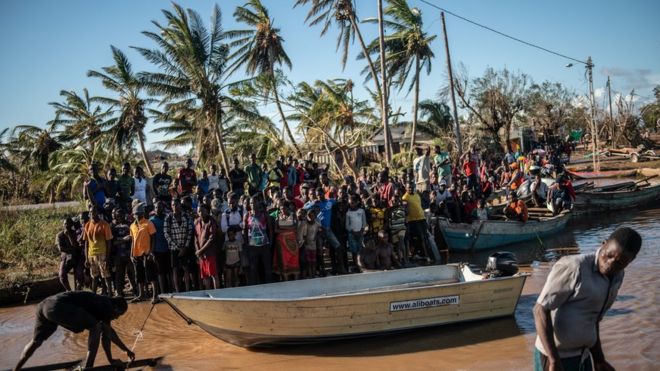
People stranded by Cyclone Idai wait for rescue by the Indian Navy on March 22
Thousands of people are still awaiting rescue from flooded areas across in southern Africa   Getty Images

Labels: , , , , ,

Follow @rheytah Tweet