Terrifying Flooding in British Columbia
 |
| These videos shared by Jordan Jongema to his
Instagram detailed the devastation to his home in Yarrow and the
conditions that stranded him and his dog Bowser on Monday overnight
before crews rescued the pair. Photo by JORDAN JONGEMA / INSTAGRAM |
 |
Jordan Jongema
|
"Those ten hours were easily the most terrifying times I've ever experienced in my life."
"I
had heard there were looters going around Yarrow to empty houses, so
shame on me for staying just a few minutes too long to protect the
place."
"As we were leaving, the water pooled over the road and it started like
fountaining, like a stream. I could have been driving into a
deeper pool so I just...went back to my house and we had to wait it out
in there. And as time went by, it got worse and worse.”
"A massive wave of water started to rush [over the roadway and into his front yard]."
"By
the time it was midnight, I was wading through the kitchen, swimming in
the backyard up to my chest, trying to find any flotation devices.
Pitch black and freezing cold water for hours."
"The
fear of the pump station breaking and the Fraser River flowing through
made me want to die. Bows and I lay on my bed with the water
half-an-inch from covering it."
Jordan Jongema, B.C. flood victim, Yarrow, British Columbia
"I believe it was Coquitlam Fire or Coquitlam SAR, actually, went and got that dog right near the end of the [rescue] queue."
"He's a service dog and so the fellow was just over the moon."
"So it was really cool that they were able to pull that off. That was good customer service, definitely worth the risk."
Abbotsford Fire Chief Darren Lee
 |
| Bowser, a 120-pound Bernese mountain dog, is
pictured in a rescue boat in the early hours of Tuesday after he and his
owner Jordan Jongema were rescued after flood waters breached his home
and left the pair stranded. Photo by HANDOUT |
British
Columbia's Interior was hit by a catastrophic rain event that started
last Sunday with high winds and torrential rain. Between Sunday and
Monday, more rain fell than normally would in a full month during the
province's late fall rainy season. The local weatherman spoke of an
'atmospheric river' that drenched the province causing critical
mudslides, rockfalls and floods leaving motorists stranded for 17 hours
on highways between two road washouts. Rail lines were disrupted,
bridges were washed out and so were highways.
Orders
for evacuation went out for a number of places inundated by floods.
Several hundred people stranded in their vehicles were airlifted by
helicopter to safety. Farmers were desperately trying to lead their
livestock to higher ground, many remaining behind on their farms despite
orders to evacuate. The military was called in to provide logistical
and rescue assistance. All of the province's many and varied rescue
teams were tasked to endure unsafe conditions to rescue those trapped in
flooded areas.
 |
| A person paddles a kayak past a submerged taxi after the
major flood event in Abbotsford. More federal assistance is on its way
to the province as reconstruction begins. (Ben Nelms/CBC) |
Jordan
Jongema was one of those trapped people. He and his dog Bowser, a
120-pound Bernese mountain dog, found themselves in a frightening
impasse with rising flood waters. They were stranded when rising flood
waters suddenly breached his home and property. He was in fact preparing
to leave for safety from Yarrow where he lived, some 99 km east of
Vancouver. He thought he had time to spare but was soon disabused of
that reassurance.
"A massive wave of water started to rush"
over the road and into his front yard as he began pulling out of his
driveway. With thoughts of his car being flipped by the debris-filled
water he turned back, deciding that he and Bowser would stay where they
were, safe at home while the water raged outside. Nature had other
plans, as he soon discovered. The flood waters entered his house and by
1:00 a.m. reached up to his knees.
He
thought about seeking respite from the rising waters on the roof of his
house, but found himself struggling with trying to figure out how he
might manage to get Bowser onto the roof. And then, an hour later, his
phone battery died, leaving him feeling "emotionally butchered". He lay
with Bowser on his bed, just minimally above the water level and no
doubt imagining what might happen as the water kept inching up.
And
then, at about 3:30 a.m., a boat sounded outside his window. He leaped
to the window and shouted, shining a flashlight, hoping to attract the
attention of whoever it was in the boat. As the rescuers in the boat
edged close to the house, Jongema held Bowser up and shoved him out the
window, then crawled himself out to the raft. One they reached dry land
some kilometres distant, Jongema and Bowser were then driven to a safe
site.
According
to officials, eleven people in the vicinity that night were rescued
overnight. Forty farmers chose to remain in the eastern portion of the
Sumas Prairie, tending their properties and their livestock.
 |
| Farmers carry their livestock out of a flooded barn in
Abbotsford. The city southeast of Vancouver is home to half of B.C.'s
dairy farms and has been hit badly by the devastating floods. (Ben Nelms/CBC) |
Labels: British Columbia, Evacuations, Flooding, Torrential Rainstorms
Ida's Cruel Joke in the U.S. NorthEast
"The human loss, which is hard to imagine — that people simply in their
cars, in their homes, in their basements succumbed to the ravages of a
brutal storm."
"[An update of storm systems is needed to handle more frequent flash flooding.] We're not treating this as if it's not going to happen again for 500 years."
New York Governor Kathy Hochul
"We're in what we call the rapid-assessment phase because we are trying to assess it from the air ..."
"We don't have a sense yet of what the source of sheens [from massive oil spills] might be or volumes."
Stephanie Morris, spokesperson, Louisiana Oil Spill Co-ordinator's Office
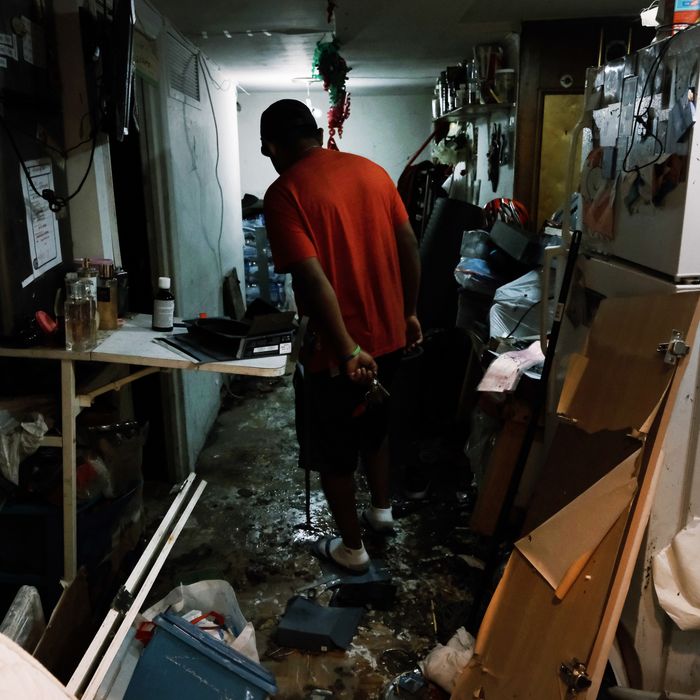 |
| Eddie, an immigrant from Mexico, walks through his flooded basement
level apartment on Friday in a Queens neighborhood that saw massive
flooding and numerous deaths following the heavy wind and rain from the
remnants of Hurricane Ida which struck overnight Wednesday.
Photo: Spencer Platt/Getty Images |
In the Northeast of the United States, what is considered to have been a 500-year-storm has left 48 people dead in its devastating wake, as Hurricane Ida blasted its way across the country. Sewer systems were unable to rise to the occasion, that saw facilities with industrial chemicals battered in New York. Some people died in their basement apartments, unable to react to the instant surge that imprisoned them in a watery grave. People on highways that suddenly were inundated by a flood surge died still seated in their vehicles, unable to escape.
While this was happening, other people in New York, refusing to be inconvenienced, continued to call out for restaurant takeouts, and delivery drivers risked the flood to deliver those orders. They also said resentfully it was a "cruel joke" they were forced to plow through water reaching above their waist level for "pathetic pay" and tips through the duration of this epochal storm and flood surge.
Sunday was the fearsome, fateful day when Ida made landfall to storm through Louisiana with 240 km/h winds. The storm surge was so intense it managed to reverse the flow of the Mississippi River temporarily as it passed through an area of the state where hundreds of chemical plants were situated. And in New Orleans, hundreds of thousands of gallons of waste water escaped from the Jefferson Parish sewer system.
Water cascaded into people's homes, engulfing cars, overwhelming drainage systems as the storm hit the U.S. Northeast. New Jersey wracked up the highest death toll, of at least 25 people, some of whom drowned when their cars were caught in flash floods. Both New Jersey and New York had spent billions in the improvement of flood defences following 2012's Hurricane Sandy. Much of that work took place on the coasts and tidal flood plains.
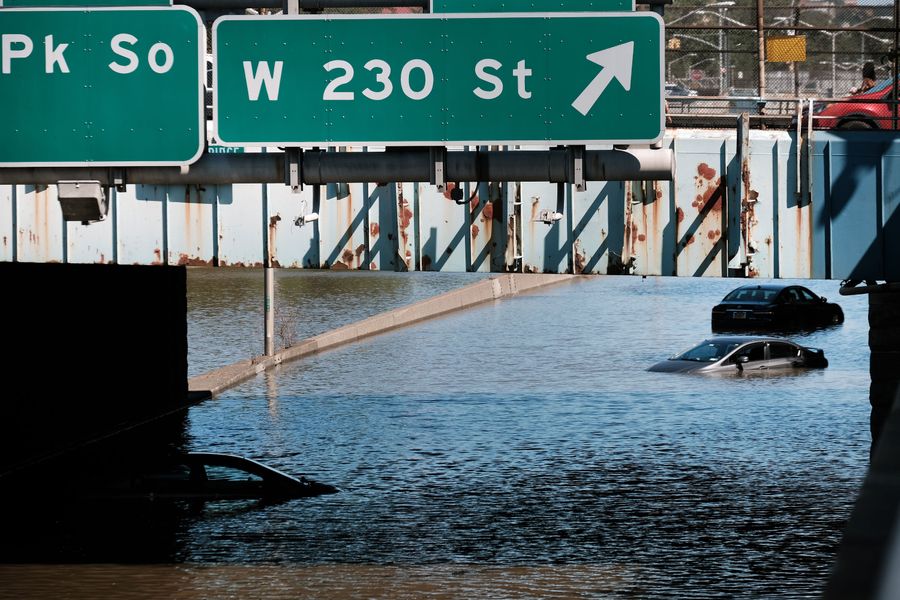 |
| Cars sit abandoned on a flooded highway on Thursday following a night of
extremely heavy rain from the remnants of Hurricane Ida in the Bronx
borough of New York City.
Photo: Spencer Platt/Getty Images |
An aircraft with photographic and
chemical detection equipment was dispatched to Louisiana by the
Environmental Protection Agency to fly over areas including a refinery
along the Mississippi River to assess the threat represented by chemical
spillages. Significant flooding at a refinery in Belle Chase, Louisiana
was seen through images taken by the National Oceanic and Atmospheric
Administration.
A
levee meant to protect the plant had been breached, enabling flood waters
to flow in, according to the Louisiana Department of Environmental
Quality. There were 100 reports of chemical and petroleum spills in all,
that Louisiana regulators are tracking.
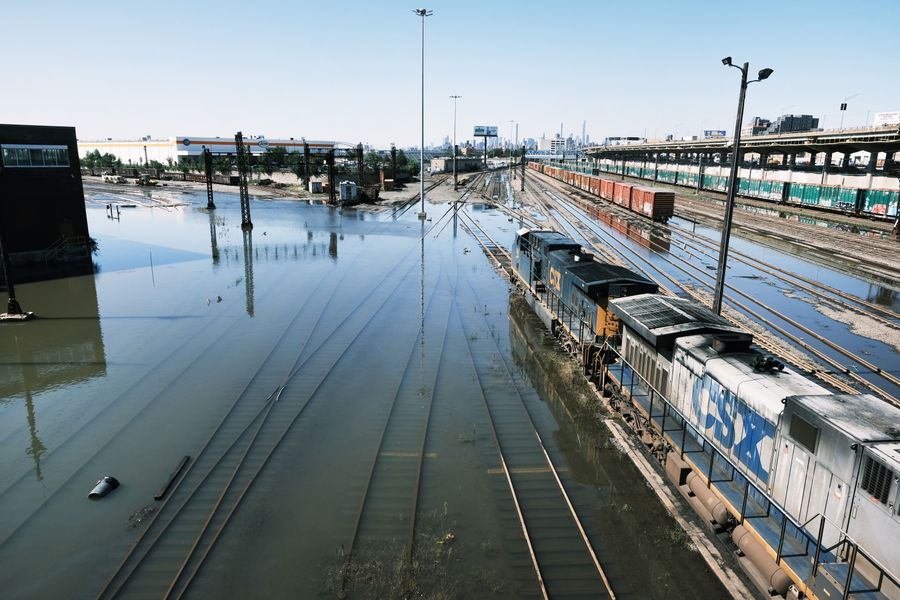 |
| Train tracks flooded in the Bronx on Thursday.
Photo: Spencer Platt/Getty Images |
Labels: Chemical Spillage, Epic Rainfall, Flooding, Hurricane Ida, Storm Surge, U.S. NorthEast
The Fabled Yellow River and Climate Change
"The water reached my chest."
"I was really scared, but the most terrifying thing was not the water, but the diminishing air supply in the [subway train] carriage."
Resident of Zhengzhon, Henan Province, China
"[I had] no water, no electricity, and no internet."
"Never
in my life had I seen so much rain. There was one hour
where the rain was just pouring down on us from the heavens, and
everything went completely white."
Mr Liu, 27, Zhengzhon resident
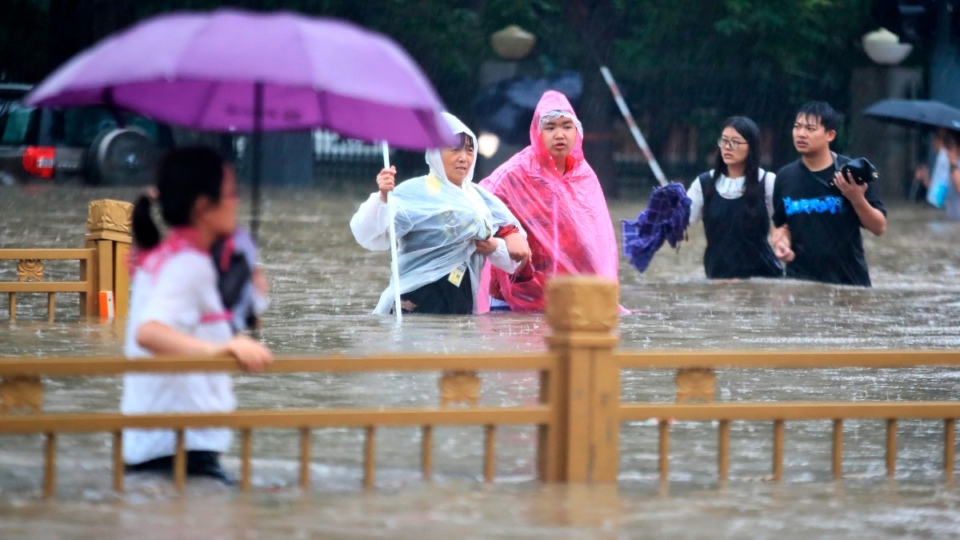 |
| People walk through floodwaters in Zhengzhou, China, on July 20, 2021. (Chinatopix via AP) |
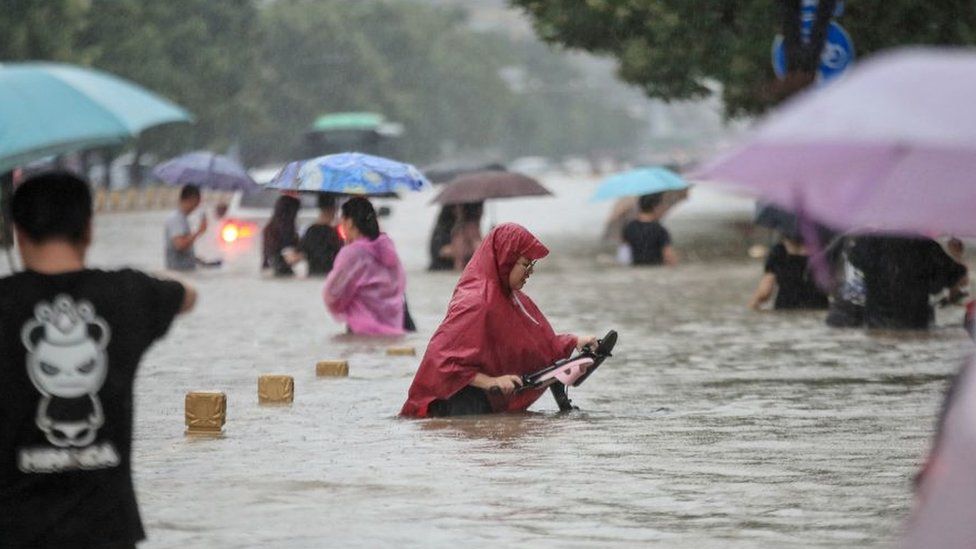
China's central province of Henan has experienced a disastrous flood resulting from torrential rain falling in a short period of several days, equal to the amount of rain the province would normally receive throughout the course of a year. In the provincial capital Zhengzhou, a city of 12 million people some 650 kilometres from Beijing, bus service was halted and people were forced to spend the night at their office buildings.
"That's why many people took the subway, and the tragedy happened", said a resident of the city whose name was Guo, and who had opted to spend the night at his office. The tragedy he mentioned caused the death of 25 people at last count. Half of those people lost their lives in a subway line when flood waters rushed into the tunnel, entering the subway cars and passengers swiftly found themselves trapped in water rising progressively higher.
Roughly 100,000 people had to be evacuated in the city, which is an industrial and transport hub. Rail and road links were disrupted, dams and reservoirs swelled to danger levels leading thousands of troops from the People's Liberation Army to be dispatched to take part in the provincial rescue effort. Social media showed train commuters immersed chest-deep in water in the dark. One station appeared as a large brown pool.
Over 500 passengers were pulled to safety when one of the subway tunnels flooded. With electricity out, they had been trapped, unable to open doors or windows, trying desperately to keep their heads above water. Taller passengers helped shorter people survive by holding them up to gasp at the diminishing quality of air they gulped to survive.
Cities and towns built too close to the Yellow River, on floodplains that themselves proved inadequate to contain the massive overflow when 617.1 mm of rain fell in Zhengzhou, where the annual average stands at 640.8 mm. Three days of unrelenting rain realized a level seen only "once in a thousand years", according to the Zhengzhou weather bureau.
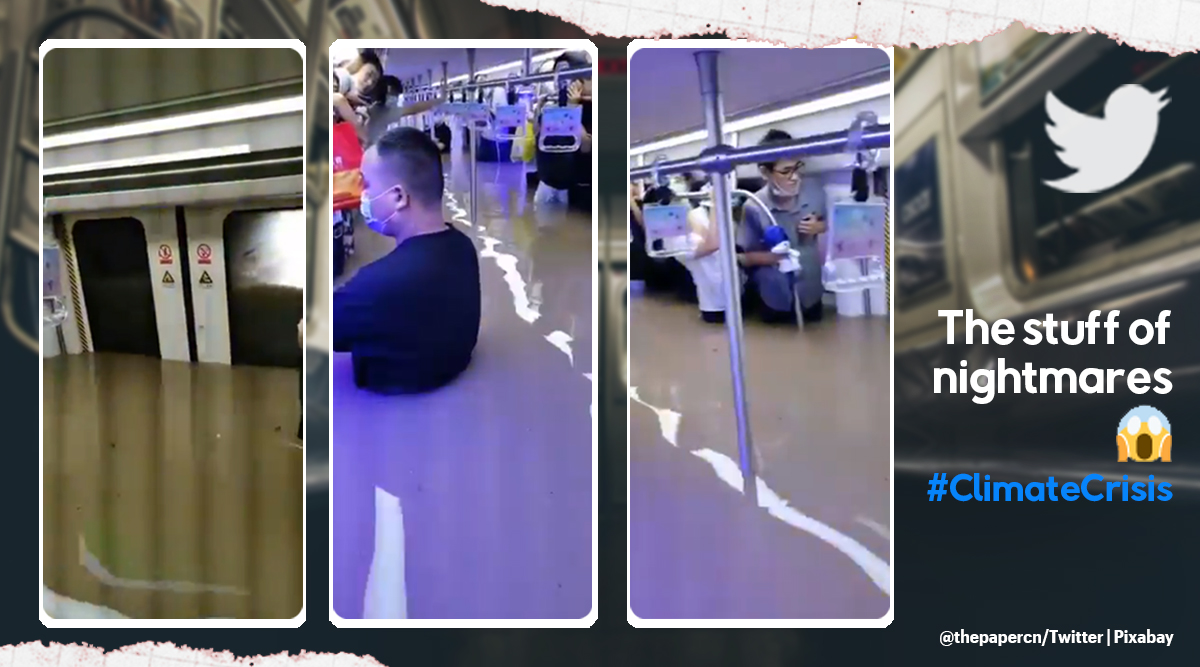 |
| Due to the
rain, the authorities halted bus services, as the vehicles are powered
by electricity and many took the subways only to get trapped inside. |
In the city of Gongyi located like Zhengzhou on the banks of the Yellow River, there was a widespread collapse of homes and structures succumbing to the force of the floods. More rain is being forecast across the province for the rest of the week. The People's Liberation Army is helping with search and rescue.
The province itself is a logistics hub with a population of about 100 million. Train services have been suspended across the province and highways have been closed and flights delayed or cancelled. Food and water were needed for hundreds of people stranded on a train that had stopped beyond city limits of Zhengzhou two days earlier.
The sheer volume of the rainfall had caused a 20-metre breach in the Yihetan dam in the city of Luoyang, with expectations that the dam could collapse at any time.
 |
Getty Images
|
Labels: China, Flooding, Henan Province, Torrential Rain, Yellow River
Rampaging Nature : COVID, Wildfires, Floods : America Assailed
"The fact that these fires are emitting so much pollution into the atmosphere that we can still see thick smoke over 8,000 kilometres away reflects just how devastating they have been in their magnitude and duration."
Senior Scientist Mark Parrington, CAMS [Copernicus Atmosphere Monitoring Service], EU
"We had a body wash up, we believe it was hurricane related, but we have no definite proof of that right now."
Trent Johnson, police lieutenant, Orange Beach, Alabama
"Normally, it goes away. But with this one it was first the anxiety of it coming and then when it finally came, it didn't move."
"It was just constant rain and wind."
Preity Patel, 41, Pensacola resident
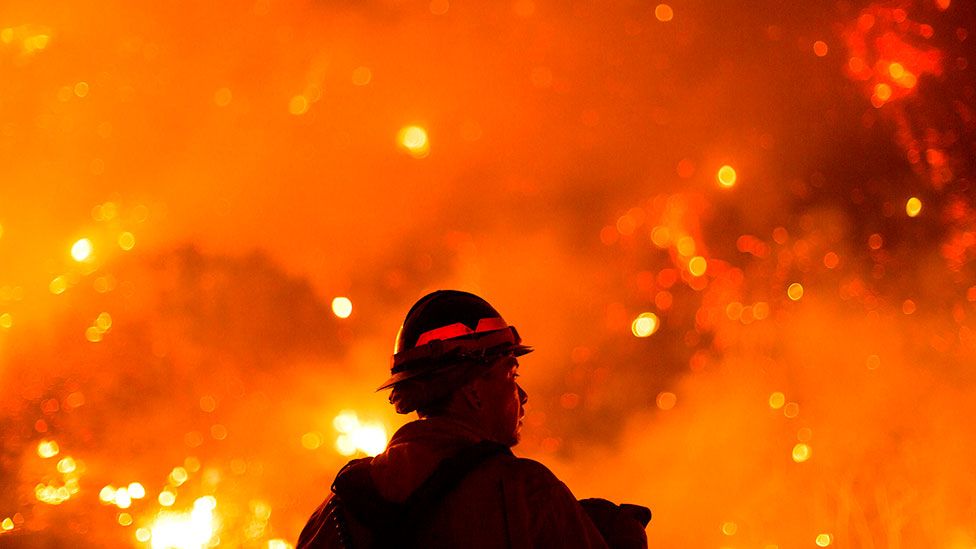
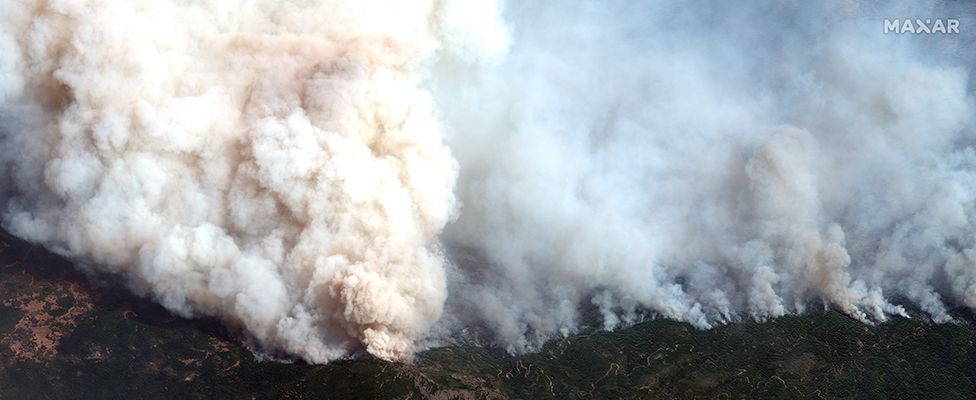
Firefighting crews may be weary but they're continuing to battle deadly wildfires in the western United States while thousands of evacuees in Oregon and other states confront a daily struggle. In Europe, scientists now track the thick, stifling smoke as it spreads intercontinentally. An astonishing 1.8 million hectares of brush, grass and woodlands in Oregon, California and Washington State has burned since August. In the fires' wake, small towns have been left smouldering, no sign of life, nothing to come back to. Although there are people listed as 'missing', 34 people, found dead, will never 'come back'.
FEMA, the U.S. Federal Emergency Management Agency has gone into emergency mode, tasking mission assignments deploying five urban search-and-rescue teams to the region torn asunder by wildfires. Their mission is to scour through the incinerated homes, and to search for the missing, even as firefighters focus on their exhausting battle against heat, wind and leaping sparks firing up new areas.
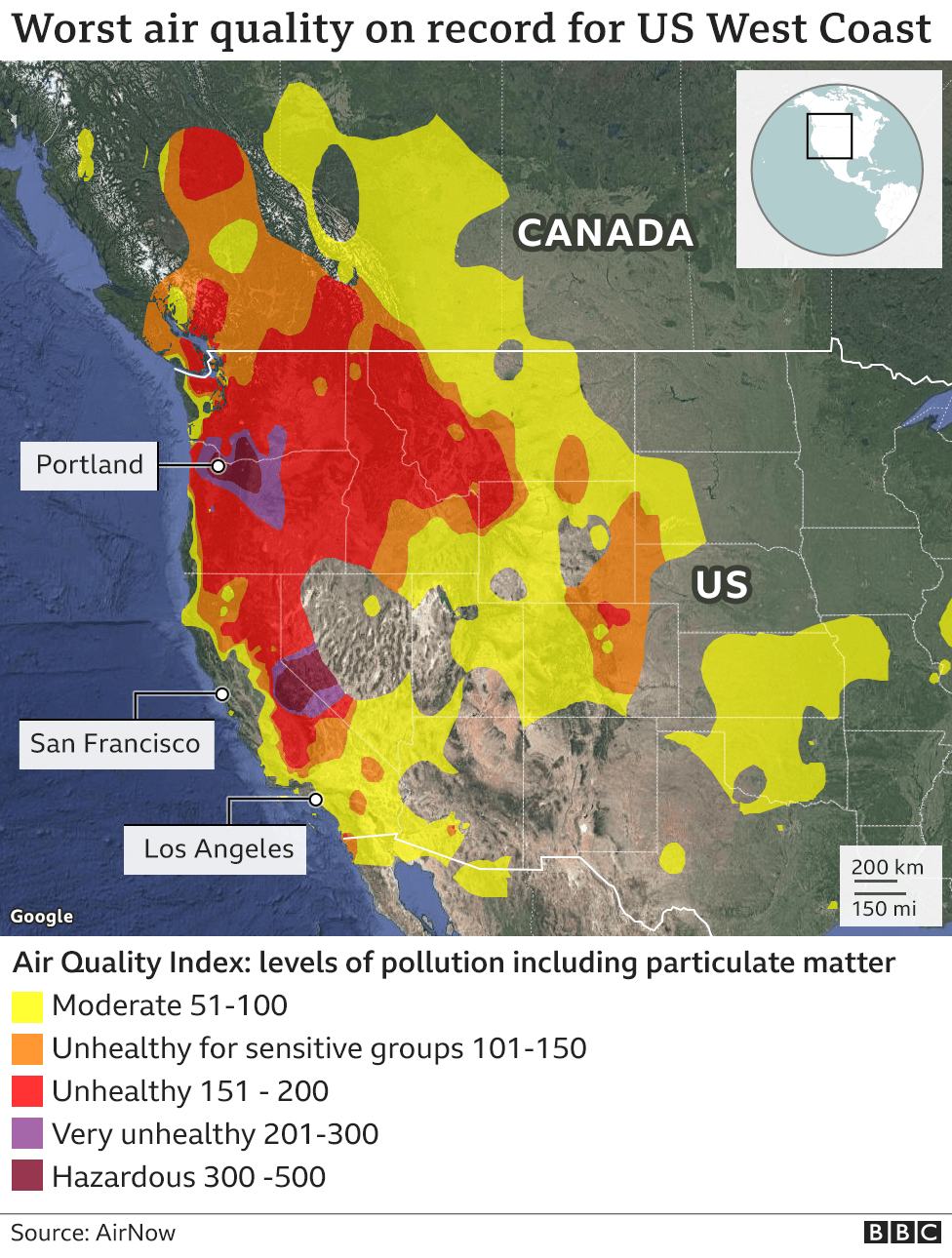
The region's skies have been filled with dense, acrid smoke that has been pronounced the worst air pollution on the globe. It has drifted over to British Columbia, where the air quality there has also become injurious to health. With the presence of the novel coronavirus, this represents a double health threat under trying conditions.
Now, scientists in Europe are tracking the smoke bearing down on the continent, emphasizing the magnitude of the fire-borne disaster. CAMS is monitoring the scale and intensity of the fires along with the wind-borne transport of smoke drifting across the United States and beyond. In mid-August, wildfires had roared into existence, erupting across Oregon and Washington at the beginning of September, many fires sparked by lightning storms augmented by record-breaking heat waves and howling winds.
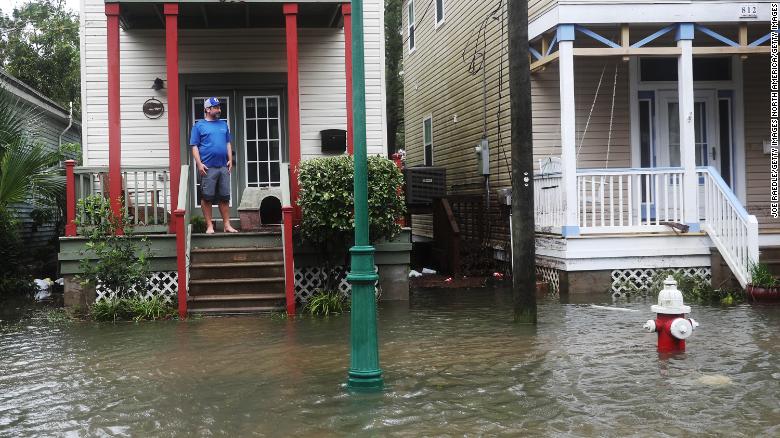
Compounding the misery in the West, is Hurricane Sally that has swept along the Gulf Coast, uprooting trees, flooding streets and cutting power to hundreds of thousands of homes and businesses, responsible for "historic and catastrophic" flooding to the Alabama-Florida coast, according to the U.S. National Hurricane Center. Making landfall early Wednesday near Gulf Shores, Alabama as a Category 2 storm it slowed to a tropical storm with maximum sustained winds of 113 km/h.
Parts of the Gulf Coast were inundated as over 45 centimetres of rain fell within 24 hours and no end in sight as the storm's winds stalled, according to the National Hurricane Center, leaving the coastal community of Pensacola, Florida with up to 1.5 metres of flooding. Roads have been damaged along with bridges, cutting off traffic access. Over 500,000 homes and businesses in the broad area had their power cut off as the storm knocked over oak trees and tore down power lines.
Hurricane Sally's winds were clocked at 155 kn/h when it hit landfall at Gulf Shores. Piers were ripped away by surges caused by the storm and high winds.A section of the Pensacola Bay Bridge is missing a "significant section", in the words of Florida Governor Ron DeSantis whose state once again is in need of all the good luck and help it can conceivably muster. Truth is, there's more on the way gathering steam...
Labels: Flooding, Gulf Coast, Hurricane, U.S. Pacific Northwest, Wildfires
China's Environmental Misery
"This flood battle is a practical test of the leadership and command system of our army, and the army's combat readiness and ability to perform the tasks." Chinese President Xi Jinping
"There is no room for suffering [unseen by drone footage shot from afar]." "The images of floods sweeping away homes, pigs and humans drowning, corpses rotting and garbage spread all over after the floods will never be captured by drones in bird's-eye views." Zhang Feng, media critic, Beijing
 |
| Water is discharged Tuesday from the Three Gorges Dam in Hubei Province.
© Xinhua via Kyodo |
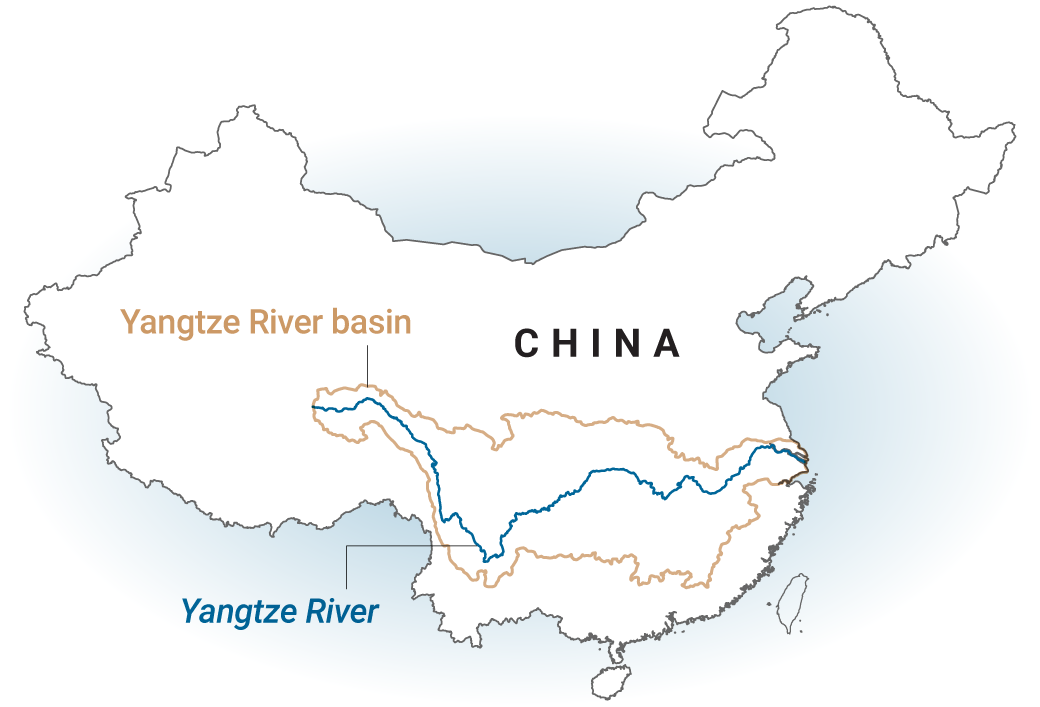
August represents the third month of large-scale flooding in China, creating damage truly catastrophic even while the country grapples with the outcome of the SARS-CoV-2 pandemic. Where the Jialing River meets the Yangtze waters have risen to the extent that the ancient village of Ciqikou was inundated by five feet of water; highways vanished, waves cresting threatened elevated rail tracks. China's central provinces reaching to the upper Yangtze has been devastated.
The area includes Chongqing, with its 30 million residents and Sichuan province in the southwest affecting up to the present, 63 million people. An area of farmland -- 15 million acres -- has been destroyed. The government has officially placed the floods on an equal level as the coronavirus pandemic in its shock value that China is suffering through. The potential of a sixth wave of flooding striking in September due to ongoing rainfall reaches into the near future.
The scale of the call-up mobilizing the People's Liberation Army to provide disaster relief emphasizes the grave crisis and urgency of the response to the catastrophe. Where the Chinese military has mobilized 1.3 million troops across 17 provinces in the evacuation of 170,000 residents and to reinforce embankments and roads. Yangtze water levels in Chongquing hit a record days ago. The flood peak at the Three Gorges Dam has seen record water levels, with dam operators on "wartime footing".
 |
| A house leans over in the floodwater, Jiangxi province. |
A hydrologist at Sichuan University, Zhang Faxing, noted that summer floods routinely occur at Sichuan. However a disaster of the scale of the current floods and the level of rainfall lasting into August is truly unusual. "We should stay on alert for further flooding in upper and middle reaches of the Yangtze until mid-September", he warned.
According to the Chinese origin myth dating back four thousand years, King Yu founded the first prehistoric dynasty when he overcame a great flood. China badly needs another King Yu, and its current president is prepared to present himself as such, to rescue his country from the clutches of a yearly natural phenomenon which this year coupled with a global pandemic that originated in China has made 2020 a very special year.
One where government officials warn increasingly extreme weather and flooding are becoming even more extreme in the grip of climate change. A joint report produced in 2015 by several Chinese ministries noted the that country was vulnerable to drought, flooding and sea level rise, given environmental change.
Not that human intervention in the natural order of China's geology hasn't had a hand in worsening the situation. Intense reclamation and development of wetland along the Yangtze River is implicated in impairing the basin's capacity to absorb floods, according to experts.
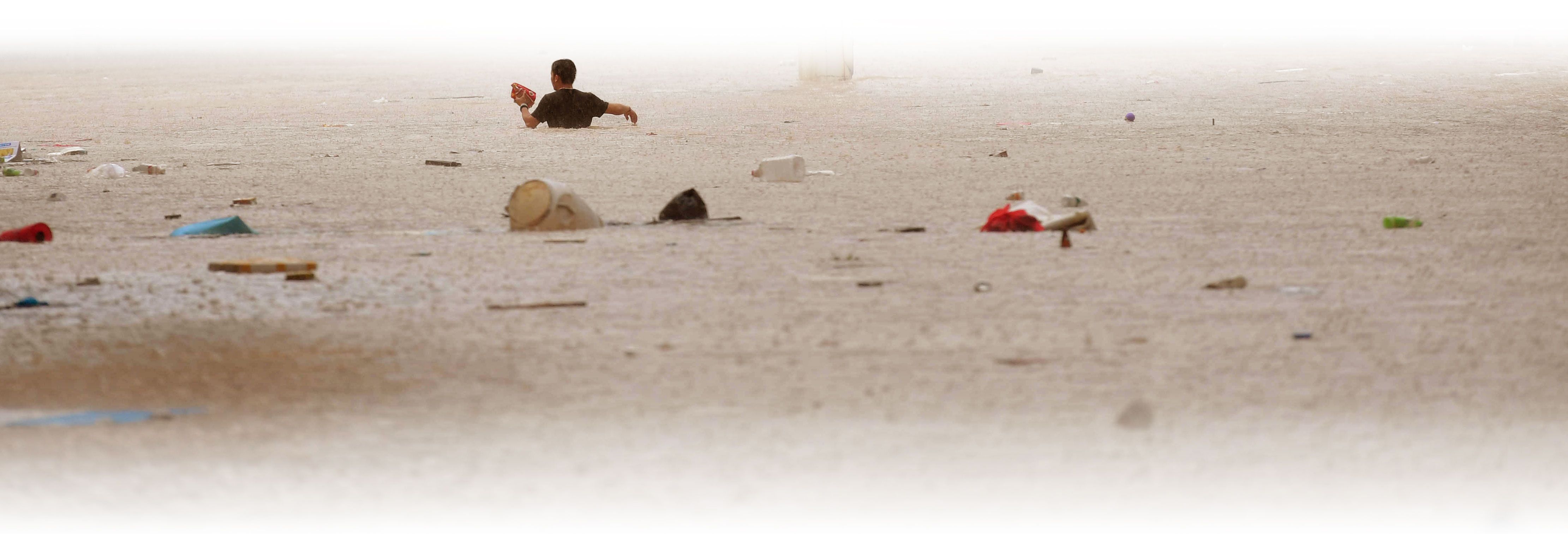 |
| Heavy rains in south China's Guangxi Zhuang Autonomous Region caused floods and blocked roads leading into villages. |
Labels: China, Flooding, Natural Disasters
Monumental Mozambique Misery
"They [the estimated number of dead and humanitarian needs] are nowhere near the scale and magnitude of the problem. And I fear we will be seeing more in the weeks and months ahead, and we should brace ourselves."
"The situation is simply horrendous, there is no other way to describe it. Three thousand people who are living in a school that has 15 classrooms and six, only six, toilets. You can imagine how much we are sitting on a water and sanitation ticking bomb."
Elhadj As Sy, secretary-general, International Federation of Rd Cross and Red Crescent Societies
"Yesterday [we] did a reconnaissance and we found another [inland] lake."
"So we are still very early in the phase of identifying what the scope of this is, for who is affected and how many are lost."
Emma Batey, coordinator, Oxfam, CARE, Save the Children consortium
"[What rescuers are seeing is] sometimes it's just a hut completely surrounded by water."
"If islands are big enough, we can even see smoke coming out, meaning that they're cooking."
"[It remains] super difficult [to estimate a death toll let alone the numbers missing]."
Pedro Matos, emergency co-ordinator, World Food Program
"I've never seen anything like this. We were not warned. Suddenly the roof flew away."
"[She and neighbours herded children away but] we lost some of them."
"[They have received nothing from aid groups or the government] not even bread."
Marta Ben, 30, mother of five
![More than 65,000 people are already in shelters in central Mozambique [Enock Muchinjo/Al Jazeera]](https://www.aljazeera.com/mritems/imagecache/mbdxxlarge/mritems/Images/2019/3/23/551032f077144639818dbca7626fb87e_18.jpg "Cyclone-hit Mozambique: cases of cholera, malaria, typhoid") |
| More than 65,000 people are already in shelters in central Mozambique [Enock Muchinjo/Al Jazeera] |
Parts of Mozambique are finally seeing flood waters recede as the estimated number of deaths rises above a thousand, the number the country's president predicted earlier in the week. Thousands of dazed and fearful survivors are slowly making their pilgrimage toward Beira, the city where 90 percent of its infrastructure has been destroyed. Despite which, it has become a centre for rescue efforts for the entire region.
People have made their cautious way along roads heavily carved by the raging floods days ago, while others were rescued as part of a local effort by fisherman plucking stranded people from small islands, to bring them to safety. Despite the rain, helicopters take off to search for people clinging to rooftops and branches of trees. Water-borne diseases threaten as a result of water and sanitation systems being destroyed.
In the centres, children absent parents, separated in the chaos or newly orphaned wait to be tended to, confused and fearful. Women stake out places for themselves and their children on sidewalks with nowhere else to go, awaiting aid that hasn't yet reached them. They sit there, barefoot, nursing cooking pots, minding their children and begging those passing by for help.
In Zimbabwe, school children and their headmasters are missing. Miners operating illegally looking for gold and diamonds, have been swept into the raging rivers. In the worst-affected part of Zimbabwe, a woman who had left Chimanimani for the diamond fields to search for her son-in-law, who mined illegally, buried and mourned him.
"There are no jobs and all he wanted was to feed his family. He was with his colleagues. They thought it would be easier to mine since the rains would keep the guards and the police away from patrolling", said Maina Chisirlirwa of her son-in-law who was swept away while his colleagues survived. Even police, arresting illegal miners were swept away with their prisoners.
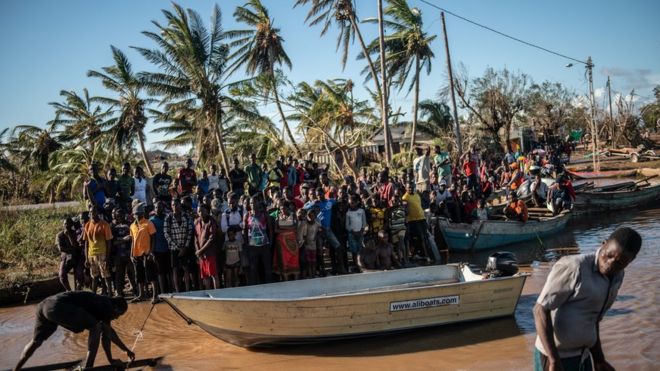 |
| Thousands of people are still awaiting rescue from flooded areas across in southern Africa Getty Images |
Labels: Africa, Cyclone, Disaster, Flooding, Mozambique, Zimbabwe