Islamic State Thrives and Lives On Globally
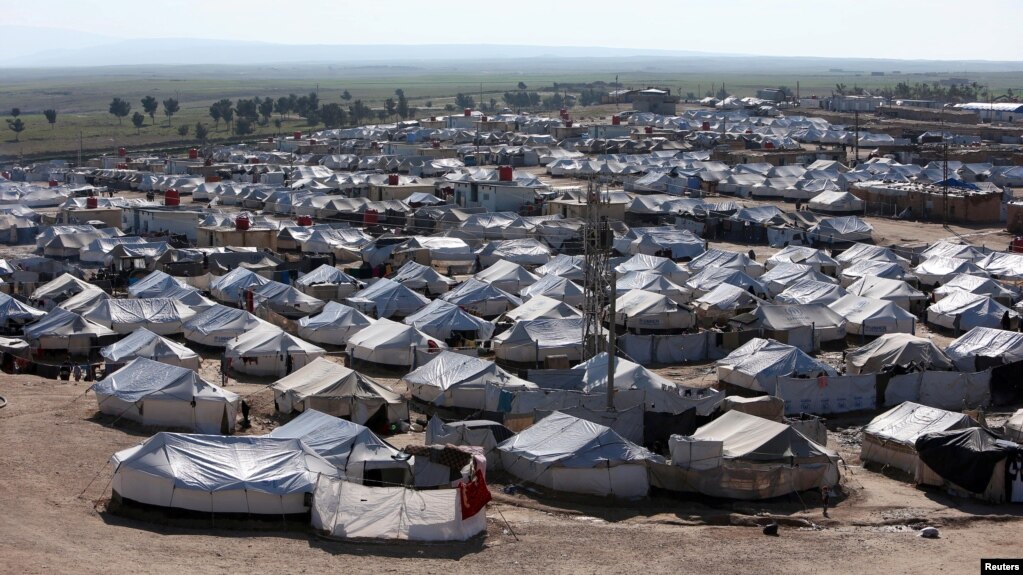
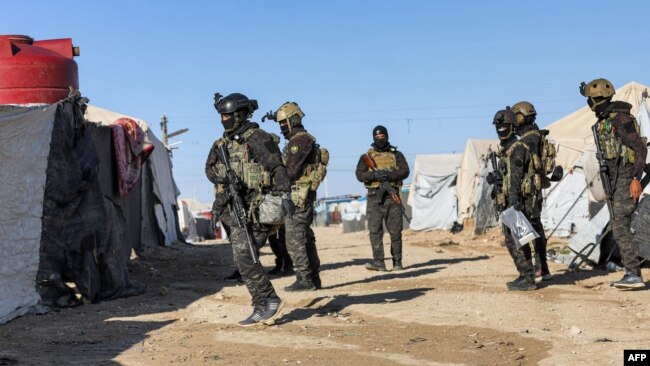
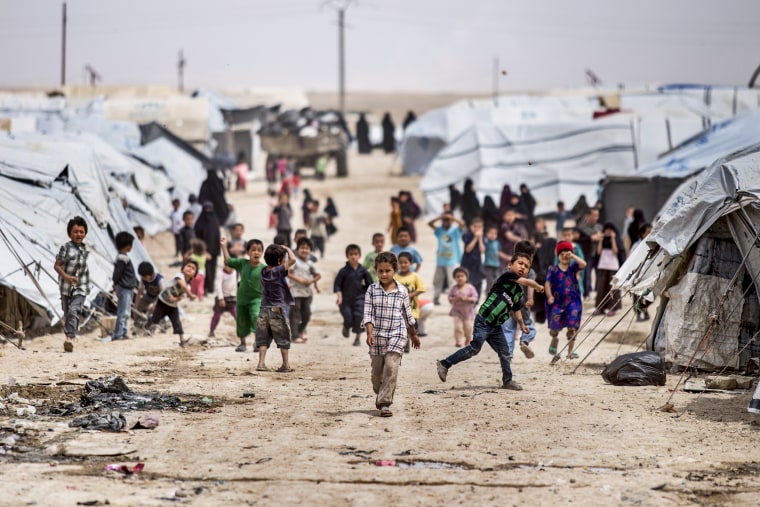
Twenty-one years after its founding in 2004 and eleven years since declaring a caliphate in 2014, the Islamic State’s territorial presence in Iraq and Syria has diminished significantly. At its height, the organisation fielded up to 80,000 militants, including more than 42,000 foreign terrorist fighters from over 120 countries. In contrast, by mid-2025, estimates suggest only 1,500 to 3,000 fighters remain active in Syria and Iraq.Despite the Islamic State having shrunk in the Middle East, its global presence has expanded significantly, and by the end of 2024, the Islamic State remained the deadliest terrorist organisation in the world. Since the loss of its self-proclaimed Caliphate in Syria and Iraq in 2019, and some 60,000 combatants, the organisation has undergone radical structural and operational changes. In 2025, the Islamic State relies primarily on a dynamic network of regional affiliates who operate with a greater autonomy of action than ever before."The Islamic State’s digital operations in 2025 remain a key pillar of its strategy to maintain global influence, project power, and advance its ideological and operational goals. The organisation effectively exploits social media platforms and encrypted messaging tools to disseminate propaganda, radicalise, and recruit supporters, particularly targeting younger demographics who are both most active online and vulnerable to radicalisation.International Centre for Counter-Terrorism
 |
| AP Photo/Khalid Mohammed |
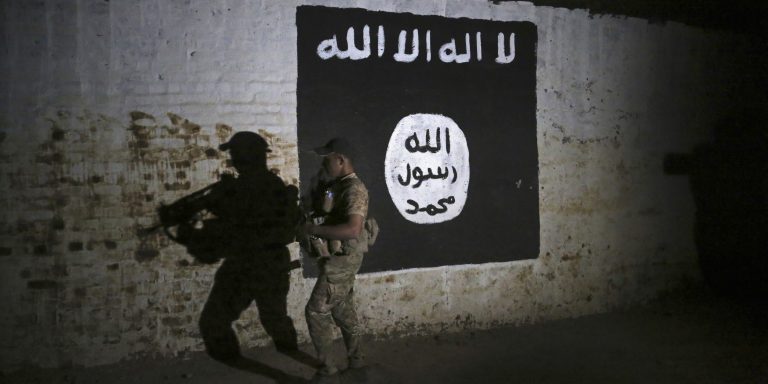
"With the events of last weekend — an Islamic State (IS) attack in Palmyra, Syria that killed three Americans and an IS-inspired (or directed, pending further investigation) terror attack in Sydney, Australia targeting a Hanukkah celebration that killed 15, the Islamic State is once again back in the headlines.""One of the most frequently asked questions from journalists and the media was, does this suggest the beginning of a new wave of IS attacks across the globe? In truth, nobody knows.""But the attacks were less about a resurgence of IS, and more a reflection of a longstanding reality — the group has not been defeated and will remain a major counterterrorism challenge for the foreseeable future."The Soufan Center
One
of the three men arrested in Toronto charged with hate-motivated
extremism targeting women and members of the Jewish community last week,
26-year-old Waleed Khan faces ISIS-linked terrorism charges. Khan
conspired with "persons known and unknown" in Toronto and elsewhere in
Ontario to commit murder, according to the RCMP. It appears fairly
reasonable to comprehend from this that Islamic State-linked extremists
dedicated to jihad make their homes in Canada.
Earlier
occurrences in Montreal and Newmarket respecting ISIS-related arrests,
make this most recent one in Toronto, a third in what appears to be a
growing series where since 2023, 23 such arrests have taken place in
Canada. Mere days ago an ISIS attack in Syria killed three U.S.
soldiers, while an ISIS-inspired attack on a Hanukkah celebration at
Bondi Beach in Sydney saw 15 people killed and 40 wounded. A reminder to
the world that the Islamic State Caliphate has morphed from a
since-routed territory within Syria and Iraq to the far more
difficult-to-expunge minds of aspiring Islamist jihadists where the
Internet plays a central role in radicalizing young Muslims.
 |
| Australian PM: Bondi Beach Atrocity inspired by ISIS |
The
Canadian Security Intelligence Service (CSIS) has ventured an estimate
of at minimum 200 individuals with connections to Canada travelled
overseas to serve as fighters, recruiters, fundraisers and propagandists
in league with Islamic State in its heyday. The agency warned early in
2025 of its "increasing...concern" for
the risk of ISIS-inspired attacks at home. A Canadian has been
identified as one of the group's most notorious online propagandists.
The kind of propaganda appealing to restless young man prone and prey to
self-radicalization as "lone-wolf" terrorists eager to make their mark
striking anywhere.
The
psychologically corrosive allure of violent action in a cause believed
to be divine, with the faithful of Islam responding to one of the major
faith edicts of jihad, promises a role for those willing and able to
weaponize the grievances of victimhood and nowhere at present is that
target of lethal vengeance more alive than in Israel's military response
in Gaza to the Palestinian terrorist attack of 7 October 2023; a
flashpoint of rage and retribution.
 |
| Waleed Khan, Osman Azizov and Fahad Sadaat are facing a combined total of 79 charges according to police, including attempted kidnapping with a firearm and sexual assault with a weapon, police say. Khan is also accused of funding ISIS and aiding terrorist activity, the RCMP said. (Toronto Police Service/YouTube) |
As
the most recent arrests to take place in Canada demonstrate,
terrorism's allure is increasingly for the young to incite violence
within their own areas of domicile where governments tend to be lenient
in their response to the destabilizing, socially divisive solitary and
group actions of the disaffected demographic that reacts compulsively to
the prods of incitement that claim Israel has mounted a genocide
against the people of 'Palestine'. Clamouring for Israel's destruction
from afar has its satisfying long-range echoes, but Jew-hate can be
practised anywhere and in Canada, the ongoing 'pro-Palestinian',
anti-Israel marches target the Jewish contingent in the country for a
'Final Solution'.
Deviations
from a crowd mentality are those lone wolves who strike out to commit
violent acts of terror; acts as wide-ranging as fire-bombing synagogues,
firing at Jewish parochial schools, vandalizing Jewish community
centers and Jewish businesses, and now the most recently revealed
pursuits, hunting down Jewish women with the intention of kidnapping and
sexual assaults. Petty and disturbing incidents of ripping mezuzahs (small metal lozenges containing sacred scrolls) commonly placed on Jewish door posts, are disconcertingly frightening for the elderly residents in targeted homes.
And
yet, through all these warning signs, along with the rising decibel of
fear and loathing, Canadian authorities at all levels cling to inaction.
Failure to make use of existing laws against public disorder, threats,
violence and instigation of acts of violence have served to embolden
those who continue to slanderously stigmatize others, threaten their
peace of mind and deviate when it suits them from targeting Canadian
Jews, to harass shoppers at Christmas markets, or enter Jewish-owned
businesses to confront those shopping there.
The
Government of Canada recently announced additions to its terrorist
list. A year ago it added Samidoun, yet it still permits the terrorist
entity to operate its foreign affiliates out of Vancouver.
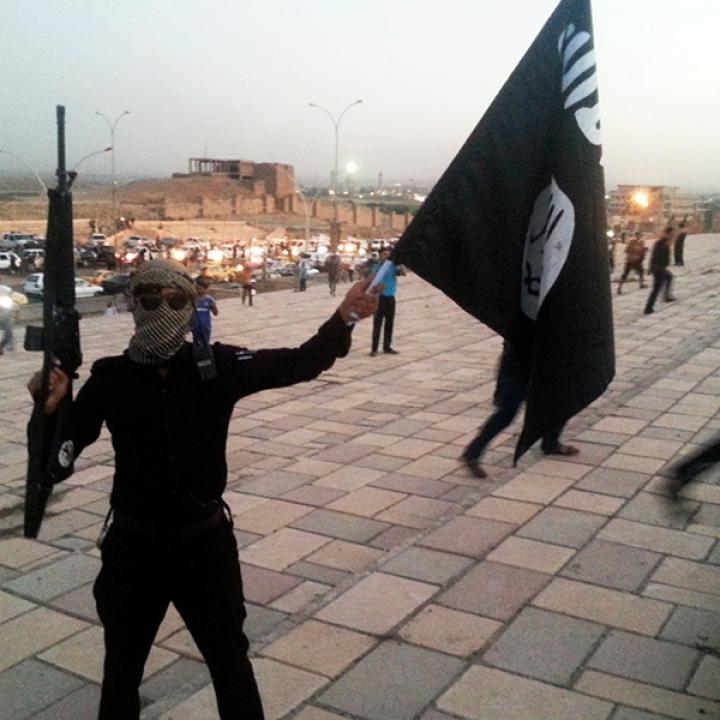
The Government of Canada is taking action to counter terrorism and violent extremism, in particular the radicalization of young people online, by adding four new organizations to the Criminal Code list of terrorist entities. These measures help protect Canadians and communities from intimidation, hate, and acts of violent extremism and terrorism.Today, the Honourable Gary Anandasangaree, Minister of Public Safety, announced the addition of the following groups: 764, Maniac Murder Cult, Terrorgram Collective, and the Islamic State of Iraq and Syria (ISIS, also known as Daesh) affiliate Islamic State-Mozambique.Under Canada's Criminal Code, these organizations are now legally defined as "terrorist groups". This gives Canadian law enforcement and security agencies stronger tools to prevent and disrupt terrorist activity. Key implications include:
- All property owned by these groups in Canada must be frozen and reported to CSIS or the RCMP.
- It is a criminal offence for anyone in Canada and Canadians abroad to knowingly deal with property belonging to a listed terrorist group.
- Providing property or financial services that benefit these groups is also prohibited.
- Immigration and border officials can use this listing to inform decisions on admissibility under the Immigration and Refugee Protection Act.
764, Maniac Murder Cult and Terrorgram Collective are transnational ideologically motivated violent extremist (IMVE) networks. They use social media and online gaming platforms to recruit and radicalize individuals, spread propaganda and violent extremist narratives, and incite violence both online and offline. Canada is the first country to list 764 as a terrorist entity, taking a leadership position in combatting the significant threat of IMVE and fighting against emerging terrorist trends. Listing these groups helps Canada protect the safety and security of Canadians, including children and vulnerable populations, against terrorism and violent extremism.Islamic State-Mozambique (IS-M) is an official ISIS branch. It is an armed insurgent group based in Mozambique seeking to replace the governing authority with Sharia-based governance by seizing territory, infiltrating civilian populations and security forces, and committing violent acts of terrorism.Listing these entities will help Canadian security, intelligence, and law enforcement agencies in combatting their crimes and terrorist activities, and make our communities safer.Government of Canada, December 10, 2025
 |
| Washington Institute for Near-East Policy |
Labels: Canada, Internet Incitement to Fundamentalist Islamist Jihad, Islamic State, Ongoing Global Threat
posted by Pieface @ Saturday, December 27, 2025