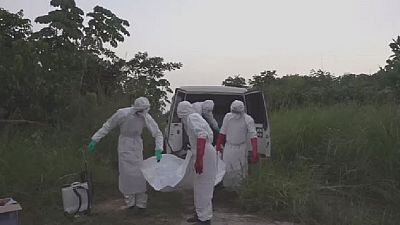
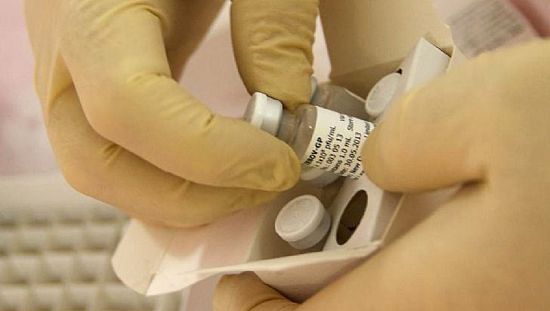
"The new protocol is that we just abandon the body." "They will learn their lesson when they get sick." Philemon Kalondero, 39, Ebola response team
"Can we stop the epidemic? Certainly we can." "[But to succeed, a political solution is first required to reduce the violence]." Mike Ryan, World Health Organization emergencies program
Health workers carry a coffin containing a victim of Ebola virus on May
16, 2019, in Butembo, DRC, a city at the epicenter of the Ebola crisis.
In Democratic Republic of Congo, in rural Beni, subsistence farmer Janvier Muhindo Mandefu set aside his farming occupation to work instead buying the bodies of Ebola victims, aware of the highly contagious state of the decomposing bodies. He is aware of the possibility of contagion, handling these bodies, but he perseveres. The bodies' threat to his own state of health is one thing, the threat he is equally aware of that he and his burial team could be attacked by relatives of the dead, is more worrying. He has already experienced one such attack.
Mourners accuse burial team members of stealing organs from the corpses, threatening to throw the team members into the open graves. Mr. Muhindo has been attacked by a swinging hoe. On another occasion a mourner had a hand grenade. On that occasion the entire team scattered and failed to return. The three-year-old Ebola victim remained unburied. "Someone like me can be buried alive", Mr. Muhindo said, watching his team hose down the trucks following another day of burials.
It was thought that the Ebola outbreak in eastern Congo was under control. Now, however, it has roared back, and is spiraling out of control mostly because combat efforts have been interfered with by attacks on treatment centers and health workers, making this outbreak the second-largest ever recorded. Growing mistrust of government managing the efforts at eradication, and mistrust of international medical experts struggling to steer patients into treatment centers, have taken their toll.
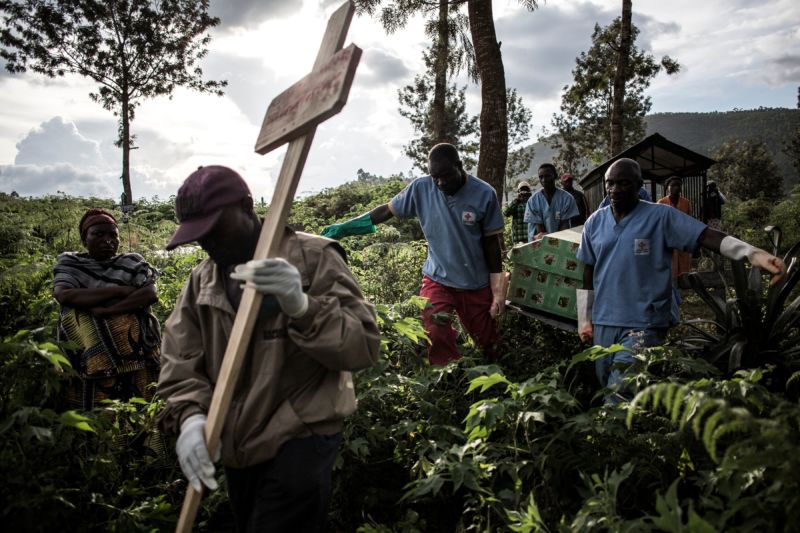
Insecurity has significantly complicated efforts to contain the DRC's ongoing Ebola outbreak [File: Al-Hadji Kudra Maliro/AP]
Treatment centers were attacked by gunmen, others set on fire, health workers suspended their work when a doctor was killed. Some international groups have seen fit, given the dangers involved, to pulling some of their personnel out of the situation. Mid-May saw almost 1,150 deaths from Ebola. When the outbreak first occurred, police would remove bodies from homes sometimes at gunpoint. Now, the bodies are left as a result of the violence from relatives of the dead.
The outbreak has occurred in the part of eastern Congo afflicted by armed groups, conflicts over land possession, natural resources, ethnicity and religion motivating them. One of the groups is tied to the Islamic State. When the latest wave of health experts and humanitarian workers arrived they had their previous experience treating Ebola. They had lessons learned from the outbreak across West Africa in 2013 that killed over 11,000 people. And they had recently contained an outbreak in western Congo.
They brought with them medical advances, an effective vaccine, experimental treatments and a transparent enclosure called the "cube", where patients would be placed within, reducing the risk of transmission. Because the outbreak was in a vulnerable region close to the borders of Rwanda, Uganda and South Sudan it was imperative to bring it under control to halt its spread.
The region had been exempt from the presence of Ebola until last year when it manifested in a town called Mangina and by late summer it had shown up in Beni, a city of about 350,000.
In Beni massacres by machete killed an estimated 800 people in recent years. Local politicians speculated the government had imported the disease in a region where an estimated two percent of those surveyed felt mistrust for the national government. "Scientifically, I don't believe that it's possible to first have the killings of people in Beni, and now this disease without them being related", sagely said Crispin Mbindule Mitondo, a national assembly member, his remarks broadcast on local radio.
A tight national election was occurring along with the first transfer of power by ballot in Congo since 1960's independence. But when Ebola arrived Kinshasa suspended voting in Ebola-effected areas claiming that polling places might spread the disease in an area that was an opposition stronghold. A coincidence that persuaded locals that Ebola was part of a government plot to deny them the vote. And a day later an Ebola triage center in Beni was set on fire by protesters.
"When they cancelled the elections, it was a disaster for us", Emmanuel Massari of Doctors Without Borders remarked. Vaccination teams traveled under armed police or military escort, adding to the locals' suspicion, which made it appear as though the Ebola response was in reality an extension of an unpopular national government. Where, during confrontations with grieving family members, police officers and soldiers accompanying medical teams have opened fire.
The city of Butembo, with its million residents is now another disease locale where patients who had Ebola refused to go to treatment centers, viewing them as a place where they would not be cured, but die from the infection. In Katwa, an outlying area of Butembo, operated by Doctors Without Borders the Ebola treatment center was set on fire, the patients fleeing into the night.
"We can then look at survivors and see if they can recall any of these stimuli, and when they were able to receive information, and how that relates to their brain resuscitation quality." "What happened to this person's mind and consciousness, this sweet human being that I was talking to just a half an hour ago? Is he conscious? Is he able to see us, hear us? When did he lost it, if he did lose his consciousness?: "Transcendental mystical or spiritual experiences close to death have been described for millennia. The problem with all those studies are that none of them are causative -- none of them show you how brain cells could possibly generate a thought, which is the fundamental problem of consciousness." "Why would my brain cells, millions of them connected together, suddenly feel guilty, or have a sentiment of guilt, like if I were to throw a brick in my neighbour's window, or be rude to somebody or do something immoral?" "Yet, paradoxically, what we started to see is that millions of people have now been resuscitated, and many of them have reported these very lucid, well-structured thought processes [able to to form memories, describe conversations and what people were wearing] Except that their brain has shut down and they've gone through death. Which is completely a paradox, it should not happen." "We're all conscious, thinking beings. Everything we do starts with consciousness. Yet we don't know fundamentlaly where it comes from." Dr. Sam Parnia, author, AWARE, awareness during resuscitation, resuscitation specialist, NYU Langone Medical Center
Cornelia Li for National Post
"If you take that organ [the brain] away or kill that organ or that organ dies, you cannot be conscious. [While there is no identified conscious centre of the brain, nothing to point to and claim] 'there, that's where it all happens." "And I know of no case in the literature of a brain dead patient coming back." Adrian Owen, neuroscientist, Western University
"Serotonin in particular was very high [in dying brains]. We know that the serotonin is associated with hallucinations and other mental functions." "But the part that is at least partly responsible for conscious information processing is actually increased tremendously in the dying brain [for 30 seconds at least]." Jimo Borjigin, associate professor, University of Michigan Medical School
Dr. Parnia believes that human consciousness may very well go on even after our heart stops beating for an undetermined period of time. He has taken the testimony of many people whose detailed descriptions of their out-of-body-at-death experience he gives credence to. A man, for example who suffered a cardiac arrest, and his brain "flatlined", with no sign of brain activity of any meaning. He described someone beckoning to him from the ceiling, and then the next second, "I was up there, looking down at me", a corpse, surrounded by doctors, nurses.
He witnessed his blood pressure being taken, a doctor placing something down his throat, saw a nurse pumping on his chest. He described the people, the sounds and the events of his eventual "resurrection". The man experienced conscious awareness for three to five minutes in the absence of detectable brain activity, "When no human experience should be happening whatsoever", stated Dr. Parnia, who cited the case in his study published in 2014 called AWARE.
According to Dr. Parnia, who has made himself an expert on the phenomenon, evidence from AWARE along with other related studies brings in the possibility that the mind or consciousness; the psyche, the "self", the spirit that reflects our uniqueness may not originate after all in the brain as popularly imagined as reality, but may rather reflect a separate, as yet-undiscovered scientific entity. Modern science at the present time lacks the tools required to demonstrate this, that when we die, what we name consciousness or the self does not become "immediately annihilated".
Dr. Parnia is not religious, he is not looking for proof of an afterlife; he and others who believe as he does are attempting to discover improved methods whereby the brain can be saved to avoid "disorders of consciousness", such as that which afflicted a Florida woman who suffered massive brain damage which resulted in a permanent vegetative state following a cardiac arrest. He is also searching for a method whereby he can test the accuracy of fantastical claims of near-death experiences with the use of objectively scientific approaches.
He plans to measure, second by second, oxygen levels inside the brain through a planned study of 1,500 people in cardiac arrest when a "code" is called so participating researchers, once alerted can dispatch themselves to resuscitation rooms with backpacks carrying portable brain oxygen monitoring devices. A portable EEG will measure whether the brain is functioning, and patients will be fitted with wireless headphones where random words and sounds will be transmitted and images beamed upwards as people undergo CPR.
The ultimate goal is to understand the optimal brain oxygen levels to be targeted by doctors during cardiac arrest and CPR to be able to optimize survival and bring a whole person back from cardiac arrest, with intact brain and mind and full functionality for their living future. This reflects advances in resuscitation where death can be reversed in those who have lacked a pulse for hours. Even greater numbers of people could be brought back across the death threshold, believes Dr. Parnia, if more hospitals implemented advanced techniques; chilling bodies to protect the brain, or using automated mechanical devices for chest compressions beyond what a human could perform.
Most people ultimately die of cardiac arrest, irrespective of how it has come about; the drop of blood pressure, the heart's inability to pump sufficient blood to supply the body, the heart eventually stops, respiration stops, electrical activity to the brain stops, and the brain flatlines. Studies suggest that six to 23 percent of cardiac arrest survivors report having clear memories fitting the parameters of a near-death experience. From a functional perspective, the moment the heart stops, the brain shuts down, said Dr. Parnia; even so, people become resuscitated, they form memories, describe conversations, "Except that their brain has shut down and they've gone through death".
The notion of a soul or mind existing separate from the body, charge his detractors is absurd. "I thought to myself, we can probably figure this [conundrum of brain-mind and near-death phenomenon] out in, like, a year, year-and-a-half of research", muses Dr. Parnia. He's still struggling with it after twenty years, with no end in sight, but opportunities to conduct further research, looking for that elusive "eureka!" moment of discovery.
"It's my 6-year-old daughter who had measles first. She had a lot of fever." "I called the doctor but it was Friday. He had already gone to town. I went to see another doctor who told me that my daughter had an allergy." "This misdiagnosis was almost fatal." Erika Hantriniaina, Ambalavao, Madagascar
"Vitamin A is given to children to increase their immunity. We try to reduce the fever. If there is a cough, we give antibiotics." Dr. Boniface Maronko, World Health Organization
"The epidemic unfortunately continues to expand in size. Malnutrition is the bed of measles." "But immunization is not the only strategy for the response to this epidemic. We still need resources for care, monitoring and social mobilization." Dr. Dossou Vincent Sodjinou, WHO epidemiologist
"He has a fever. I think it's measles because there are these little pimples that have appeared on his face." "I'm so scared for him because in the village everyone says it kills babies." Nifaliana Razaijafisoa, Ambalavao, Madagascar
A
volunteer nurse examines six-month-old Sarobidy, who is infected with
measles, while her mother Nifaliana Razaijafisoa looks on at a
healthcare centre in Larintsena, Madagascar. (Laetitia Bezain/Associated Press)
Madagascar has logged beyond 115,000 cases of the largest measles outbreak in its history. Misinformation and hesitation born of deliberate campaigns to turn people away from having their children inoculated have resulted in measles cases rising globally. It is a lack of resources in Madagascar, however, that has driven the rise of measles infections.
On Madagascar's main island only 58 percent of people have been vaccinated, representing a major feature in the spread of the outbreak. One of the most infectious diseases, immunization rates are required to be at least 90 to 95 percent, even higher, for the herd immunity effect to prevail in the prevention of measles outbreaks.
It is mostly children under age 15 that have died from the measles infections since the outbreak began in September, according to the World Health Organization. Close to fifty percent of Madagascar's child population is malnourished, complicating the outbreak. For rural dwellers, simply reaching a clinic for help can represent a challenge.
Health centres in the country are often understaffed or are staffed with poorly qualified workers and many people living in Madagascar cannot afford to see a doctor, or to buy medicine. Information on health issues can be lacking entirely or be unreliable.That vaccines are free in public health centres doesn't reach all parents.
There are no specific treatments for measles; instead the symptoms are treated. Highly infectious, the disease is spread by coughing, sneezing, close contact or infected surfaces. Should the disease fail to be treated in its early stages by antibiotics, complications including diarrhea, bronchitis, pneumonia and convulsions can manifest.
Free medications have been sent to regions most affected by the outbreak, by Madagascar's health ministry. Dr. Maronko supervises efforts to contain the outbreak, reminding heads of health centres in the Ambalavao region not to ask parents to pay, having seen some doctors asking them for money. WHO began a third mass vaccination campaign with the goal of reaching 7.2 million children, six months of age to nine years, in Madagascar last month.
Mothers wait to have their babies vaccinated against measles, at a healthcare center in Larintsena, Madagascar. Laetitia Bezain / AP
"I just want to do what's best for Max. And sometimes that's tough love." "I
have no animosity toward Sarah on this issue. I think we both believe
we are doing the right thing. And I believe we both have Max's best
interest in mind." "I thought it was a long process and nothing drastic was going to really happen, at least without consent." "You don't just jump them into things they can't change back. When she's 18 and she does it, I'll support her 100 percent." "What if?" Clark, father of daughter/son (identities withheld) "I have a male brain that doesn't match up with the body I'm in. It's like being trapped in a cage." "It just kind of clicked right away [after watching YouTube video "Boy" while in Grade 7]." "Even if I'm open with who I am, I'm still insecure." Max, 14, Grade 9, Surrey, British Columbia
"I
didn't quite understand transgenderism myself, didn't know if I fully
believed in it. But having gone through the experience, I've gone
through with my son I fully believe that yes, it is very possible that
transgenderism does exist and there are people wandering around feeling
excruciatingly uncomfortable in their own skin." "If
this [testosterone injections] is what alleviates my child experiencing
this dysphoria, I'd rather move forward. ... If it happens to have side
effects down the road, we're OK to handle that -- at least our child
would still be alive." "I
don't want it on my conscience knowing that if this is all it took to
alleviate that dysphoria from my child then why didn't we follow through
with it? Sarah, Max's mother
"Max's
health care team has concluded that he possesses sufficient maturity
and intelligence to be capable of consenting to his own medical care,
notwithstanding the fact that he is only 14 years old. Furthermore, the
team agrees that the proposed course of treatment is in his best
interests." "Under
these circumstances we are of the view that it is ultimately up to Max
to give or withhold consent to is own medical care; neither you nor his
mother can make this decision for him." Letter to Clark, Max's father, from B.C. Children's Hospital
"I
have seen in some circumstances ,,, where young people have had health
care delayed and denied because everybody wasn't on board. One parent
is supportive, and one is not, and nothing happens. That can be a
problem. If the clinicians, the psychologists, the endocrinologists, the
family doctor, if all of them have done the assessment and have
determined that this is medically necessary, then it's important to
actually pay attention to the expertise." Elizabeth Aaewye, professor, UBC school of nursing
Some enterprising researcher who may have doubts about the new open and
accepting attitude of medical professionals toward accepting a child's
confident assertion that they are not in fact, a girl despite having
been born female, or a boy, identified as such at birth -- but in
reality a member of the opposite sex yearning to be recognized as such
and anxious to be given medical treatment to make the physical
transformation to match their psychological belief -- should begin
interviewing women of all ages to ask whether such gender-identification
confusion ever resonated with them.
It would, without doubt, be recognized that a good proportion of girls
in their early years fantasized being a boy, imagining how much freedom
it would confer upon them to do things that boys do so effortlessly and
so physically well coordinated, in rebellion against the cultural
confines they struggle against as girls. The same would be true for many
boys who resent the expectation that they will do
manly things and behave in a manner that fails to suit their
personalities, imagining that pressure would be relieved if they were
girls instead.
Children are suggestible, hugely so, and their imaginations can run
rampant into fanciful territory. We are a species never quite satisfied
with who and what we are, seeking to portray ourselves differently to
reflect what we would prefer, and at the same time we are
attention-seekers, wanting to stand out in the crowd, generally to be
admired, even if it takes a leap at non-conformity in rebellion to do
so; we see ourselves as individualists so often, entitled to insist on
having things our way. Who is it that can claim with complete confidence
that children are not in fact gender-confused psychologically and
briefly as part of maturation?
The general scientific, medical consensus seems now to have succumbed to
the confidence in belief of a biological mismatch between
ego/personality and birth presentation in gender. This is not now seen
as a type of brief psychosis, but rather a biological error in need of
intervention by medical science to remediate an error that nature
produced. And if this doesn't represent a confusion of medical arrogance
and layman effort to salve an emotional conundrum afflicting a steadily
increasing group of people for whom transgenderism has become an escape
from their reality in life, what else is it?
Max, all of 14, born a girl, feels she is a boy and insists she must
live out her life as a male. Her/his mind is settled on self as male and
all that is now wanting is to convince her father just as he was
successful in convincing his mother, and undergoing treatment to
transform his voice, his physique and confer upon him the male
characteristics that she so fervently wishes to acquire. All the medical
personnel consulted agree with that candidacy, as does mother Sarah,
but father Clark is the holdout. The parents are separated, with joint
custody and a provision in the custody agreement that both must agree on
any issues of substance.
Clark and Sarah must jointly exercise "all parental responsibilities" inclusive of "giving, refusing or withdrawing consent to medical, dental and other health-related treatments for the child",
reads their legal document. Despite which the B.C. Children's Hospital
invokes the B.C. Infants Act to insist that as long as a health care
provider is satisfied a child understands the nature, consequences,
benefits and risks of the proposed treatment and concludes that the
treatment is in the child's best interests the right to consent "belongs to the child alone".
Max was assessed a half dozen times over a period of several months
starting in Grade 8, by a clinical psychologist. When those sessions
ended, the psychologist considered Max a good candidate for testosterone
therapy, for Max demonstrated to the psychologist a "long-lasting and intense pattern of gender non-conformity or gender dysphoria"
among other issues related to the matter at hand. Sarah and Max went to
the B.C. Children's Hospital's gender clinic, reputed to be one of the
busiest in North America.
They met with a medical team that included a paediatric endocrinologist,
a social worker and a nurse. All described the treatment that Max would
undergo. On a three-page "informal consent form", the risks of testosterone therapy were laid out. The "treatment in young adolescents is a newer development, the long-term effects of which are not fully known".
Testosterone use would lead to permanent changes; a lower-pitched
voice, facial hair and thicker hair on arms, legs and torso, that would
prevail even should treatment be stopped.
Testosterone treatment could lead as well to an elevated risk of heart disease, stroke and diabetes. "It is not known", according to the consent form, what the effects of testosterone are on fertility. "You may or may not be able to get pregnant in the future". Max, said his mother, was definitely not undergoing some "phase".
Staff at the hospital were prepared to initiate injections that very
day, but Sarah felt it incumbent upon her to advise Max's father who was
shocked at the swiftness of the conclusion.
He refused his assent on the basis of the information on the form. A
court hearing has ensued. Clark's lawyer speaking for his client advised
they take the position that Max not be rushed into treatment, that no
injections should commence until such time as both parents agree to
consent, or Max turns 18, or the court orders treatment to proceed. The
judge, in hearing the details felt he had never encountered a case quite
like this before in his career.
He was not aware whether provincial law recognizing Max's rights to give
informed consent trumps family law and the parents' joint
responsibilities in care of their child as per their separation
agreement.
"Very alarmed to learn that Samar Badawi, Raif Badawi’s sister, has been
imprisoned in Saudi Arabia." "Canada
stands together with the Badawi family in this difficult time, and we
continue to strongly call for the release of both Raif and Samar
Badawi." Canadian Minister of Foreign Affairs Chrystia Freeland
"There's always hope. It's all the way up to the highest levels of both governments to find a resolution [to the viral spat that has ensued from Canada's Minister of Foreign Affairs tweeting her criticism of Saudi Arabia's arrest of Saudi women's rights activists]." "[Positions held by Saudi medical residents are] over and above [places provincial governments pay to Canadian students]. They would sit empty otherwise. It's extra capacity [for treating patients]." "We're in the process now of really sitting down with our hospital partners, site by site, and program by program, and figuring out what the impact will be if September 1, these folks [Saudi medical students] aren't around." "The situation came on fairly suddenly and hopefully a resolution could be found equally suddenly and surprisingly." Dr. Salvatore Spadafora, vice-dean, post-MD education, University of Toronto, Faculty of Medicine
Saudi Arabia has recalled an estimated 15,000 Saudi students studying to complete degrees in various academic disciplines such as engineering, medicine and various sciences on Saudi-funded scholarships. The Kingdom, in a rage over Canadian temerity in insulting the sovereign internal laws of the country, has lashed out, accusing the government of Canada of unconscionable and atrocious accusations against its internal affairs. Saudi Arabian Foreign Ministry has made it clear that only an abject apology by Canada could possibly assuage its rage over the outrage it has caused.
Nothing short of a lack of attention to the niceties of diplomatic relations required nation-to-nation led Canada's Minister of Foreign Affairs Chrystia Freeland to send off a tweet criticizing the Kingdom's harshly punitive laws against political critics, urging it to release several human rights activists recently arrested as well as blogger Raif Badawi whose sentence for criticizing the Saudi government was ten years in prison and a flogging of 1000 lashes, 50 of which were carried out and nearly killed him.
The instantaneous response by the Kingdom over a tweet translated from English into Arabic that circulated within the country courtesy of Canada's Foreign Affairs, immediately halted all trade agreements, called on all Saudi university students to further their education elsewhere funded by the Saudi government, ordered all investment in Canada to be sold off, even at a loss, ensured that direct flights from Riyadh to Toronto would cease, and sent Saudi Arabian news media into a demented spin of accusing Canada of all manner of human rights abuses. Oh, and booted the Canadian ambassador out of the country.
Along with the estimated fifteen thousand Saudi university students enrolled in Canadian institutes of higher learning, there are thousands of medical students studying in Canada. And Canadian hospitals, many of which are internationally celebrated for pediatric surgery, cardiac and neurosurgery are now grappling with a sudden emergency; losing residents advancing their medical education by working directly with patients in hospitals, leaving a vacuum that will not otherwise be filled. Saudi Arabia financed each of those students to the tune of $100,000 yearly, adding up to multimillions of financing for Canadian hospitals.
While still hoping that the two countries will soon reach an agreement that will spare the students from leaving the country, citing the personal loss to the residents by having their professional studies interrupted, a temporary measure has been reached allowing students to remain until September 1 before being recalled. This retaliatory action by the Saudi government resembling a spurned lover going into a hysterical huff and throwing out all the belongings of the other while shutting themselves off from conciliatory efforts, has placed a real spanner in the working cogs of affected hospitals.
An estimated 750 Saudi medical students being exposed to highly specialized medical skills are also in the process providing care to patients in the hospitals hosting them. University of Toronto affiliated hospitals identify 216 out of 3,600 residents as Saudi. While at McGill University affiliated hospitals in Montreal, 225 out of 1,250 residents are Saudi for which their nation pays the hospitals $100,000 each yearly, including salary support. This arrangement has been in place for the last 40 years. McMaster University in Hamilton has 150 Saudi students enrolled in mostly postgraduate medical training.
There is the additional issue of Saudi Arabian nationals being treated in Canadian hospitals suffering from severe health conditions such as "advanced cancers, organ failure, and other complex medical diseases". These Saudi nationals too are being removed from Canada. The Saudi government has tasked its United States-based attache, Fahad Altamimi to "ensure the safety of Saudi patients who receive treatment in Canada" by finding places for them in hospitals outside Canada.
There, that should teach Canada a lesson in diplomatic niceties!
A totally unworthy thought intrudes: given the Saudi Arabian propensity to invest billions worldwide in the construction of mosques and madrasses to inculcate its Wahhabi Salafist-style of Islam wherever Muslims migrate to live throughout Europe and North America, the very version of Islam that has been responsible for the rise of disparate groups of the faithful such as al-Qaeda and Islamic State, perhaps it is possible that the presence of Saudi students in Canadian universities have boosted the spread of Palestinian-centric BDS on campuses...?
At University of Toronto-affiliated hospitals,
216 out of 3,600 residents are Saudi. In Montreal, 225 out of 1,250
residents at McGill University-affiliated hospitals are from Saudi
Arabia.Ernest Doroszuk/Postmedia Network
"This is a major development in the outbreak." "We have urban Ebola, which is a very different animal from rural Ebola." "If the number increases in Bikoro it's bad but it's not a disaster. But if these three cases in Mbandaka become ten, or twelve, then we have an urban epidemic." "We're certainly not trying to cause any panic in the national or international community. [But] urban Ebola can result in an exponential increase in cases in a way that rural Ebola struggles to do." Peter Salama, senior World Health Organization official
"Boats move up and down the river, carrying people and goods." "One of the risks is that someone with the virus could easily access one of the boats and start moving up and down." Jose Barahona, Oxfam DRC country director
"The arrival of Ebola in an urban area is very concerning and WHO and partners are working together to rapidly scale up the search for all contacts of the confirmed case in the Mbandaka area." Matshidiso Moeti, WHO regional director for Africa
A victim of the ebola outbreak in the Democratic Republic of Congo has
been buried by the Red Cross. The society says this was to prevent
further spread of the contagious viral disease. Dr. Pierre Formenty, is
team leader for viral haemorrhagic fevers at the World Health
Organization.
In 2014-2016, the world's eyes were riveted on the largest recorded Ebola outbreak in West Africa that killed 11,300 people, causing widespread fear and panic before it was stalled. Difficult to control, it spread to the capitals of Guinea, Sierra Leone and Liberia. And the race was on to find a formula that could be relied upon to stop this deadly virus before it infected and killed many more. In a Canadian research laboratory in Manitoba one such vaccine was produced by ZMapp scientists,and the incidence of infection began to be reduced.
Before it came to a halt, however, it took the lives of men, women and children, and those of health workers as well. Medical teams rushed to the affected areas in a desperate effort to check the advance of the often-deadly virus. A few cases showed up in Europe when travellers brought the virus back with them, often people in the medical community whose advanced treatment largely proved successful. A huge sigh of relief was exhaled once the WHO was able to declare the epidemic at a halt.
Now, once again, teams from the World Health Organization and major agencies are being swiftly deployed to Democratic Republic of Congo to face this new outbreak to which world governments and agencies have pledged funding. Teams from Medicines sans Frontieres set up an isolation zone in the area, preparing to build two Ebola treatment centres in Mbandaka and Bikoro.
"With Ebola, when people die, they are very contagious. So it’s a place
where we have a lot of infections. It is therefore important to have
safe burials because it reduces the risk of human-to-human transmission,
but it is also important to have dignified burials", explained Dr. Pierre Formerlty,
team leader for viral haemorrhagic fevers at the World Health
Organization.
Ebola kills half of those who are infected. Recovery is long and people are extremely ill throughout the touch-and-go process, then face suspicion from a fearful population unconvinced survivors are no longer infectious, leading to the social isolation of survivors. While Ebola usually surfaces in the countryside, it is now speculated that the disease was carried from the countryside down the Congo river to the city by someone infected, but unaware.
The city of Mbandaka, with its 1.2-million population is connected through the Congo river with the capital of Democratic Republic of Congo, Kinshasa, and Brazzaville, the capital of Congo-Brazzaville, as well, so the potential of Ebola spreading more widely is feared. Moreover, in a crowded city environment the virus can spread far more rapidly in person-to-person contact than it can in less-crowded surroundings in the countryside.
Hundreds of people are suspected to have been in contact with infected people, now being monitored. The WHO is deploying thirty experts to move throughout the city conducting surveillance. The city of Mbandaka though densely populated has poor sanitation, and inadequate health care services. Of the 44 people identified as having been infected, 23 have died. It was only ten days ago that an outbreak was reported in the remote rural area of Bikoro, in the DRC's northwest.
DRC receives first batches of vaccine during outbreak. Africa News
"When you leave Cuba for the first time, you discover many things that you had been blind to. There comes a time when you get tired of being a slave." "You are trained in Cuba and our education is free, health care is free, but at what price? You wind up paying for it your whole life." Yaili Jimenez Gutierrez, 34, Cuban doctor, Minas Gerais State Brazil
"The end of the program [by the U.S. to welcome Cuban doctors] was a huge blow to us. That was our way out." "It was a pretty acceptable offer [to leave Cuba for Brazil, finance-wise, initially] compared to what we made in Cuba." "We began to see that the conditions for the other doctors were totally different. They could be with their family, bring their kids. The salaries were much higher." "It's sad to leave your family and friends and your homeland. But here we're in a country where you're free, where no one asks you where you're going, or tells you what you have to do." "In Cuba, your life is dictated by the government." Maireilys Alvarez Rodriguez, Santa Rita, Maranhao, Brazil
Part of the over 7,000 Cuban doctors working in Brazil. Photo: Juvenal Balán/granma
Cash-strapped Cuba has garnered an enviable reputation as a country that trains more doctors than it could possibly have use for within the country itself. And the purpose of all those redundant medical professionals is to farm them out to other countries in need of what Cuba has an excess of. Contracts are signed between the host country and the services-providing country and young doctors are persuaded to further their life-saving careers abroad where they gain experience, are honoured, and in the process do a great service to their country of origin.
Cuba receives $3,620 monthly for each doctor they send to Brazil. At the present time, 18,600 Cuban doctors work in Brazil, out of the 18,000 doctors from Cuba who have completed their contract time in the country. Great satisfaction is felt that this program, according to the United Nations, has significantly lowered the infant mortality rate in Brazil, while extending care to indigenous communities served by the presence of these Cuban doctors.
When Dr. Alvarez was first recommended to go abroad by the Cuban government the offer was a stipend that appealed to her and to her husband, Arnulfo Castanet Batista, another doctor. They would have to leave their two children in the care of relatives after signing up, but each would earn 2,900 Brazilian reals monthly, to the value of $1,400 compared to $30 monthly they would earn in Cuba, although that original $1,400 is now worth $908. "There is no injustice", Brazil's health minister Ricardo Barros stated. "When they signed up, they agreed to the terms." He speaks here of lawsuits launched in Brazil by a number of Cuban doctors. A year ago a Cuban doctor had a conversation with a clergyman in a remote village. Arriving at the conclusion of her three-year medical assignment, Anis Deli Grana de Carvalho having married a Brazilian man wanted to remain in Brazil. When the pastor learned what the government pays Cuba and what the doctor received, he introduced her to a lawyer. She sued. Other doctors followed.
Brazilian lawyer Andre de Santana Correa analyzed the contracts coming to the conclusion they were not compliant with the equality provisions in Brazil's Constitution. Justices issued temporary injunctions but a federal judge ruled that allowing Cuban doctors to walk away from their contracts represented "undue risks in the political and diplomatic spheres". The Cuban doctors were immediately fired, each invited to fly back to Cuba within 24 hours, or face an eight-year exile.
Dr. Alvarez and her husband had the good fortune to keep their jobs and be granted a large pay raise, enabling them to bring their children to Brazil. But Dr. Jimenez has been unable to find work since she was fired and now she is barred from Cuba for an eight-year period. Mr. Barros, Brazil's health minister feels the Cuban doctors were not poorly compensated; their salaries equal to what Brazilian doctors earn during residencies.
"Most government-funded services are only in detoxification, allowing
people to briefly withdraw from their addiction and then to return to
their life situation. Private rehabilitation services
have grown, where people can go after detoxification, but mostly you can
only use them if you have money. If you don’t have money, there are
still basically no options." Anya Sarang, president, Andrey Rylkov Foundation, Russian nongovernmental organization (NGO)
"Intravenous drug users make up most of my patients. To treat them — and
for their HIV, for the tuberculosis that usually comes with it — they
need to take pills every day." "The only reliable
way to bring them in is with OST. Without it, patients only come when
they are feeling deathly ill and leave as soon as they can get their
next fix." Russian (anonymous) lung disease specialist
In Russia, just as there are no gays, despite the presence of gay clubs and the official proscription against gays flaunting a lifestyle that could 'infect' impressionable young people as the government seems to put it, there are also no HIV-infected citizens of the country. At least no HIV crisis that would require government to put its mind to instituting protocols that would have the effect of viewing the situation as one requiring intervention that would begin to halt the rise of those infections.
Since there are no gays, it makes sense that there are no HIV infections. Except for the fact that it is no longer just the gay community that is haunted by HIV/AIDS but a growing contingent of the heterosexual community. Russia, like most other countries, has a problem not only with alcohol consumption, but with heroin and other injectable drugs as well. Trafficking of drugs from Afghanistan through Central Asia and into Russia has helped drive infection rates.
The trafficking of drugs represents a multi-billion illegal business, profitable for traffickers and impossible to put a stop to. There are many elements of involvement, and corruption reigns supreme when such profits are involved. And where there is rampant drug use, there invariably also is infection. According to the Russian Federal AIDS Center, intravenous drug use resulted in 58 percent of HIV infections; the remainder from transmission through sexual encounters.
Volunteers
for the Andrey Rylkov Foundation must attach the label “foreign agent”
to the plastic bags they distribute. Credit Max Avdeev for The New York
Times
However, since Russia has no gay problem and no HIV problem, opioid substitution therapy (OST) is also not present as a proven harm-reduction response to what Russia claims may be a growing problem elsewhere but not in Russia. OST reduces HIV transmission by replacing intravenous drug use with oral medication that is opioid-based but does not induce a high, through the use of methadone or buprenorphine. Taking away the use of needles reduces risk.
But Russian authorities see the situation of OST as authorizing simply another form of drug addiction. Now, the number of Russians with HIV surpassed one million a year ago. HIV afflicts about 850,000 Russians, with another 220,000 who have died in the last thirty years. As well, estimates Vadim Pokrovsky, head of the Moscow-based Federal AIDS Center, there is at least another half-million Russians whose HIV condition has gone undiagnosed.
Those with HIV/AIDS represent about one percent of the 143 million population of the country, with heterosexual sex poised to leap over intravenous drug use as the main infection vector. "This can be considered a threat to the entire nation", observed Mr. Pokrovsky. Russia's HIV demographic now represents the largest such epidemic in Europe, as well as being among the highest infection rates globally.
Volunteers from the Andrey Rylkov Foundation distributing free needles,
condoms and other supplies from a truck in Moscow. Credit Max Avdeev for
The New York Times
"Family values" put forward as a solution to just about everything will not rescue Russia from its current and growing HIV epidemic. But there is an actual national strategy along with an advertising program to promote testing for HIV, a movement supported by Svetlana Medvedeva, wife of the prime minister.
The World Health Organization guidelines meant to reduce HIV from spreading posits that at minimum 90 percent of HIV-positive patients receive anti-viral drugs. Just in excess of 37 percent of Russian HIV patients receive anti-viral treatment. Russia has the distinction of being among five countries accounting for nearly fifty percent of new infections globally, keeping company with South Africa, Nigeria, India and Uganda.
If an HIV-sufferer lives in St. Petersburg the story is that all comers to its clinic are treated at the St.Petersburg AIDS clinic. There, Dr. Tatiana V. Vinogradova who works at the clinic has noted the shrinkage of drug addicts among the clinic's patients, at the same time seeing cases of HIV/AIDS steadily increasing among heterosexual couples.
Dr. Vinogradova's husband is Andrei Skvortsov, a reformed drug addict who operates a small NGO called Patients in Control, and is himself HIV-positive. "I watch people jump back a meter when he says he is living with HIV", says Dr. Vinogradova. "Now whenever I hear about HIV discrimination, I take it as a personal offense", she says.
She and her husband are featured in an advertising poster, standing together, looking into one another's eyes with the caption: "I know that there are no barriers to my love".
Dr.
Tatiana N. Vinogradova and Andrei Skvortsov, who is H.I.V. positive,
have used their marriage to help break the image of H.I.V. as
untreatable. Credit Max Avdeev for The New York Times
"This is extremely difficult research to have done." "It’s a mammoth system. Each hospital has so many doctors, nurses, and
surgeons. That in itself isn’t a problem. China’s a big country. But where did all the organs come
from?" Li Huige,
professor, medical center, Johannes Gutenberg University,
Mainz, Germany
"There is no other plausible explanation for the sourcing of this number of organs than the killing of Falun Gong [and to a lesser extent, the killing of Uyghurs, Tibetans and House Christians] for their organs." "The ultimate conclusion of this update, and indeed our previous work,
is that China has engaged in the mass killing of innocents." David Kilgour, David Matas, Ethan Guttman: Bloody Harvest/The Slaughter: An Update
The report analyzed all known organ transplantation centers in
China—over 700 of them. (Illustration by Jens Almroth/Epoch Times)
"To be able to complete such a large number of organ
transplant surgeries every year, we need to give all of our thanks to
the support given by the government. In particular, the Supreme People’s
Court, Supreme People’s Procuratorate, Public Security system, judicial
system, Ministry of Health, and Ministry of Civil Affairs have jointly
promulgated laws to establish that organ procurement receives government
support and protection. This is a one-of-a-kind in the world." China Medical University, Shenyang -- transplant center website
And unique in the world as well in that the industrialization of human organ transplants has been handed over to the Chinese military and security agencies to be responsible for. By the standards and values they feel entitled to exercise, the program is a resounding success; hence the pride of China Medical University. The staggering number of organs and their transplantation in a country which until 2014 had no official medical voluntary organ program, is difficult to comprehend.
In fact, when David Kilgour and David Matas began their investigation years ago, their contention that organs were being harvested from prisoners and from living involuntary donors went unheeded because the controversial claims were just too difficult to believe. But the two persevered, collecting evidence, interviewing Chinese with insider knowledge, to bolster their claims, resulting in a 2009 publication: Bloody Harvest: Organ Harvesting of Falun Gong Practitioners in China.
This latest report is a blockbuster at 564 pages with several thousand footnotes. It lists all organ transplantation centres in the country they are aware of and that's 700 of such centres, counting the number of beds in each, the transplant numbers they advertise, the use of anti-rejection drugs and anything else that is pertinent to their case. Which includes surgical staff, training programs, infrastructure, wait times and with this data, an estimation of the number of transplants performed was posited.
Over one million.
The report relies in part on information drawn from the testimonies rendered by whistleblowers, along with Chinese medical papers in translation to conclude that some of the organ donors may have still been alive at the time that their organs were removed. A former paramilitary police officer who witnessed a live harvest operation without the use of anaesthesia and a former health care worker from Jinan gave additional valuable testimony.
Plainclothes police arrest Falun Gong practitioners on Tiananmen Square, Beijing, in 1999. (Compassion Magazine)
According to former Canadian cabinet minister David Kilgour, senior legal counsel of B'nai Brith David Matas, and London-based journalist and foreign policy analyst Ethan Guttman, whose books on the subject have been banned in China, it is prisoners of conscience, mostly practitioners of Falun Gong who are the targets of organ extraction by government agencies. China has become well known as a travel/vacation/organ transplant destination for foreigners desperate for an organ transplant.
"When you were a kid, did you ever pick up a big rock and see all this
life underneath it—ants and insects? That’s what the experience of
working on this report has been like." "They’ve built a juggernaut. We’re looking at a gigantic
flywheel, which they can’t seem to stop. I don’t believe it’s just
profit behind it, I believe it’s ideology, mass murder, and the cover-up
of a terrible crime where the only way to cover up that crime is to
keep killing people who know about it." Ethan Guttman, author of The Slaughter, 2014.
Mr. Guttman's research concluding in the publication of his book in 2014, estimated that 65,000 Falun Gong practitioners have been killed to recover their organs for transplant to further China's organ market prospects, over the past few years. Hospital records, medical journals, databases translated from Chinese all helped to confirm that the estimates were judiciously on the cautious side. Amnesty International under-
estimated that in 2008 1,066 people were sentenced to death which is when death row organ extraction occurs.
Whenever Beijing is questioned over the 'rumours' of organ extraction from such sources by international medical associations among other NGOs, citing the disparities and fraudulent official numbers relating to its transplant industry, Beijing draws itself together in umbrage that it could be suspected of such inhumane practises. But it is undeniable that it places those it accuses of challenging its authority under arrest, and sentences to death political adversaries, including Falun Gong members who simply want to practise their contemplative form of religion.
The harvesting of organs is from that pool of helpless victims, to feed China's burgeoning industry of serving the international community represented by desperate people in need of organ transplants and prepared to travel to China to acquire there what a voluntary national organ donation scheme at home has been incapable of providing for them. State-controlled and -operated, the truth is a slippery eel that slides into the backwater of deceit and coverups, conveniently washed by the happy news that China's transplant program is wildly successful for recipients.
A
re-enactment of organ harvesting in China on Falun Gong practitioners,
during a rally in Ottawa, Canada, in 2008. (Epoch Times)
"I had to explain it in detail to a German friend who’s a bioethicist,
who deals with many challenging international topics. She
literally couldn’t believe me, and asked, 'Why didn’t I know about this
already'?" "This is very emotive for me [speaking of her close friend who suffered liver
failure due to hepatitis requiring a transplant within three days if
she was to live]." "She was extraordinarily lucky to get one in that timeframe. But to do 46 of them in a row? It’s hard to think of another plausible explanation, apart from killing on demand." Wendy Rogers, bioethicist, Macquarie University, Australia
"[Mr. Duncan] met several of the criteria of the Ebola algorithm." "We
did not correctly diagnose his symptoms as those of Ebola. We are
deeply sorry. Despite our best intentions, and a highly skilled medical
team, we made mistakes." Dr. Daniel Varga, chief clinical officer, Texas state health resources
"People's
lives are at stake and the response so far has been unacceptable.
People are scared. We need all hands on deck. We need a strategy." "None
of us can understand how a nurse who treated an Ebola-infected patient,
and who herself had developed a fever, was permitted to board a
commercial airline and fly across the country." American Congressman Fred Upton, Congressional hearing
"We remain confident that Ebola is not a significant public health threat to the United
States. We know Ebola can be stopped with rapid diagnosis, appropriate
triage and meticulous infection-control practices in American
hospitals." Dr. Thomas Frieden, director, Centers for Disease Control and Prevention
Dr. Thomas R. Frieden, director of the
Centers for Disease Control and Prevention, said he worries that the
spread of Ebola in Africa could pose a long-term threat to America’s
health care system.
Publish Date October 16, 2014.
Photo by Jabin Botsford/The New York Times.
"I
can no longer defend my hospital at all. I'm embarrassed for my
hospital. I watched them violate basic principles of nursing care, of
medical care." "Our infectious disease department was contacted to ask 'What is our protocol?' And their answer was, 'We don't know'." "There were no special precautions, no special gear. We did not know what to do with his lab specimens." "I
threw a fit. I couldn't believe in the second week of an Ebola crisis
the only gear they were offering us allowed our necks to be uncovered." "There was no one to pick up the garbage for two days. It was literally piled to the ceiling. The garbage room was full." Briana Aguirre, nurse, Texas Health Presbyterian Hospital
A general view of Texas Health Presbyterian Hospital is seen where Ebola
patient Thomas Eric Duncan is said to have died on October 8, 2014 in
Dallas, Texas. The patient who had traveled from Liberia to Dallas 10
days ago was the first person Ebola that had been diagnosed outside of
West Africa. (Joe Raedle/Getty Images)
While the United States rode to the
rescue, along with other nations' health authorities, responding to the
plight of the three West African countries most heavily impacted with
the onset and growing threat of the Ebola virus with the message coming
through of American competence and the huge unlikelihood of Western
countries having at any time any difficulty suppressing the spread of
such a virus given their hygiene practices and modern technology, all of
a sudden Ebola is grinning its deaths-head from a Texas hospital.
Greater
routine hygiene and access to all the benefits of modern medical
technology aside, a litany of failures went to demonstrate how ignorance
and unpreparedness has an international mien. When Liberian Thomas
Duncan first appeared at the emergency ward of Texas Health Presbyterian
Hospital on October 8 only to be turned away and told to rest and given
antibiotics, that was the first blip in the system. And there were
more, much more, telling a tale of profound ineptness and medically
unsound practise, to come.
That first no-clue inkling
could be swept under the carpet of never-happened at the time. Not so
when two nurses at the hospital who had helped in his eventual care,
Nina Pham and Amber Vinson contracted the virus with its deadly 80%
mortality rate. With the added news that Miss Vinson had been given
permission by CDC officials to board a commercial flight despite an
elevated temperature, and while in the incubation period that required
sequestration, public anxiety and White House fury was raised to an
incandescent level.
When one of the Texas hospital's
nurses tearfully spoke before the Congressional committee conducting
hearings into the state of Ebola preparedness or lack of, in the United
States, her testimony was shocking in its revelations of slovenly
medical procedure. She incredulously described "chaos" at the hospital
treating Mr. Duncan, staff completely ignorant of how they might go
about conducting themselves in view of the diagnosis of Ebola.
The
hazmat suits issued had large neck gaps, even while materials used in
the treatment of Ebola patients were left to moulder in hospital
corridors for days at a time shedding still-viable contagion. Suspected
Ebola patients were wheeled about the hospital with no care to
protection while doctors were informed it was perfectly acceptable to
move from room to room without disinfecting. On Mr. Duncan's arrival in
an ambulance he was placed in an area with other patients.
The
nurse who was tasked to look after Mr. Duncan was simultaneously
looking after three other patients. So much for undivided attention and
scrupulous care not to re-infect. Three hours elapsed before the CDC was
contacted. When her friend and colleague Ms. Pham became ill, Ms.
Aguirre was tasked with treating her. She was informed by hospital
officials to fix the gap between the hazmat suit given her and her neck
with the use of tape.
In its defence the Texas hospital said:
"The assertions do not reflect actual facts learned from the medical
record and interactions with clinical caregivers. Our hospital followed
the CDC guidelines and sought additional guidance and clarity."
If so, and if it can thus be proven to be so, Ms. Aguirre could be offered a consulting job with a horror production agency.
"It could be helpful for the government to have powers to isolate and quarantine people and it's certainly better than what's been done so far." "Whether it works, we will have to wait and see." Dr. Heinz Feldmann, chief of virology, U.S. National Institute of Allergy and Infectious Diseases
"Door-to-door searches are not going to be easy. "What will help is encouraging people to come forward when they see symptoms and seek medical help." Dr. Unni Krishnan, head, disaster preparedness and response, aid group Plan International
In this photo taken on Sunday, July 27, 2014, Medical personnel inside a clinic taking care of Ebola patients in the Kenema District on the outskirts of Kenema, Sierra Leone. Liberia President
Ellen Johnson Sirleaf has closed some border crossings and ordered
strict quarantines of communities affected by the Ebola outbreak. The
announcement late Sunday came a day after Sirleaf formed a new taskforce
charged with containing the disease, which has killed 129 people in the
country and more than 670 across the region.(AP Photo/ Youssouf Bah)
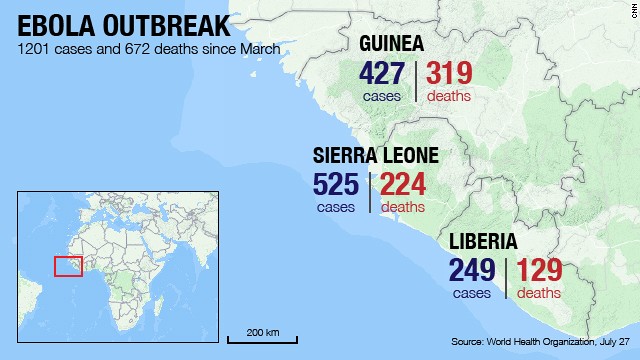
Ebola cases emerged back in March, first in the nation of Guinea, and then it spread across the borders into Liberia and Sierra Leone. The Ebola outbreak now represents the largest recorded in world history, infecting three African capitals, with -- hugely adding to the potential for spreading Ebola around the world -- international airports.
Although local officials are doing their best to screen passengers, an American man was still able to board a flight from Liberia to Nigeria where he became symptomatic of Ebola, and died soon afterward. His death represents the first and only one in Nigeria. Ebola is not readily communicable, but it can be transferred through body fluids; viral agents remain alive for awhile even on a corpse. At funerals it is customary to touch the departed.
Ebola has been blamed for 729 deaths in four West African countries this year, with no signs of it diminishing. In Liberia and Sierra Leone the worst of the outbreaks are raging. People living in remote areas are difficult to reach and even more difficult to convince that they must present to a hospital or clinic and agree to being isolated rather than remain where they are and spread the disease.
Because people living in remote areas are suspicious of strangers, they feel that the Westerners who come to aid them are really infecting them with the disease, resulting in attacks on aid workers. Those who are amenable to reason still have no wish to be taken to a hospital, since there is where people die, and they prefer to be nursed by their relatives, by villagers, rather than consign themselves to death.
But untreated by those who understand the progression of the disease they will die, and their deaths will invariably help to spread the disease. In Freetown, Sierra Leone, security forces were dispatched for house-to-house searches on the lookout for people who are symptomatic of Ebola onset. Across the Globe many governments are advising their populations to avoid travel to Sierra Leone, Liberia and Guinea unless absolutely necessary.
In Liberia, two American aid workers have been struck with Ebola and are in 'grave' but stable condition. One was slated to receive an experimental serum. "There was only enough for one person. Dr. [Kent] Brantley asked that it be given to Nancy Writebo", the president of Samaritan's Purse, an aid organization working in Liberia during the crisis stated.
On the other hand, Dr. Brantley did receive another kind of treatment, one that has been attempted before, but hasn't been necessarily successful. On the theory that someone surviving Ebola might have antibodies to the virus in their blood, giving a sufferer a blood transfusion from that person is hoped to result in a greater chance of survival.
A 14-year-old boy whom Dr. Brantley's medical skills had succeeded in saving from death, on hearing of his doctor's plight, offered his blood for a transfusion to save the doctor's life. "The young boy and his family wanted to be able to help the doctor who saved his life", explained Franklin Graham, president of Samaritan's Purse.
Otherwise, there is at the present time, no drug or vaccine for Ebola. Supportive care consists of constant hydration. There are some experimental drug and vaccines as hoped-for candidates for a protocol to defend against Ebola, but none has been tested in humans, though promising results have resulted in animal models studied.
Many people keep their relatives at home and pray for their survival rather than take them to clinics where, it is well known, there is at least a 60% fatality. Gruesome images of some people who, in their death throes bleed from their eyes mouth, ears and rectum, horrify people. But as long as those infected remain in the community, cared for by relatives, the incidence grows. Soiled linens, touching the ill, spreads the virus.
And even though aid workers are extremely careful to wear protective clothing this alone does not guarantee that they too will become infected. Among deaths that occurred this week one was that of the chief doctor treating Ebola in Sierra Leone. Dr. Sheik Humarr Khan's death was described by authorities as "an irreparable loss of this son of the soil", leaving the country one expert short.
He was 39 years of age, a leading authority on hemorrhagic fevers in a nation with few medical resources.
This represents a general opinion site for its author. It also offers a space for the author to record her experiences and perceptions,both personal and public. This is rendered obvious by the content contained in the blog, but the space is here inviting me to write. And so I do.
![Insecurity has significantly complicated efforts to contain the DRC's ongoing Ebola outbreak [File: Al-Hadji Kudra Maliro/AP]](https://www.aljazeera.com/mritems/imagecache/mbdxxlarge/mritems/Images/2019/6/5/bb56a80172034519b7b7685d2ba0b333_18.jpg "ISIL claims deadly attack in Ebola-wracked eastern DR Congo")