Canada, Diminished and Faltering
"One could argue that we've lost that unifying sense of right and wrong.""The very sense of [the] liberal, permissive, non-judgmentally embracing society that our countries were fundamentally founded on is now being openly exploited for the purpose of reshifting the balance."Former Vice-Chief of the Canadian Defence Staff, Mark Norman"Symbolic politics has never been sufficient, it is a sign of weak leadership. Condemnations without enforcement, statements without consequences and gestures without policy are not leadership.""Canadians do not need additional legislation layered over existing statutes. We need the consistent application of the laws already in force.e""Canada is lost and no longer immune. A nation cannot remain open if it forgets how to be a nation. The choice is not between tolerance and cohesion. It is between a confident pluralism anchored in shared civic norms, and a politics of endless accommodation that dissolves the very framework that makes diversity possible."Larry Maher, CEO, Exigent Foundation
 |
It
took no more than a decade to fundamentally alter Canada, reverse many
of its values, not the least the outstanding human right assurance of
equality and rights under the Canadian Charter of Rights and Freedoms.
With that assurance came the expected responsibility of each member of
society to respect the social contract that ensured equal opportunities (if not equal outcomes)
to succeed and prosper for Canadian citizens who obeyed Canadian laws
and whose experience in the general education system helped them to
understand their citizen obligations to the country.
In
an earlier era those rights and obligations were unevenly applied and
issues of discrimination against minority groups reflected a European
heritage of entitlement and belittlement of the exotic 'others' who had
made their way into North America, many as refugees fleeing persecution
and conflict. Under moderately good governance evinced by leaders who at
best understood their own guiding obligations to the people they
served, laws were passed that ushered Canada into an era of fair justice
and social cohesion.
Migrants
from abroad who entered Canada in the first half of the 20th century as
immigrants from impoverished backgrounds to make a home for themselves
in a new country where opportunities abounded worked hard, obeyed laws,
and accommodated themselves to a new culture with values that suited
their own notions of being and belonging. Canadian authorities refined
immigration rules to eventually reflect Canada's needs in a point system
that rewarded education, professional qualifications, age suitability
and an assessed philosophical fit.
A
succession of Liberal governments in more recent times gradually
morphed toward the kind of liberal progressivism that loosened
qualifications and requirements of suitability to join the Canadian
population. Sympathy for people searching for haven from authoritarian
governments, from endemic poverty, from societal crime rates, from
conflict zones opened the gates of entry to Canada wide, including the
refugee class and illegal migrants who bypassed normal entrance
procedures to declare themselves refugees.
 |
The
intake swelled, fulfilling what government and business leaders
professed to be a need to replace an aging, low-child-bearing population
with new recruits to build Canada's working population. Entry to the
country no longer relied on screening for adaptability and suitability
for integration into the prevailing culture, its values and its laws. To
the point where landed immigrants and new citizens openly declared
their defiance of those values and accompanying laws, bringing havoc and
division and open discrimination to the very streets of the cities
throughout the country where they settled in influential numbers.
Newcomers
to the country felt no loyalty to the country that had adopted them and
there were no expectations from government that they should integrate
and accept the prevailing social order as it was. Instead religious and
ideological divisions erupted and with no amending reaction from
government and institutions at any level, those divisions deepened,
becoming more publicly expressed, including through deliberate acts of
law-breaking.
Canadians
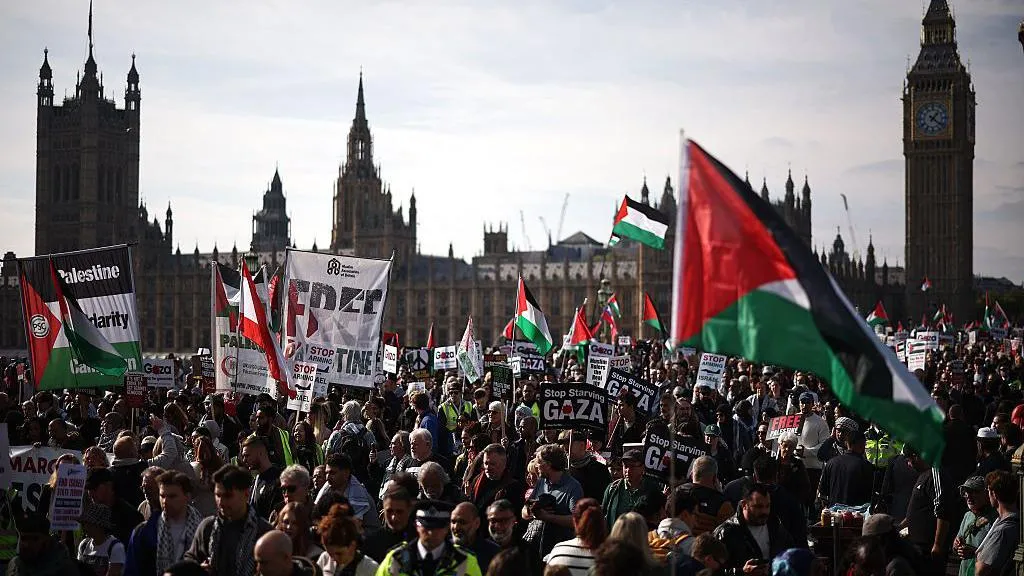
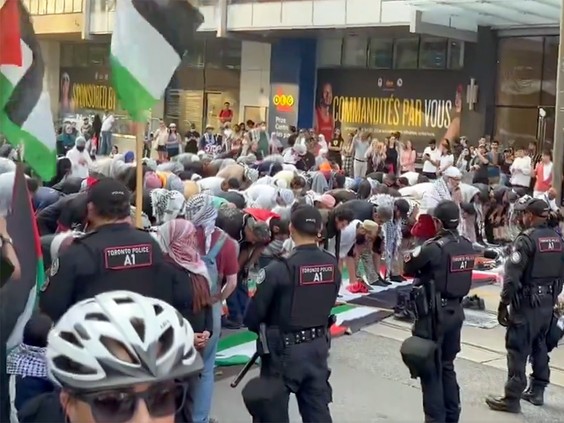
of long standing were treated to displays of overt challenges to the
public order in universities and cultural institutions where mass
protests took to the streets, bringing foreign campaigns, conflicts,
ideological convictions averse to Canada's own, to the fore, with no
government intervention at any level. All the while Canada congratulated
itself as a bastion of liberal democracy. Politicians rather than
applying themselves to Canada's and its populations' defense, eyeing the
numbers of voluble protests and the votes they represented, chose
appeasement of activist groups.
 |
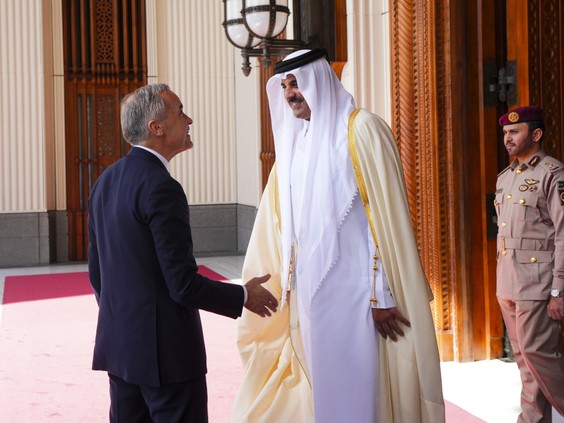
| Canadian PM Mark Carney : China's President Xi Jinping AP |
And
from the outside world, lax attention to the actions of foreign powers
that invaded Canada's sovereignty through the infiltration of foreign
agents acting on their behalf on the social, academic and political
levels exercised the 'soft power' of authoritarian regimes and of
extremist movements, effectively interfering in Canada's politics as
well as the social contract unique to Canada. Russia, China, Iran,
Qatar, Turkey and the Muslim Brotherhood all have made an indelible impact within Canada with their malign presence.
Qatar, Turkey and the Muslim Brotherhood all have made an indelible impact within Canada with their malign presence.
The
moral, institutional foundations of Canada's principles of equality and
human rights have been assailed by Islamist, Marxist, socialist and
other radical engagements in destabilizing Canada, as well as other
Western nations they have entered both legally and under the radar. What
all these Western nations appear to have in common is an attitude of
oblivious disinterest in the interference and subtle changes being
wrought in normalizing abnormal social behaviour and its effect on their
institutions.
The
exploitation of liberal societies, priding themselves on their
Democratic principles of inclusion appear willing to accept the slow
erosion of their adherence to the public weal rather than risk being
labelled racist, exclusionary or 'Islamophobic'. Identity politics,
moral relativism, and DEI guide governments content to do nothing in
response to the unravelling of their nations' stability and social
coherence. If there is a solution to Western democracies' inaction in
the face of this dilemma, it has not yet shown its face.
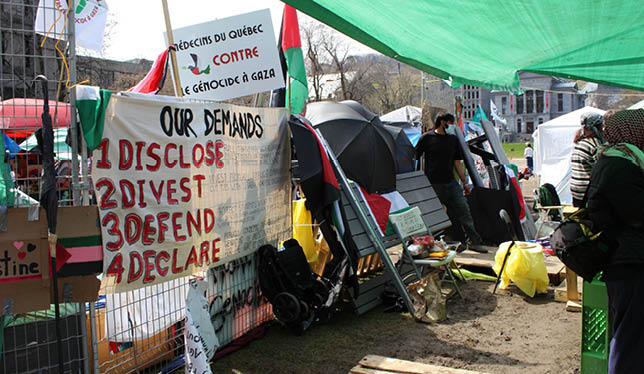 |
| Canadian universities have seen a surge of pro-Palestinian protests following similar demonstrations across North America. University Affairs |
Labels: Canada, China, Destabilization, Immigration, Iran, Migrants, Muslim Brotherhood, Qatar, Refugee Intake, Russia
posted by Pieface @ Saturday, January 31, 2026