"Although the team has concluded that a laboratory leak is the least
likely hypothesis, this requires further investigation, potentially with
additional missions involving specialist experts, which I am ready to
deploy."
"[The international expert team had] expressed the difficulties they encountered in accessing raw data [while in China]."
"[The report also] raises further questions that will need to be addressed by further studies."
"I expect future collaborative studies to include more timely and comprehensive data sharing."
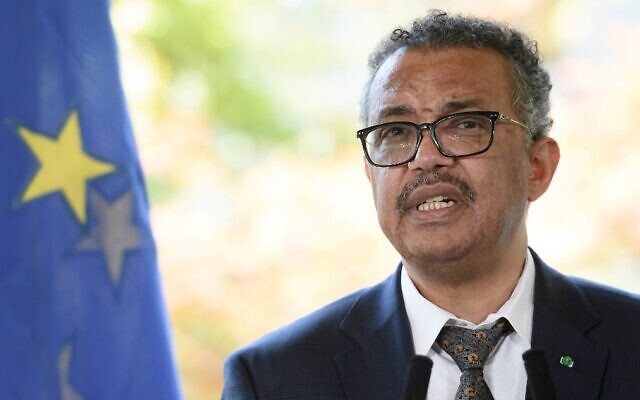
Tedros Adhanom Ghebreyesus, Director-General, World Health Organization
Members of the World Health Organization (WHO) team investigating the
origins of the novel coronavirus arrive by car at the Wuhan Institute of
Virology in Wuhan, in China’s central Hubei province on February 3,
2021. (Hector Retamal/AFP)
"I still think the most likely etiology of this pathogen in Wuhan was from a laboratory escape."
"Other people don't believe that, that's fine, science will eventually figure it out."
Robert Redfield, virologist, former head, Centres for Disease Control
"[The Institute saw] no disruptions or incidents."
"[A formal audit of the laboratory was] far beyond what our team is mandated to do or has the tools and capabilities to do."
"The
fact that we assessed this hypothesis [that the SARS-CoV-2 virus
escaped from the Wuhan Institute of Virology lab] as extremely unlikely
doesn't mean it's ruled out."
Peter Ben Embarek, WHO investigative team
"We were allowed to ask whatever questions we wanted, and we got
answers. The only evidence that people have for a lab leak is that
there is a lab in Wuhan."
"A
thousand samples [of animals sold at the Huanan market when the WHO
investigative team took samples from 188 animals of 18 species at the
market, all of which tested negative] is a great start, but there’s more
to do."
WHO team member Peter Daszak
Animal markets like this one in China could be a source of the COVID-19 pandemic, according to the WHO report. Credit: Eric Lafforgue/Art In All Of Us/Corbis via Getty
The
World Health Organization's investigative team of ten travelled to
Wuhan, China for the express purpose of conducting an unbiased,
scientific survey of any available evidence in an attempt to determine
the source of the SARS-CoV-2 virus that swept the world when it first
surfaced as a strange new pneumonia-like pathogen deadlier and more
infectious than most viruses that erupt from time to time in the East
and spread eventually worldwide. The WHO team had plenty of local
assistance in their diligent search for answers during their two-week
stay.
There
were quite a few interviews and on-site examinations, bearing in mind
that the team had to first isolate on arriving in China before they
could proceed. With them throughout their investigative exercise was a
matching team of Chinese scientists to give them aid and direction, some
17 in number. The People's Republic of China was deeply and sincerely
invested in the search for the origins of the novel coornavirus, making
certain that at all times the WHO researchers were escorted by Chinese
officialdom.
WHO
microbiologists and medical researchers fully intended to do a thorough
and creditable job of searching for answers while conducting interviews
under constant supervision in the presence of government officials.
Needless to say every individual who was questioned to gain a wider and
more full understanding of what had occurred would have been under a
certain level of constraint, testifying under the fixed scrutiny of
government agents. In their minds no doubt, the fate of Li Wenliang
accused of 'spreading harmful rumours' when he first alerted his
colleagues to the presence of a threatening new virus. Before he himself
died of COVID.
"It's
essentially a highly-chaperoned, highly-curated study tour ... this
group of experts only saw what the Chinese government wanted them to
see", explained Jamie Metzl, former senior adviser to
then-U.S.President Bill Clinton. What is known is simply that a novel
coronavirus erupted from some source within walking distance of the
high-security laboratory under the aegis of the Wuhan Institute of
Virology specializing in the study of coronaviruses. It is also known
that the laboratory is located not far from the wild animal 'wet' market
where both domestic animals and exotic animals were sold, dead and
alive.
And
it was the market that Chinese authorities pointed to as the
unfortunate source of cross-species, animal-to-human viral vector. These
wet markets exist throughout Asia where an insatiable appetite for
exotic animals like bats, snakes, pangolins and many other creatures can
be satisfied. Crossing the species barrier for pathogens is rare, but
it does happen. It did with AIDS and we know what agony that led to
throughout the world.
"We could show the virus was circulating in the market as early as
December 2019."
"A
lot of good leads were suggested in this report, and we anticipate that
many, if not all of them, will be followed through because we owe it to
the world to understand what happened, why and how to prevent it from
happening again."
Peter Ben Embarek, co-leader, WHO investigative team
Long
before the novel coronavirus was identified, the Wuhan Institute of
Virology had come in for lax safety regulation criticism when a U.S.
team of scientists had visited the premises and felt alarm at the
situation prevailing there. That very same laboratory is involved in a
security breach that took place in Canada's own National Microbiology
Laboratory in Winnipeg when a high-profile Chinese scientist and her
husband, both employed there, were escorted from the lab never to
return. Involved in an unauthorized transfer of highly sensitive
biological samples from there to the Wuhan lab.
The
team of WHO investigators appear to have reached the conclusion through
a joint report that a lab escape of the coronavirus was to be regarded
as "extremely unlikely"
following a brief examination of the Wuhan Institute of Virology. Four
hours were spent at the facility by the WHO team, the investigation
limited to interviews with laboratory staffers where the investigators
were informed that no disruptions or incidents occurred, and nor did the
WHO investigators request collaborative documentation.
The
Beijing government appears to have withheld case data from outside
investigators, the WHO team no exception. China, it would appear,
deigned not to honour a request to turn over 174 health records from the
first patients in Wuhan to contract COVID-19: "They
showed us a couple of examples, but that's not the same as doing all of
them, which is standard epidemiological investigation", explained Dominic Dwyer of the WHO team.
What
the WHO team reported was that 92 cases of Wuhan patients exhibiting
COVID-like symptoms were documented in October of 2019, quite a few
weeks before the officially recognized first cases were reported by the
Chinese government. The investigators were given Chinese assurances that
serological tests indicated no link to COVID-19.
"Most scientists studying the origins of COVID-19
have concluded that the SARS-CoV-2 virus probably evolved naturally and
infected humans via incidental contact with a wild or domesticated
animal. But a few persistent voices, including respected microbiologist
and biosafety advocate Richard Ebright, PhD, continue to highlight
circumstantial evidence suggesting that SARS-CoV-2 escaped from a
biohazard laboratory in Wuhan, China. Such an escape might have occurred
via accidental infection of a lab worker who came into contact with the
isolated virus, an infected lab animal, or animal waste.
For now, we cannot definitively rule out either origin story—a lab
accident or a natural animal-to-human transmission. Determining the
origins of this pandemic is unlikely to help current efforts to treat
and cure the disease. It could, however, be an important determinant for
efforts to prevent future outbreaks."
"Most arguments in favor of the lab accident theory are based on
geography. Wuhan, the site of COVID-19’s first reported cases in late
2019, is also home to two of China’s most advanced biological
laboratories. The Wuhan Institute of Virology (WIV) has come under
special scrutiny because it hosts China’s only biosafety level 4 lab
facilities."
"Ebright, a former Howard Hughes Medical Institute investigator and
current laboratory director at Rutgers University, is the most prominent
scientist espousing the possibility of a lab escape. He raised biosafety concerns
about WIV when it opened in 2017, as did Tim Trevan, founder of CHROME
Biosafety and Biosecurity Consulting. Ebright has long opposed the
expansion of preventative research into dangerous pathogens, and he
views the possible lab escape of SARS-CoV-2 as strong support for that
position."
Genetic Engineering & Biotechnology News
"It
certainly couldn't have been Wuhan ... surely another person brought it
in. Or surely it came from some other product brought from outside."
"There were just certain conditions for it to appear here."
Chen, wet-market vendor, Wuhan, China
"The
first cluster of cases was there, so at least it would be of interest
to find out the origin of those and put forward a few hypotheses, like
whether it's more likely from the wild animals or perhaps points to a
human super-spreader."
Jin Dong-Yan, professor of virology, University of Hong Kong
"There is new evidence to show that China locked down all domestic
traffic internally by end January 2020 but pushed to open foreign travel
till end March. Data from Tom Tom traffic index, a traffic location
site that covers 416 cities across 57 countries show that as a result of
this strategy, China, intentionally or otherwise, was able to lockdown
its cities unknown to the world. While this reduced the spread of the
Corona virus within China, China’s aggressive foreign travel policy lead
to a virus explosion worldwide."
Sandip Sen, The Economic Times, April 30, 2020
"
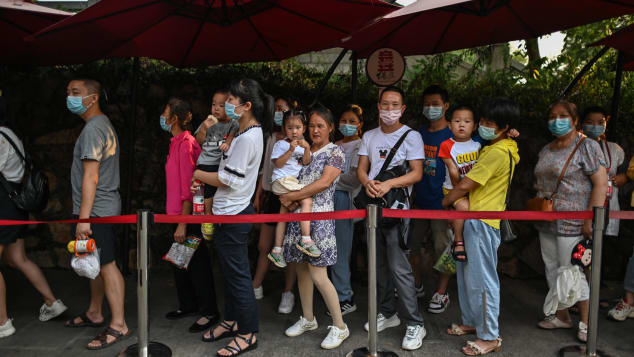
Tourists wearing face masks line up outside the Yellow Crane Tower in Wuhan, China on September 3.
HECTOR RETAMAL/AFP/AFP via Getty Images
The
Huanan Seafood Wholesale Market in Wuhan, China where vendors set up
their wares in small stalls was a popular place for individuals to shop
as well as local restaurant owners who would start their day by passing
through the market to pick up fresh-caught fish and bring it back to
their restaurants to begin the day's menu preparations. Most Asian
cities have such live markets, Tokyo, Japan has a large celebrated
market, Ueno district's Koromon market, where crowds of shoppers
converge on the market to sample live fish. These markets are part of
the food culture, a part of daily shopping life.
On
December 31, 2019, four cases of a mysterious type of pneumonia
appeared at local Wuhan hospitals and were linked to the Huanan market
and overnight it was no longer open for business, taking shoppers by
surprise the following morning. A month later, the city went into a
strict 76-day lockdown on hours' notice, barring people from leaving
their homes. A severely restrictive move that represented the start of a
hugely successful gambit to control the new virus's spread. Hubei
Province itself was border-shuttered to the rest of China.
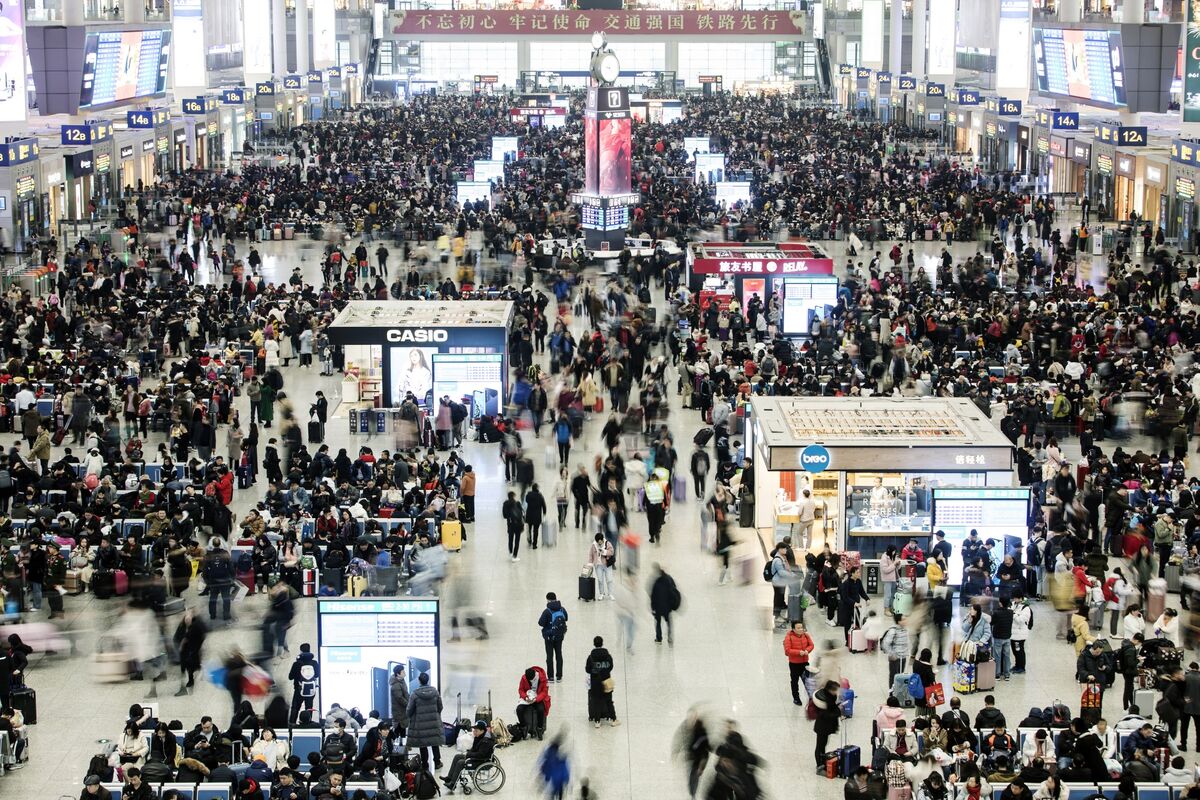
Travelers walk through the main hall of the Hongqiao Railway Station in Shanghai on Jan. 18.Photographer: Qilai Shen/Bloomberg
On
the other hand, China kept its national borders open so Chinese could
celebrate the Lunar New Year as usual, and the population spread out in
its customary holiday travel pattern as millions of Chinese travelled
back to their home cities and provinces in a tradition as important to
the Chinese as Christmas is to Westerners. A massive human migration
takes place as individuals travel back to
their hometowns. People in China are estimated to make close to 3
billion trips over the 40-day travel period, or Chunyun, of the Lunar
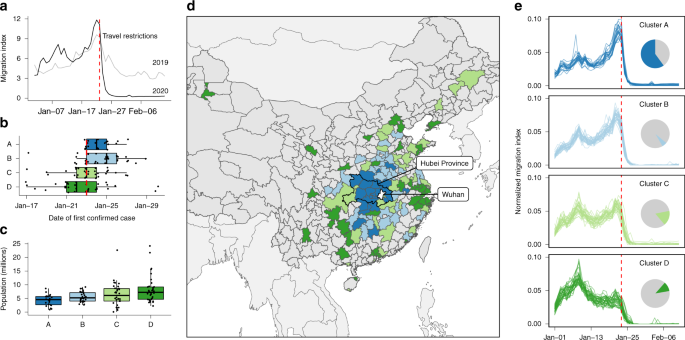
New Year holiday. It's estimated that 5 million people left Wuhan, the
epicentre of the pandemic before the travel ban of January 23, 2020. An estimated million Chinese went abroad, to Europe and elsewhere during that period.
The
disease spread rapidly throughout China and to neighbouring countries.
Despite the aberration of the massive migration for the Lunar New Year
celebrations, China and its neighbours then cracked down on their
populations, enacting draconian social distancing laws and total
lockdowns. Their success in bringing the internal spread of the disease
following a massive infection rate in China which led to hastily built
hospitals to handle the load and patients being isolated in massive
temporary quarters with cots lined up one after another in proximity to
one another, did succeed in eventually quelling the massive outbreak.
Which
then spread to Europe, devastating the continent which is now grappling
in desperation with its second and third waves of the domineering
recurring nightmare. Globally, over one-and-a-half million people have
died of the effects of SARS-CoV-2. Initially, Beijing had bristled at
the global community's attempts to close their borders to Chinese
visitors, claiming the move was clearly racist in nature; even the World
Health Organization supported China's umbrage, chiding the rest of the
world for their reaction. The United States now hosts a ravaging beast
of a pandemic.
When
both Beijing and the WHO came under criticism, particularly from the
U.S. administration, both bridled and responded they had each acted with
alacrity to stem the tide of the viral contagion, acting with due
respect and regard to public safety globally. China took further umbrage
when the virus was referred to as the China virus, and the WHO came up
with a neutral designation for the scourge. To their credit, Chinese
scientists released to the world at large the genetic sequence of the
virus, enabling scientists elsewhere to get on with research to find a
vaccine against the virus.
In
Wuhan, the city is once again 'normal'. But the wet market remains
closed, the stalls shuttered. The origin of the virus remains a topic of
fierce political and scientific enquiry. Beijing circulated the claim
that the virus originated elsewhere, in Spain or Italy, and was then
brought to China where it surfaced to appear as the origins of the
virus. Residents of Wuhan certainly don't believe the virus really
originated there, but was brought to the city by travellers. When a
second wave erupted in China, a strain of the virus brought back by
Chinese returning from trips abroad again, it gave impetus to the notion
that the virus originated abroad.
Beijing
and the United States continue to spar with one another along with
other countries, accused by China of bias against the Chinese. Even yet,
a team of World Health Organization experts has still to visit Wuhan to
gather information. Origin-tracing efforts, warn health authorities in
China and elsewhere, could take years and in the end inconclusive
results may be yielded. More recently Chinese diplomats and state media
claim their belief the market was not the origin of the virus but the
victim of the disease, which originated somewhere other than China.
According
to experts the market is critical to any investigation, unlikely to be
dismantled even though the bulk of the research would rely on samples
sored immediately following the outbreak. Access to the market area is
heavily restricted. The bustling building with its hundreds of stalls
sectioned off into areas for red meat, for seafood, and for vegetables
is now quiet and abandoned. Local government has placed traditional
Chinese paintings over the semi-permanent blue barricades the area is
encircled by. Wooden boards line the interior stalls and windows.
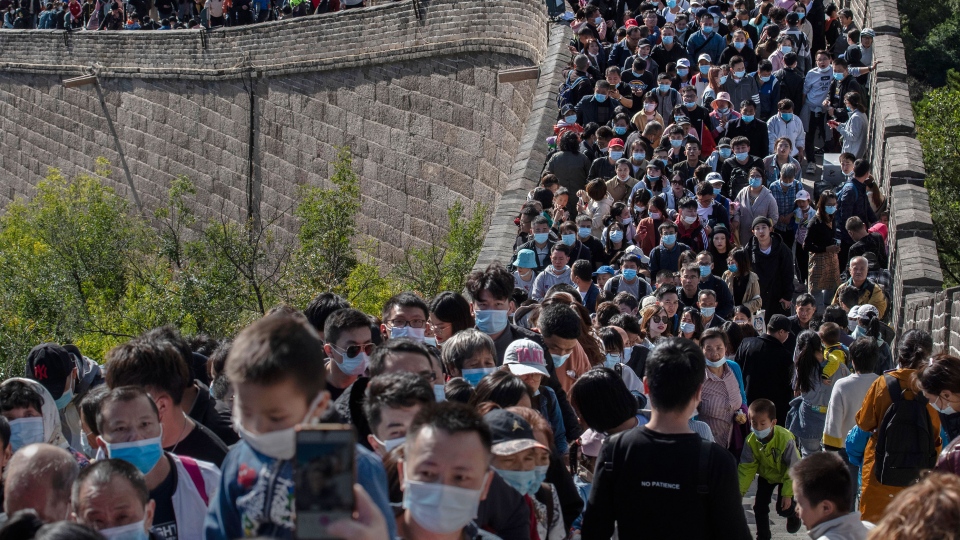
Chinese tourists crowd together on the Badaling section of the Great
Wall of China in Beijing on October 4, 2020. (Kevin Frayer/Getty Images)
"A report issued by a Shanghai-based online travel agency said people from over 100 Chinese cities had booked to
travel to nearly 500 destinations across over 90 countries and regions."
"Thailand, Japan, Indonesia and Singapore are among the most popular
destinations while Nordic countries, the United Arab Emirates and Spain
have seen the fastest growth of Chinese visitors".
"Traveling schedules covering cultural sites or winter sports that can
be enjoyed by a big family are the most popular choices, indicating
that Chinese are willing to enjoy high-quality travel experiences."
"Lvmama, another Shanghai-based online travel agency, said in its
latest report that more convenient transport, easier visa application
procedures and Chinese people's upgrading demand for leisure were major
factors in China's booming outbound tourism."
"In 2018, 140 million Chinese traveled outbound, marking a
year-on-year increase by 13.5 percent, according to the China Tourism
Academy."
XinhuaNet, December 13, 2019
Wuhan
has not reported any new locally transmitted cases of COVID-19 since
May. A local restaurateur speaks of the market's closure and public
panic over the safety of imported seafood, increasing the cost of
ingredient procurement substantially. Above the empty, closured market,
shops reopened in June selling optometry equipment and eye-ware. Guards
at the upper entrance to the market take temperatures, warning that no
videos or photos may be taken inside the building. "Maybe
some people have some bad feelings about it, but now it's just an empty
building ... who feels anxious about an empty building?" a shop assistant remarked.
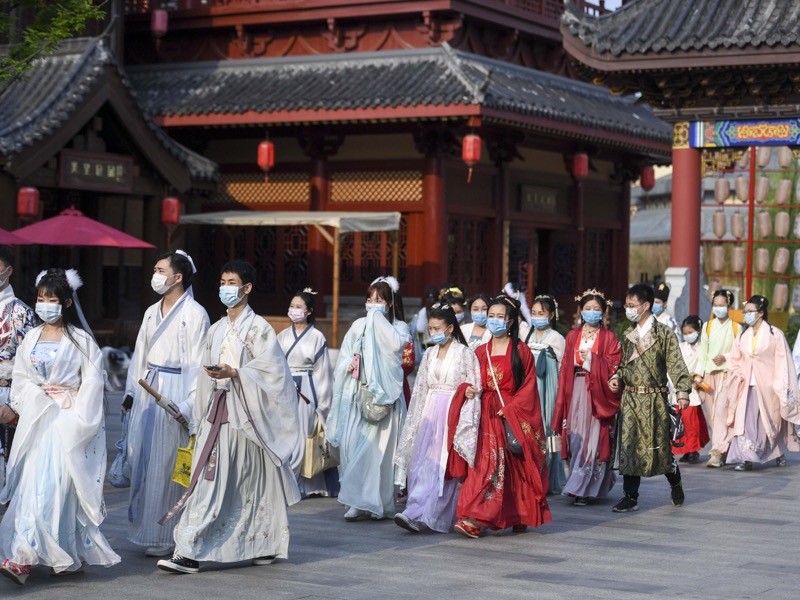
People at a heritage theme park in Hunan province in China, wear face masks and traditional dress.Credit: Yang Huafeng/China News Service/Getty
This represents a general opinion site for its author. It also offers a space for the author to record her experiences and perceptions,both personal and public. This is rendered obvious by the content contained in the blog, but the space is here inviting me to write. And so I do.