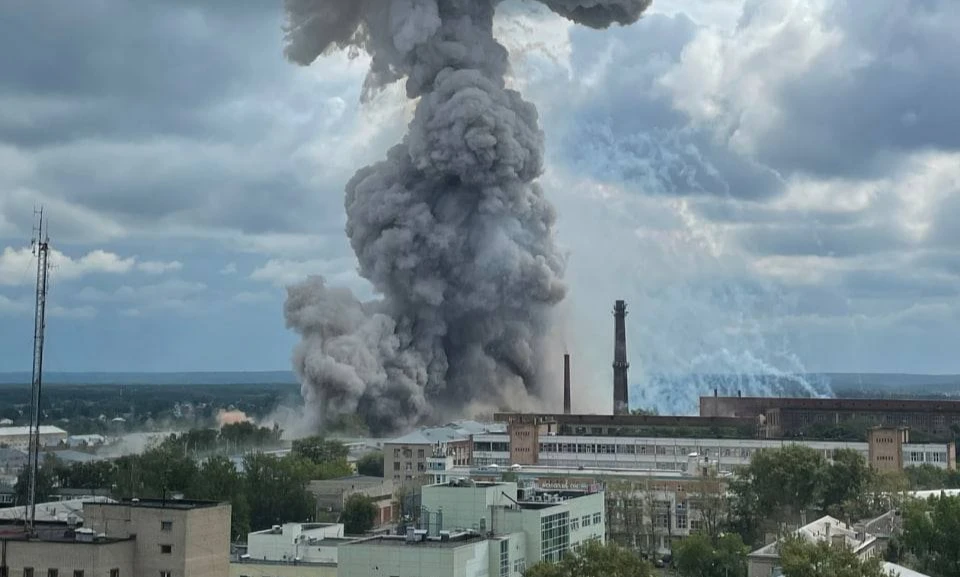
"The explosion occurred on the territory of the
Zagorsk optical-mechanical plant in the area of the boiler house."
"The
shock wave caused the windows of several houses to be blown out."
Russian Emergency Service
"One
person died and fifty-six people were injured in a massive explosion at
a factory some 75km from the center of Moscow, according to reports."
"Videos posted on social media showed a large mushroom cloud rising above the site of the blast."
"Local authorities have blamed a breach in protocols as the primary cause of the explosion, countering rumors of a Ukrainian drone strike that had circulated via Telegram channels."
Kyiv Post
Explosion Rocks Military Optics Factory Near Moscow Kyiv Post
The
Kremlin orders the Russian military to invade Ukraine at President
Vladimir Putin's behest. For the purpose of preempting Kyiv's intention
-- Russian propaganda informs its public -- to attack Russia, for this,
ostensibly is the plan of Ukrainian fascists, to prey on Russia with the
intention of destroying it and in the process enlist the nations
associated with NATO to supply the Ukrainian military, vastly
undermanned and under-equipped with the wherewithal for success. The
sanctions imposed on Russia represent a reprehensible Ukrainian plot,
but Russia will not allow this to happen.
The
question really is, how many Russian civilians believe this claptrap?
And the urgency of ensuring that ordinary Russians have no doubt in the
veracity of their government's war propaganda is now linked with the
need to persuade the public that there is absolutely no danger that the
war the Kremlin is fighting on their behalf as a civilized nation taking
action to forfend a Ukrainian invasion will ever cross the border from
Ukraine into Russia itself. Russia is immune from 'terrorism' striking
from Ukraine.
And
if it were not for the courage, perseverance and professional action on
the part of the Russian military, Ukraine's plot to invade Russia would
be an assured reality. But it will never happen; Russia has the
situation firmly in hand. Mind, there have been some 'terrorist'
aspirations carried out by drones striking close to the border and even
daring to go so far as Moscow itself. On July 30 and August 1 drones
smashed into Moscow's business district. Drones struck near Minsk
highway as well as Domodedovo district.
More
latterly, however, 56 people were injured, six severely, north of
Moscow on Wednesday, a blast on the grounds of the Zagorsk optics
manufacturing plant, damaging 28 apartment buildings and causing an area
evacuation. The mangled industrial site was invaded by emergency crews
with sniffer dogs while firefighters hosed down the wreckage. According
to some in the Russian media, a drone attack was the cause of the blast
at the plant site, Denied, however, by Russian authorities.
Members of emergency services work at the site of a blast at the Zagorsk
Optical-Mechanical Plant in Sergiev Posad in the Moscow Region, Russia
August 9, 2023. REUTERS/Stringer
The plant was described in 1995 as "a producer of precision optical equipment for the military",
by the U.S. Department of Commerce. A procurement data statement as
well, indicated the plant supplied binoculars and dosimeters to Russia's
National Guard, that it produced equipment for military aircraft and
that it was involved in the development of a new fighter-bomber,
according to the Russian investigative news outlet Agentstvo.
According
to the Investigative Committee, Russia's premier law enforcement
agency, a criminal inquiry has been launched on charges of violating
industrial safety requirements at hazardous production facilities.
Which, translated, is that the plant itself was guilty of negligence in
its safety procedures, a negligence that led to the occurrence of the
blast. Russian citizens could rest assured that the war in Ukraine
remains firmly there, with no intention of spilling over the border.
Although,
of course, it is inconvenient that Ukraine's attempts to strike the
Russian capital in acts of terrorism represent the latest plans to
strike the Russian capital for the benighted campaign of unnerving
Muscovites in the hopes of taking the war in Ukraine directly back to
Russia. Citizens of Moscow could be assured that the "terrorist attack"
was apprehended, the drones shot down, and no harm done.
When
Ukrainian media reported that social media blogs revealed a thick plume
of smoke billowing over Sevastopol, Mikhail Razvozzhayev, the
Moscow-appointed governor of annexed Sevastopol, assured the public that
the smoke emanated from a "fleet training exercise", no cause for anyone to be concerned. "Yes, the smell is unpleasant, but it is absolutely safe. Everything is calm in the city." And a counteroffensive by Ukraine is not occurring, not in the least bit.
A rescuer with a dog works at the site of a blast at the Zagorsk
Optical-Mechanical Plant in Sergiev Posad in the Moscow Region, Russia
August 9, 2023, in this still image taken from video. Russian
Emergencies Ministry/Handout via REUTERS
"[Vladimir
Putin's decision on tactical weapons] followed the failure by Kyiv's
allies to heed previous serious signals [from Moscow because of the]
fundamental irresponsibility of Western elites before their people and
international security."
"Now they will have to deal with changing realities."
"We hope that NATO officials will adequately assess the seriousness of the situation."
Russian Deputy Foreign Minister Sergei Ryabkov, Moscow
The Russian Foreign Ministry initially said Moscow would keep notifying
the U.S. about planned test launches of its ballistic missiles, but
Ryabkov's statement reflected an abrupt change of course. CBC
Russian
President Vladimir Putin has decided that Moscow is no longer obligated
via treaty to honour the United States' decision-making by trustfully
alerting it through advance notice regarding Russian missile tests.
This, at a time when the Russian military under Kremlin orders deployed
mobile missile launchers in Siberia as a demonstration of Russia's
massive nuclear capabilities a highlighted link to the invasion of
Ukraine and the fortunes of a conflict that has left both countries in a
veritable stalemate condition.
Russian
news agencies carried Deputy Foreign Minister Ryabkov's remarks that
all information exchanges under the START agreement with Washington have
been halted by Moscow, completing the distancing of the two countries
in their nuclear responsibility pacts following on the suspension of
Russia's ongoing participation in the last remaining nuclear arms pact
with the United States.
Data
relating to the current state of both countries' nuclear forces -- up
to the present routinely released at six month intervals complying with
the treaty -- both parties also exchanged advance warnings of test
launches. Notices of this type represent an essential element of
strategic stability and have for decades. This cooperation allowed
Russia and the United States to properly interpret each other's moves,
making certain that neither would mistake a test launch for a missile
attack.
Termination
of missile test warnings represents another effort on Moscow's part to
discourage the West from continuing to strengthen its support for
Ukraine. Emphasizing Russia's massive nuclear arsenal is a most
transparent threat, one occasioned by the fury of stalemate and the
isolation imposed by the U.S. and NATO upon the Russian Federation.
Augmented by President Putin's announcement of tacticl nuclear weapons
deployed to Belarus territory, as a regional trusted ally.
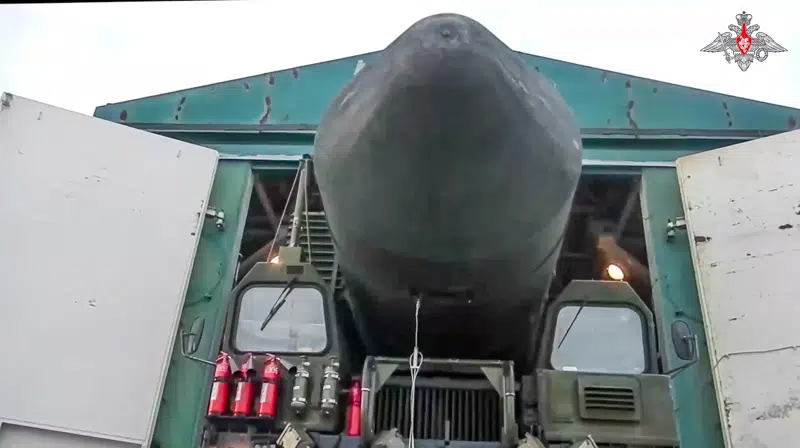
This photo made from video provided by the Russian Defense Ministry
Press Service on Wednesday, March 29, 2023, shows a Yars missile
launcher of the Russian armed forces being driven from a shelter in an
undisclosed location in Russia. The Russian military on Wednesday
launched drills of its strategic missile forces, deploying Yars mobile
launchers in Siberia in a show of the country's massive nuclear
capability amid the fighting in Ukraine. (Russian Defense Ministry Press
Service via AP)
The
New START treaty was suspended last month, with Mr. Putin stating that
U.S. inspections of Russia's nuclear sites was unacceptable at a time
when Washington and its NATO allies have committed to Moscow's defeat in
Ukraine. While not withdrawing entirely from the pact, Moscow stated
its intention to continue to respect caps on nuclear weapons set by the
treaty.
To
the present, until Ryabkov's statement, it was understood by the United
States that Moscow intended to continue notifying the U.S. of planned
test launches of ballistic missiles, now upset by an abrupt change in
orders.
Russian
drills will see Yars mobile missile launchers manoeuvre across three
regions of Siberia involving measures to conceal the deployment from
foreign satellites and other intelligence assets. No mention from the
Russian Defence Ministry was given of how long the drills would last,
nor were any practice launches mentioned of the nuclear-tipped
intercontinental ballistic Yars missile with its range of about 11,000
kilometers. The Yars missile represents the backbone of Russia's
strategic missile forces.
The
tactical nuclear weapons deployed in Belarus are useful on the
battlefield with their relatively short range and considerably lower
yield, in comparison with the long-range strategic missiles fitted with
nuclear warheads capable of obliterating entire cities. This latest
decision by President Putin follows repeated warning that Moscow is
prepared to use "all available means" -- referring to its nuclear arsenal -- to fend off attacks on Russian territory.
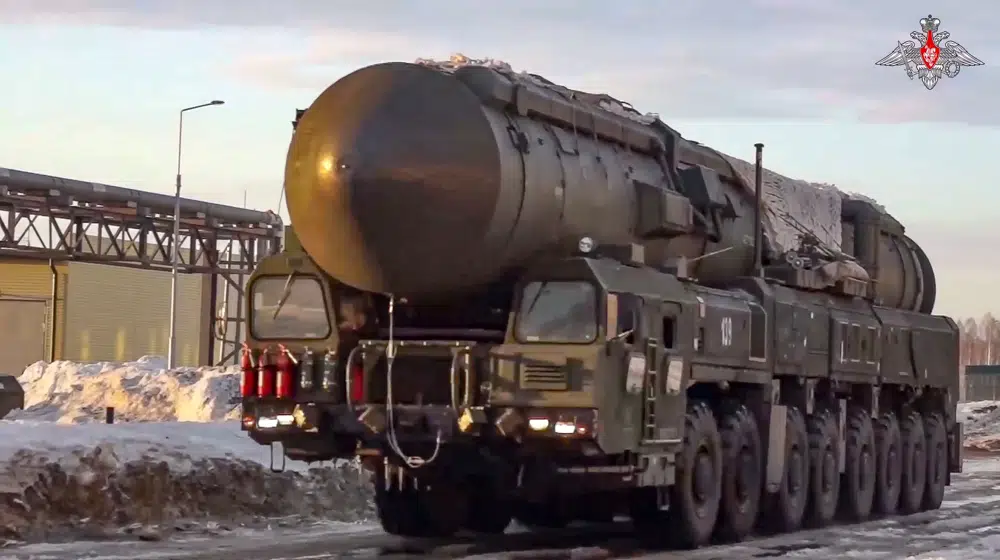
A still image from video, released by the Russian Defence Ministry in
October 2022, shows what is said to be a Yars intercontinental ballistic
missile launched during an exercise at the Plesetsk Cosmodrome in
Russia. (Russian Defence Ministry/Reuters)
"What
we see in Ukraine, and the way Russia is waging war -- means that this
strategy [NATO's batlegroup 'tripwires' meant to forestall Russia's
territorial ambitions] needs to be adjusted."
"We
do have to reassess the risk posture and how much we need to stand
together against potential Russian incursions and aggression."
"Where
the Russian military goes, not only is civilian infrastructure
destroyed, but civilians are shot, maimed, murdered, raped, tortured,
deported, killed."
"That means we need to have a more robust position in the Baltics to prevent an attack from occurring in the first place."
Latvian Prime Minister Arturs Krisjanis Karins
"Finland must apply for NATO membership without delay."
"We hope that the national steps still needed to make this decision will be taken rapidly within the next few days."
Finnish President Sauli Niinisto/Prime Minister Sanna Marin
"Definitely [Finland's accession to NATO poses a direct threat to Russia]."
"Definitely NATO expansion does not make our continent more stable and secure."
This cannot fail to arouse our regret, and is a reason for corresponding symmetrical responses on our side."
Dmitry Peskov, Kremlin spokesman
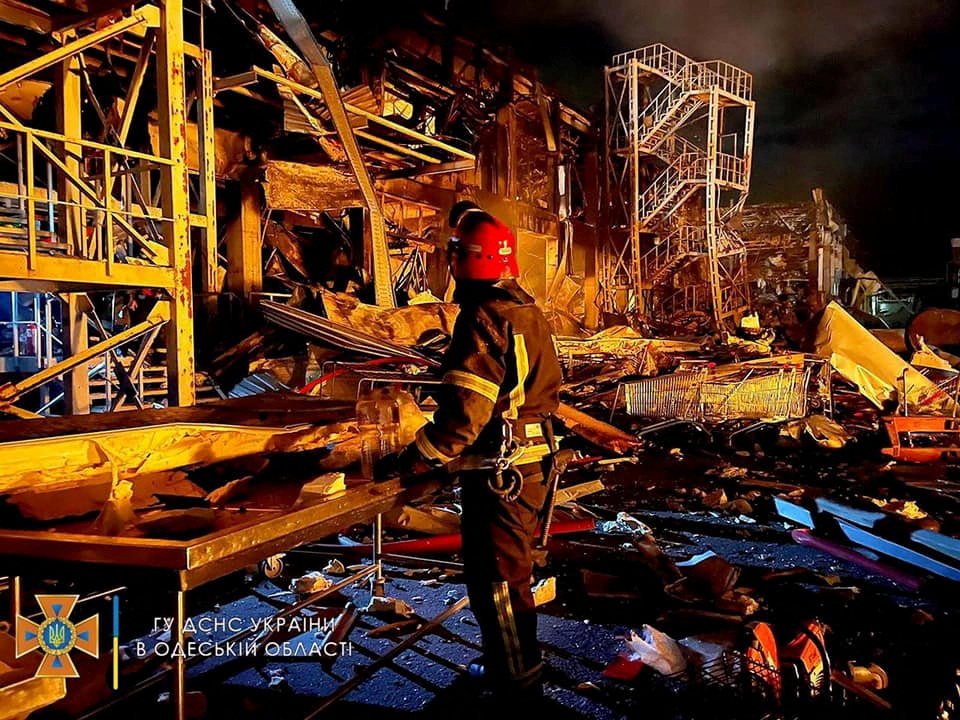
A first responder works at the site of a missile strike, amid Russia's invasion of Ukraine, in Odesa, Ukraine in this handout
That
'symmetrical responses' phrase was attention-grabbing. Analysts might
point out that past situations spoke to potential counter-measures the
Kremlin could consider in the event that its neighbours decided to move
closer to the West and to join NATO, a prospect that makes the Russian
Federation very nervous indeed. And one that reputedly spurred Vladimir
Putin to scorn Ukraine as a puppet of the West controlled by fascists
which obligated Russia to invade and bring war to Ukraine, a stunning
course of punishment.
Responses
on a wider basis -- setting aside the prospect of a Russian invasion of
all its neighbours simultaneously rather than the feared and
anticipated sequentially at a time when the Russian military finds
itself bogged down in one country -- could conceivably consist
alternately of Russia placing nuclear-armed missiles on the Baltic
Seacoast. When asked whether Finland might, by joining NATO, provoke
Russia, its President said: "My response would be that you caused this. Look at the mirror".
The
expectation of other NATO allies is that Finland, along with Sweden
which has also stated its intention to apply for NATO membership, would
be quickly granted membership. That would result in an increased troop
presence to defend the Nordic region during the period of ratification
that would take approximately a year. The irony is that Ukraine which
has long sought NATO membership and has been put off for fear of
aggravating Russia, was targeted with a "special military operation" to
prevent just such NATO expansion.
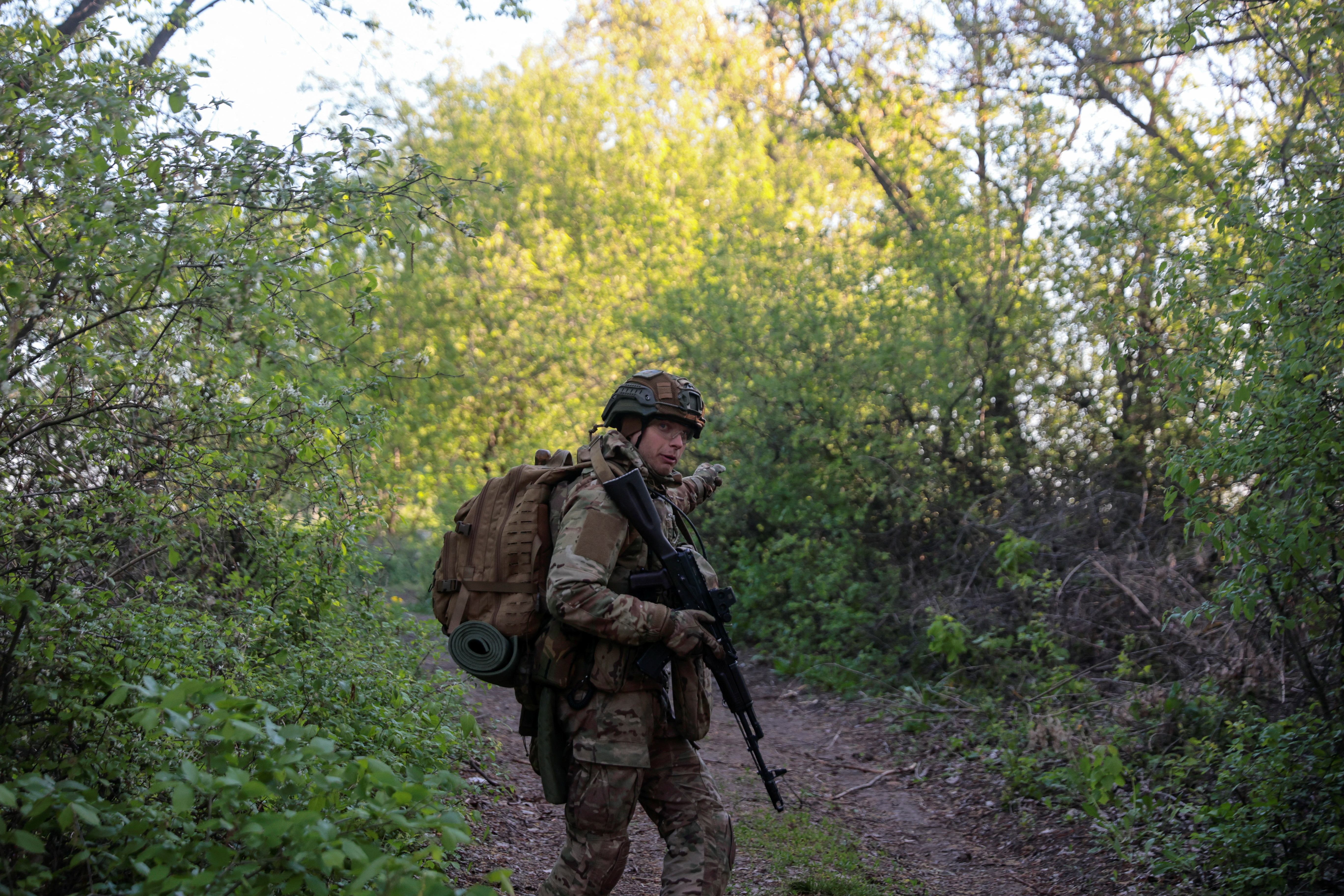
A Ukrainian serviceman patrols an area, as Russia's attack on Ukraine continues, in an undisclosed location in Kharkiv Region Reuters
As
the two largest EU countries to join NATO to the present, Finland's
1,300-km border with Russia would double the frontier between NATO and
Russia. NATO guards would be placed with this new alliance, a mere few
hours' drive from the northern outskirts of St.Petersburg. As the
world's sole superpower European nations feeling the stress and strain
of a silent, looming threat from Russia, seek the protection of the
world's largest and best-armed military, that of the United States.
Even
while Moscow regards these events as a direct threat to its own
influence and security in the region, it was that pre-emptive move to
demonstrate that it would not tolerate NATO's creeping presence in the
Russian near-abroad that motivated the Ukrainian invasion; the extended
reach of which has been to shock, unnerve and convince Russia's
neighbours that they're in dire need of the backing of an international
coalition to give Russia pause over extending its 'special military
operations' elsewhere.
And
all will have taken note that Ukraine, though not a NATO member-nation,
has been amply supported with the supply of advanced technological
weaponry which, together with the Ukraine military's fighting spirit in
countering the Russian presence with a strong defense, has now
transformed that hugely successful defense into an admirable
counter-offensive, pushing Russian troops back towrd their own border,
and even threatening Russian towns with the same treatment Russia meted
out to Ukrainian towns.
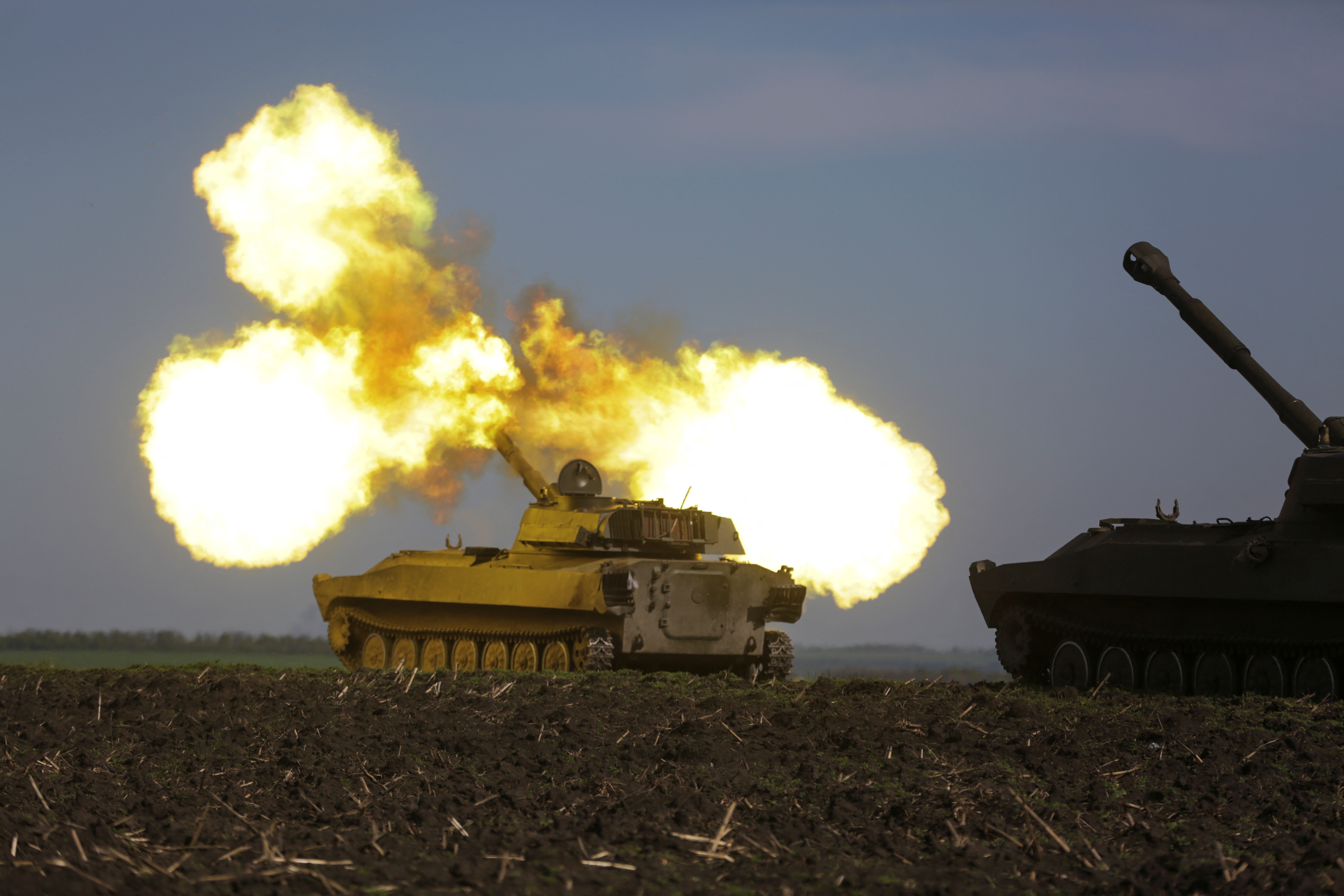
Ukrainian service members fire with a self-propelled howitzer 2S1
Gvozdika, as Russia's attack on Ukraine continues, in unknown location
in Kharkiv region, Ukraine May 7, 2022. REUTERS/Serhii Nuzhnenko
Ukrainian President Volodymyr Zelensky, left, and NATO
Secretary General Jens Stoltenberg are seen at a news conference at the
European Union headquarters in Brussels on Thursday. (John Thys/AFP/Getty Images)
"The message today to Russia is that it is for Ukraine as a sovereign nation to decide its own path."
"We call on Russia to return to diplomacy. To de-escalate. And to respect Ukraine's sovereignty and territorial integrity."
"Any further aggression against Ukraine will have severe consequences. And would carry a high price." Jens Stoltenberg, NATO Secretary-General
"We
will emphasize here once again, that the inviolability of borders is
one of the very important foundations of peace in Europe, and that we
will do everything together to ensure that this inviolability actually
remains."
German Chancellor Olaf Scholz
"I'm worried because the military concentration, especially on the Ukrainian border with Russia [is] very strong."
"We are prepared to avoid the kind of surprises we met during the occupation of Crimea."
Slovenian Prime Minister Janez Jansa, EU revolving presidency
"Probably
we face the most dangerous situation in the last 30 years. I think we
have to do everything that is in our hands to prevent the worst
scenario, which we [cannot] exclude."
"This scenario is possible military intervention into the territory of Ukraine."
Lithuanian President Gitanas Nauseda
"There will be no talks on European security without European allies and partners."
"[Washington
will hold discussions with its allies but] we will not compromise the
key principles on which European security is built, including that all
countries have the right to decide their own future and foreign policy,
free from outside interference."
Jen Psaki, White House spokesperson
Russian President Vladimir Putin speaks at a conference in Moscow on Friday. (Sergei Guneyev/SPUTNIK/AFP/Getty Images)
Over
100,000 Russian troops have been massed on the Russian border with
Ukraine, leaving leaders of Europe to warn of the most dangerously tense
episode occurring in real time, in the past 30 years since the
dissolution of the Soviet Union when its satellites went their separate
ways, assuming full sovereignty for themselves after years of orbiting
helplessly around the powerfully-enforced magnetic star of the USSR.
With
the last European Council summit of the year in Belgium, EU heads of
state and government gave ample warning to the Kremlin that it would
face "massive consequences and severe cost" should there be a repeat of
the annexation of Crimea in a violent 2014 takeover. But Vladimir Putin
remains resolute; should Europe wish to achieve a relaxation of
tensions, NATO must withdraw its 2008 assurance to Ukraine that it would
be welcomed along with Georgia into its bloc. No agreement, no
de-escalation.
Moscow's
published list of demands for de-escalation and recall of Russian
troops and war machinery has failed to impress NATO and the EU.
Russia's insistence of a legally binding guarantee that NATO surrender
all military activity in eastern Europe and Ukraine is part of its list
of security guarantees to be negotiated with the West if any progress is
to be made in de-engaging from its current level of intimidation and
threat.
The
detailed demands, Moscow stressed, are essential, without which
tensions will not be diminished in Europe, and the crisis over Ukraine
defused. However, the world could be assured, Moscow reiterated, that it
has no intention whatever of planning an invasion of Ukraine. Demands
include an effective Russian veto on future NATO membership for Ukraine.
Other elements relate to the removal of U.S. nuclear weapons from
Europe alongside the withdrawal of multi national NATO battalions from
Poland, Estonia, Latvia and Lithuania.
None of those demands were met with ingratiating deference. Russia does not, after all, control with the EU
or NATO and its allies, led by the United States, envision for Europe;
total abandonment of the Baltic states and the rest of eastern Europe to
the kind remonstrances of the Kremlin to convince former satellites
that their futures lie with a resumption of their former devotion to a
mighty Russia's formation of a strong Europe.
According
to Russian Deputy Foreign Minister Sergei Ryabkov, Russia and the West
must begin with a clean slate to rebuild relations gone sour. Russia
being fully prepared to begin talks as soon as possible. As far as the
Kremlin is concerned, its position is one of response to threats to its
security from Ukraine's increasingly warm relations with NATO and its
aspirations to join the alliance.
The
best possible scenario the Kremlin envisages if that NATO return to
the situation that existed before May 1997; predating the accession to
NATO of any of the former communist states in east Europe; that NATO
relinquish any military activities in Ukraine, eastern Europe, the
Caucasus and Central Asia. Wait for it.
Ukraine’s
foreign minister has asked Canada to help strengthen its defences amid
escalating tensions with Russia, while NATO warns Russia will face “high
impact” sanctions if it attacks
"I want to say that the image of President Biden that our press and
even the American press paints has nothing in common with reality,"
"He was on a long trip, had flown
across the Ocean, and had to contend with jet lag and the time
difference. When I fly it takes its toll. But he looked cheerful, we
spoke face-to-face for two or maybe more hours. He's completely across
his brief."
"Biden is a professional, and you have
to be very careful in working with him to make sure you don’t miss
anything. He doesn’t miss anything, I can assure you."
Russian President Vladimir Putin
"We
didn't need to spend more time talking. [I informed Mr. Putin that] we
need some basic rules of the road that we can all abide by. I did what I
came to do."
"[There
was] no substitute for face-to-face dialogue, [I told him the agenda
was] not against Russia [but] for the American people."
"This
is not about trust, this is about self-interest and verification of
self-interest [with a] genuine prospect [of improving relations]."
U.S. President Joe Biden
U.S. President Joe Biden (left) and Russia's President Vladimir Putin
meet at the start of the U.S.-Russia summit at Villa La Grange in
Geneva, Switzerland, on Wednesday, June 16, 2021. (Denis Balibouse)
They're
not strangers to one another, although relations between them have been
strained; the cool distance between Washington and Moscow has been
awhile brewing. President Biden's predecessor had a relaxed, somewhat
warmish relationship with President Putin. The Democratic White House is
aggrieved over what it believes was Russian interference in the
election that brought Donald Trump to four years in the White House.
Nonsense, Moscow responds.
The summit
between them on June 16 was productive, in a cool, businesslike way,
according to each of the participants. Despite that no feel-good,
accomplishment-proud joint news conference took place after their frank
discussions laying (almost) everything on the table. There were
some 'don't go there' issues that each made clear were not up for
discussion, and they weren't. Both accomplished politicians, actors,
diplomats, smile on cue.
Vital
issues like arms control and cybersecurity talks proceeded. The
discussions were to have consumed between four to five hours. And to
make certain that it was well understood that this was strictly
business, no food to be served; water sufficed on this occasion. The
exercise in 'airing it all' (almost) took much less time than anticipated; between two to three hours, so no hardship for either in threats of famishing penance.
Certainly
the setting was conducive to feeling good, at the lakeside Villa La
Grange in Geneva. In the end, 68-year-old Vladimir Putin, acquiesced to
the 78 year-old American president, graciously putting the lie to early
dementia capturing the older man's brain. To Mr. Biden's severity of
purpose, Mr. Putin was less curt and dismissive in a notable
role-reversal, expressing his confidence in his political adversary as a
constructive, experienced discussion partner, speaking "the same language".
Reminiscent
in part, of former U.S. President George W.Bush enthusing that looking
into Vladimir Putin's eyes assured him that this was a man he "could do business with".
But in the final analysis, was unable to. Relations between the two
countries have been tense. The Kremlin came under fairly universal
condemnation with its surprise annexation of Crimea and its military
arming, training and fighting alongside ethnic Russian Ukrainians in
eastern Ukraine's Donbas region. An issue that Mr. Putin is rather
prickly about; off-limits.
President
Putin, briefing reporters following their discussion, and in lieu of
the more generally accepted joint news conference spoke of the two sides
making progress on shared goals, that the meeting had set aside
hostilities as indication of the two leaders' wish to make an effort to
understand the framework of the position each spoke from. It was "hard
to say" whether relations would improve beyond a "glimpse of hope" that
mutual trust might result.
The
remaining distance between them expressed by the lack of geniality in
each inviting the other to visit their respective capitals. According to
Mr. Biden, much time was spent on discussions around arms control and
cyber-attacks, when it was made clear by him to Mr. Putin that "critical infrastructure should be off-limits".
As emphasis, he handed over a list of 16 strategic sectors to Mr.
Putin, who undoubtedly has a similar list back home in Moscow.
The
impression was left with Mr. Biden that there was genuine concern of
being "encircled", the belief by Mr. Putin that Washington planned to
"take him down". And of course, Mr. Biden assured Mr. Putin that such
was not the case; they just had to accommodate themselves to the
practicality of getting along and pursuing their mutual interests in
ensuring the good of the global community was uppermost in mind,
primarily in restraints in arms control.
He
did warn Mr. Putin, he said, of consequences should jailed opposition
figure Alexei Navalny expire in prison as a result of detention
conditions; a situation that would prove to be "devastating for Russia".
Both agreed without hesitation that Moscow and Washington shared
nuclear stability responsibility; further discussions on altering the
recently extended New START arms limitation treaty would be on the
agenda.
Mr.
Putin made it abundantly clear that concerns about Mr. Navalny's fate
should rest solely with Russia and expanded Russia military presence
close to the eastern border of Ukraine was also Russia's internal
business. He laid to rest as far as he was concerned the very absurdity
of Russian responsibility for a series of cyber-attacks in the United
States.
Although
both Mr.Putin and Mr. Biden expressed the hope that more stable,
predictable relations between the two countries might result prior to
their meeting, it appeared somewhat obvious that the meeting itself did
little to advance that prospect; cool, collected, remote relations. The
irritants expressed on the U.S. side unresolved to its satisfaction, and
guaranteed to remain so in the near future. "I'm not confident he'll change his behaviour", the last words on the matter by Mr. Biden.
President Joe Biden and Russian President Vladimir Putin, arrived to
meet at the Villa la Grange on Wednesday, June 16, 2021, in Geneva,
Switzerland. (Saul Loeb)
"I
watched Putin's press conference after the summit meeting, but since
Russians have heard most of his lies and evasions for years, there
wasn't much new for me. The foreign audience seemed shocked when Putin
said Navalny had only himself to blame for consciously breaking parole
by leaving the country -- even though Navalny was evacuated to Germany
in a poison-induced coma. He also tried to justify the Russian invasion
of Crimea in 2014 (which he used to deny) by arguing that it had
introduced "stability" after the independent nation struggled to free
itself from Putin's grip. Putin also denied responsibility for
cyberattacks and blamed the US for being the biggest offender."
"These
are examples of the absurd, reality-twisting nonsense Russians are fed
24-7 by the state-controlled media, and Putin was delighted to have the
chance to spread it around the world. Had Biden wanted to send a real
message to Putin, he would have met instead with Volodymyr Zelensky, the
president of Ukraine. Or with Sviatlana Tsikhanouskaya,
the leading opposition candidate in Belarus' sham elections last year,
who is now living in exile after fleeing persecution by Putin's loyal
servant Belarusian despot Alexander Lukashenko. Or Biden could have
extended a White House invitation to the families of Putin's many
victims."
"We don't want to burn bridges, but when someone views our good intentions as indifference or weakness and intends to blow up these bridges in turn, they must know Russia's response will be asymmetrical swift and harsh."
"I hope no one will cross the red line in regards to Russia. And where this red line will be drawn, we will decide for ourselves."
"The practice of organizing coups and planning political
assassinations of top officials [referencing Venezuela and Russian-Ukraine cronies] goes over the top and crosses all
boundaries."
"Russia has its own interests, which we will defend in line with
the international law. If
somebody refuses to understand this obvious thing, is reluctant to
conduct a dialogue and chooses a selfish and arrogant tone, Russia will
always find a way to defend its position."
Russian President Vladimir Putin
Russian President Vladimir Putin delivered his annual address to the Federal Assembly in Moscow on Wednesday. (Sputnik/Mikhail Metzel/Kremlin/Reuters)
The international community has been forewarned. Russian President Vladimir Putin is fed up, disgusted, annoyed, irritated and fuming over criticism he knows has no place in good international diplomatic relations. Russia's internal business is its own, and it will no longer tolerate the sanctimonious criticism levelled at Russia and at him personally. No Western democratic countries come to him, cap in hand, to ask whether they should proceed on a certain course of action, as a courtesy, and he will not grovel and ask permission of his critics to act as he does, for it is his prerogative and his alone.
He made it abundantly clear in his annual address that any source from within the international community that seeks to criticize, to threaten Russia "will regret it like they've never regretted anything before". That's fairly definite, and Vladimir Putin is defining the rules of engagement. As soon as he can decide on delineating them. NATO, the United States, the European Union and their acolyte nations be damned!
He has no idea who poisoned Alexei Navalny with a military-grade nerve agent, restricted to military laboratories. Obviously, Mr. Navalny has made many enemies who resent his having criticized the Kremlin and particularly Mr. Putin himself, enemies who may have decided to eliminate his strident voice. Navalny and Company have unsettled the country, they have much to answer for. Now, he is trying to kill himself by refusing food, to elicit sympathy from among Russians who have no use for him whatever.
People attend a rally in support of jailed Russian opposition politician Alexei Navalny in Omsk, Russia, on Wednesday. (Alexey Malgavko/Reuters)
And what do Western critics know of Russian history? Of the fact that Ukraine has always been Russia's geography, the borders to which have simply been misplaced and loyal ethnic Russians living in Ukraine have simply remedied a past error, rounding eastern Ukraine, the Donbass back into Greater Russia, where it belongs. As for the Crimean Peninsula, Russian blood lies there, it is part of the heart of Russia, pleasing no end to Russians to have it restored. Complaints from the West? Who cares, what are they anyway, to think they have a right to criticize!
Sanctions have victimized ordinary Russians. The reason they're now living in straitened circumstances is clear enough; they, as part of Russia, have been penalized, victimized, unfairly and unjustly and without reason. The U.S. abandoned its allies in the Middle East, and Russia has stepped back in to bolster support for the fine regime in Syria battling terrorists. There are such things as domestic terrorists of course, and they simply bear the guise of Syrian Sunnis rebelling against the Assad regime.
A deep-sea naval base and an airbase are trifles, but acceptable in exchange for Russia's devotion to aiding a friend in need with military warplane flyovers and the occasional bomb dropped here and there where hospitals just happen to be inconveniently placed. Who knew? As for the terrorists, they deserve to be bombed for their discrediting of a government trying to reconsolidate its geography so rudely invaded by Islamic State.
Manezhnaya Square is blocked by law enforcement officers
ahead of Putin's annual address to the Federal Assembly, in central
Moscow on Wednesday. (Shamil Zhumatov/Reuters)
"Some countries have developed a nasty habit of bullying Russia
for any reason or without any reason at all. It has become a new sport."What are they doing so far from home, in Eastern Europe, on our doorstep, interfering with our neighbours, causing panic and concern that would otherwise not arise, destabilizing the entire geography. A military buildup on the border with Ukraine? Who says so! These are military games, practises, to keep our people sharp and in command, given the presence of foreign troops so near at hand, planning god-knows-what interventions where they don't belong... Interfering in our free and open society!
Keep your tiresome, toothless threats of 'consequences' should Russia do this, do that, do the other. It's none of your damn business. Disinvite Russian diplomats, it will be reciprocated. The International Space Station was getting too crowded, Russia will build its own, exclusive to Russia, thank you very much. The EU is excruciatingly short of vaccines? Beg us, and maybe we'll send along some of our highly efficacious Sputnik V. Nostrovia!
Police officers detain a man during a protest in support of
Navalny in Ulan-Ude, the regional capital of Buryatia, a region near the
Russia-Mongolia border, Russia, on Wednesday. (Anna Ogorodnik/Thie Associated Press)
"All raw materials -- oil, gas, diamonds, timber -- it all comes from here [Arkhangelsk Province] and is sold abroad, while the profits go to Moscow." "We get nothing." Yuri Dezhin, 41, rural hunter, Urdoma, Russia
"People are ready to be great [past celebrations of the Russian Federation's 'victory' in Putin's Ukraine and Syria exploits], but they are not ready to pay for it from their own pockets." "For the first time since Putin came to power 20 years ago, life is not improving, but getting worse." Vladimir A. Ryzhkov, opposition politician, Moscow
"A society that got used to such terms as 'Putin' and 'fat years' being interchangeable is suddenly facing a new, surprising reality." Mikhail Rostovsky, columnist, Moskovsky Komsomolets
"Moscow is the richest, most glittering city in Russia." "Rather than spending money on recycling, they spend money on new pleasures and they want to send the [Moscow's] garbage to the provinces." Sergei Yaikmov, lawyer, Clean Urdoma
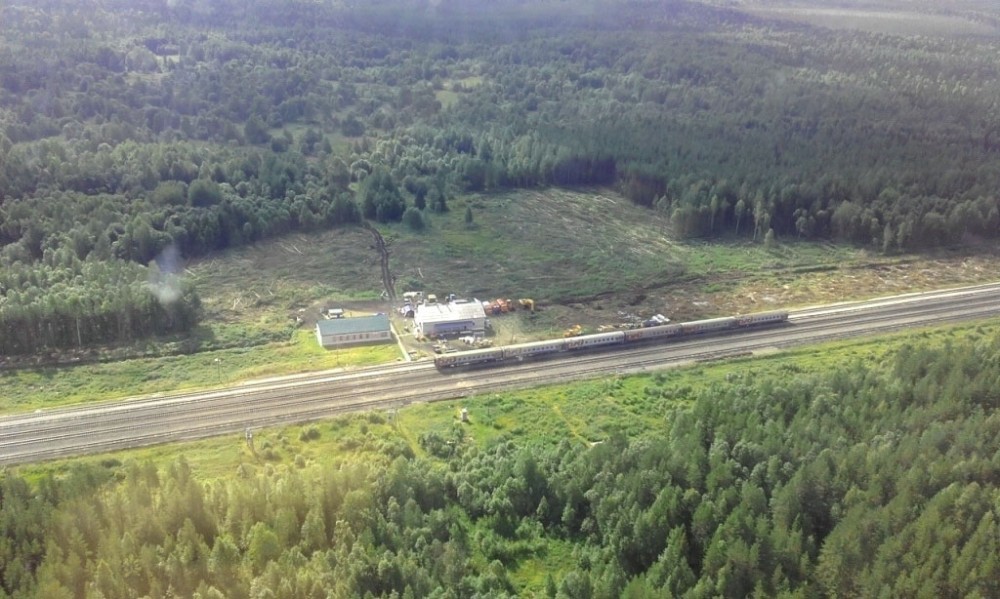
The site for the planned waste management facility. Photo: Aleksandr Kravets, Novaya Gazeta
Close to the geographic size of France, with a population of 1.1 million people, the Arkhangelsk region may appear to have ample space for a massive landfill, but clearly the population doesn't want it, not even the rarefied garbage of the city of Moscow. The federal authorities in Moscow decided they would send their garbage to Shiyes, dump it all 30 kilometers north of Urdoma, once a thriving village and now only a railroad maintenance station left of its former vigour.
As far as Igor Orlov, the governor of Arkhangelsk is concerned, this is a project that will have great practical value for the residents of the province, bringing investment and along with that, employment for an estimated 500 people. The secretive, dishonest methods that launched the project, however, has made residents hostile to its presence. Above all, no public environmental impact study undertaken, leaving residents with the fear that groundwater and the Vychegda River will become polluted.
But plans to ship Moscow's garbage despite the protests are set to proceed. The economic problems along with a popular understanding that the hinterlands are there to support the Russian capital where government cannot pour enough money into, while the struggling provinces get nothing, have not endeared the project to its recipients.
Located 1,100 kilometers northeast of Moscow, the residents of Urdoma learned in 2018 of the landfill project only when two local hunters happened to stumble across workers felling trees to prepare the groundwork for the project. Urdoma was galvanized in outrage, along with dozens of other communities in Arkhangelsk Province. Support for President Putin, according to polls, is slipping.
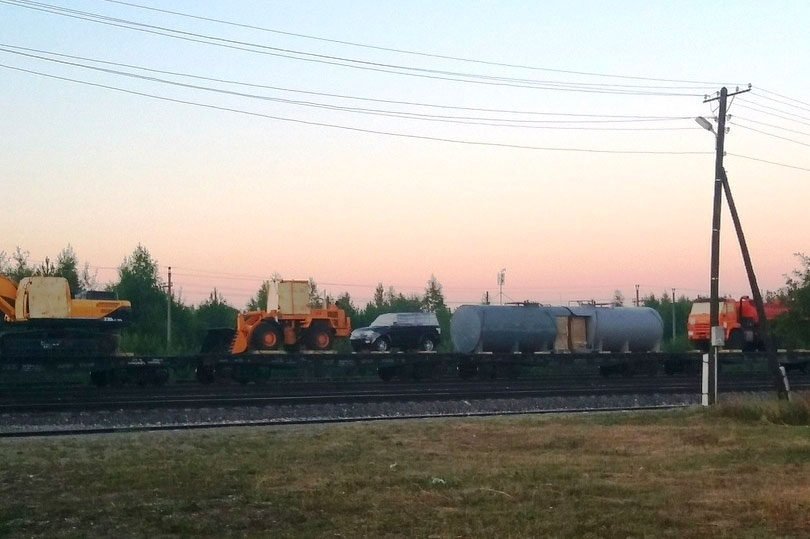
Construction equipment on its way to site. Photo: Aleksandr Kravets, Novaya Gazeta
For the first time in thirteen years, a plurality of Russians feel their country is steadily moving in the wrong direction, with public opinion shifting sharply in provincial areas, precisely where Mr. Putin's popular voting base led him to power when national pride and economic gains were uppermost in people's minds. Since then the government has indulged in changes rural dwellers have found deeply unpopular.
Raising the retirement age. Increasing sales taxes and utility fees. Incomes have dropped about 11 percent adjusted for inflation, over the past five years. Urdoma's 4,750 population along with other similar communities in the region, grumble that the governor has abandoned their idyllic lives to the interests of garnering garbage. No one is interested in their concerns, and no responses have been forthcoming in their search for answers.
Demonstrations seethe with broader political discontent through events held across Russia against rising garbage collection fees and little effort given to recycling. Falling oil prices and international economic sanctions have hit the Russian economy hard, leading to waning support for the interventions in Syria and Ukraine, the source of huge popularity when they both began.
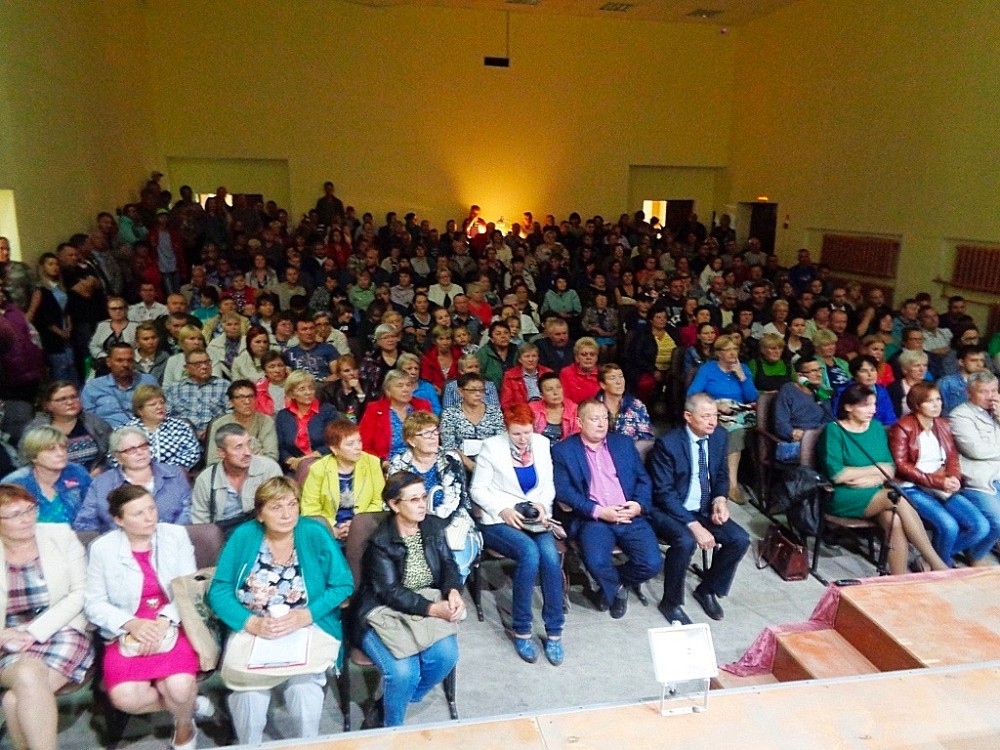
The "deep depression" that has overtaken Russians will inevitably intensify, but without destabilizing President Putin, according to Mikhail Rostovsky. Despite Russia's immense natural resources and areas of wealth, many Russians continue to live in poverty. After complaints that a public hearing hadn't materialized as required by law before deciding on the trash to be sent to Arkhangelsk, one day outsiders were bused into town to enter an auditorium for a "hearing".
Police officers barred residents of the town from entering the hearing. "After we get rid of the garbage in Shiyes", said Nikolai Viktorov, owner of a town hardware business "we will start getting rid of the garbage in Moscow".
People from the village of Urdom gather in protest against a projected
major garbage management facility. Photo: Aleksandr Kravets, Novaya
Gazeta
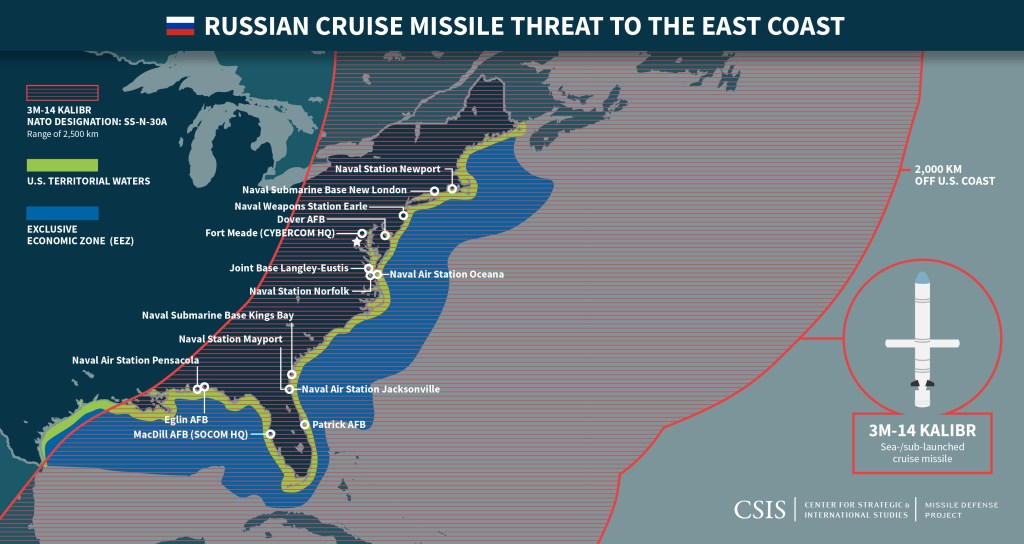
"It is time now for Russia to come to the table and stop the violations." "[If the 9M729 missile system] became capable of delivering] the U.S.] would then be looking at the capability to take out a missile that could hit any of our countries in Europe and hit America." "Counter measures [by the U.S.] would be to take out the missiles that are in development by Russia in violation of the treaty. They are on notice." "There will come a point in the future in which America will determine that it has to move forward with a development phase that is not allowed by the treaty right now." U.S. Ambassador to NATO Kay Bailey Hutchison, Brussels
So there it is. It has taken awhile, but the American administration has finally mustered the required fortitude to state its intentions. Back in March, Russian President Vladimir Putin wasn't the least bit averse to doing the same himself. Tersely, implying threat directed to the United States, pulling the weight of a revitalized military for the Russian Federation. Back then, it was Russia blaming the U.S. for driving the Russian military to pull out all the stops to advance state-of-the-art military technology second to none in the world.
"I want to tell all those who have fueled the arms race over the last 15
years, sought to win unilateral advantages over Russia, introduced
unlawful sanctions aimed to contain our country's development: All what
you wanted to impede with your policies have already happened. You have failed to contain Russia. Now they need to take account of a new reality and understand that
everything I have said today is not a bluff", said Vladimir Putin grimly and with obvious satisfaction.
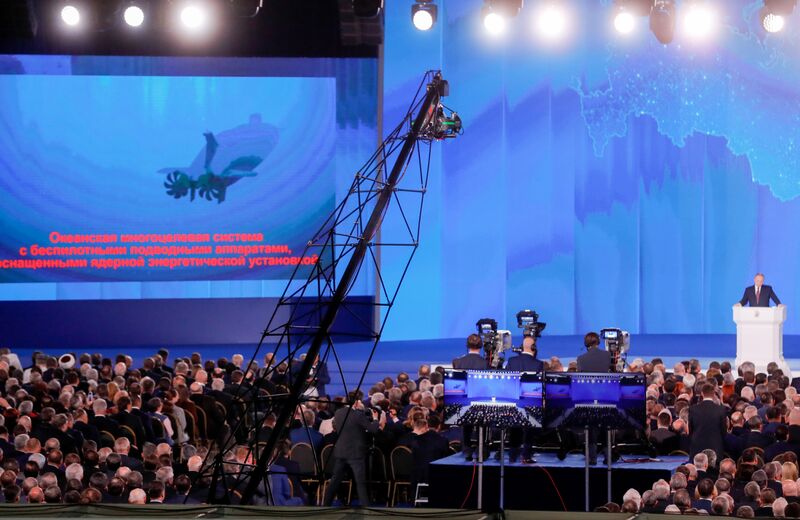
The
nuclear-powered cruise missile, tested last year has not only a
"practically unlimited range" but advanced maneuverability and
speed. The high-speed underwater drone has an "intercontinental" range
capable of carrying a nuclear warhead, can operate at depths and
speeds to outpace interceptors. "No one in the world has
anything like that. It may appear someday, but by that time
we will develop something new." The intercontinental
hypersonic missile is capable of reaching targets at a
speed 20 times that of sound to strike "like a fireball", he gloated.
Now, in essence, he has been called on his threat. But not for the first time. Back in 2014 the Obama administration raised its own concerns, at that point the missile had been in test stage, but still in violation of the INF. Now it has become a "fully operational unit". Intelligence evidence gathered by Washington has been shared with its 28 NATO allies. Grim news that the system could be launched in a nuclear strike at Europe, no notice given.
Unmanned nuclear-powered submersible on screen during Putin’s address on March 1.
Photographer: Mikhail Metzel\TASS via Getty Images
This is advance notice that the U.S. plans to respond to the "fully operational unit" of the Russian Federation itn violation of the INF by stating that Russia is forcing the issue giving the U.S. no choice but to forge on and develop its own missile in response at the risk of violating the treaty that both Washington and Moscow celebrated the 30th anniversary of, last year, presumably before the Kremlin's push for greater militancy took final root.
This represents a general opinion site for its author. It also offers a space for the author to record her experiences and perceptions,both personal and public. This is rendered obvious by the content contained in the blog, but the space is here inviting me to write. And so I do.

/cloudfront-us-east-2.images.arcpublishing.com/reuters/DFFFE7X7PBMXJC7QCYTBGOHWGQ.jpg)





/cloudfront-us-east-1.images.arcpublishing.com/dmn/HRMWXBSX5P3W7NGDLV5O6CES7U.jpg)
/cloudfront-us-east-1.images.arcpublishing.com/dmn/MP4Q2QIY5NQUHWMZLIUGO7PQ4U.jpg)