Have Turkey's Erdogan and Russia's Putin Kissed-and-Made-up for the Very Last Time?
"This is a person [Recep Tayyip Erdogan] who keeps his word — a man."
"He does not follow his tail. If he believes it is
advantageous for his country, he goes to the end"
"There is an element of
predictability, and it is very important to understand who you are
dealing with."
Vladimir Putin, 2021
"[Putin’s words are] exactly how I have known Mr. Putin since I first
met him."
"He is straightforward and keeps his word."
"It is rare to have
such strong relations with any state."
Recep Tayyip Erdogan
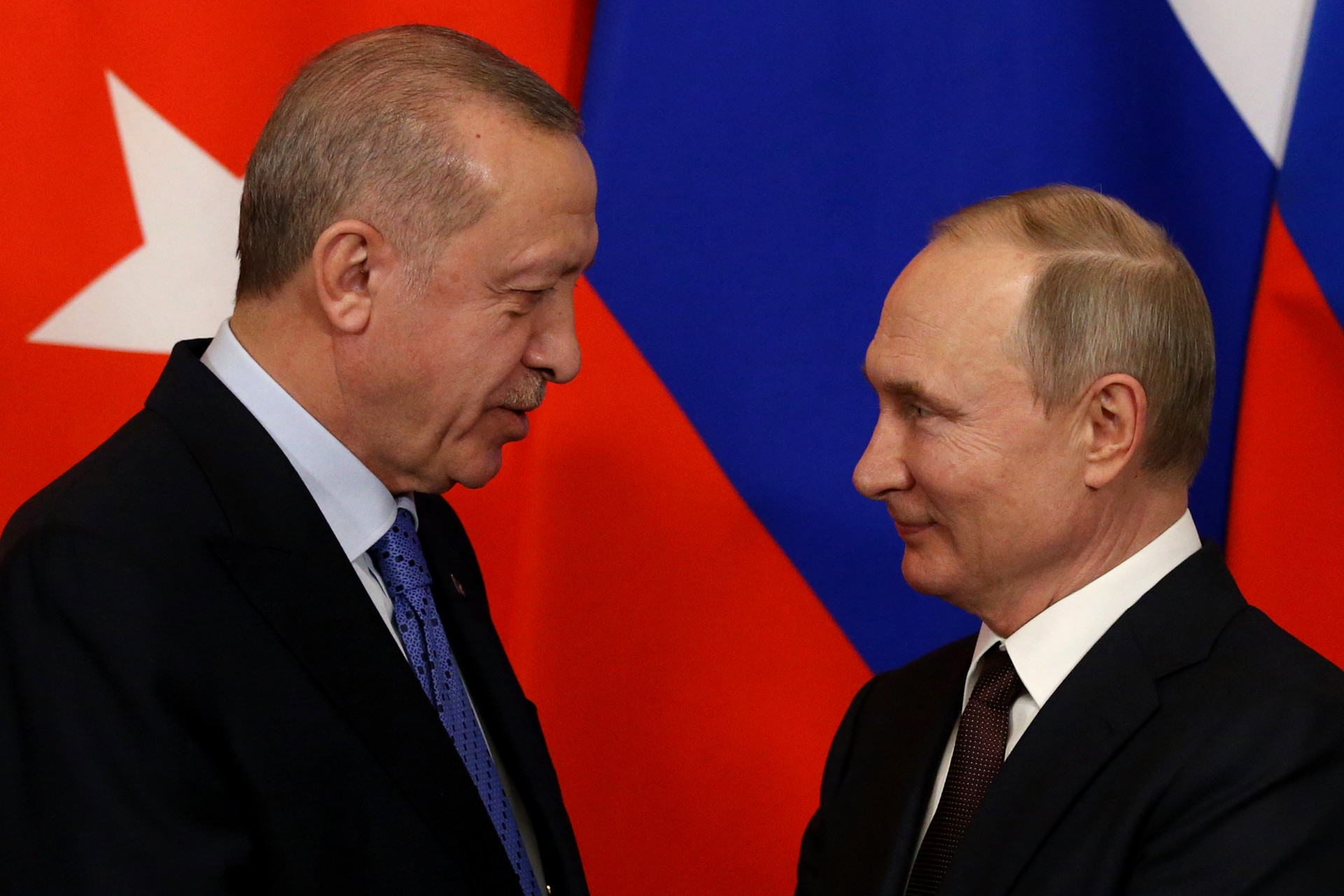
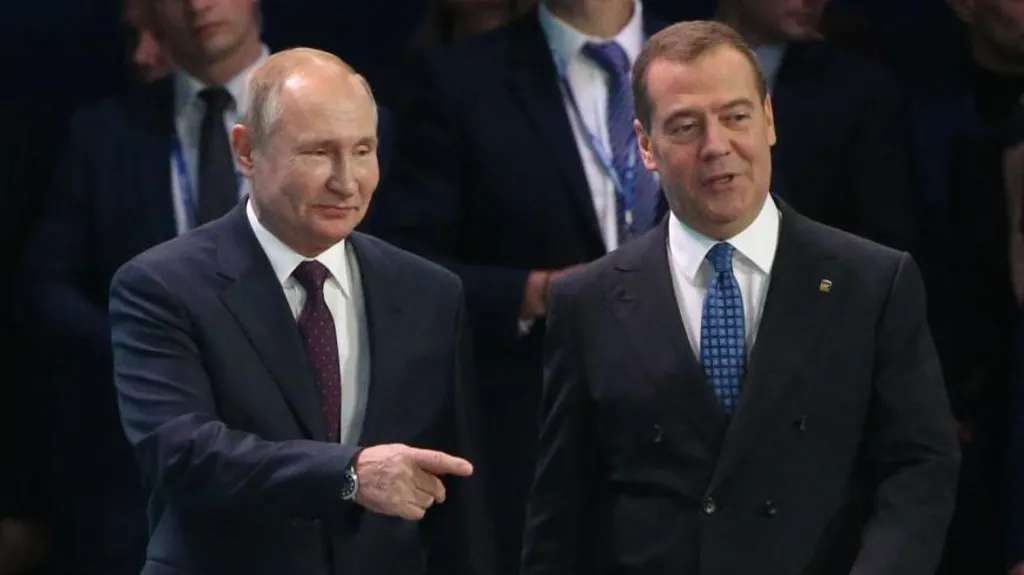
Russian President Vladimir Putin and Turkish President Recep Tayyip
Erdogan at the Kremlin on March 5, 2020 in Moscow, Russia/ Mikhail
Svetlov/Getty Images
"On Nov. 24, 2015, Turkey shot down a Russian fighter jet over Syria,
resulting in the deaths of two Russian soldiers and prompting a
sometimes spine-chilling war of words. At his annual press conference in
December that year, Putin’s description of Erdoğan was quite different
from the one he gave five years later. He said he did not “see any
prospect of improving relations with the Turkish leadership,” whom he
accused of trying to “lick the Americans in a certain place”."
"Sinking
the knife in even deeper, Putin accused Erdoğan of betraying the
secular system put in place by Turkey’s national hero, Mustafa Kemal
Atatürk. “The creeping Islamization would probably cause Atatürk to turn
in his grave,” he said. Erdoğan, for his part, lambasted Russian “war
crimes” in Syria. Russia imposed sanctions, with the package holidays
that brought hundreds of thousands of tourists to Turkey’s Mediterranean
coast halted and goods like Turkish tomatoes no longer welcome in the
other direction."
Stuart Williams, New Lines Magazine
Suddenly
Turkey is Ukraine's best friend -- no, really. With Erdogan's courteous
assistance, Ukrainian President Volodymyr Zelenskyy now has cordial
ingress to the movers-and-shakers of the Middle East. Many of whom have
been under extreme violent duress, with the Islamic Republic of Iran
punishing the Gulf states for their friendliness with the United States,
not to mention Israel. U.S. military bases in Saudi Arabia, the UAE,
Bahrain, Qatar and Kuwait, all of whom have been, to some degree
targeted by the IRGC; above all, the United Arab Emirates.
If
any leader of any country currently knows anything about
counteroffensives and self-preservation, it is the Ukrainian President,
and he is more than pleased to be able to demonstrate what the Ukrainian
military has learned while it has been under massive bombardment by an
aggressive, much larger conventionally armed neighbour. The Iran war has
enabled Mr. Zelenskyy to cultivate closer ties with Gulf states. The
Shahed-136 kamikaze drones that Russia uses in Ukraine have been
supplied to Iran by Russia and China.
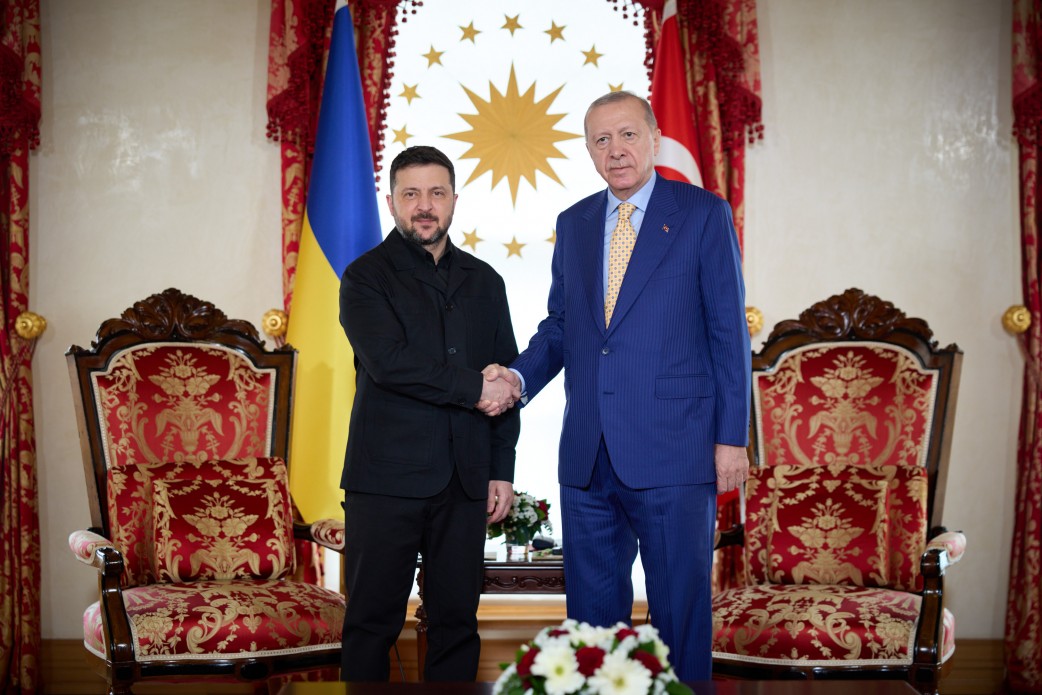
At the Dolmabahçe Palace in Istanbul, President of Ukraine Volodymyr
Zelenskyy held a meeting with President of Türkiye Recep Tayyip Erdoğan. President of Ukraine
Ukraine's
answer to the devastating attacks on its cities and civil
infrastructure was almost-instant devising, production and use of
surprisingly simple advance drone technology which has given it longer
reach into Russia itself, demonstrating what's good for the goose is
fine for the gander in blowing up Russian military bases, bridges,
ships, weapons storage, and oil depots. Ukrainian resistance has
resulted in the deaths of tens of thousands Russian servicemen monthly,
dealing severe blows to Russia's troop numbers and recruitment.
With
all that experience behind them, Ukraine was pleased to dispatch air
defense teams to Qatar, Saudi Arabia and the United Arab Emirates.
Turkey, in ushering Ukraine into the comfort zone of making new contacts
in the Middle East, has a new partner, as it leaves behind the old one
with which its own agenda was never quite a perfect fit. After all,
during the drawn-out civil war in Syria, Turkey armed the Sunni groups
trying to break Bashar al-Assad's Alawite grip on the country, even as
Erdogan targeted Kurds whose fighting prowess was superior to all of the
regime's opponents.
And
it was Russian warplanes out of the Russian air base in Syria that
constantly flew over Sunni strongholds bombing them mercilessly. Just
incidentally the very same Sunni fighting groups that Mr. Putin has
attempted after the fall of President Assad, (domiciled now in Russia),
to ingratiate himself with, hoping to be able to maintain both his
remaining naval and air bases in the new Sunni-led government of Ahmed
al-Sharaa.
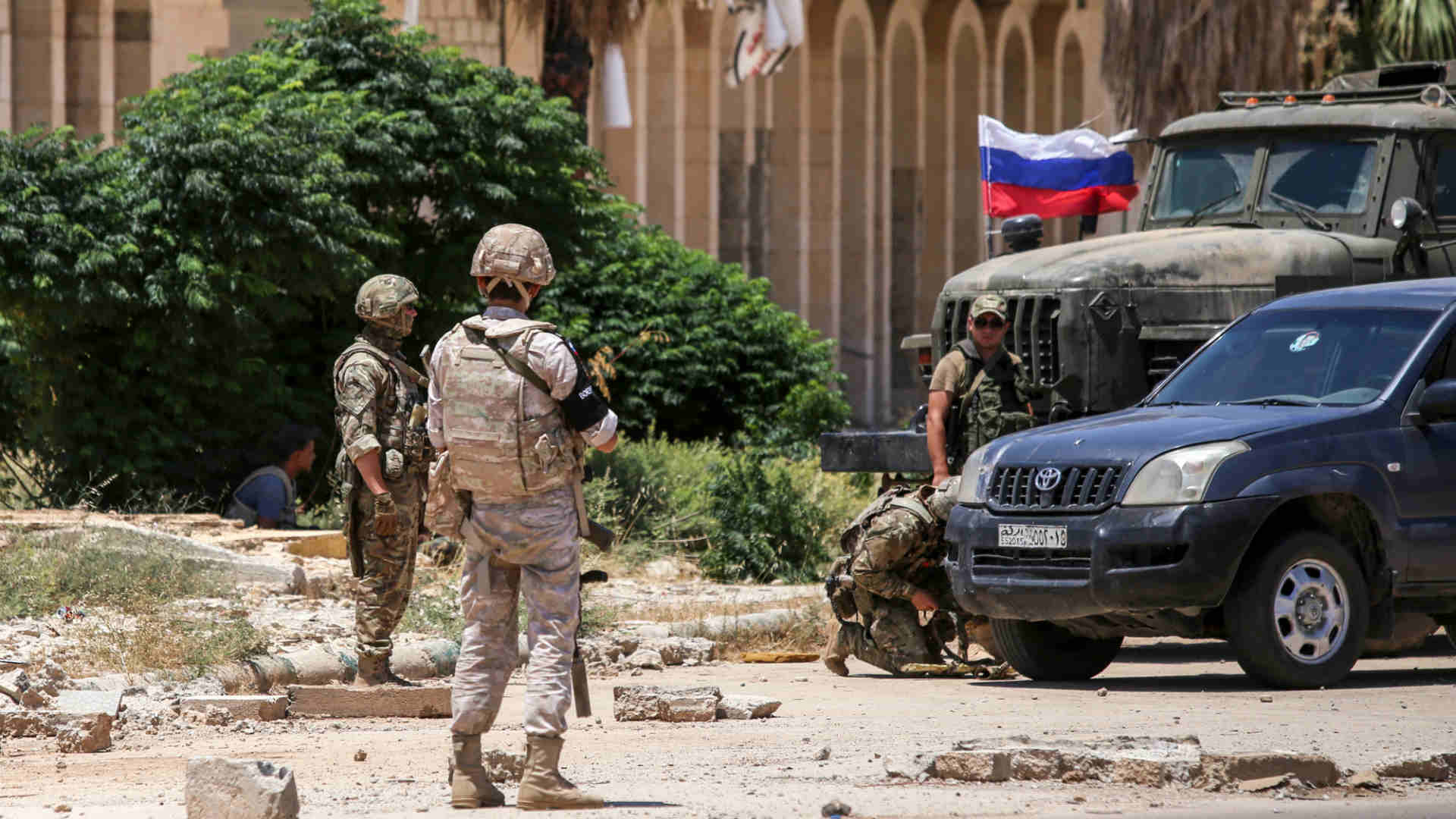
The Russian military presence in Syria has declined significantly over
the past two years, from 114 military sites to only two bases today.
[Getty]
In
the early years of Russia's conflict in Ukraine when Moscow was
isolated by the West, Turkey, though a standing member of the NATO
alliance, spurned the sanctions. In the process becoming a link for
Russian trade, investment and energy flows. A situation that gave Ankara
greater leverage over Moscow. Russia, before the ouster of the Syrian
Alawite regime, could do anything it wanted there and had hundreds of
military bases; now under the new Sunni-led regime, reduced to two,
albeit its major bases.
It
is Turkey that is now the power lever in Syria, helping its interim
president al-Sharaa to be presented to the EU, the U.S. as the new,
kinder, 'democratic' face of Syria with whom they could all do business
with confidence. And in the process, Turkey has become the king-maker,
which suits its future plans of greater dominance in the Middle East
very well. A role that as a junior partner to Russia for so many years,
Russia cultivated for itself, while it is Turkey now that has inserted
itself in helping to rebuild the Syrian Army.
By
openly giving assistance to Ukraine's President Zelenskyy, Mr. Erdogan
is amply demonstrating that once again Turkey has spurned its
sometimes-tenuous, but generally past-useful allyship with Russia,
moreover a Russia that has, by its territorial aggression served to
isolate itself, while continuing to aggravate and threaten his eastern
European neighbours and needling NATO, of which Turkey is a member.
Vladimir Putin and his war-wearied economy has lost the projection of
global power, and Turkey for the time being has no further use of his
allyship with Russia.
Russian and Turkish delegations at a summit in Tianjin, China, September 2025Vladimir Smirnov / Reuters
"Based
on the highly provocative statements of the former President of Russia,
Dmitry Medvedev, who is now the Deputy Chairman of the Security Council
of the Russian Federation, I have ordered two Nuclear Submarines to be
positioned in the appropriate regions, just in case these foolish and
inflammatory statements are more than just that."
"Words are very important, and can often lead to unintended consequences. I hope this will not be one of those instances."
"Medvedev said some things that are very bad, talking about nuclear.
When you mention the word nuclear my eyes light up and I say we better
be careful, because it's the ultimate threat."
"A threat was made and we didn't think it was appropriate, so I have to
be very careful. So I do that on the basis of safety for our people. A
threat was made by a former president of Russia, and we're going to
protect our people."
U.S. President Donald J. Trump
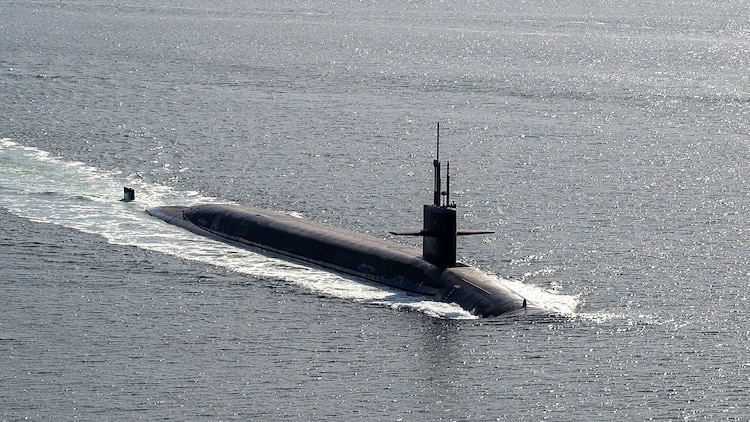
Ohio-class ballistic-missile submarine USS Maine transits Puget Sound during routine operations, March 18, 2025. Specialist 1st Class Ryan Riley/U.S. Navy
"Trump's playing the ultimatum game with Russia: 50 days or 10… He should remember 2 things: 1. Russia isn't Israel
or even Iran. 2. Each new ultimatum is a threat and a step towards war."
"Not between Russia and Ukraine, but with his own country."
"Don't go down
the Sleepy Joe road!"
Former Russian President Dmitry Medvedev, currently deputy chair, Russia's security council
"[The
Patriot transfer to Ukraine was made possible by an agreement with the
U.S. that Germany would be] the first nation to receive newly produced,
latest-generation Patriot systems at an accelerated pace [which Berlin
would pay for]."
"[The delivery to Ukraine would also include] additional system components within the next two to three months."
German Defence Minister Boris Pistorius
Dmitry Medvedev (right) has sparred with Donald Trump on social media in recent days. Getty Images
After
Trump shortened the timeline for his ceasefire-or-sanctions ultimatum,
Medvedev responded Monday by warning him that was a step towards war. He
added, "Don't go down the Sleepy Joe road!"
Trump
responded in a post on Truth Social calling Medvedev a "failed former
President" and warning him to "watch his words" as he's entering
"dangerous territory."
On Friday morning, Medvedev fired back
with an allusion to Russia's "Dead Hand" automated strike system — which
purportedly could unleash a full-scale nuclear response in the event
Russia was struck first.
Medvedev also mocked Trump, saying "if
a few words from the former President of Russia can provoke such a
jittery reaction from the mighty President of the United States, then
Russia must be completely in the right."
Axios
More
bodies pulled from under rubble in yet another aerial bombardment from
Russia, with numbers of dead doubling, to reflect the deadliest strike
so far this year on Ukraine's capital, Kyiv. While recovery operations
commence, Germany has stepped in to announce it plans to provide two
Patriot air defence systems to Ukraine, in coming days. Berlin is poised
at the top of a list to obtain new-model replacements of the Patriot
systems from the United States in an exchange agreement.
Ukraine
desperately needs more air defences to stave off strikes from
unrelenting Russian missile and drone attacks, and its president,
Volodymyr Zelenskyy has pleaded with Ukraine's western allies to provide
them. In July alone, stated President Zelenskyy, Russian forces
launched some 3,800 drones, 250 missiles -- including 128 ballistic
missiles and 5,100 guided bombs. Ukrainian forces are using outdated
equipment in attempting to intercept the drones and missiles; whatever
they have in their antiquated arsenal is clearly lacking effectiveness.
The "vile blow"
of the Thursday overnight attack demonstrated that additional pressure
on Moscow was required, stated Mr. Zelenskyy, going on to say that
Ukraine's allies in the west should tighten their sanctions regime
against the Kremlin, something that U.S. President Donald Trump has been
threatening to do. "No
matter how much the Kremlin denies their effectiveness, [the sanctions]
are working and must be stronger -- to hit everything that allows such
strikes to continue."
President
Trump is preparing to slap additional sanctions on Moscow to place
pressure on Russia to accept a ceasefire. Trump characterized the
Russian airstrikes on civilian targets in Ukraine as 'disgusting' and 'a
disgrace', even while himself questioning the effectiveness of further
sanctions to convince Russian President Putin to agree to a ceasefire. "I don't know that sanctions bother him. I don't now if that has any effect, but we're going to do it", said the U.S. president.
He also said on Friday that he had ordered two nuclear submarines positioned "in the appropriate regions"
after former Russian president Dmitry Medvedev reminded the U.S. that
Moscow still has robust nuclear strike capabilities. President Trump had
earlier in the week tightened the deadline for Russia to agree to a
ceasefire from the previous stated 50 days to ten days, for Russia to
agree to a ceasefire with Ukraine or face new sanctions.
Explosions seen in Kyiv during Russian attack Still from video
Ukrainian
air defences have been overwhelmed by the numbers and frequency of
cruise and ballistic missiles, along with drones fired at Ukrainian
targets by Russian forces. The missile clusters in combination with
waves of drones have been devastating for the ill-equipped, overworked
Ukrainian military teams, with no relief in sight. Expectation of the
receipt of the Patriot missile systems will substantially boost both
Ukrainian morale and the functionality of Ukraine's response to the
bombardments.
Thursday's
overnight attack saw over 300 drones across Ukraine, with 21 drones
striking targets, the brunt borne by Kyiv, stated Ukraine's air force.
Of the eight cruise missiles fired, five penetrated Ukraine's air
defences, according to the Ukrainian military.
Sputnik/Alexei Maishev and REUTERS/Evelyn Hockstein
The Oppressed People of Revolutionary Iran Amidst its Nuclear Threat
"[Negotiating
with the United States would be neither] wise, intelligent nor
honourable. Negotiating with such a government should not be done."
"We
must understand this correctly and not be misled into thinking that
sitting at the negotiation table with that government will resolve
certain matters. No, negotiations with the United States will not solve
any problems."
"They
make statements about us, express opinions and issue threats. If they
threaten us, we will threaten them. If they act on those threats, we
will do the same. If they undermine our nation's security, we will
undoubtedly respond in kind."
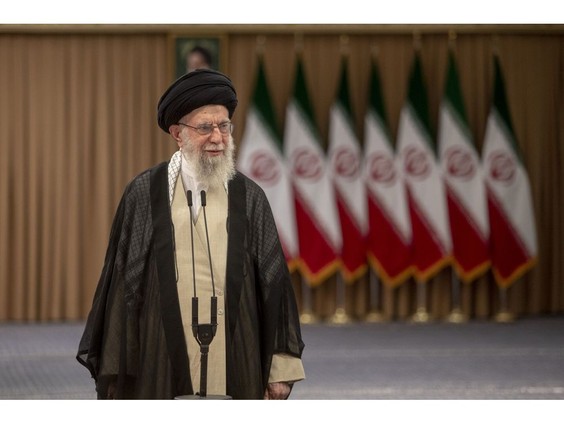
Supreme Leader Ayatollah Ali Khamenei, Tehran, Iran
Ayatollah Ali Khamenei Photographer: Majid Saeedi/Getty Images
The
Islamic Republic of Iran has for years suppressed the wishes of the
Iranian people to live fruitful lives without the interference of strict
medieval-era Sharia law that imposes restrictions on every aspect of
people's lives. Iranians have attempted time and again to convey their
wishes to the hardline Islamist government that the version of Islam
they have been forced to live under has made their lives a torment. The
advent of the return of former Grand Ayatollah Ruhollah Khomeini from
exile in 1979 and the downfall of the Shah of Iran introduced the
Iranian public to repression, subjugation and poverty of opportunities.
The
octopus arms of Revolutionary Iran that brought the dictatorship of a
theocracy intolerant of any sign of its population rejecting the
imposition of Islamist principles and practises under the watchful eyes
of the ruling mullahs and their military arm, the Islamic Revolutionary
Guard Corps, has diminished quality of life entirely for the population
they command. But the aspirations of the Islamic Republic goes well
beyond imposing their version of Islam on its citizenry. In forming a
sectarian alliance with other Shi'ite-led and majority governments,
Tehran aspires to transform the entire Middle East including
Sunni-majority nations into its satellites.
The
sole exception being the State of Israel -- whose presence on land
formerly 'consecrated' to Islam, irrespective of that land being
ancestrally the heritage of Judeans and current Israeli citizens --
destined, as far as the Iranian government is concerned, to be
destroyed. To that end, the al Quds division of the IRGC founded,
sponsored, armed, organized, trained and guided Islamist terrorist
groups whose primary function would be to attack and ultimately vanquish
the Israeli Defense Forces, and that done, destroy the Jewish state and
its Jewish inhabitants. Its proxy militia Hezbollah was conscripted
into the Republic's vision for that singular purpose. In tandem with
Hamas in Gaza and the Houthis in Yemen they formed a formidable threat
to Israel, fortified by Shi'ite militias in Iraq.
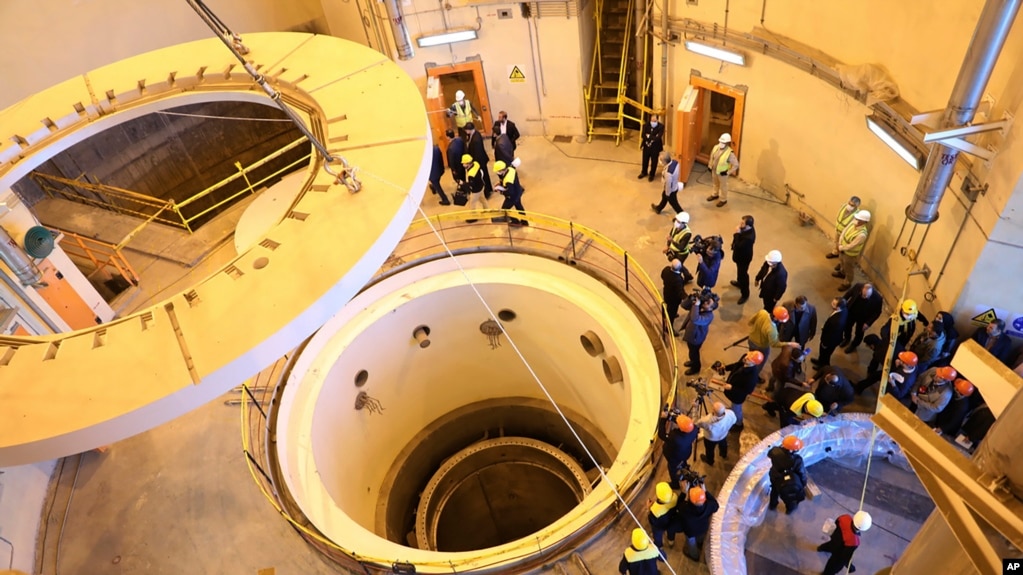
Iran said it is ready to negotiate with the United States over its nuclear program
The
IRGC nuclear program that began with ever more advanced centrifuges
enriching uranium in hidden locations to the point where the creation of
nuclear bombs could be created to match the technological advances of
the short- and medium-range ballistic missiles that could be fitted with
nuclear heads, continues to concern Western intelligence agencies, and
certainly it does Israel. Iran's claims that its interest in nuclear is
restricted to domestic purposes is clearly a feint that fools no one. It
has made no secret of its intentions against Israel and its antipathy
to the United States.
"With me, it's very simple: Iran cannot have a nuclear weapon", said American President Donald J. Trump. Signing an executive order on Tuesday for the reimposition of "maximum pressure" sanctions on the Islamic Republic, Mr. Trump said he felt "torn" on signing the order. "It's very tough on Iran", he said, without doubt referring to the additional economic pressure imposed on an already flailing economy. "Hopefully we are not going to have to use it very much. I'm unhappy to do it"; not for any sympathy with the government, but empathy for the Iranian people living under economic hardships.
For
months prior to this latest setback for Iran, the Republic has been
signalling its readiness to re-engage in talks with the United States in
the interests of negotiating the issue of its rapidly advancing nuclear
program -- ostensibly in exchange for lifting crushing economic
sanctions draining billions of dollars from the Iranian economy. With
Khamenei's latest comments, the Iranian rial crashed to a record low of
872,000 rials to US$1 in aftermarket trading.
"The
Americans did not uphold their end of the deal. The very person who is
in office today tore up the agreement. He said he would, and he did",
complained Khamenei dolefully. Reformist President Masoud Pezeshkian on
Thursday promised dialogue with the West. Several days later Khamenei
contradicted that statement. While Iran's Foreign Minister stated that
Iran would never engage in talks under the kind of pressure the newly
imposed sanctions bear on the country.
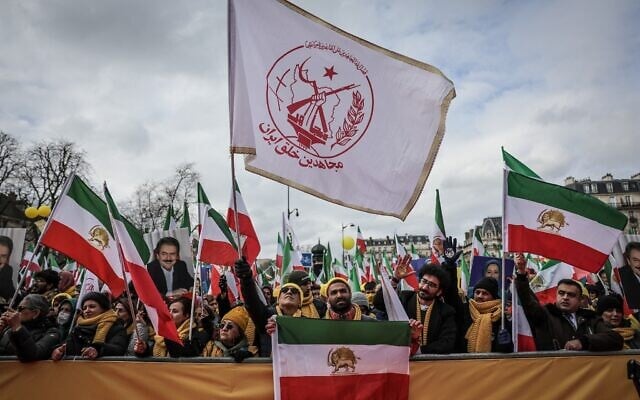
Thousands of Iranians from across Europe rallied impressively in Paris on February 8,
urging world leaders to put more pressure on Iran’s ruling clerics."Instead of appeasing the mullahs, [the world] should stand side by
side with the Iranian people", Maryam Rajavi, president of the National
Council of Resistance of Iran (the political wing of the People's Mujahedin of Iran), told the rally. "We say your demise has arrived. With or without negotiations, with or
without nuclear weapons, uprising and overthrow await you", NCRI
President-elect Maryam Rajavi said.
Supporters of the People’s Mujahedeen of Iran wave a flag of their
organization (C) along with Iran’s pre-revolution flag during a
demonstration in Paris, on February 8, 2025, on the occasion of the 46th
anniversary of the uprising against the Shah. (Thibaud MORITZ / AFP)
"[Sudan is in the grips of a] catastrophic situation, [on the brink of a man-made famine.]"
"There are reports of mass graves, gang rapes, attacks in densely populated areas and many more horrors."
"We are failing the people of Sudan."
Edem Wosornu, UN relief advocate
"We haven't done anything -- just expressing concern, which doesn't solve any problems."
"There's not enough pushing from the international community, including Canada, to stop this war."
Imad Satti, director, Sudanese Canadian Communities Association
"We are looking to welcome Sudanese people fleeing war at the end of this year or the beginning of next year."
"It's very important to talk about what has become a forgotten war for a lot of us."
Canadian Immigration Minister Marc Miller
"Fighting broke out
in Khartoum, Sudan’s capital, on 15 April 2023 as an escalating power
struggle between the two main factions of the military regime finally
turned deadly."
"On
one side are the Sudanese armed forces who remain broadly loyal to Gen
Abdel Fattah al-Burhan, the country’s de facto ruler. Against him are
the paramilitaries of the Rapid Support Forces (RSF formerly known as Janjaweed), a collection of
militia who follow the former warlord Gen Mohamed Hamdan Dagalo, known as Hemedti.'
"The
RSF was founded by the former dictatorial ruler Omar al-Bashir as an
Arab counterinsurgency militia. Bashir wanted to crush a rebellion in
the region of Darfur that began more than 20 years ago due to the
political and economic marginalization of the local population."
Background
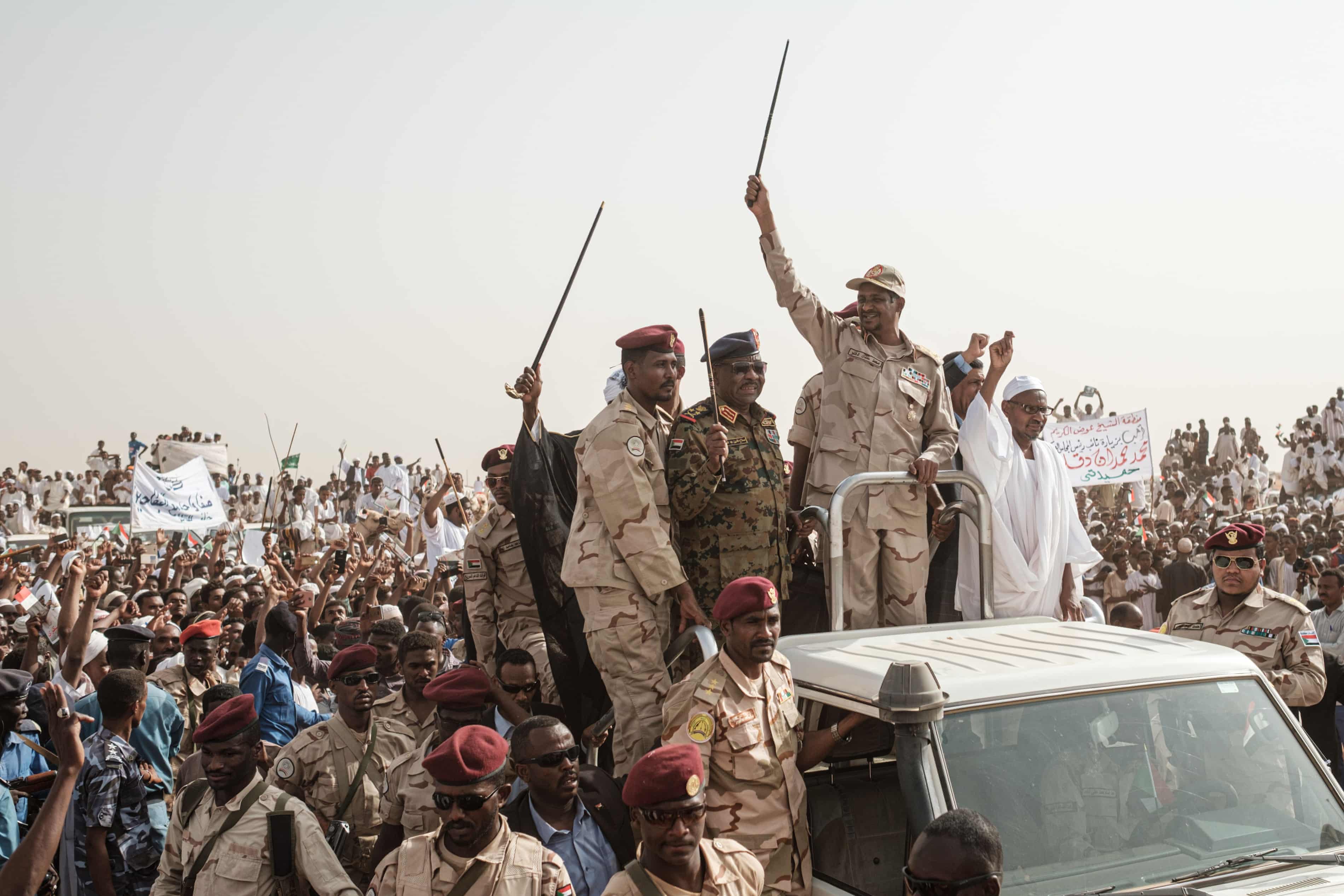
Gen Mohamed Hamdan Dagalo, known as Hemedti, at a rally in Abraq village, outside of Khartoum, 22 June 2019.Photograph: Yasuyoshi Chiba/AFP/Getty Images
Desperate
Sudanese trying to escape Sudan with its raging conflict re-ignited by a
reconstituted Islamist group known for the horrors they inflicted on
Black Darfurian farmers seek haven elsewhere than in a country that has
distinguished itself for its lethal confrontation between traditional
herders and pastoralists, forcing farmers off their land through
uninhibited human rights violations of mass murder, rape, and situations
where the then-government sent helicopter gunships to mow down people
fleeing for their lives.
An
estimated 8.5 million people have been forced out of their indigenous
lands -- described by the United Nations as the largest internal
displacement crisis in the world. Sudanese who had previously immigrated
to, or been absorbed as refugees in Canada, escaping political and
social oppression, call upon Canada to exert its immigration bureaucracy
to enable threatened Sudanese to be reunited with their families in
Canada.
The
Liberal government of Justin Trudeau is skilled in expressing support
for the war-torn unfortunates of the world by 'expressing concern' as it
did last spring, in addressing the security situation in Sudan,
airlifting its Canadian citizens to safety. However, the Canadian
government has refrained from sanctioning the warlords, much less
expressly naming and blaming countries that have been involved in
fueling the war.
A
family reunification program had been announced late in 2023, one
designed to permit those fleeing Sudan to join their relatives in Canada
with the proviso they have the means to provide financial support.
According to the families involved, the program's demands for paperwork
make the process impossible in an active war zone. Potential sponsors
have been advised they must have $18,100 in cash, along with a minimum
annual income of $51,128 to proceed with sponsorship of a family of
four.
According
to Mr. Satti, speaking through his organization as representing
Sudanese groups across Canada, there are those with the required cash,
set back by futile efforts aiding relatives in Sudan with the required
paperwork, while others send money to help their relatives in a
desperate situation, an effort that serves to deplete savings, while
accomplishing little to actually enable their relatives to travel
outside Sudan, much less look to the onerous requirements before
immigration is countenanced.
Applications
were being accepted from February 27, to the point where 680
applications had been received by a month later, representing the hopes
of some 1,500 people who qualified for processing. To this point,
however, no applications have yet been approved by Immigration, Refugees
and Citizenship Canada. The program was scheduled to accept as many as
3,250 applications, yet the minister of Immigration, Marc Miller has no
expectation that anyone will arrive any time soon in Canada.
Former
Ottawa ambassador to Sudan, Nicholas Coghlan, has spoken out for months
urging Canada to follow the United States and Europe in sanctioning
economic networks which warlords in Sudan are reliant upon. He also
criticized Canada for lagging on appointing a senior diplomat for the
region, to among other issues, gather intelligence to guide Ottawa on
how best it could project humanitarian and diplomatic moves to aid the
situation in Sudan.
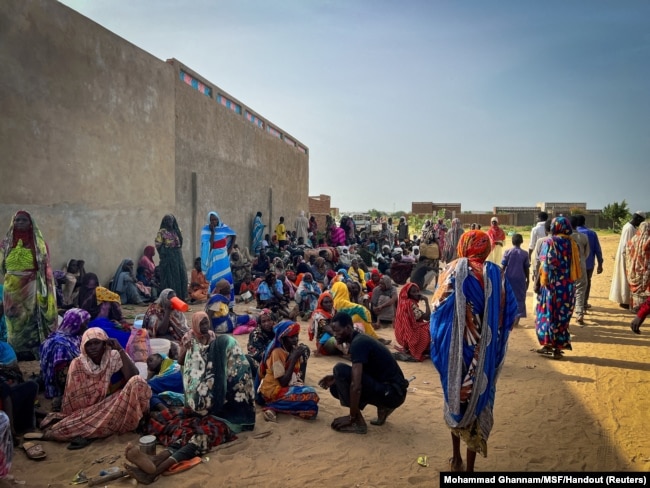
Sudanese refugees gather as Doctors Without
Borders teams assist the war-wounded from West Darfur, Sudan, in Adre
hospital. (Mohammad Ghannam/MSF/Handout via
Reuters)
Russia Happy to Let Europe Freeze in the Dark This Coming Winter
"[The Russian move] tells Europe that Russia is willing to flare gas instead of sending it to European countries."
"It's a reminder about how dependent Europe has been and is on Russian gas."
"We either must find new supply sources of gas or find new alternative energy sources."
Zongqiang Luo, senior analyst, Rystad energy consultancy
"It's been continuous for 75 days."
"Gazprom could have stopped flaring if they wanted to. It's likely they're making a deliberate choice to continue to flare."
Mark Davis, chief executive, Capterio
"The flaring is an environment disaster."
"The flaring flame is highly visible, perhaps indicating that gas is ready and waiting to flow to Europe if friendly political relations resume."
Rystad energy consultancy, Norway
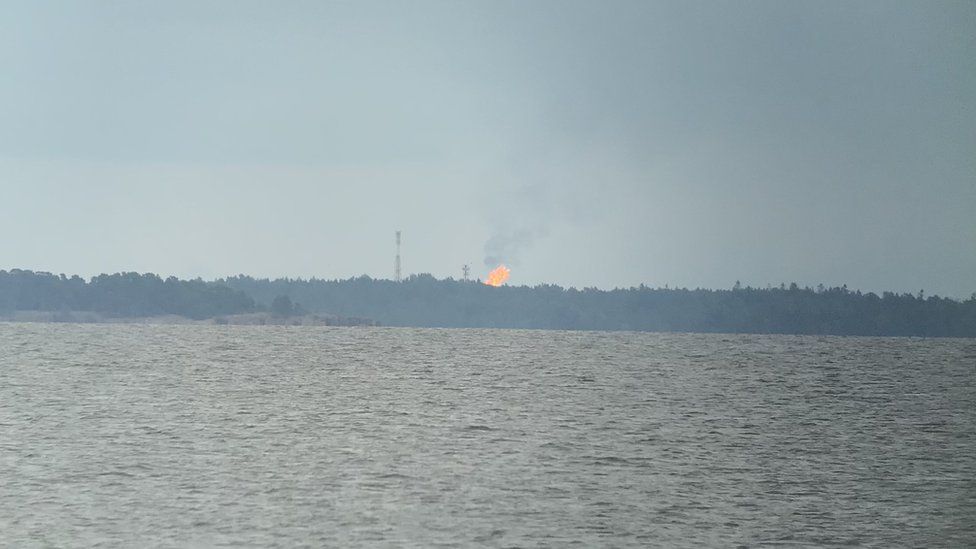
This photo was taken by Finnish citizen Ari Laine on 24 July at a distance of around 23 miles (38km) from the Portovaya facility Ari Laine
Having dramatically reduced the amount of gas flow that the Kremlin is permitting to go to Europe as pay-back for the sanctions against the Russian Federation for sending its military on a mission to destroy Ukraine, the speculation is that all that gas going nowhere must be stored, but that there is limited storage capacity and so the gas must be burnt, effectively destroyed.
Moscow made quite a fanfare over its agreement to supply China and India with gas.These are the two most populous countries on the planet, and their need for energy is manifest, and increasing. So given that contracts have been signed to supply gas for their energy needs, surely that new consumer base more than compensates for the gas being withheld from energy-dependent Europe...?
Is then, the exercise strictly one of poking Europe in the eye, wasting the gas in preference to supplying it where it is desperately needed?
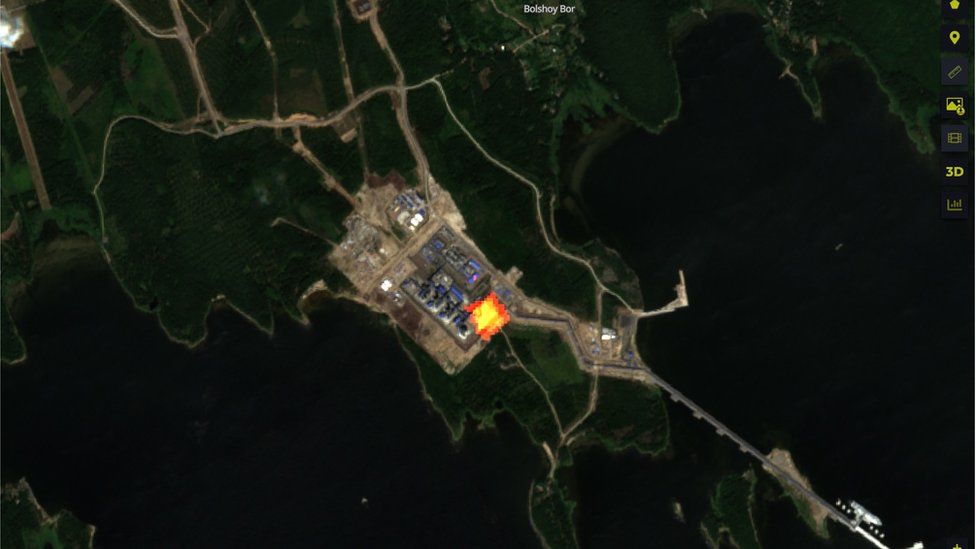
So there is the reality, the choice has been made by the Kremlin to flare off gas on a daily basis at a plant located near the Nord Stream 1 pipeline. This is an unprecedented situation, with experts estimating that the gas being burned reflects a lack of storage to contain the backlog, leading to the huge flare at the new liquefied natural gas plant at Portoaya since June.
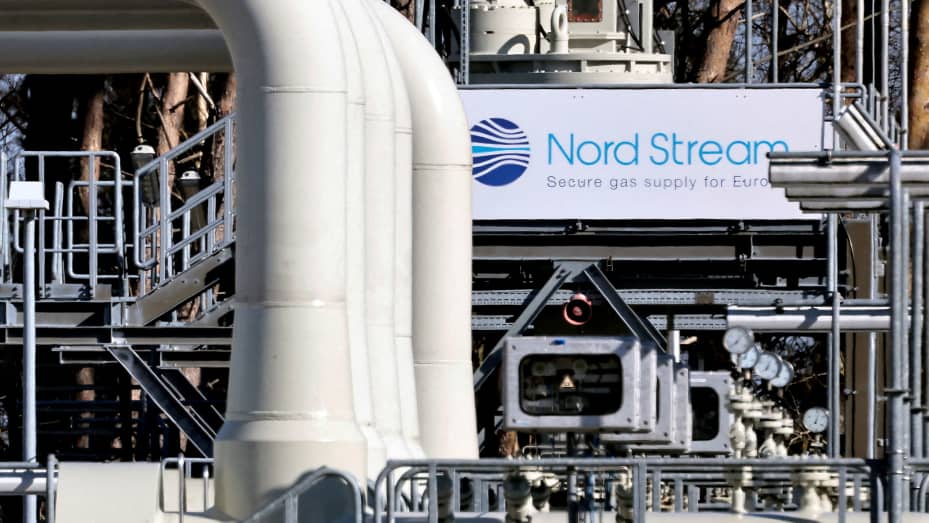
Its location adjacent the compressor station at the head of the Nord Stream 1 pipeline used to transport gas undersea to Germany, is a potent message to a country desperate to find alternate sources of energy and dreading the onset of winter and a distracting situation looming in the close future. Analysts from Rystad decribe the situation in environmental disaster terms, estimating the gas being burned off into the atmosphere to be equivalent to around 0.5 percent of daily EU needs.
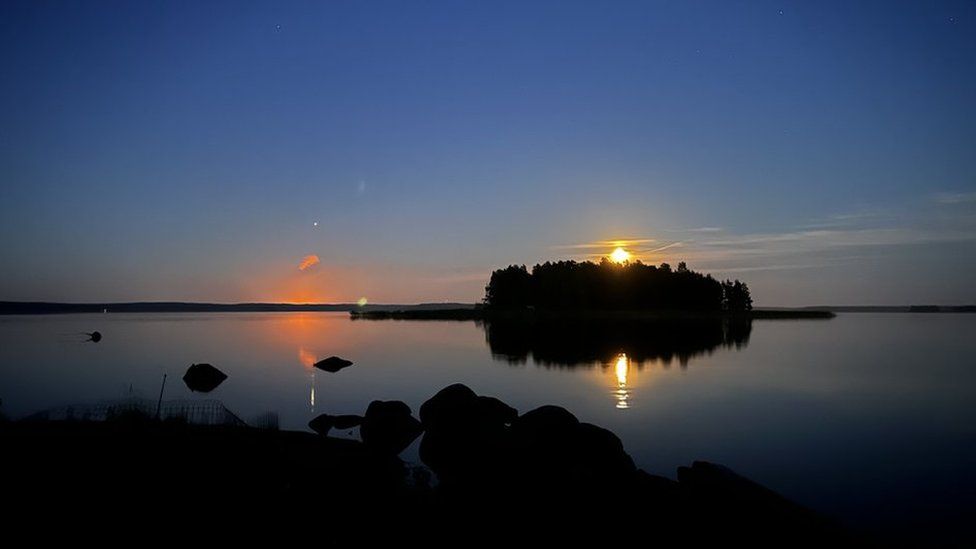
The smoke and orange light from the gas flare at Portovaya is seen on
the left of this image captured by holidaymaker Elmeri Rasi
Satellite images of Portovaya reveal the spectacular flare. Since mid-June Moscow has curtailed supplies through Nord Stream 1 as a telling political move despite Russian claims of technical problems hampering production and delivery. Finnish citizens first caught sight of flames from beyond their border, raising awareness of the situation. It is the sheer scale of the burning that puzzles experts, not the flare offs which are not themselves unusual.
Capterio which provides gas flaring solutions for energy companies, believes the flaring could reflect technical faults caused by the trade embargo in Europe leaving Russia incapable of procuring equipment necessary to contain the gas. But they also believe that it's conceivable that the flaring is a deliberate snub at Europe's needs in response to its sanctions of Russia.
What the flare is doing is releasing 9,000 tonnes of C02 equivalent every day including the release of black carbon. Soaring energy prices since the end of COVID lockdowns and international economic recoveries have been complicated by repeat increased costs related to the invasion of Ukraine.
"Of
particular concern with flaring at Arctic latitudes is the transport of
emitted black carbon northward where it deposits on snow and ice and
significantly accelerates melting."
"Some
highly cited estimates already put flaring as the dominant source of
black carbon deposition in the Arctic and any increases in flaring in
this region are especially unwelcome."
Professor Matthew Johnson,
Carleton University, Canada
A colourised version of this satellite image captures infrared radiation from the burning of gas at the Portovaya plant Copernicus Sentinel/Sentinel Hub/Pierre Markuse
Moscow Wringing Out Europe's Winter Gas Shortages Fears
"It puts stress on Europe for gas curtailments."
"If there are no effective gas and electricity demand savings implemented now there will be inevitable curtailments for industries in the case of [a] cold winter."
Mauro Chavez Rodriguez, research director, European gas & LNG, Wood Mackenzie Ltd.
"[The government is] monitoring the situation very closely [together with the Federal Network Agency]."
"According to our information, there is no technical reason for a reduction in deliveries [of gas]."
German Economy Ministry
"[Russia is] not interested [in a complete cut-off of its gas deliveries to Europe]."
"[However], if Europe continues its course of absolutely recklessly imposing sanctions and restrictions that are hitting it, the situation may change."
Kremlin spokesman Dmitry Peskov
A view shows a screen with the logo of Gazprom at the St. Petersburg
International Economic Forum (SPIEF) in Saint Petersburg, Russia June
17, 2022. REUTERS/Anton Vaganov/
Less than a week after returning the Nord Stream pipeline link from maintenance, Russia has announced plans to curb natural gas flows. A statement that was anticipated, but which still shocked European energy markets, escalating concerns over a critical supply shortage on the continent for the coming winter.
The link to Germany will see cut shipments by Gazprom PJSC to roughly 20 percent of capacity, from 7:00 a.m. Moscow time Wednesday, warned a statement from the Russian gas giant. Another gas turbine critical for supply is due for maintenance, scheduled to be taken out of service.
Of the remaining gas conduit from Russia to the European Union, gas had been flowing through the pipeline at about 40 percent of capacity since its return on line after ten days of maintenance, from July21. Europe is currently in the grip of its most serious energy crisis in decades, with governments desperate to fill gas storage sites before winter's onset. The broader economy has realized supply shortages, adding to concerns over a potential recession, raising the risk of gas rationing.
Canada had granted an exemption, despite sanctions, for the release and delivery of a Montreal Siemens turbine maintenance schedule. Last week ,Vladimir Putin warned Nord Stream flows could fall again should a disagreement over its turbines which pump gas through the network fail to resolve. Manufactured by Siemens Energy AG, the units are required to be shipped to Canada for maintenance where sanctions-related delays threaten expeditious returns.
A turbine recently serviced remains en route to Russia from Germany amidst delays related to paperwork. Once that component is returned it would allow flows to increase to 40 percent, according to Mr. Putin. Leaving, at present, one turbine only in working condition based on Gazprom's statements. Under normal conditions the station requires six major turbines; the one en route from Canada represents only a second one in operational mode.
Given recent comments from Russia, a Nord Stream flow reduction "was unfortunately expected" according to the head of gas analytics at ICIS. "The key question now is how long will this reduction to just 20 percent of the pipe's capacity actually last", noted Tom Marzec-Manser.
It has been months that Moscow has curbed European Union gas shipments, an obvious weaponization of energy, resulting in high regional tensions as a reflection of Russia's invasion of Ukraine. The EU is focused on whatever inadequate gas it receives from Russia to fill its winter stockpiles. Every market in Europe is consumed about gas shortages. The European Commission has called on all member-states to take part in the effort to save gas.
Nord Stream supplies were cut by Gazprom in two steps a month earlier, citing issues with turbines at the Porovaya compressor station. Issues, according to the company, caused by delays in repairs by Siemens, related to international sanctions. The turbine shipped from Canada remains in Germany resulting from paperwork delays by Gazprom itself needing to provide the required documents to Siemens.
Nord Stream 1 provider said gas flows have resumed after maintenance works.
Crimping the Russian Revenue Faucet Fueling Ukraine Conflict
"We
want to go more into the details. ... We want to make sure that the
goal is to target Russia and not to make our life more difficult."
"We need to have a clear common understanding about what are the direct effects and what could be the collateral consequences."
Charles Michel, head, European Union council of governments
"At current prices, this entails massive profits for the Kremlin."
"Should the G7 agree on a price cap for Russian oil, that would be a very important step to limit Putin's windfall revenues."
Simone Tagliapietra, energy policy expert, Bruegel think tank, Brussels
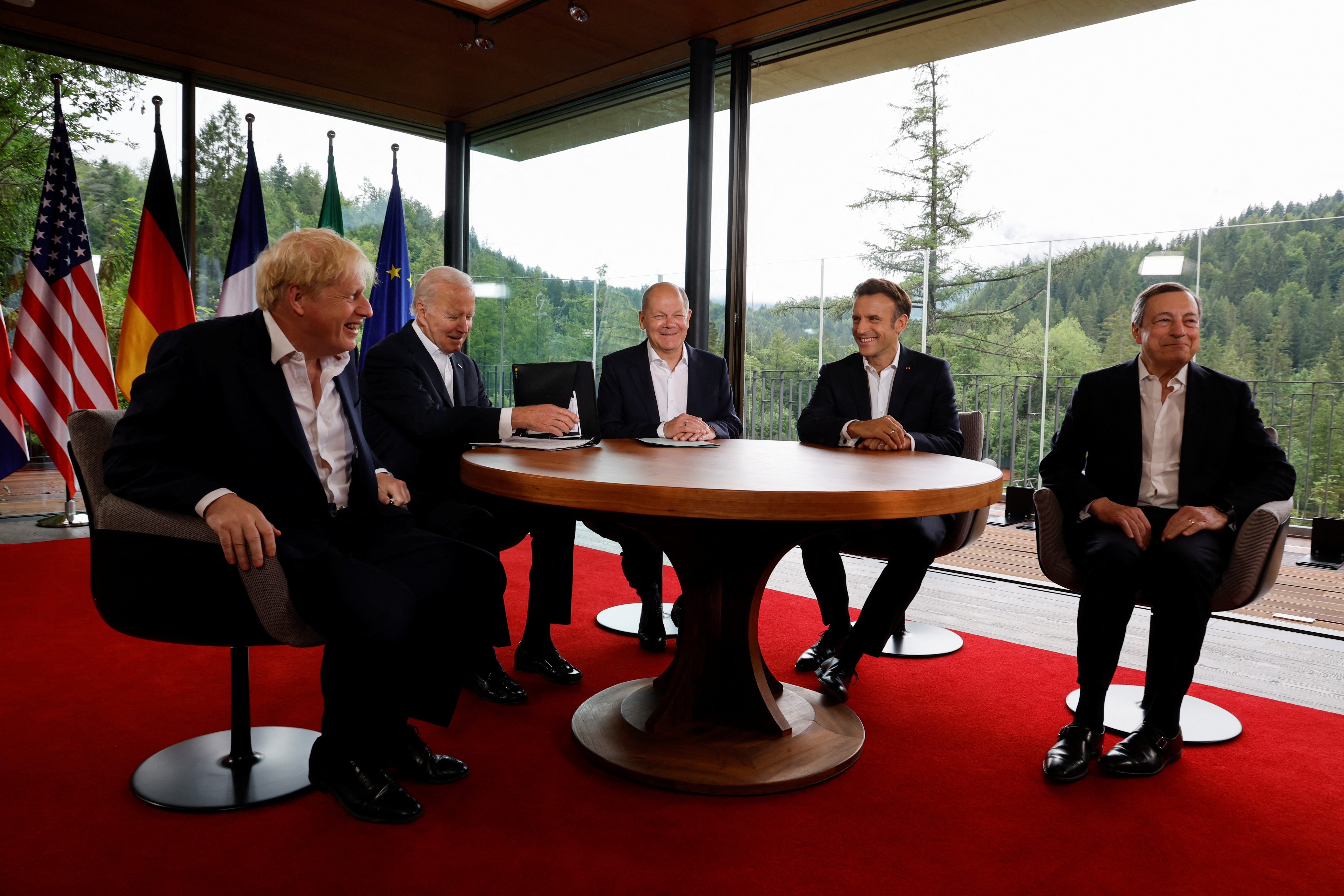
U.S. President Joe Biden meets with German Chancellor Olaf Scholz,
French President Emmanuel Macron, Italian Prime Minister Mario Draghi
and British Prime Minister Boris Johnson alongside the G7 leaders summit
at Bavaria's Schloss Elmau, near Garmisch-Partenkirchen, Germany June
28, 2022. REUTERS/Jonathan Ernst
The
leaders of the world's largest developed economies are exploring any
and all options to continue to bring economic, political and social
pressure to bear on Russia in hopes of finally breaking the back of the
violently aggressive bear that is pulverizing Ukraine, leaving its towns
and cities in smouldering ruins, creating millions of displaced people,
killing thousands of innocent civilians to satisfy Russia's rage over
an implacably determined neighbour that sees its future with the West,
struggling to leave the Kremlin's orbit.
Vladimir
Putin's pretext of concern over the salvation of Ukrainians from the
stranglehold of fascism that Ukraine's leaders purportedly exert on the
country, evidenced by its drive toward EU and NATO membership is thin
gruel as an explanation for mounting a violent invasion of its neighbour
no matter how the issue is dressed in terms of ideology and the
camouflage of Russian predation of territories that comprise part of
Ukraine's vast land holdings.
The
Group of Seven summit in Germany has discussed practical, workable
methods to reduce Russia's income from its sale of energy products,
profiting Russia's tremendous financial outlay to prosecute its conflict
in Ukraine. The functionality of a price cap tied to services allied to
trading in Russian oil and gas would see insurers barred from dealing
with shipments above the cap. Service providers based largely in the EU
and UK would see Russia finding it difficult to source large-scale
workarounds.
Price
limitations are foreseen to reduce the income the Kremlin now accesses
from oil and gas and affect inflation in energy costs for consuming
countries reliant on Russian energy. The plan would rely as well on
countries in Asia agreeing to accept such a price cap. Another issue is
enforcement as well as caution around potential side-effects. 90 percent
of Russian oil reaches the EU by ship, an embarrassment to the EU which
has relied heavily on Russian oil and gas.
There
are warnings from economists that to proceed with such a plan there is a
possibility of a recession being triggered in Europe. Recovering demand
from the COVID pandemic and global markets hungry for energy are
additional constraints that could hamper the plan. Although Russia is
selling less oil to Western countries and diminishing its gas exports,
it has seen no fall in revenues given the atmosphere of rising prices
erasing the loss to state finances.
Russia,
according to Western officials, has used its energy as a weapon to
penalize the countries in Europe that have isolated it and applied
crippling sanctions, by delivering less gas, for example, than
contracted for. Moscow's success in replacing its European importers
with willing replacement buyers in China and India has helped Russia out
in its income dilemma.
The
new import arrangements in Asia sees India importing Russian crude and
refining it, then selling it on the international market where Russian
oil refined into gasoline or blended with other crude makes it difficult
to determine its source. Countries hungry for energy have no
inclination to delve into the issue of the finished product's origins,
and that includes the United States, buying India's refined products
which originated in Russian crude.
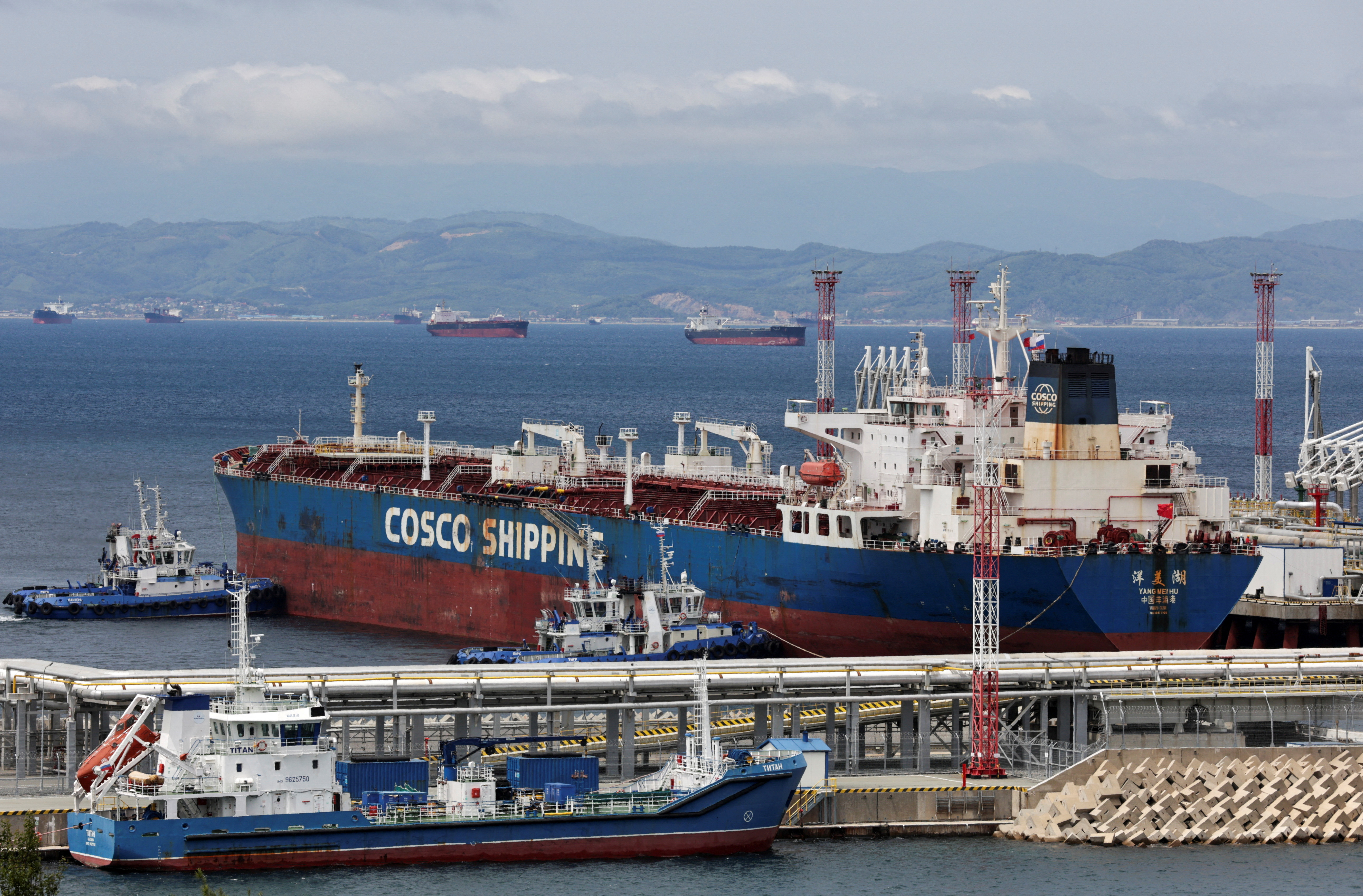
Yang Mei Hu oil products tanker owned by COSCO Shipping gets moored at
the crude oil terminal Kozmino on the shore of Nakhodka Bay near the
port city of Nakhodka, Russia June 13, 2022. REUTERS/Tatiana Meel/File
Photo
"You should not swallow informational tranquilizers. The situation, frankly speaking, will get worse for us."
"We need to view one million well-armed Ukrainian soldiers as a reality for the coming months."
"The
main thing in our business is have a sense of military-political
realism; if you go beyond that then the reality of history will hit you
so hard that you will not know what hit you."
"The
main deficiency of our military-political position is that we are in
full geopolitical solitude and -- however we don't want to admit it --
practically the whole world is against us -- and we need to get out of
this situation."
"The
desire to defend one's motherland in the sense that it exists in
Ukraine -- it really does exist there and they intend to fight to the
last."
Mikhail Khodaryonok, retired colonel, military analyst
"Time
is definitely working against the Russians. They're running out of
equipment. They're running out of particularly advanced missiles."
"And, of course, the Ukrainians are getting stronger almost every day."
Neil Melvin, RUSI think-tank, London
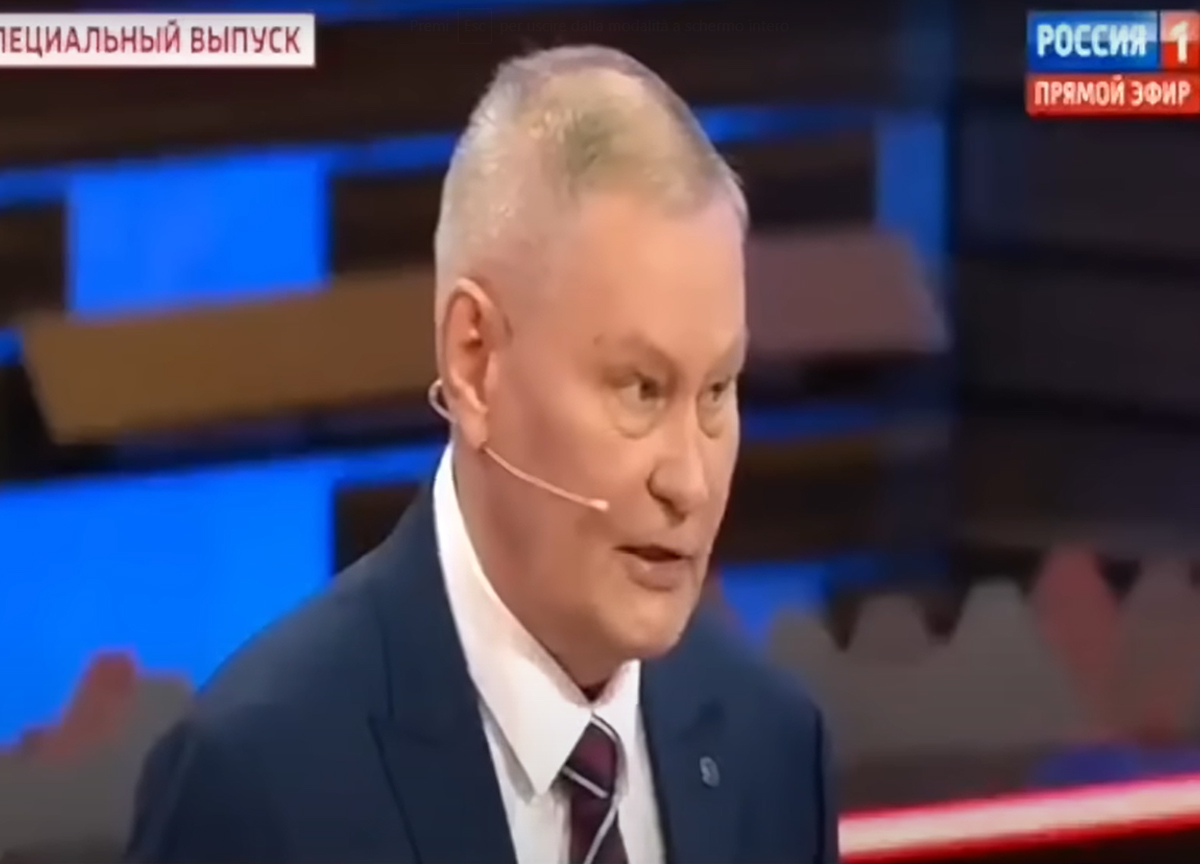
Viewers
on Russian state television were given a surprising message directly
from a highly respected Russian military analyst: Russia hasn't seen
anything yet; the war it launched in Ukraine is heading in a direction
the Kremlin never envisioned and while things appear bleak at the
present time, they will become much worse yet, for Russia. When the
retired colonel delivered his message to a captive audience accustomed
to Russian propaganda on Monday evening on the 60 Minutes talk show on Rossiya-1, its host Olga Skabeyeva, a pro-Kremlin television journalist, interrupted the military columnist for the gazeta.ru newspaper.
Khodaryonok
was also a graduate of one of Russia's elite military academies,
someone who stuck his neck out even before Vladimir Putin's 'special
military operation' went into motion, cautioning against the
advisability of propelling Russia into a hugely ill-advised conflict,
warning that this would not work out to Russia's national interests. In
his obvious defence is the fact that thousands of people have been
killed in this war which has displaced millions more. The fact is an
indelible fear of a serious confrontation between Russia and the United
States.
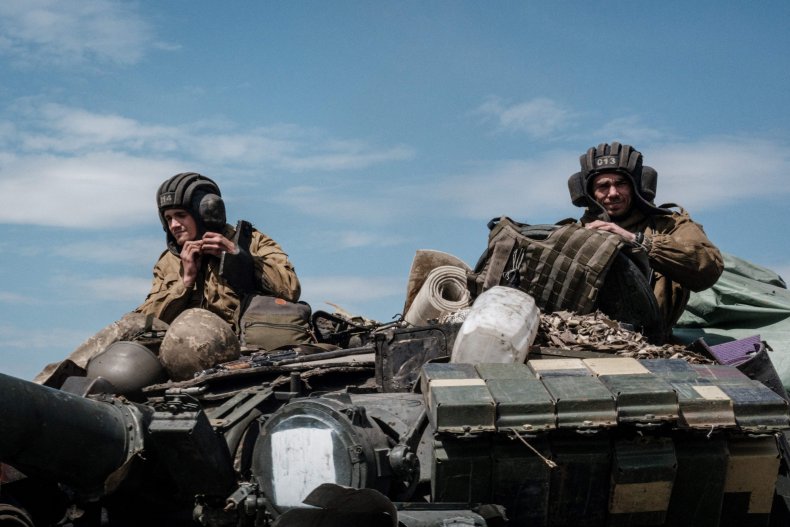
Military pundit Mikhail Kodaryonok told Russian
television that Moscow's forces faced an uphill battle against Ukrainian
troops in a rare moment of candor on Kremlin-backed TV. Above,
Ukrainian soldiers ride in tanks near Bakhmut, Ukraine, on May 12, 2022,
amid the Russian invasion of Ukraine. YASUYOSHI CHIBA/Getty Images
The
swiftness with which consequences occurred to the present was the unity
of the U.S.'s European allies and other states in condemning Russia's
invasion and agreeing jointly on punitive sanctions, straining Russia's
economy and making it an international outcast. Followed by Sweden and
Finland deciding in their best interests to apply for membership in the
U.S.led NATO military alliance. Fear that what has occurred to Ukraine
may also threaten them in future led to Vladimir Putin's most feared
scenario.
"Don't wave rockets in the direction of Finland for goodness sake -- it just looks rather funny",
said Khodaryonok. While insisting that everything is "under control",
Russian officials admit to the obvious; that their military operation is
being prolonged, against all expectations. Kremlin spokesman Dmitry
Peskov Tuesday stated that the invasion is "quite effective. The success of our military men is plain to see". Plainly emptily risible rhetoric.
The
most recent 'victory' celebrating Russian military strategic acumen --
the full control of Mariupol city -- or rather its ruins. If this is a
victory it seems a fairly abject one, even if it leads to Russia now
controlling the Black and Azov seas. For how long, after all...? Even
having finally done so by battering the city beyond recognition and
losing in the process a substantial number of their own servicemen, not
to mention war munitions, its plan to conquer the entire eastern Donbas
does not now look too secure.
Putin
now faces a choice, whether to send in additional troops and military
hardware replenishing his weakened forces in the face of modern Western
weaponry giving greater heft to Ukraine's combat power. Other military
analysts feel that the Russian invasion force faces unsustainable troop
and equipmnt losses while hopes for success in their mission are
narrowing. Western heavy guns, including M777 howitzers with longer
range than Russia's equivalents look to give Ukraine an edge.
A destroyed Russian tank in Malaya Rohan, a village outside Kharkiv that was occupied by the Russians, on Tuesday.Credit...Finbarr O'Reilly for The New York Times
"I think it's either going to be defeat with the current force position, or mobilize. I don't think there is any middle ground."
"The
Ukrainians are starting to outrange the Russians. That means they are
able to operate without the threat of counter-battery fire from the
Russians."
"Right
now, from what I can tell, Putin is just kicking the can down the road
and letting the situation within the Russian military actually get
worse."
"For now, this is looking like the Russians' last offensive."
Konrad Muzyka, director, Rochon consultancy, Poland-based
Russian President Vladimir Putin chairs a government
meeting via a video link at the Novo-Ogaryovo state residence outside
Moscow on Wednesday. Putin said Russia will only accept payments in
rubles for gas deliveries to "unfriendly countries," which include all
EU members and the U.S. Mikhail Klimentyev/Sputnik/AFP via Getty Images
"I have decided to implement ... a series of measures to switch payments
— we'll start with that — for our natural gas supplies to so-called
unfriendly countries into Russian rubles."
"Russia
will continue, of course, to supply natural gas in accordance with
volumes and prices ... fixed in previously concluded contracts."
"The changes will only affect the currency of payment, which will be changed to Russian rubles."
Russian President Vladimir Putin
"At
face value this appears to be an attempt to prop up the ruble by
compelling gas buyers to buy the previously freefalling currency in
order to pay."
Vinicius Romano, senior analyst, consultancy Rystad Energy
"It is unclear how easy it would be for European clients to switch their payments to rubles given the scale of these purchases."
"However, there are no sanctions in place that would prohibit payments of Russian gas in rubles."
Leon Izbicki, associate, consultancy Energy Aspects
AFP/Getty Images
Punishment
and its sister spite have aided Russia in drawing up a list of
'unfriendly' countries who just happen to correspond to any imposing
sanctions on Russia for its sudden invasion of Ukraine. Agreements with
companies and individuals from the marked countries must be approved by a
government commission. Some of the listed countries like the United
States and Norway make no purchases of Russian gas and some others
purchase so little they have no need of it whatever.
The
list Russia has compiled includes but is not exclusive to the United
States, European Union member states, Britain, Japan, Canada, Norway,
Singapore, South Korea, Switzerland and -- suppress that laugh --
Ukraine. Questions arise over whether this decision of Russia to impose
this kind of 'penalty' would breach contract regulations agreed in
euros.
"This would constitute a breach to payment rules included in the current contracts",
a senior Polish government source complained, adding there is no
intention on Poland's part to sign new contracts with Gazprom following
the current long-term agreement's expiration in 2022. "I can't imagine we will agree to change the terms of that", he stressed.
Punishing
Russia with sanctions and more sanctions for its misdeeds and now the
incalculable horrors of a full-on conflict with Ukraine has given
Vladimir Putin inspiration on pay-back. It's the steep price that comes
with dependency. Without Russia's natural resources bonanza paying the
freight for his technologically-updated war machinery inspiring him to
the belief it'll be a quick in-and-out to achieve his aspirations to
help himself to Ukraine's territories, his level of confidence would be
somewhat less.
In
the full confidence of European dependence on Russia's gas and oil, Mr.
Putin feels he's still holding aces. His rubles demand from
'unfriendly' countries sent prices for European gas into the
stratosphere on concerns the region's energy crunch would be
exacerbated. Heating homes and powering up industries is of vital
concern to any economy and so it is with Europe who in their fury over
Russia's invasion of Ukraine exacted their own punishment on Russia.
To the EU's consideration of whether to sanction the Russian energy anchor, Putin took the initiative to snap back: Buy our currency or forget about acquiring our gas.
Europe's need of Russian gas accounts for 40 percent of its total
usage. Fluctuating between 200 million to 800 million euros daily so far
in 2022. The demanded currency change has the potential to disrupt that
trade, sending wholesale gas prices 30 percent steeper after the
announcement.
Since
February 24 when Russia began its invasion of Ukraine, the Russian
currency has fallen about 20 percent. Major banks are wary of trading in
Russian assets and some buyers of Russian gas in the European Union
were unable to clarify how they would go about paying for gas under the
new demand. 58 percent of Gazprom's sales of natural gas to Europe and
other countries from January 27 were paid in euros, with U.S. dollars
accounting for 39 percent of gross sales and sterling 3 percent.
The
European Commission plans to end reliance on Russian supplies of gas
"well before 2030" and has started out with plans to cut its dependency
by two-thirds this year. EU states, given their dependency on Russia's
energy sector, however, have not agreed to sanction it. Germany's
Economy Minister plans to discuss with his European partners a potential
response to Moscow's gas payments announcement. Even while Germany's
Habeck stated that the demand represented a breach of delivery
contracts.
A Russian Gazprom vessel — a floating storage and
regasification unit — is seen anchored offshore in the Baltic Sea near
Kaliningrad, Russia, in early February. (Vitaly Nevar/Reuters)
"It's difficult, given the current economic situation, for Russian
authorities to abandon sales of oil and gas to the Western countries."
"You can say, 'We do not trust euros or dollars,' but economically it's the same operation. Money is money."
Marcel Salikhov, president, Institute for Energy and Finance, Moscow
"It is absolutely vital that the West is united now, because it is our unity now that will be much more effective in deterring any Russian aggression."
"[We are urging] our European friends [to be prepared to deploy sanctions as soon as any incursion develops]."
"[NATO is unwilling to send troops into Ukraine itself and has to] beware of doing things... that would constitute a pretext for Putin to
invade."
British Prime Minister Boris Johnson addressing Parliament
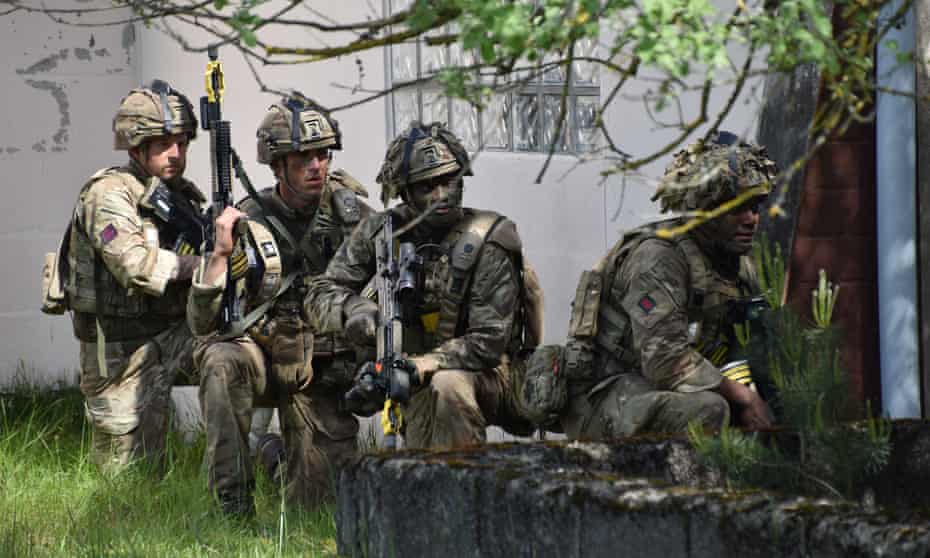
Soldiers from the
Royal Tank Regiment preparing for a deployment to Estonia at the
Sennelager training centre in Germany last June. Photograph: Mike Whitehurst/Ministry of Defence/Crown
Ukraine's President Volodymyr Zelensky urged the country to remain calm. Work was underway to arrange a meeting between himself and leaders of Russia, Germany and France. "There are no rose-coloured glasses, no childish illusions, everything is not simple ... But there is hope", he assured his nation.
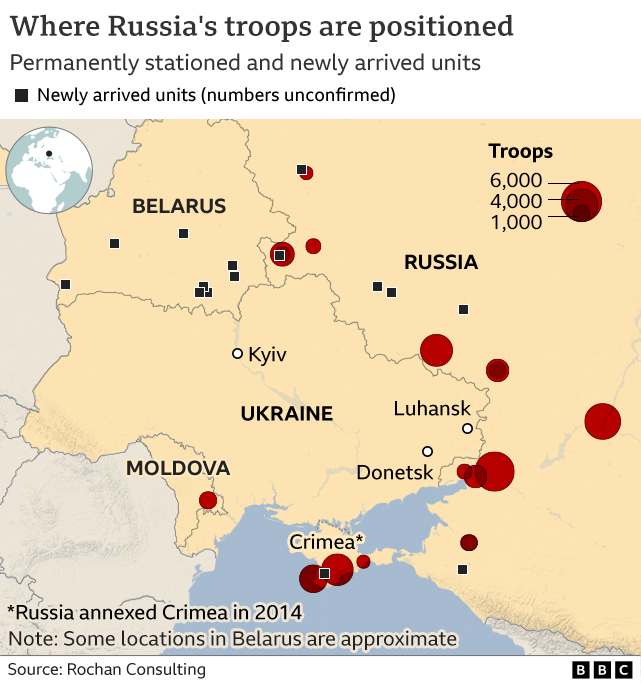
There are roughly 100,000 Russian troops stationed next to the Russian border with Ukraine. Tanks and other heavy military artillery are at the ready. Across Europe fears of an invasion are at a feverish level, even while Russia denies it has any such intention. War games, readiness rehearsals, what any country involves itself with, bringing along its neighbours with contiguous borders to Ukraine; Belarus and Kazakhstan. Friendly war games.
But the illusion of non-friendly intentions is there; unintentional or deliberate. Vladimir Putin does not indulge in the 'unintentional'. And the feeling of power that is instilled with all the attention with eyes swivelling his way seems to satisfy some inner compulsion that controls his ego. He imagines it is his destiny to leave a historical legacy of having re-united Eastern Europe once again under a Soviet-style banner of unity.
The power of communism is more than capable of fending off the intrusion of democratic alliances threatening the unity of the future plans of Greater Russia. Mr. Putin's schemes are a gambler's nightmare. Handing ultimatums to NATO and the United States; fulfill Russia's demands, without which there is no agreement on anything. Bringing Russia to the brink of invasion while denying any such intention, yet should the situation result in a forced withdrawal, there would be loss of 'face'. A red line.
Ukrainian soldiers in a front line trench near pro-Russian separatists take shelter from the extreme cold.
On the other hand, all NATO members have made it clear they have no intention of committing their own troops to enter Ukraine for the purpose of facing invading Russian troops. Many will provide military equipment and strategic combat advisers (at a cuber-distance), share intelligence and impose strict and punishing sanctions against Russia -- even against Vladimir Putin himself, isolating it politically, socially, economically.
So how pressing is the current need to invade Ukraine, to take Kyiv, to gain international disapproval in acquiring a territorial imperative success as a lesson to Baltic nations and others once under the Soviet thrall? Of course that the US. has stationed 8,500 troops on heightened alert is moderately alarming. Troops, however, that will not enter Ukraine in its defence. And what would 8,500 troops accomplish against 100,000; as a countervailing strategy?
NATO announcing "enhanced deterrence and defence" deployment of ships, fighter jets and troops for a show of heightened solidarity. Conviction is there, somewhat lacking in the final step of commitment. Yes, the West is united in its opposition to the perceived plans of Russian dominance over Ukraine, but its methodology of diplomatic pressure and sanction threats as opposed to kinetic response to a military assault cannot be so very reassuring to Ukraine...
"What we have seen in recent days ... only underscores our belief that if we are going to make progress, that we will need to engage in that dialogue [to attempt once again to conduct a nation-to-nation conversation with North Korea]."
Ned Price, spokesman, U.S.State Department
"[North Korea's latest launches were] further evidence that it continues to advance prohibited programs despite the international community's calls for diplomacy and de-nuclearization."
"[The State Department designated sanctions on North Korean individuals and Russian entities for] activities or transactions that have materially contributed to the proliferation of weapons of mass destruction or their means of delivery."
U.S. Under Secretary of the Treasury for Terrorism and Financial Intelligence, Brian Nelson
Kim Jong-un speaks to
officials at the Defence Development Exhibition, in Pyongyang, North
Korea, in this undated photo released on October 12, 2021 Photo by KCNA via Reuters
"Pyongyang's goading seems to have struck a chord among some officials in Seoul. Foreign Minister Chung Eui-yong in his pull-aside talks
October 5 with Secretary of State Antony Blinken stressed the need for
an end-of-war declaration as a “confidence-building measure” to engage
the Kim regime. Chung on a separate occasion said that the time is ripe
to consider easing sanctions on North Korea for the sake of
engagement—despite the regime's ongoing nuclear development and missile
testing. In a similar vein, Seoul's Unification Minister Lee In-young
vowed to push for inter-Korean talks before the end of this year."
Soo Kim, policy analyst, RAND Corporation, adjunct instructor, American University. October 14, 2021
Japan Times North Korea accuses Biden of 'provocation' and warns of 'consequences'
Sanctions were imposed on Wednesday by the United States on six North Koreans, a Russian and a Russian company said to be responsible for obtaining materiel from Russia and China to enable it to build its weapons programs. The sanctions come on the heels of a series of missile launches by North Korea; two alone in the past week.
The sanctions, according to the U.S. Treasury, are meant to prevent further advancement of North Korea's weapons programs, and to impede its efforts in proliferating weapons technologies. These sanctions represent the first imposed by the Biden administration to target North Korea's weapons programs. The administration has been unsuccessful in seeking engagement with Pyongyang meant to sway it away from producing nuclear bombs and missiles.
The administration remains firm in its intention to engage in diplomacy with the hermit kingdom. Six ballistic missiles were launched by North Korea's military since September, egregious violations of UN Security Council resolutions. Despite which, two key members of the UN Security Council, Russia and China, act in concert to protect China's protegee from UN-sponsored sanctions.
Choe Myong Hyon was singled out for sanctions for having worked to procure telecommunications-related equipment from Russia. She is based in Vladivostok as a representative of North Korea's Second Academy of Natural Sciences. Four North Korean representatives based in China of SANS-subordinate organizations were also hit by sanctions.
As has Sim Kwang Sok been, based in Dalian, working to procure steel alloys, as well as Kim Song Hun, based in Shenyang, accessing software and chemicals. As loyal North Koreans, based in friendly nations from whom materials critical to Pyongyang's plans for future technological development in nuclear and missile updates they pay the penalty for enablement when the true enablers go unpunished, seated on their UN thrones.
State media say the test, the eighth this year, was ‘successful’ as US urges Pyongyang to refrain from ‘provocations’.
This represents a general opinion site for its author. It also offers a space for the author to record her experiences and perceptions,both personal and public. This is rendered obvious by the content contained in the blog, but the space is here inviting me to write. And so I do.