Wednesday, January 18, 2023

Latvian Insecurity in Russia's Orbit

"Per capita, we are probably the state that gives the most weapons to Ukraine so that they can fight for us.:"
"When my 90-year-old parents watch the television news, when they see the horrors of the war in Ukraine, the mass graves, the burnt-out buildings, they see the Soviet occupiers again."
"They remember their culture reduced to a folkloric theme, the dozens of thousands of innocent people sent to the Gulag, the Second World War which decimated their people."
"These traumas come to haunt the entire population."
"Putin killed minority rights for Russian speakers by manipulating the issue for expansion purposes."
Nils Muiznieks, former Latvian cabinet minister

"The Russian invasion of Ukraine revives two completely different perceptions of history. For many, it is a continuation of World War Two."
"For Russian speakers, the victory monuments are symbols of their parents and grandparents who liberated the country from the Nazis. For the ethnic Latvians, the Soviet liberation is the beginning of a terrible occupation."
"Until now, we avoided ethnic violence. But the war completely undermined this. What Putin did, played very well in the hands of nationalists."
"It is far from perfect but enormous progress was made. We cannot afford to lose what we have gained."
Boris Cilevics, Russian speaking Latvian community leader, former member of Latvian Parliament
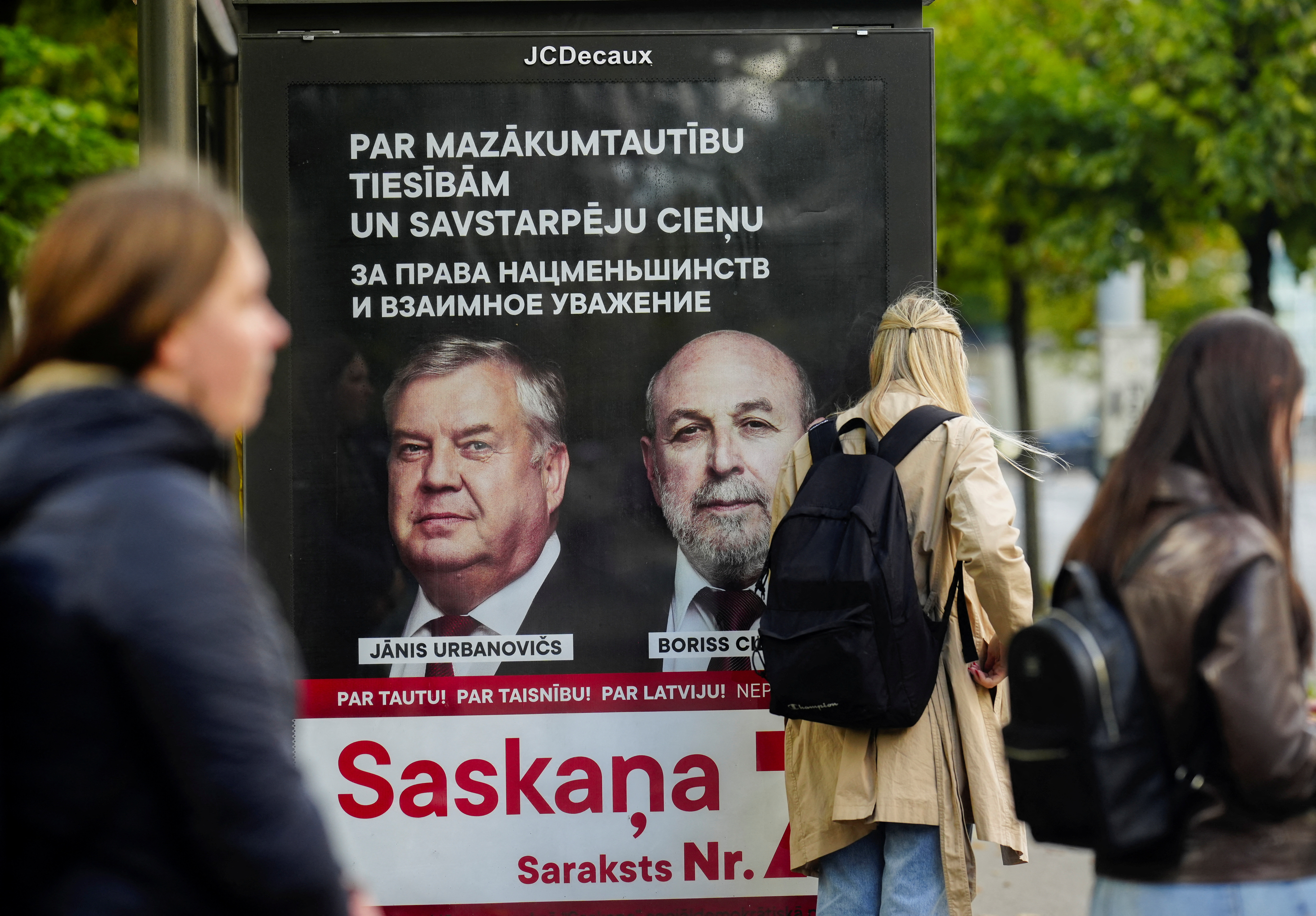
Latvian political parties campaign before general election in Riga
 An election campaign poster depicting leaders of Harmony party is seen in a public bus stop in Riga, Latvia September 28, 2022. REUTERS/Ints Kalnins
 
During the time of the Soviet Union's outreach to its satellites, there was a migration of Russians taking up residence in countries that formed part of the USSR. Now, those diverse nations are fully independent of Russia, but all of them -- particularly the Baltic nations -- are, and always have been, acutely aware of their vulnerable position and fear that they will once again be inducted -- violently -- back into what is now the Russian Federation. Vladimir Putin likes to use the fact that those countries host ethnic Russians and thus, Russia has a responsibility to the welfare of Russians living in the near abroad. 

He made his point in Georgia when he helped to separate two of its provinces and again in Ukraine when he declared the Crimean peninsula to be part of Russia. More latterly, he has subsumed in theory four huge Ukrainian provinces into greater Russia during the Kremlin's 'special military operation' in Ukraine. Latvia has latterly become extremely aware of its vulnerability with the war raging in Ukraine with Russian and Belarusian borders uncomfortably close to its own.
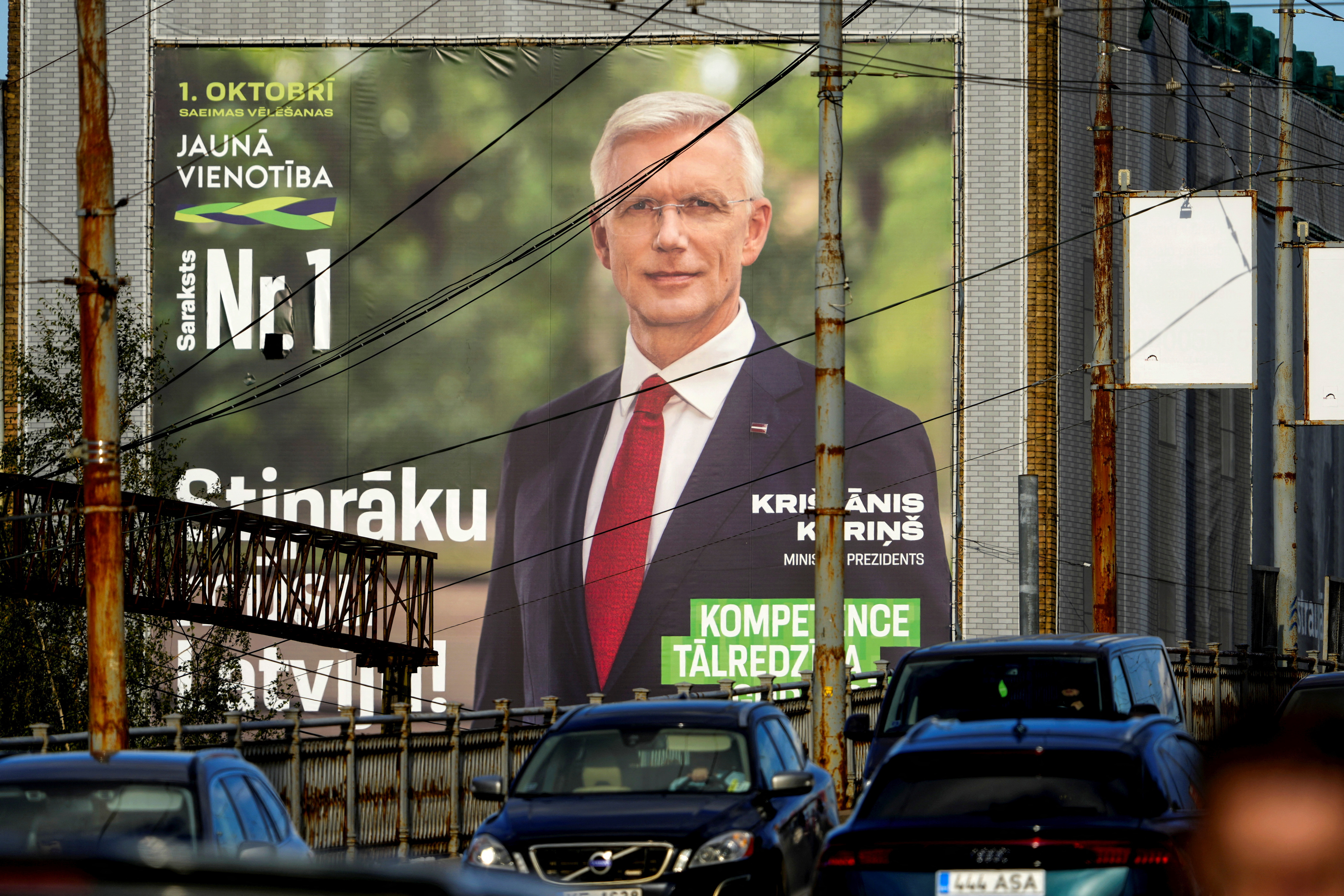
 
Latvian political parties campaign before general election in Riga
Motorists drive past a giant election campaign poster depicting Latvian Prime Minister Krisjanis Karins of New Unity party in Riga, Latvia September 28, 2022. REUTERS/Ints Kalnins
 
Latvia has the slight comfort of being part of NATO with a Canadian NATO troop presence in the face of an increasingly aggressive Russia. It is also a member of the European Union, but these salutary conditions cannot change its geographic presence as a next-door neighbour to a country whose appetite for domination cannot be appeased. 

The brutality of the Russian military in Ukraine, the mentality that sneers at the conventions of war observed by civilized nations that has Moscow ordering the bombing of civilian enclaves, of cities well outside the zone of conflict, of hospitals, theatres, shopping malls, apartment blocks, schools has engendered a lashback within Latvia. A nation of three million people, a Russian speaking minority accounts for a third of the population. Up to the present the two ethnicities have been frostily accommodating.

It hasn't helped that the Russian expatriates have never sought to integrate themselves into Latvian society. Where they inhabit parts of Latvia becomes a Russian enclave with Latvian seldom spoken and Russian language dominating.  In the course of the last year, since the Russian invasion on February 24, nationalism has awoken from a slumber. Accommodation of the Russian-speaking minority no longer predominates; 30 years of patience, waiting for that minority to become Latvian has outworn its time.

A poll taken in the summer of 2022 saw 25 percent of Russian speakers opposed to the war, 25 percent supported it, and 50 percent declared themselves undecided, a reflection of Russian propaganda. In the past year over 30 criminal proceedings have been initiated relating to inciting hatred and supporting Russian aggression. The Latvian Parliament passed a law prohibiting the teaching of Russian in schools.

Government websites now appear in Latvian only Television channels originating in Russia are banned. "I am personally against these laws, but my party and I voted for them, social pressure was simply too strong", explained Martin Bondars a former member of the Saeima. TV Dozhd, the sole remaining Russian independent television channel, was shut down after five months on air, accused of showing content sympathetic to the invasion of Ukraine.

The government of Latvia closed off its borders to Russian citizen, inclusive of young men absenting themselves from mobilization -- although Russian dissidents and independent journalists are welcome. These decisions don't come easily, since Latvia is very well aware of the investing power of Russia in maintaining the Latvian economy. 

Last August a towering Soviet-era obelisk in commemoration of the Red Army victory over Nazi Germany was toppled in a series of monuments pulled down throughout Eastern Europe as hostility toward Russia grows. 
 
Things did change in Latvia among the ethnic Russian population. Younger generations have become fluent in Latvian; more interested in European capitals than they are in Moscow. A bare fifth of the Russian population could speak some Latvian in 1989, but by 2022, 22 percent of the Russian community was unable to speak Latvian.
 
Ukrainian parents gathered in the auditorium of Middle School 10 in Daugavpils, Latvia. They had arrived just days earlier to the city as refugees. These Ukrainian refugees in Latvia needed to choose a temporary secondary school for their uprooted children. In the auditorium of a middle school, they listened as local educators described their options and tried to make them feel at home.
The refugee orientation in the auditorium of Middle School 10. The projector is showing the Latvian and Ukrainian flags. Politico
"In the context of this senseless war, I have no moral authority to protest against these anti-Russian measures."
"I met Latvian speakers my own age when my parents sent me to art school in the city centre. I was so shy. I didn't care speak Latvian. It took years before I became fluent."
"I never lived there [Russia]. I am not a Russian citizen. I am a Russophone Latvian, a European."
"Putin is the biggest Russophobe that ever existed."
Igor Gubenko, 37, Russian-speaking philosophy professor, University of Riga


Labels: , ,

Saturday, May 14, 2022

Russia's Near-Abroad

"What we see in Ukraine, and the way Russia is waging war -- means that this strategy [NATO's batlegroup 'tripwires' meant to forestall Russia's territorial ambitions] needs to be adjusted."
"We do have to reassess the risk posture and how much we need to stand together against potential Russian incursions and aggression."
"Where the Russian military goes, not only is civilian infrastructure destroyed, but civilians are shot, maimed, murdered, raped, tortured, deported, killed."
"That means we need to have a more robust position in the Baltics to prevent an attack from occurring in the first place."
Latvian Prime Minister Arturs Krisjanis Karins

"Finland must apply for NATO membership without delay."
"We hope that the national steps still needed to make this decision will be taken rapidly within the next few days."
Finnish President Sauli Niinisto/Prime Minister Sanna Marin

"Definitely [Finland's accession to NATO poses a direct threat to Russia]."
"Definitely NATO expansion does not make our continent more stable and secure."
This cannot fail to arouse our regret, and is a reason for corresponding symmetrical responses on our side."
Dmitry Peskov, Kremlin spokesman 
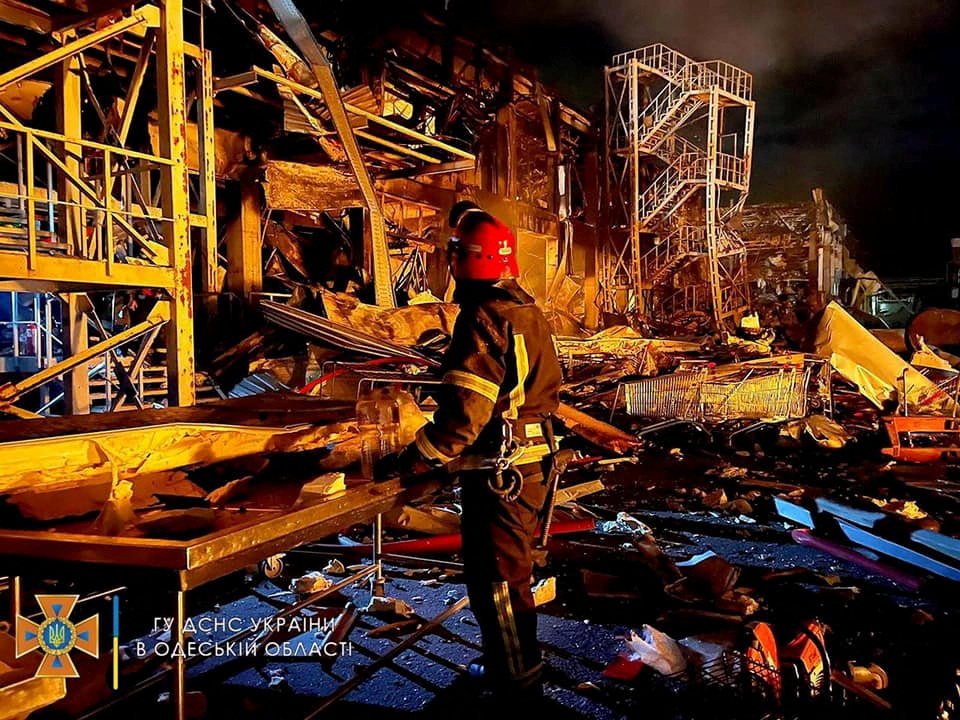
First responders work at the site of a missile strike, in Odesa
A first responder works at the site of a missile strike, amid Russia's invasion of Ukraine, in Odesa, Ukraine in this handout
 
That 'symmetrical responses' phrase was attention-grabbing. Analysts might point out that past situations spoke to potential counter-measures the Kremlin could consider in the event that its neighbours decided to move closer to the West and to join NATO, a prospect that makes the Russian Federation very nervous indeed. And one that reputedly spurred Vladimir Putin to scorn Ukraine as a puppet of the West controlled by fascists which obligated Russia to invade and bring war to Ukraine, a stunning course of punishment.

Responses on a wider basis -- setting aside the prospect of a Russian invasion of all its neighbours simultaneously rather than the feared and anticipated sequentially at a time when the Russian military finds itself bogged down in one country -- could conceivably consist alternately of Russia placing nuclear-armed missiles on the Baltic Seacoast. When asked whether Finland might, by joining NATO, provoke Russia, its President said: "My response would be that you caused this. Look at the mirror".

The expectation of other NATO allies is that Finland, along with Sweden which has also stated its intention to apply for NATO membership, would be quickly granted membership. That would result in an increased troop presence to defend the Nordic region during the period of ratification that would take approximately a year. The irony is that Ukraine which has long sought NATO membership and has been put off for fear of aggravating Russia, was targeted with a "special military operation" to prevent just such NATO expansion.
 
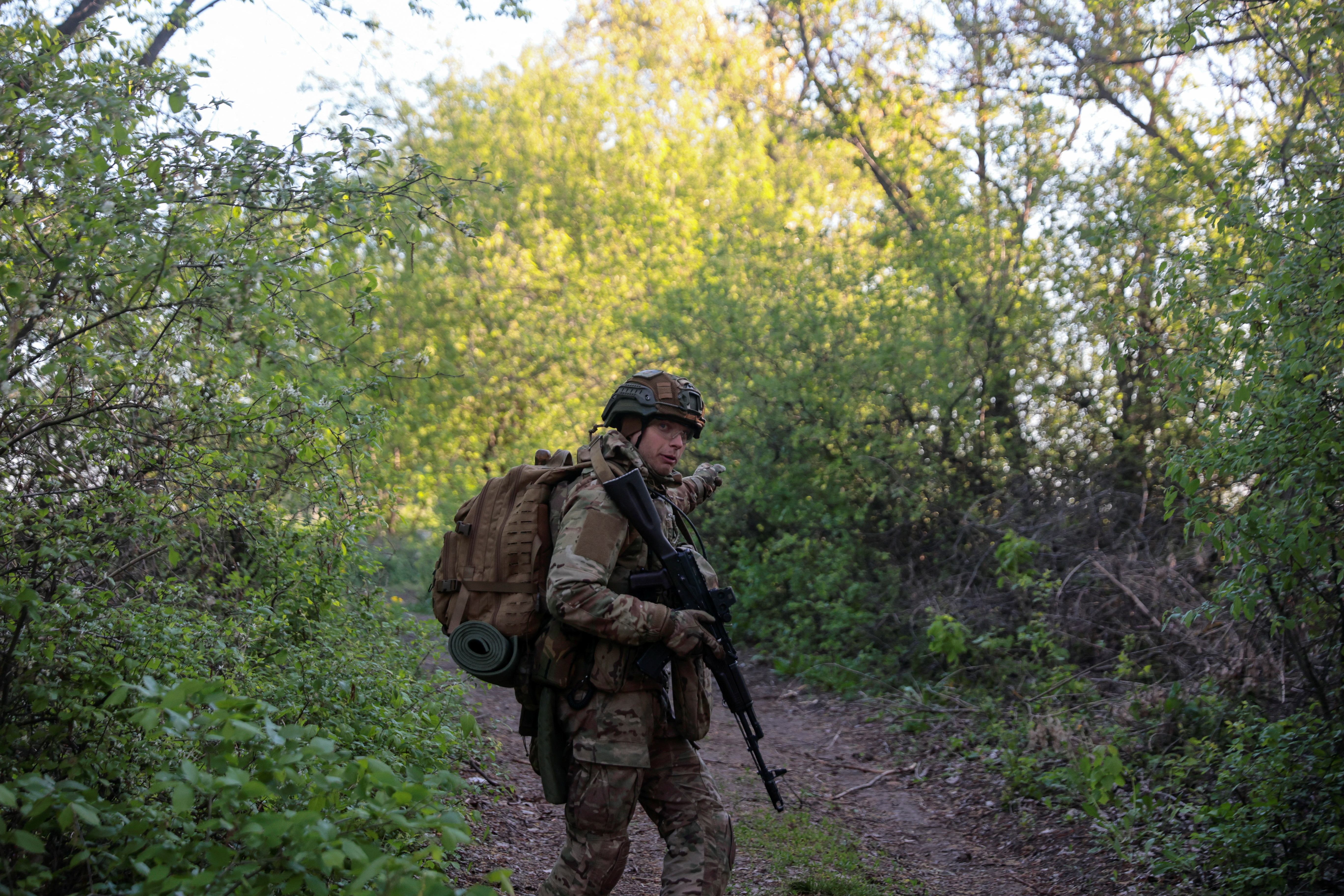
Russia's attack on Ukraine continues, in Kharkiv region
A Ukrainian serviceman patrols an area, as Russia's attack on Ukraine continues, in an undisclosed location in Kharkiv Region   Reuters
 
As the two largest EU countries to  join NATO to the present, Finland's 1,300-km border with Russia would double the frontier between NATO and Russia. NATO guards would be placed with this new alliance, a mere few hours' drive from the northern outskirts of St.Petersburg. As the world's sole superpower European nations feeling the stress and strain of a silent, looming threat from Russia, seek the protection of the world's largest and best-armed military, that of the United States.

Even while Moscow regards these events as a direct threat to its own influence and security in the region, it was that pre-emptive move to demonstrate that it would not tolerate NATO's creeping presence in the Russian near-abroad that motivated the Ukrainian invasion; the extended reach of which has been to shock, unnerve and convince Russia's neighbours that they're in dire need of the backing of an international coalition to give Russia pause over extending its 'special military operations' elsewhere.

And all will have taken note that Ukraine, though not a NATO member-nation, has been amply supported  with the supply of advanced technological weaponry which, together with the Ukraine military's fighting spirit in countering the Russian presence with a strong defense, has now transformed that hugely successful defense into an admirable counter-offensive, pushing Russian troops back towrd their own border, and even threatening Russian towns with the same treatment Russia meted out to Ukrainian towns.

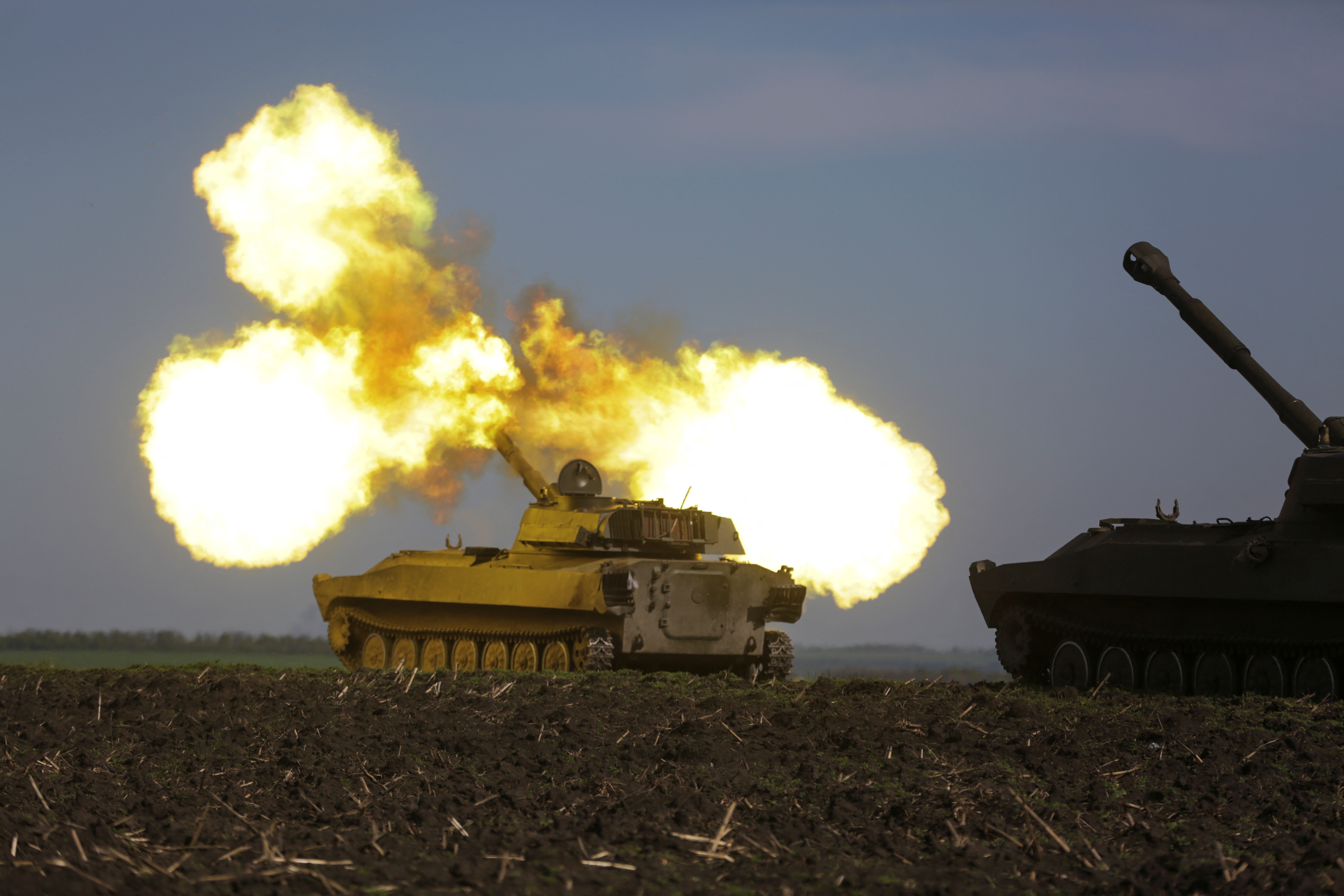
Russia's attack on Ukraine continues, in Kharkiv region
Ukrainian service members fire with a self-propelled howitzer 2S1 Gvozdika, as Russia's attack on Ukraine continues, in unknown location in Kharkiv region, Ukraine May 7, 2022. REUTERS/Serhii Nuzhnenko


Labels: , , , , , ,

Saturday, March 19, 2022

Heroic Pride in Latvian SS Battalion

Heroic Pride in Latvian SS Battalion

"They are honouring an SS unit whose members were involved in atrocities."
"This year in particular there is an amazing lack of understanding of the damage a march like this does to the unity of NATO and the nations standing for democracy."
Marvin Rotrand, national director, B'nai Brith Canada 

"Canada has consistently supported Latvia's freedom and independence, and condemns those who would co-opt those sentiments to promote hatred, extremism, and division."
"To our understanding, these events are neither sanctioned nor attended by the Latvian government."
Global Affairs Canada

"[It is] utterly sad [the parade was back on in Riga, Latvia]."
"That they would this year again be gifted the historic centre of the capital is a folly rife with poor judgment and even poorer ethics."
Dovid Katz, editor, Defending History, Holocaust journal studies
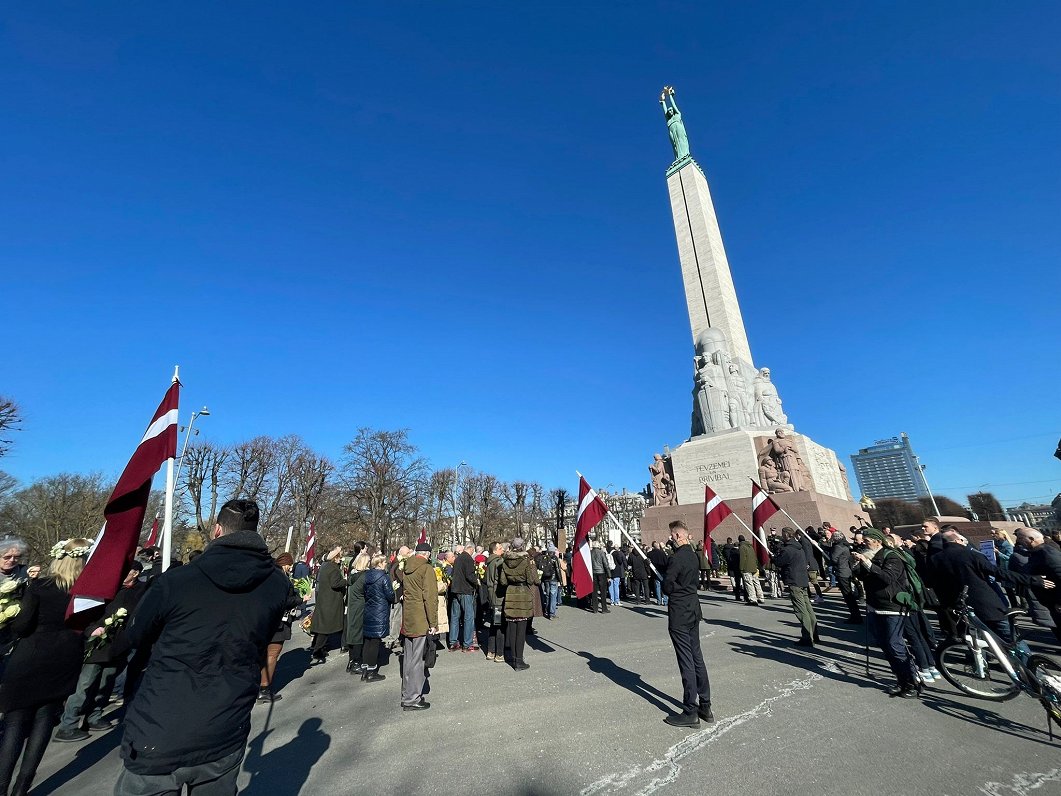
A veteran of the Latvian Legion, a force that was commanded by the German Nazi Waffen-SS during the Second World War, places flowers at the Monument of Freedom in Riga, Latvia on March 16, 2019. Some see the parade as glorifying Nazism because the Legion, founded in 1943, was commanded by Germany's Waffen-SS, the armed wing of the Nazi party's Schutzstaffel SS.
It is nothing but heedless at this time when Russia has invaded Ukraine, an East European neighbour of both, under the pretext of rescuing Ukrainians from the 'nazis' and 'racists' and 'right-wing' gangs Moscow claims govern Ukraine. There is also the presence of the Azov Division along with other far-right Ukrainian militia groups who revere their alliance with Nazi Germany as adjuncts to the Nazi SS battalions that fought during the Second World War, and of course, slaughtered European Jews.

The yearly commemoration meant to honour Latvia's seconded citizens to fight alongside regular German SS groups, by veterans and their families and supporters of the ethnic Latvian SS battalions is not an official Latvian event, but the government of Latvia does nothing to deter the yearly celebration, issuing a permit for the parade to proceed, attended by several hundred people. The intervention in the past two years was by nature, when COVID restrictions cancelled the event.

Latvia's SS Legion being honoured to this very day for its dedication to the Nazi ideology, bringing glory in its participation in war and mass murder should be a matter of shame, but evidently it is not. Latvian TV reported the event, attended by hundreds of participants on Wednesday. It is hardly surprising that Jewish groups continue to condemn the yearly support of Hitler's policies and exploits, glorifying those who took part in the Holocaust. 

It does give heft to Vladimir Putin's spurious assertions, however, that the Russian military had a moral obligation to invade Ukraine for the purpose of "de-Nazifying" the country. There is also the unfortunate reality that in the years since World War Two ended, eastern European nations saw fit to build monuments to the nationalist leaders who were happy to fight the Soviet Union; many of the leaders being Nazi collaborators, some actively participating in the mass butchery of the Holocaust. 
 
SS units were drawn from the ethnic populations in Lithuania, Latvia, Ukraine and Estonia.

Officials in Latvia praise the SS; their argument is that members of the legion are to be viewed as national heroes for fighting Russia and none among them were involved in the Holocaust. When, in fact, in those countries occupied by Germany during the war, it was not the least bit difficult to find the historical reality documenting deadly mass pogroms carried out by these same groups against their nationals who happened to be Jews.
 
Photo: Ivans Milovs/Latvijas Televīzija
 
"The pride of the Latvian people and of the state", was how Latvian Defence Minister Artiz Pabriks referred to his country's SS members. "It is our duty to honour these Latvian patriots from the depths of our soul." A sentiment and statement that Canadian government and military officials decided not to condemn. Even while, through its NATO membership, Canada has a contingent of 540 troops and military trainers in Latvia to 'guard against' any potential Russian plans to invade the Baltics.

In 2019, Global Affairs Canada through its spokesperson stated that Canada was "strongly opposed to the glorification of Nazism and all forms of racism, racial discrimination, xenophobia, intolerance and extremism. That is why we condemn the parade to commemorate the Latvian SS Brigade held in Latvia on March 16th". Now there is silence on the ongoing issue, coinciding with the tension in Europe and beyond, with Russia's military campaign in Ukraine.

The reality is that the Latvian SS Legion was represented by hard-core Nazi collaborators who took their place with enthusiastic pride as helpers in the Holocaust. Viktors Arajs, a Legion officer liked to refer to himself as "Arajs, the Latvian Jew-killer". The best way to kill Jewish babies, according to him, was simply to toss a Jewish child into the air and shoot them in mid-air, avoiding potential ricochets.

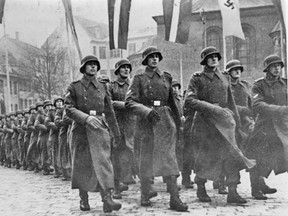
This photo from the Second World War shows Latvian SS members.
This photo from the Second World War shows Latvian SS members


Labels: , , , ,

Tuesday, November 09, 2021

The Shameful Conduct of the Canadian Military


"Do we have a clear expression of CAF policy toward this group [the Azov Battalion]?" 
"This may or may not prompt questions, but we need to be ready and not come across as being taken by surprise.”
Chris Henderson, then assistant deputy minister for public affair
 
"In Ukraine, the Azov Battalion has recruited foreign fighters motivated by white supremacy and neo-Nazi beliefs, including many from the West, to join its ranks and receive training, indoctrination and instruction in irregular warfare."
Soufan Report
 
“Given the fact that the [Latvian SS] fought for a victory of the Third Reich, the most genocidal regime in history, and that among those serving in it were active participants in the mass murder of Latvian Jewry, as well as of German and Austrian Jews deported by the Nazis to Riga, such comments are incomprehensible, let alone deeply offensive, coming from a senior minister of a country with full membership in the European Union and NATO."
Efraim Zuroff of the Simon Wiesenthal Center
File photo: A news broadcast by German ZDF station showed soldiers of the Ukraine Azov Battalion with nazi symbols on their helmets.
A news broadcast by German ZDF station showed soldiers of the Ukraine Azov Battalion with nazi symbols on their helmets. Photo by Files /ZDF station

 Once again the Canadian Armed Forces' top brass has been revealed to be strangely oblivious to the fallout of matters they engage in without due thought to appropriate behaviour and their consequences. The Canadian public has been treated to a full-throated cry of desperation from female CAF members who have suffered sexual harassment and violence and when they bring the situation to the attention of military authorities, the issue is set aside, the victims of sexual violence left to steam in frustration, their abusers free to continue their upward trajectory toward leadership.

More latterly, the public has been reminded once again of the unsavoury contacts the Canadian Armed Forces leadership, along with government diplomats engage in through casual and personal contact with self-declared admirers of fascism and neo-Nazis abroad. Canada has a 'special' relationship with Ukraine through Canada's membership in NATO which has pledged to protect Ukraine from the intentions of the Kremlin to re-forge a union with Ukraine which the current government of Ukraine has no interest in and which Moscow has pursued with a vengeance.

Another factor in Canada's commitment to military partnership with Ukraine is the lobbying presence of large number of Ukrainian-Canadians urging a more firm alliance between Canada and Ukraine. An incidental but telling issue took place a few years ago when the Russian Embassy in Canada brought to the light of day, Canada's then-minister of Foreign Affairs and currently deputy Prime Minister and heir apparent to head the Liberal government's Ukrainian heritage. Chrystia Freeland's grandfather, it was revealed, was an ardent Nazi collaborator as the editor of a Ukrainian newspaper during WWII.

In his newspaper, Nazi propaganda found its place, along with vicious anti-Semitic sentiments; in no small measure doing his part in aiding and abetting fascist Germany in its dehumanization of European Jewry on their way to total genocide. So the Ukrainian community in Canada, has great influence in the country. However, since Canada is a country comprised of immigrant populations, a great congregation of people from all over the world, so too do Chinese-Canadians, Indian-Canadians, Italian-Canadians and other ethnic/cultural groups have influence, as they should, as Canadians.

In the latest revelations it would appear that Canadian officials and members of the military met with and were briefed by leaders from the Ukrainian Azov Battalion; neither the officers nor the diplomats involved voiced any objection to the meeting although they were briefed befirehand that they would be meeting with overt Nazi sympathizers. Photographs were taken of the meeting, which were used for propaganda purposes by the Azov Battalion online, stating that the Canadian delegation had expressed "hopes for further fruitful cooperation".
 
The Canadian Forces have decided, as a result of public embarrassment when an Ottawa newspaper revealing the unsavoury aspects of CAF interactions with foreign military forces, to mount a review of the issue. A review undertaken in response to the latest revelations of Canadian diplomats and military personnel meeting with Azov Battalion members while in Ukraine; a decision that arrived just as a Jewish group in Ukraine circulated a new video of Ukrainian paratroopers singing a song to honour Stepan Bandera who was an infamous anti-Semite and Nazi collaborator whose group was linked to the mass murder of over 100,000 Jews and Poles during the Second World War.
 
These new revelations fold neatly into the near past when senior Canadian Forces leaders took a pass on condemning glorification of Nazi collaborators in Latvia and Ukraine, where Canadian troops are conducting training sessions. The Latvian Minister of Defence Artis Pabriks publicly praised members of the Latvian SS who fought for the Nazis, proudly stating them to be "the pride of the Latvian people and of the state" and that his country would not "allow anyone to discredit their memory".

As a friend of Pabriks, then-defence minister Harjit Sajjan refused to comment, much less to condemn glorification of the SS unit. Canadian generals saw no reason to break their silence, at the 2019 event and declaration. The Latvian SS included personnel who took part in the wholesale murder of Jews during the Holocaust. Members of the unit were among the last defenders of the Nazi regime in Berlin.

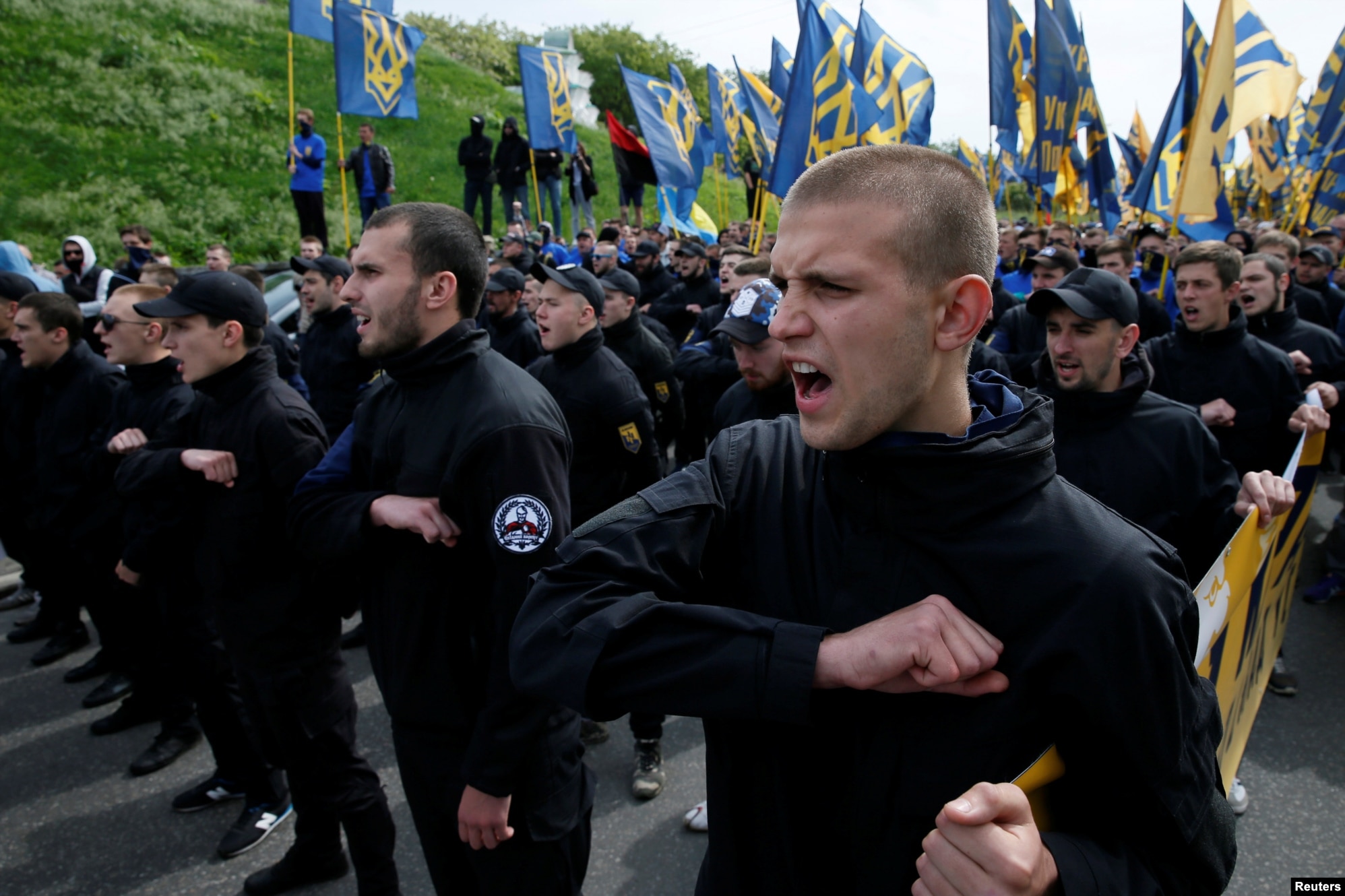
Members of the Azov Battalion attend a protest against local elections in separatist-held areas of eastern Ukraine in Kyiv on May 20, 2016.
Members of the Azov Battalion attend a protest against local elections in separatist-held areas of eastern Ukraine in Kyiv on May 20, 2016.   Reuters
 
Just coincidentally, as though underscoring the lax attitude and moral and ethical failings of the military hierarchy in Canada and government leaders disinterestedly overseeing their conduct in such matters, Canada’s training mission to Iraq was brought under scrutiny when it was revealed that Canadian soldiers complained in 2018 to their commanders that among the Iraqi troops they were training were war criminals who enjoyed sharing videos of their atrocities, including executing prisoners and raping a woman to death.

Labels: , , , , , , , ,

Wednesday, January 29, 2020

Nazi Collaborators, Eastern Europe

"This is like a nightmare."
"This is all happening once again in the lifetime of survivors."
"It has to be tearing their hearts out."
Bernie Farber, former chief executive officer, Canadian Jewish Congress

"[Such events as Ukraine's honouring of Nazi collaborators are] internal issues of Ukrainian politics."
"[Israel's decision to condemn such parades is] counterproductive."
Gennady Nadolenko, head, Ukraine diplomatic mission, Israel

"We must challenge all those who distort the historical record on governments, military units or organizations that fought with, supported or sympathized with the Nazis during World War II."
"This includes government leaders who acquiesce in, or fail to condemn, a process of Nazi glorification that amounts to Holocaust distortion."
"Those who glorify the record of such organizations or units cannot dismiss criticism as 'fake news'."
Michael Mostyn, CEO, B'nai Brith Canada
Veterans of the Latvian Legion, a force that was commanded by the German Nazi Waffen SS during WWII, and their sympathizers carry flowers as they walk to the Monument of Freedom in Riga, Latvia on March 16, 2016 to commemorate a key 1944 battle in their ultimately failed attempt to stem a Soviet advance. Jewish groups, Moscow and some in Latvia's ethnic-Russian community see the parade as glorifying Nazism because the Legion, founded in 1943, was commanded by Germany's Waffen SS, the armed wing of the Nazi party's Schutzstaffel SS (Protective Squadron). / AFP / afp / Ilmars ZnotinsILMARS ZNOTINS / AFP/Getty Images

For Jews around the world the 75th anniversary of the Soviet Red Army's liberation of Poland's Auschwitz-Birkenau death camp where Nazi Germany engineered the death of almost a million Jews, along with Roma, Soviet POWs, Polish political dissenters, gays, the very thought that Latvians, Lithuanians, Ukrainians and Poles would in the 21st Century, celebrate their national heroes who were Nazi collaborators is unthinkable.

Yet the reality is that throughout Eastern Europe countries are celebrating their nationals who collaborated with the Third Reich and took active participation in the rounding up and murder of Jews. Torchlight parades were held in a number of cities in Ukraine early this month in honour of Stepan Bandera, a nationalist Ukrainian and Nazi collaborator involved in the killing of thousands of Jews and Poles. Despite which, Ukraine sponsors such events celebrating Nazi collaborators with links to the Holocaust.

A school was named in Lithuania for Jonas Noreika whose own family agrees was involved in the killing of Jews. A Ukrainian diplomat talked about punishing "k----", while posing for photographs with a cake baked in the shape of Hitler's memoir Mein Kampf, and blaming Jews for the Second World War. Once a minor kerfuffle passed, when he was condemned by Jewish groups, he was reinstated to his diplomatic position.

For the approximately 200 Canadian military trainers currently deployed to Ukraine, it is likely that on the first of January they would have witnessed a torch lit procession. Throughout Kiev and numerous other towns in Western Ukraine, thousands of civilians took to the streets – not to usher in the New Year – but to celebrate the 110th anniversary of the birth of a man named Stepan Bandera.  Scott Taylor, Canadian Military Magazine

Estonia, Latvia and Ukraine have all held parades in honour of those who fought in Nazi SS units. The Latvian SS units who fought for the Nazis in the Second World War were praised by Latvian Defence Minister Artis Pabrike in December, who spoke of them as "the pride of the Latvian people and of the state". One of the unit's officers, Viktors Arajs, participated in the murder of 26,000 Jews with his unit. At a dinner party in Riga he entertained guests with his method of killing Jewish babies.

Throwing the babies into the air, then shooting them would avoid any ricochets that might occur if the babies were shot while lying on the ground. Eastern European nations such as Latvia, Ukraine and Lithuania are involved in rebuiilding their national identities, "rediscovering" individuals from the 1940s to elevate them to the status of national heroes, according to Holocaust researcher, Professor Per Anders Rudling.

Latvian Herbert Cukurs was a key member in the Arajs Kommando, known as the "Butcher of Riga". In 2014, the Israeli government raised concerns relating to a musical performed in Latvia celebrating his life, that of a Nazi war criminal whom Holocaust survivors linked to the murder of Jews. Over 50 members of the U.S. Congress in 2018 condemned Ukraine's efforts to glorify leaders of the Ukrainian Insurgent Army, along with the 14th SS Galizien Division, comprised of Ukrainian volunteers.

"It's particularly troubling that much of the Nazi glorification in Ukraine is government-supported", the letter stated. Poland passed legislation to make it illegal to accuse Poles of any complicity in the Holocaust when the simple reality is that fascist Germany felt confident in placing a number of forced labour and death camps in Poland, knowing there would be no popular outcry from a country where antisemitism was well entrenched.

In Western Ukraine, thousands of civilians took to the streets to celebrate the 110th anniversary of the birth of Nazi collaborator Stepan Bandera

Lithuania's pro-Nazi government had been involved in the rounding up and murder of Jews, according to well-researched conclusions, yet a new law is under consideration in Lithuania to declare that neither Lithuania nor its leaders had ever participated in the Holocaust. Ukrainians, for their part, push back against Israel's condemnation, insisting that Stepan Bandera had never supported Nazi Germany, just as the Latvian government claims the Latvian SS units hadn't fought in support of Hitler, but to fight the Soviets.

News articles and research relating to Nazi collaborators have been dismissed by officials in Latvia, Estonia, Ukraine and Lithuania, claiming them to be the product of Russian disinformation campaigns meant to cast their countries in a bad light. Canadian officials failed to join Jewish groups condemning Latvian Defence Minister's Pabriks praise of the Latvian SS and two months later, he met with Canadian Minister of Defence Harjit Sajjan, while next month he returns to Ottawa for a defence conference.

Chrystia Freeland, formerly Canada's Minister of Foreign Affairs and in this new Liberal government named as deputy Prime Minister, is of Ukrainian background. She has been banned from entry to Russia. Her grandfather was a Ukrainian patriot who collaborated with Nazi Germany, publishing a newspaper in Nazi-occupied Poland, supportive of the Third Reich and rife with antisemitic tropes. The Ukrainian-Canadian community has always denied that members of the 14th SS Galizien were Nazi collaborators, many of whose members immigrated to Canada.

After Ukraine gained its independence from the Soviet Union in 1991, their initial collaboration with the Nazis and participation in the slaughter of Ukrainian Jews prevented Bandera and Shukevych from being considered national role models. However, much to the consternation of the Jews, and the Poles – whom Bandera’s OUN also massacred in the thousands – over the past three decades history in Ukraine has been revised.
At the time of the Maidan uprising in 2014, the spirit of Bandera was revived by the right wing, ultra-nationalists, and, just five years later, his past crimes have been whitewashed to the point where his date of birth is a national holiday.  Scott Taylor, Global-Politics,EU

Labels: , , , , , , , , , ,

Wednesday, March 06, 2019

The Reviled KGB Informers

"I am in shock. I had no idea. [The files must have been doctored and deliberately left as a] special gift [to Latvia], as part of a] disinformation operation [by retreating Soviet officers."
"It is impossible that the KGB would leave behind a real list of agents in what it considered enemy territory."
Rolands Tjarve, former director, Latvian post-independence national broadcaster

"He [Andres Slapine, Latvian cameraman shot and killed by Soviet troops with pro-independence activists in Riga, 1991] was a hero, not a traitor."
"How can he have been a KGB agent? It makes no sense."
Mara Sprudja, director, national archive

"Everything was in chaos in 1991. They could not organize a deep plot. they were too disorganized."
"The documents released so far present] only part of a very big puzzle [giving names but no details regarding the purported informants' role for their handlers. This reflects a] fake reality."
"As soon as someone is exposed publicly as an 'enemy', it is not easy for them to tell the truth."
Indulis Zalite, former longtime director, Latvian documentation centre
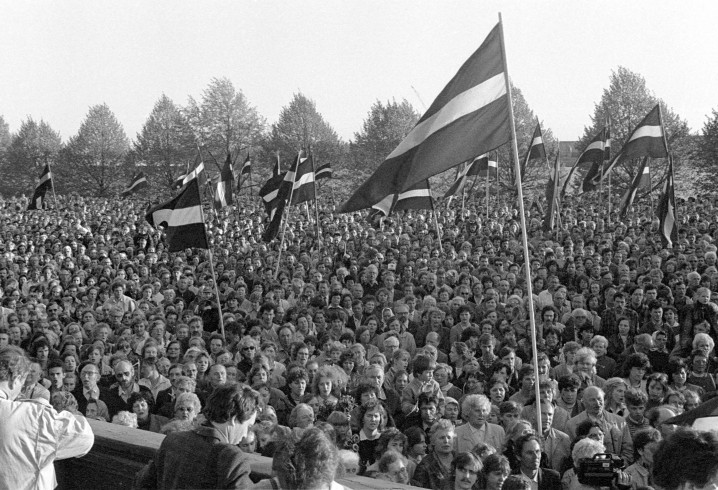
Latvian independence, 1991

Just as East Germans were shocked and appalled when former Stazi files neatly listing East German informers for the Communist East were published and names of those they portrayed, creating a fury of puzzled disbelief, so too is Latvia now undergoing a similar experience with recent revelations of betrayals under the Soviet yoke. Those whose names have been revealed are now passionately declaring their innocence; they never, ever acted as informants for the KGB; never were agents; the documents are false and utterly misleading.

As one of three Baltic nations now independent states since 1991, Latvia has spoken over the past 30 years with uncertainty over how to dispose of reams of documents left by the hasty retreat of the KGB. Bags of documents, files, briefcases full of secret files that the Cheka left behind. And while other former Soviet satellites such as Lithuania, Estonia and Georgia had their own KGB files to open and surprise themselves with, only Latvia had been left with a systematic index listing real and code names of over four thousand purported agents, inclusive of a digital archive of KGB activities.

Latvia's parliament took a vote and agreed the contents of the bags and the sacks stuffed with those secret files be posted online. Leaving it puzzled by the outcome; were so many among its citizens eager to aid the Soviet oppressors as collaborators and informers, or does this all represent a sinister, devious plot to sow disarray among the country's authorities disclosing fabricated records of betrayal at every level of society? Have they been the victim of Soviet secret police padding a list of informants to impress their superiors? Or was this a deliberate plant to shock Latvians in betrayal for the Soviets?

Some Latvians have now been identified as having been "in the bags", their ties to the files including a two-time former prime minister, the chief justice of the Supreme Court, a one-time foreign minister, leaders of the Catholic and Orthodox churches, three post-independence rectors of the University of Latvia, celebrated film-makers, and a number of Latvian television stars and writers. Releasing the names of people who succumbed to a terrible choice "in a different time and a different place has just created more confusion" not clarity, said Mara Sprudja, director of the national archive.

Lidija Lasmane, 93, a veteran of Latvia's Soviet era, wanted the documents released. She insisted historical truth must be known and an attempt made to answer a fundamental moral question: "How does a perfectly normal person become a beast ready to betray their friends, their family and their country?" Ah well, difficult times where the Soviet system placed people under dreadful pressure: "But every individual has a choice in the end. I knew from childhood that there is God and also the Devil. For me, there was never a real choice about what to do", she said.
Former GB Headquarters, the Corner House, in Riga, Latvia    Akos Stiller Photos/The New York Times

Labels: , , , , ,

Monday, May 08, 2017

The New Kids On The Playground

"We are educating our leadership to look for certain things and to try to avoid those situations where a provocation could happen."
"[Because] a bright light will be shining on us all the time, we are going to set the conditions through policy. If you go for a pizza there will be a fire team, you will not be alone."
Chief Warrant Officer Michael Forest

"Will it happen that there will be a Canadian with two heads and four eyes rampaging around Riga? Of course, there will be 'news' like that."
"How do you combat things like that? The first thing is to talk to each other and have common sense. Ask yourself if that is reliable. What the military will do, the Latvians and the Canadian Forces, will be to have a very straightforward two-way conversation with the press and Latvian citizens."
"The short answer is that we can expect many things [from Russia's propaganda machine]."

Col. Ilmars Lejins, Latvian infantry brigade commander

"I would tell them [Canadian military] to act sensibly. You are not in a war zone. No one is going to blow you up. But there is a Russian modus operandi with the girls, the alcohol, etc."
"Just watch out. If you do something stupid you will end up on Russian television. It is not a pleasant experience."
Sanita Jemberga, Baltic Centre for Investigative Journalism

"There will be no 48-hour weekend passes."
"We looked for everyone we could find who is an A hockey player."
"We already have a game lined up for the combat-support unit."
Commander Lt.-Col.Wade Rutland, 1 Battalion, Princess Patricia's Canadian Light Infantry
Matthew Fisher/Postmedia
Matthew Fisher/Postmedia    The likelihood of a Russian smear campaign is so great that Lt.-Col. Wade Rutland (left) and Sergeant-Major Michael Forest do not think that their troops will be allowed to be out on their own in Latvia
 
Two new words for the Canadian military to absorb: "Kompromat", and "Dezinformatsiya". A lesson in linguistics and in Realpolitik. It's a sometimes successful game evidently. Not quite like hockey, perhaps more resembling psychological warfare, creating a trust breach between allies. Where a furtive legend goes the rounds and, repeated often enough, however outrageously absurd, it will be accepted, believed, and a rift will occur of suspicion and blame between international units pledged to one another's zone of comfort.

In the interests of protecting against dastardly campaigns geared to spreading slanderous assaults to discredit one group in the opinion of the other with the goal of disrupting reliance and trust, it seems the elite commanders of the Canadian military tasked to be dispatched on a NATO mission to Latvia are prepared to view Canadian enlisted men as schoolyard yahoos, discrediting their adult sensibilities for juvenile sensitivities to the allure of Jezebels on a mission to entrap and discredit.

The 450 Canadian troops scheduled to appear in Latvia in the NATO mission to ensure that Moscow does not proceed with suspected plans to invade its neighbours and take possession of sovereign land on which sit ethnic Russians as citizens of the sovereign neighbours whom the Kremlin asserts are suffering the indignity of discrimination relating to their Russian heritage. A stealth, but naked effort to refresh the old associations of the Soviet bloc of nations.

The fear that Russian agents will go into overdrive to create a rift between Canadians and Latvians has led the Canadian military brass to regard their own as immature and naive, susceptible to female blandishments and to the ingestion of planted disinformation in the interests of creating an atmosphere of dysfunctional chaos. The Canadian mission is seen to be in potential peril through anticipated attacks with "kompromat" and "dezinformatsiya" -- compromising situations and the feed of disinformation.

What a sad and sorry lot, those Canadians. Clearly, they need diversions. And what better to divert these pathetic little soldiers of Canadian stock than to remind them of their childhood, what fun it was to play hockey on their neighbourhood streets, summer and winter alike. So why not in Latvia? So hockey is in, and the freedom to move about as mature adults is most definitely out. When the Princess Patricia's Canadian Light Infantry, 1 Battalion does deploy to Latvia in August they will be permitted off base on "supervised cultural days" only.

Planned excursions include visits to museums, theatres, parks and restaurants. Just as children are offered cultural and social enrichment experiences to introduce them to civil behaviour in public and to expand their minds through exposure to events and venues of value, so too these enlisted men and women in the Canadian forces are to be spoon-fed these interdiction-allied forays, under close watch and supervision. And these are the men and women in the military who are expected to act and react in full possession of their faculties in a prospective theatre of war?

Scheduled hockey games -- somewhat in theory akin to play-dates that mothers of young children schedule to keep their young ones busy and entertained. Four rinks are evidently available close to the base that the Canadians are to share with the Latvian army and a smaller group of soldiers from Albania, Italy, Spain, Slovenia and Poland. Evidently German troops in Lithuania have experienced being the target of Russian propagandists through "hybrid warfare".

Shortly after their arrival in Lithuania where the Germans had been delegated to present themselves in this NATO mission, emails charging that German troops had raped an underage Lithuanian girl were forwarded on to a leading Lithuanian politician, reported in the local media, to kind of get the slander-and-ostracism ball rolling. When police investigated they reached the conclusion it was a false claim.

Then the German commander appeared on a blog charged with being a Russian spy "not loyal to NATO or to Lithuania, but is a strong supporter of Russian policy", went the legend accompanying a photo-shopped photograph of Lt.Col.Christoph Huber. "We are taking it very seriously", said the Canadian commander, the focus will be on keeping Canadian soldiers "on the straight path". Entirely too bad that this situation could not simply be a matter of discussion with the expectation that the soldiers are sufficiently mature to govern themselves accordingly.

Labels: , , , ,

Follow @rheytah Tweet