Monday, March 02, 2026

Message to the People of Iran

Donald Trump speaks with the CIA director, John Ratcliffe, left, alongside White House chief of staff, Susie Wiles, right, and the secretary of state, Marco Rubio, centre right, at Mar-a-Lago on Saturday.
Trump speaks with the CIA chief, John Ratcliffe, left, alongside the White House chief of staff, Susie Wiles, and Marco Rubio at Mar-a-Lago on Saturday. Photograph: The White House/Reuters

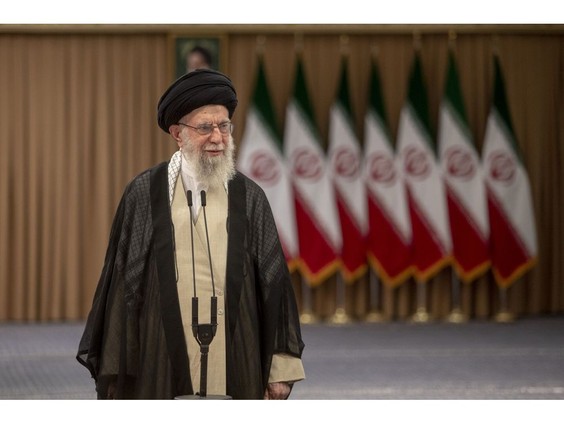
"[Grand Ayatollah Ali] Khamenei, one of the most evil people in History is dead."
"[Khamenei] was unable to avoid our Intelligence and Highly Sophisticated Tracking Systems and, working closely with Israel, there was not a thing he, or the other leaders that have been killed along with him, could do."
"This is the single greatest chance for the Iranian people to take back their country." 
U.S. President Donald J. Trump 
Months in the planning stages, the  joint American/Israeli operation began on Saturday during the Muslim holy month of Ramadan -- following nuclear program negotiations that went nowhere on a circuitous route of circumvention, protestations of innocence of intent alongside declarations of entitlement and stall tactics that the Islamic Republic is known for. Despite the tension building up to the moment, it is doubtful that anyone believed military action would indeed be taken against the Islamic Republic of Iran. 
 
Yet the action, in a seeming repeat of June's combined Israeli-U.S. attacks on Iran's nuclear installations, its military headquarters and weapons-storage units as well as the regime's missile-launch sites, seemed inevitable given its theocratic rulers' frequently repeated intentions to attack Israel to wipe it from the face of the Middle East, and its ongoing characterization of the United States as 'Satan' needing to be confronted. The ever-increasing lethality and reach of Iran's ballistic missiles threatening to reach the U.S. seaboard, as well as its  history of fomenting schemes with its terrorist proxies to attack U.S. forces signed its death warrant.
 
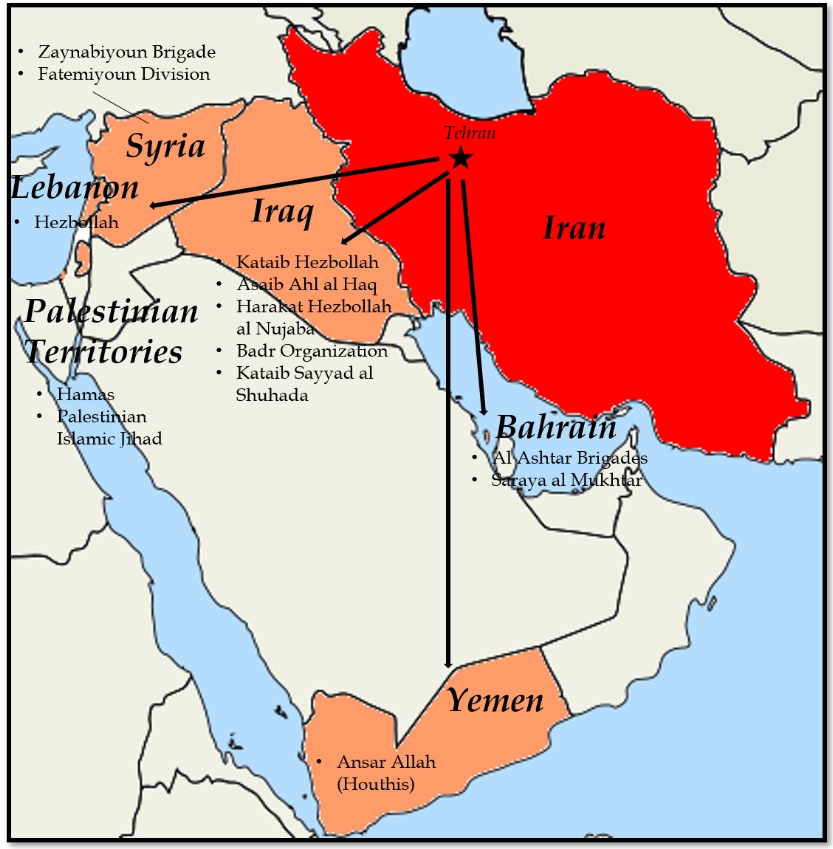
The final impetus to carry out a final attack to exterminate the ruling theocracy, its military and policing units came courtesy of the Iranian people themselves whose eruption of mass protests in January against stringent economic conditions resulting from the regime's focus on funding its sponsored, trained and armed terror groups in Yemen, Lebanon, Iraq and the Palestinian Territories while Western sanctions imposed high inflation and medical and food shortages at spiralling prices, drove ordinary Iranians to massive protests. Protests the regime responded to with expected brutality, where thousands among the protest movement were killed, tens of thousands wounded and imprisoned.
 
"Hundreds of Iranian missile and drone attacks" responded in retaliation from Iran to targets in Israel and toward U.S. military bases in Gulf States. Targets in Iran included Revolutionary Guard command facilities, air defence systems, missile and drone launch sites and military airfields. The commander of the Revolutionary Guard Corps and the Iranian defence minister, along with the secretary of the Iranian Security Council had been targeted by Israel and were extinguished.
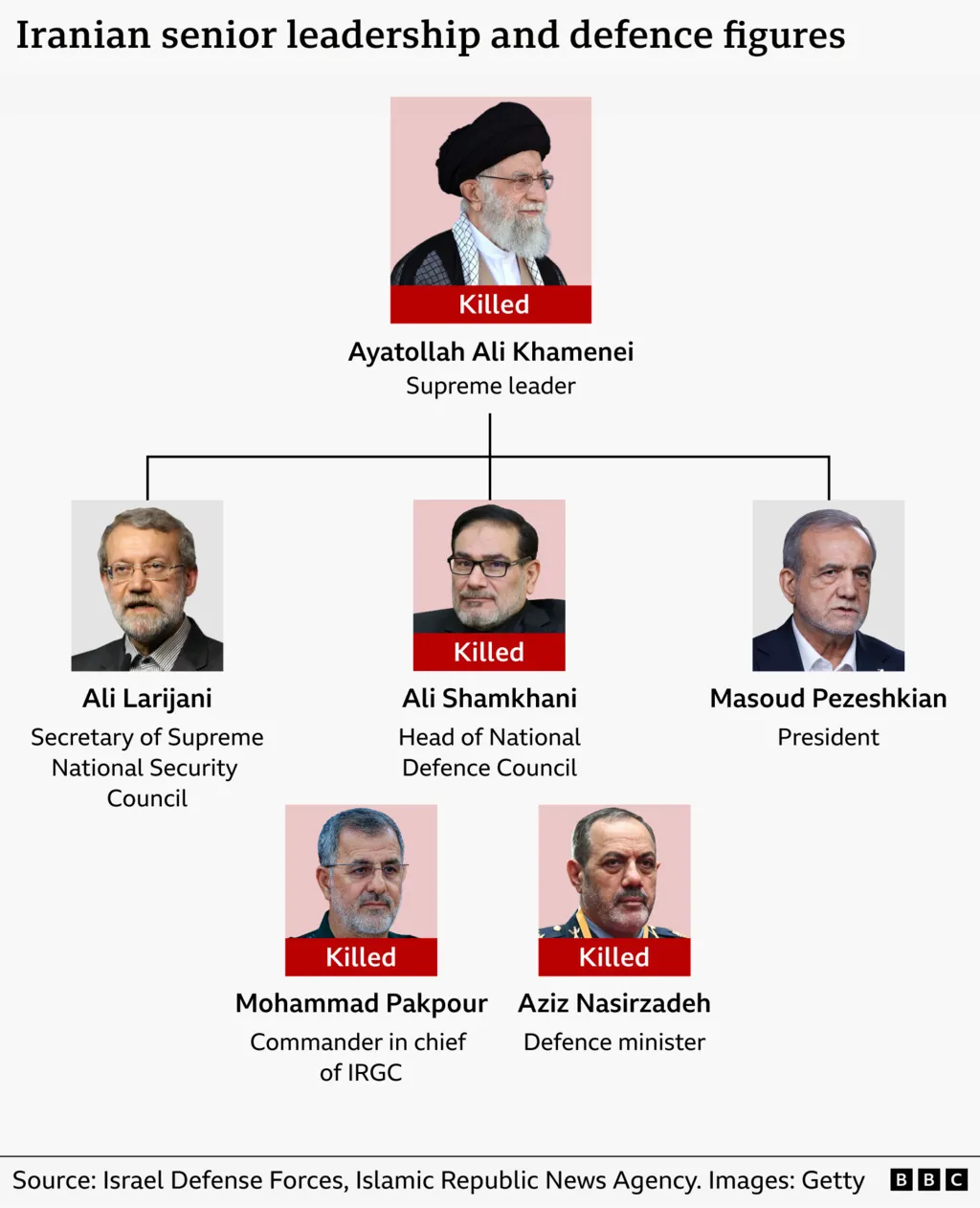
https://ichef.bbci.co.uk/news/1024/cpsprodpb/4925/live/deee5890-1582-11f1-b048-c9424b2cf5fd.png.webp
 
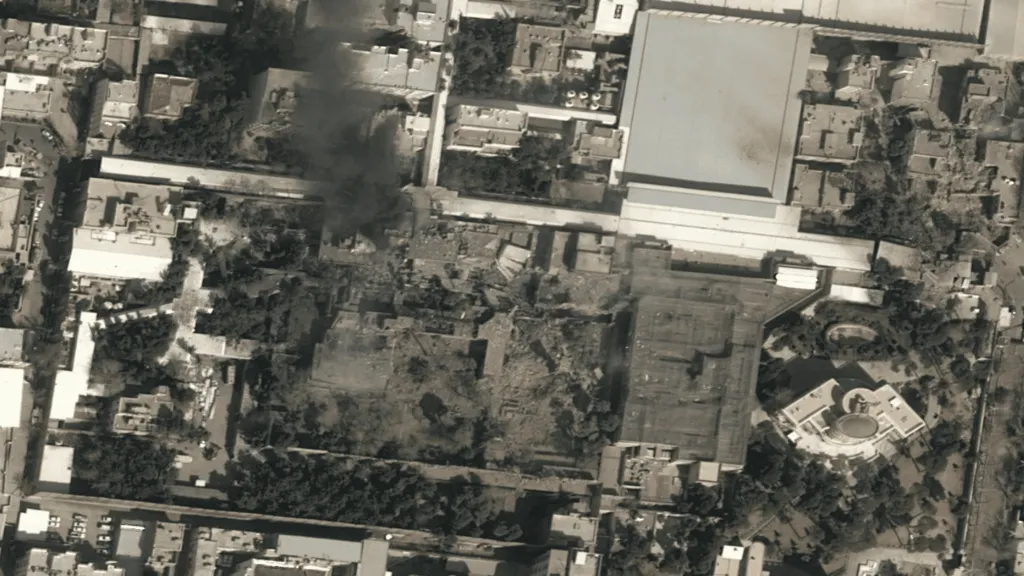
Among the first strikes on Iran, the compound of the Grand Ayatollah Khamenei was shown by satellite photography to have been utterly crushed. Ayatollah Ali Khamenei, his wife, and several of their offspring were killed in the strikes that levelled his offices and all the associated buildings in the compound. Although this wasn't entirely predictable, there was an expectation built on the obvious conclusion that the buildup of the largest force of U.S. warships and aircraft in decades in the Middle East presaged just this.
https://ichef.bbci.co.uk/news/1024/cpsprodpb/65fc/live/6d5bfb50-14ca-11f1-b048-c9424b2cf5fd.png.webp
Satellite image showing damage to the compound of Iranian Supreme Leader Ayatollah Ali Khamenei in Tehran   Airbus DS 2026 
 
In the earlier June of 2025 aerial assaults carried out jointly by Israel and the U.S. meant to defuse Iran's nuclear capabilities, and to destroy its armouries and ballistic missile launching sites to put an end to the regional threats posed by the regime, it had been generally felt that the mission had accomplished its goal. Since then, however, it became clear that Iran's nuclear program had not after all been obliterated and that the regime was busy rebuilding destroyed infrastructure. Moreover its centrifuges were producing highly enriched weapons-grade uranium. 
"The  hour of  your freedom is at hand. Stay sheltered. Don't leave your home. It's very dangerous outside." 
"Bombs will be dropping everywhere."
"When we are finished, take over your government. It will be yours to take."
"This will be probably your only chance for generations."
U.S. President Donald Trump ... message to the people of Iran 
https://i.cbc.ca/ais/4692a260-e321-4981-957e-aa442504b0d1,1772415832948/full/max/0/default.jpg?im=Crop%2Crect%3D%280%2C234%2C4491%2C2526%29%3BResize%3D860
Smoke rises up after a strike in Tehran on March 1, 2026. (Vahid Salemi/The Associated Press)


Labels: , , , , ,

Thursday, February 05, 2026

ME -- The Stage Is Set ... Will the Play Commence?

"What they're doing is setting the theatre to provide an expanded set of offensive options should the president direct military strikes."
"[This time the administration does not appear to have such a] discrete objective [as was witnessed before strikes against the nuclear program in Iran last year]." 
Dana Stroul, former deputy assistant secretary of defence for the Middle East 
 
"[While Iran has the right to] operate professionally in international airspace and waters ... any unsafe and unprofessional behaviour near U.S. forces, regional partners or commercial vessels increases risks of collision, escalation, and destabilization."
U.S. Central Command
 
"[If the U.S. brings in more F-35s, that would suggest that it plans on] operating inside Iranian airspace in a more considerable way."
"[These movements -- of the U.S. fleet in the Red Sea and eastern Mediterranean -- indicate that] both the U.S. and Israel are very concerned about an Iranian retaliation against Israel, even if Israel is not directly involved."
Gregory Brew, senior Iran analyst, Eurasia Group
https://imageio.forbes.com/specials-images/imageserve/6966c84d024d1194b097d8f3/USS-Roosevelt/0x0.jpg?width=960&dpr=1
U.S. Navy photo by Mass Communication Specialist 1st Class Indra Beaufort
 
Dozens of aircraft have been deployed by the U.S. military to bases near Iran, while some dozen warships have been assembled in or near the Middle East in the past month, according to satellite imagery, tracking data and U.S. defence officials. The stage certainly appears to be set for a potential U.S. strike against the Islamic Republic of Iran within a few weeks, as tensions continue to rise. Prior to strikes last year against the Iranian nuclear program, there was an even greater buildup of military might than on this occasion, lending an air of real uncertainty as to the outcome of what is currently a standoff between the abrasively defiant regime and the challenge of the powerful United States.
 
Not all experts on the Middle East and Iran are convinced that this show of force will culminate in an actual invasion to remove the Ayatollah-led, IRGC-fortified regime. The death toll from Iran's violent crackdown on protests is still rising, with activists and human rights groups claiming over 6,000 Iranians have been killed through the government crackdown, though some insist the death toll reaches even higher -- in the tens of thousands.  
 
President Trump speaks of his 'armada' whose purpose he hints, is to place pressure on Tehran over its nuclear program. Iran, he stated, is "talking to us, and we'll see if we can do something, otherwise, we'll see what happens".  For his part, Iranian Foreign Minister Abbas Araghchi has stated "Just as (Iran) is ready for negotiations, it is also ready for war."  While "Structural arrangements for #negotiations are progressing", senior Iranian security official Ali Larijani stated on social media. 
 
https://imageio.forbes.com/specials-images/imageserve/6966c88534d465953d795d15/USS-Roosevelt/960x0.jpg?format=jpg&width=1440
U.S. Navy photo by Mass Communication Specialist 1st Class Indra Beaufort
 
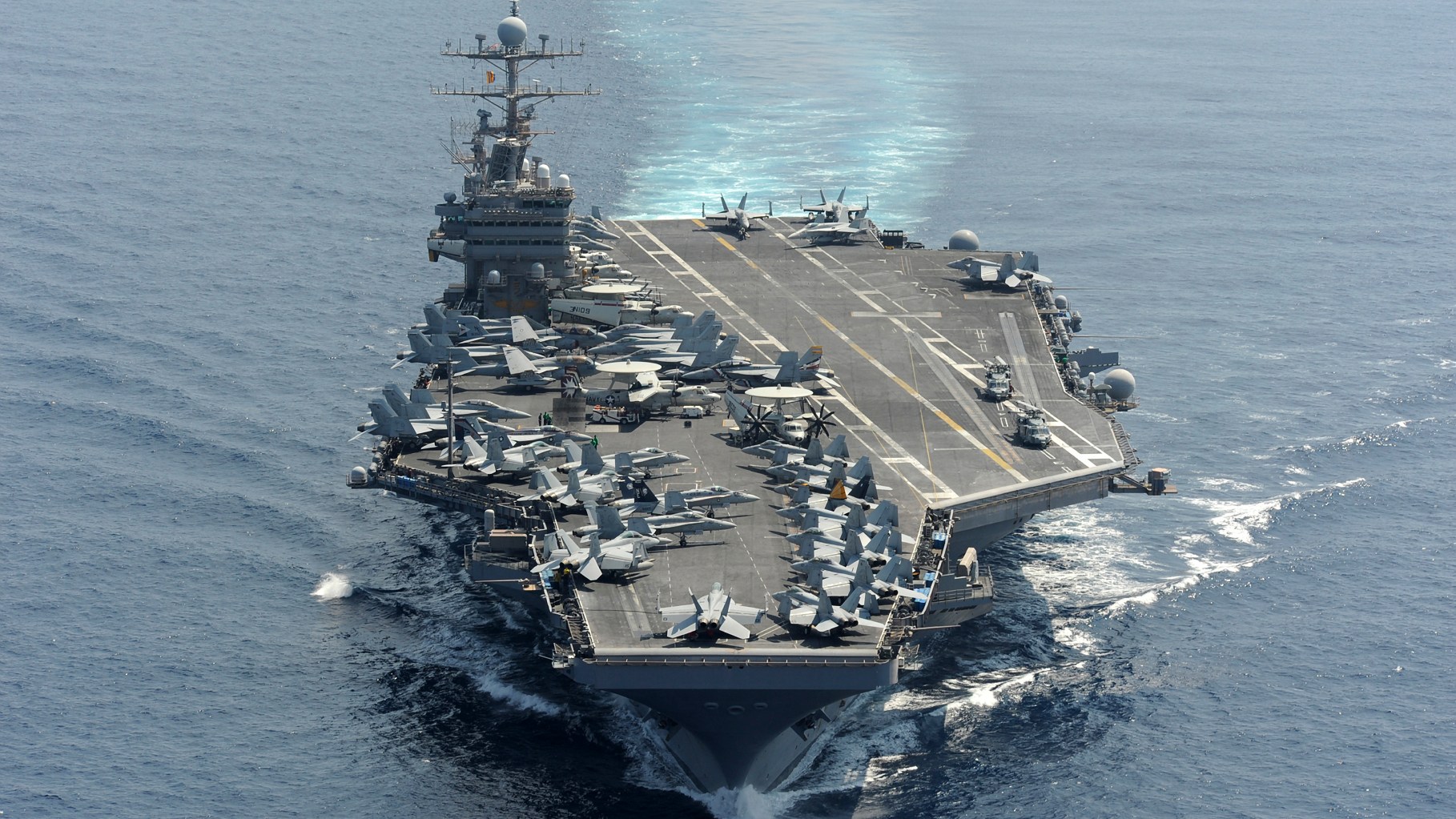
Accompanied by three guided missile destroyers, the aircraft carrier USS Abraham Lincoln entered Central Command's area of responsibility and is now in the north Arabian Sea. Air defences and dozens of missiles are carried by each destroyer, including Tomahawks, a type of munition U.S. forces used back in June when they struck Iranian nuclear targets. While historically the U.S. has maintained an aircraft carrier in the Middle East there had been none in the region, when the Lincoln was redirected from the South China Sea.
 
According to defence officials, at least eight other warships are now positioned in the area, including at least two guided-missile destroyers, the USS McFaul and USS Mitscher, near the Strait of Hormuz. In this same area in recent days, Iran deployed drones. Analysts identified an Iranian drone carrier from satellite imagery, the Shahid Bagheri. Over three dozen U.S. aircraft, among them fighter jets, drones and planes used for refuelling reconnaissance  and transport have been forwarded to U.S. bases.
 
F-15 aircraft from the squadron that fought the 12-day war between Israel and Iran in June have been deployed now, along with nine A-10C Thunderbolt IIs, used to protect groups on the ground from enemy forces, stationed at Muwaffaq Salti Air Base in Jordan. America's ME allies like Jordan, the UAE and Saudi Arabia and Qatar have alerted Washington that they will not allow the U.S. to use the bases on their soil to attack Iran. Which is where the USS Lincoln steps into the picture since assaults can be launched directly from its position at sea.
 
EA-19G Growlers, electronic warfare aircraft that jam radars and disrupt communications which are on board the USS Lincoln, would be useful should the U.S. intend to enter Iranian airspace to hit targets in the interior. The USS Delbert D. Black visited Israel and left port from there on Sunday, moving further into the Red Sea. Additionally, two more destroyers are in the eastern Mediterranean, the USS Bulkeley and the USS Roosevelt, according to American defence officials. 
 
https://www.twz.com/wp-content/uploads/2026/01/lincoln.jpg?w=1819&h=1023
USS Abraham Lincoln, The War Zone
  

Labels: , , , , ,

Thursday, June 26, 2025

Interrupting Iran's Nuclear Program

"The fact that Iran is the only non-nuclear-weapon State in the world that is producing and accumulating uranium enriched to 60 percent remains a matter of serious concern, which has drawn international attention given the potential proliferation implications."
"[The IAEA cannot] ignore the potential proliferation implications [and it is not in a] position to provide assurance that Iran's nuclear program is exclusively peaceful."
International Atomic Energy Agency 
 
"The Iranian regime is the most destabilizing force in the Middle East and the largest state sponsor of terrorism in the world."
"A nuclear-armed Iran would pose a grave threat to global security and U.S. national security."
"Allowing Iran to obtain nuclear weapons is an outcome that must never be allowed."
"This military escalation was ordered unilaterally, without Congressional authorization or meaningful consultation."
"There are important Constitutional implications that must be addressed going forward." 
New Jersey Democrat Senator Cory Booker
 
"Presidents of both [U.S. political parties] have deployed U.S. forces and ordered the use of military force, without congressional authorization, on numerous occasions."
"Over the last two decades, Congress has acquiesced more and more to uses of military force by presidents of both parties without congressional approval and with little congressional oversight."
Adjunct senior fellow for international and national security law, Council on Foreign Relations, John Bellinger
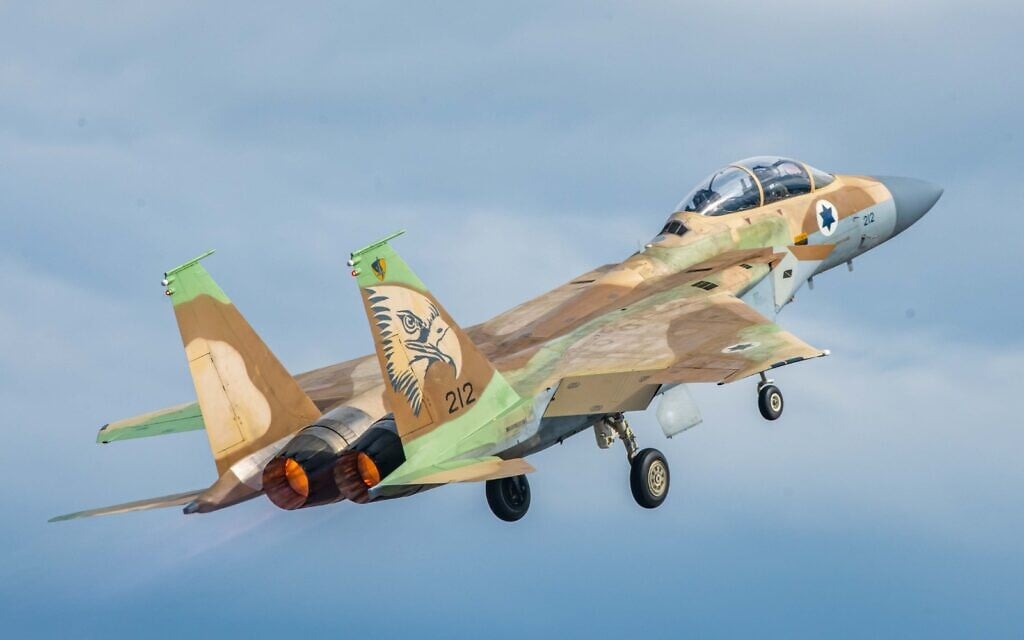
An Israeli Air Force fighter jets takes off for strikes in Iran, June 18, 2025. (Israel Defense Forces)
 
Three Iranian nuclear facilities, Fordow, Isfahan and Natanz, were struck on Saturday in preemptive assaults by the United States, which decided to join Israel in its aerial bombardment of Iran's nuclear installations with a view to prevent the Islamic Republic from succeeding in the manufacture of atomic bombs to add to its ballistic missile arsenal in its aspirations to produce warheads. Short-range ballistic missiles to be used to destroy Israel, long-range missiles to strike the United States; as threatened time and again.
 
According to the International Atomic Energy Agency, the largest sponsor of world terrorism is estimated to possess sufficient uranium to enable it to create nine nuclear weapons after undertaking the short step to enrich its uranium product from the current 60 percent to the required 90 percent enrichment. "Since 16 February 2021, the Agency has not been able to verify Iran's total enriched uranium stockpile precisely on any given day", reads the IAEA's May report of verification and monitoring in Iran. 
 
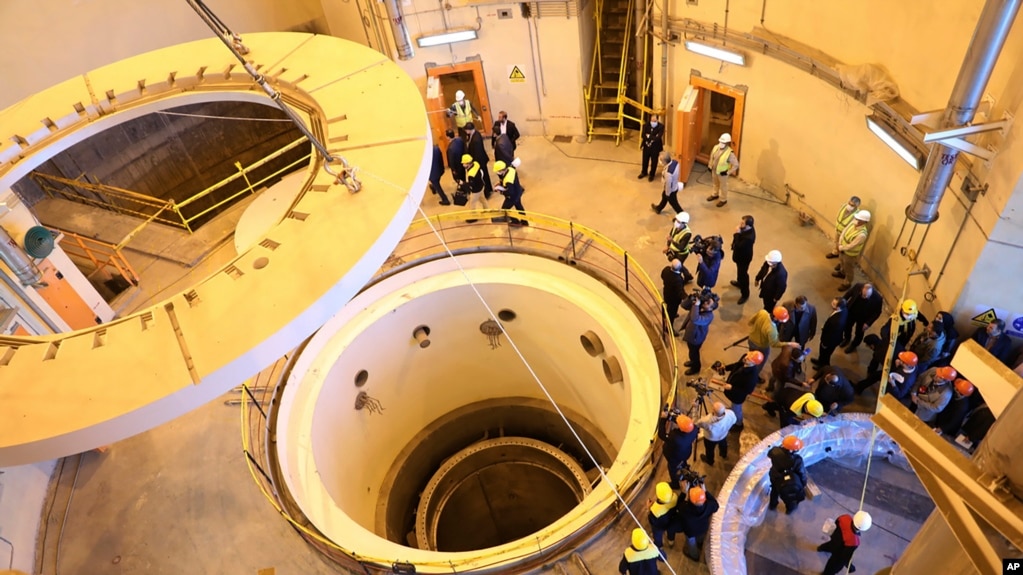
As far as cooperating with the international inspection agency is concerned, Iran has never been open and above-board with respect to its nuclear plans and actual research and production practises. Inspectors were withheld the opportunity to monitor heavy water production required for the nuclear program; access to enrichment facilities were refused for Natanz and Fordow; and centrifuge inspections or other infrastructure were not allowed to proceed. 
 
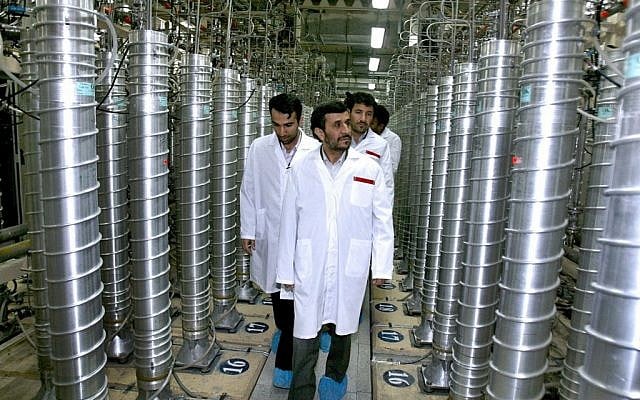
Then-Iranian President Mahmoud Ahmadinejad visits the Natanz Uranium Enrichment Facility some 200 miles (322 kilometers) south of the capital Tehran, Iran in 2008. (AP/Iranian President’s Office)
 
Iran is a signatory to the Joint Comprehensive Plan of Action between it and the United States, the United Kingdom, France, Russia, China and Germany, agreed to in 2015. When the deal was signed then-U.S. President Barack Obama, described the outcome as: "The historic deal which will prevent Iran from acquiring a nuclear weapon". This was a deal that failed to include Iran's emerging technology in the production of ballistic missiles, and one that completely sidestepped its primary links to terrorist groups.
 
Since that signing and the pledge inherent in its agreement a decade ago,  Iran has  hindered inspectors, flouted a key point of limiting levels of uranium enrichment to an agreed-upon 3.67 percent -- instead proceeding with enrichment of uranium to 60 percent in direct violation of the agreement. The Islamic Republic succeeded in amassing a stockpile of 408.6 kilograms of 60 percent uranium.
 
Figures from the IAEA state that 42 kilograms of 60 percent enriched uranium can produce one atomic bomb, enriched further to 90 percent. 408 kilograms therefore, represents a potential for nine weapons if further enriched. A controversy has erupted in the wake of Saturday's bunker-busting bombs aimed at penetrating the mountain fastness of the Fordow facility. There is uncertainty over the extent to which Iran's nuclear program was impacted. 
 
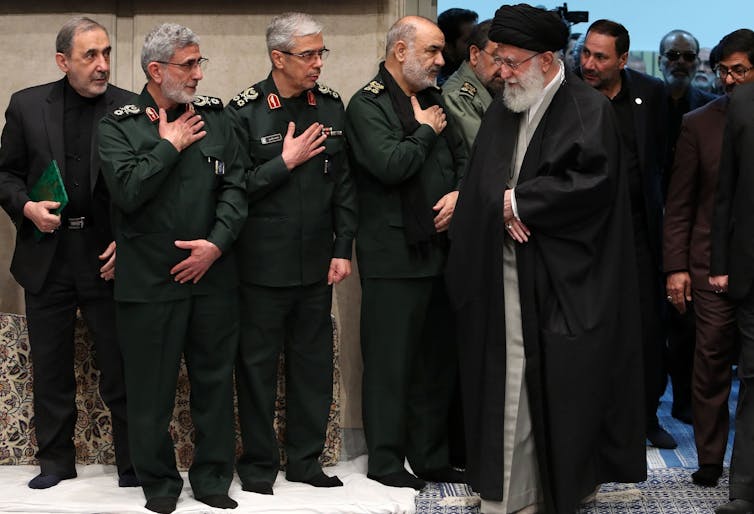
A man in traditional Iranian dress meat a group of men in army fatigues.
Iran's Supreme Leader Ali Khamenei and his military leaders face an enemy with superior military hardware. Anadolu via Getty Images
 
Iran is unlikely to be entirely shut off from obtaining nuclear weapons in months or years into the future. What the strikes accomplished was to address the immediacy of the situation whereby prevention was required to ensure atomic bombs, so close to completion on the horizon, was set back for possibly a considerable amount of time. In that time, it would be possible, even feasible, that the regime would fall, and with it the Islamist ideology of acquiring weaponry of a striking calibre that could result in catastrophic loss of human life.
 
Were Iran to be left to its malign devices as it has been to the present time -- prior to Israel's unleashing of an aerial campaign of precision and determination to not only strike nuclear emplacements, but military and IRGC bases, weapons caches, along with assassinations of key government, military and scientific leading figures to send the program into disarray while eliminating many of the figures deeply involved in supporting nuclear weaponry development -- the production of nuclear weapons was assessed to be mere weeks or months ahead.
 
Iran's bad faith relationship with the nuclear inspectors, its hidden nuclear sites, its stated intentions threatening the survival of an entire country in the Middle East, naming other countries as enemies to be dealt with harshly as "Death to America" portends, made it a mandatory intervention of survival for at least two countries, and likely more, inclusive of the majority-Sunni Arab countries sharing the geography of the Middle East, which Iran's Shi'ite-led 'axis of evil' was groomed to conquer.
 
https://www.wilsoncenter.org/sites/default/files/styles/embed_text_block/public/media/uploads/images/Iran%20Proxy%20Map%20only%202020%20small.webp 
 
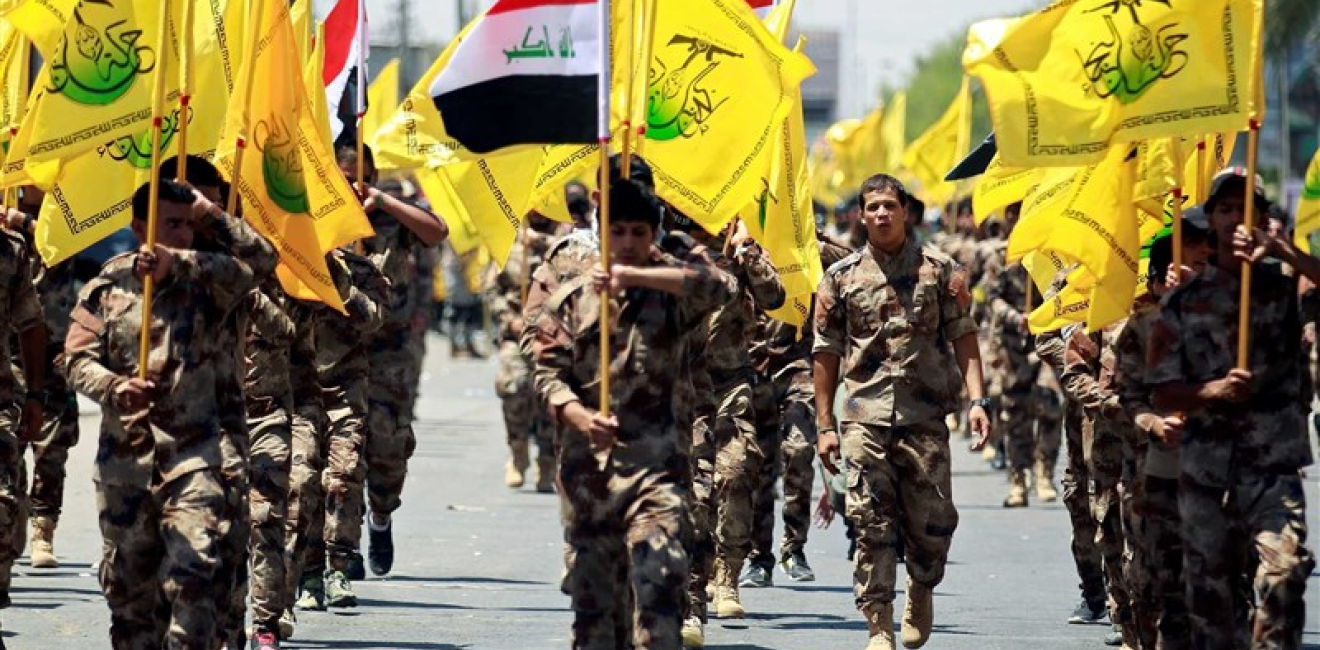
Iran has furthermore, trained and armed terrorist groups like Hezbollah in Lebanon, Hamas in Gaza, Houthis in Yemen, and Shiite militias in Iraq, providing them with updated technologically advanced rockets. There are no guarantees that Iran would withhold from its proxy terrorist groups atomic weaponry that would make them infinitely more dangerously effective at carrying out their directives from Iran to do its bidding in attacking and annihilating the Jewish state. Jihad demands total loyalty to the concept of killing non-believers as an obligation to Islam.
 
Terrorist groups in possession of nuclear weapons would represent a nightmare scenario of helplessness for any targeted population living in fear and  trepidation of imminent attacks by terrorist groups for whom a massive death toll would be viewed as a success in following through that obligation to prove to Islam that the world stands in awe and suspense over where and when the final blow from Islamist terror would strike in its challenge of the non-Muslim democratic world.
 
The decisions made by Israel and the United States in striking at Iran and its threatening forces was long overdue in view of the simmering antagonisms and terrorist attacks taking place throughout the world as Islamist terror normalized its presence as a counter-weight in world affairs to long-distant colonial rule and the supremacy of Western thought, technology, laws and values in a world that Iran believes belongs to Islam and its values and laws.
 
Nujaba
Harakat Hezbollah al Nujaba, an Iraqi militia trained by Iran's Revolutionary Guards  Wilson Center


Labels: , , , , , , ,

Monday, February 10, 2025

The Oppressed People of Revolutionary Iran Amidst its Nuclear Threat


"[Negotiating with the United States would be neither] wise, intelligent nor honourable. Negotiating with such a government should not be done."
"We must understand this correctly and not be misled into thinking that sitting at the negotiation table with that government will resolve certain matters. No, negotiations with the United States will not solve any problems."
"They make statements about us, express opinions and issue threats. If they threaten us, we will threaten them. If they act on those threats, we will do the same. If they undermine our nation's security, we will undoubtedly respond in kind."
Supreme Leader Ayatollah Ali Khamenei, Tehran, Iran
https://smartcdn.gprod.postmedia.digital/financialpost/wp-content/uploads/2025/02/776168586.jpg?quality=90&strip=all&w=564&h=423&type=webp&sig=Wnvx_g_2fhm559089EluIw
Ayatollah Ali Khamenei Photographer: Majid Saeedi/Getty Images
 
The Islamic Republic of Iran has for years suppressed the wishes of the Iranian people to live fruitful lives without the interference of strict medieval-era Sharia law that imposes restrictions on every aspect of people's lives. Iranians have attempted time and again to convey their wishes to the hardline Islamist government that the version of Islam they have been forced to live under has made their lives a torment. The advent of the return of former Grand Ayatollah Ruhollah Khomeini from exile in 1979 and the downfall of the Shah of Iran introduced the Iranian public to repression, subjugation and poverty of opportunities. 

The octopus arms of Revolutionary Iran that brought the dictatorship of a theocracy intolerant of any sign of its population rejecting the imposition of Islamist principles and practises under the watchful eyes of the ruling mullahs and their military arm, the Islamic Revolutionary Guard Corps, has diminished quality of life entirely for the population they command. But the aspirations of the Islamic Republic goes well beyond imposing their version of Islam on its citizenry. In forming a sectarian alliance with other Shi'ite-led and majority governments, Tehran aspires to transform the entire Middle East including Sunni-majority nations into its satellites.
 
The sole exception being the State of Israel -- whose presence on land formerly 'consecrated' to Islam, irrespective of that land being ancestrally the heritage of Judeans and current Israeli citizens --  destined, as far as the Iranian government is concerned, to be destroyed. To that end, the al Quds division of the IRGC founded, sponsored, armed, organized, trained and guided Islamist terrorist groups whose primary function would be to attack and ultimately vanquish the Israeli Defense Forces, and that done, destroy the Jewish state and its Jewish inhabitants. Its proxy militia Hezbollah was conscripted into the Republic's vision for that singular purpose. In tandem with Hamas in Gaza and the Houthis in Yemen they formed a formidable threat to Israel, fortified by Shi'ite militias in Iraq.
 
https://gdb.rferl.org/fd487141-ed28-4149-a960-7b9d94e97273_w1023_r1_s.jpg
Iran said it is ready to negotiate with the United States over its nuclear program

The IRGC nuclear program that began with ever more advanced centrifuges enriching uranium in hidden locations to the point where the creation of nuclear bombs could be created to match the technological advances of the short- and medium-range ballistic missiles that could be fitted with nuclear heads, continues to concern Western intelligence agencies, and certainly it does Israel. Iran's claims that its interest in nuclear is restricted to domestic purposes is clearly a feint that fools no one. It has made no secret of its intentions against Israel and its antipathy to the United States.
 
"With me, it's very simple: Iran cannot have a nuclear weapon", said American President Donald J. Trump. Signing an executive order on Tuesday for the reimposition of "maximum pressure" sanctions on the Islamic Republic, Mr. Trump said he felt "torn" on signing the order. "It's very tough on Iran", he said, without doubt referring to the additional economic pressure imposed on an  already flailing economy. "Hopefully we are not going to have to use it very much. I'm unhappy to do it"; not for any sympathy with the government, but empathy for the Iranian people living under economic hardships.
 
For months prior to this latest setback for Iran, the Republic has been signalling its readiness to re-engage in talks with the United States in the interests of negotiating the issue of its rapidly advancing nuclear program -- ostensibly in exchange for lifting crushing economic sanctions draining billions of dollars from the Iranian economy. With Khamenei's latest comments, the Iranian rial crashed to a record low of 872,000 rials to US$1 in aftermarket trading. 

"The Americans did not uphold their end of the deal. The very person who is in office today tore up the agreement. He said he would, and he did", complained Khamenei dolefully. Reformist President Masoud Pezeshkian on Thursday promised dialogue with the West. Several days later Khamenei contradicted that statement. While Iran's Foreign Minister stated that Iran would never engage in talks under the kind of pressure the newly imposed sanctions bear on the country.
 
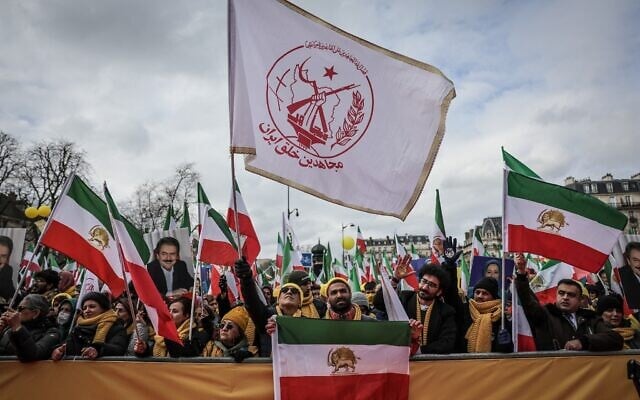
Thousands of Iranians from across Europe rallied impressively in Paris on February 8, urging world leaders to put more pressure on Iran’s ruling clerics."Instead of appeasing the mullahs, [the world] should stand side by side with the Iranian people", Maryam Rajavi, president of the National Council of Resistance of Iran (the political wing of the People's Mujahedin of Iran), told the rally. "We say your demise has arrived. With or without negotiations, with or without nuclear weapons, uprising and overthrow await you", NCRI President-elect Maryam Rajavi said.
 
https://static-cdn.toi-media.com/www/uploads/2025/02/AFP__20250208__36XF3EA__v1__HighRes__FranceIranDemonstrationRights-640x400.jpg
Supporters of the People’s Mujahedeen of Iran wave a flag of their organization (C) along with Iran’s pre-revolution flag during a demonstration in Paris, on February 8, 2025, on the occasion of the 46th anniversary of the uprising against the Shah. (Thibaud MORITZ / AFP)

Labels: , , , , , ,

Sunday, May 28, 2023

Conquest-Seeking, Death-Threatening Iran

"One of the prominent characteristics of this missile is its ability to evade radar detection and penetrate enemy air defence systems, thanks to its low radar signature."
"This missile has the capability to utilize various warheads for different missions."
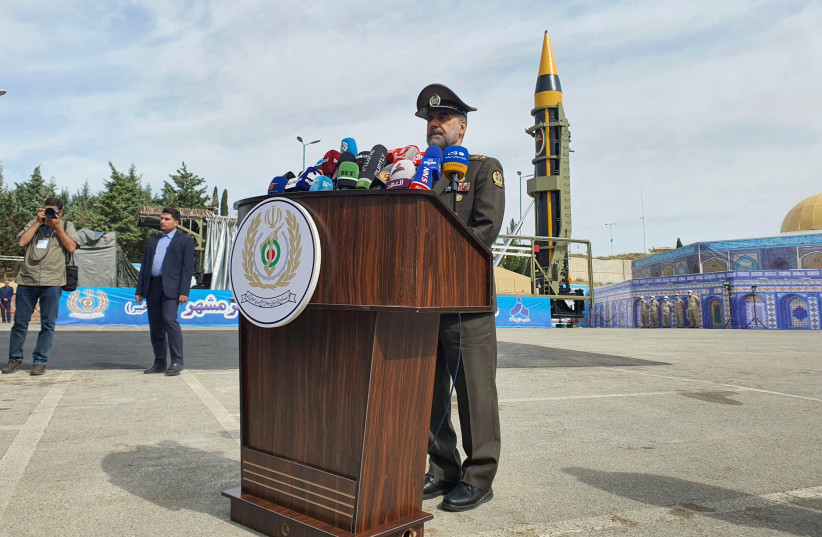
Iranian Defence Minister General Mohammad Reza Ashtiani
 Iran's Defense Minister Brigadier General Mohammad-Reza Ashtiani speaks in a press conference during the unveiling of a new surface-to-surface 4th generation Khorramshahr ballistic missile called Khaibar in Tehran, Iran, May 25, 2023.  (credit: WANA (WEST ASIA NEWS AGENCY) VIA REUTERS) Iran's Defense Minister Brigadier General Mohammad-Reza Ashtiani speaks in a press conference during the unveiling of a new surface-to-surface 4th generation Khorramshahr ballistic missile called Khaibar in Tehran, Iran, May 25, 2023. (credit: WANA (WEST ASIA NEWS AGENCY) VIA REUTERS
"During a follow-up statement by Iran’s deputy defense minister for Logistics Mahdi Farhi, the official appeared to indicate this is a multi-stage missile, such that the warhead has its own guidance system and can reach high speeds and achieve greater accuracy. The official elaborated on claims that it is immune to electronic warfare, since it is not guided by satellites. He also elaborated on claims the warhead, that separates, has a low radar cross-section and that the missile can change direction during later stages of flight."
"Iran’s new test of a missile joins a long lineage of  testing and claims about new missiles. It frequently gives these missiles new names, even if they are very similar to previously known missiles, with some updates. Iran claims new abilities for these missiles, such as “pinpoint accuracy” and the ability to defeat air defenses." 
"Overall then, the new test of a missile should be seen in the context of Iran often claiming to test missiles with new capabilities during historic anniversaries and continuing to boast about them."
"Considering that Iran has exported missile technology to the Houthis in Yemen and Hezbollah; as well as sending actual missiles to Syria, Lebanon and Iraq; the missile threats must be taken seriously. The overall threat to countries like Israel is that these missiles have large warheads and may be part of the larger Iranian drive for weaponizing its nuclear program."
Seth J. Frantzman, Jerusalem Post 
So much for the nuclear talks that have taken years to negotiate off and on and which have accomplished precisely nothing. At no time during these negotiations between the US, EU and Tehran negotiators was there mention or allusion to rocketry meant to carry nuclear warheads. In the prolongation of the negotiations, Tehran essentially accomplished what it set out to do -- appear to take the concerns of the US and EU seriously, while earnestly negotiating in 'good faith', endlessly extending the talks and using the extended time to get on with its ballistic missile program.
 
At the very same time that it continued to enrich uranium much beyond its agreed-to limit, even while its experiments in the creation of nuclear fissile material and the production of nuclear heads to fit on the missiles commenced apace. Taking steps all the while to create deep underground bunkers to house its production laboratories at a depth that would be immune to surface bombing. Pre-emptive bombing that might conceivably be carried out by the very Middle East country that Tehran has stated time and again it has plans to annihilate with the use of nuclear bombs.

The latest iteration of its liquid-fuelled Khorramshahr ballistic missile at a time of ongoing, deep tensions with the West and certainly with Israel, and to a lesser degree the Sunni-Islamic countries it plans to dominate into submission with the threat of its attainment of the means to destroy them as well as Israel, is telling enough. The technologically advanced boasts themselves are a form of terrorism it employs to ensure its adversaries in the region are kept in check. Iran's recent detente with Saudi Arabia, its closest adversary next to Israel is no guarantee that the Saudi oilfields will not be attacked again by Iran's proxy Houthis in Yemen.

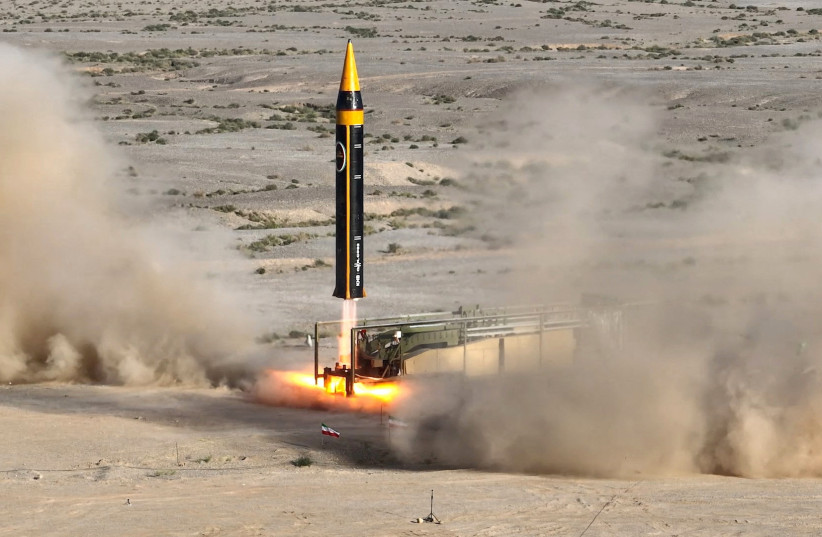
The Khorramshahr-4 was placed on proud display in Tehran, the missile on a truck-mounted launcher. A missile that Iran's defence minister assured those present, including journalists, that launch could be prepared within a short period. Poised and ready-to-go. The missile described with a 2,000-kilometre range, and a 1,500 kilogram warhead. Undated video footage was released which purportedly showed the missile during a successful launch.

Of Iran's ballistic missile fleet, the Khorramshahr possesses the heaviest payload which may have been designed to keep the weapon under a 2,000km range limit, some analysts feel. Placing most of the Mideast in its range, and falling just short of Western Europe. Named after an Iranian city where heavy fighting took place between Iran and Iraq in the 1980s, there is much symbolism in naming the missile Khorramshahr. Just as the missile, called Kheibar is heavily symbolically named in reference to the 7th century Jewish fortress that fell to Islamic conquest within an area where Saudi Arabia now sits.
 
In staging that is a continuum of symbolism, so heavily employed by Tehran, a miniature of Jerusalem's golden Dome of the Rock sitting on the Al-Aqsa Mosque compound which squats on a much earlier Judaic sacred site of the two iterations of the Temple of Solomon, the Temple Mount, was placed next to the mobile missile launcher.
 
Viewing Israel as its arch-enemy, Tehran has been actively and visibly inciting to violence the terrorist groups that are its proxies; Hezbollah in Lebanon, and Palestinian Islamic Jihad in Gaza, along with the Gaza-governing Hamas, all of whom were created for the express purpose of destroying the presence of a Jewish state on a geography that Islam conquered and where land sacrosanct to Islam theologically considers the presence of another religion forbidden. 

That the geography in question is historically linked to Judaism, and Israel is located on part of its ancestral homeland, is entirely irrelevant to fundamentalist Islamic states who regard the presence of a Jewish state to represent an assault on Islam itself. The inexhaustible supply of weaponry emanating from Iran to supply terrorist groups in Lebanon, Syria, Iraq and Gaza is an assurance that peace will not come easily to the region. 

It is a region, moreover, that has always been and likely always will be at war with itself. Without the presence of Israel in their midst, the tribal and sectarian violence that destroyed Lebanon and led to the deaths of a half-million Syrians would still fester and carry on. Groups like the Islamic State will always surface to create deadly chaos, creating bloodbaths between Muslims and victimizing minority religious and ethnic groups deprived of their human rights. 

The new Khorramshahr with its updated technology would be capable of reaching Israel from Iran. But then, when Iraq was invaded by a Western alliance after its sweep into and claim of Kuwait as Iraqi territory, missiles were sent by Saddam Hussein into Israel at that time, too. The uneasy tensions between Iran and Israel have mounted steadily of late, with Iran's threats of destroying Israel, giving the Jewish State good reason to destroy Iran's nuclear program before it has a chance to deploy.
 
A new surface-to-surface 4th generation Khorramshahr ballistic missile called Khaibar with a range of 2,000 km is launched at an undisclosed location in Iran, in this picture obtained on May 25, 2023. (photo credit: IRANIAN DEFENSE MINISTRY/WANA/VIA REUTERS)
A new surface-to-surface 4th generation Khorramshahr ballistic missile called Khaibar with a range of 2,000 km is launched at an undisclosed location in Iran, in this picture obtained on May 25, 2023.
(photo credit: IRANIAN DEFENSE MINISTRY/WANA/VIA REUTERS)


Labels: , , , ,

Follow @rheytah Tweet