Tuesday, February 03, 2026

Terra Nullius -- Svalbard: Cold Shore

"Norway now finds itself in the most serious security situation since 1945."
"[Svalbard has for too long been seen by nations as a place where] everyone who wants to can come up and do almost whatever they want."
"That's not the fact. This is Norwegian sovereign territory. So we're making that a bit clearer."
Eivind Vad Petersson State Secretary, Ministry of Foreign Affairs, Norway 
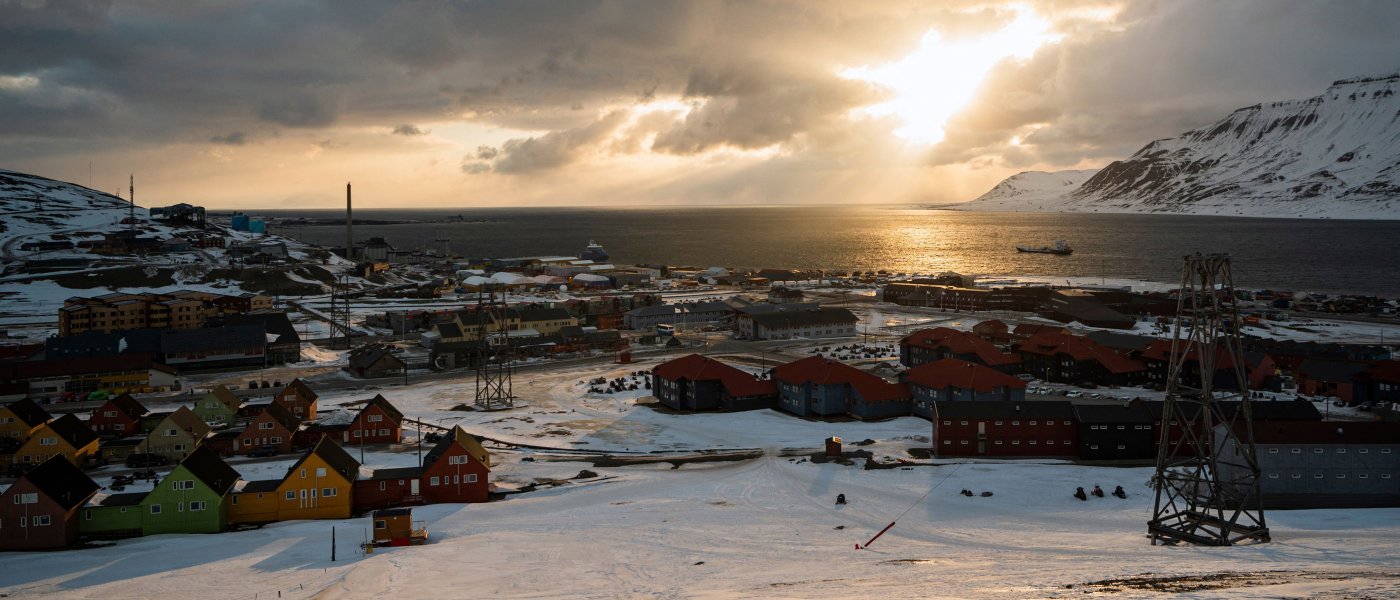
https://csis-website-prod.s3.amazonaws.com/s3fs-public/styles/1400x600/s3/2023-09/GettyImages-1240741560_Crop1.jpg?VersionId=mWKSkGPe0GKiiz9cG_mcY1Bo2xQci7Ps&h=266da715&itok=RNVD8uor
The Svalbard Archipelago   Photo: Jonathan Nackstrand/AFP via Getty Images
 
Following World War 1, Norway's claim to the Arctic archipelago and its islands was officially recognized. The Svalbard Treaty of 1920 banned the presence of activity linked to the military while granting all other nations choosing to sign on to the agreed-upon treaty access to hunting, fishing, mining and land ownership. Over the years, close to fifty countries added their names to the treaty which allowed them access.
 
Of late, studies of the geology of Svalbard and the ocean floor surrounding it have identified vast amounts of copper, zinc, cobalt, lithium and rare earth elements buried in the ocean floor. These are eagerly-sought-after minerals that power electric car battery technologies and wind turbines. It was  generally taken that the Svalbard Treaty granted signatories rights to its surrounding seas and seabed. Until January 2024 when Norway's governing party announced it would pursue deep-sea mineral exploration in an enormous sweep of its seabed.
 
The remote, frigid island, viewed as hostile to human life on a prolonged basis where minus 34 Celsius temperatures were not unknown, were initially home to Norwegian miners and Russian fur trappers. Longyearbyen, Svalbard's largest town, these days boasts candlelit restaurants, hotels, daily flights to the mainland, and is home to 2,500 people from 50 countries. According to the town's mayor, a surge in investment, official visits and strategic attention has recently focused on Svalbard.
 
https://csis-website-prod.s3.amazonaws.com/s3fs-public/styles/original_aspect_ratio_style/s3/2023-09/230913_ERE_Svalbard_Map.jpg?VersionId=6St.B4o5DWrkzOdGqX9xuMpPNfkmFdoO&itok=OWDx1xTK

 
Recently, the Energy Ministry of Norway publicly declared that Norway's goal in exploiting the natural geology of the area had a defined purpose; the goal of "profitable and sustainable" pursuit of seabed minerals, including the seabed around Svalbard. As Norway moves toward consolidating its sovereign rule over the island, its attitude toward foreigners and civil rights has hardened. Foreigners since 2021 were able to cast a vote in the political arena. 
 
That changed when authorities declared that voting in local elections would be off limits to foreigners living on Svalbard if they had not lived on Norway's mainland for the previous three years. "Should have been done a long time ago", said Mr. Petersson. The Svalbard Treaty guaranteed "equal access, not equal rights", he said, pointing out that in other countries foreigners are not given the right to vote. 
 
Svalbard is located about 800 kilometers from the North Pole, one of the only places on Earth where instant connection is possible with polar-orbiting satellites, leading to uninterrupted, clearer feeds and faster downloading speeds; more advantageous than anywhere else on the planet. In fact SvalSat, the world's largest satellite downloading station is based on Svalbard. 
 
https://csis-website-prod.s3.amazonaws.com/s3fs-public/styles/original_aspect_ratio_style/s3/2023-09/GettyImages-1240634673.jpg?VersionId=QZhSaW8ej6MSzDQa6fE02YGYNHnnPq6Z&itok=xu5dbLeF

Telecommunications domes of KSAT, Kongsberg Satellite Services, on a mountain near Longyearbyen. Photo: Jonathan Nackstrand/AFP via Getty Images 

Fur traders from the Pomor region in northwestern Russia arrived at Svalbard some 300 years ago. The Soviets established several coal mining towns in Svalbard a century ago and had signed the Treaty. Of the mining towns, only one, Barentsburg, remains and still operates minimally. Once there was a population of 1,000, now reduced to around 300. One Russian official claimed the archipelago should be renamed the "Pomor Islands".
 
A powerful radar system monitoring space weather and the atmosphere is at the service of Chinese scientists. Data gathered from this equipment have been shared with the China Research Institute of Radiowave Propagation, a Chinese defense organization. Members of the U.S. House Select Commission on the Chinese Communist Party are convinced China is performing military research on Svalbard in defiance of the Treaty proscription. 
 
Outside the Yellow River Station where the Chinese scientists live a pair of granite lions stands guard.  
Norway ordered the Chinese to remove the lions, each of which weighs 900 kilograms, installed 20 years ago when the Chinese government agents arrived on Svalbard. For the first time last summer, the archipelago's sole university,   the University Center, operated by the Norwegian government, barred entry to Chinese students, identified by Norwegian intelligence agencies as a potential security risk. 
 
Criticisms of China's activities represent "nothing but distortion of facts and groundless speculation", according to officials at the the Chinese Embassy in Norway. As for the lions standing guard, they continue to remain where they were placed two decades earlier. 
"While the Russian geopolitical threat remains paramount, Chinese encroachments facilitated by an isolated Russia may complicate the Arctic security landscape in the longer term. The coast guard agencies of Russia and China recently signed a cooperation agreement on strengthening maritime law enforcement to great fanfare in Murmansk, a city on Russia’s western flank close to Norway."
"Moreover, when all other Arctic coast guard agencies suspended their participation in the Arctic Coast Guard Forum, Russia invited China to join the forum—clear signs of China’s expanding presence in the High North."
"As Iris A. Ferguson, U.S. deputy assistant secretary of defense for arctic and global resilience, has put it, Chinese efforts aim “to normalize its presence and pursue a larger role in shaping Arctic regional governance and security affairs.”"
Center for Strategic and International Studies  
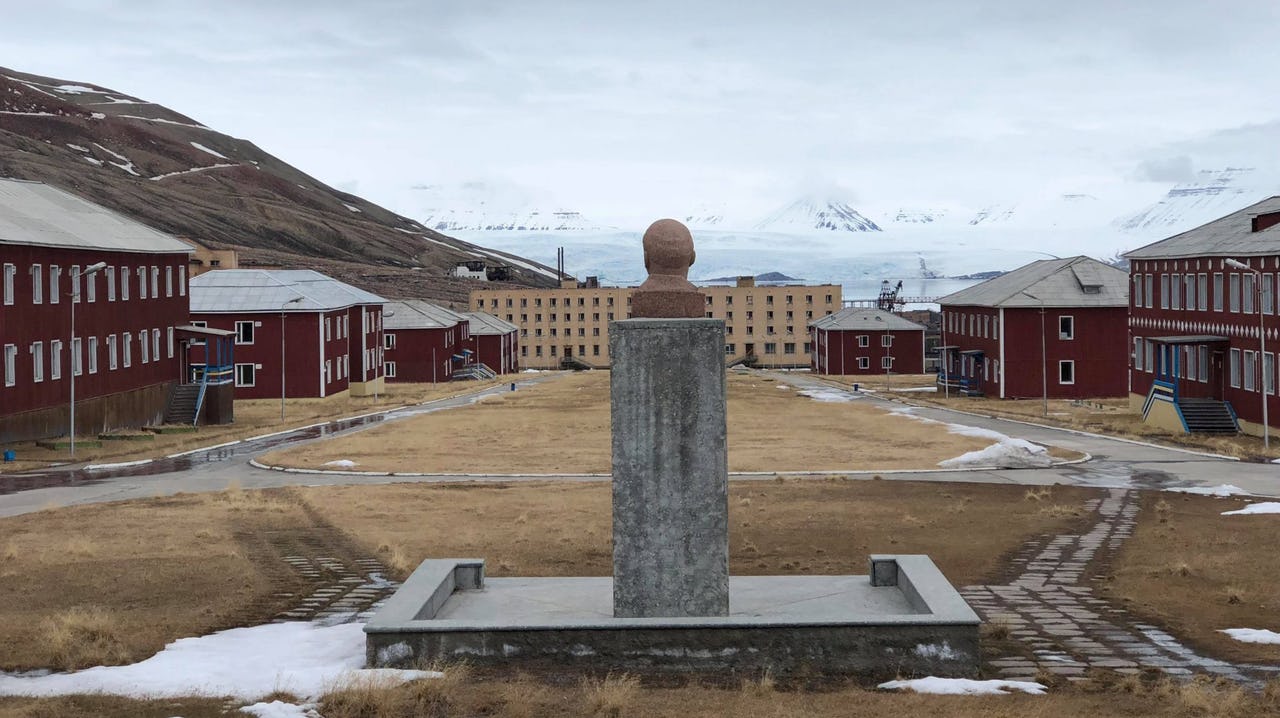
https://www.thearcticinstitute.org/wp-content/uploads/2019/12/Lenin-statue_Pyramiden-Svalbard.jpg
The world’s northernmost Lenin statue looks over the abandoned Russian city of Pyramiden on Svalbard, summer 2018. Photo: Alina Bykova
 

Labels: , , , , ,

Tuesday, March 11, 2025

Canada's new Trump-averse "Buy Canada" Mantra


"It's shocking that our view of the U.S. is now veering closer to how we feel about Russia, a country that is viewed very unfavourably." 
"In 25 years of polling I don't recall it ever being this low. And to see the United States viewed only a little more positive than say China, with whom we've had problems, shows how much damage has been done to a relationship with a country that has long seen us as its closest ally."
Jack Jedwab, president, Association for Canadian Studies, Montreal
https://smartcdn.gprod.postmedia.digital/nationalpost/wp-content/uploads/2024/11/iStock-508632322-1-e1740060430521.jpg?quality=90&strip=all&w=564&h=423&type=webp&sig=USiJS1H_I_r7IZ0aqufMDw

A historic 'realignment' regarding the countries that the Canadian population view as their main allies has become sharply evident in the very short reign to date of American President Donald J. Trump. Mr. Trump's hostility toward Canada has reshaped public opinion in Canada to a degree never before countenanced in reaction to his economic and sovereignty threats against Canada. Although he himself signed a trade agreement (Canada-Mexico-United States -- or CUSMA) he has now unilaterally negated it with his imposition of massive tariffs on goods imported into the United States from his North American neighbours.
 
With that imposition of tariffs, interrupting the flow of manufactured and raw materials in a continent-wide intertwined economy in production, has come a warning from the man himself that his more malign intention is to impact Canada's economy to an extent that his invitation for Canada to fold itself into the United States as its 51st state will find favour with a population he has beggared. His conceit of himself as a great 'negotiator' is to go for the jugular and he has done this with gusto, leaving former friends and allies dazed at the swiftness of their inter-relationship's demise.
 
Canadians now look to the European Union and United Kingdom as the countries most likely to remain their friends, allies and trading partners. The wreckage of the Canada-Mexico-U.S. free trade relationship will lead both Canada and Mexico to search out other countries with which business can be conducted on a trustworthy basis. There is now scant-to-none left with the United States whose moves can be characterized as dishonourable.
 
https://smartcdn.gprod.postmedia.digital/nationalpost/wp-content/uploads/2025/02/Donald-Trump-hostages.jpg?quality=90&strip=all&w=564&type=webp&sig=VMS1dxXwIAvSg8lGRfyhUA
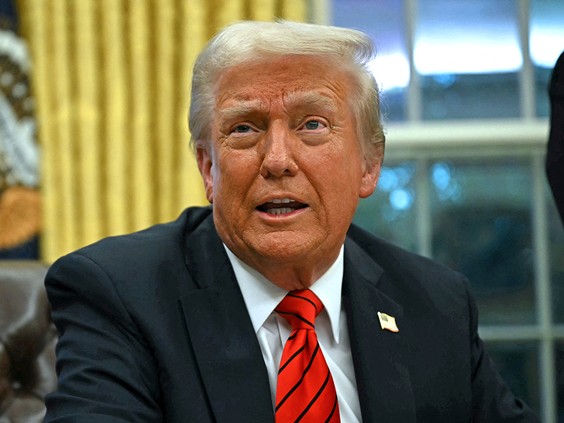
U.S. President Donald Trump speaks to reporters after signing an executive order in the White House, on February 10, 2025. Photo by ANDREW CABALLERO-REYNOLDS/AFP via Getty Images

Some two-thirds of Canadians feel that Mr. Trump's "expressed interest to make Canada the 51st American State" must be taken "very seriously", with a slim majority of respondents to the Leger poll commissioned by the Association for Canadian Studies going on to state that they are personally willing to defend Canada should the situation turn into a military threat of invasion. The historical view by Canadians of Americans has been one of deep friendship, trade and military alliance aside. That has now dwindled remarkably.
 
Positive opinions of various countries from June to the present day had been tracked by the survey, with the sole country's opinion on a steep downward trend in Canadian eyes being the United States. The current survey of 1,548 respondents indicates positive opinion of the United States remains most common among young respondents, 25 to 34, a 42 percent. Among an older demographic, 55 upward, it is 27 percent. Asked the same question relating to the American people, rather than their government, positive numbers leap, still reaching overall just 50 percent.
"While the 50 percent is low compared to past surveys, it still shows that a distinction is being made between our views of Americans and our view of their current government."
"Clearly for the time being, President Trump has soured our relationship."
Jack Jedwab 
Over the past year, all other countries' favourability rating remain stable, moving no more than two percentage points: Ukraine at 66 percent, Israel at 36 percent, China at 30 percent, Iran at 17 and Russia at 18. Young Canadians, 18 to 24 appear fairly negative about Israel, just 25 percent with a positive opinion in comparison to 46 percent of people over 65 years of age. Young people on the other hand, are relatively positive on China, at 38 percent, compared to just 28 percent older than 65.
 
Interestingly enough, the young in Canada appear quite a bit more interested on Iran and Russia in comparison with older people, at 30 percent of those age 18 to 24 holding positive opinions of both. Those over 65 are just 12 percent positive on Iran and nine percent on Russia. Men appear more positively disposed than women to the U.S., Israel and Russia. The split is 12 points for Israel with between 42 percent of men with a positive view as compared to 30 percent of women.
 
As for defending their country, fully 38 percent of those 18 to 34, would do so, in comparison to respondents older than 55 seeing 17 percent commitment. Two thirds of Canadians overall agree a travel boycott is an effective response, while among young people that falls to 56 percent. Among those older than 55, 78 percent agree on a travel boycott. "Buy Canada" has become a popular message. 

https://www.readthemaple.com/content/images/size/w2000/2025/02/presidents.png
Graphic assembled by The Maple staff using photo of the American flag by Charles "Duck" Unitas via Unsplash and official presidential portraits via Wikiepdia.

Labels: , , , , , ,

Follow @rheytah Tweet