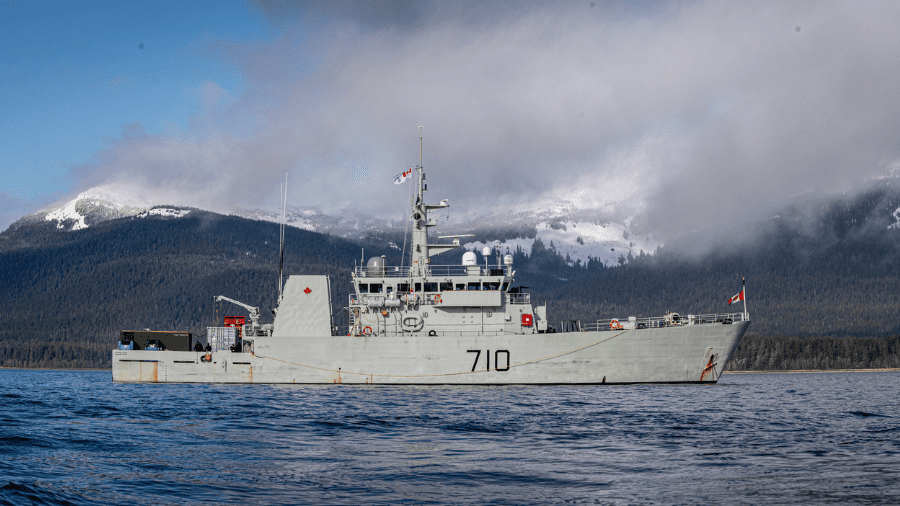
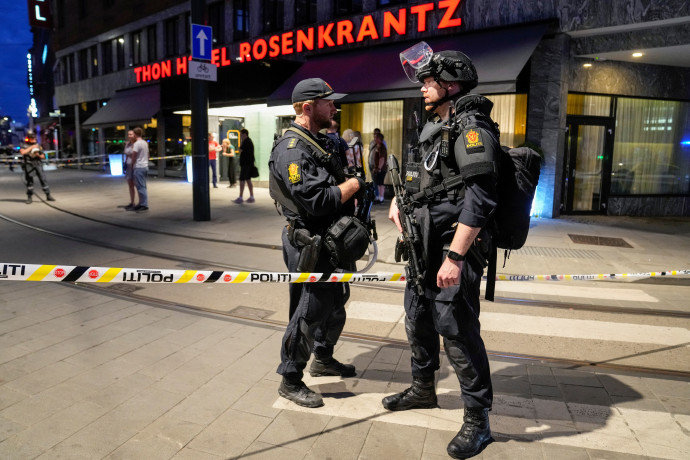
Terra Nullius -- Svalbard: Cold Shore
"Norway now finds itself in the most serious security situation since 1945."
"[Svalbard
has for too long been seen by nations as a place where] everyone who
wants to can come up and do almost whatever they want."
"That's not the fact. This is Norwegian sovereign territory. So we're making that a bit clearer."
Eivind Vad Petersson State Secretary, Ministry of Foreign Affairs, Norway
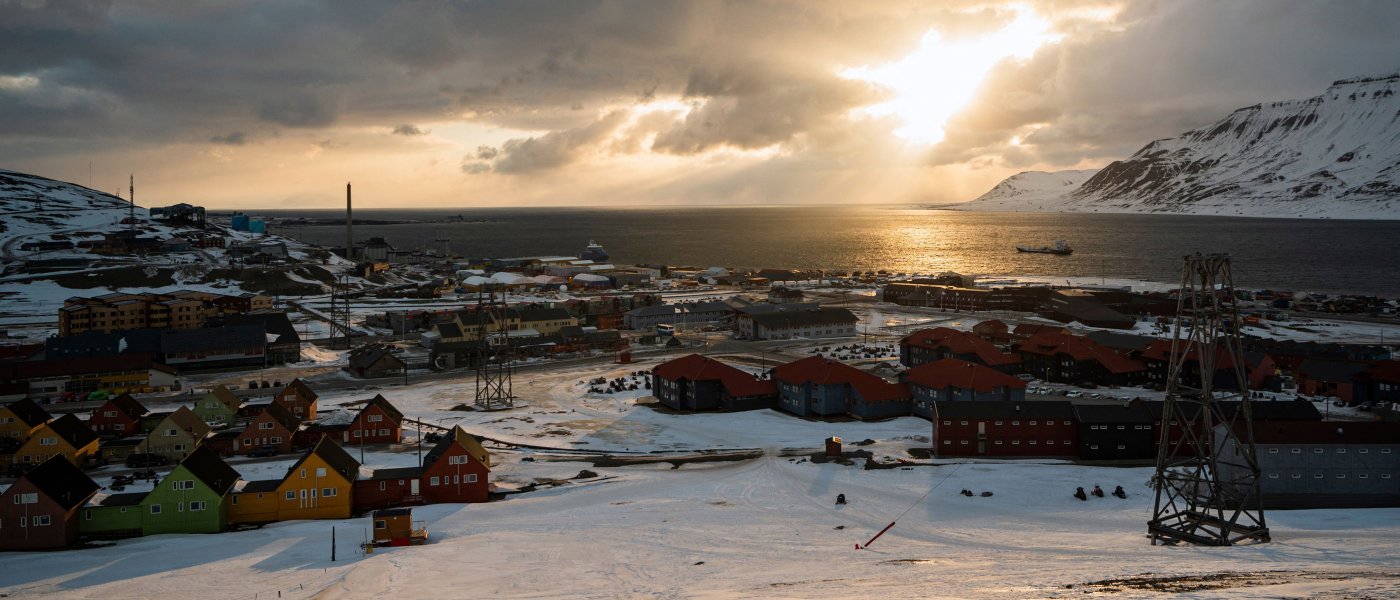 |
| The Svalbard Archipelago Photo: Jonathan Nackstrand/AFP via Getty Images |
Following World War 1, Norway's
claim to the Arctic archipelago and its islands was officially
recognized. The Svalbard Treaty of 1920 banned the presence of activity
linked to the military while granting all other nations choosing to sign
on to the agreed-upon treaty access to hunting, fishing, mining and
land ownership. Over the years, close to fifty countries added their
names to the treaty which allowed them access.
Of
late, studies of the geology of Svalbard and the ocean floor
surrounding it have identified vast amounts of copper, zinc, cobalt,
lithium and rare earth elements buried in the ocean floor. These are
eagerly-sought-after minerals that power electric car battery
technologies and wind turbines. It was generally taken that the
Svalbard Treaty granted signatories rights to its surrounding seas and
seabed. Until January 2024 when Norway's governing party announced it
would pursue deep-sea mineral exploration in an enormous sweep of its
seabed.
The
remote, frigid island, viewed as hostile to human life on a prolonged
basis where minus 34 Celsius temperatures were not unknown, were
initially home to Norwegian miners and Russian fur trappers.
Longyearbyen, Svalbard's largest town, these days boasts candlelit
restaurants, hotels, daily flights to the mainland, and is home to 2,500
people from 50 countries. According to the town's mayor, a surge in
investment, official visits and strategic attention has recently focused
on Svalbard.
Recently,
the Energy Ministry of Norway publicly declared that Norway's goal in
exploiting the natural geology of the area had a defined purpose; the
goal of "profitable and sustainable" pursuit
of seabed minerals, including the seabed around Svalbard. As Norway
moves toward consolidating its sovereign rule over the island, its
attitude toward foreigners and civil rights has hardened. Foreigners
since 2021 were able to cast a vote in the political arena.
That
changed when authorities declared that voting in local elections would
be off limits to foreigners living on Svalbard if they had not lived on
Norway's mainland for the previous three years. "Should have been done a long time ago", said Mr. Petersson. The Svalbard Treaty guaranteed "equal access, not equal rights", he said, pointing out that in other countries foreigners are not given the right to vote.
Svalbard
is located about 800 kilometers from the North Pole, one of the only
places on Earth where instant connection is possible with polar-orbiting
satellites, leading to uninterrupted, clearer feeds and faster
downloading speeds; more advantageous than anywhere else on the planet.
In fact SvalSat, the world's largest satellite downloading station is
based on Svalbard.
 |
Telecommunications domes of KSAT, Kongsberg Satellite Services, on a mountain near Longyearbyen. Photo: Jonathan Nackstrand/AFP via Getty Images |
Fur
traders from the Pomor region in northwestern Russia arrived at
Svalbard some 300 years ago. The Soviets established several coal mining
towns in Svalbard a century ago and had signed the Treaty. Of the
mining towns, only one, Barentsburg, remains and still operates
minimally. Once there was a population of 1,000, now reduced to around
300. One Russian official claimed the archipelago should be renamed the "Pomor Islands".
A
powerful radar system monitoring space weather and the atmosphere is at
the service of Chinese scientists. Data gathered from this equipment
have been shared with the China Research Institute of Radiowave
Propagation, a Chinese defense organization. Members of the U.S. House
Select Commission on the Chinese Communist Party are convinced China is
performing military research on Svalbard in defiance of the Treaty
proscription.
Outside the Yellow River Station where the Chinese scientists live a pair of granite lions stands guard.
Norway
ordered the Chinese to remove the lions, each of which weighs 900
kilograms, installed 20 years ago when the Chinese government agents
arrived on Svalbard. For the first time last summer, the archipelago's
sole university, the University Center, operated by the Norwegian
government, barred entry to Chinese students, identified by Norwegian
intelligence agencies as a potential security risk.
Criticisms of China's activities represent "nothing but distortion of facts and groundless speculation",
according to officials at the the Chinese Embassy in Norway. As for the
lions standing guard, they continue to remain where they were placed
two decades earlier.
"While the Russian geopolitical threat remains paramount, Chinese
encroachments facilitated by an isolated Russia may complicate the
Arctic security landscape in the longer term. The coast guard agencies
of Russia and China recently signed a cooperation agreement on
strengthening maritime law enforcement to great fanfare in Murmansk, a
city on Russia’s western flank close to Norway."
"Moreover, when all other
Arctic coast guard agencies suspended their participation in the Arctic
Coast Guard Forum, Russia invited China to join the forum—clear
signs of China’s expanding presence in the High North."
"As Iris A.
Ferguson, U.S. deputy assistant secretary of defense for arctic and
global resilience, has put it, Chinese efforts aim “to normalize its
presence and pursue a larger role in shaping Arctic regional governance
and security affairs.”"
Center for Strategic and International Studies
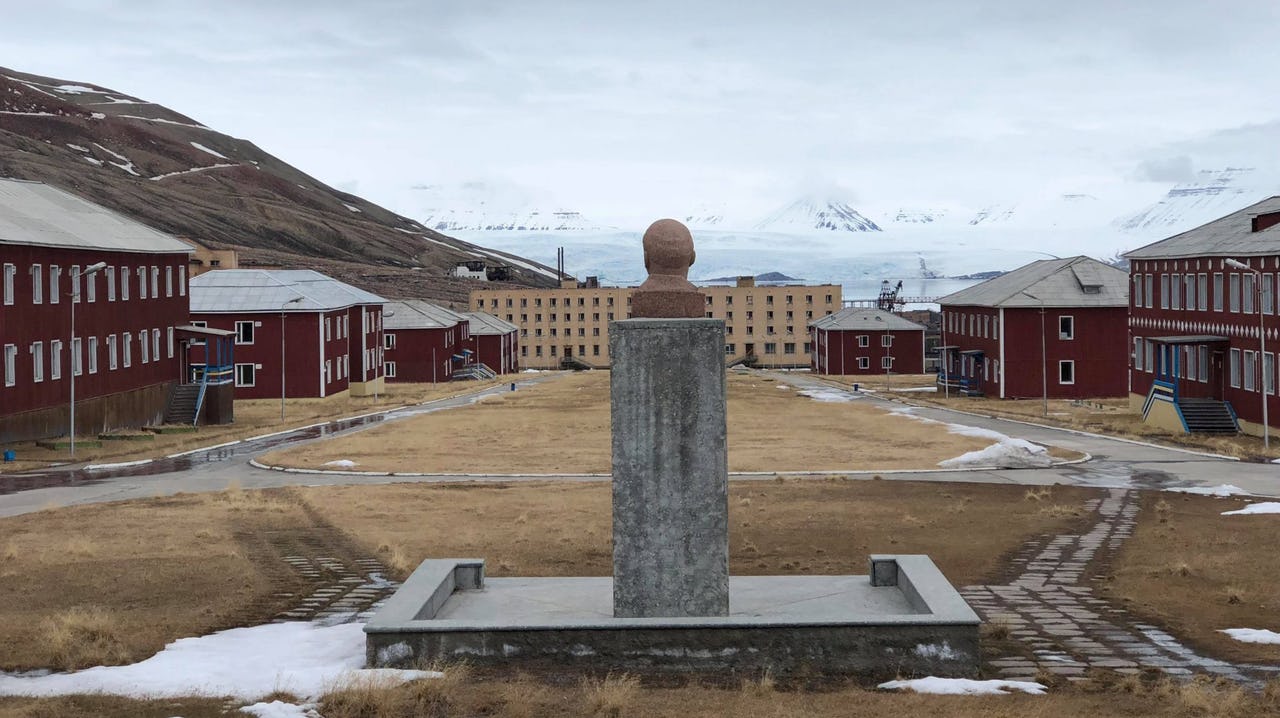 |
| The world’s northernmost Lenin statue looks over the abandoned Russian city of Pyramiden on Svalbard, summer 2018. Photo: Alina Bykova |
Labels: Arctic, China, Norway, Russia, Sovereignty Challenges, Svalbard Archipelago
Negotiated Settlements Set Aside by Norway, Ireland, Spain
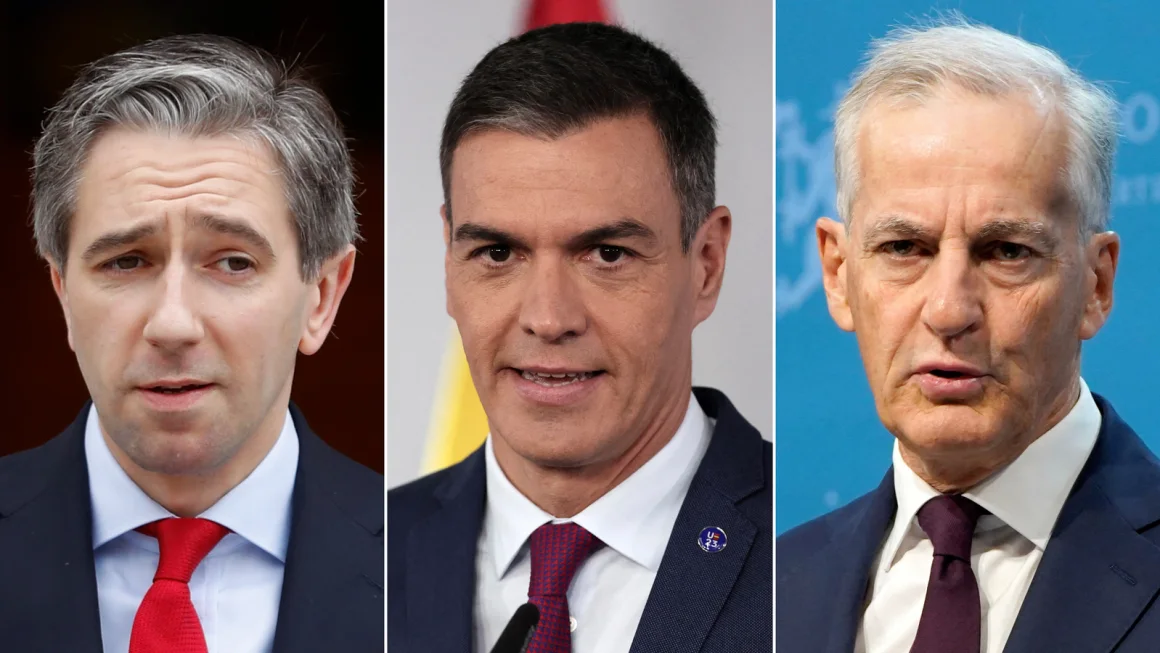
"Today, Ireland, Norway and Spain are announcing
that we recognize the state of Palestine. Each of us will now undertake
whatever national steps are necessary to give effect to that decision."
"There is never a wrong time to do the right thing".
"It was my government’s preferred position to recognize a
two-state solution as part of a peace process to bring that about, but
sadly, unfortunately, such a comprehensive peace settlement now seems,
in many ways, further away than it has ever been."
"We believe you can’t say you’re in favor of a two-state
solution and not recognize the very existence of two states."
Irish Prime Minister Simon Harris
 |
|
Was
ever a sentence uttered that should have been corrected as 'There is
never a right time to do a wrong thing'? Israel, in reacting to the
tripartite statement in shock and disbelief is entirely correct in
chiding these three Western democracies for their gross error in
judgement, deciding between them that the 'right thing' to do is to
reward terrorist groups in the Middle East for their vicious penchant to
declare their intention to destroy a legally and morally constituted
state on its own ancestral geography that has been challenged for
possession by a group of Arab (of mostly Egyptian origin)
colonizers claiming it as their own. Did the three ask themselves why it
was that a negotiated settlement was further away than ever?
The
opportunity for a two-state 'solution' was offered through the UN's
partition plan, promptly and gratefully accepted by Israel, furiously
rejected by those now calling themselves 'Palestinians' who preferred to
wait out the intentions of surrounding Arab/Muslim countries to march
on the nascent state of Israel with a view to preventing the
establishment of the Jewish state. Succeeding wars failed just as the
initial one did, but the Palestinian-Arab determination to wreak havoc
on Israel with the ultimate aim to destroy it and murder all its
population has never faded.
The
October 7 butchery that took place in southern Israel by the terrorist
groups Hamas, Palestinian Islamic Jihad and the Popular Front for the
Liberation of Palestine, aided and abetted by Palestinian civilians
exhibiting raw savagery in the sordid, ghoulish sadistic cruelty meted
out to innocent civilians has few parallels in modern history. This
declaration by Palestinians both in the West Bank and the Gaza Strip who
have been polled to render 85% support to Hamas terrorism and their
approval of the October 7 bestiality represents the level of
civilization that Spain, Norway and Ireland are prepared to recognize
and legitimize with statehood.
Israel
is dismayed, but perhaps not completely surprised by the three
countries turning their backs on the only democracy in the Middle East,
distinguished from all others because it is Jewish, its origins the very
land it now sits upon, along with other areas the world prepared to
honour and hand over to an Arab population that has no intention, ever,
of living in peace with the original inhabitants of the land. In their
preparation to recognize the State of Palestine, no effort has been made
by Spain, Norway and Ireland to condemn the Palestinians for their
aspirations to destroy Israel.
Nor
has any overture been made to persuade the Palestinians through their
leadership to turn their ambitions toward statehood infrastructure and
the merits of civilized behaviour in favour of completely foregoing its
lethal hostility against Israel. Needless to say, with no expectations
of Palestinians curbing and abandoning their commitment to violence
against Israel, the announcements of support in the form of recognition
of their ambitions to form a legitimate state with no pre-conditions
sits extremely well with the Palestinian leadership -- the Palestinian
Authority and Gaza's Hamas rulers.
Envoys
of the three countries were summoned by Israel in a diplomatic
expression of profound disappointment in their judgement and
decision-making. The European ambassadors to Israel, Israeli Foreign
Minister Israel Katz said grimly, would be requested to witness video
footage of the October 7 attack, to ensure they had intimate first-hand
knowledge of what had transpired, through videos produced by the
terrorists themselves as they rampaged through Israeli farming
kibbutzim, raping and vandalizing, torturing children and women before
murdering them.
"[A Palestinian state is] a prerequisite for achieving peace in the Middle
East."
"There will be no peace in the Middle East without a
two-state solution."
"There can be no
two-state solution without a Palestinian state."
Norway’s Prime Minister Jonas Gahr Støre
"This recognition is not against the people of Israel and
certainly not against the Jewish people."
"It’s not in favor of
Hamas."
"It’s in favor of co-existence."
Spanish Prime Minister Pedro Sánchez
"[Recognizing a Palestinian state would be a] reward for terror."
"This will be a terror state, which will attempt to
perpetrate the onslaught of October 7 time and again, and to that we
shall not agree."
"This evil must not be given a
state."
Israeli Prime Minister Benjamin Netanyahu
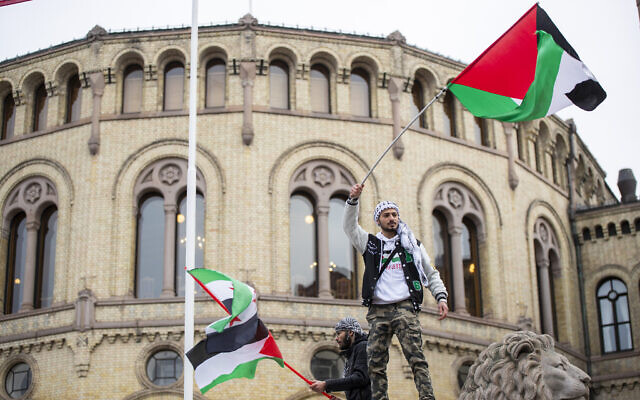 |
| A man waves the Palestinian flag in front of the Norwegian Parliament
building during a demonstration in Oslo, Oct. 28, 2023. (Frederik
Ringnes/NTB via AP) |
Labels: Abandoning Negotiated Settlement Agreement, Appeasement, Ireland, Israel, Norway, Palestinians, Spain, State of Palestine Recognition
Russia, Respecting The Rule of Law/Arctic Council Chairmanship 2021-2023
 |
|
"A cross-cutting priority of the Russian Chairmanship in the Arctic
Council will be "Responsible Governance for Sustainable Arctic" through
promoting collective approaches to the sustainable development of the
Arctic, environmentally, socially and economically balanced, enhancing
synergy and cooperation and coordination with other regional structures,
as well as implementation of the Council's Strategic Plan, while
respecting the rule of law."
"The Russian Chairmanship will continue supporting the establishment of
the Arctic Council as the leading format for international Arctic
cooperation, improving its work, increasing the effectiveness of its
Working and Expert groups, the Secretariat, as well as developing
mechanisms for financing the Council's activities, including its
projects and programs, implementing decisions and recommendations, as
well as encouraging the dialogue and interaction with the Observers to
provide their meaningful and balanced engagement in the Council’s
activities. It intends to further intensify collaboration of the Arctic
Council with the Arctic Economic Council, the Arctic Coast Guard Forum,
the University of the Arctic. Among the priorities of the Russian
Chairmanship – promoting international scientific cooperation, in
particular, exploring the possibility to conduct an Arctic Council
scientific expedition to the Arctic Ocean."
His Excellency Lavrov Sergey Viktorovich Minister of Foreign Affairs of the Russian Federation
 |
| Sea ice in the Arctic Roscongress |
"The
hopes for cooperation with Russia in the Arctic continue to cool. Days
after a U.S. diplomat stated that cooperation with Russia in the Arctic
was now virtually impossible, the Kremlin published amendments to its
Arctic policy. President Putin signed the decree earlier this week on 21
February 2023. "
"The updated document places
greater emphasis on Russian national interests in the region and removes
specific mentions for cooperation within the Arctic Council."
"While the original policy,
published in March 2020, called for the “strengthening of good
neighborly relations with the Arctic states” in the fields of economic,
scientific, cultural and cross-border cooperation the amended version
removes the above section and instead calls for the “development of
relations with foreign states on a bilateral basis, […] taking into
account the national interests of the Russian Federation in the Arctic”."
High North News
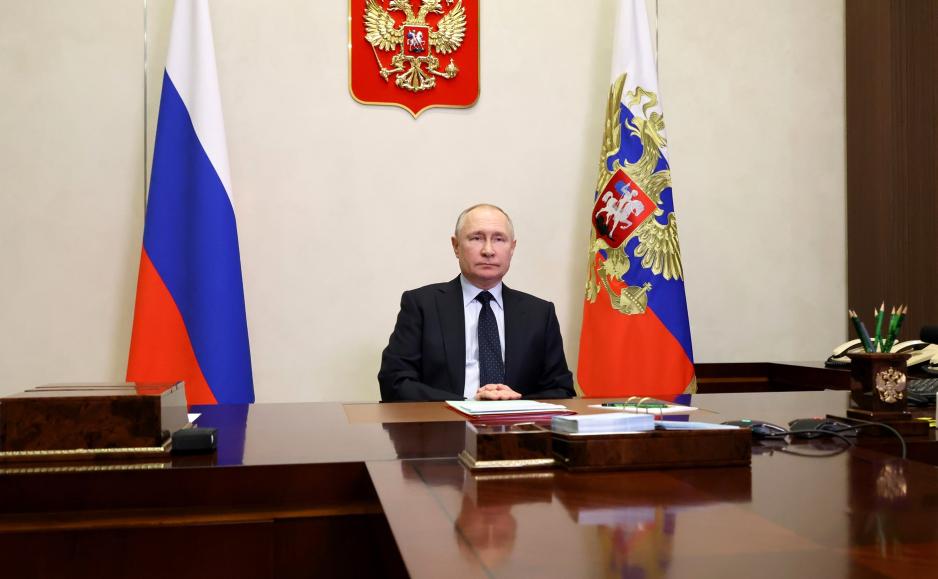 |
| President Putin discusses expansion of Russia’s territorial claims with the permanent members of the Security Council. (Source: Kremlin) |
The
eight Arctic states that comprise the Arctic Council are Finland,
Norway, Iceland, Sweden, Russia, Denmark, Canada and the United States.
All these states in collaboration and agreement have produced binding
agreements focused on preservation and environmental protection. The
council represents a rare platform that gives a voice to the region's
Indigenous peoples. Security interests are not part of the Council's
agenda,
The
Arctic Council for close on three decades has been an example of
successful post-Cold War cooperation. Its members have seen common
purpose in cooperating on climate-change research and social development
in recognition that this is an ecologically sensitive region of the
world and currently undergoing vast environmental transformation linked
to Climate Change.
All
that has changed. Following the Russian invasion of Ukraine other
council members were estranged from Russia as a rebuke of its imposition
of war on its neighbour, and stopped working with their Russian
counterpart. Norway now prepares to assume the Council chairmanship from
Moscow, on May 11. Leaving experts to ask whether the viability of the
polar body itself is at risk reflecting its inability to cooperate with
the very country that controls over half of the Arctic coastline.
There
could be dire future implications for the region's environment and its
four million inhabitants who face the effects of melting sea ice and the
interest of non-Arctic countries in the region's untapped mineral
resources in the face of an ineffective Arctic Council. With the end of
cooperation with Moscow a third of the council's 130 projects cannot
move forward, new projects cannot proceed, existing projects cannot be
renewed.
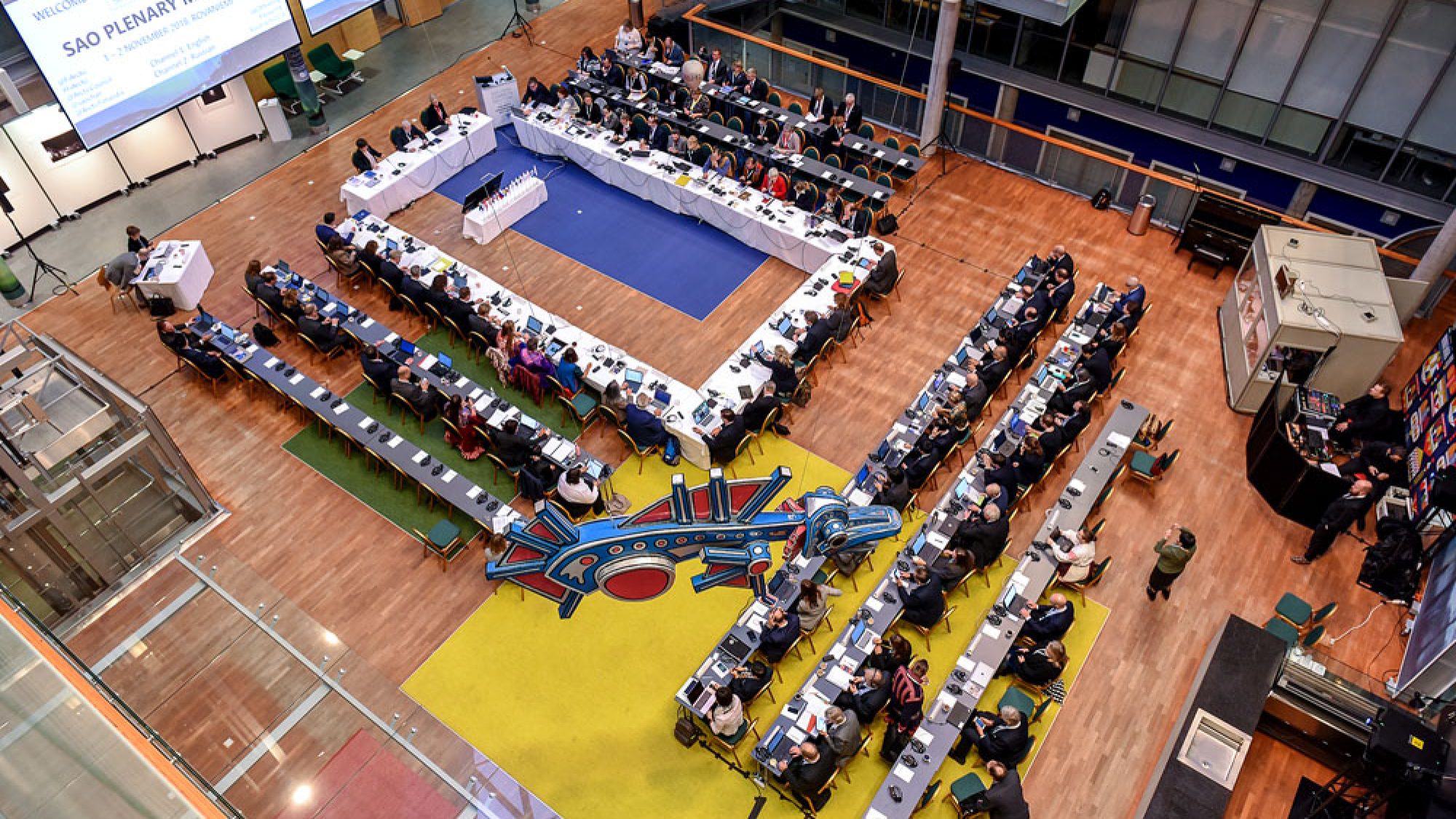 |
Arctic Council Meeting
|
No
longer do Western and Russian scientists share climate-change findings.
Cooperation for possible search-and-rescue missions or oil spills has
come to an end. "I am worried that this will really hobble the ability of the Arctic Council to work through these various issues",
stated US. Senator Angus King. Polar waters are opening to shipping as
sea ice vanishes. The Arctic is known to be warming four times faster
than the rest of the world.
Industries
are eager to exploit the region's endowment of natural resources that
include oil, gas and metals like gold, iron and rare earths. An
effective response to changes and the vital issues that loom are less
likely given discord between Russia and the other members of the Arctic
Council. "Norway
has a big challenge. That's how to rescue as much as possible of the
Arctic Council's good work in the absence of Russia", pointed out John Holdren, co-director of the Harvard Kennedy School's Arctic initiative.
For
its part, Russia points out that the work cannot continue without its
cooperation. Nikolay Korchunov, Russian Arctic Ambassador, said he was
not confident it "will be able to remain the main platform on Arctic issues, given that the council has become weak".
There is the possibility that Russia may decide that issues affecting
the region must be addressed with Russian interests only in mind. Or
that it may establish a separate Russia-centric rival council.
 |
| China warmly welcomes Putin’s state visit in 2018. After the
conversation between Xi Jinping and Putin, China and Russia reached a
consensus on deepening bilateral cooperation and signed a series of
cooperation agreements. Photo: Presidential Press and Information Office |
Russia
has recently taken steps to expand cooperation in the Arctic with
non-Arctic states; signing a memorandum for example with China,
establishing cooperation between the two countries' coast guards in the
Arctic. China's interests in the Arctic revolve around shipping and
investing in ore extraction, particularly rare earth minerals. Russian
Arctic Ambassador Korchunov pointed out Moscow's welcome of non-Arctic
states in the region. With the proviso they not arrive with a military
agenda.
And
this is yet another area where Russia has distinguished itself, long
before its invasion of Ukraine occurred. It has rebuilt or refurbished
old Soviet military bases on its Arctic shorelines and islands that form
part of Russian territory. It is Russia under Vladimir Putin that has
militarized the Arctic, a condition it wants no other country to
emulate.
Labels: Arctic Council, Canada, Cooperation, Denmark, Environment, Finland, Iceland, Norway, Russia, Sea Ice, Sweden, United States
Islam Quite Smply Incompatible with Gay Rights
"Around 2015 we were worried about this person. We have followed him, to a degree."
"In more recent times, he was not one of the people we were the most worried about."
Roger Berg, acting head of PST (Norwegian Domestic Security agency)
"We are sorry that once again we have to say that a Pride event must be
cancelled."
"It is wrong, as the police claim,
that this was meant to be a small event. We understand that people are
now frustrated and still want to gather."
Oslo Pride
"I
know how many of you felt when it turned out that the perpetrator
belonged to the Islamic community. Many of you [Norway's Muslim
community] experienced fear and unrest "
"You should know this: We stand together, we are one community and we are responsible for the community together."
Norwegian Prime Minister Jonas Gahr Stoere
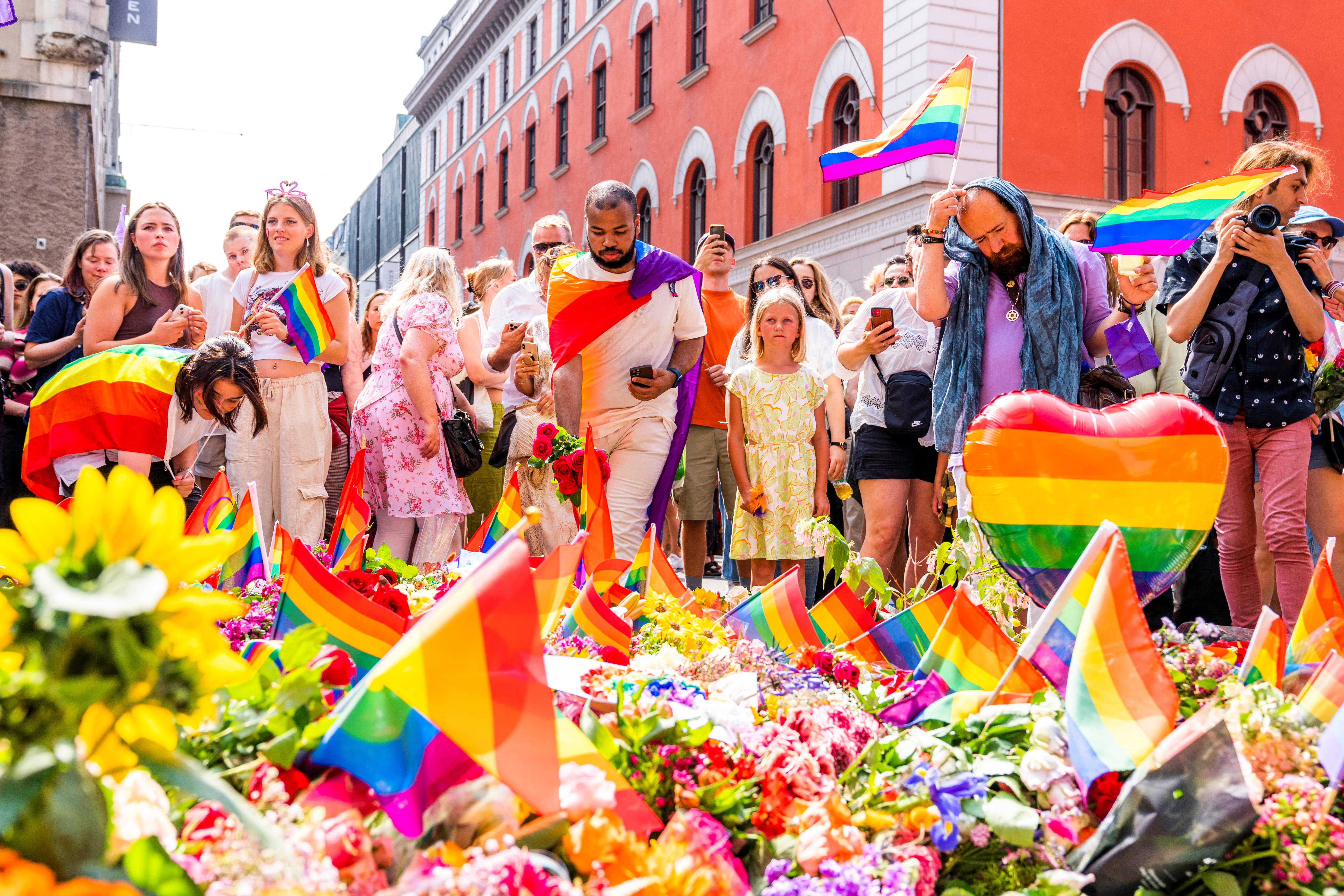 |
| People bring flowers and rainbow flags to pay tribute to the victims as
they take part in a spontaneous Pride parade, following a shooting at
the London Pub, a popular gay bar and nightclub, after the official
event was cancelled, in Oslo, Norway, June 25, 2022. Haakon Mosvold
Larsen/NTB/via REUTERS |
Another
shock in Norway. The country's right-wing (Anders Brevik) has already
made it abundantly clear how much they fear and detest the entry to the
Nordic country of people from the Middle East, people practising a
different religion linked to a different history, culture and set of
laws, not secular like that of most Western democracy, but theocratic,
linked to and a mainstay of Islam which regulates every aspect of the
Muslim faithful's lives.
Norway
insists that it is open to immigration and migration from the Middle
East, prepared to welcome and absorb people radically differently
socialized than indigenous Norwegians. And the country's political elite
make it a point of pride that their welcome is unconditional. Native
Norwegians are not so sure. There has been a lashback of anti-Muslim
sentiment, with a hefty third of Norwegians uncomfortable to say the
least with the presence of Muslims among them.
The
42-year-old suspect in the attack that took place during an LGBTQ
festival in Oslo, was no recent immigrant. He was brought by his family
to Norway while still an infant, so he has lived in Norway all his life.
He is considered to be a radicalized Islamist, and was recognized as
such from 2015 onward by Norwegian police authorities, but not
considered to be a high-value threat. As with most of these terrorist
actions, he has been described as mentally ill.
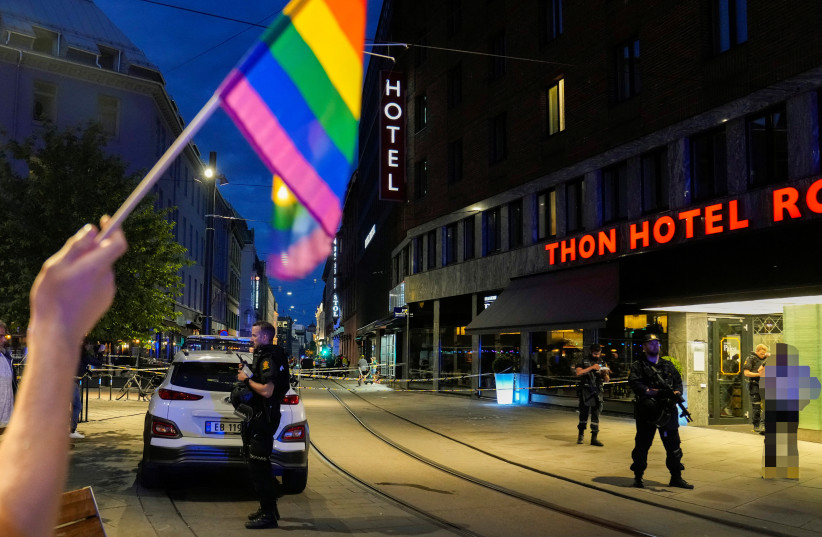 |
2 dead, 21 wounded in Norway LGBT nightclub shooting (photo credit: REUTERS)
|
Married,
children, he has lived on the dole for years. Iranian by birth, he was
arrested after a shooting in the nightlife district of the country's
capital early on Saturday, held on suspicion of murder, attempted murder
and terrorism. It was actually people on the scene who followed him
after the shooting and took him into initial custody until the arrival
of police. Two people were killed and another 21 were injured in what
has been named an "Islamist terror act".
Clearly,
he was 'radicalized' while a long-time citizen of the country. Clerics
established in mosques throughout the non-Islamic world are known to be
involved in introducing impressionable young Muslims to the concept of
jihad and violent missions in the glories of martyrdom. Police in Oslo
have thus far had no luck in their attempts to question the man
identified as Zaniar Matapour.
He
has made his own demands, however, that he would make a statement to be
recorded and videotaped only if it were to be released to the public "with no time delay so it won't be censored or manipulated",
his defence lawyer explained. Clearly, a type of 'manifesto' that he
believes will deliver a welcome message that Gay Pride and LGBTQ
festivities are sinful and not permitted by Islam. Punishment is their
due and he assigned himself to deliver that punishment; death to the
unbeliever.
The
killer opened fire at three locations; outside and inside the London
Pub, a popular gay bar in Oslo. Despite which police investigators feel
confident in stating it was yet too soon in their investigation to
determine whether the man had specifically targeted the gay community.
Police found two weapons at the scene, one a fully automatic gun.
Despite which, police recommend that all further LGBTQ events be
cancelled for the present, not ruling out further and ongoing threats.
Labels: LGBTQ Club, Norway, Norwegian-Iranian Islamist, Terrorist Attack
Norway's Human Rights Justice System
Norway's Human Rights Justice System
"According to Norwegian law he has a right now to go before a judge."
"He emphasizes that
right. And his motivation for doing so is difficult for me to have an
opinion on."
"According to the law there is no obligation that you
have to be remorseful."
"So it is not a legal main
point. Absolutely the legal problem is whether he is dangerous."
Øystein Storrvik, Breivik’s defense lawyer
"The only thing I am afraid of is if he has the opportunity to talk
freely and convey his extreme views to people who have the same
mindset."
"I think personally it is absurd he has this possibility. I think he is
ridiculous, but you have to remember that him having all this attention
will be hard for the survivors and the parents and some people can be
re-traumatized."
Lisbeth Kristine Røyneland, head, family and
survivors support group
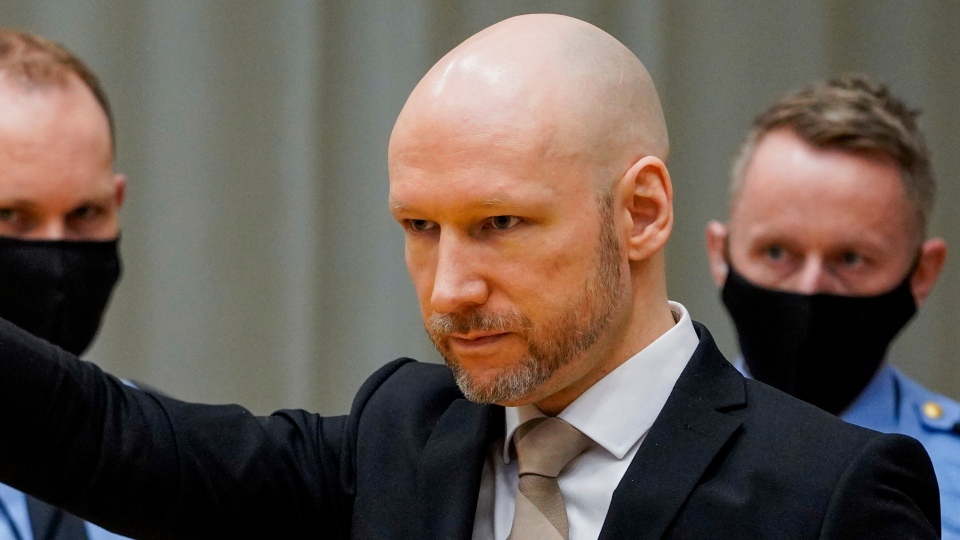 |
| Norwegian mass killer Anders Behring Breivik arrives in court on the
first day of a hearing where he is seeking parole, in Skien, Norway,
Tuesday, Jan. 18, 2022. (Ole Berg-Rusten/NTB scanpix via AP) |
It's
questionable whether a man with expressed fascist views who set out to
commit a mass atrocity, could be any more notorious than Norwegian
Anders Behring Breivik. The world read in horror of his murderous
exploit in 2011 after he had planned to execute a brutal plan of mass
murder where he began by setting off a car bomb in Oslo outside
government headquarters where the blast killed eight people outright,
wounding dozens of innocent bystanders in the process. That bloody event
was just the start, he went on to complete the major part of his plan.
Driving
to a recreational island where a leftist political group, the Labour
Party, was holding a youth event at a summer camp he opened fire,
shooting at defenceless people, mostly teens desperate to escape the
nightmare that had suddenly erupted on an idyllic day of togetherness in
recreation and politics where the man known as Norway's mass killer,
took the lives of sixty-nine fellow Norwegians. Because from the
perspective of his fascist ideology they practised a deplorable
political agenda.
He was
arrested and stood trial for his unspeakably evil act of war against
decency, law and order. Norway's social culture, reflected in its laws,
saw this mass murderer imprisoned in conditions that few other
countries' prisons reflected. An obvious belief in redemption that
included an morally unscrupulous sadist. He had a nicely furnished
'cell' that might equal hotel accommodations elsewhere in the country;
proffered respect for his 'human rights' denied to others by his
terrorist act of obliteration of human life.
He had the audacity
in 2016 to sue the government that was treating him with kid gloves of
understanding and hope for time to correct his mode of thought and
execution of fascist 'justice'. Claiming isolation from other prisoners
and frequent strip searches violated his human rights, initially he won
his case. Somehow good sense and justice prevailed and the verdict was
subsequently overturned in 2017. In fact, had he not been kept in
solitary confinement, his life might have been forfeit, with other
prisoners conducting jungle justice on the conscienceless slaughterer of
youth.
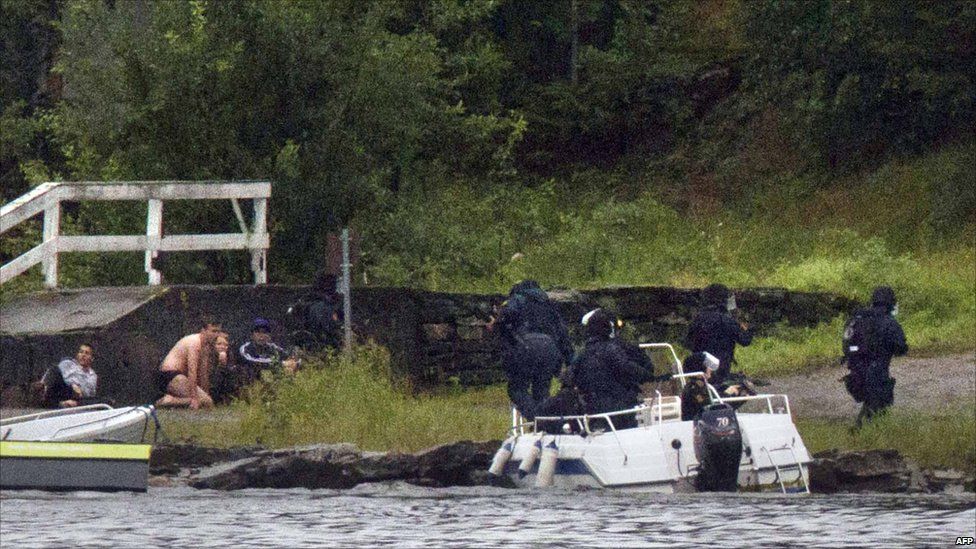 |
Terrified youngsters hid in the woods, with some jumping into the water to escape the hail of bullets AFP
|
The psychiatrist who had followed Breivik since 2012, Randi Rosenqvist, expressed her professional opinion in saying she could "not detect great changes in Breivik's functioning"
from his original criminal trial to his current presentation. He had
been convicted of terrorist acts, having been found criminally sane when
a court rejected the prosecution's claim that he had been psychotic.
Having
served a decade in prison for his horrific, planned and executed murder
spree, he presented himself in court at a parole hearing to decide
whether he might be released from prison. His appearance was as
deliberately provocative as his acts of bloody carnage. With shaved
head, a black suit bearing fascist messages, he made a white supremacist
sign, then raised his right arm in that abhorrent Nazi salute, entering
court.
Signs he carried read "Nazi-Civil-War",
among other slogans. He blamed the commission of his crimes on online
radicalization through a network of leaderless far-right extremists. It
was those online contacts he attributed to having motivated his attacks.
He said, incredibly, "I was brainwashed". He quite evidently knows his civil rights under Norway's laws.
He
was given the maximum 21-year sentence in 2012, on his conviction. The
sentence came complete with a rarely-used clause within the Norwegian
justice system; he can be held indefinitely should he continue to be
considered a danger to society. The clause, however, gives him the right
under the law to demand a parole hearing after a decade of detention.
Which offers him the opportunity for annual parole hearings enabling
him to publicly.air his murderously pernicious ideology.
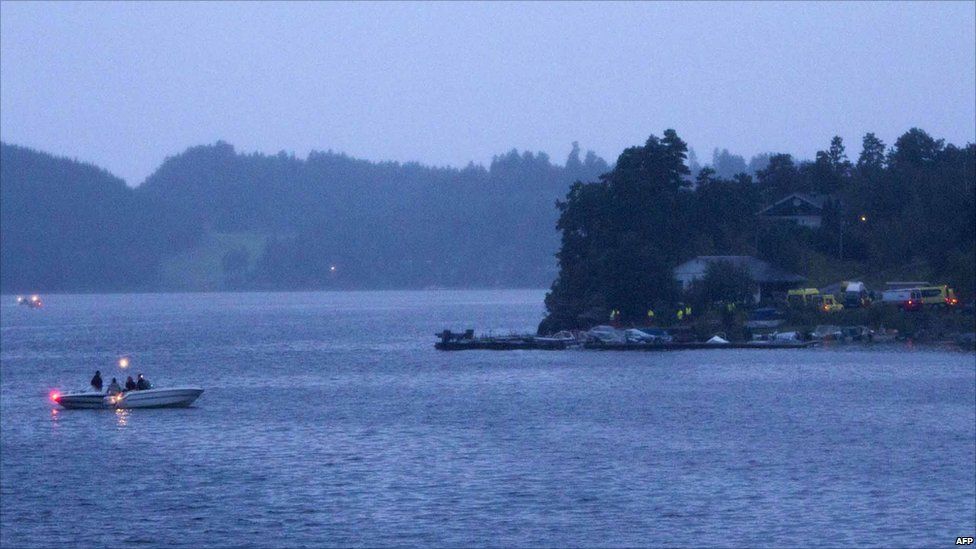 |
Locals gathered boats near the island to try and help those jumping into the water to escape AFP
|
Labels: Anders Behring Breivik, Mass Murder, Norway, Parole Hearing
Terrorist Attack in Norway, But Don't Jump To Conclusions...
"My
youngest daughter was a couple of meters in front of me when she
suddenly stopped as there were lots of blue lights."
"We
saw a police car with sirens on come, and it stopped at the top of the
street. Two policemen jumped out of the car with weapons and ran into
the shop here, and they were shouting, 'armed police, put down the
weapon.'"
"Then
we were told to move away, that we had to get to safety. So we ran to
the corner there, and stood there on the corner. There, we met another
man who said that it was he who had called the police, and that the
perpetrator had shot after him, down here, and then we saw that there
was an arrow down there in the road. There was no crossbow only a long
arrow lying there."
Linda Ostergaard, attack witness, Kongsberg, Norway
"The man has been apprehended ... from the information we now have, this person carried out these actions alone."
"Several people have been injured and several are dead."
Oeyvind Aas, police chief, Kongsberg
"This is a gruesome incident, there is nothing else to say."
"Now we must try to take care of the inhabitants as best we can."
"[This town is] a completely ordinary community with completely ordinary
people. [Everyone has been deeply shaken by] this very
tragic situation."
Kari Anne Sand, mayor, Kongsberg
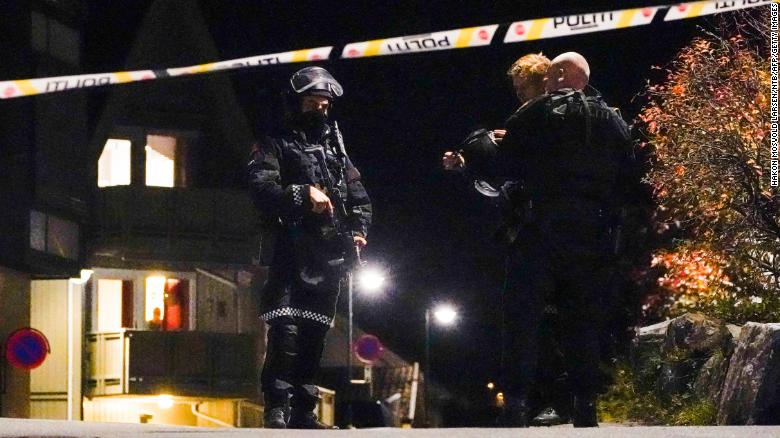 |
| Police officers cordon off the scene in Kongsberg on October 13. |
"We
have during last night, this morning and this afternoon learned more
about what atrocities have taken place, what cruel acts innocent people
were exposed to, what unrest and fear hit the community in Kongsberg,
and spread to the whole country."
"This
shows that our society is vulnerable. It is not good for
us to conclude what is the motive, what is behind this action. The
police must be allowed to finish their work and clarify, but it
emphasizes again that preparedness is a complex task for a society."
Labour leader, Norway Prime Minister Jonas Gahr Store
Despite
having said which, police readily and early declared the longbow attack
that killed four women and a man, injuring several others, was a
terrorist attack. Committed, as it happens, by someone whom the police
had previously interacted with, a Dane living in Norway who had
converted to Islam and who was known to have been radicalized. Espen
Andersen Bråthen, 37, is slated to appear in court Friday, charges
levelled against him not yet revealed.
Obviously,
no one is leaping to conclusions; the evidence seems fairly
straightforward, yet the government itself walks on tippy-toes over
declaring the obvious, not wanting its citizenry to draw from the
shocking news any hint of caution required against the country's
immigrant Muslim population. A situation which could easily get out of
hand, after all, leading to suspicion from indigenous Norwegians about
how trustworthy their relatively new demographic of immigrant Muslims
can be in their loyalty to their welcoming country.
How
many 'radicalized' Muslims could there be? How much of a threat do they
pose to the general population? Norway has already dealt with a much
more shocking terrorist event when one of its own conceived and acted on
a plan to illustrate just how dangerous hatred of the other can be,
when he murdered 8 innocent people in Oslo detonating a bomb, then
stormed an island to slaughter 69 more in a gun rampage. All together
Anders Behring Brevik, a right-wing idealogue, angry over immigration killed 77 people.
A
bow and arrow cannot claim as many lives as a bomb and guns, but the
damage to society through the 'gruesomeness' of the event is monumental.
Although police consider the deadly attack to be an instance of
terrorism, they are as yet without an explanation as to what motivated
the convert to Islam, although commitment to jihad seems a reasonable
enough conclusion; it is what 'radicalization' results in, responding to
the call to jihad.
The
first call to police by bystanders reporting a man with a bow and arrow
came in at 6:15 pm, the rampage was over, the man arrested 35 minutes
later. The municipality of Kongsberg, 68 km from Oslo, has a population
of some 28,000 people. There were, said police, "several crime scenes"
that took place over "a large area" of the town. Resulting in large
areas of the west side of the town cordoned off.
The
attacker first opened fire in a supermarket. At the supermarket an
off-duty police officer was shot and wounded. With one of the lowest
crime rates in the world, unarmed Norwegian police respond to few
crimes. Last year there were only 28 occasions when police used or
threatened to use firearms to apprehend a criminal situation. Not that
there aren't occasions of violence erupting. When restaurants, bars and
nightclubs were reopened following the loosening of pandemic
restrictions dozens of mass brawls broke out.
Celebratory
occasions marking the end of pandemic lockdowns in cities across
Norway. Certainly not comparable to the sinister threat of stalking
killers setting out on a mission of lethal violence in a country known
for its tolerance and calm reaction to adverse events. A country notorious for criticism of Israel, a country which is constantly on guard for just such attacks. Norway practices a facade of public and
social mores invested in quiet everyday civil diplomacy among
people. Not much different than Israel but without the constant threats.
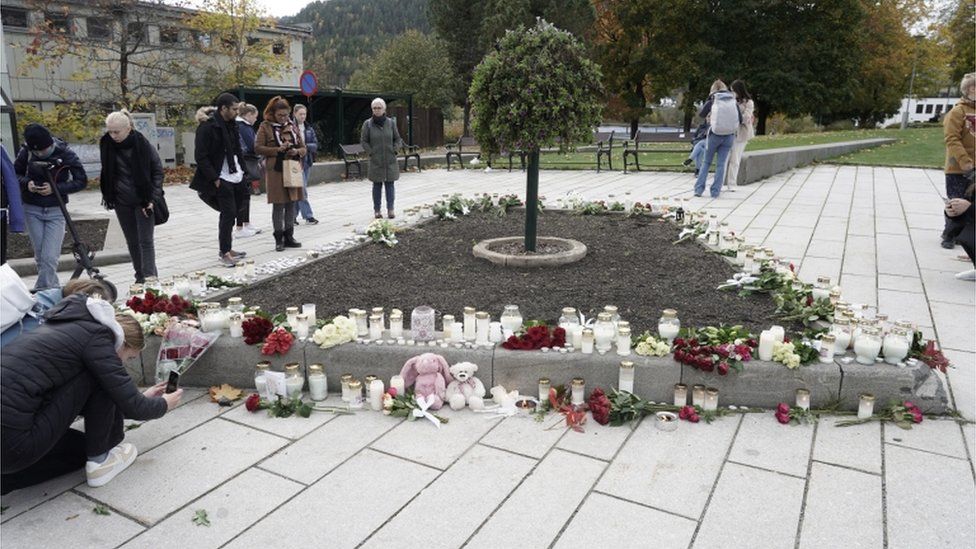 |
Residents have placed tributes for those killed in Kongsberg town centre EPA
|
Labels: Jihad, Muslim Convert, Norway, Terrorist Attack
The Spy That Came In From The Cold Sea
"This is a tame animal that is used to get food served so that is why it
has made contacts with the fishermen."
"The question is now
whether it can survive by finding food by itself. We have seen cases
where other whales that have been in Russian captivity [are] doing fine."
"It is most likely that [the] Russian Navy in Murmansk [is involved. Russia
has major military facilities in and around Murmansk on the Kola
Peninsula, in the far northwest of Russia]."
Audun Rikardsen, professor, Department of Arctic and Marine Biology, Arctic University of Norway, Tromsoe
"If this comes from Russia, and there is good reason to believe it does, then it is not Russian scientists but rather the navy that has done this."
"This is not a method scientists use, and as far as I know, Russian scientists do not tag beluga whales."
Martin Biuw, Institute of Marine Research, Norway
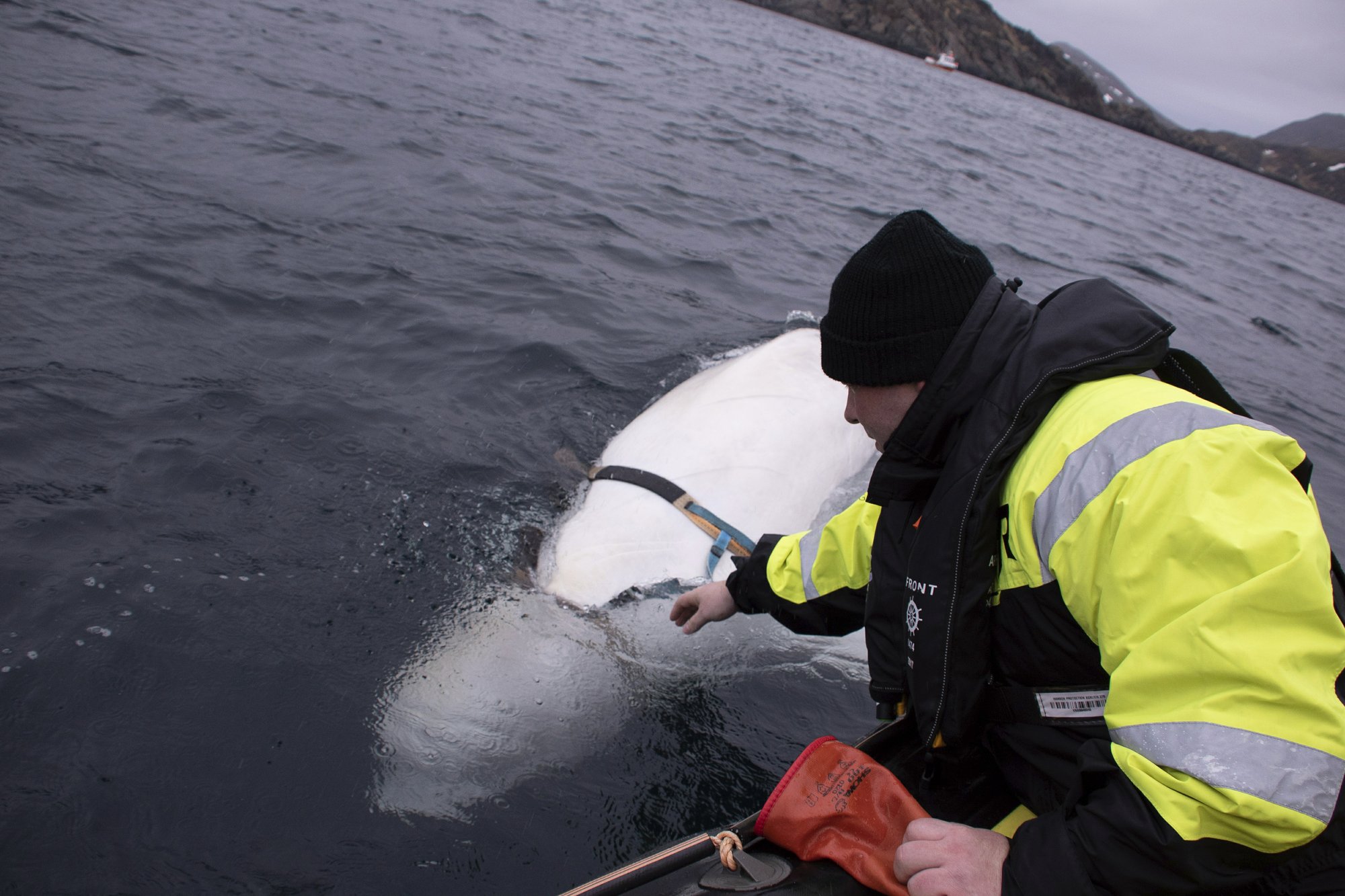 |
| Joergen Ree Wiig tries to reach the harness attached to a beluga whale
before the Norwegian fishermen were able to removed the tight harness,
off the northern Norwegian coast Friday, April 26, 2019. The harness
strap which features a mount for an action camera, says "Equipment St.
Petersburg" which has prompted speculation that the animal may have
escaped from a Russian military facility. (Joergen Ree Wiig/Norwegian
Direcorate of Fisheries Sea Surveillance Unit via AP) |
The Arctic nations of
(Russia), Canada, Norway, Denmark and the United States have long been on the alert resulting from the Russian Federation's uptick in activity in the region. Investing huge sums of national treasury to upgrade and rebuild former Arctic stations for research and new military installations equipped with the latest technically-advanced arms. Russia's exploit in planting a titanium flag on the ocean floor was its first gambit on putting the world on notice. Future opportunities to begin extracting valuable natural resources within the Arctic beckon.
With the melting of Arctic glaciers and sea ice becoming less packed in, sea lanes are opening up, promising greater accessibility to shorten voyages through the Northwest Passage, reducing costs for trade purposes. Even China, as distant as it is from the Arctic has requested observer status on the future of the Arctic within UN auspices. Fishermen in northern Norway were startled recently when a beluga whale came abreast of their fishing boat. The cetacean appeared to seek them out as though it wanted something.
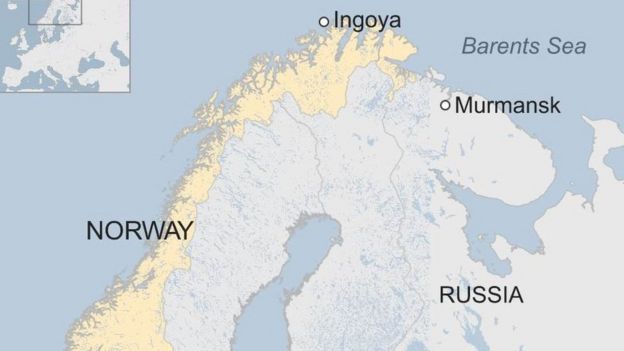
Perhaps, as a 'tame' animal accustomed to being fed, that might be what it wanted. On the other hand, a constricting harness was attached to the small whale and it's even more likely it wanted help removing the harness. Fishing off the island of Ingoya in proximity to Norway's Arctic border with Russia three brothers saw the small white whale alongside their boat. It had previously approached other fishemen who witnessed the beluga attempting to rub the straps off its body, the brothers said.
Eventually the whale was relieved of the irritating harness when a fisheries service employee wearing a wetsuit was enabled to remove the harness while in the water, and the beluga swam away, communication received, aid given. On the buckle of the harness identification as to its origins was clear:
"Equipment St.Petersburg" was stamped there. And with the harness was an attachment meant to hold a GoPro camera.
Professor Rikardsen from the Norwegian Arctic University contacted Russian colleagues to ascertain that neither they nor Norwegian scientists had placed the harness on the whale. During the Cold war in the time of the Soviet Union a program with
"combat dolphins" had been undertaken. Dolphins trained to hunt for submarines and mines. Former army media officer Viktor Baranets spoke of the dolphins completing tasks
"from studying the sea floor to guarding harbours to destroying enemy infiltrators to attaching explosives to the hulls of foreign ships".
This, in reference to a secret military installation in Cossack Bay, Crimea, known to train belugas and dolphins. With the collapse of the Soviet Union, two dolphinariums at Cossack Bay fell into disuse, wth one trainer taking possession of a beluga whale and other animals in 2000, taking them to Iran insisting that in Ukraine he was left with nothing to feed them. When Moscow annexed Crimea in 2014 when eastern Ukraine fell to rebel ethnic-Russian Ukrainians opting for independence, it took possession of the facility.
Since then the program evidently was expanded. The Russian defence ministry in 2016 announced a tender for the purchase of five dolphins. A now-retired Russian general attributed
"Scandinavian paranoia" to the very thought that the whale had been engaged in a spying operation for Russia.
"The Norwegians probably would have liked the ID of a GRU dolphin officer to be attached to it as well. We're not idiots. If we were conducting reconnaissance with the help of this animal, how would we have done it? Written a mobile phone number on it to call in case something happens?"
Well -- who knows?!
Labels: Beluga Whale, Norway, Russia, Spyware
Russia Taking its Arctic Sovereignty Seriously
"Our task is to monitor the airspace and the northern sea route."
"We have all we need for our service and comfortable living [in Severny Klever military base, Kotelny Island, Siberia]."
Lt.Col. Vladimir Pasechnik, base commander
"In Russia, the Northern sea route has been described as a bonanza with lots of potential of economic development."
"And that's why there is a need for military capacity in the area."
"It is likely meant as defensive, but it is being interpreted by the West as offensive."
Flemming Splidshoel Hansen, Danish Institute for International Studies
"Norway is a small country, whose next-door neighbour is mighty Russia, which has placed the bulk of its military capacity right next to them."
"Norway is extraordinarily worried."
Kristian Soeby Kristensen, researcher, Copenhagen University, Denmark
 |
| The Mir-I is one of two Russian craft that dived to the Arctic floor |
Russia symbolically staked its claim to billions of dollars worth of oil
and gas reserves in the Arctic Ocean today when two mini submarines
reached the seabed more than two and a half miles beneath the North
Pole.
In a record-breaking dive, the two craft planted a one metre-high
titanium Russian flag on the underwater Lomonosov ridge, which Moscow
claims is directly connected to its continental shelf.
However, the dangerous mission prompted ridicule and scepticism among
other contenders for the Arctic's energy wealth, with Canada comparing
it to a 15th century colonial land grab.
Descending to 4,300 metres, the mini-subs Mir-1 and Mir-2 collected
water and sediment samples from the seabed. Russian scientists hope the
samples will shore up their claim that the ridge is an integral part of Russia.
If
Russia's claim is approved by the UN, the country could gain rights
over supplies of hydrocarbons that some experts put at 10bn tonnes. The
ice cap is melting, making exploration and drilling for oil and gas
easier.
The Guardian, August 2007
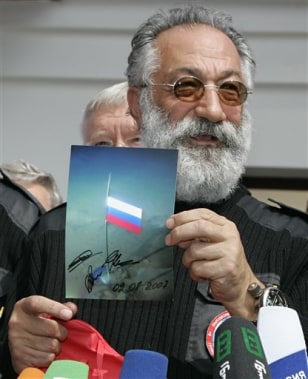 Alexander Zemlianichenko
/
AP Renowned Russian polar scientist Artur Chilingarov holds a photo of the
Russian flag on the ocean floor upon his arrival at Moscow's Vnukovo
airport on Tuesday (2007).
Alexander Zemlianichenko
/
AP Renowned Russian polar scientist Artur Chilingarov holds a photo of the
Russian flag on the ocean floor upon his arrival at Moscow's Vnukovo
airport on Tuesday (2007).
The Arctic has many contestants for jurisdiction by nations bordering that frozen sea and whose claims contest Russia's, including the United States, Canada, Denmark and Norway. And then there is China which has no physical presence in the Arctic but would like to and claims observer status. The vast mineral and energy resources stored under the ocean and thought to be technologically accessible for exploitation has all Arctic nations interested in claiming ownership of 'their' portions of the Arctic. And some, like Russia, are particularly anxious and prepared to be aggressively engaged in pursuing their claims.
Russia has invested quite a bit of funding in its Arctic claims of sovereignty, upgrading and modernizing old Soviet-era infrastructure, and installing permanent military missions on its share of the Arctic where temperatures can and do plunge to minis 50C in the winter, with the short Arctic summers giving merely temporary relief while still freezing at night. Russia's new massive investment in its base between the Laptev Sea and the East Siberian Sea on its Arctic shipping route includes permanently housing 250 military personnel.
There, with sprawling new facilities, the base maintains sufficient supplies for over a year for fully assured autonomy. The sprawling facilities can all be accessed without anyone having to venture into the icy outdoors. The military personnel are responsible for the maintenance of air and sea surveillance at the facilities, along with coastal defences such as anti-ship missiles. This is serious business for Russia; any contesting of their claims, any sign of hostile approaches will be both monitored and responded to.
For Russia, in its view of Arctic security and economic competition, the region represents a vital priority in foreign policy. No other Arctic country, including the United States has undertaken a clear presence dominating the vast area, and a bristling military menace presence as has Russia. Its intentions were clear from the time in 2007 it staged a mock but serious claim of the Arctic seabed by planting a Russian flag and celebrating its publicity coup.
In 2015 Russia submitted a revised bid claiming vast territories in the Arctic, sending it to the United Nations when it claimed 1.2 million square kilometres of the Lomontov sea shelf, all of which it claims is attached to the Russian mainland, some of which Canada disputes. Russia's claim extends over 650 kilometres from its shore. To support its claim, it has spent massively on modernizing Soviet era installations, upgrades that no other Arctic nation has committed to.
By comparison, Canada's lackadaisical efforts reflect a total lack of commitment belying the government's claims of the vital importance of its Arctic sovereignty. The amount of investment that Canada has committed to shrinks to minuscule proportions in comparison with Russia's. A road completed to the Arctic coast at Tuktoyaktuk in the Northwest Territories and work embarked upon for a port at Iqaluit in Nunavut, the extent of Canada's commitment to this date, along with the first Arctic patrol vessel being launched and satellite surveillance enhanced with a naval refueling station on Baffin Island.
Russia, on the other hand, has launched a gigantic effort since 2014 to rebuild the Kotelny Island military outpost, neglected after the 1991 collapse of the Soviet Union. Where the Russian Defence Ministry recently showed off Bastion anti-ship missile launchers positioned near the shore and Pantsyr-Si air defence systems during a drill firing shots at a practice target. A large radar dome sits on a hill overlooking the coast, stressing the main mission of monitoring the strategic area from the base.
Full radar coverage of Russia's 22,600-kilometre Arctic frontier has been achieved through the expanded infrastructure, where fighter jets can be deployed to protect Russia's Alaska airspace. And its permanently deployed military can access new base features such as spacious living quarters, a gym, and a sauna.
 |
1) North Pole: Russia leaves its flag on the seabed, 4,000m (13,100ft) beneath the surface, as part of its claims for oil and gas reserves
2) Lomonosov Ridge: Russia argues that this underwater feature is an extension of its continental territory and is looking for evidence
3) 200-nautical mile (370km) line: Shows how far countries' agreed economic area extends beyond their coastline. Often set from outlying islands
4) Russian-claimed territory: The bid to claim a vast area is being closely watched by other countries. Some could follow suit |
Labels: Arctic, Canada, Denmark, Norway, Russia, Sovereignty, United States
Cold War In A Cold Place
"This place is very, very important for America and for the Western world so that they can keep an eye on what the Russians are doing."
"Russia wants to look into our secrets, and the United States and Norway want to look into their business."
"That is the way the game is played."
Lasse Haughom, former mayor, Vardo, Norway
"Russia views Vardo as a high-value target. In a crisis it will be one of the first places to be blown up."
"There is a new Cold War but it is more threatening than the old one because Russia is so much weaker, and because of that much more dangerous and unpredictable."
Lieutenant Colonel Tormod Heier, faculty adviser, Norwegian Defense University College, Oslo
 |
| The Globus radar system in Vardo, northern Norway: Photo Norwegian Armed Forces |
Vardo, a tiny island in the Arctic on Norwegian territory, was once an outpost involved in the fishing industry. That was up until the collapse of the fishing stock. But until then generations of Norwegians depended on fish for their livelihood. Now there is a different industry in Vardo, one not spoken of openly, but it is one which necessitated the laying of a heavy cable in a tunnel under the Arctic separating the island from the Norwegian mainland.
The local power company, citing an unexplained surge in demand for electricity began laying in increased energy supplies in May. That new electricity cable fuels an important new business in the region, initiated as a result of Russia's enlarged fleet of nuclear submarines in the Barents Sea. That those nuclear submarines are armed with ballistic missiles gives a sense of urgency to the enterprise. And that enterprise is one that has been going on since time immemorial when one country spied on another.
Now, a new radar system is under construction in proximate sight of a Russian territory which is the site of high-security naval bases, the Kola Peninsula. The game that President Vladimir Putin initialed of primacy in the high Arctic with a view to exploiting a future of climate change openings of shipping routes and vast stores of gas and minerals located on and under the ocean floor, prompted the planting of a titanium Russian flag on that sea floor.

The Russian naval bases where submarines armed with multiple ballistic missiles are located is 65 kilometers across the Arctic from Vardo. Making the placement of a sophisticated radar system called Globus III of huge interest to both Norway and the United States, which is funding the project. Moscow is none too pleased with this joint U.S.-Norwegian radar project. It identifies the situation as an American Defense Department plan to isolate and surround Russian resurgence.
The Russian nuclear arsenal and its capability of launching a retaliatory strike from its Arctic submarine fleet is uppermost in the minds of the Norwegians. The American missile defence program infuriates Mr. Putin no end, challenging as it does Moscow's claim to superpower status. That American program, according to President Putin
"destroys the strategic balance in the world." Vardo now represents a locale of great strategic interest to the United States.
The radar system, funded by America, is operated by Norwegians, but the main hotel in Vardo hosts American technicians along with spies who disguise their interest in being there as dedicated bird watchers. Yet, a former local fisherman Aksel Robertsen, is grateful for the presence of the Americans and the radar system, employing locals to ensure that the 2,100 population has meaningful work and no reason to leave the island to find employment elsewhere.
The presence of radar radiation troubles some residents, however. On a street located close by the radar system, women had suffered miscarriages, leaving them uncertain whether radiation from the radar system had a role. They are also concerned with what seems like a potential:
"If war breaks out we will be the first place the Russians bomb", said May-Sissel Dorme of Vardo.
 |
| Globus II radar in Vardo, Norway: Norwegian Armed Forces |
Labels: Conflict, Norway, Radar, Russia, United States