Extreme Adventure and its Consequences and Personal Responsibility
"Whether
I had hallucinations or not, whether someone saw me or not, whether
there was shelter or not, the moral of this is that I am alive. No
matter what, I am alive." "It's
fear that makes the masks you wear every day fall. But when real fear
stares you right in the face, and you embrace it, you realize that it
takes less physical and mental energy than it does to travel 500 km at
-50 degrees Celsius." "I will lose something, and maybe I will lose everything. But this doesn't make me lose the will to love life even more." Roberto Zanda, Italian ultra race competitor
Robert Zanda competes in the Montane Yukon Ultra Race in February, 2018.Joe Bishop/Montane Yukon Arctic Ultra
"There's not only the risk of frostbite, there are other symptoms that athletes themselves can't recognize." "So
there needs to be someone at each checkpoint who can provide a medical
opinion. Did [Roberto] have the mental capability to go on ...? No." "Were
his clothes dry? No. Did anybody ask him how long he hadn't slept for?
No. Was he able to use the SPOT [tracker] with this frozen hands? No." "Did the [race] organizers think of everything? No." Giovanna Carla, Roberto Zanda's life partner
"For one occasion at night [-50], I took my hand out of my glove to find some food. My hand did not get cold as usual." "After
two or three minutes, I realized that the feelings had just disappeared
and it took fifteen to twenty minutes of hard work to get the
circulation back." "When
there are so many people ending up with frost-bite, this is a sign of
bad organization. Professional runners who participate in this type of
race are looking for challenges to difficult areas, but expect the
organizer to take care of safety -- and create a safe framework for the
participants along the way." "That's why we pay $2,500 to enter." Frode Lein, Norwegian ultra-racer
Competitors set out in the Yukon Ultra Race 2018.Joe Bishop/Montane Yukon Arctic Ultra
"[Zanda
had access to a race volunteer who spoke Italian fluently, and] got all
vital information in his mother tongue. [He] showed no signs of
hypothermia or frostbite [at arrival at the checkpoint and] in fact was
looking rather good." "[His critical decision to unhook from his sled was an error, separating him from] the athlete's lifeline." "Reflecting
on the race and making changes to increase safety is an ongoing
process. Will this guarantee that it is impossible somebody gets
hypothermic and makes mistakes? I do not know. Anybody can make
mistakes. It is human." Robert Pollhammer, German outdoor gear operator, founder, Yukon ultra race
Roberto Zanda, aided by ski poles, navigates the trail pulling a sled with his supplies.Joe Bishop/Montane Yukon Arctic Ultra
Mr. Pollhammer, despite living in Germany, travels annually to the
Canadian north in the winter to plan and oversee the event he founded in
2003, called the Montane Yukon Arctic Ultra, the "world's toughest and coldest ultra race".
It is a 480-kilometre adventure in human endurance, across frozen
rivers, ascending and descending mountains and trekking along fir-lined
dogsled tracks, taking place in February which just happened this year
to rank among the coldest on record with temperatures as low as -50
Celsius at times.
Most of the competitors gave up their attempts, surrendering to
conditions that were unusual in the icy grip of a formidable winter
season, in an unforgiving landscape. Those who decided not to continue
the competition mostly did so because they were suffering from
frostbite, from hypothermia, and some of the competitors from both
dangerous conditions. This is a round-the-clock challenge. On its sixth
day, Italian competitor Roberto Zanda, one of three men left in the
race, hauling his sled holding a tent, sleeping bag, cook stove, food
and spare clothing along the Yukon landscape was in trouble.
He began to suffer the effects of extreme exhaustion, exposure to
relentless winter elements, and a wandering mind. This is a man with a
background of a good many ultra-extreme challenges behind him, from
running across deserts to traversing mountain ranges, always managing to
stay his course and emerge with his goal completed. At age 61, he was
fit and muscular, confident and determined. He was also, at that
juncture, suffering mental and physical breakdown. When he attempted to
use the GPS technology to contact race organizers in Whitehorse his
fingers refused.
He was suffering acute frostbite and hypothermia, a state of
irrationality that persuaded him to heed what a hallucinatory figure
recommended; to abandon his drive and search out a cabin in the forest
where aid awaited him. He jettisoned his sled with its life-preserving
gear and trekked on into the forest. When his boots became mired in
off-track deep snow he removed both boots and socks and fell into
unconsciousness. Where he was discovered the following morning, half
frozen, bare hands and feet black with fourth-degree frostbite.
Airlifted by helicopter to Whitehorse General Hospital, doctors did what
they could, while their prognosis for recovery held little hope that
his hands and feet would not have to be amputated before gangrene might
set in. Two weeks later the man was flown to a hospital in northern
Italy that specializes in mountain medicine. He is being treated with
anticoagulants and vasodilators and experimental stem cell protocols in
hopes of stimulating his collapsed arteries in hands and feet to
regenerate.
Roberto Zanda, seen here at the Whitehorse hospital, suffered severe
frostbite during the Yukon Arctic Ultra. (Wayne Vallevand/CBC)
Is it reasonable to assure people undertaking their personally ambitious
ventures in the field of the world's toughest physical endurance
challenges, that rescue is available -- their survival assured under the
most dreadfully adverse circumstances nature can impose, when they have
themselves decided to surrender their free agency in decisions made
with due consideration to the consequences, to alert others that they
are in dire straits and despite the odds they don't court death, but
want to live -- that they will come to no harm?
"There's been a lot of discussions, as 'could we have, what if,' and the conclusion is, no."
"He had everything he needed, he had the right gear… he simply ignored all the warning signs of hypothermia." "If he would have left with his sled hooked up to him we would've
seen him wander off the trail and we could've sent somebody." "He was hypothermic, and to a stage where you… don't really know what's happening anymore."
"It's always difficult to know that you're organizing something and somebody's now suffering serious consequences." Robert Pollhammer, event founder, organizer
A solitary Roberto Zanda pushes forward in the Yukon Ultra Race 2018.Joe Bishop/Montane Yukon Arctic Ultra
"Everything just became a lot more dangerous." "In places, it's literally a knife edge, and there's a 10,000 foot drop on either side of you." "It's such a wild place, that anything unexpected can be a problem." Ryan Agar, author, Yukon Climbing Guide
"She didn't know it was an earthquake, she thought the hanging glacier on which she was camping had moved." The helicopter will leave ASAP, but that doesn't seem to be earlier than Friday according to current forecasts." "It's different waiting for a storm when you're in the climb and you're
looking forward to continuing. But now, it's just waiting to be
evacuated." Camilo Rada, mountaineer
Martinez can be seen camped on the mountain, a few days before the earthquakes. (Lance Goodwin/Icefield Discovery Tours)
Natalia Martinez is clearly one of those driven people attracted to challenging her stamina, strength, capability and knowledge of mountaineering skills in the determination to summit the world's most difficult mountains. The Argentinian woman from Patagonia, as close to the cold and inhospitable Antarctica as anywhere else on Earth, had already summited five peaks never before climbed, in a Patagonian icefield.
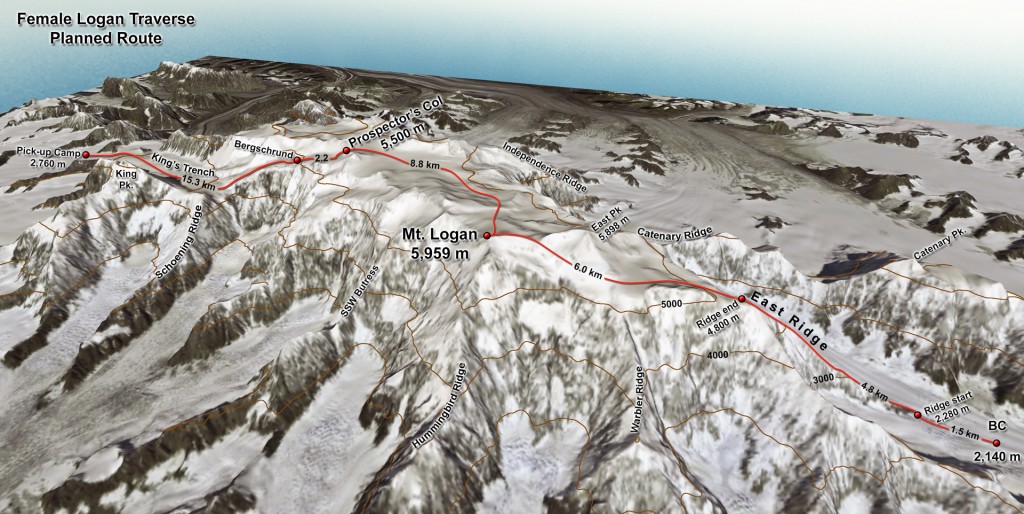
She and her climbing partner, Camilo Rada, had celebrated the world's first summit of Mount Malaspina located near Mount Logan, in Canada's Yukon Territory.
And now she had set another goal for herself, a solo climb of Canada's tallest peak, Mount Logan. She is alone in her venture, though other climbers have also ventured toward the peak. Those climbers are nowhere near where Natalia Martinez is located, however, since she chose a far more difficult-to-access East Ridge route.
File photo Mount Logan
The unpredictable can always happen on a mountain. Avalanches, wicked weather conditions with storms breaking creating white-outs and high winds threatening to blow climbers off the slopes. An earthquake likely ranks among the least-expected of events to occur, but a magnitude 6.2 earthquake struck southern Yukon early Monday morning and another 6.3-magnitude tremblor hours later, with over 100 minor aftershocks following.
The immediate consequences of the earthquakes impacted the area of the mountain where Ms. Martinez had established her 3,900-metre camp. Around her avalanches tumbled, and immense glacial ice pieces came crashing down through the destabilized region. As an experienced climber she knew where best to situate her camp, and that saved her from immediate danger.
Yet because the entire area is so destabilized she can neither ascend nor descend for fear of the shield of ice and snow crumbling under her.
She had planned to give herself another six days to complete her summit. She remains in touch via satellite phone, speaking to her climbing partner, updating him. Areas around her collapsed, were buried, but fortunately her campsite remained intact. With aftershocks pummeling the area, she decided to move her camp close by to a more protected ridge she hoped would put her out of reach of any new avalanches. She has with her ten days' worth of provisions.
Parks Canada is coordinating rescues from Mount Logan, located within Kluane National Park. Normally, a rescue helicopter would have been dispatched, but a delay has occurred given that storms and high winds are battering the region. Climbers are generally asked to access areas where a rescue helicopter can land. In this instance it won't be possible. What may be required is for the helicopter to lower a rescuer to place Ms. Martinez in a harness, to be lifted back to the hovering helicopter.
'It's an area that you've always got to look over your shoulder if you're
flying around up there,' said Tom Bradley, chief pilot with Icefield
Discovery Tours. (Lance Goodwin/Icefield Discovery Tours)
"You've got weather conditions that are constantly changing, no two
flights are ever going to be the same. So it's an area
that you've always got to look over your shoulder if you're flying
around up there." "It's the world's largest non-polar icefield, so it's just a sea of
snow and ice. The mountains there are on a grand scale — they're the
largest mountains in the world, by girth." Tom Bradley, chief pilot, Icefield Discovery Tours
"[Otto Warmbier] was arrested while perpetrating a hostile act against the DPRK [Democratic People's Republic of Korea] after entering it under the guise of tourist for the purpose of bringing down the foundation of its single-minded unity at the tacit connivance of the U.S. government and under its manipulation." Korean Central News Agency
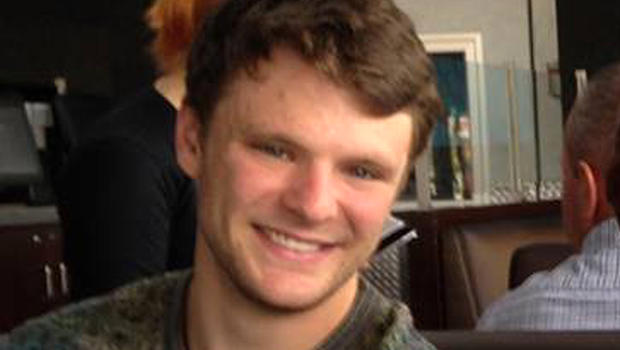
University of Virginia student and Ohio native Otto Fredrick Warmbier is seen in an undated photo posted to his Facebook page
"We don't have enough information about this case, but it's always a risk for any U.S. citizen to go to North Korea." "You have to be careful in a way that we wouldn't think of as normal." John Delury, American international relations expert, Yonsei University, Seoul
"In addition to continuing political pressure to exhort the DPRK to improve human rights, it is also now imperative to pursue criminal responsibility of the DPRK leadership." Marzuki Darusman, UN special rapporteur
A 21-year-old American has ample time now to muse on the thrills of exciting the notice of North Korean authorities as someone plotting against the people's republic. If he can get close to a computer any time soon he can update his Facebook postings with some material about his impressions of North Korea's prison system. He appears to have a penchant for unusual experiences, and he certainly appears self-motivated to expose himself to such experiences.
It is not yet known, while it may be at some future date, how he feels about being the fourth Westerner to be incarcerated in the lunatic asylum ruled by its Great Leader Kim Jong Un. They may, at some time, wish to compare notes. It certainly is a puzzle to most people who have curious streaks about the world at large why it is that some among them court this kind of situation where they make themselves vulnerable to becoming some despot's victim.
Why it is that people with such an intense sense of adventurous curiosity seek such challenges from which no influence is capable of extracting them; they are left to their own survival devices under extremely trying circumstances that could and should be avoided at all costs. Is it bragging rights that so consume their attention as to pursue these unusual adventures? The ambition to write a book about perseverance under trying circumstances?
In some instances people are taken hostage while attempting to undertake a mission of some sort on behalf of a body such as the United Nations. But a recent college graduate embarking on a New Year's holiday deciding to take it in Pyongyang, North Korea? He is described by the University of Virginia as an "intellectual risk taker". He might consider trying to persuade his captors that he is a personal friend of Dennis Rodman sent to give greetings to the Great Leader.
In the meantime, he can take comfort with the U.S. State Department's message that "The welfare of U.S. citizens is one of the Department's highest priorities."
Otto Frederick Warmbier, from the University of Virginia, was in North
Korea for a five-day New Year trip and was detained at Pyongyang airport
on January 2 ahead of a flight back to China
A former Nepali Gurkha has been forced to abandon his attempt to become the oldest man to climb Everest. Min Bahadur Sherchan, 81, had been planning to beat the record set only last Thursday by his longtime rival, the Japanese climber Yuichiro Miura, 80. But he had to be airlifted from the mountain's base to a hospital in Kathmandu after suffering from chest problems. His departure brought an end to an epic octogenarian battle -- and sounded a note of disappointment for Nepalese officials who had hoped he would regain the record Wednesday to mark the 60th anniversary of the first ascent by Sir Edmund Hillary and Sherpa Tenzing. The pair's rivalry began in 2008 when the Japanese man set out to extend his then-world record, set in 2003 at age 70. He reached the summit again in May 2008 only to find Mr. Sherchan, then 71, had been there the day before. The Daily Telegraph
Pakistani authorities suspended a four-day polio vaccination program Tuesday after gunmen killed a female polio worker and wounded another in a blow to the UN-backed campaign aimed at eradicating the crippling disease in this violence-torn country. Such attacks have made it harder for Pakistan to join the vast majority of nations declared polio-free. The two women were attacked Tuesday in Kaggawala, a village near Peshawar. Senior police official Shafiullah Khan said two attackers on foot fired a pistol at the workers. The vaccine campaign was launched Tuesday morning, but it was halted "for security reasons and to express solidarity with the slain and injured female polio workers", said Habibullah Arif, a government official. No group has claimed responsibility for the latest killing, but some Pakistani insurgents have claimed in the past the polio workers are U.S. spies and the vaccine makes people sterile. The Associated Press
Two recently rehired Afghan police opened fire on their commander at a checkpoint in a remote district in the country's south, killing him and six of his men, officials said Tuesday. It was the latest in a string of "insider attacks", in which Afghan forces gun down their comrades or international forces. The police chief of volatile Kandahar said the two attackers were former policemen who had rejoined the force only two days before. Gen. Abdul Razaq said they fled in a police vehicle with their dead comrades' weapons after the attack Monday. "We found the weapons and the vehicle today, and now we are searching for the two policemen", Gen. Razaq said. Taliban insurgents warned they would infiltrate security forces to carry out insider attacks. The Associated Press
Kenyan members of parliament voted Tuesday to overturn a directive that had reduced their pay, hoping it would force the government to pay the higher salaries earned by legislators in the previous parliament. Their pay was slashed to $78,000 from $126,000 this year by a government commission which indicated the country's wage bill was too high. The Salaries & Remuneration Commission had also argued that although Kenya was among the world's poorer economies, its legislators earned more than French lawmakers. Kenya adopted a new constitution in 2010 which intended to remove the parliamentarians' powers to establish their own level of pay. The minimum wage in Nairobi is about $1,500 a year, but many here live on even less. The Associated Press
Sudanese government troops clashed with rebels in Southern Kordofan state, near the border with South Sudan, and each side claimed Monday to have inflicted heavy losses on the other. The clashes erupted Sunday in Dandor, 500 kilometres west of Khartoum. Southern Kordofan has been hit by violence for nearly two years, displacing hundreds of thousands of people and killing scores. South Sudan broke away from Sudan in 2011 under a 2005 peace treaty that ended decades of war, but disputes remain over their common border, demilitarization and sharing oil revenues. A spokesman for the Sudanese army, Col. Sawarmy Khaled, said government forces clashed with rebels who attacked Dandor, killing more than 70 and seizing two of their tanks. He did not mention government casualties. From the other side, a rebel statement said Sudan People's Liberation Army-North and Sudan Liberation Army rebels carried out a joint attack Sunday on a Sudan government garrison, east of Southern Kordofan's state capital, Kadugli. The Associated Press.
Bombings and gunfire in central and northern Iraq killed at last 19 people and wounded dozens on Tuesday, in the latest bloody chapter of a wave of violence that has edged the country closer to all-out internal warfare. A day earlier, 70 people were killed, and more than 450 have died this month. Most of the attacks are sectarian in nature, with Sunni and Shiite areas targeted frequently. No one has claimed responsibility for the recent wave of attacks, but such systematic bombings bear the hallmarks of Sunni insurgents under the leadership of the al-Qaida branch in Iraq, known as the Islamic State of Iraq. They appear aimed at drawing the country's majority Shiites into an exchange of attacks like that which brought the country to the brink of civil war in 2006-07. National Post
Japanese mountaineer Takao Arayama, 70, in blue, scales Mt. Everest,
the world's highest peak, Nepal, Wednesday, May 17, 2006. (Kenji Kondo /
AP Photo) It takes the vigour and strength of youth, the prowess of well
developed athletic ability, the passion of an explorer and the
determination of a mind set on conquering the vicissitudes of
unpredictable and sometimes catastrophic geological and atmospheric
conditions hugely hindering progress -- let alone the dangers inherent
in clambering to such heights where oxygen is too thin for normal human
activities, both cerebral and physical to be relied upon -- to hope for a
successful outcome.
Despite all of these harrowing
and most difficult conditions -- including the rather nasty occurrences
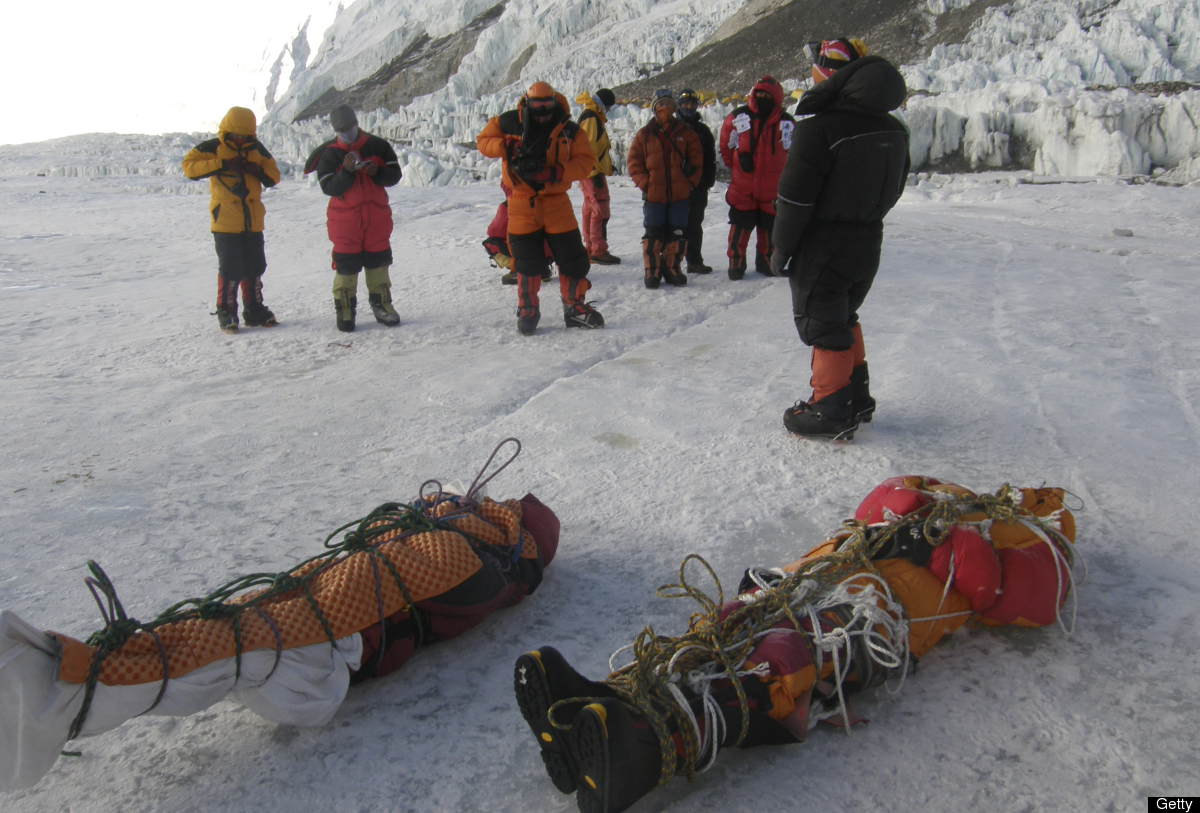
when climbers come across the stiff and frozen bodies of those who have
not managed to succeed, and who remain as sad reminders of human hubris
and conditions inimical to human endurance at altitudes and in dangerous
places where no rescue missions to retrieve and give proper burial can
take place -- aspirants still flock to the fabulous Himalaya.
Two bodies retrieved by a Sherpa mission
There are those for whom it is no longer
enough of a prestigious plaudit to simply manage to summit Mount
Everest. Now there are the 'firsts' that have assumed monumental
proportions of acclaim. The youngest to summit the mountain, taking the
obligatory photograph as proof. And just recently a very fit and
determined woman from Saudi Arabia became the first from the Middle East
to achieve the summit, alongside her companions, also from the Middle
East.
But these are young, energetic and fit people.
How about older people? There was one occasion where a quite elderly man
insisted he needed to repeat the feat of climbing the mountain, too
many years after his first initial success. And it was left to the
patient prowess of the long-suffering Sherpas to manage to manoeuvre him
in his mission to succeed. Many make the ascent without supplemental
oxygen; something not just anyone can succeed at in that oxygen-starved
atmosphere.
And now two octogenarians are competing
against one another for the honour of achieving the summit, representing
the oldest people to manage that stunning feat. Most people in their
70s struggle to clamber up a gentle sloping hill of several hundred feet
in height. Mount Everest's height is a monumental 8,848 metres. From
base camp there are a series of other camps toward which aspirants climb
and then acclimatize before moving on to the higher camps and finally
the summit.
Yuichiro Miura
of Japan, 80 years of age, set out to claim the record of oldest
mountaineer to reach the summit of Mount Everest, to best his own record
at age 75, achieved in 2008. He happens also to be the first man to ski
down Everest -- another historical first. This attempt will be his
third climb to the summit. In 2003 he scaled Mount Everest at age 70.
When he made his second ascent at age 75 he discovered that Min Bahadur Sherchan at age 76 had reached the peak before him -- by a day.
Now the two are locked in a conquest that each is determined to win. British Army Gurkha pensioner Min Bahadur Sherchan is a year older than Yuichiro Miura. Mr. Miura has begin his climb, starting out from base camp and determined to set a new world record: "We plan to stand on the summit on May 24 ... We are all doing well, getting in position to tackle the mountain", he wrote on his website.
The
man rivalling his efforts planned to begin his ascent a few days later.
He claims that he would take back the record within days if Mr. Miura was successful, believing himself to be a better climber, even while acknowledging Mr. Miura's technical ability. "I am sure I will break my won record", 81-year-old Sherchan said, confident he would make his own country proud of his achievement once again.
Min Bahadur Sherchan, Nepali ex-soldier, who reached the summit of Mount Everest
on May, 25 2008 at the age of 76 years 340 days and is the oldest
summitteer of Everest. Here shown at Summitteers Summit at COP-15 in
Copenhagen Dec.11, 2009
He
will be 82 next month and ascribes his long life and incredible
endurance and physical strength to his diet and his exercise regime.
Other elderly people can only look on with awe at such exploits at such a
ripe old age. And wish both of the contestants well in their
endeavours.
Wounded soldiers train in Iceland for South Pole race
BBC News online - 15 March 2013
By Frank GardnerBBC security correspondent at Langjokull Glacier, Iceland
Frank Gardner joined the teams as they started their training in Iceland
In
one of the worst storms anyone in Iceland can remember, a group of badly
injured servicemen and women from around the world have been struggling
through howling blizzards on the edge of a mountain glacier.
They are training for Antarctica and a coming international
race later in the year that will stretch them 330km (205 miles) across
the frozen wastes to the South Pole.
Every member of the three competing teams, from the UK, the
US and the Commonwealth (in this case Australia and Canada), has been
either shot, burned, blown up or traumatised in combat operations.
Many are missing limbs and one, US Army Capt Ivan Castro, is totally blind after losing his sight to a mortar bomb in Iraq.
Buffeted by the wind, unable to see the contours ahead of him, he is finding it harder than most.
"I've fallen over so many times I've lost count," Capt Castro shouts above the wind.
"Yesterday I only fell four times but this time I've lost
count. It's extremely tough for me, I have to say. Since I lost my sight
this has been one of the toughest things I've ever done." Hazards and hurdles
The South Pole 2013 challenge is being organised by the UK
charity Walking With The Wounded (WWTW) - whose patron is Prince Harry -
to raise awareness of wounded servicemen and women returning from
conflict and trying to assimilate back into civilian life.
There is no talk of politics, of
the rights or wrongs of being sent off to somewhere like Afghanistan.
All the focus is on rehab and recovery, mental as well as physical.
Last year, they made an attempt to climb Mt Everest, but had to turn back just before the summit due to bad weather.
The year before that, WWTW's British team successfully
trekked across the polar ice cap to the North Pole, with Prince Harry
accompanying them part of the way, leaving them with just days to spare
before his brother Prince William's wedding to Kate Middleton.
This year, it is different.
Trekking across Antarctica brings its own hazards and hurdles.
For a start there is the altitude. Unlike the North Polar ice
cap, which is all at sea level, Antarctica is a landmass that rises
steadily up to over 4,000m (13,000ft).
The winds are legend and the continent holds the record for the lowest recorded temperature on earth: -89.2C at Vostok station.
And Walking With The Wounded has now gone global.
The Commonwealth team, made up of Australians and Canadians, will be racing against Britons and Americans.
Despite the camaraderie and the banter, it is likely to get fiercely competitive.
Some of the race participants explain why they are taking part
At the foot of a black, volcanic mountain I find the
Commonwealth team hunched against the gale and wolfing down mouthfuls of
some glutinous meal.
With all their backs turned against the wind I can't help
thinking of those flocks of Antarctic penguins huddled miserably against
the blizzard.
Some of the Australians are from the subtropics and are now getting their first taste of snow.
Despite the vile conditions they are determinedly upbeat. "It
could be colder," jokes one. Another reminds himself why he is putting
himself through this ordeal.
"Being able to raise awareness of wounded soldiers through
charities like Walking With The Wounded and Soldier On," says Heath
Jamieson of the Australian Army, "provides avenues for the public to get
behind their wounded soldiers."
Meanwhile, the British team, clad in bright red tops, have planted their skis some way off.
There is no natural shelter to be had anywhere, for any team, which is exactly what will face them in Antarctica.
Only one of the Britons, Guy Disney, has been on a polar expedition before with WWTW.
A former British army cavalry officer, he lost his leg in an
explosion in Afghanistan. Yet, equipped with a prosthetic leg, he
successfully trekked with the rest of his team to the North Pole in
2011.
I ask one of his new team mates, Jason Wilkes, how he is finding the conditions.
"The problems are just the wind and the skiing and also
people have never skied before, the amputee guys, they're just getting
used to it," he replies.
It would seem a fitting time if he and his team were having any second thoughts - after all, this hardly looks like fun.
"None at all Frank, none at all," he says, grinning, as he skis off into the wind. He might even be whistling.
You can follow news of the race, the participants and their training on Twitter #southpole2013
"Nobody had heard about us and now all the world knows. "We can earn some dividends on that. If there'll be a massive tourist inflow, we'll build more hotels." Chelyabinsk Gov.Mikhail Yurevich
Well, why not? It was, after all, a genuine "once in a millennium" event, an event that rivetted the world's attention, however briefly on the Russian province on the Asian edge of the Ural Mountains. A city of a million people - who know? - suddenly, without any warning, the recipient of a gift from outer space.
A gift, mind, that most residents of the city of Chelyabinsk in the province of the same name, would far have preferred to be able to avoid. Particularly those 1,400 residents who happened to be innocent and injured bystanders to a rare natural event that, had it occurred in a less populated area would have been just as spectacular and far less injurious to human health and security.
And it will be a very costly business to re-install glass in those four thousand buildings that were impacted, let alone restore roofs and any other structural damage that was accrued in the split-second instance of nature's proclivity to visit her natural phenomena into the reality of peoples' mundane lives, changing forever the manner in which they will henceforth view her arbrupt potentials.
For the people of Chelyabinsk, however, the afterthought of the event is to plan a scenario that will not waste all those eggs that were scrambled when the world seemed to fall in on this city; officials there have held a meeting to propose taking advantage of all the breakage and the aftermath by making souffles or omelettes and serving them up to a foreign public, through tourism attractions.
This was some natural event, after all; a meteor about 17 metres across, weighing over 10,000 tonnes hitting Earth's atmosphere and exploding with the force of 33 Hiroshima A-bombs; the blast the most tremendous of its type in over a century. Leaving sought-after meteorite pieces to be discovered, much of them, the largest specimens in Lake Chebarkul.
RIA Novosti
The potential is there for alluring foreign tourists to this landmark site. And the most puzzling thing to surface is that one local travel agency has already launched several tours, of Japanese groups. Japan, lest we forget, had its own spectacular blast when an catastrophic earthquake spawned an equally dreadful tsunami, causing death and destruction and one of the world's worst nuclear disasters at Fukushima last year.
And here are Japanese tourists, among the first to want to explore yet another phenomenon of nature, and isn't that just typical of notoriously famed Japanese curiosity? The question is - would they be game to get wet in the cause of exploration, adventure and gain? Chebarkul Mayor Andrei Orlov had a really uniquely winning brainstorm of an attraction.
He plans to build a diving centre at the lake when the ice finally melts. Tourists can avail themselves of the opportunity to search for meteorites in the three metres of mud that lie 11 metres below the surface. A uniquely clever idea to exploit the opportunity that nature has afforded.
I stepped out
into a blinding light, into the whitest world under an impossibly blue
sky. The naked sun seared me right through my polarized goggles. The
next thing that hit was a cold so deep and complete it was surreal. My
first breaths torched my throat and chilled my lungs. It was cold from
another dimension, from an ice planet in a distant galaxy. And this was summer in the Southern Hemisphere. *
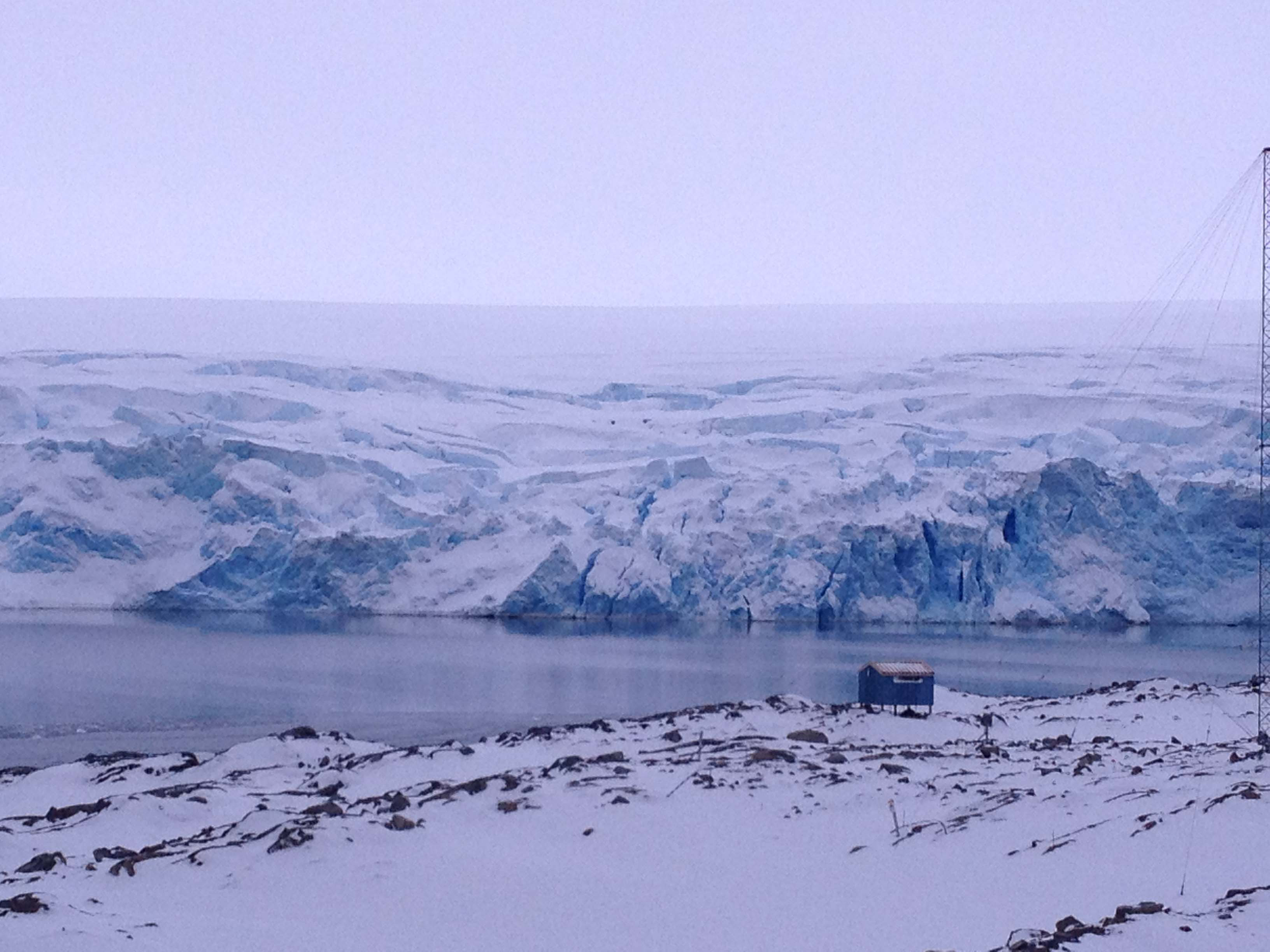
Photograph by: Kaneen Christensen National Science Foundation
Date Taken: September 23, 2012
The view from Palmer Station.
"I
usually look forward to expeditions, but there is such a big degree of
uncertainty with this one that looking forward to it is probably not the
exact right word. Some people will say it is irresponsible to go unless
you know everything, in which case the Americans would never have got
to the moon. If humans are going for something new, then unfortunately
there are bound to be some grey areas", explained explorer Sir Ranulph Fiennes of his plan to lead a five-member team across winter Antarctica.
He is 68 years of age, and a formidable adventurer. This
will by no means be his first venture at Antarctica, and he has amassed
familiarity through previous expeditions with Arctic regions of the
world. In 2009 he became the oldest Briton to summit Mount Everest. His
hands are absent some of his digits as a souvenir of a North Pole
expedition he had undertaken ten years ago. There are some people whose
endurance is legendary, as much so as their curiosity of the world around them and their determination to explore as much of it as they can.
Humans
at the South Pole experience a phenomenon called "physiologic
altitude". The centrifugal force of the Earth's rotation causes the
atmosphere to bulge at the equator and flatten at the poles. The mass of
air at the equator weighs more than the air mass closer
to the Poles, which means the atmosphere is thinner and lighter at the
South Pole, ninety-three hundred feet above sea level, than at an
equivalent altitude in North America, such as the eastern slope of the
Sierra Nevada Range. *
This will be a six-month expedition and since it takes place in the Antarctica winter it will be in darkness. The plan mapped out and released by Sir Fiennes is to begin at the South Pole on March 21 after the polar vessel SA Agulhas has ferried them from Cape Town, South Africa to the world's southernmost continent. From that point their journey will take
place in a setting hostile to human life, serene (sometimes, but for
storms) and icily beautiful; all four thousand kilometres of the planned
trip. Temperatures are known to descend to minus 70 Celsius.
The temperature on the plateau was plummeting. By now it was minus 90 F. and falling, a new record for mid-March. One night I was watching a video with a friend when we heard the most horrible booming noise.
We heard more of these ungodly booms over the next few days as the ice
heaved in great cracks under the Dome. People were having more trouble
sleeping. Sometimes it sounded like the roof was falling in or the floor
was caving or people were stamping their feet overhead. Sometimes it
sounded like guns or cannons. The ice was breaking around us everywhere.
Large cracks ran from the front of the galley and then spider-webbed out to the Dome perimeters. There was a foot-wide crack over the ice road and a crevasse split what was left of the skiway. The
scientists speculated that the ice had never before gotten so cold so
fast and the temperature change was causing it to buckle. *
During the Antarctic winter the cold is so intense that fuel freezes, making it impossible for a rescue flight should the expedition run into difficulties. They
will be well equipped, with communications technology at their disposal
and high tech gear. Even their clothing will have built-in battery-operated heating mechanisms, along with special breathing apparatuses.
Modified, 20-ton tractors will carry their sledges, along with mounted
living quarters and special fuel that won't freeze in the sub-polar
temperatures.
This is a multi-purpose expedition. Geared to satisfy the exploratory and scientific curiosity of the expedition team members, and to raise $10-million for a charitable organization whose research seeks blindness prevention solutions.
If all proceeds as planned, they hope to complete their journey around
September 21. At which point they are prepared to camp out until January
2014 when temperatures become 'warm' enough for their polar vessel to
head out over the sea-icy waters to reach them.
This strange world at the end of the Earth seemed more and more
normal every day. Even the climate seemed ordinary, something I started
to take for granted until it taught me a hard lesson one bright
afternoon. That day Joel and I had decided to walk out to Wright's
tunnel, about a mile away from the station. The blue ice tunnel was so
beautiful and peaceful, we treated it as a tourist destination. But
after we had turned back and were halfway home, deep in conversation and
not paying close
attention to the sky, the wind picked up from the plateau over hundreds
of miles of flat ice, and within seconds we were engulfed in a
full-blown ground blizzard. It was a total whiteout. We couldn't see a single landmark, and we lost our orientation to the Dome.For
the first time in Antarctica, I felt my own mortality. I realized you
could die in an instant -- and the quickest way to go was to stop paying
attention. Joel and I got down on our hands and knees
in the blowing snow and started crawling. Incredibly, we found a set of
recent tractor tracks, and like Hansel and Gretel following a trail of
crumbs, we crept along the furrows until they led us back to the
station. *
* Excerpts from Ice Bound: A Doctor's Incredible Battle For Survival At The South Pole...Dr. Jerri Nielsen
Photograph by: Sven Lidstrom National Science Foundation
Date Taken: June 17, 2012
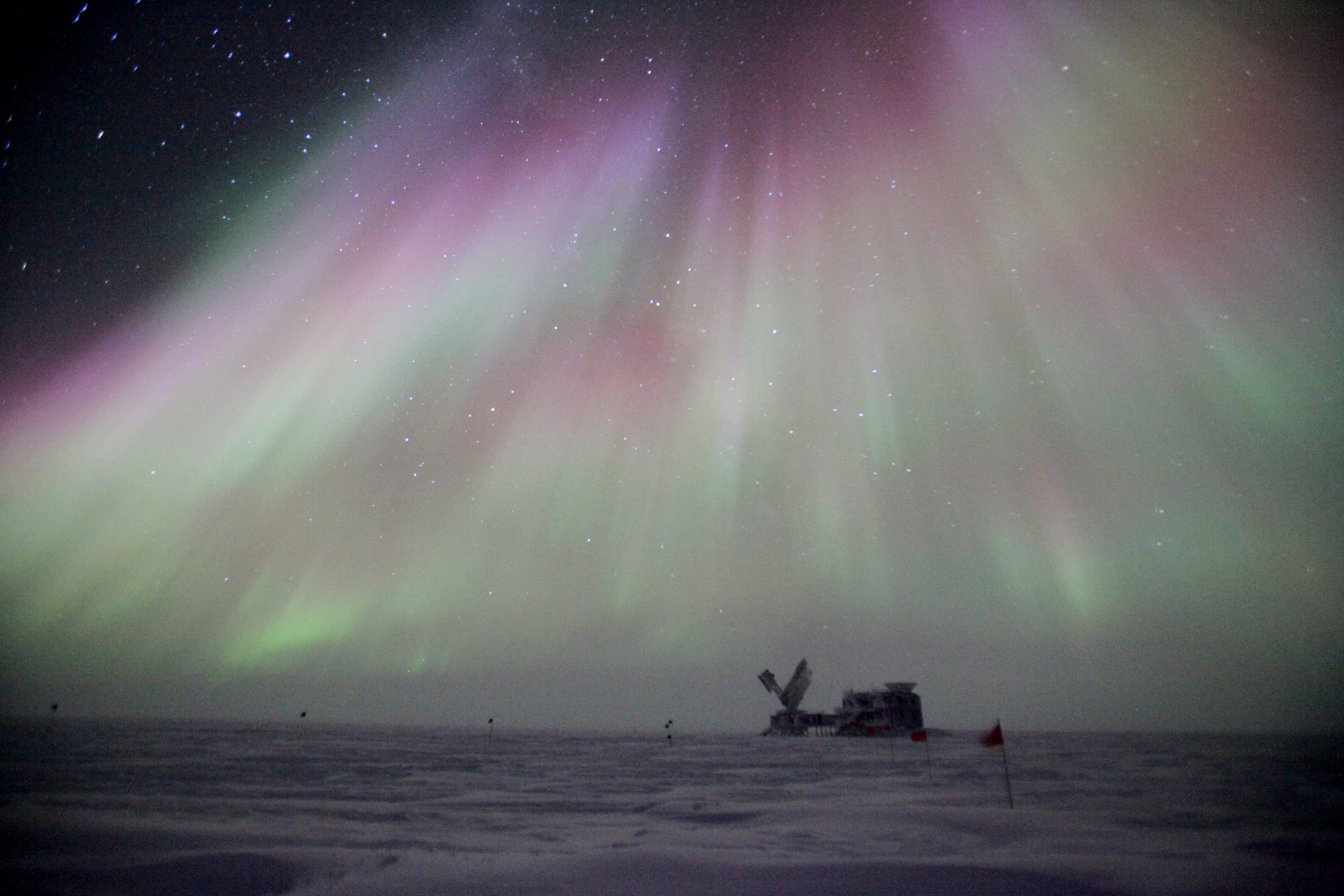
A shower of auroras
seems to be pouring down onto the South Pole Telescope (SPT) at
Amundsen-Scott South Pole Station. The SPT is designed to study the
Cosmic Microwave background. Constructed between November 2006 and
February 2007, the SPT is the largest telescope ever deployed at the
South Pole. This telescope provides astronomers a powerful new tool to
explore dark energy, the mysterious phenomena that may be causing the
universe to accelerate. To learn more, visit http://pole.uchicago.edu
The mountains, inaccessible to
most mortals, appear to them to exist for the sole purpose of enticing
them to ascend and in so doing experience an affirmation of their quest
to surmount seemingly impossible geological challenges, climatic
excesses, all that Nature conspires to challenge humankind's endurance
and dedication with, in a seemingly mischievous or perhaps even
malevolent inspiration to demonstrate her dominion over all.
Modern
summiteers like Joe Simpson who miraculously survived a climb in the
Peruvian Andes despite breaking one of his legs in an unfortunate
descent of horrendous danger and monstrously inclement weather
conditions, amply demonstrate, despite their respect for the mountains
and the unease and fear some may suffer of the dangers they will
encounter, how some manage to survive.
Anatoli
Boukreev, a climber of immense capability and experience, wrote movingly
of his personal view of an ascent of Mount Everest that took too many
lives when the mountain was crowded beyond the capacity to ensure a
timely final ascent and early enough descent to avoid catastrophe. Jon
Krakauer wrote of his own version of those very same events, but both
captured the essence of the allure of the climb and the ascent.
And
David Brashears, who ascended Mount Everest repeatedly, representing
the most successful of the many challengers that the Himalaya has seen,
further made his place in history by producing a finely detailed,
interactive view of the mountain that has fixated so many aspiring
climbers.
Mingmar, one of the team who captured the 477
images that make up the panorama - and they say they have thousands more
ready for a larger version
Many
make the attempt, and in the endeavour many experience the most
harrowing adventure of their lives. Now comes word that Ireland's most
accomplished mountaineer has been killed on Mount Kilimanjaro during a
massive lightning storm.
"Torrential rain all day. "Spirits remain good even if drying clothes
is proving impossible! We pray for drier weather tomorrow - the big day", wrote Ian McKeever.
Three
days of serious weather conditions culminated in a lightning strike
that killed Mr. McKeever outright and injured six other members of the
20-person climbing crew he was leading to the summit of the mountain.
The team of climbers was intent on reaching the summit of 5,895-metre
Kilimanjaro, and raising funds for charity.
The
climbers had ascended to the 4,000-metre level despite the weather,
heading to the Lava Tower for an acclimatization exercise, after which
they would plan to descend to a lower level, make camp and begin the
final ascent toward the summit on the following morning. As they
climbed the storm became more dangerously threatening.
Mr.
McKeever's career in mountaineering gained him a formidable reputation,
setting a world record for scaling the highest peaks on all seven
continents - an ambitious goal shared by many seasoned mountaineers to
cap off their mountain climbing career with the glory of achievement -
in 156 days.
Highlights from Felix Baumgartner's leap into the record books
Austrian
Felix Baumgartner has become the first skydiver to break the speed of
sound, reaching a top speed of 833.9mph (1,342km/h), officials say.
The 43-year-old jumped out of a balloon 128,000ft (24 miles,
39km) above New Mexico, breaking the record for the highest skydive.
He said he almost aborted the jump because his helmet visor frosted up.
It took just under 10 minutes for him to land safely, but he did not set a record for the longest freefall.
Video cameras relayed the moment Baumgartner stepped from his balloon capsule to begin his fall to Earth.
Only the last few thousand feet were negotiated by parachute.
Once down, he fell to his knees and raised his fists in triumph.
Helicopter recovery teams were on hand moments later.
"When you're standing there on top of the world you become so
humble. The only thing is you want to come back alive," he said at a
press conference after he landed.
None of the new marks set by Baumgartner can be classed as
"official" until endorsed by the Federation Aeronautique Internationale
(FAI).
Eva Baumgartner watches her son climb into the sky
Its representative was the first to greet the skydiver on the
ground. GPS data recorded on to a microcard in the Austrian's chest pack
will form the basis for any height and speed claims that are made.
There was concern early in the dive that he was in trouble.
Baumgartner was supposed to get himself into a delta position - head
down, arms back - as soon as possible after leaving his capsule. But
the video showed him tumbling over and over.
Eventually, however, he was able to use his great experience,
from more than 2,500 career skydives, to correct his fall and get into a
stable configuration.
Even before this drama, it was thought the mission might have
to be aborted. As he went through last-minute checks inside the
capsule, it was found that a heater for his visor was not working. This
meant the visor fogged up as he exhaled.
"This is very serious, Joe," he told retired US Air Force Col
Joe Kittinger, whose records he was attempting to break, and who was
acting as his radio link in mission control at Roswell airport.
Baumgartner's efforts have finally toppled records that have stood for more than 50 years.
The Austrian has been discussing his attempt since 2005
The previous highest, farthest, and longest freefall was made
by Col Kittinger, who leapt from a helium envelope in 1960. His altitude
was 102,800ft (31.3km). (His mark for the longest freefall remains
intact; he fell for more that four and a half minutes before deploying
his chute.)
Col Kittinger, now an octogenarian, has been an integral part
of Baumgartner's team, and has provided the Austrian with advice and
encouragement whenever he has doubted his ability to complete such a
daring venture.
The 43-year-old adventurer - perhaps best known for leaping
off skyscrapers - first discussed the possibility of beating Col
Kittinger's records in 2005.
Since then, he has had to battle technical and budgetary challenges to make it happen.
What he was proposing was extremely dangerous, even for a man used to those skyscraper stunts.
Baumgartner was given commands by the previous record holder, Joe Kittinger
At an altitude of 120,000ft (36.5km), the air pressure is less
than 2% of what it is at sea level, and it is impossible to breathe
without an oxygen supply.
Others who have tried to break the records for the highest, fastest and longest freefalls have lost their lives in the process.
Baumgartner's team built him a special pressurised capsule to
protect him on the way up, and for his descent he wore a next
generation, full pressure suit made by the same company that prepares
the flight suits of astronauts.
Although the jump had the appearance of another Baumgartner stunt, his team stressed its high scientific relevance.
The researchers on the Red Bull Stratos project say it has
already provided invaluable data for the development of
high-performance, high-altitude parachute systems, and that the lessons
learned will inform the development of new ideas for emergency
evacuation from vehicles, such as spacecraft, passing through the
stratosphere.
Nasa and its spacecraft manufacturers have asked to be kept informed.
Jon Clark is the medical director on the team. The former
shuttle flight surgeon lost his wife in the Columbia accident in 2003.
He said Baumgartner's experience could help save the lives of future astronauts who get into trouble.
A BBC/National Geographic documentary is being made about the project and will probably be aired in November.
The giant helium balloon carrying Baumgartner's capsule was released at 0831 local time in Roswell
A
plane heading for the Everest region has crashed on the outskirts of
Nepal's capital, killing all 19 people on board including seven British
tourists.
The plane, operated by Sita Air, came down minutes after
take-off from Kathmandu. Officials said it crashed into a river bank and
caught fire.
Sixteen passengers and three crew were on board the twin-propeller Dornier.
The UK Foreign Office has confirmed the British deaths and said relatives have been informed.
As well as the seven Britons, five Chinese nationals and
seven Nepali nationals were on the plane, including the three Nepalese
crew, police and aviation officials said.
Analysis
Sanjaya DhakalBBC Nepali
Friday's plane crash has once again drawn international attention to Nepal's poor air safety record. The crash is the second this year. Four months ago, 15
people died when an Agni Air plane carrying Indian pilgrims to a Hindu
religious site in northern Nepal crashed at a high-altitude airport. In September last year, another plane on a mountain
sight-seeing flight crashed into a hillside near Kathmandu, killing all
19 people on board.
Since 1949 - the year the first aircraft landed in Nepal -
there have been more than 70 different crashes involving planes and
helicopters, in which more than 650 people have been killed. While the latest crash appears in part due to exceptional
circumstances, critics say that many passenger aircraft in Nepal are
often poorly maintained, one of the main reasons for so many crashes.
But critics say that there is also another serious malaise in
Nepali aviation - a regulatory body that has consistently failed to
prevent airline operators from cutting corners on safety in what is a
competitive market.
The British Embassy in Kathmandu
said the UK ambassador had gone to Tribhuvan University Teaching
Hospital, where the bodies of those who died had been taken.
The cause of the crash is not yet known. However, the general
manager of Tribhuvan International Airport, Ratish Chandra Lal Suman,
said it appeared that the plane had struck a bird.
He said air traffic control contacted the pilot after
noticing an unusual manoeuvre minutes after take-off and the pilot said
his plane had hit a vulture.
Mr Suman said the plane had been attempting to get back to the airport when it crashed. Nepalese officials later said that the flight recorders had been recovered from the wreckage. They said initial reports suggested the crash happened as the
pilots tried to change direction and land again after suffering
"technical glitches".
Nepalese Prime Minister Baburam Bhattarai promised to take action to prevent similar accidents, but did not give details.
"I am saddened by the death of the locals and foreign
nationals in the plane crash. I pay condolences to the families of the
dead," he said.
The Dornier 228 aircraft had been heading for Lukla, the hub for trekking in the Everest region. The trekking season has just begun in Nepal and thousands of
climbers, including many Westerners, head to the country's famous
Himalayan peaks.
A spokeswoman for local travel firm Sherpa Adventures said
the British group had arrived in Nepal on Wednesday and was due to start
trekking on Friday until 16 October.
Police spokesman Binod Singh told the AFP news agency that
"the pilots seem to have tried to land it safely on the banks of the
river but unfortunately the plane caught fire".
One of the first rescuers to reach the crash site, police officer Bhagwan Bhandari, described the scene as "terrifying".
"There was fire coming from the aircraft. Red flames were reaching up to 20m (65ft) above the ground," he said.
Climber Alan Hinkes says the landing strip at Lukla is where most crashes happen
"It wasn't possible to get inside to conduct rescue operations.
We could hear blasts from the parts and engines of the aircraft."
Images showed burning wreckage at the crash site and dozens of rescue and security personnel.
British mountaineer Alan Hinkes told the BBC he had taken the
flight from Kathmandu to Lukla many times and that problems usually
occurred at the Lukla end.
"The landing strip in Lukla is a bit like an aircraft carrier
with a mountain at the end of it, with a 1,000ft drop at the end of the
runway. Normally crashes happen at that end," he said.
He added: "It is not the safest place to fly, I must admit, but it is what you have to do to get into the mountains."
Aviation accidents involving small aircraft are not uncommon in mountainous Nepal.
In May, 15 people were killed when a plane crashed trying to land at an airport in the north of the country.
And in September 2011, 19 people were killed when a Buddha Air plane crashed during a flight to view Mount Everest.
Injured climbers were flown to safety by helicopter
At least nine climbers are
feared dead and six more are missing in Nepal after an avalanche swept
away Europeans and others on a Himalayan peak.
Officials confirmed two bodies had been recovered while a
further seven were spotted on the slopes of Mount Manaslu in the north
of the country.
The avalanche struck a base camp near the summit on Saturday, police said.
The two bodies recovered are said to be of a German and a Nepalese guide.
Police official Basanta Bahadur Kuwar was quoted as saying by
the Associated Press news agency that 10 people had survived the
avalanche but many among them were injured.
They were being flown to hospitals by rescue helicopters, he added.
Officials are trying to determine exactly how many people were in the climbing party.
Deteriorating weather conditions meant it was impossible to continue air searches of the mountain on Sunday, Mr Kuwar said.
The climbers were caught at 7,000m (22,960ft) as they were preparing to head toward the summit, which is 8,156m high.
"The avalanche hit camp three of the Manaslu peak...
resulting in a flood of snow," said Laxmi Dhakal, head of the Nepalese
home ministry's disaster response division.
Hundreds of foreign climbers head every year for the
Himalayas in Nepal, which has eight of the world's 14 highest mountains,
including Mount Everest.
Manaslu, the eighth highest mountain in the world, is
considered one of the most dangerous, with dozens of deaths in recent
years.
Notoriously hungry for attention, he's at it again. Odd, that it has never yet occurred to him to climb the Himalaya. Mount Everest calls and Vladimir Putin remains oblivious. Disconcerting, to say the least. The siren call of true adventure seems not to be all that attractive to this doughty man of the world, this avowed nature lover, this man dedicated to buoyant self-advertising.
His exploits to date have been many and varied. The admiration that the Russian people have for their ruler is boundless. He is not only their prime minister, their past-president, past-past prime minister, but their strongman, as of old. He exemplifies the Russian spirit of the Steppes, a modern-day Attila, but refined and reliable to the core, however unpredictable.
Who but their hero would ride a stallion on the Steppes of Russia, bare-chested and proud? Who communes with the eagles, the hunting falcons, the wolves, the ghosts of the past, but he?
And, now, on to other exploits to demonstrate his fearless and ferocious stalwartness. In the coming episode of Vladimir-the-Great, not to be confused to Vladimir-the-Impaler, he will assume a mantle of Steward of Nature. Oh yes, he's done that before, that's right. When he tranquilized a wild tiger (not so wild, after all, but zoo-born and -raised, but why quibble?).
What's in the planning stages is his participation in the Flight of Hope project whose purpose it is to pattern a flock of cranes, raised in captivity, to take hem toward warmer southern climes. Our hero (correction: Russia's hero) will perform a surprise manoeuvre; he will take the controls of a motorized hang glider to direct the birds on their flight.
The photographs that will ensue will prompt international awards, no doubt. And that will result in a lovely scrapbook that Mr. Putin will be able to scroll through, reminiscing in his dotage. He can look back on having recovered two ancient Greek urns, diving at an archaeological site on the Black Sea last year. (Those, ahum, were the amphora planted for 'discovery'.)
And to spoil it all there's always someone lingering in the background, prepared to spill the beans with their mean-spirited balloon-puncturing observations. Example: the liberal Russian journalist, Masha Gessen forced to leave her post as editor-in-chief of Vokrug Sveta when she refused to send a reporter to cover this latest crane-Putin exploit.
"We were planning to write about the cranes, but expeditions with Putin's involvement have their own characteristic features: It's enough to remember the saving of the tigers or the search for the amphorae. It could turn out that the trees are tied to their stumps."
ANDREAS SOLARO/AFP/Getty Images Rescuers place explosive charges on the emerged side of the cruise liner Costa Concordia prior to entering on January 17, 2012.
What a distinction; the largest luxury liner yet in modern history to meet such a disastrous end. Almost a half-billion to build and outfit, with 1,500 luxe suites, tennis courts, swimming pools with retractable glass roofs, spas, dining rooms, casinos on one deck after another, the colossus in glorious sail with over four thousand people aboard just managed to hit a rocky reef. One well enough known to the locals off the Italian island of Giglio, to even have a name.
And all would have been well, but for the vanity of a captain who felt he could challenge Lady Fortune by a manoeuvre that he deemed gallant, but which was clearly not authorized by the company that employed him for his reliability and expertise as a sea captain, responsible for the safety and security of over a thousand crew members and a thrice-greater number of clients who paid handsomely for an enjoyable ocean cruise.
Perhaps the Costa Concordia was doomed from the moment Francesco Schettino was hired to captain it, although it took six years to occur. Familiarity, goes the old adage, breeds contempt. Just as well for the lives of all those who survived the fiasco-at-sea that they were as close to port as they were, even in that limping wreck of a wounded vessel. Think nothing of it, it was a trifle, an electrical malfunction, was the first notice given to the concerned passengers.
The captain, seasoned in his profession, must surely have been aware what that gradient of list signified, yet he neglected somehow to inform the coast guard of what was occurring even while the 50-metre gash in the ship's hull was leading it to gasp in it's death agony, alarming the passengers, and panicking the crew. It took him an hour to advise the coast guard. Prior to which some passengers used their cellphones to inform police.
Captain Schettino, in defiance of proud marine tradition, dishonoured that tradition and himself by choosing to take possession of a lifeboat, leaving women and the elderly and disabled and children remaining on deck to fend for themselves. And when the coast guard communicated with him, he informed them loftily that he was organizing the rescue mission from shore. Ordered brusquely back to his ship, he adamantly refused.
Bodies of eleven dead have now been recovered. Twenty-four more are missing. Divers have been making their way through the colossal structure, looking for the possibility that anyone might still be discovered alive, miraculously. The possibility that the pristine waters of the sea preserve may be contaminated by the tonnes of oil on the ship, yet another concern.
The ship lies close to shore, so any oil released could do major damage
This represents a general opinion site for its author. It also offers a space for the author to record her experiences and perceptions,both personal and public. This is rendered obvious by the content contained in the blog, but the space is here inviting me to write. And so I do.