"[Community
spread] is going to be wide-spread. It's going to be severe, young
people will get ill, and we have to prepare for all of this." "You can't pull your punches with some of the messages. This is going to be a challenging situation." Dr.Marc Loeb, infectious disease specialist, McMaster University
"If
transmission is very rapid, the interventions to try and slow down that
spread are interventions that will have significant implications for
communities and families." Dr.Amy Greer, Canada Research Chair, population disease modelling, University of Guelph
In
a way, it's good news, isn't it, that people aren't running around
panicking too much? I've seen some evidence on social media of panicking
-- buying toilet paper and other bizarre items." "My
gut feeling is that this is what a 1918-style pandemic might look like
today. People have talked for years now about the 'big one'. Well, the
big one doesn't necessarily have to have catastrophic mortality,
off-the-scale figures like 1918." "What
we're seeing now rhymes. Strip away the media and social media, all of
which didn't really exist in 1918. Most people wouldn't really be aware
of a thing called Spanish flu until you actually had this mortal wave
and lots of people were sent to hospital." "It's
not the zombie apocalypse. You don't need to go up and fill up your car
or stock up with toilet paper, but I think it would be wise to make
sure you have ibuprofen and basic medical supplies. Not because you
might necessarily need them now, but you want to make sure you have them
before people panic-buy them." "That's the kind of bind we're in." Dr.Mark Honigsbaum, medical historian
"[Since
its Wuhan debut eight weeks ago, the virus has infected our global
psyche, spawning an] epidemic of catastrophizing [hammering the stock
market, stranding cruise ships, cutting oil output, shutting down
schools and] increased social conflict and xenophobia." "[To
appreciate the] full and very real -- power of the coronavirus, we need
to enter the rabbit hole of evolved human psychology." "Cues that signal the presence of pathogens tend to elicit automatic disgust responses, so as to help us avoid strangers." Samuel Paul Veissiere, anthropologist, cognitive scientist
"When
conditions are right, epidemics can potentially create a medical
version of the Hobbesian nightmare -- the war of all against all. [It
begins with fear] fear that I might catch the disease and the suspicion
that you may already have it and might pass it on to me." "The
whole environment, human, animal and inanimate may be rendered
potentially infectious. If we do not know what is happening, who knows
where the disease might spring from?" Philip Strong, 'epidemic psychology'
Community-acquired COVID-19 signals that the disease has surpassed its
original infection sources, that communities far from the origins of the
infection have now acquired the means to transfer the novel coronavirus
among a population; a second front of contaminated sources. And the
moment that a community recognizes that the virus is ensconced within
itself, not merely transferable from people who were infected at its
original source passing the virus on to others, it becomes inevitable
that the infection rate will grow.
The scientific-medical community, once it became aware of the presence
of a new communicable virus, focused its resources on containment.
Ensuring that the primary victims of the virus were kept well away from
others, to stem the tide of communication. Once community-acquired
infections begin surfacing, it is acknowledged that containment must
switch to control. Assembling all possible medical/scientific resources
in an effort to control and stem the outbreak where some people exhibit
no symptoms yet are carriers able to infect others.
Dozens of cases where the source of infection is unknown are under
investigation in the United States. Predictions resulting from
mathematical modelers appear fairly dire that the virus has the capacity
to infect between 40 to 70 percent of adult humanity. Projections that
saw a downward revision to 20 to 60 percent. But that too is a high
prediction of a potential infection rate in any population. Containment
was involved in identifying imported, travel-related cases then
isolating the infected, tracing their contacts to keep from generating
new clusters.
Mitigation was meant to retard the virus's trajectory of infection rate
through reducing contact of people with other people. Suspicion of
infection meant self-isolation for a two-week germination period. In
China, cities were placed in lockdown, no one permitted to enter or to
leave. People leaving their homes were expected to wear containment
masks to aid the goal of minimizing illness and the death rate. In the
West, the focus will be on curtailing "social disruption", while at the
same time persuading people to avoid crowds, observe the niceties of
personal hygiene, and self-isolate if required.
The
coronavirus outbreak has hit particularly hard in Italy.Francesca Volpi/Bloomberg
Through observation and experience it is expected that people who are
healthy will experience mild infections; they will become ill, then
speedily recover, while those over 65 and the elderly, those with heart
disease, diabetes, asthma, cancer, hypertension and other chronic
illnesses and underlying medical conditions have the highest risk of
acquiring severe pneumonia, acute respiratory distress syndrome, sepsis,
septic shock and death. Health and emergency response authorities pray
that a major outbreak will not arrive until flu season departs, when
hospitals will be better able to cope.
Substantial hospital resources would be strained under pandemic
conditions, leading to a surge of patients to be tested and treated. "A surge of cases appears inevitable", wrote doctors from eight Toronto hospitals, in an article published in the Canadian Medical Association Journal.
The World Health Organization adjusted the case fatality rate to 3.4
percent, much more severe than expectations with a typical influenza
season. What remains a puzzle is that so few children have been reported
infected. Might they be somehow immune to infection, or do children
become mildly infected only, while becoming efficient spreaders?
Scientists are working in their laboratories around the world,
feverishly looking for an antidote to this virus, but it will be at
least a year before a safe vaccine against COVID-19 may be available for
wide distribution and use. According to a new DART & Maru/Blue
Poll, many people in Canada are trepidatious they may contract the
virus. 32 percent of 1,513 randomly selected Canadians representing
about 10 million Canadians, responded they were very or somewhat
concerned of infection. Five percent of Canadians avoid public transit
and an increased number of people are buying hand sanitizer washing
their hands more frequently, avoiding sport events, movies, theatres and
restaurants.
Coronavirus pop-up store in Washington, DC Nicholas Kamm/AFP via Getty Images
There were over 98,000 confirmed cases of COVID=19 and at least 3,380
confirmed deaths as of Friday. Frightful statistics to be sure, and
growing, but as cognitive scientist Samuel Veissiere put it, a deeply
inbuilt negativity bias is in play here; the human tendency to focus
more keenly on the negative than the positive, its source in
evolutionary reasoning. As for the opinion of Dr.Steven Taylor,
professor and clinical psychologist at University of British Columbia,
anxiety will be ramped up once the pandemic is officially declared.
Psychological problems involved in persuading people to comport
themselves in ways such as to reduce risk to themselves and vulnerable
others through societal measures to slow community spread may inevitably
increase public anxiety when efforts to slow community spread with
travel restrictions, movement restrictions quarantines, will serve to
exacerbate people's anxiety levels. Dr. Taylor cautions that we should
be listening to health care authorities, but on the other hand, should
not be losing sleep over COVID-19.
"They start the burning early in the morning and go until evening." "It happens every day and the smoke is always in the air. For me, it's difficult to breathe." Karnawi, 84, Tropodo, Indonesia
"These stark findings illustrate the dangers of plastics for human health and should move policymakers to ban plastic waste combustion, address environmental contamination, and rigorously control imports." Lee Bell, adviser, International Pollutants Elimination Network
"There are many tofu makers here and most of them do not care." "The tofu makers only count the profit, profit, profit." Ismail, 50, former mayor of Tropodo
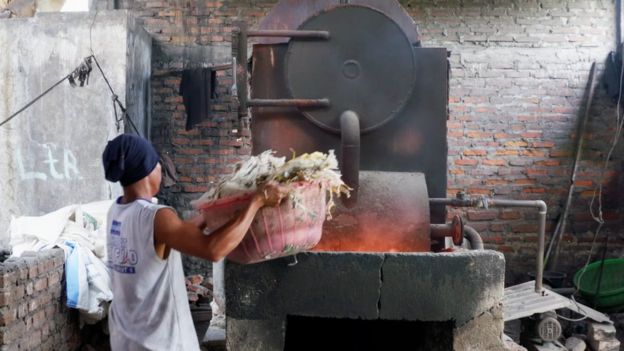
At tofu factories, plastic is burned as fuel
A village of five thousand people, Tropodo was found to harbour high levels of several hazardous chemicals including dioxin -- known to cause cancer, birth defects and Parkinson's disease -- according to a recently released report written by an alliance of Indonesian and international environmental groups. They point the finger of blame at the level of dioxin found in the village as an end product in a chain of malfeasance, carelessness and government neglect.
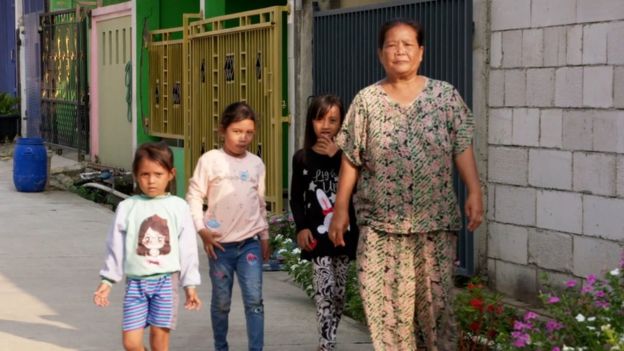
Mila Damila says her granddaughters' health has been badly affected
The smell of burning plastic pollutes the very air where patches of black ash cover the ground as black smoke billows from towering smokestacks in the village. Over 30 commercial kitchens in Tropodo located on the eastern side of Indonesia's main island of Java, fuel their tofu production through the burning of a mixture of paper and plastic waste. In these kitchens much of the area's tofu is produced.
An egg laid by one of Mr. Karnawi's chickens where he lives close by seven of the plastic-burning kitchens tested out with one of the highest levels of dioxin contamination ever recorded in Asia. One such egg from Mr. Karnawi's henhouse would exceed the European Food Safety Authority dioxin standard by 70-fold, for an adult. The waste produced in the West tends to be sent abroad, including to Indonesia.
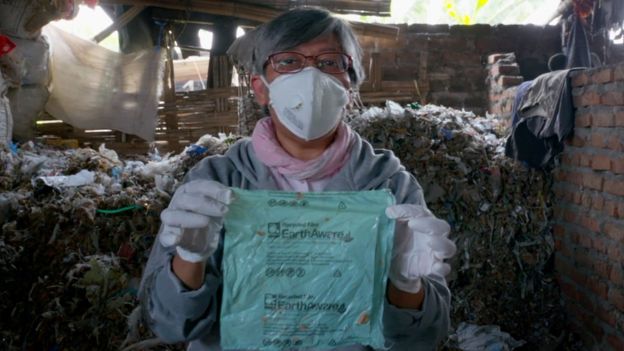
Researcher Yuyun Ismawati found recyclable plastics among the waste set to be burned
That waste is combined with local waste for processing. Not to be processed into new consumer goods, but to be tossed into furnaces to fuel Tropodo's tofu boilers. Indonesia's president Joko Widodo has neglected health concerns in favour of economic development and environmentalists have urged him to address the urgent issue of toxic contamination, inclusive of air pollution and mercury contamination.
The Environment Ministry's director general for waste management visited Tropodo in July, acknowledging plastic burning was hazardous, but making no effort to put a stop to it. She would, she said, investigate how the toxic smoke could be controlled. Perhaps predictably, given its preferred priorities, the government has done nothing since.
Leaving Tropodo's residents to stifle in the stench of burning plastic but worse, ingest it, breathe it into their lungs where it leads to lethal health problems. The former mayor, a tofu producer himself, had banned the use of plastic as fuel in 2014, a prohibition that lasted several months before the burning of plastic was resumed.
Villagers sort through plastic in Bangun for the better-quality material they can sell
"Unless these quack doctors, barbers and dentists are not checked, the number of incidents of H.I.V. infection will continue going up." Dr. Imran Akbar Arbani, local doctor
"It was devastating." "At the beginning, there was attention and an outcry, the patients were in the spotlight." "Now, they are nearly forgotten." Gulbahar Shaikh, 44, television journalist, Ratodero
Sumaira Jajja/Dawn
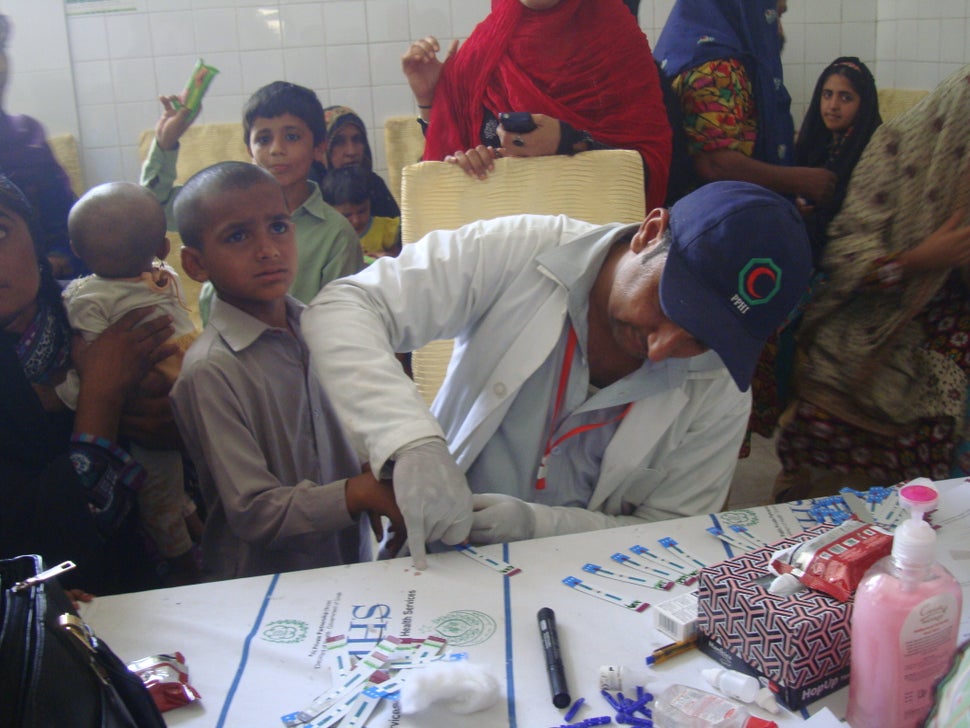
A child gets tested at a screening camp in Ratodero, Larkana District, Sindh
Guilbahar Shaikh's two-year-old daughter s among those children who have contracted the virus that leads to AIDs. The city in which he lives is recognized as among Pakistan's poorest, with 200,000 residents. Close to 900 children in the city were suffering raging fevers early in the year that attempted treatment failed to resolve. By April the mysterious illness was recognized as H.I.V., an outbreak that overwhelmingly affected children.
At first a pediatrician, Muzaffer Ghanghro, was accused by health officials as being responsible for the outbreak, claiming he reused syringes from one patient to another. As time went on, 1,100 people -- one in every 200 residents -- tested positive for the virus and close to 900 of them are under age twelve. A high enough number to be declared an urgent emergency, but held to be under-reported. Mr. Ghanghro was arrested, charged with negligence, manslaughter and causing intentional harm.
Health authorities are now of the opinion that the man being charged with causing the outbreak is only one among many practising a negligent form of medicine absent critical hygiene, transferring viral pathogens from one person to another. According to visiting health workers, it was a common sight to witness doctors reusing syringes and I.V. needles. And they too are not alone in this type of malpractice where barbers too reuse razors on multiple customers.
And then there are the city's dentists who use unsterilized dental tools on their patients' mouths. In fact, it is not only Ratodero but the entire nation that has seen an increase in cases of H.I.V. when at the same time the global community has seen a generalized decline of new infections. In Pakistan between 2010 and 2018, numbers of H.I.V.-positive patients nearly doubled to an estimated 160,000.
Clinics operated by unqualified doctors and illegal blood banks, many of them reusing syringes, were shut down. The situation has resulted in people taking aim on their family members who have been diagnosed with the virus. One man strangled his H.I.V.-positive wife to death while a month later in another town residents saw their neighbour tied to a tree by her family when she had tested positive, because the family wanted to prevent her from spreading the virus.
Coping With Explosive Drug Dependencies in Scotland
"We're seeing diseases that you would associate with old age in a lot of these middle-aged men with a long history of drug use." "What your body tolerates at 18 it doesn't tolerate at 38 or 48." Dr. Carole Hunter, lead pharmacist, Glasgow Addiction Services
"The jigsaw is complex." "It's our history, it's the way we consume drugs, it's the chronic underfunding and underperforming treatment services we have." "Underline that with austerity and welfare cuts in recent years, and you've got the perfect storm for this to happen." "We've managed to keep a lot of the aging cohort alive through our current drug treatment services, but they get to a certain point where that blanket is not enough. They need respiratory care, they need mental health care, they need help with housing, employment, welfare and a whole host of other things." Amdrew McAuley, senior research fellow on substance use, Glasgow Caledonian University
"I know the instinct from the U.K government is that they don't want to be seen in any way to be condoning illegal drug use." "But people are dying. We need to do things that at first feel difficult." Scotland Public Health Minister Joe FitzPatrick
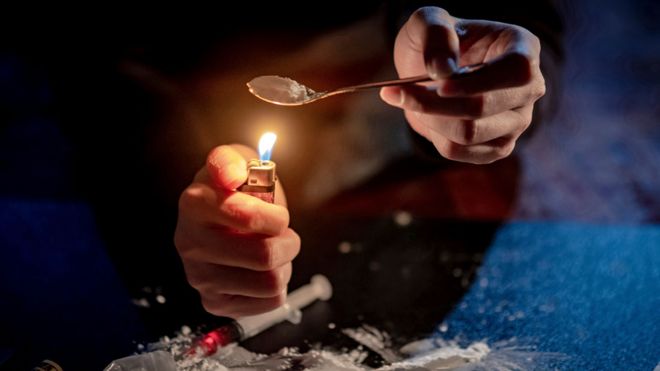
"Street Valium", or etizolam has flooded into Glasgow. "People are dying with one bad pill", said Halth Minister Joe FitzPatrick. The drug Etizolam has been discovered in close to half of all drug deaths that occurred last year in Scotland. Unlike the scourge of overdose deaths where fentanyl and carfentanil, two hugely powerful opioids -- one more deadly than the other -- have entered Canada and the United States -- mostly from China -- Scotland has not yet seen their presence.
But even without those two deadly scourges, Scotland struggles with drug dependency and its inevitable death toll. The situation has become so dire in that country it is now being referred to as the "drug-death capital of the world", a distinguishing prize the nation could well do without. There were 1,187 drug-related deaths last year, a record for Scotland, representing an increase of 27 percent from the previous year.
And what distinguishes these deaths is that it is older, long-term opioid users who are now accounting for the greater proportion of the deaths.
Over twenty years ago Edinburgh's addiction rate was infamous. The known 60,000 drug users in Scotland, routinely involved in a prolonged history of opioids or benzodiazepines keep the crisis in drug-related deaths at a high level of dramatic life expiration for no good reason. Those who fail to die of drug overdoses are experiencing disturbing health deterioration with the onset of medical conditions familiarly seen in much older people.
Drug users suffer from both physical and mental health issues. As an example, one patient who has been using drugs since age 19 and who has overdosed no fewer than four times in the past year. "I've nearly died four times", the now-43-year-old says. "It's getting harder for me to recover as I get older". He is being treated for deep-vein thrombosis, hepatitis C and skin abscesses, and lately has been urinating blood.
Life expectancy until 1950 was on a par with most of Western Europe, even better. Following the Second World War, Scotland's progress was slower than that of any other Western European country and the varied reasons behind Scotland's drug crisis can be attributed to economic policies that left regions in a deeply impoverished state where treatment services were neglected and drugs became deadlier. Needle exchanges introduced in the 1980s along with naloxone to reverse overdoses have been in widespread use since 2011.
Methadone as an opioid substitute therapy is free, available at most pharmacies. Efforts by the Edinburgh Access Practice treatment center to boost more people into treatment faster and to begin to address issues behind their drug use are positive factors in response to the epidemic of drug use, but there are few such facilities. Controlled substances like heroin fall under the British government's jurisdiction and there is resistance from conservative lawmakers to move to more progressive drug policies.
Guantanamo Bay? Old Folks Home, Medical Facility, Cemetery
"It is paradoxical. But we don't let people just die in this country." "It violates all of our ethics." Dr. Stephen N. Xenakis, psychiatrist, retired U.S. Army brigadier-general
"These are the ones that could not be released. Many of these gentlemen are still at war with the United States." "Any act of resistance, no matter how small -- they are still fighting the war through these minor acts of resistance." Admiral John Ring, base commander
"There has been a lot of thought put into what preparing for an aging
detainee population looks like and what infrastructure we need to have
in place to do that safely and humanely." Anne Leanos, public
affairs director, Joint Task Force Guantanamo
“It would either require modifications to the current facilities,
because everything we have is two floors connected by stairs." "Obviously that wouldn’t work too well for someone who’s
in a wheelchair. If it requires wheelchair lifts and whatnot, that’s
something we’ll have to retrofit or build a new facility for." Colonel David Heath, Guard Force Commander
"[In the] next three to five years [detainee mobility is expected to become
an increasingly important issue. Are the doors in the cells wide
enough to move wheelchairs in and out? Are there ramps to reach the
medical facility, those types of things." "And we’ve just started looking
at that, so I can’t tell you whether we’re ready or not but it’s
something we will plan for." "So far it has not had an effect, but I believe it will. If the detainees stay
here or stay under law of war detention for several more years, we will
begin to have to deal with what any aging population deals with." Admiral Peter Clarke, base commander
A physical therapy room has been set up for older detainees at Guantanamo Bay prisonAFP/File
"Many Guantánamo detainees continue to suffer from the lasting effects
of torture and indefinite detention, which have caused significant
medical and mental health needs that will only increase as detainees
age." "I know from my
work with torture victims and Guantánamo detainees that it is nearly
impossible for a person to establish a positive therapeutic relationship
with mental health personnel in the very place where he or she was
tortured." "The U.S. government has neglected and concealed the extent to
which detainees have suffered, and this precludes the possibility of
meaningful medical and psychological care as long as the detainees
remain at Guantánamo." Vincent Iacopino, Medical Director, Physicians for Human Rights
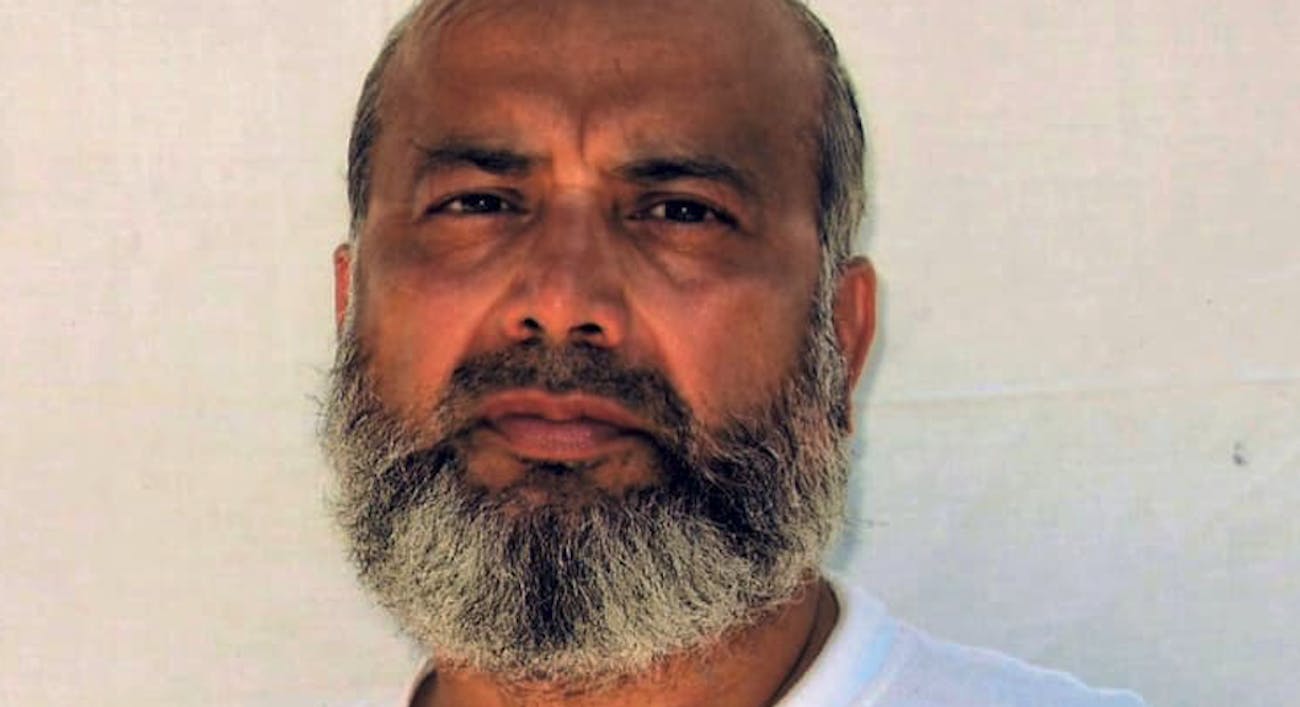
Saifullah Paracha in a photo released by his attorney David H. Remes, is 68
Guantanamo Bay is an exclusive club, as it were. Its very selected clientele can be assured of no unauthorized entry to concern their heightened sense of security. It is a well-guarded facility. An expensive one to stay at, with a price tag of roughly $5.56 million to house each inmate annually. It does not represent, however, a facility that people clamour to enter, and those housed there would far and away prefer to be elsewhere, anywhere else. It is where they have been incarcerated, charged with waging war against the United States. One inmate was to have been among the 9/11 hijackers.
The wardens of Guantanamo Bay anticipate that any time soon they will be faced with urgent incidents of hip and knee replacement requirements. In the interim, they can stock up on sleep apnea breathing masks, install grab bars on cell walls, and put dialysis equipment on standby and install wheelchair ramps where applicable.... It has been in use for the past 17 years, to house Islamist fighters and terrorists, who are all, unsurprisingly, 17 years older themselves and in none too good condition.
Where at one time the U.S. administration spoke of closing the prison, it now envisions retaining it for the purpose it was conditioned for until such time as the need for it is no longer in existence. Authorities of the U.S. Defense Department are prepared to continue operating Guantanamo Bay until the last of the inmates is gone. As many were shipped out as their countries of origin would agree to take. The remainder will continue to grow into their elderly years there, and eventually die.
In the not too distant future what is now purely a prison with generalized medical facilities will become a nursing home with more sophisticated medical facilities preparing to treat chronic and deadly illnesses, from cancer and advanced heart conditions to dementia. The detainees are even now evincing symptoms of high blood pressure and high cholesterol, joint pain, diabetes and sleep apnea.
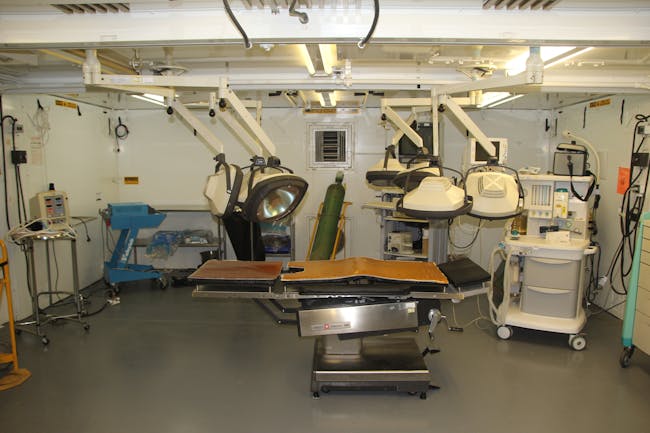
When military personnel require medical care themselves and the small base hospital is not outfitted to provide it yet, they travel 1,232 kilometers to Jacksonville, Florida to a major American military hospital for expert care. Eventually, the base hospital at Guantanamo will be outfitted with more sophisticated medical devices, perhaps even an M.R.I. Law forbids prisoners held under Law of War detention to enter the United States.
Cardiologists for over a decade have travelled to Cuba to consult on some cases, and other specialists make regular visits for colonoscopies and orthopedic injuries. Inmates with long-healed battlefield amputations are visited by prosthetists. There have not yet been any incidents of cancer onset, and no one yet must make use of a wheelchair without being able to manage it independently. Still, senior staff are considering the number of cells required with grab bars, ramps and a larger space for gurneys, wheelchairs and showers.
The Guantanamo Bay prison's revolving medical staff of 140 doctors, nurses, medics and mental health care providers look after the needs of detainees while providing services to the 1,500 troops stationed at the base. A Muslim chaplain has been appointed to the base. A fenced plot of land is marked "Entrance Islamic Cemetery" where a number of prisoners over the years -- nine -- have died since 2006, and it is located on an off-limits area of Guantanamo.
The medical facilities at Guantanamo Bay. Leaders at the military
detention facility say the clock is ticking down on how the facility can
serve an aging population
"[Are there some kinds of cancer his staff and outside
specialists wouldn’t be able to treat here?] As it stands today, yes." "When you start hitting those
issues, and we have to address this issue, then the decision would have
to be made at that point how do you care for that particular patient." Navy Captain Richard Quattrone, chief medical officer, Guantanamo Bay
"When I was a kid and used to come here, Chamula was isolated and didn't have access to processed food." "Now, you see the kids drinking Coke and not water. Right now, diabetes is hitting the adults, but it's going to be the kids next. It's going to overwhelm us." Vicente Vaqueiros doctor, San Juan Chamula clinic
"Coca-Cola is abusive, manipulative." "They take our pure water, they dye it and they trick you on TV saying that it's the spark of life." "Then they take the money and go." Martin Lopez Lopez, local activist "Coca-Cola pays this money to the federal government, not the local government." "While the infrastructure that serves the residents of San Cristobal is literally crumbling." Laura Mebert, social scientist, Kettering University, Michigan
[A road-sign marking the way to YITIC, in the Altos de Chiapas (Maria Verza)]
Coca-Cola arrived in this normally rainiest region of Mexico fifty years ago to set up their factory locally, employing locals and advertising its product in marketing campaigns shared by Pepsi producing billboards in local languages using models in traditional Tzotzil outfits. The locals became so psychologically involved with the sweet chemical drink that they have adopted it in their religious ceremonies practised by the indigenous Tzotzil population. To the extent that many believe the power to heal the ill lies within the purview of the carbonated soda drink.
Cruel irony.
Coca-Cola pays the government a minuscule amount for its right to extract water for the production of its world-famed pseudo-potable product; about ten cents per 1,000 liters. Water runs so short in San Cristobal de las Casas in the southeastern state of Chiapas, some neighbourhoods can count on running water several times a week only. Tanker trucks sell additional water to households. And because of the shortage of potable water, in steps Coca-Cola priced in competition with bottled water.
Chiapas residents drink an average of over two liters of soda daily. This habit born of avoidable circumstances has affected people's health, raising the mortality rate from diabetes 30 percent between 2013 and 2016. The second leading cause of death in the state after heart disease is diabetes, with over 3,000 people dying annually from complications of diabetes. Those complications are not only blindness and vascular problems, but primary links to heart disease.
San Pedro Chenalhó (M.V)
The Coca-Cola bottling plant is owned and operated by a food and beverage giant with the rights throughout much of Latin America. Femsa executives claim their plant impacts minimally on the water supply for the city; their wells are deeper by far than the springs supplying local residents. And Ferma has permits to extract over one million liters of water a day in its decades-old deal with the Mexican government. Its deep wells, of course deplete the water table; little wonder that wells further up run dry....!
But Femsa represents an influential force for the local and federal economy. Four hundred people are employed at the plant, which contributes roughly $200-million annually to the state economy. In that sense, it is like a tax, funded by the locals who consume inordinate amounts of the unhealthy concoction whose manufacture leaves them critically short of water. It is a situation that represents an insane, repetitive raping of a vital natural resource, victimizing those whom it claims to serve.
The rivers running through San Cristobal are found to be rife with infectious pathogens and E.coli, speaking to a general neglect of the area by the federal government; the population ill served by their own municipal authority with a lack of wastewater treatment, raw sewage flowing directly into local waterways. Maria del Carmen Abadia, a resident of the city, witnessed her father die from diabetes complications, sees her mother's health waning, fears for herself. "I'm worried I'll end up blind or without a foot or a hand. I'm very scared", she says.
"While in China, if you experience any unusual acute auditory or sensory phenomena accompanied by unusual sounds or piercing noises, do not attempt to locate their source." "Instead, move to a location where the sounds are not present." U.S. Consulate, Guangzhou, China
"I know of no acoustic effect that would produce concussion-like
symptoms; according to my research, strong effects on humans require
loudness levels that would be perceived as very loud noise while
exposed." Jürgen Altmann, physics professor, Technischen
Universität Dortmund, Berlin
"If you took any one of these patients and put them into a brain injury
clinic and you didn't know their background, you would think that they
had a traumatic brain injury from being in a car accident or a blast in
the military." "It's like a concussion without a concussion." Dr. Randel Swanson, specialist in brain injury rehabilitation, University of
Pennsylvania
"We don't want to see that this individual case would be magnified, complicated or even politicised."
"China has been investigating this matter in a very
responsible manner. We haven't found that any organisation or
individual has carried out such a sonic influence."
"[The US might with to carry out an] internal [probe into the case]."
Chinese Foreign Minister Wang Yi
"The employee was sent to the United States for further evaluation.
On May 18, 2018 the Embassy learned that the clinical findings of this
evaluation matched mild traumatic brain injury (MTBI)." "The Chinese government has assured us they are also investigating and taking appropriate measures." Jinnie Lee, U.S.
Embassy spokesperson, Beijing
There it is, again. Consular officials once more exposed to some mysterious sound wave likened to a 'sonic attack', that occurred just recently in China, after that same peculiar and inexplicable event occurred earlier, a year back, in Cuba, in some cases seriously affecting both American and Canadian Embassy officials, and their family members. Why nowhere else in the world have these events occurred? Only in Communist nations with undercurrents of hostile attitudes toward the West. Strange indeed!
For some of the diplomats and their family members who experienced the peculiarly strange phenomenon that made them peculiarly ill, their experience and its results still linger. Those affected reported "mental fog" that "slowed" them for months, according to a commissioned report. Some became beset with a sense of nervousness and irritability. Two of those interviewed for the study evidently met criteria for post-traumatic stress disorder. Their job performance capability was reduced substantially.
Three of those affected required hearing aids in response to moderate-to-severe hearing loss that resulted from their exposure to the unknown-in-origin sound. Many others continued to experience pressure or ringing in their ears, while over half required prescribed medication to enable them to sleep or to respond to headaches.
And among those affected, many were unable to return to work, given symptoms not typical of concussion; pain and ringing in one ear only. Another difference the study noted was that though concussion patients frequently make swift, full recoveries, these patients had their symptoms persist for months on end.
Photo: File photo of the Guangzhou skyline (Getty)
The similarity between the Cuba experience and that now identified in China is striking and puzzling. A government employee in the southern Chinese city of Guangzhou reported "subtle and vague, but abnormal, sensations of sound and pressure", alerting the U.S. State Department of a mild traumatic brain injury brought on by "abnormal" sensations of sound and pressure, resembling those that occurred to American diplomats in Cuba.
"The U.S. government is taking these reports seriously and has informed its official staff in China of this event", stated the US. consulate. As yet, no other cases within or without the diplomatic community have been reported. The U.S. Embassy in Beijing called members of their diplomatic corps from five consulates in China to a meeting for staff to air questions and receive responses. The U.S. is preparing to send a medical team to Guangzhou to conduct medical evaluations for any employees requesting such.
In Cuba, 24 diplomats and their family members had been victimized by "specific attacks" that left them with injuries such as those occurring with brain trauma. When Canadian diplomats experienced similar symptoms, Canada withdrew its officials from Cuba as well. And while investigators suspect the involvement of a "sonic weapon", no proof has arisen other than speculation that this might be the cause of those events.
The "unusual sounds or auditory sensations" reported by the victims have never been identified.
Do ‘Sonic Weapons’ Adequately Explain ‘Health Attacks’ on Diplomats in Cuba? Inaudible sonic weapons are an unlikely cause of the mysterious symptoms suffered by American and Canadian diplomats in Cuba. Snopes
"If you take coal out of the ger, people will burn anything, the tires on their cars, their neighbours' fences." "It's hard to survive in minus 30 degrees." Batmend Shirgal, Mongolian engineer
"[Because of the pollution] a simple flu becomes a pneumonia or bronchitis very easily." "It requires long-term treatment." Dr. Soyol-Erdene Jadambaa, immunologist, private clinic
"It's a fairy tale [that the government of Mongolia will be able to enforce its coal ban]." "There are thousands of families who mine, sell and burn coal in order to live." Khangai Unurkhaa, 25, seller of raw coal
"It’s still the warm season, so the cold and air pollution aren’t too
bad at the moment. You should come back in January to see it at its worst – when people
living in these poor neighbourhoods don’t have anywhere to dispose of
the ash and leave it in the streets. The ash flies with the wind. That’s
when Ulaanbaatar turns into a massive ashtray." "My sister-in-law died from lung
cancer a year ago. She
lived only three months after the diagnosis."
"My sister’s father-in-law also
recently died from lung cancer. Then, a year or two ago, her friend died
from lung cancer. These were all healthy people. They didn’t
drink or smoke. They didn’t have bad habits. They only lived in
Ulaanbaatar."
"Small children – or anyone who is shorter than 1.5 meters, really –
experience the worst form of air pollution. In deep
winter, they inhale all the ashes rising from the ground."
Bayar Deegi (46), lawyer-turned-inventor
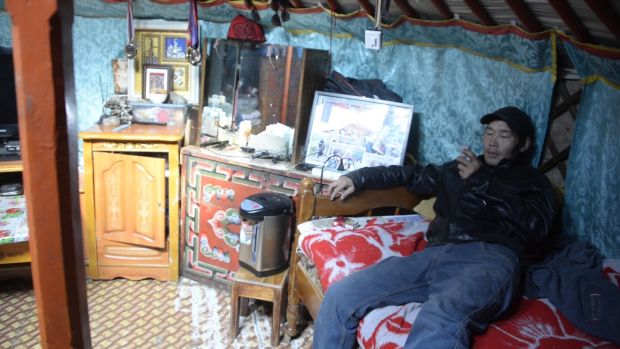
Byamba Enkhbat at home in his ger. He lost his livelihood as a nomadic
farmer as his livestock ‘got skinnier by day and died one after the
other’ in the harsh winter of 2007. Photograph: Didem Tali
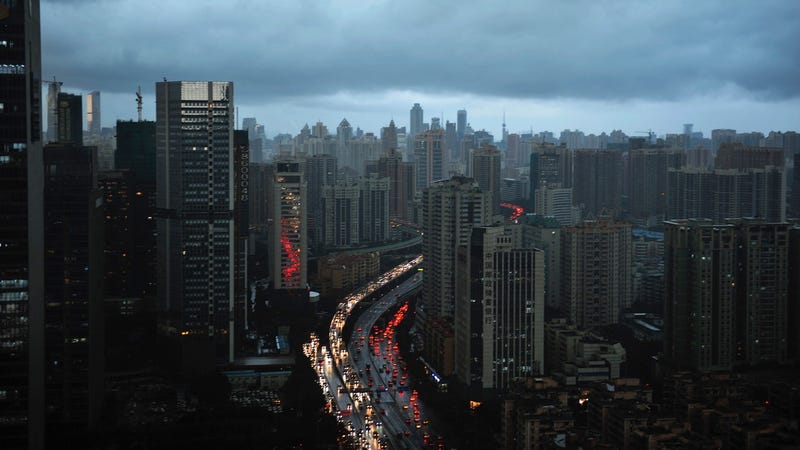
This is a problem that a wealthy nation like Canada has not had to face, although until a year or so ago, it was number second in the world in the distinction of its capital city, Ottawa, recognized for its snow and ice, second only to Ulan Bator in Mongolia. Close to 1.4 million people live in Mongolia's capital city. And throughout the winter months smoke rises steadily from the chimneys crowding the city. Not only is Ulan Bator known for being the coldest capital city in the world, it has the highest recorded air pollution level as well.
Megalopolises like Beijing and New Delhi, with their massive populations are known for the dreadful pollution they produce, enclosing those cities, cutting them off from sunlight, challenging residents' health. But they come second to Ulan Bator for the sheer weight of pollution that menaces the lives of people living there. Local government statistics reveal that around 80 percent of the air pollution in the city is produced by over half the population who live in the "ger" districts in the city's north.
Gers are the traditional dwellings characteristic to the nomadic Mongolian herding lifestyle. It is a yurt, a circular tent, a single living room where a family's bedding and furniture are arranged around the stove that makes life possible in such an extreme winter climate. The functionality of the yurt for a nomadic people is well known; readily disassembled and moved and set up again in a few hours' time. The life of pastoral sheep- and goat-herders.
But the tough life of the nomadic herders was dealt a blow when unusually cold weather even for Mongolia killed off many livestock. Hundreds of thousands of people had little option but to leave their nomadic herding lives, hoping that opportunities for employment awaited them in the Ulan Bator of mineral mining. Recently, predominately lower-to-middle-income migrant workers have created their own adjunct to the city, unplanned districts where the poor burn millions of tons of raw coal yearly.
Although raw coal is relatively inexpensive, some city dwellers on these ger outskirts cannot afford even coal, and burn whatever they can; garbage waste, plastics, whatever they feel can be consumed by fire and create warmth for their circular living space. At the end of January, a pollution station in Ulan Bator recorded a reading of 3,320 micrograms per cubic meter of air, representing 133 times what is considered safe by the World Health Organization; six times what is considered hazardous.
That same month, Mongolia's Prime Minister Ukhnaagiin Khurelsukh decided to announce the use of raw coal in Ulan Bator would be banned. So from April 2019 forward the drive to improve the city's air quality will surge toward the future by banning the use of raw coal. Since January 2017, subsidies have been available for the use of stoves producing less pollution. Use of electricity during the night in many of the city's worst-polluting districts was made charge-free. But to adequately heat a thinly insulated home on a winter day with electricity remains out of reach; too costly for the poor.
"First the weak ones [among his herd of sheep and goats] started to die and we hoped the rest would survive,
but they didn’t."
"There was too much snow, so they
couldn’t eat. They got skinnier by day and died one after the other. By
the time the winter was over, we had lost all our animals."
Byamba Enkhbat, 39, father of three, former nomadic herder
Byamba Enkhbat at his family’s ger on the outskirts of Ulaanbaatar. Photograph: Didem Tali
Reforming a Deleterious Food Culture : Then Reversing It
"It was a hard-fought guerrilla war. People have a right to know what these food companies are putting in this trash and with this legislation, I think Chile has made a huge contribution to humanity." "Sugar kills more people than terrorism and car accidents combined. It's the poison of our time." Senator Guido Girardi, vice-president, Chilean Senate
"I never really paid attention to labels." "But now they kind of force you to pay attention. And if I don't notice, my kids do." Patricia Sanchez, 32, accountant
"Originally we didn't believe the logos would make much of a difference, but in focus groups, we've discovered that kids really do look at them." "They'll say, 'Mom, this has so many logos I can't bring them to school. My teacher won't allow it'." Dr. Camila Corvalan, University of Chile
This product sold in a
supermarket carries the labels required by law to show the levels of
calories, sugars and fats, in Santiago, Chile, June 27, 2016 Associated Press
Across the globe, countries rich and poor have been struggling with the reality of rising rates of obesity in their populations, and lock-step with a hugely overweight population comes strains on any health care system alongside an increasingly troublesome mortality rate as diseases such as diabetes, heart and stroke take their toll in association with a public so accustomed to fast food outlets proliferating with cheap, non-nutritious food heavy in fat, sugar and salt that they imperil themselves.
And as governments begin to realize that processed food manufacturers have lured consumers with their public relations ploys and clever advertising marketed to grasp the attention of the most vulnerable, their efforts at persuading giant food corporations to diminish the assault on consumers' appetites has had minimum success. Chile prepared itself to take a more aggressive approach rather than rely on compliance on the part of processed food manufacturers.
Its soaring obesity rates have sounded a panic bell. Up to the late 1980s Chile faced a different kind of problem, where widespread malnutrition among poor Chileans, children in particular, was their nightmare. At the present time in Chile, an estimated three-quarters of adults are considered to be overweight or obese, according to the nation's ministry of health statistics. Childhood obesity in particular shows rates that rival the world's highest. Over fifty percent of six-year-old children are overweight or obese in Chile.
The strains on the health system are acute, with the medical costs of obesity reaching $800-million in 2016, representing 2.4 percent of all spending on the nation's health care file. This is a figure projected by analysts to reach close to four percent by 2030. These statistics and the fact that they will only increase finally spurred the Chilean government to unleash marketing restrictions, mandatory packing redesigns and labelling rules in hopes of achieving a social transformation.
Customers stand in line at a fast food restaurant in Santiago, Chile, June 22, 2016.
Experts in nutrition recognize the measures as the world's most ambitious effort to refurbish an entire nation's food culture to save the population from itself. Should it succeed, it could represent a model for other countries with similar problems to turn around their obesity epidemic contributing to four million premature deaths annually resulting from the global emergency of obesity. "It's hard to overstate how significant chile's actions are -- or how hard it has been to get there in the face of the usual pressures", commented Stephen Simpson, director of the Charles Perkins Centre, representing scholars focused on nutrition and obesity science and policy.
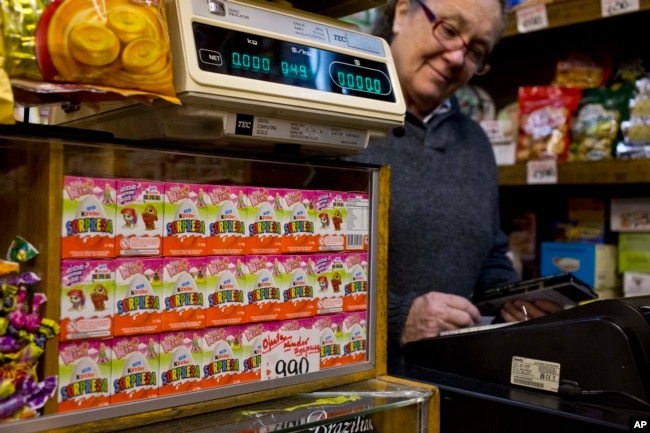
Chile's food law was put into motion two years ago, forcing multinationals like Kellogg to abandon their iconic cartoon characters so attractive to children. Cereal boxes loaded with sugar are now absent those child-centric cartoons. Kinder Surprise candies have been banned from using trinkets to attract children. Chilean schools are now prohibited from selling junk food like perennial favourites, ice cream, chocolate and potato chips. Television programs aimed at children may no longer advertise these products.
In an effort to persuade Chilean mothers that breastfeeding is the best option for healthy babies, a ban on marketing infant formula will be initiated this coming spring. Chile has mounted an 18 percent tax on beverages high in sugar. A new labelling system has been instituted requiring packaged food companies to include black warning logos prominently in the shape of a stop sign on any packaged foods high in sugar, salt, calories or saturated fat.
Candy store owner Sofia Rumpf attends a customer in Santiago, Chile, June 24, 2016 photo.
Chilealimentos, an industry association, is fighting back. Its director states the new nutrition labels are confusing and "invasive", the marketing restrictions based on a scientifically flawed correlation between consumers' weight gains and the promotion of unhealthy foods. "We believe that the best way to approach the problem of obesity is through consumer education that changes people's habits", he stated rather piously, given that the advertisements used by his industry have already achieved that end.
Over 1,400 food items representing 20 percent of all food products sold in Chile have been reformulated since the law was enacted, according to AB Chile, a food industry association. Coca-Cola initiated an advertising campaign for new Sprite and Fanta versions with the tag line "Free of Logos, Equally Rich" reflecting that those drinks no longer contain warning labels since half the sugar has been replaced by artificial sweetener. Raising other alarm flags.
A Kinder Surprise company executive from Italy and the Italian ambassador to Chile accused Dr. Jaime Burrows Oyarzun, the vice-minister of public health, of waging "food terrorism", during a trip to his office. Managing director at Ferrero, Mauro Russo, claimed Chile's law had been erroneously applied to Kinder Surprise, since the toy is an intrinsic part of the treat and certainly not to be mistaken for a "promotional gadget", as the law would have it. "Kinder Surprise's impact on obesity is very marginal", he insisted.
Chile's current president who lent himself to the new consumer-protective food laws is due to step down from the presidency. His successor is the former president, recently re-elected to the office, a conservative businessman who during his first term in office, vetoed the food bill in 2011. His incoming administration had formerly backed a nutrition initiative financed by multinational food companies emphasizing healthy recipes, exercise and moderation related to junk food.
The incoming president's intention, noted a spokesperson, would be to take a second look at the law, to explore ways "to improve it", once he takes office. His wife had led the campaign financed by the multinational food companies. "We don't need more taxes", she said recently.
"We've seen around a 30 to 35 percent increase of patients in the past couple of days." "It wasn't like this five years ago. Children with respiratory problems are finding their issues are exacerbated. It affects everyone." Anupam Sibal, group medical director, senior pediatrician, Apollo Hospitals, India
"United has temporarily suspended our Newark-Delhi flights due to poor air quality concerns in Delhi and currently has waiver policies in place for customers who are travelling to, from or through Delhi." "We are monitoring advisories as the region remains under a public health emergency, and are co-ordinating with respective government agencies." United Airlines
Smoke and ash billow from the volcano in Eyjafjallajokull, Iceland. Photograph: Ingolfur Juliusson/Reuters
In 2010 and again in 2015 when Icelandic and Indonesian volcanoes erupted respectively, air traffic was suspended due to the ash and other particulate matter elevated by their explosions into the atmosphere and screening the skies for days and weeks. The threat to plane engines' intake of the particles ensured that airline safety came first, suspending flights. More recently United Airlines took similar steps, refusing to fly into New Delhi in India as a result of health concerns related to unremitting, thick and dangerous smog.
Visitors walk through the courtyard of Jama
Masjid amid heavy smog in the old quarters of New Delhi. (Sajjad
Hussain/AFP/Getty Images)
The air quality in New Delhi ranks among the worst in the world, and that's saying quite a lot, given the reputation of Beijing so hugely dependent on energy generation through coal-burning furnaces for their industrial output. And China's industrial output as the entire world knows, is prodigious. China consciously sacrificed quality of life for its population as a temporary measure while it grew its industries. That temporary measure appears at this juncture to have become permanent. It is also a permanent embarrassment to the country which had to order all industries to temporarily shut down during the Olympics to produce a vision of the sun in a blue sky for a brief window of time.
In India, farmers recently having harvested their crops have been busy burning the fields, with the resulting smoke soaring into the atmosphere. The illegal burning of fields is an old technique that brings minerals back to the soil, but has other, obvious consequences in the diminishment of air quality in the process. Pollution from gas-burning vehicles where public transportation is absent, along with ongoing construction projects in the city, further exacerbate the compromised air.
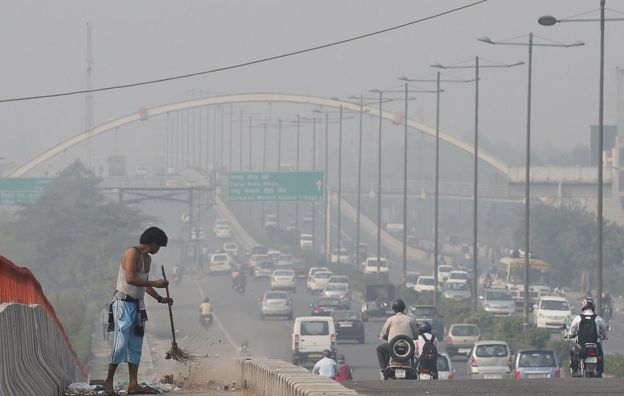
Beijing's wholesale pollution was out-rivalled by New Delhi's last week, when the Delhi smog was ten times greater than Beijing's. In parts of New Delhi pollution registers 40 times the World Health Organization-recommended safe level for human health. Over six thousand schools were ordered to be closed. Trucks carrying essential supplies only are permitted into the city; all other vehicles restricted from entry, and a stop has been placed on construction projects. There was even talk of spraying water over the city in hopes of dissolving the toxic smog.
Residents of the city go about wearing face masks, hoping to protect themselves from the worst invasive effects from the grey haze. When they can, people remain indoors, with those who can afford it using air purifiers, the air-cleansing effects of indoor plants and closed windows to keep their air as clean as possible under the circumstances. Doctors warn of deaths in this city of 20 million inhabitants, particularly those of the most vulnerable, the children.
A study recently linked 2.5 million deaths in India's population of 1.3-billion people in 2015 to the effects of pollution. Concerned parents bring their coughing children into hospitals all around the city. Not everyone can afford expensive air purifiers. Those families who live in poverty share among themselves a few inexpensive gas masks in hopes of preventing the worst medical emergencies caused by the toxic smog spewing into their atmosphere, threatening their lives.
Indian commuters wear masks to protect themselves from the smog. (Sajjad Hussein/AFP/Getty Images)
"Going into this, my colleagues and I knew that pollution killed a lot of people. But we certainly did not have any idea of the total magnitude of the problem." "Until now, people haven't recognized what an incredible hit pollution makes on the economy of a country." "Pollution control can stimulate the economy because it reduces death and disease." Philip Landrigan, dean of global health, Icahn School of Medicine, New York
"When you're looking at developing countries, you really have to address this challenge if you want to move people out of poverty and into the middle class." "Climate change is going to exacerbate the very problems that are identified in this article. There will be more contagious and infectious diseases. There will be more lives lost, more injuries, if we don't identify a path that gets us out of the hole that we're in." "What people don't realize is the instability that results from poverty, the instability that results from migration as a result of climate change." "Even if they're off [researchers] by a factor of ten, you're still talking about huge, huge impacts. But they're not off by a factor of ten." Gina McCarthy, former Environmental Protection Agency administrator
Smog enveloped Delhi after Diwali in 2016 -- Getty Images
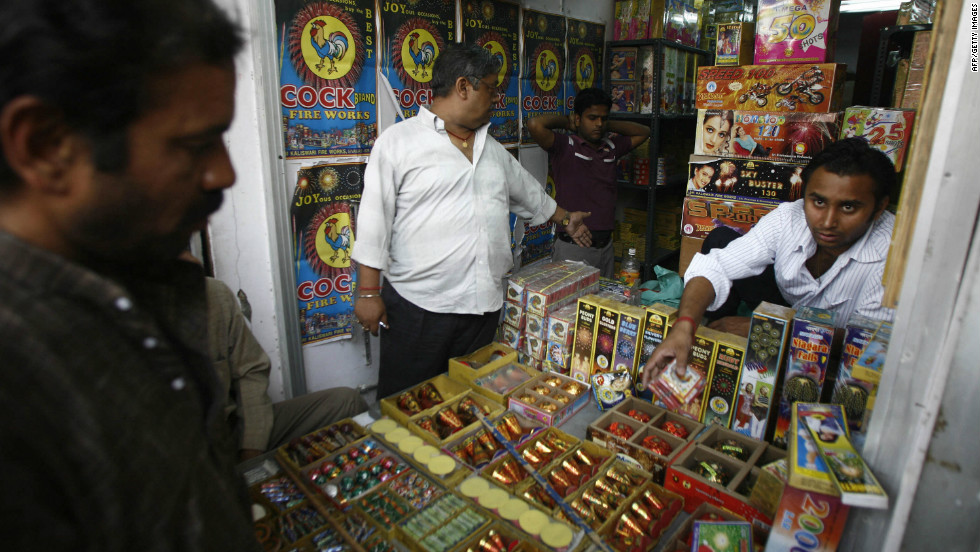
A report appeared several weeks ago in the British medical journal the Lancet which focused on the massive human toll of pollution. And nor did the researchers ignore the financial burden that pollution-related health problems cause. One of the world's most polluted cities, New Delhi, had its air quality index reach 1,031 several weeks back, where a reading of over 300 is considered to be hazardous to human health. There were overtures by government several weeks back to attempt convincing people in India not to set off the usual fireworks to celebrate the Hindu festival Diwali.
But people are so fixated on celebrating in traditional ways that it was simply inconceivable to them that they were being advised to abstain from setting off fireworks, even though the Indian Supreme Court brought in legislation to make it illegal, they simply ignored the warnings. The heavy smog that so alarmed government officials was laced to an even greater degree by the resulting pollution, injurious to peoples' health, the very same people who insisted they must observe their favourite traditions.
During the Hindu festival of Diwali fumes from millions of fireworks create a dense layer of pollution over the Indian capital. CNN
Global pollution, according to the new study resulting from a two-year research project, concluded that an estimated 9 million premature deaths could be attributed to the scourge of pollution, in 2015. One in six of all premature deaths, result from global pollution, according to this newly-published in-depth study undertaken by an international group of researchers. Pollution, then, destroys the lives of more people than all war and violence in the world, each year. Three times more people die as a result of global pollution than lost their lives to HIV/AIDS, tuberculosis and malaria combined.
China, known for its devastatingly poor air quality, thanks to the ever-present coal-fired chimneys blasting away in all its major, hyper-populated cities is a case in point, where heavy, grey smog thick with particulate matter threatens the health of its citizens. India is right behind China in the quality of the air its people breathe. The irony is that received wisdom has it that emerging economies are expected to go through these growing pains, paying more attention to cheap energy for manufacturing than to the quality of life for their populations; once they have achieved economic status, attention will turn to ameliorating the pollution.
So it is that most of these massive death counts attributable to overwhelming levels of pollution occur in developing nations; compromised air quality in China and India and tainted water throughout sub-Saharan Africa, along with toxic mining and smelter operations in South America, all taking their inevitable toll while governments focus on building their economies toward wealth, while sacrificing their populations to early decline and death.
Data was assembled from researchers in over 130 countries throughout this two-year project, to document causes of disease and premature deaths in the 21st Century, to discover that poor air quality represented the most significant pollution-related culprit in reaping huge death counts in vulnerable populations. Outdoor pollution tainted by mercury, arsenic and allied particulate matter, and household air polluted through the burning of wood, dung and other organic matter for cooking and for heat, are also included in the death toll.
Researchers compiled alarming figures such as an estimated 6.5 million 2015 deaths attributable to heart disease, stroke, lung cancer and allied respiratory ailments. Unsafe sanitation and contaminated drinking water accounted for another 1.8 million annual deaths reflecting the prevalence of gastrointestinal diseases and other such infections from water pollution. The world's most vulnerable indigent workforce suffered from work-related exposure resulting in bladder cancer in dye workers, and pneumoconiosis in coal miners.
Occupational vulnerabilities to carcinogens and toxins were linked to almost a million annual deaths.
An estimated 2.5 million and 1.8 million deaths respectively were tracked to pollution occurring in India and China, representing roughly 24 and 19 percent of global pollution deaths. Other countries accordingly affected include Pakistan, Bangladesh and Kenya. And it is not just the cost in human lives, point out the authors of this latest study. They make the claim that some $4.6-trillion in annual losses are linked to the early deaths and illnesses.
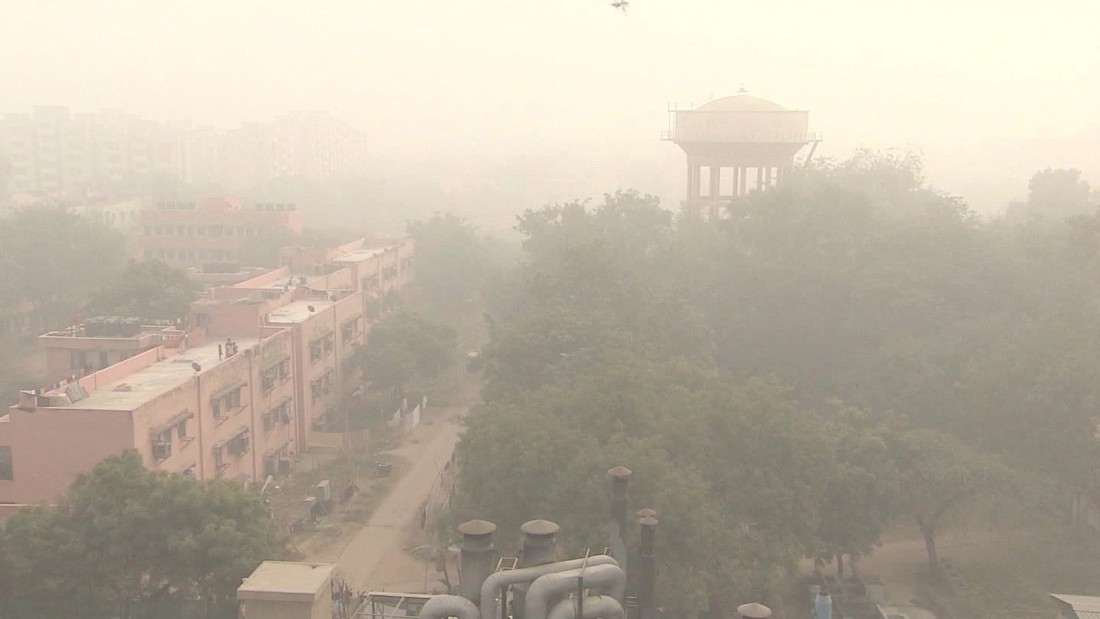
Pollution levels regularly exceed recommended safe levels in the Indian capital -- CNN
This represents a general opinion site for its author. It also offers a space for the author to record her experiences and perceptions,both personal and public. This is rendered obvious by the content contained in the blog, but the space is here inviting me to write. And so I do.