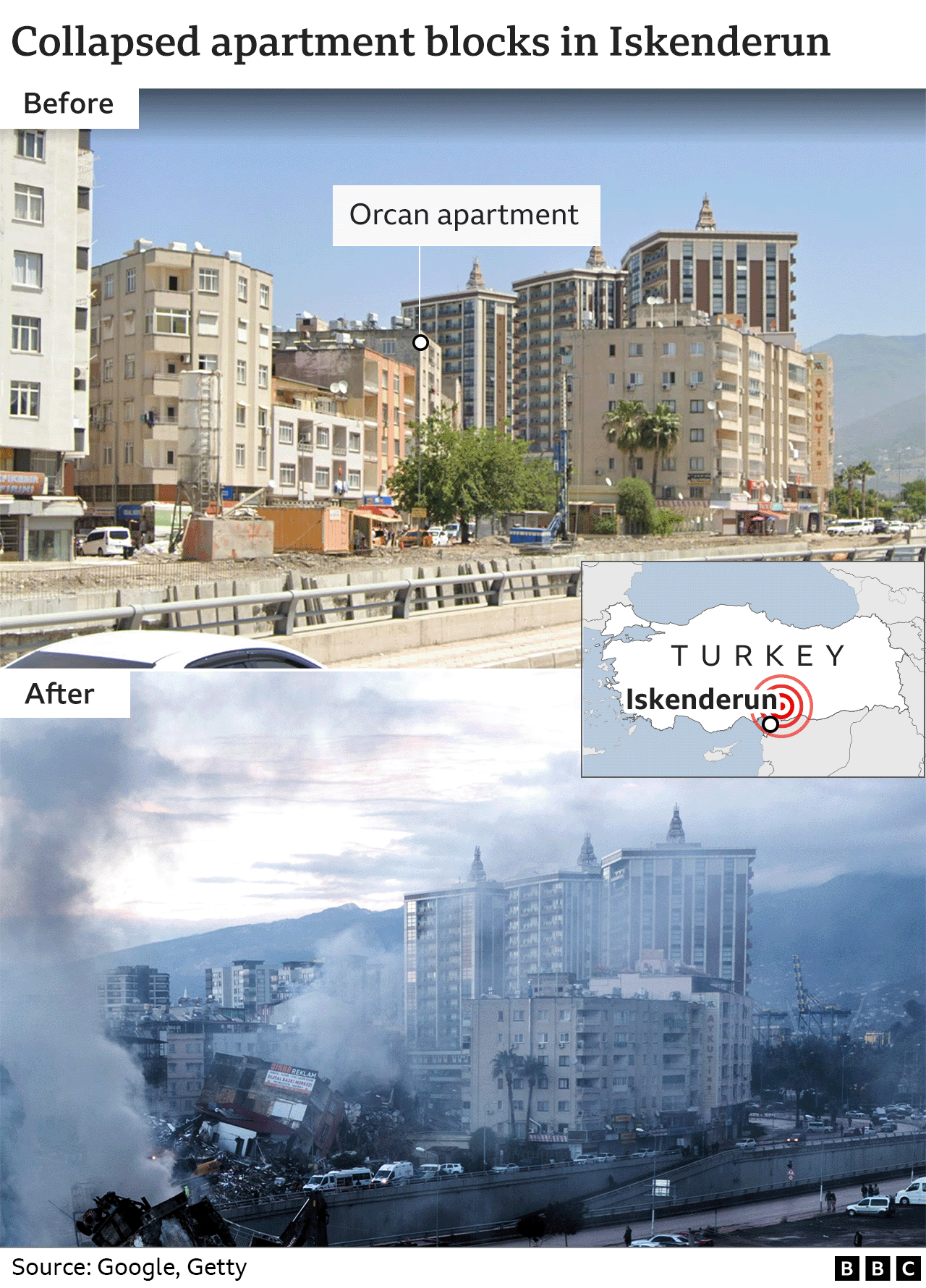
The Sheer Scale of the Tragedy
“We have so far failed the people in north-west Syria."
“They rightly feel abandoned.
Looking for international help that hasn’t arrived."
"My duty and our
obligation is to correct this failure as fast as we can."
Martin Griffiths, UN relief chief
"We will follow this up meticulously until the necessary judicial
process is concluded, especially for buildings that suffered heavy
damage and caused deaths and injuries."
Turkey’s vice-president, Fuat Oktay
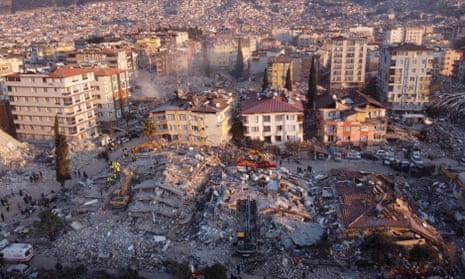 |
| Collapsed buildings in Antakya, Turkey. Photograph: Hassan Ayadi/AFP/Getty Images |
The
disastrous earthquake that struck Turkey and Syria has brought out the
best and the worst in both people and their national representatives.
The international community responded quickly, almost 30 countries sent
search-and-rescue teams in a desperate bid to save as many people as
possible, trapped under the rubble of thousands of collapsed buildings
in towns and cities all over northeast Turkey and across the border into
Syria where 4 million Syrians, displaced in the ongoing civil war
sought refuge in a crowded area with only one cross-border site, blocked
by Russia.
In
Syria, the White Helmet rescue group did their best with inadequate,
basic tools to try to extract as many still-living people trapped and
crying for help. UN aid trucks finally managed to get through several
days following the series of quakes, and to the intense disappointment
of the White Helmets no life-saving equipment better than the picks and
sledgehammers they were using were made available to them. Hundreds of
thousands of quake survivors, now homeless, are sleeping rough, hungry
and fearful.
The
Turkish military is still bombing border sites in Syria against the
Kurds they mark as terrorists. Military personnel that could more
usefully be deployed to rescue missions in both countries. The
governments of both countries are facing accusations from their
populations of a tardy, insufficient response to the urgency of the
tragedy. President Erdogan's popularity has taken a tumble and like most
autocrats looking to place blame has started legal action against
building contractors, holding them responsible for poor construction.
Over
100 arrest
warrants resoectung collapsed buildings have been issued by Turkish
authorities amid warnings that the death toll
from the earthquake that struck parts of Turkey and Syria could double
from the current total of 33,000. A dozen people are in custody;
contractors, architects and engineers with links to some of the tens of
thousands of buildings collapsed or seriously damaged in the 7.8- and
following 7.6-magnitude quakes.
 |
Rescuers
carry 12-year-old Cudie from the rubble of a collapsed building, in
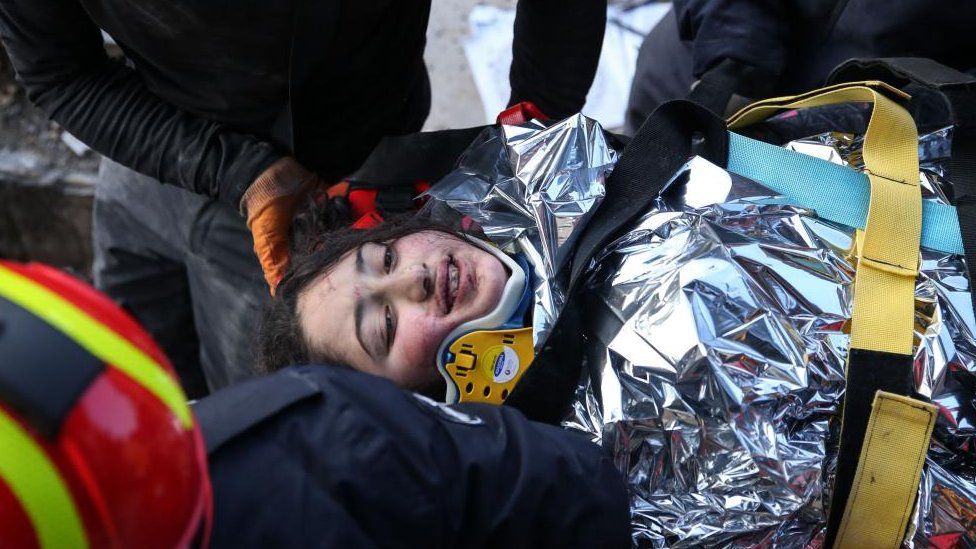
Hatay, southern Turkey, 147 hours after the quake EPA
|
Rescue
teams from Austria and Germany withdrew temporarily to a base camp used
by international volunteers, citing the dangers they've come across
from firepower in the conflict between Turkey and Kurdish militias. Not
far from the search-and-rescue areas, there was an attack on civilians,
leaving 11 dead, at the hands of Islamic State terrorists. Because of
threats, one of the Israeli search-and-rescue teams was forced to
withdraw.
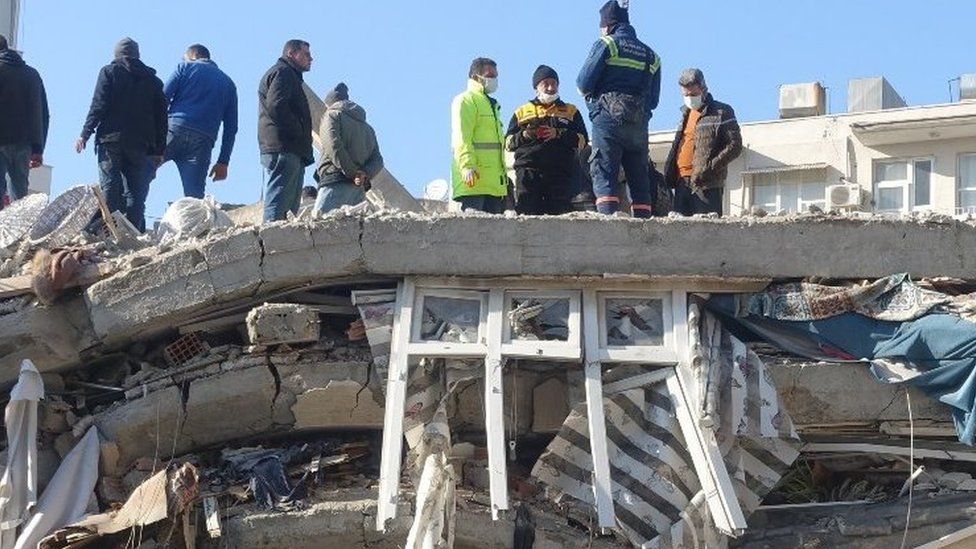
Beside collapsed buildings, others standing whole are
experiencing looting. Some stores have begun to empty their shops of
merchandise to keep them from being looted. Contrast that behaviour with
that of desperate bystanders using their bare hands in the first three
days after the tremblors to try to rescue trapped victims under steel
and concrete. In Hatay province several days ago rescuers crouched
under concrete slabs as they carefully reached into the rubble to rescue
a ten-day-old newborn. His mother, also alive, they were carried to a
field hospital.
This is winter, extreme cold and snow blankets the
area. People trapped under the collapsed buildings would die from
exposure as much as from their wounds. Those too exhausted and in pain
to continue calling for help, would never see help arrive. In time
their bodies would be exhumed and they would be identified, and buried.
Miraculous recoveries of victims were still sporadically taking place
days after the initial earthquake, but hope of finding more diminished
as time consumed hope.
Now, attention turns to the struggle of
survivors, homeless and traumatized, trying to maintain body heat in the
winter weather, looking for food and water. "Especially
in this cold, it is not possible to live here. If people haven't died
from being stuck under the rubble, they'll die from the cold",
said survivor Ahmet Tokgoz, calling for his government to evacuate
people from the Turkish city of Antakya. Chances of finding anyone else
yet alive are fast dwindling.
Winter
weather, road and airport runway damage all conspired to hamper
emergency responses. Both governments will have much to answer for; the
Syrian regime in its fracturing of the country, the plight of the
millions of Syrians who fled government attacks on its citizens whom
Bashar al Assad called terrorists, and Turkey's Recep Tayyip Erdogan for
the lacklustre response to the catastrophe that struck his country."Such things have always happened," he said. "It's part of destiny's plan."
Labels: Earthquakes, Homeless, Lives Lost, Monumental Destruction, Syria, Turkey
Sacrificing the Environment : Fracking
"[The frequent occurrence of minor earthquakes was related to fracking.]"
"Most
importantly, the area is located near the southern edge of the Sichuan
basin, near mountains that were formed by tectonic plate movement, which
means that the area has large fault lines underground."
"Southern Sichuan is an area with particularly strong seismic activity.
Earthquakes happen due to the long-term accumulation and sudden release
of geological stress. From a scientific point of view, the vibrations in
the Earth's crust caused by shale gas fracking can continuously create
underground geological stress which leads to small earthquakes, but this
can also help avoid large earthquakes in future."
Wang Xinzhi, professor of geology, Southwest Petroleum University, Chengdu
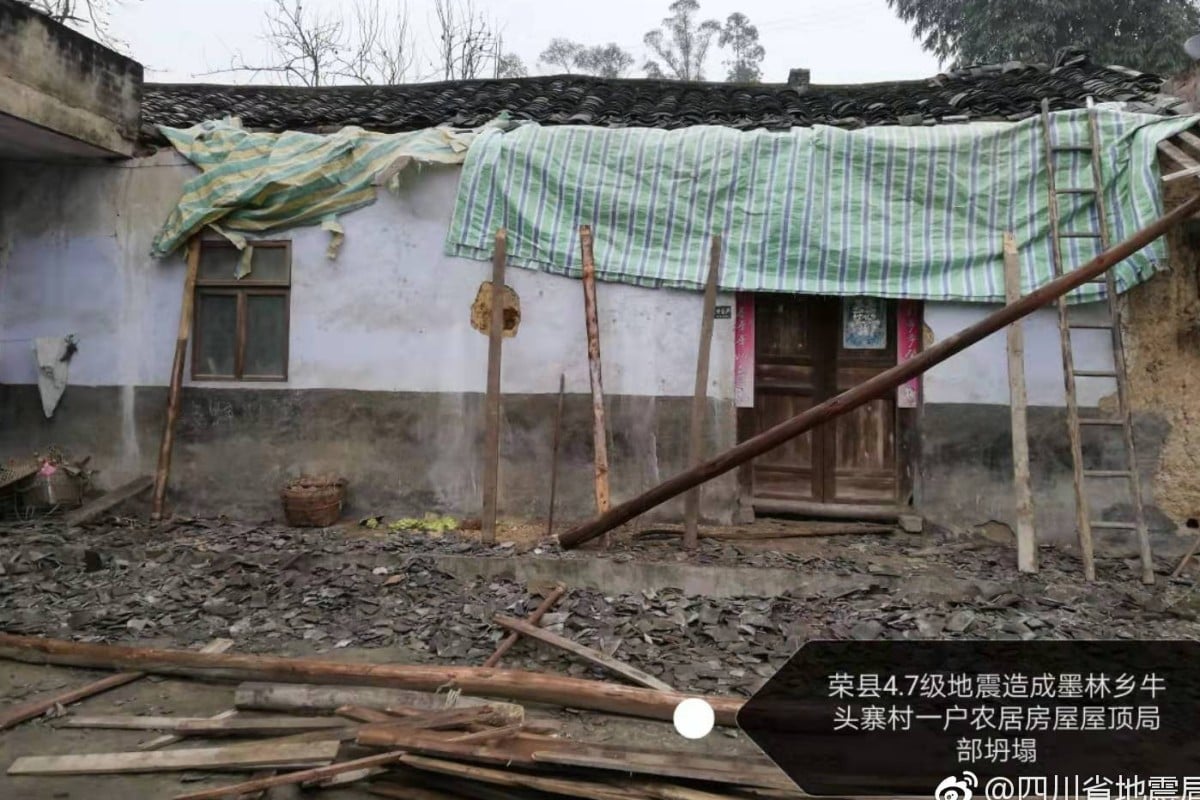 |
| In Rong county, Sichuan, two people were killed and 10,000 buildings
were damaged in earthquakes protesters say were triggered by fracking
for shale oil. Photo: Weibo |
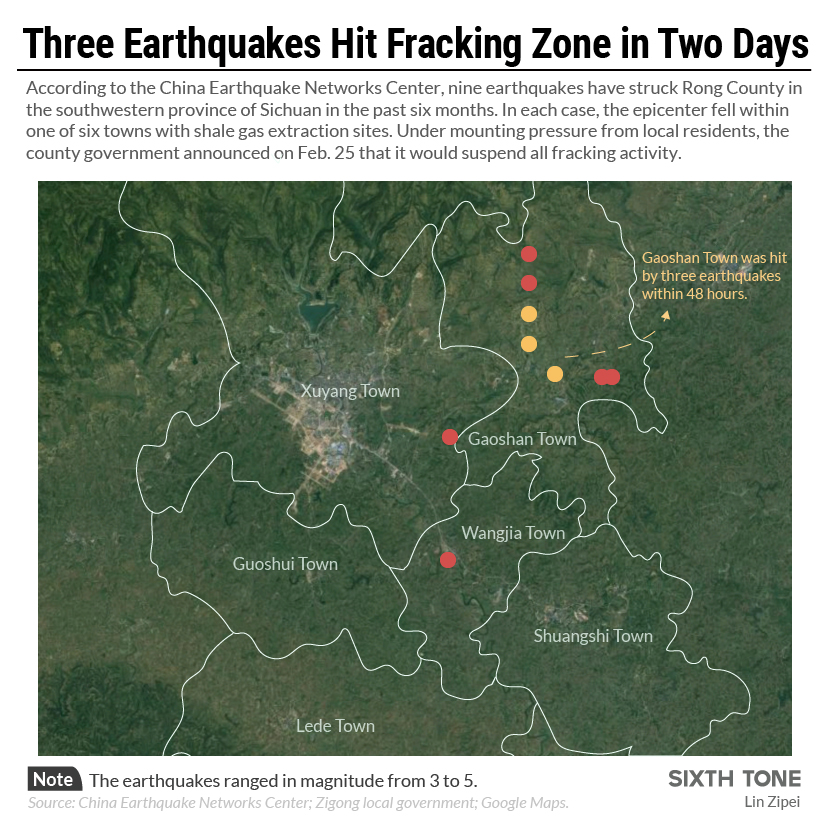
On February 24, Gaoshan, a farming village in Sichuan Province, was struck by an earthquake before dawn. Two more earthquakes followed the next day. A major earthquake hit Sichuan in 2008, leading to the death of close to 70,000 people. That, to the people living in Gaoshan, was a natural disaster of tremendous proportions, unavoidable, a fact of life because nature cannot be tamed. The tremors they experienced in February, however, they recognize as human-derived.
"The drilling", sobbed Yu Zhenghua, surveying her home.
Hydraulic facturing
(fracking) technology has revolutionized the production of natural gas and oil, famously in the United States, but a boom has resulted in China as well. And with that boom has come controversy, arising everywhere fracking takes place. Thousands of residents of the village converged in Rong Cunty at a government building in protest of fracking in the hills and valleys where they live.
Security guards tried to restore order, to convince the protesters to disperse. Which they did once officials announced the suspension of fracking operations until the results of a government survey were known. Elsewhere in the region, however, fracking operations continue. Like all other countries that have embraced fracking as a revolutionary technology to free up energy reserves, China entertains thoughts of becoming energy independent, no longer reliant on foreign energy sources.
It now faces unanticipated public fury in concern over social and environmental challenges seen to threaten the country, despite its tight control of political concerns.
"Sichuan is a major earthquake zone, so there is clearly a risk (inherent in fracking", explained Philip Andrews-Speed, a geologist located in Singapore. Two people died in the three earthquakes that hit the village, and another thirteen were wounded. Over 20,000 homes in three villages were left damaged, nine of which completely collapsed.
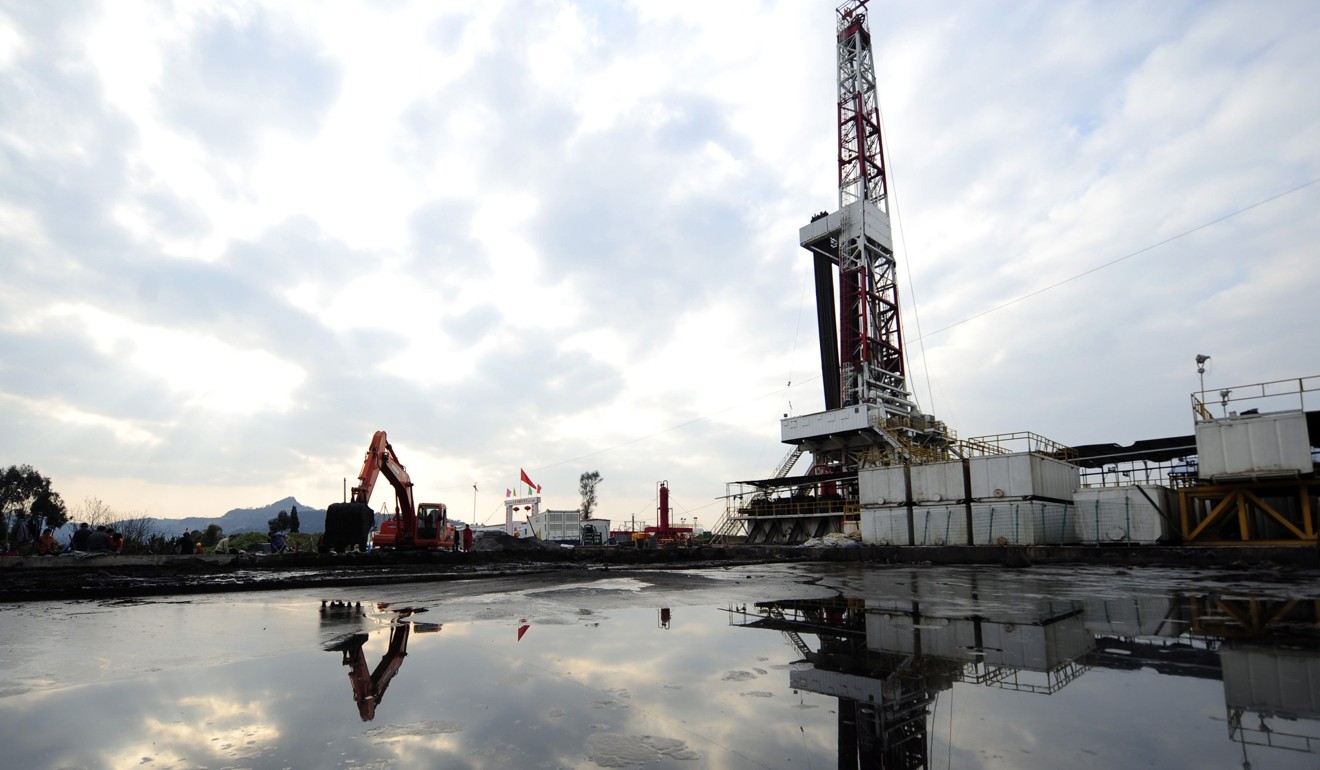 |
| Work on a natural gas appraisal well goes on behind a pond of drilling waste in Sichuan province. Photo: Reuters |
In the event, roughly 1,600 people were displaced, evacuated and having to move in with relatives or forced to live in hundreds of blue tents distributed by the local authorities. The retaining wall holding up the property along a steep hillside buckled at Ms. Yu's house and deep cracks gouged the stuccoed brick walls of the two-story house her son had built for her.
"My house was built only twelve years ago, and now it is like this", she mourned.
The damage would be repaired, the authorities promised. Sitting atop the largest recoverable reserves of shale gas in the world, according to the U.S. Energy Information Administration, China's government has set itself goals to expand fracking in the years ahead, hoping to repeat the U.S. fracking boom. Stumbling blocks have arisen, however, since shale deposits are deeper in China, at 3.5 kilometers in Rong County, making them more expensive to tap. As well, in a process requiring the heavy use of water, scarce in some regions, adding another complication.
China's dense population makes problematical many of its best shale deposit sites, located in crowded areas, including Sichuan, with its over 80 million people. There are 39 separate wells in the 15 platforms in Rong Country, drilled or already in operation. Roads to the sites are rutted, sometimes impassable as a result of the heavy equipment involved in fracking. The once scenic valleys and terraced fields have been mutilated with the presence of long black tubes.
A noticeable increase in tremors and quakes after production began worries Rong County residents, the latest of which seismic events appeared to inflame anger beyond the accustomed simmering point.
"What on earth do you want from us? Will you take the matter seriously only when there's loss of life?" one woman write on Weibo.
Labels: China, Controversy, Earthquakes, Energy, Environment, Fracking, Protests