Stopping the Epidemic
"The new protocol is that we just abandon the body."
"They will learn their lesson when they get sick."
Philemon Kalondero, 39, Ebola response team
"Can we stop the epidemic? Certainly we can."
"[But to succeed, a political solution is first required to reduce the violence]."
Mike Ryan, World Health Organization emergencies program
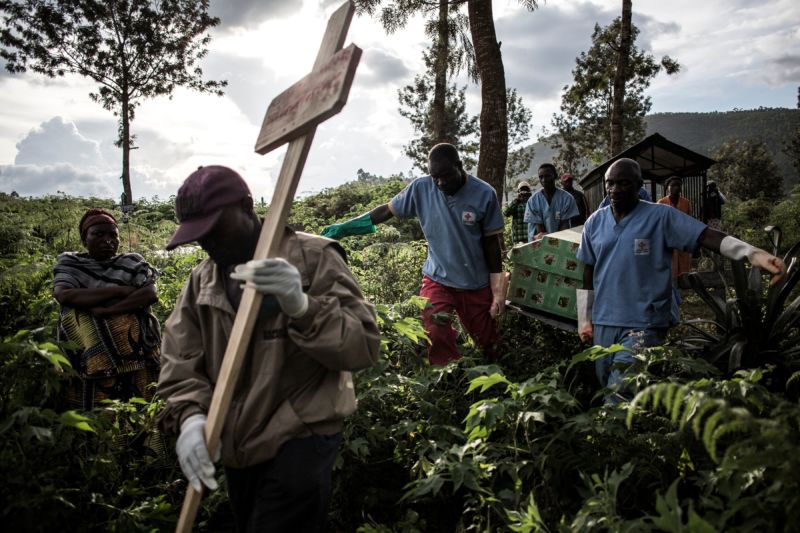 |
| Health workers carry a coffin containing a victim of Ebola virus on May
16, 2019, in Butembo, DRC, a city at the epicenter of the Ebola crisis. |
In Democratic Republic of Congo, in rural Beni, subsistence farmer Janvier Muhindo Mandefu set aside his farming occupation to work instead buying the bodies of Ebola victims, aware of the highly contagious state of the decomposing bodies. He is aware of the possibility of contagion, handling these bodies, but he perseveres. The bodies' threat to his own state of health is one thing, the threat he is equally aware of that he and his burial team could be attacked by relatives of the dead, is more worrying. He has already experienced one such attack.
Mourners accuse burial team members of stealing organs from the corpses, threatening to throw the team members into the open graves. Mr. Muhindo has been attacked by a swinging hoe. On another occasion a mourner had a hand grenade. On that occasion the entire team scattered and failed to return. The three-year-old Ebola victim remained unburied.
"Someone like me can be buried alive", Mr. Muhindo said, watching his team hose down the trucks following another day of burials.
It was thought that the Ebola outbreak in eastern Congo was under control. Now, however, it has roared back, and is spiraling out of control mostly because combat efforts have been interfered with by attacks on treatment centers and health workers, making this outbreak the second-largest ever recorded. Growing mistrust of government managing the efforts at eradication, and mistrust of international medical experts struggling to steer patients into treatment centers, have taken their toll.
![Insecurity has significantly complicated efforts to contain the DRC's ongoing Ebola outbreak [File: Al-Hadji Kudra Maliro/AP]](https://www.aljazeera.com/mritems/imagecache/mbdxxlarge/mritems/Images/2019/6/5/bb56a80172034519b7b7685d2ba0b333_18.jpg "ISIL claims deadly attack in Ebola-wracked eastern DR Congo") |
| Insecurity has significantly complicated efforts to contain the DRC's ongoing Ebola outbreak [File: Al-Hadji Kudra Maliro/AP] |
Treatment centers were attacked by gunmen, others set on fire, health workers suspended their work when a doctor was killed. Some international groups have seen fit, given the dangers involved, to pulling some of their personnel out of the situation. Mid-May saw almost 1,150 deaths from Ebola. When the outbreak first occurred, police would remove bodies from homes sometimes at gunpoint. Now, the bodies are left as a result of the violence from relatives of the dead.
The outbreak has occurred in the part of eastern Congo afflicted by armed groups, conflicts over land possession, natural resources, ethnicity and religion motivating them. One of the groups is tied to the Islamic State. When the latest wave of health experts and humanitarian workers arrived they had their previous experience treating Ebola. They had lessons learned from the outbreak across West Africa in 2013 that killed over 11,000 people. And they had recently contained an outbreak in western Congo.
They brought with them medical advances, an effective vaccine, experimental treatments and a transparent enclosure called the "cube", where patients would be placed within, reducing the risk of transmission. Because the outbreak was in a vulnerable region close to the borders of Rwanda, Uganda and South Sudan it was imperative to bring it under control to halt its spread.
The region had been exempt from the presence of Ebola until last year when it manifested in a town called Mangina and by late summer it had shown up in Beni, a city of about 350,000.
In Beni massacres by machete killed an estimated 800 people in recent years. Local politicians speculated the government had imported the disease in a region where an estimated two percent of those surveyed felt mistrust for the national government.
"Scientifically, I don't believe that it's possible to first have the killings of people in Beni, and now this disease without them being related", sagely said Crispin Mbindule Mitondo, a national assembly member, his remarks broadcast on local radio.
A tight national election was occurring along with the first transfer of power by ballot in Congo since 1960's independence. But when Ebola arrived Kinshasa suspended voting in Ebola-effected areas claiming that polling places might spread the disease in an area that was an opposition stronghold. A coincidence that persuaded locals that Ebola was part of a government plot to deny them the vote. And a day later an Ebola triage center in Beni was set on fire by protesters.
"When they cancelled the elections, it was a disaster for us", Emmanuel Massari of Doctors Without Borders remarked. Vaccination teams traveled under armed police or military escort, adding to the locals' suspicion, which made it appear as though the Ebola response was in reality an extension of an unpopular national government. Where, during confrontations with grieving family members, police officers and soldiers accompanying medical teams have opened fire.
The city of Butembo, with its million residents is now another disease locale where patients who had Ebola refused to go to treatment centers, viewing them as a place where they would not be cured, but die from the infection. In Katwa, an outlying area of Butembo, operated by Doctors Without Borders the Ebola treatment center was set on fire, the patients fleeing into the night.
Labels: Attacks, Burials, Congo, DRC, Ebola, Epidemic, Medicine, Vaccine, Violence
Rapid Emergency Response to DRC Ebola Outbreak
"This is a major development in the outbreak."
"We have urban Ebola, which is a very different animal from rural Ebola."
"If the number increases in Bikoro it's bad but it's not a disaster. But if these three cases in Mbandaka become ten, or twelve, then we have an urban epidemic."
"We're certainly not trying to cause any panic in the national or international community. [But] urban Ebola can result in an exponential increase in cases in a way that rural Ebola struggles to do."
Peter Salama, senior World Health Organization official
"Boats move up and down the river, carrying people and goods."
"One of the risks is that someone with the virus could easily access one of the boats and start moving up and down."
Jose Barahona, Oxfam DRC country director
"The arrival of Ebola in an urban area is very concerning and WHO and partners are working together to rapidly scale up the search for all contacts of the confirmed case in the Mbandaka area."
Matshidiso Moeti, WHO regional director for Africa
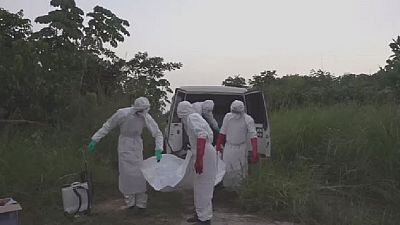 |
| A victim of the ebola outbreak in the Democratic Republic of Congo has
been buried by the Red Cross. The society says this was to prevent
further spread of the contagious viral disease. Dr. Pierre Formenty, is
team leader for viral haemorrhagic fevers at the World Health
Organization. |
In 2014-2016, the world's eyes were riveted on the largest recorded Ebola outbreak in West Africa that killed 11,300 people, causing widespread fear and panic before it was stalled. Difficult to control, it spread to the capitals of Guinea, Sierra Leone and Liberia. And the race was on to find a formula that could be relied upon to stop this deadly virus before it infected and killed many more. In a Canadian research laboratory in Manitoba one such vaccine was produced by ZMapp scientists,and the incidence of infection began to be reduced.
Before it came to a halt, however, it took the lives of men, women and children, and those of health workers as well. Medical teams rushed to the affected areas in a desperate effort to check the advance of the often-deadly virus. A few cases showed up in Europe when travellers brought the virus back with them, often people in the medical community whose advanced treatment largely proved successful. A huge sigh of relief was exhaled once the WHO was able to declare the epidemic at a halt.
Now, once again, teams from the World Health Organization and major agencies are being swiftly deployed to Democratic Republic of Congo to face this new outbreak to which world governments and agencies have pledged funding. Teams from Medicines sans Frontieres set up an isolation zone in the area, preparing to build two Ebola treatment centres in Mbandaka and Bikoro.
"With Ebola, when people die, they are very contagious. So it’s a place
where we have a lot of infections. It is therefore important to have
safe burials because it reduces the risk of human-to-human transmission,
but it is also important to have dignified burials", explained Dr. Pierre Formerlty,
team leader for viral haemorrhagic fevers at the World Health
Organization.
Ebola kills half of those who are infected. Recovery is long and people are extremely ill throughout the touch-and-go process, then face suspicion from a fearful population unconvinced survivors are no longer infectious, leading to the social isolation of survivors. While Ebola usually surfaces in the countryside, it is now speculated that the disease was carried from the countryside down the Congo river to the city by someone infected, but unaware.
The city of Mbandaka, with its 1.2-million population is connected through the Congo river with the capital of Democratic Republic of Congo, Kinshasa, and Brazzaville, the capital of Congo-Brazzaville, as well, so the potential of Ebola spreading more widely is feared. Moreover, in a crowded city environment the virus can spread far more rapidly in person-to-person contact than it can in less-crowded surroundings in the countryside.
Hundreds of people are suspected to have been in contact with infected people, now being monitored. The WHO is deploying thirty experts to move throughout the city conducting surveillance. The city of Mbandaka though densely populated has poor sanitation, and inadequate health care services. Of the 44 people identified as having been infected, 23 have died. It was only ten days ago that an outbreak was reported in the remote rural area of Bikoro, in the DRC's northwest.
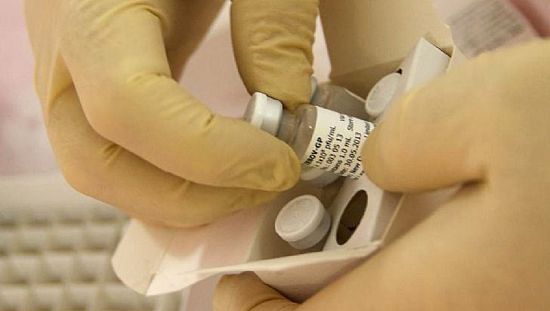 |
| DRC receives first batches of vaccine during outbreak. Africa News |
Labels: Africa, Democratic Republic of Conco, Ebola, Epidemic, Medicine
Strident Ebola Insecurity
"Airborne
transmission has not been ruled out and this is the fundamental
disagreement that we're having with the government. We need to err on the side of safety."
Ontario Nurses' Association president Linda Haslam-Stroud
"It was the nurse in Texas that really rang the alarm bells for us."
"We
will do our jobs 24/7 if we are well-protected, and we have the
training. But we have to ramp up what we have on paper and ramp it up
fast."
"My
understanding is there are gaps. We are nurses for a reason. We know
that you will be placed in some kind of danger, but the best option is
to make sure you are well-trained and have proper personal equipment."
Linda Silas, head, Canadian Federation of Nurses Unions
"I
think we passed the test in terms of the appropriate precautionary
steps being taken, appropriate treatment being offered, lab tests being
ordered in a rapid way. ... It was useful to see our planning that has
been in place to now has really paid off."
Dr. Vera Etches, associate medical officer of health, Ottawa

A Doctors Without Borders (MSF), health
worker in protective clothing carries a child suspected of having Ebola
in the MSF treatment center on Oct. 5 in Paynesville, Liberia. The girl
and her mother, showing symptoms of the deadly disease, were awaiting
test results for the virus. The Ebola epidemic has killed more than
3,400 people in West Africa, according to the World Health Organization.
(John Moore/Getty Images)
One Ottawa-area patient suspected of having the Ebola virus has been cleared. Clearance is awaited in yet another individual in Belleville.
But the case of the nurse in Spain and the Texas nurse, both of whom
acquired the virus from patients they were tending with Ebola, hangs
heavy in the minds of Canadian nurses. The head of the organization
representing 60,000 Ontario nurses expressed her fears that the province
is not fully prepared.
Questions revolve around
whether protective equipment should include special respirators to
protect health workers from airborne particles. As well as some coverage
offering more than simply gowns. Uncertainty about equipment and their
protective capabilities stirs the fears of health care workers,
particularly nurses across the country. Ms. Silas speaks of equipment
problems she has heard of with some nurses complaining chins and necks
were exposed, others that protective gowns had sleeves too short.
Equipment, she stressed, must be available at all facilities. The SARS epidemic, Ms. Haslam-Stroud
reminded, infected dozens of health-care workers and death claimed
three. That Canada is not yet fully prepared to cope with an epidemic in
the country is a major concern to these nurses' representatives,
particularly in light of the heavy death toll taken on health-care
workers in the four West African countries most heavily impacted by
Ebola.
And the World Health Organization warned that up
to ten thousand new Ebola cases weekly could be surfacing in West
Africa within the next several months. This, at the same time that it
revealed the death rate
in the present outbreak has risen, to 70 percent. Previous estimates
given by the agency had given the Ebola mortality rate at around 50
percent. Contrast that to flu pandemics where the death rate typically is under two percent.
Ebola
is considered a high-mortality disease, and the problem of isolating
the ill, providing treatment as early as possible is being compounded by
the increase in cases. Doctors Without Borders has said that 16 of its
employees were infected with Ebola, nine of them having died.
"Where is WHO Africa? Where is the African Union?" asked Sharon Ekambaram head of the South Africa unit of Doctors Without Borders.
"We've all heard their promises in the media but have seen very little on the ground."
In
Leipzig, Germany a 56-year-old medical worker with the United Nations
infected in Liberia, died. Prompting Liberia's UN mission to place 41
other staff members under "close medical observation". In Dallas the
American nurse who became Ebola-positive after treating a Liberian
patient who then died, received a transfusion of plasma from Dr. Kent Brantly who received an experimental treatment to survive the virus.
The
assistant nurse in Spain infected with Ebola has seen slight
improvement while still in serious condition. Fifteen of her contacts
were being monitored. And in the United States, over 200 people who
shared a flight with another nurse from Texas Health Presbyterian
Hospital who has now tested positive for Ebola are being sought for the
purpose of isolating them until such time as their condition can be
cleared.
The deadly spread appears inexorable... While
withering the confidence of health-care workers to whom is entrusted the
care of the infected.
Labels: Ebola, Europe, North America, West Africa


