The National Message Has Undergone a Massive Transformation
The National Message Has Undergone a Massive Transformation
"We
could save tens of thousands of lives if everyone would just wear a
mask for the next few months. Not Democratic or Republican lives.
American lives."
"I implore you. Wear a mask. Do it for yourself. Do it for your neighbour. A mask is not a political statement."
"The goal is to get back to normal as fast as possible. And masks are critical in doing that. It won't be forever."
"But
that's how we'll get out nation back up to speed economically, so we
can go back to celebrating birthdays and holidays together, so we can
attend sporting events together, so that we can get back to the lives
and connections we shared before the pandemic."
"I hope it [Catholic hymn -- "On Eagle's Wings"] can provide some comfort and solace to the 230,000 Americans
who have lost a loved one to this terrible virus this year. My heart
goes out to each and every one of you."
U.S.President-Elect Joe Biden
"Given the fact that the statisticians
have come to a conclusion at this stage, I think we get behind the new
President."
"You're not
going to change the nature of President Trump in these last days."
"He
has a relatively relaxed relationship with the truth. And so he's going
to keep on fighting until the very end, But I'm
convinced that, once all remedies have been exhausted, if those are
exhausted in a way that's not favorable to him, he will accept the
inevitable."
"But don't expect him to go quietly in the night. That's not
how he operates."
Mitt Romney, Utah Senator, former presidential aspirant
"[I ask Americans to set aside their political differences and] give him a chance and lend him your support."
"When
he walks into the White House in January, he'll face a series of
extraordinary challenges no incoming President ever has -- a raging
pandemic, an unequal economy and justice system, a democracy at risk,
and a climate in peril."
"I know he'll do the
job with the best interests of every American at heart, whether or not
he had their vote. [The election results] at every level show that the country remains deeply and bitterly divided."
"It
will be up to not just Joe and Kamala, but each of us, to do our part
-- to reach out beyond our comfort zone, to listen to others, to lower
the temperature and find some common ground from which to move forward."
Former President Barack Obama
"[I] WON THE ELECTION."
"Bad
things happened [during the election his poll observers were not permitted to view]."
"71,000,000 Legal Votes. The most EVER for a sitting President!" [Biden
had won 74.5 million votes and Trump had won 70.4 million votes]."
"I
will not rest until the American People have the honest vote count they
deserve and that Democracy demands."
U.S.President Donald Trump
President Donald Trump has cast doubt on whether he will commit to a peaceful transfer of power.
Mr.
Biden has gone into action, first things first; attending to the
disastrous pandemic that has stricken over ten million Americans and
taken the lives of a quarter million U.S. citizens in its sweep through
the continent, striking the United States ferociously. A fact that the
sitting administration should but would not admit to having had some
hand in producing primarily through the off-hand attitude of its
president who constantly and deliberately downplayed the nature of the
threat that SARS-CoV-2 represented.
Jeering
at the namby-panby individuals who followed science and wore masks and
diligently social distanced, he did otherwise, setting an example for
his avid followers, an example that bit back when he contracted the
disease himself and with the considerable assistance of therapies not
available to ordinary citizens, surmounted the disease, while members of
his administration began succumbing to COVID-19 like dominoes falling
in order, struck down in their turn.
Millions
of Americans are now unemployed as a result of the turmoil in the
economy in overturning normal business, production and economies as they
have been worldwide. Mr. Trump made no secret of the fact that he
focused primarily on returning the economy back to a firm footing to
restore losses in trade, the stock market, the country's employment
figures. It was only the elderly that were really under threat, he
shrugged, characterizing them as expendable in the larger interests at
stake for the U.S. economy to get back to production and work and
profitability.
The
latest close Trump associate testing positive for COVID was Housing
Secretary Ben Carson, following hard on the revelation that White House
Chief of Staff Mark Meadows tested positive. Mr. Biden spoke of his team
focus on rapid testing to be widely available and a corps of
contact-tracers tracking and curbing the spread of the pathogen,
prioritizing vulnerable populations such as the health-impaired and the
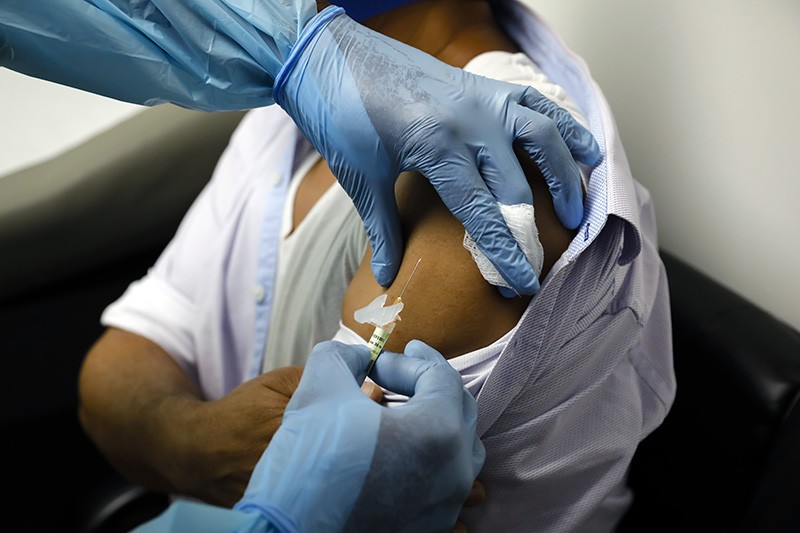
elderly. Approved vaccines would be "distributed as quickly as possible to as many Americans as possible, free of charge".
Credit: Eva Marie Uzcategui/Bloomberg via Getty
Compelling
scenarios allied with today's surprise revelation from Pfizer that they
and their German collaborator BioNTech had succeeded in developing a
promising vaccine -- that ongoing Third Stage human trials have proven
90 percent successful in a double-blind trial involving 44,000
volunteers. The vaccine producers are prepared to ask the U.S. Food and
Drug Administration for immediate assent for use of the vaccine which
they are prepared to produce 50 million doses of by the end of 2020,
increasing to well over a billion doses next year.
China, Birthplace of SARS-CoV-2, Boasting Vaccine Success
"Giving untested vaccines means that there is no guarantee that they are going to work, so people could wrongly assume that they are inoculated when they are not." "In doing so, they could engage in behaviour that has a higher risk ... [and] unwittingly put other people at risk." "The reason why vaccines go through phase 3 trials is to reduce the short- and long-term risk to the individual. Giving vaccine shots without this knowledge places individuals at significant personal risk."Nicholas Thomas, health security expert, professor, City University of Hong Kong
"It's better for a community if there's more people vaccinated, so there's less risk of an outbreak of COVID." "At the same time, just having some vaccinated people wouldn't be enough to mean that social distancing could be relaxed." Ben Cowling division head, epidemiology and biostatistics, Hong Kong University School of Public Health
China claims to have reached the final spurt in the coronavirus vaccine race ahead of its global competition, with four of seven potential candidates all in last stage human trials. No other country can match that purported record, although Moscow has announced that Russia has begun vaccinating with its leading candidate, ahead of the completion of its final trials. All countries worldwide are anxious to take possession of a 'cure' for the coronavirus that has devastated economies and put societies on edge in the last six months.
The world has been turned upside down and inside-out, demoralizating populations everywhere causing great social unrest and protests against lockdown conditions and the mandate to social isolate to prevent contagion. Conspiracy theories have run amok with normally half-intelligent people claiming that governments have purposely built an atmosphere of fear and panic for the purpose of enslaving their populations in a iron grip of control, dictating the manner in which they are henceforth expected to conduct their lives.
The senseless defiance of medical recommendations and government mandates to continue social isolation and seek relief in small bubbles, to wear masks in public places, and to continue to take all due steps to safeguard individuals and communities are chafing some peoples' sense of individualism and leading to loud protest marches. The unreasonableness of assertions that the global upset looking for a reset in the face of the coronavirus's massive displacement of normalcy is a government construct for power, fails to take into account that governments everywhere are facing ruinous financial collapses.
In China, a leader in gifting the world with a record number of viruses, the Communist leadership revels in a celebration of success n its confidence that the inoculations they have proceeded with will result in a final stifling of the disease and that admiring acclaim will resound in the echo chamber of world opinion whitewashing Beijing's human rights blemishes in Tibet and Xinjiang, its bullying aggression of its neighbours over the South China Sea, its grim relations with India in its territorial advances, its Belt and Road enslavement of under developed nations, and its campaign to have Huawei infiltrate global communications.
Chinese authorities have administered vaccines for over a month irrespective of the fact that clinical studies have not been concluded. Segments of the population deemed at higher infection risk; border officials and state-owned enterprise employees working overseas have been inoculated on an emergency-use basis, transport and service workers next to be vaccinated.
No details have been released specifying the numbers inoculated amidst speculation that participation may have been forced not voluntary in nature. Papua, New Guinea was moved to cancel a flight from China of arriving passengers thought to have been inoculated, over concerns of a possible health impact to the local population.
Over 840,000 people worldwide have now died from the effects of the coronavirus. Placing governments under increasing pressure to obtain a solution to the threat of the virus. China's January coverup of the coronavirus and its lack of responsible action in maintaining open borders whereby the infection spread globally has not been forgotten.
"[CanSino] deserves credit for the speed with which they pushed the vaccine through pre-clinical studies and human testing." "It
tells you something about their ability to mobilize and leverage the
resources that it takes to get all these done. the resources required
here are substantial." "The
viral vector CanSino is using is a relatively safe approach compared to
other techniques but it's hard to make a call on efficacy for now." "There's no shortage of histories where promising efforts made it to the last stage of testing only to see things fall apart." Wang Ruizhe, pharmaceutical industry analyst, Capital Securities Corp, Shanghai
"Most of our families stayed in Canada, and we could only see them a few times a year." "When
you think about your young kids and teenagers growing up without dads,
when you know your wife had to shovel out of ten inches of deep snow
early morning in -20C wind chill all by herself -- these were the tough
moments." Yu Xuefeng, chief executive, CanSino
"CanSino is in the game and it's about where the other so-called leaders are." "Whether anybody will cross the finish line where we ever can see safety data that we would like to see is unknown." William Haseltine, former HIV researcher, Harvard University
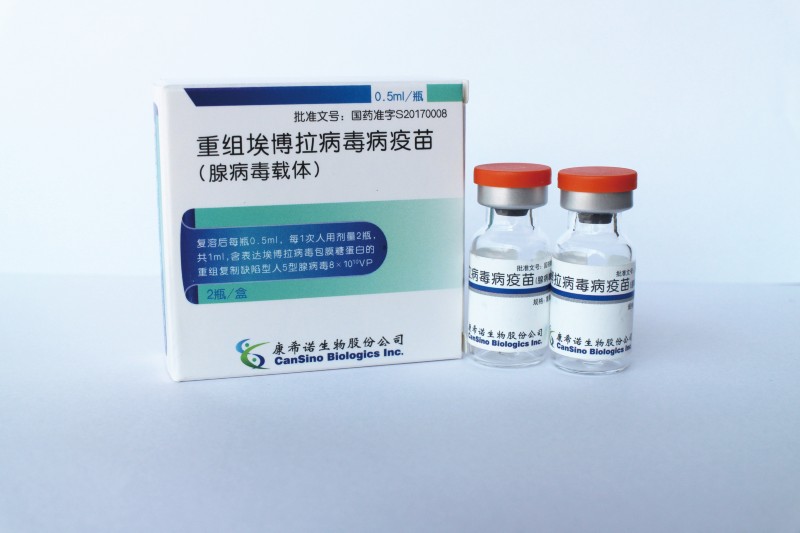
Credit: Cansino
In the desperate race to develop a vaccine to immunize populations
against the SARS-CoV-2 virus which causes COVID-19, CanSino, a Chinese
pharmaceutical company with ties to Canada boasts the reputation of
having been the first to publish results of an initial trail with a
product they developed with mixed results where its efficacy failed to
impress and its alarming side-effects indicate that they're not quite
there yet. The CEO of CanSino formerly worked for a Canadian
pharmaceutical company, Sanofi as senior executive of vaccine
operations.
The 57-year-old CEO of CanSino, born in China, took his doctorate at
McGill Univrsity in microbiology. He became the head of vaccine
development and production at Sanofi Pasteur in Canada. And now that he
heads his own pharmaceutical company in China, relations in Canada with
former colleagues have been maintained, at a time when both countries
have seen their relations considerably cooled, in trade and diplomacy.
The U.S./Canada/Huawei affair where Huawei's CFO was taken into custody
in Vancouver on an extradition warrant from the U.S. and where Meng
Wanzhou awaits extradition to the U.S. to stand trial on charges of
misleading U.S. banks on her company's sanction-breaking business with
Iran, led to Beijing arresting two Canadians in China on trumped-up
charges of espionage. Ms.Meng lives in her luxury Vancouver mansions on
bail, while Michael Kovrig and Michael Spavor languish in a Chinese
prison with no legal representative, unable to communicate with their
families and rarely permitted consular visits.
Canada has not yet stated whether or not the government has decided to
permit the telecommunications giant Huawei to provide some of the
content of Canada's 5G upgrade while Beijing has darkly warned Ottawa of
'consequences' should Huawei be shut out based on fears of the
potential based on prior such incidents of Chinese cyber espionage. This
is a country whose nationals infiltrated Canadian technology, in
working exchanges with Canada's giant successful telecommunications
giant, Nortel Industries.
Nortel was subjected to infiltration, to commercial espionage, to a
ransacking of secret data by Chinese insiders working for Nortel whose
activities eventually concluded in the complete collapse of Nortel
Networks, with the one and sole beneficiary being Huawei which took on
former Nortel employees and milked their experience and the trade
secrets they brought with them, to launch Huawei as a world heavyweight
in global telecommunications technology.
Now, CanSino's Yu appears to be following a similar trajectory,
substituting bioengineering and pharmaceutical production for advanced
communications technology. Yu, whose company has not yet generated
revenue, facing a $22 million deficit in 2019 given its enormous
investments, has linked his company an its scientific advances with
Canada's largest research organization, the National Research Council.
Lab of Chinese vaccine maker CanSino Biologics in Tianjin.Stringer/Reuters files
While in China, Mr. Yu collaborates closely with prominent military
scientist Chen Wei, a major general in China's People's Liberation Army
who heads the Institute of Biotechnology at China's Academy of Military
Medical Sciences. She has lent her expertise to working with CanSino in
the development of an Ebola vaccine approved in 2017 for emergency use
and national stockpiling in China. During the SARS outbreak of 2003 she
succeeded in developing a therapy for Chinese health workers.
Credit: Cansino
More latterly, CanSino alongside Dr.Chen's team of researchers sped
through pre-clinical studies on the coronavirus vaccine, named Ad5-nCoV,
starting human clinical trials in Wuhan in mid-March. When CanSino
published a study in the medical journal Lancet,
the vaccine appeared safe, generating a level of immune response, but
with severe shortcomings. But CanSino's Canadian ties has enabled it to
receive approval for conducting Phase III tests on its vaccine in Canada
where researchers at the Canadian Centre for Vaccinology out of
Dalhousie University are leading the clinical trials.
Yu had previously licensed a technology from the National Research
Council of Canada in HEK 293 cell lines required to produce large
quantities reliably of a vaccine, underpinning CanSino's viral vector
technology. At the time few Chinese companies possessed that technology.
The National Research Council has the option of producing doses of the
vaccine for emergency pandemic use in Canada, should the vaccine
candidate be approved by authorities.
Dr. Eleftherios Diamandis Peter J. Thompson/National Post/File
"It looks like a crazy idea -- people say 'No, no, no'." "[But]
the isolation leaves billions of people without immunity, and at the
end of the day we must achieve immunity one way or another." "And this is one way." Eleftherios Diamandis, biochemist, head, Advanced Centre for Detection of Cancer, Mt.Sinai Hospital, Toronto "[Diamandis's
paper] is shocking in that it proposes the deliberate infection of
healthy people in the prime of life by a feared virus." "[But] it's thoughtful and] offers an important idea to discuss." Juliet Guichon, ethicist, University of Calgary
"I don't subscribe to either of these proposals." "Infecting people to build their immunity is wrong -- you do that with a vaccine, not with the virus." Michael Houghton, virologist, University of Alberta
It is a shocking proposal that Dr.Diamandis proposes in his paper posted
on his cancer research laboratory's website. This professor of
biochemistry has proposed the setting up of special hospital settings
and there volunteers could be infected with deliberation, with low doses
of the COVID-19 virus, a procedure he proposes would help to build a
national protective herd immunity. One that could be achieved a year
prior to a vaccine becoming generally available.
The suggestion, provocative as it is, has appeared elsewhere as various
countries in lockdown seeing their economies in dire straits have begun
to think outside that particular box where the conundrum of keeping
people safe, yet re-opening their economies to escape the devastating
loss of national financial security has appealed to some. A group in the
United States succeeded in recruiting over 2,000 volunteers prepared to
be infected by COVID-19 in the interests if rapidly testing potential
vaccines.
There have been suggestions that health workers be voluntarily infected
to enable the creation of an immunized medical army. An echo of the past
where people had been given a limited dose of smallpox in an effort to
avoid a more devastating infection; a tactic named variolation.
Nevertheless, this is a controversial concept where some scientists and
bioethicists warn it would violate basic moral principles of medicine
and research.
The base of the proposal is the understanding that the world will never
be free of the novel coronavirus threat until enough immunity exists to
cut transmission of the virus short. About 60 percent of the population
is considered the base required to do so. The world awaits a vaccine to
do the job, but that prospect extends into the future; a year, even a
year-and-a-half distant. While lockdowns continue and nations see their
economies crumble.
Grassroots group 1DaySooner claims to have recruited almost 2,400
volunteers from 52 countries to submit to studies of vaccine efficacy
trials which involve a group randomly selected to receive a new
potential agent with the other group receiving a placebo. As they go
about their normal lives, the immune response is gauged.
Professor Diamandis states in his paper that Canada should pursue social
distancing measures as is currently being done while considering the
implementation of his idea when and if the epidemic peak has passed, the
health care burden lifted and no vaccine is yet in sight. At that
point, young, low-risk volunteers could be infected with a small dose of
the coronavirus to result in minimal illness, the process leading to
eventual immunity.
A note of caution came courtesy of Dr. Ian Mitchell, pediatrician and
ethics export at University of Calgary who emphasizes that it remains
unclear as yet what kind of immunity COVID-19 infection confers, and how
long if it does, it might last.
"There's no pre-existing information. It's related to SARS and SARS-like viruses that have been found in bats, but, on its own, it's something unique and new." "You don't need the virus to make a vaccine for that virus. But to actually test if the vaccine works at some point, you need the virus to challenge and show protection." "We have a plan, we have reagents that are being made [to build the vaccine. Once a prototype is developed, the team will tests its efficacy in an animal model] to see whether or not it's immunogenic." "That sounds like a long time [up to a year prepared for clinical trials, bu the process has been] accelerated. Most vaccines are taking almost ten years from discovery, to clinical trials, to approval." "It could be two years before the vaccine is ready to be distributed. There's no point in having a vaccine if it's not safe." Dr.Darryl Falzarano, research scientist, International Vaccine Centre, University of Saskatchewan
"[The coronavirus that caused the SARS outbreak and the 2019-nCoV] are probably between 75 percent and 80 percent similar at a general level ... and are part of the same subgroup of coronaviruses. [They are somewhat similar in the sense that both viruses are] transmitted by the respiratory route [and attach to the same host cell receptors]. However, that's not enough to say that they are the same virus." "[It's] possible [that the coronavirus outbreak could be contained before the vaccine is deemed ready]. At this stage, it appears that it could be less severe than MERS." "SARS was very difficult, it [relied] on a lot of observational stuff. And people were doing all kinds of different things -- steroids, interferon -- and things could have gotten better or worse regardless of what we did because there was no clear trial or study." "If it does get contained initially, the vaccine could be applied should the virus re-merge. It's highly unlikely, but we should learn to never say never." Dr.Samira Mubareka, infectious disease consultant, Sunnybrook Hospital,Toronto
Medical staff members carry a patient into the
Jinyintan hospital, where patients infected by a mysterious SARS-like
virus are being treated, in Wuhan in China’s central Hubei province on
January 18, 2020.STR /
AFP via Getty Images
The coronavirus from Wuhan, central China, marches on, infecting more people daily -- over ten thousand confirmed in China alone, killing a few more every day, 258 at last count, all in China, though it has travelled to 20 countries. The World Health Organization has now upgraded its alert on the coronavirus declaring it a public health emergency of international concern, while praising China for its efforts thus far in isolating and confronting it.
However, before Wuhan, where the virus was first detected, was placed in lockdown, an estimated five million people had already exited the city of 11 million on the annual New Year's trek to visit with family.
Chinese scientists had sequenced the genome of the novel cornavirus in short order, then released their data publicly two weeks ago enabling research teams around the globe to begin efforts in researching a vaccine. Scientists in Australia had announced this week that they were successful in recreating the virus in the laboratory, and were prepared to share samples with other researchers to aid in testing vaccines.
Shanghai,
China, on Thursday, Jan. 30, 2020.Qilai Shen/Bloomberg
Once a vaccine is discovered it faces rounds of animal testing that could take an additional three months, according to virologist Dr.Falzarano. After which the production of the vaccine would follow to ensure the product is acceptable and safe for clinical use, all of which is difficult to predict time-wise. The general consensus among experts is that it could take up to a year, and another year added on that before distribution can proceed.
"It involves getting a commercial partner to produce the vaccine, getting the vaccine conditionally approved in the countries you want to use it. A lot of these things are out of our hands and up to the regulatory authorities", explained Dr. Falzarano of the mass-producing and distribution of a vaccine to regions requiring its use.
Dr. Falzarano concurs with Dr.Mubareka's contention; the possibility is that the outbreak might be contained before a vaccine is ready for use. "But we don't know that ... Of course we should hope that public health measures and quarantine are able to contain that on its own. But that shouldn't mean we should sit around and see what happens...."
Scientists work in VIDO-InterVac's
(Vaccine and Infectious Disease Organization-International Vaccine
Centre) containment level 3 laboratory, where the organization is
currently researching a vaccine for novel coronavirus, at the University
of Saskatchewan in Saskatoon, Saskatchewan, Canada October 18, 2019.David Stobbe/VIDO-InterVac/University of Saskatchewan/Handout
"The new protocol is that we just abandon the body." "They will learn their lesson when they get sick." Philemon Kalondero, 39, Ebola response team
"Can we stop the epidemic? Certainly we can." "[But to succeed, a political solution is first required to reduce the violence]." Mike Ryan, World Health Organization emergencies program
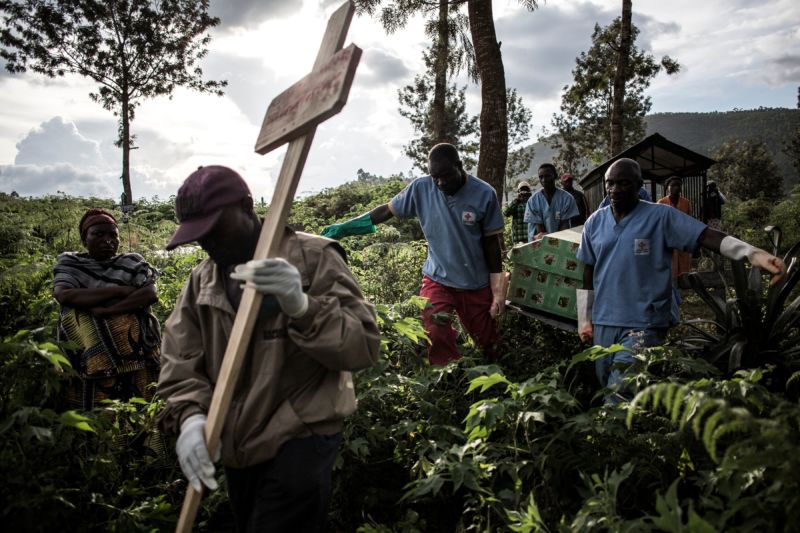
Health workers carry a coffin containing a victim of Ebola virus on May
16, 2019, in Butembo, DRC, a city at the epicenter of the Ebola crisis.
In Democratic Republic of Congo, in rural Beni, subsistence farmer Janvier Muhindo Mandefu set aside his farming occupation to work instead buying the bodies of Ebola victims, aware of the highly contagious state of the decomposing bodies. He is aware of the possibility of contagion, handling these bodies, but he perseveres. The bodies' threat to his own state of health is one thing, the threat he is equally aware of that he and his burial team could be attacked by relatives of the dead, is more worrying. He has already experienced one such attack.
Mourners accuse burial team members of stealing organs from the corpses, threatening to throw the team members into the open graves. Mr. Muhindo has been attacked by a swinging hoe. On another occasion a mourner had a hand grenade. On that occasion the entire team scattered and failed to return. The three-year-old Ebola victim remained unburied. "Someone like me can be buried alive", Mr. Muhindo said, watching his team hose down the trucks following another day of burials.
It was thought that the Ebola outbreak in eastern Congo was under control. Now, however, it has roared back, and is spiraling out of control mostly because combat efforts have been interfered with by attacks on treatment centers and health workers, making this outbreak the second-largest ever recorded. Growing mistrust of government managing the efforts at eradication, and mistrust of international medical experts struggling to steer patients into treatment centers, have taken their toll.
Insecurity has significantly complicated efforts to contain the DRC's ongoing Ebola outbreak [File: Al-Hadji Kudra Maliro/AP]
Treatment centers were attacked by gunmen, others set on fire, health workers suspended their work when a doctor was killed. Some international groups have seen fit, given the dangers involved, to pulling some of their personnel out of the situation. Mid-May saw almost 1,150 deaths from Ebola. When the outbreak first occurred, police would remove bodies from homes sometimes at gunpoint. Now, the bodies are left as a result of the violence from relatives of the dead.
The outbreak has occurred in the part of eastern Congo afflicted by armed groups, conflicts over land possession, natural resources, ethnicity and religion motivating them. One of the groups is tied to the Islamic State. When the latest wave of health experts and humanitarian workers arrived they had their previous experience treating Ebola. They had lessons learned from the outbreak across West Africa in 2013 that killed over 11,000 people. And they had recently contained an outbreak in western Congo.
They brought with them medical advances, an effective vaccine, experimental treatments and a transparent enclosure called the "cube", where patients would be placed within, reducing the risk of transmission. Because the outbreak was in a vulnerable region close to the borders of Rwanda, Uganda and South Sudan it was imperative to bring it under control to halt its spread.
The region had been exempt from the presence of Ebola until last year when it manifested in a town called Mangina and by late summer it had shown up in Beni, a city of about 350,000.
In Beni massacres by machete killed an estimated 800 people in recent years. Local politicians speculated the government had imported the disease in a region where an estimated two percent of those surveyed felt mistrust for the national government. "Scientifically, I don't believe that it's possible to first have the killings of people in Beni, and now this disease without them being related", sagely said Crispin Mbindule Mitondo, a national assembly member, his remarks broadcast on local radio.
A tight national election was occurring along with the first transfer of power by ballot in Congo since 1960's independence. But when Ebola arrived Kinshasa suspended voting in Ebola-effected areas claiming that polling places might spread the disease in an area that was an opposition stronghold. A coincidence that persuaded locals that Ebola was part of a government plot to deny them the vote. And a day later an Ebola triage center in Beni was set on fire by protesters.
"When they cancelled the elections, it was a disaster for us", Emmanuel Massari of Doctors Without Borders remarked. Vaccination teams traveled under armed police or military escort, adding to the locals' suspicion, which made it appear as though the Ebola response was in reality an extension of an unpopular national government. Where, during confrontations with grieving family members, police officers and soldiers accompanying medical teams have opened fire.
The city of Butembo, with its million residents is now another disease locale where patients who had Ebola refused to go to treatment centers, viewing them as a place where they would not be cured, but die from the infection. In Katwa, an outlying area of Butembo, operated by Doctors Without Borders the Ebola treatment center was set on fire, the patients fleeing into the night.
"In Cuba, products were developed to solve pressing health problems, unlike in other countries, where commercial interests prevailed." World Health Organization report "The data is intriguing, but we need to do more definitive studies." Justin F. Gainor, oncologist, Massachusetts General Hospital
"Since I have been taking Cimavax, it [lung cancer] hasn't come back." "There's no doubt that without this medicine [Cimavax], I would be dead." Mick Phillips, 69, Appleton, Wisconsin
Mick Phillips's doctor credits a lung cancer vaccine from
Cuba with sustaining the Wisconsin man's remission from a disease he
learned he had more than five years ago. (CBC)
Cancer patients from Canada and the United States have been travelling to Cuba for the promise held out by a vaccine that appears to be able to halt the progress of the cancer they're suffering from, even those who have been diagnosed with late-stage cancer that is seen to be incurable by any methods currently practised in North America. Cuba's vaunted biotechnology industry is known to have produced a cancer vaccine that appears effective, but is not approved for use in the United States.
So, 78-year-old Zuby Malik, just incidentally a retired obstetrician-gynecologist, who was diagnosed with Stage 4 non-small-cell lung cancer a year earlier, and who has undergone and exhausted treatments available to her in the United States to little avail, determined to travel to Cuba to bring back with her the cancer vaccine that many other Americans have been successfully using to treat their cancer where all other optional treatments have been tried and found lacking.
New York Governor Andrew Cuomo, in recognition of the medical tourism undertaken by Americans, has given public notice that the Roswell Park Cancer Institute in Buffalo has received the requisite authorization to enable it to conduct a clinical trial of Cimavax, the Cuban vaccine for lung cancer. This would be the first time in sixty years that Cuban and American institutions have partnered scientifically in a joint venture.
Cimavax was developed initially in a bid to halt the growth of cancer and to block cancer from recurring in people diagnosed with non-small-cell lung cancer. The drug is geared to stimulate the immune system of the body in the production of antibodies to bind to a protein called epidermal growth factor (E.G.F.), preventing the protein from further feeding the cancer's growth. The drug is available in Peru, Paraguay, Colombia and Bosnia and Herzegovia.
Although trials undertaken in Cuba have manifested a modest benefit where, in the most recent trial, patients given the vaccine after chemotherapy treatment lived only about three to five months longer than those who did not receive the vaccine, it continues to hold out hope in the minds of those patients with nothing left to lose but their lives. The Cuban study was published in the journal Clinical Cancer Research. It found that patients who were vaccinated with Cimavax who had a high concentration of E.G.F. in their blood lived longer than the others.
Foreign medical tourists are exposed to an initial round of four injections at an international health center, La Pradera, catering for the most part to foreign patients in Havana. Thereafter, patients continue to administer themselves their periodic injections at home, for up to several months on the Cimavax protocol. Cuba, famously known for its superb cigar production favoured the world over, was plagued by a high rate of lung cancer.
Which led Cuban researchers to work on Cimavax, and it was produced in the 1990s. Patients began receiving the vaccine free of charge, in 2011. It has since been administered to over four thousand patients worldwide, according to Roswell Park Cancer Institute in Buffalo, set to begin their own trials on the promising new treatment. The Roswell Park trial plans to combine the vaccine with a form of immunotherapy named a checkpoint inhibitor that restrains the cancer from turning off a patient's immune system.
In Cuba, a four-shot dose of Cimavax has a price tag of up to $100 to manufacture, according to Dr. Kelvin Lee, chairman of immunology at Roswell Park. Mr. Phillips, a lifelong smoker whose diagnosis came in 2009, estimates that he pays $9,000 for his yearly supply of Cimavax; roughly $1,500 each dose. In some patients' experience the price has dropped to $850 each dose. The entire cost of the trip to Cuba can amount to over $15,000 taking into account airfare, lodging at La Pradera and a few months' worth of the vaccine.
For Mr. Phillips, the vaccine has been a godsend, extending his life far longer than he was given hope for. For Ms. Malik, the experience has been less than stellar. The fluid in her lungs initially diminished with the first injection of the vaccine, but since then fluid has once again filled her right lung. She has become weak and short of breath, and her son said she is now considering dropping Cimavax. "It's not panning out as we'd hoped It's really like the Wild West trying to know what is best to do", he stated.
Say what one will of the countless negatives of Cuba's loyalty to the communist ideal, its health system presents as a model of true health-care benevolence within a rigidly authoritarian regime. Its rigorous bioscientific research is undertaken with the health of its population uppermost in mind. And its pharmaceutical production is not primarily greed-inspired, profit-motivated, marketing its products at astronomical pricing as reflected in the free-market system of capitalism. It is instead modestly priced, to make it available to those in dire need.
This represents a general opinion site for its author. It also offers a space for the author to record her experiences and perceptions,both personal and public. This is rendered obvious by the content contained in the blog, but the space is here inviting me to write. And so I do.







![Insecurity has significantly complicated efforts to contain the DRC's ongoing Ebola outbreak [File: Al-Hadji Kudra Maliro/AP]](https://www.aljazeera.com/mritems/imagecache/mbdxxlarge/mritems/Images/2019/6/5/bb56a80172034519b7b7685d2ba0b333_18.jpg "ISIL claims deadly attack in Ebola-wracked eastern DR Congo")

