Saturday, August 20, 2022

European Union Closing Ranks on Russian Travel Visas

"We have to admit that Russian society, by and large also bears passive moral responsibility for these atrocities, which take place on Ukrainian soil."
"The legal responsibility is on Putin, his inner circle and these executioners of genocide. But of course, the moral responsibility lies also on this state and its citizens."
Estonian Minister of Foreign Affairs Urmas Reinsalu
Estonia plans to close its border to the 50,000 Russians who regularly arrive in Tallinn or other Estonian destinations through travel visas. Becoming the first country in the European Union to take such steps. Ordinary Russians will no longer for the foreseeable future be able to enter the EU through Estonia. Hundreds of Russians cross the border daily at Narva, Estonia.
"We hope that countries will come up with some solutions. Maybe they can agree on something."
"I keep myself away from politics, but since my relatives are buried here I would like to keep coming."
"But what can you do? For us regular people we can't solve this. This has to be negotiated and I hope our countries at some point will reach agreement and find compromise."
Anna (last name withheld)
Russia, visa ban, Russian, citizens, war in Ukraine, EU decision, Lithuani, Estonia, BAltic states ban visas, Germany
Photo: pexels
 
Ukrainian President Volodymyr Zelenskyy had earlier issued a fresh request for EU states to ban visas for Russian nationals. The bloc, he says, should refrain from becoming a "supermarket", open to anyone with the means to enable entry. He took care to add that his proposal was not meant to apply to Russians seeking help for risking freedom or their lives by opposing the policies of Vladimir Putin.

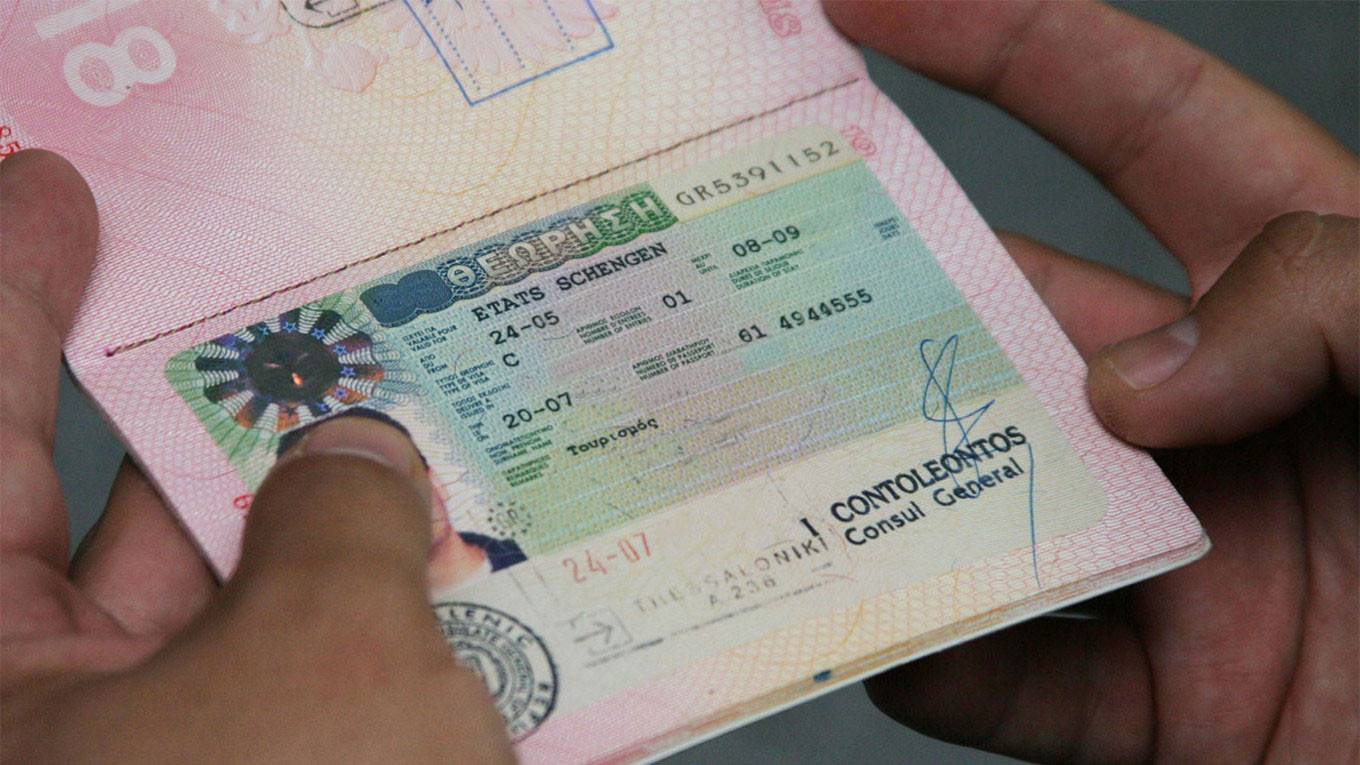
European airspace, shut to Russians, leave travellers from Russia to drive to bordering Baltic countries and Finland, to fly to other parts of Europe on Schengen visas which allow 90 days of travel within the 26-member-country agreement that constitutes the border-free Schengen Area. Estonia has broken with that courtesy, completely closing the Estonian-Russian border to all Russians.

"We will sanction all the Schengen visas which are valid currently except some humanitarian and family related cases", said the country's foreign affairs minister. Roughly 2,500 Russians normally enter Estonia daily, half on Schengen visas. A spokesperson for the Estonian government stated his country would ban travel on previously-issued visas, the first EU country to do so.
 

										 					Photobank Moscow-Live / flickr
Photobank Moscow-Live / flickr
 
As a reflection of Estonia's former status as a satellite of the Soviet Union, about nine percent of Estonian residents are citizens of foreign countries; mostly Russians. It was not a human right, according to Foreign Minister Reinsalu, to enter Europe; Russian taxpayers visiting Europe fund Russia's war in Ukraine.

Finland's Foreign Minister Pekka Haavisto, declared that this neighbour of Russia too plans to slash the number of visas issued to Russians, to ten percent of the present number from September forward. Currently, a rush of Russian tourists flock through, bound for Europe. The influx of Russian tourists using Finland and its Helsinki-Vantas Airport as a European holiday gateway destination, propelled this decision.

Both Finnish Prime Minister Sanna Marin and Estonian Prime Minister Kaja Kallas called for an EU-wide visa ban. German Chancellor Olaf Scholz opposed such a ban, observing that Russians should be able to flee their home country should they disagree with the regime making no mention, however, of the holidaying aspect of Russian travellers throughout Europe.
Stop issuing tourist visas to Russians. Visiting Europe is a privilege, not a human right."
"Air travel from RU is shut down. It means while Schengen countries issue visas, neighbours to Russia carry the burden (FI, EE, LV – sole access points)."
"Time to end tourism from Russia now."
 Prime Minister of Estonia, Kaja Kallas
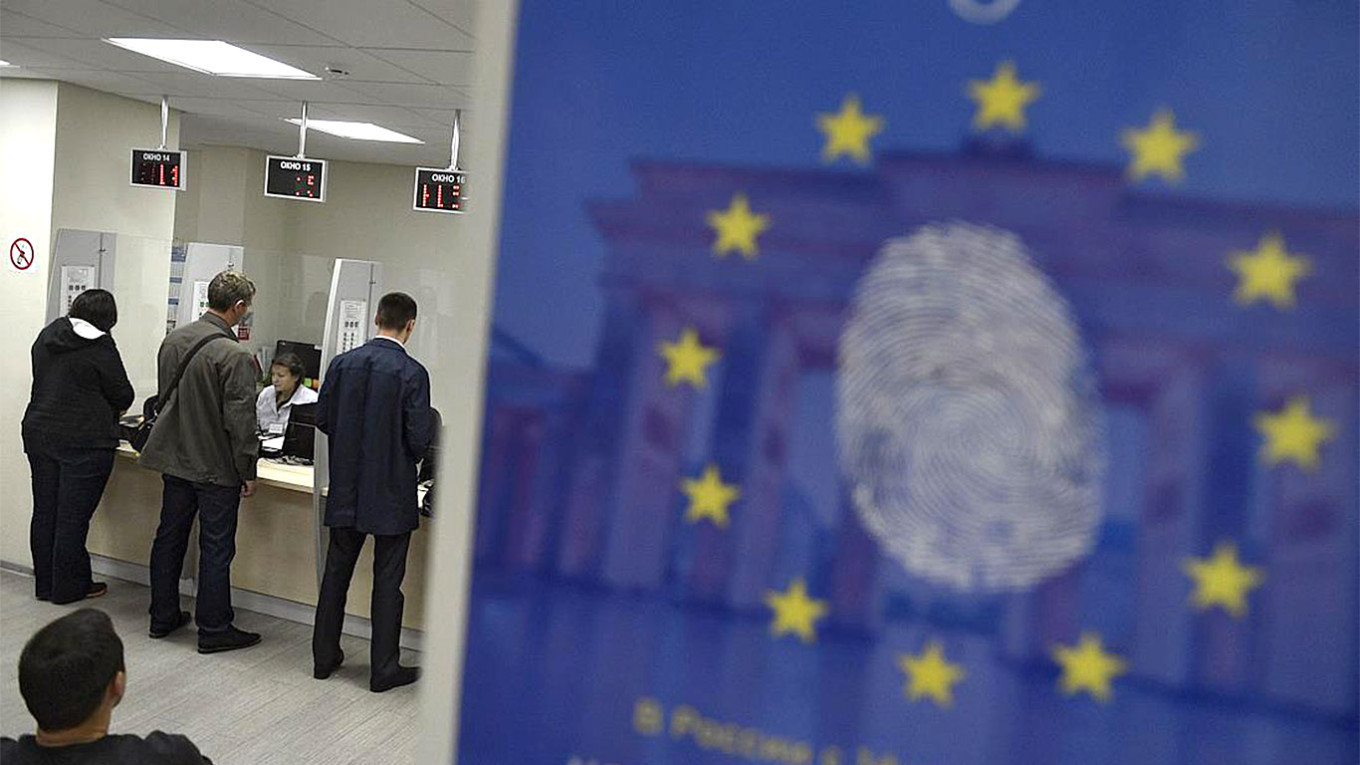
A visa center in Moscow. Gleb Schelkunov / Kommersant


Labels: , , , , , ,

Wednesday, January 29, 2020

Nazi Collaborators, Eastern Europe

"This is like a nightmare."
"This is all happening once again in the lifetime of survivors."
"It has to be tearing their hearts out."
Bernie Farber, former chief executive officer, Canadian Jewish Congress

"[Such events as Ukraine's honouring of Nazi collaborators are] internal issues of Ukrainian politics."
"[Israel's decision to condemn such parades is] counterproductive."
Gennady Nadolenko, head, Ukraine diplomatic mission, Israel

"We must challenge all those who distort the historical record on governments, military units or organizations that fought with, supported or sympathized with the Nazis during World War II."
"This includes government leaders who acquiesce in, or fail to condemn, a process of Nazi glorification that amounts to Holocaust distortion."
"Those who glorify the record of such organizations or units cannot dismiss criticism as 'fake news'."
Michael Mostyn, CEO, B'nai Brith Canada
Veterans of the Latvian Legion, a force that was commanded by the German Nazi Waffen SS during WWII, and their sympathizers carry flowers as they walk to the Monument of Freedom in Riga, Latvia on March 16, 2016 to commemorate a key 1944 battle in their ultimately failed attempt to stem a Soviet advance. Jewish groups, Moscow and some in Latvia's ethnic-Russian community see the parade as glorifying Nazism because the Legion, founded in 1943, was commanded by Germany's Waffen SS, the armed wing of the Nazi party's Schutzstaffel SS (Protective Squadron). / AFP / afp / Ilmars ZnotinsILMARS ZNOTINS / AFP/Getty Images

For Jews around the world the 75th anniversary of the Soviet Red Army's liberation of Poland's Auschwitz-Birkenau death camp where Nazi Germany engineered the death of almost a million Jews, along with Roma, Soviet POWs, Polish political dissenters, gays, the very thought that Latvians, Lithuanians, Ukrainians and Poles would in the 21st Century, celebrate their national heroes who were Nazi collaborators is unthinkable.

Yet the reality is that throughout Eastern Europe countries are celebrating their nationals who collaborated with the Third Reich and took active participation in the rounding up and murder of Jews. Torchlight parades were held in a number of cities in Ukraine early this month in honour of Stepan Bandera, a nationalist Ukrainian and Nazi collaborator involved in the killing of thousands of Jews and Poles. Despite which, Ukraine sponsors such events celebrating Nazi collaborators with links to the Holocaust.

A school was named in Lithuania for Jonas Noreika whose own family agrees was involved in the killing of Jews. A Ukrainian diplomat talked about punishing "k----", while posing for photographs with a cake baked in the shape of Hitler's memoir Mein Kampf, and blaming Jews for the Second World War. Once a minor kerfuffle passed, when he was condemned by Jewish groups, he was reinstated to his diplomatic position.

For the approximately 200 Canadian military trainers currently deployed to Ukraine, it is likely that on the first of January they would have witnessed a torch lit procession. Throughout Kiev and numerous other towns in Western Ukraine, thousands of civilians took to the streets – not to usher in the New Year – but to celebrate the 110th anniversary of the birth of a man named Stepan Bandera.  Scott Taylor, Canadian Military Magazine

Estonia, Latvia and Ukraine have all held parades in honour of those who fought in Nazi SS units. The Latvian SS units who fought for the Nazis in the Second World War were praised by Latvian Defence Minister Artis Pabrike in December, who spoke of them as "the pride of the Latvian people and of the state". One of the unit's officers, Viktors Arajs, participated in the murder of 26,000 Jews with his unit. At a dinner party in Riga he entertained guests with his method of killing Jewish babies.

Throwing the babies into the air, then shooting them would avoid any ricochets that might occur if the babies were shot while lying on the ground. Eastern European nations such as Latvia, Ukraine and Lithuania are involved in rebuiilding their national identities, "rediscovering" individuals from the 1940s to elevate them to the status of national heroes, according to Holocaust researcher, Professor Per Anders Rudling.

Latvian Herbert Cukurs was a key member in the Arajs Kommando, known as the "Butcher of Riga". In 2014, the Israeli government raised concerns relating to a musical performed in Latvia celebrating his life, that of a Nazi war criminal whom Holocaust survivors linked to the murder of Jews. Over 50 members of the U.S. Congress in 2018 condemned Ukraine's efforts to glorify leaders of the Ukrainian Insurgent Army, along with the 14th SS Galizien Division, comprised of Ukrainian volunteers.

"It's particularly troubling that much of the Nazi glorification in Ukraine is government-supported", the letter stated. Poland passed legislation to make it illegal to accuse Poles of any complicity in the Holocaust when the simple reality is that fascist Germany felt confident in placing a number of forced labour and death camps in Poland, knowing there would be no popular outcry from a country where antisemitism was well entrenched.

In Western Ukraine, thousands of civilians took to the streets to celebrate the 110th anniversary of the birth of Nazi collaborator Stepan Bandera

Lithuania's pro-Nazi government had been involved in the rounding up and murder of Jews, according to well-researched conclusions, yet a new law is under consideration in Lithuania to declare that neither Lithuania nor its leaders had ever participated in the Holocaust. Ukrainians, for their part, push back against Israel's condemnation, insisting that Stepan Bandera had never supported Nazi Germany, just as the Latvian government claims the Latvian SS units hadn't fought in support of Hitler, but to fight the Soviets.

News articles and research relating to Nazi collaborators have been dismissed by officials in Latvia, Estonia, Ukraine and Lithuania, claiming them to be the product of Russian disinformation campaigns meant to cast their countries in a bad light. Canadian officials failed to join Jewish groups condemning Latvian Defence Minister's Pabriks praise of the Latvian SS and two months later, he met with Canadian Minister of Defence Harjit Sajjan, while next month he returns to Ottawa for a defence conference.

Chrystia Freeland, formerly Canada's Minister of Foreign Affairs and in this new Liberal government named as deputy Prime Minister, is of Ukrainian background. She has been banned from entry to Russia. Her grandfather was a Ukrainian patriot who collaborated with Nazi Germany, publishing a newspaper in Nazi-occupied Poland, supportive of the Third Reich and rife with antisemitic tropes. The Ukrainian-Canadian community has always denied that members of the 14th SS Galizien were Nazi collaborators, many of whose members immigrated to Canada.

After Ukraine gained its independence from the Soviet Union in 1991, their initial collaboration with the Nazis and participation in the slaughter of Ukrainian Jews prevented Bandera and Shukevych from being considered national role models. However, much to the consternation of the Jews, and the Poles – whom Bandera’s OUN also massacred in the thousands – over the past three decades history in Ukraine has been revised.
At the time of the Maidan uprising in 2014, the spirit of Bandera was revived by the right wing, ultra-nationalists, and, just five years later, his past crimes have been whitewashed to the point where his date of birth is a national holiday.  Scott Taylor, Global-Politics,EU

Labels: , , , , , , , , , ,

Tuesday, November 21, 2017

A Tale of Two Cities

"It is a different world over there."
"You see and feel the difference as soon as you cross the bridge across the river -- the roads, the bureaucracy, the mentality."
Sergei Stepanov, former editor, Narvaskaya Gazeta, Narva, Estonia

"It is not really even a town over there -- just a road or two."
"Of course, it is better here in Narva than in Ivangorod."
Vladimir Petrov, leader, Union of Russian Citizens

"We are all Russians, but we have a different mentality here."
"We are used to European ways."
Leonid Pelesev, chess coach, Narva
Narva - Jaak Kadak
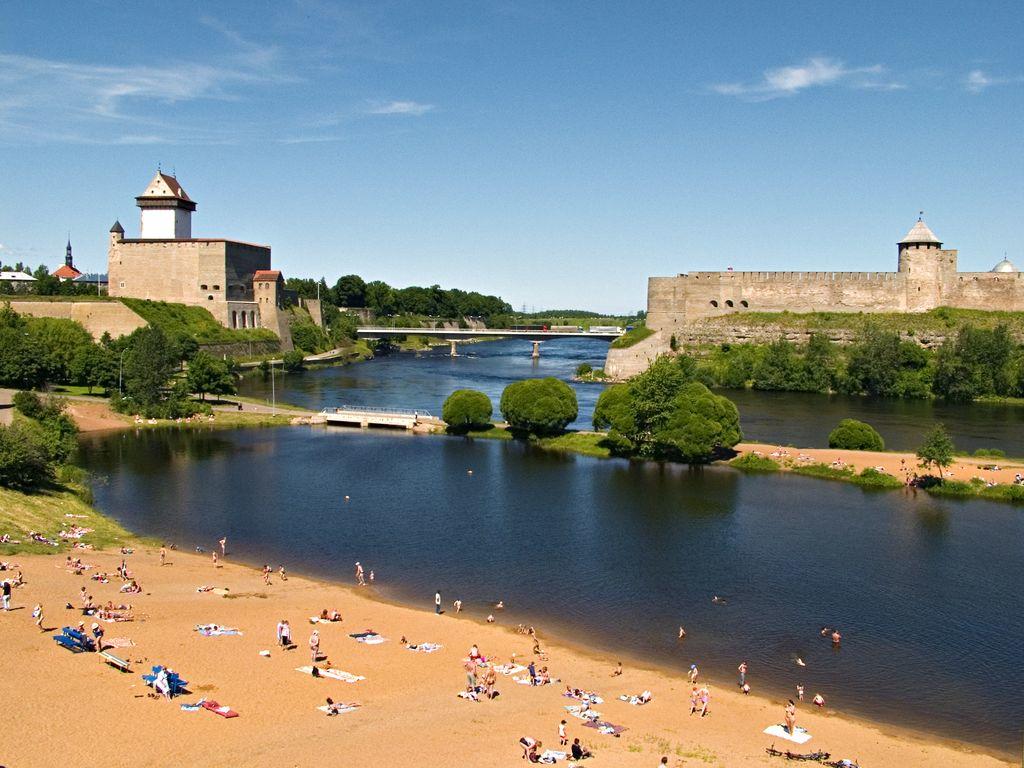
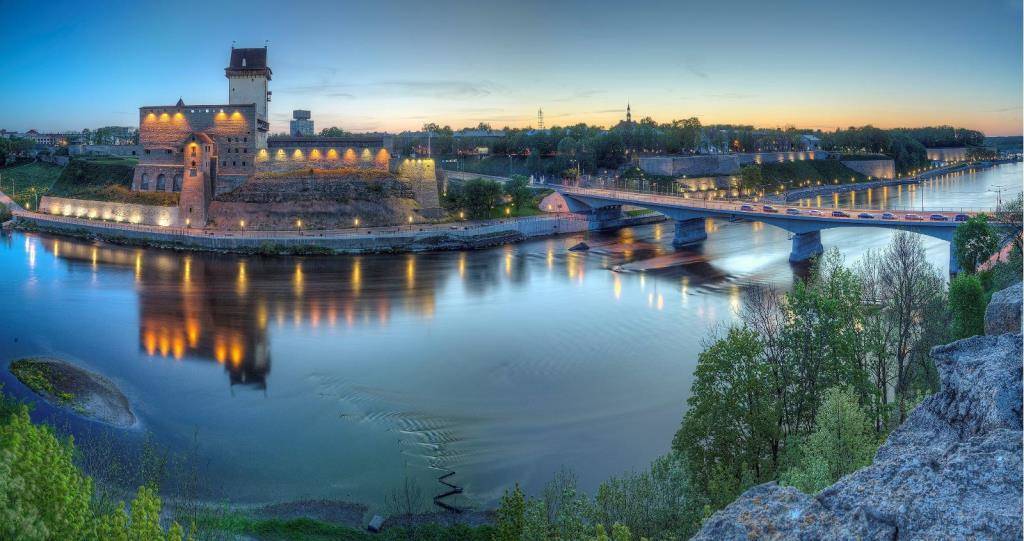
Photo by Jaak Kadak. Nova (on the left) prospers while Ivangorod the Russian town across the river, is slipping ever further behind.

It was once a city, but now the city that once was, under Soviet Union rule when Estonia was  just a part of the Union of Soviet Socialist Republics, is now two towns; one located within the border with Russia, the other just across the border, in Estonia, with a river separating the two and a bridge connecting the two halves that once comprised a unified city. The bridge itself fell into disrepair and has only recently been reopened after refurbishment made it usable once more.

But it isn't only the Narva River that has so effectively divided those two towns, of which both populations are Russian speaking, ethnic Russians. Narva has a population of roughly 60,000 (80% ethnic Russians) as compared to Ivangorod in Russia with about 12,000 inhabitants. For its population, Narva boasts modern hospitals, swimming pools, shopping malls, a university and freely accessible Wi-Fi. In sad contrast Ivangorod has none of these civic amenities.

That does not describe the only differences between the two; wages, for example; the average monthly wage in Ivangorod is $500, in Narva it is twice that amount, while pensions between the two compare on an even wider scale. Russian speakers in Narva watch Russian state television and think highly of Vladimir Putin, though they are content to live in Narva as a considered choice, spurning the alternative, to live in Ivangorod.

The European Union gave both of the towns funding to enable them to build promenades on each of their sides of the Narva River, as a manner of prompting cross-border harmony between the two Russian-speaking civic enclaves and promoting tourism in the process. Narva received $830,000 and with it completed their promenade which turned out eight times longer than the one Ivangorod built for the $1.2-million they were given.
Narva river promenade - Visit Estonia
Narva River promenade    Estonian World

Ivangorod officials explained that topographic challenges accounted for the differences in both cost and completed project, while critics in Narva point to what they say accounts for the reality leading to the fact that for less funding the Estonian town completed a much more sophisticated and longer promenade; fusty old bureaucracy leading to systemic problems characterized as corruption. "Almost certainly" corruption was the reason for the disparity between the two end results, according to the former editor of a Russian-language newspaper published in Narva.

Ivangorod is the site of a venerable old fortress built in 1492. The Church of the Holy Trinity is also located there, a cluster of spires and cupolas, situated on the edge of a lake, and newly renovated from the ruined state it fell into during Soviet rule. Russia's state railway company provided the funding for its renovation. Because of the church, the fortress and a few museums, the Russian town is an excellent candidate for tourism.

Unfortunately, most visitors are unable access the site since all Russians living outside the border area, along with any foreigners wishing to visit must first submit an application to obtain permission from the Leningrad Region branch of the Russian interior secret agency, the F.S.B. The process can take up to four months for the needed permits to visit Ivangorod. Try to visualize a tourist sticking around for that length of time to be enabled a half-day visit to the town.

Narva too has a fortress and museums, both of which are freely open to anyone living in Estonia, as well as to foreign visitors. A venture to initiate a shuttle bus service to Narva from Ivangorod was initiated by the European Union funding it, abandoned however when the Russian town insisted on requiring $4-million just to build a bus stop.

In contrast, in Narva, where salaries are higher and construction materials costlier, it was felt that $1-million would suffice to build a bus shelter. In Narva, streets are clean and in good repair, contrasting with those in Ivangorod, scarred by potholes and debris-laden. As Ivangorod's mayor lamented, the town is classified as a restricted border zone.

Labels: , , ,

Follow @rheytah Tweet