Humanity-Hostile Militarization of Space
"The U.S. has on-orbit space control weapons capable of defending the Joint Force against hostile adversary action.""Space control encapsulates the mission area required to contest and control the space domain -- employing kinetic and non-kinetic means to affect adversary capabilities.""These capabilities can be employed for offensive and defensive purposes."U.S. Space Force spokesperson
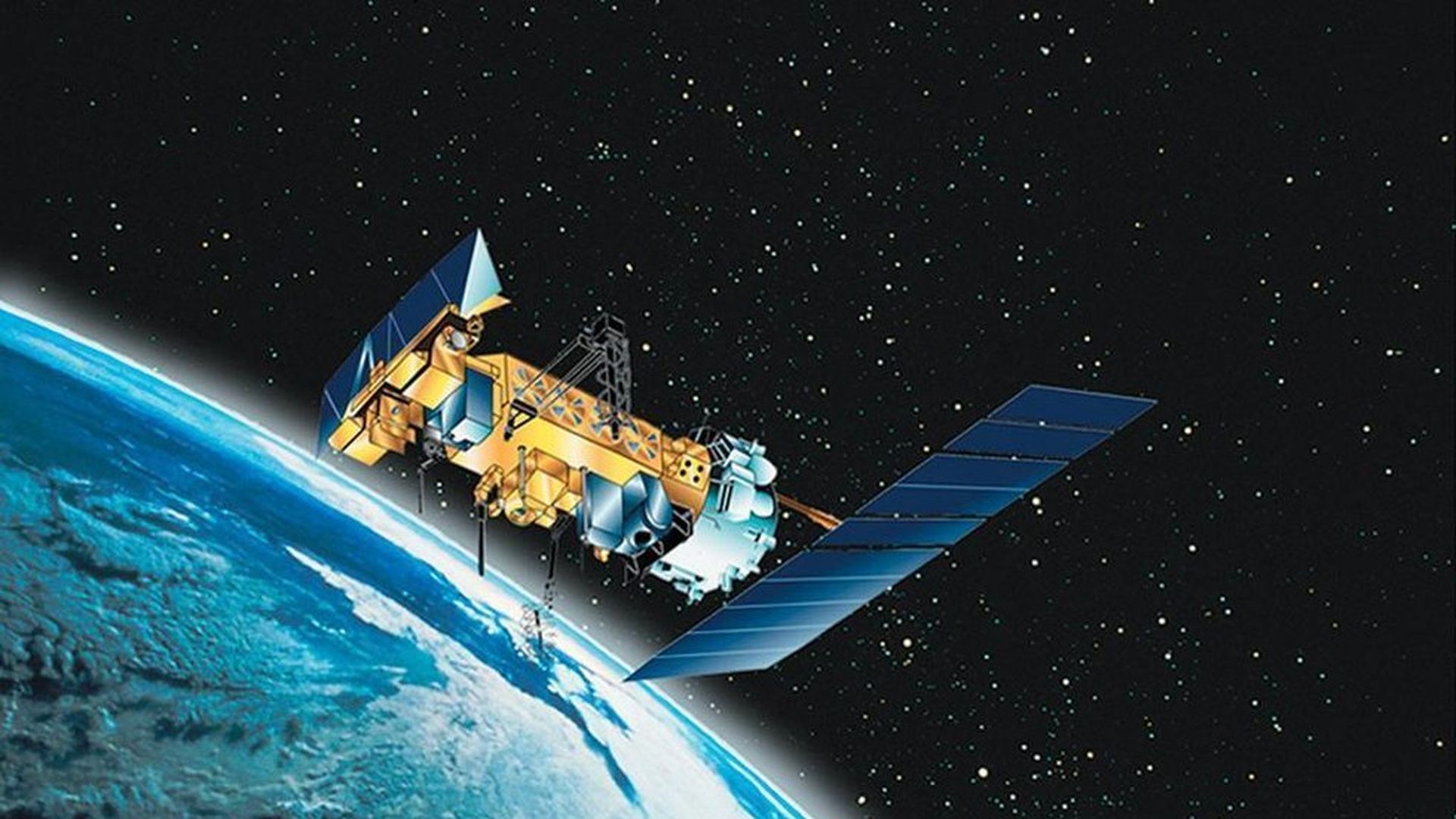
| US Space Command has announced it has put weapons in space for the first time. (Reuters: US Space Command/Christopher DeWitt) |
"[The] weaponization of outer space turning it into a battlefield, as well as an arms race there [must be avoided at all costs].""We urge the U.S. side to stop expanding its military capabilities and preparing for war in outer space."Guo Jiakun, Foreign Ministry, China"[Space must be kept] free of any weapons.""We are counting on broad international consolidation to continue working toward the complete demilitarization of space."Dmitry Peskov, spokesman, Kremlin, Russia
| The US Space Force's deployment will likely provoke other countries to follow suit, experts warn. (Reuters: Mike Blake |
American authorities unceasingly portray China and Russia as aggressors worldwide. And the truth is, they have proven themselves to be just that, in their focus on territorial expansion and their willingness to author conflicts to gain their goals. Russia for the time being, more obviously prepared to declare war by any other descriptions which ends up killing tens of thousands of civilians and military alike. China's forte has been on the commercial side, with loans to developing nations for vital infrastructure, making for indebtedness, just as it has succeeded in becoming the global colossus of manufacturing, stripping it from the West, providing cheaper alternatives to a welcoming marketplace.
Taiwan awaits the inevitable from China in Beijing's long march toward 'unification' where war is not ruled out to achieve its intentions. Although the United States has been the leader in space exploration, China has been close behind, landing a rover on the far side of the moon and acquiring valuable samples to answer astronomical questions of Earth's evolution even as the U.S. looks further into the universe to decipher its origins and creation. Russia was first in space exploration with Sputnik, falling behind ever since.
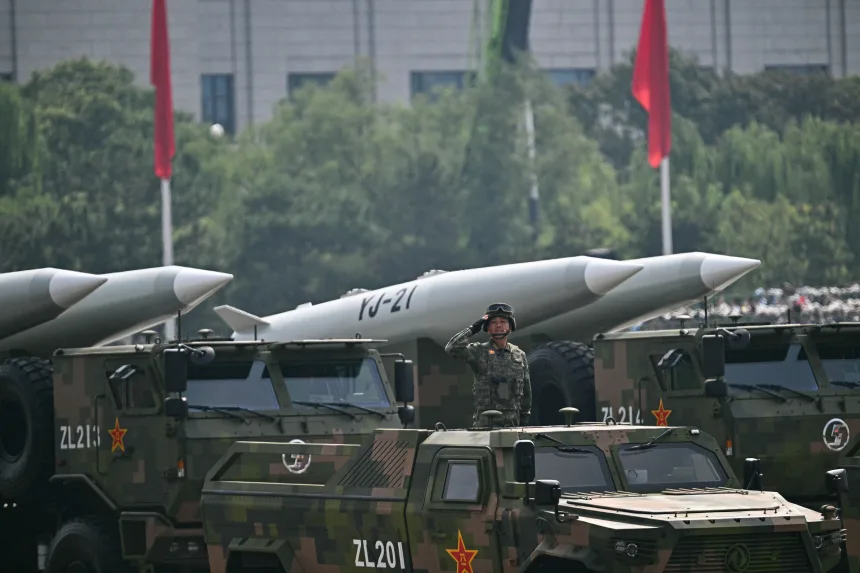
| China is among the countries with its own space ambitions. (Reuters: China Daily) |
International cooperation with the long-shared Space Station that temporarily housed both Russian and U.S. astronauts and scientific experiments, worked well as long as it lasted, but a resurgence in American pride and status as the world's sole superpower urges it forward continually to distinguish itself from its competitors seeking similar status and recognition. And then there is India which has also convincingly demonstrated that the world's most populous country is also capable of great scientific engineering feats in outer space.
"The only difference is that the U.S. used to keep it ambiguous, whereas now it has gone public, which shows that Washington is no longer trying to hide it.""China will not stand by and do nothing.""Whether China deploys weapons in space will depend entirely on whether the United States moves in that direction."Song Zhongping, independent military commentator, Hong Kong
 |
| U.S. Space Force Guardians assigned to Space Delta 5 monitor computer workstations at Vandenberg Space Force Base, California, U.S., December 18, 2025. U.S. Space Forces/David Dozoretz/Handout via REUTERS |
The sensitive issue of the militarization of space is a troubling one. The very thought of these national powers developing the methodology and structures involved in producing space weaponry to challenge each other's military aspirations beyond the confines of Earth is bedeviling beyond measure, representing a failure of human willingness to respect parameters beyond which none should seek to venture. The executive branch of national politics and their elite military counterparts see no reason to curtail their ambitions.
That life on Earth will become more fraught with existential challenges while the heavens above are wracked with powerfully destructive weapons of mass annihilation, particularly at a time when artificial intelligence is being worked to contribute to the functions of design, manufacture, scheduling and schemes of alpha conquest and control, risking at the same time the eventual autonomous devolution of AI estimating that humankind has failed its own test of humanity, and that it is time for a higher intelligence that is not human to make its mark, adds substantially to 'what could conceivably go wrong'.
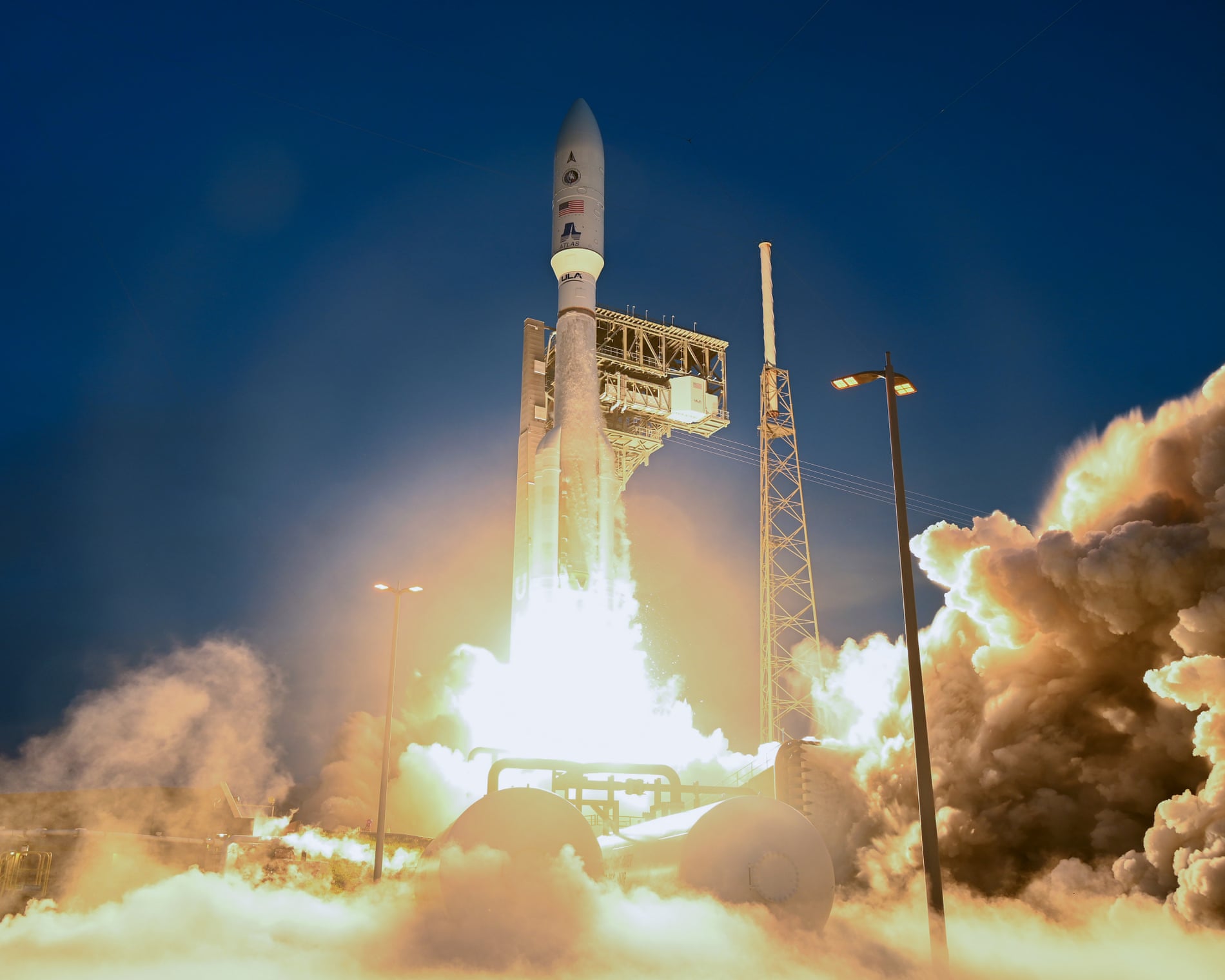 |
| A United Launch Alliance Atlas V rocket launches a classified payload for the United States Space Force at Cape Canaveral in Florida in 2024. Photograph: Joe Marino/UPI/REX/Shutterstock |
Neither the advance toward the militarization of space, nor that which continues to further develop artificial intelligence capabilities beyond the capacity of human ingenuity to control can be of any benefit to humanity, and indeed has the potential to end humanity. That the United States of America under the controlling mind and hand of a a megalomaniac for whom caution is a difficult-to-spell word and a concept he will not recognize, as his whims and arrogance disrupt human relations and nation-to-nation coherence is no shrugging matter.
"There is a regulatory vacuum because Article 4 of the 1967 treaty only forbids weapons of mass destruction and nuclear weapons in orbit.""Moscow and Beijing have been wanting to work for about 20 years on a treaty to prevent the placement of weapons in space [while] western states are trying instead to work on the notion of responsible behaviour.""The U.S. announcement will likely give impetus to the restrictive approach that Moscow and Beijing are pushing for."Laetitia Cesari, space law expert
 |
| The US military's unmanned X-37B Orbital Test Vehicle, pictured at Vandenberg Space Force Base, California, the US in 2025. — Reuters/ |
Labels: China, India, Launching Arms in Orbit, Militarizing Outer Space, Russia, United States
posted by Pieface @ Thursday, September 17, 2026