"The United States is the only Western industrialized nation that continues to administer capital punishment."
"It also continues to use a method of execution that depends on material manufactured by multinational corporations."
"Put simply, association with executions, which are seen by much of the world as a barbaric American practice, hurts their business."
Ty Alper, clinical professor of law, UC Berkeley School of Law
"I think it's stupid. I think it's stressful. If it happens, I'll be heartbroken."
"This is more than revenge."
"This is torture. There needs to be a decision one way or the other."
Carmen Blackburn, daughter of Canadian Ronald Allen Smith
United States
Ronald Allen Smith, 63, from Red Deer Alberta, is on death row and has been since 1998, in Montana. His crime: Murdering two young Indigenous cousins near East Glacier, Montana. He was high on LSD and alcohol at the time. He is a murderer. Two young men never lived long enough to attain the age that Ronald Allen Smith has; he took their lives from them in 1983. He has been waiting, waiting, waiting for almost four decades for his turn to die. And Montana is determined to give him that opportunity after a 15-year hiatus where it is now prepared to resume executions for death row inmates.
It is a matter of settling on the lethal drugs that are available for use. Lethal drugs that were once commonplace and commonly used are no longer available. Their manufacturers became unsettled and displeased at the reflection of lethal drug executions shining a light on their productive enablement of those executions so loathed by civil society. They have a reputation to uphold and it was bruised and battered by their product-association with human executions as punishment meted out by the state justice system.
Earlier in the year, Virginia announced itself the latest in a string of 22 states to abolish the death penalty. In Montana executions have been on pause since 2014 following a judge having determined that pentobarbital, a barbiturate, failed to meet the state's criteria holding that an "ultra-fast-acting" drug must be in use and capable of bestowing unconsciousness on the individual set to be executed. The last state execution took place in 2005, when the Supreme Court of the United States in 1976 found the death penalty to be constitutional, in reverse of an earlier court ruling.
Leading to a new piece of legislation in Montana that would allow for the "intravenous injection in a lethal quality" to be used to execute prisoners should it pass the State Senate. Across the United States drugs in use to execute prisoners vary widely. Before 2010, 30 of the 36 states using lethal injection favoured a three-drug cocktail consisting of sodium thiopental, to cause unconsciousness; pancuronium bromide, a paralytic; and potassium chloridem to stop the heart, leading to death.
Then, after 2010, sodium thiopental became difficult to obtain, mostly since Hospira, (now owned by Pfizer), stopped its production of the drug while other manufacturers prevented thiopental alternatives from being sold for executions. Rules in prevention of the export of drugs meant for execution use were put in place by the European Union. Leading to a chain reaction of state-level decisions to procure drugs or invent new cocktails for execution use.
Further modification of death penalty protocols with the use of compounding pharmacies to build the necessary drugs or to process a new drug cocktail to be used in the death chamber, saw some states further the process. Montana's choice was pentobarbital as an alternative to sodium thiopental. Other drugs, such as sedatives midazolam and etomidate are in use elsewhere. Arizona uses next-step drugs, like hydromorphone (an opioid) and Nebraska used fentanyl, while Texas continues to rely on a single dose of pentobarbital.
The issue is fraught, both with public disdain for the death penalty and the methodology of state executions, and with a gruesome miscarriage of plans when those being executed fail to react to the drugs chosen to kill them quickly and painlessly, by exhibiting obvious mental and physical anguish as they approach death, taking far too long to do so and reacting violently to the process. Which has resulted in some states deciding to change to alternate tried-and-true methods such as the electric chair which has, in the past, had its own memorable incidents of malfunction.
The execution room in Montana State Prison in Deer Lodge, Montana, in 2004.Photo by Peter Brieger/National Post/File
"It's always a question of dollars for research -- there's never enough to do everything you want." "So
unfortunate situations like this do forces people's and politicians'
attention on the need to do that ... I think there will be big
consequences." "It's [the novel coronavirus] really a chemical. It's inert. They're not alive or dead, they're inactive or active." "They're parasites, by definition that's what they do -- they take advantage of a host." Roy Duncan, virology professor, Dalhousie University
"HIV research really took off in the late '80s and early 90s, taught us how the virus replicates." "We're
kind of with anti-virals now where antibiotics were to the 1950s ...
This particular [COVId-19] virus is going to really dramatically
accelerate a lot of work." Dr.Gerald Evans, chair, infectious diseases division, medical school,Queen's University
"In the face of this pandemic, where public health measures are not sufficient, it is going to propel research further." "[It] is enhancing and will likely increase the number of anti-virals being developed and tested." Joanne Lemieux, biochemistry professor, University of Alberta
Cobra
Biologics, working on a potential COVID-19 vaccine.REUTERS/Carl Recine
In part as a result of the unique, parasitical qualities of viruses,
research initiatives hoping to treat infections from the flu, the common
cold and Ebola have been unsuccessful since they are much more
difficult to deal with successfully than, as an example, antibiotics in
countering bacterial infections. There have been scant few success
stories, overwhelmed by abject failures in coming up with drugs with the
properties to treat viral infections.
Gilead’s antiviral drug remdesivir
To the present, Remdesivir, designed originally for Ebola, and which
failed to counter its effects, held out hope for efficacy in the
treatment of the SARS-CoV-2 virus. It has just been given regulatory
approval in the United States after undergoing a study that affirmed it
had a fairly mild effect on the subjects enrolled in the trial,
shortening their hospital stays by several days, but doing nothing
whatever for the symptoms, much less protecting against the coronavirus.
It is illustrative of the anxiety involved in trying to find a coping
mechanism for the SARS-CoV-2 virus that the drug, however modest its
effect, will now be the first arrow in the quiver of the novel
coronavirus arsenal. Hope remains high that other drug trials will be
more successful, not only in alleviating symptoms but eventually even
preventing the virus from infecting people as readily as it does,
replicating and spreading. Now the great hope is for the discovery of a
reliable, safe vaccine to end the pandemic by preventing its contagion.
At one time the HIV infections that causes AIDS killed just about anyone
who contracted it 30 years ago. Now patients are able to live long,
healthy lives given the drug regime prescribed for that very specific
purpose; not able to cure but to suppress the virus to the point that
its deadly symptoms are prevented. Hepatitis C drugs represent a new
generation of drugs, excruciatingly expensive but representing a
breakthrough by curing the disease.
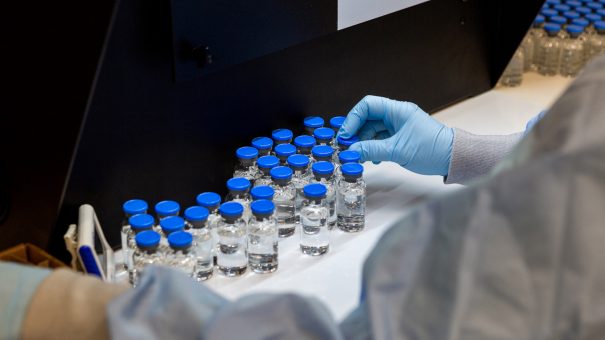
Ampules of Remdesivir Ulrich Perrey/Pool via REUTERS
In "acute" viral infections such as flu, measles or West Nile, a short,
sharp onset of symptoms ensue followed by fairly swift recovery -- and
sometimes death. And no anti-virals have yet been discovered and
certainly not for lack of trying. On the other hand, since they've
become part of a controlled background of awareness without quite the
same level of dire and immediate threat the COVID-19 infection has
become, we live with them and adapt accordingly.
"We really don't have good anti-virals for an acute viral infections", Dr.Srinivas Murthy, head of a Canadian trial of possible COVID-19 drug treatments admitted. And as Dr.Evans adds, it is "a heck of a lot harder"
to create an antiviral than an antibiotic. Bacteria represent
free-living cellular organisms with the biology to survive and reproduce
independent of a host they may invade. They can be viewed as relatively
easy targets for drugs.
Viruses on the other hand consist of nucleic acid, genetic material
encased in protein. Once they infiltrate a host and stick to a cell,
viruses become active and burrow deep into the cell, using its molecular
chemistry to replicate, in the process creating additional viruses that
will go on to infect other cells. They represent a more difficult,
limited target. Added to which difficulty is the fact that drugs must be
designed not to be toxic to the host cell, along with the virus
attached to it.
Cobra
Biologics,
Britain, April 30, 2020.REUTERS/Carl Recine
And then there is the capacity for viruses to mutate, complicating the
issue exponentially; they are more difficult to target than bacteria
given their mutation tendency, its swiftness and frequency in mutation
ensures medication becomes less potent: "Viruses are tricky, they change",
noted Dr. Murthy. People's own immune system responding to the presence
of an invading virus, can wreak the most damage through dangerous
inflammation or sepsis.
"The company was, in June 2017, in arrears on its land lease payments by almost three years [35 months]." "The company has since settled its debt with the NRC [National Research Council], on November 16, 2017, and is a valued client in good standing." "In the conduct of its business, the NRC respects the proper stewardship of financial resources and is accountable for their management to Canadians in accordance with Treasury Board policy." National Research Council, Ottawa
The National Research Council Canada at 100 Sussex Drive in Ottawa ..Errol McGihon /
Postmedia
"We knew we were getting a grant [$30-million from the Gates Foundation] in September and we did." "We just asked them [the NRC] to give us the summer [to get the financial fundamentals in order]." Dr. Don Gerson, founder, CEO, PnuVax SL Biopharmaceuticals., Montreal
The startup biotech company contracted with the National Research Council in 2012 to rent a previously abandoned bio-tech facility in Montreal on federally-owned land, administered by the NRC agency. This facility had been leased to a Dutch company for the princely sum of $1 annually previously, but when the company closed up shop in 2005 the facility was again vacant. When Pnu Vax expressed interest in the site, the NRC was disinterested in offering it to the start-up on the same terms offered to the Dutch company.
Father Don and son Jonas Gerson were busy developing a low-cost vaccine against pneumonia, recognized as a deadly disease that is the largest killer of children under five years, world-wide. The costs in developing the vaccine were astronomical, and at one point the Gersons were faced with a conundrum; pay their rent and come up short in their research costs, or suspend their rent payments and focus on their research. They chose the latter route.
After all, the National Research Council is the very government agency whose existence fosters scientific excellence. Research coming out of the NRC is often proudly hailed for its scientific firsts in many areas of scientific endeavour. It is a national crown jewel of scientific research. So it stands to reason that scientists engaged in developing a vaccine as significant as that the Gersons were involved in would be given a break.
But that was not to be. Their pioneering work close to a breakthrough, convincing enough to the Gates Foundation to offer the largest investment ever given to any Canadian biomedical company failed to convince NRC management that they might be patient in awaiting arrears in rental back-payment in favour of giving the start-up a break. PnuVax received 30 day's written notice to either make good on the outstanding rental, represent $1-million, or be prepared to demolish the manufacturing facility and evacuate the premises.
Father and son decided to go to Ottawa to personally speak with NRC president Iaian Stewart, hoping to persuade him that when the Gates grant came through at the end of summer, the past-due rent would be paid, and to put off the order of evacuation. What they found, when they made their case, was scorn and refusal when Stewart laughed off the suggestion that PnuVax and the NRC could work out the problem with a positive conclusion.
Close to clinical trials of the new drug they had developed, the Gersons hardly knew what next to do. Health Canada approval was pending, allowing the vaccine to be commercialized. The NRC had even supplied one of the chemicals and as such would have received royalty payments. "But he [Stewart] didn't want to listen", Mr. Gerson recounted. Donald Gerson had helped to develop and manufacture the first childhood pneumonia vaccine produced at Wyeth, an American pharmaceutical company, in 2000.
He went on to found PnuVax in 2008, with a view to developing a pneumonia vaccine for children world-wide, that would cost a dollar-a-dose. When, in 2012, the arrangement was made to lease the Montreal facility, the Gersons invested in renovating the facility to the tune of $10-million, passing a Health Canada inspection. The lease cost came to $300,000 annually, on top of which was $600,000 yearly in city taxes.
PnuVax found its financial resources strained, though it had already received funding from the Gates Foundation which stipulated that the funding was to be used for research only. And then came news that a larger grant would be forthcoming, that would cover vaccine development, clinical trials and facility overheads. Received in September of this year, it enabled PnuVax to pay off its rental arrears, but before that, because of the NRC threat due to non-payment of rent, the company had been on the cusp of insolvency.
Bridge financing and desperate determination kept them going. The company now has in its employ 25 well-paid scientists moving the process forward.
It costs the Government of Canada $160-million on childhood pneumonia vaccine annually. According to PnuVax, $100-million of that total could be saved if its low-cost alternative is approved.
This government partners with the Gates Foundation in its battle of infectious diseases globally.
Canada pledged $785-million to the Foundation to combat AIDS, tuberculosis and malaria. Yet the federal agency responsible to lead the innovation agenda of the government cavalierly dismissed a reasonable request by a biotech company to enable it to proceed with its goal to produce a drug badly needed to help fight deadly disease at a reasonable cost.
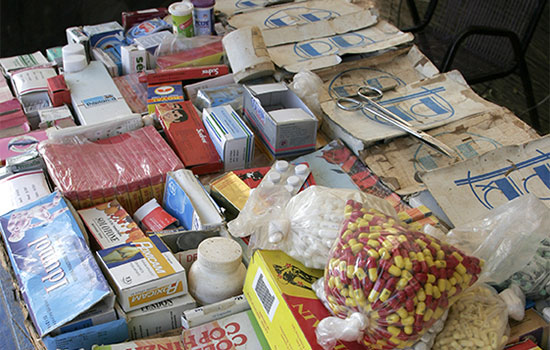
Counterfeit drugs include products that have not been approved by
regulators, fail to meet quality standards or deliberately misrepresent
an ingredient.
Photograph: Alamy
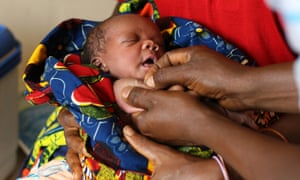
And the final irony can be found in the World Health Organization bemoaning cases of fake medicines it discovered in developing countries held to be responsible for the deaths of tens of thousands of children from malaria and pneumonia every year. One hundred studies of over 48,000 medicines were reviewed by experts who reached the conclusion that drugs to treat malaria and bacterial infections represented close to 65 percent of fake medicines.
It is mostly poor countries that are affected, according to WHO's director-general. Between 72,000 and 169,000 children die from pneumonia annually resulting from bad drugs, counterfeit medications held responsible for an additional 115,000 deaths from malaria in sub-Saharan Africa, according to scientists at the University of Edinburgh and London School of Hygiene and Tropical Medicine whom the WHO commissioned to conduct research in the matter.
Drugs on sale at a market in Mali. Photo: Bert Spiertz/Hollandse Hoogte/Redux
This represents a general opinion site for its author. It also offers a space for the author to record her experiences and perceptions,both personal and public. This is rendered obvious by the content contained in the blog, but the space is here inviting me to write. And so I do.