Saturday, February 28, 2026

Canada: A Shy Energy Giant

"Canada holds 163,108,000,000 barrels of proven oil reserves as of 2025, ranking #4 in the world and accounting for about 9.24% of the world's total oil reserves of 1,765,151,568,000."
"Canada has proven reserves equivalent to 188.6 times its annual consumption levels (based on 2024 data). This means that, without net exports, there would be about 189 years of oil left (at 2024 consumption levels and excluding unproven reserves)."
world0meter  
Voronoi graphic of the countries with the most oil reserves in 2024, showing how a handful of nations control over half of global supply.
Visual Capitalist 
"Canada has significant reserves of conventional and unconventional oil and gas resources. Canadian oil production is focused in the west of the country, especially in Alberta. Canada’s proven oil reserves remain among the world’s largest — estimated at around 168 – 170 billion barrels (about 10 % of global reserves), with the majority in oil sands. The largest oil reserves are found in Venezuela and Saudi Arabia, which have around 18.2 % and 16.2 % of the total reserves, respectively."
"Canada also produces natural gas, with reserves and production primarily in provinces such as British Columbia, Alberta, and the Northwest Territories. Producing natural gas involves extracting gas from underground reservoirs and processing it so it is suitable for various uses, such as heating. In 2025, Canada’s natural gas production averaged about 19 billion cubic feet per day (Bcf/d), making it the fifth-largest producer globally and accounting for roughly 5 % of world natural gas supply."
"Canada is currently the fourth-largest oil producer in the world, with production near 6.0 million barrels per day in 2024, including oil sands, conventional, offshore, and liquids."
Olivia Bush, Made in CA   
albertaoilsandsstockimage
A large oil refinery along the Athabasca River in Fort McMurray, Alta.
 
New Brunswick, an eastern province of Canada was the second place in the world in 1859 to discover oil and gas would bubble to the surface when a hole was drilled in the ground. New Brunswick has a wealth of fossil fuel; an estimated 77.9 trillion cubic feet of natural gas, according to Natural Resources Canada. New Brunswick held the knowledge of its great natural resources close to its chest, making the choice not to develop its reserves. The province imposed an indefinite moratorium on hydraulic fracturing (fracking) in 2014 judging it to be environmentally unfriendly. 
 
Yet it is precisely that system of extraction that is required to draw up the provincial gas reserves. New Brunswick is not alone among Canadian provinces in the abundance of its energy resources, given the Canadian total of about 1.4 quadrillion cubic feet. And according to an analysis conducted by the U.S. Department of Energy, that plenitude of energy is sufficient for Canada to provide natural gas needs for the entire world for a period of 200 years. 
 
When Japan's prime minister travelled to Canada in 2023 and a year later Germany's chancellor followed, both leaders had a distinct and direct purpose in mind. To persuade the Canadian government of those countries' dire need for a reliable energy source in the wake of Russia's invasion of Ukraine, when the U.S. and the EU took punitive steps against Russian aggression by sanctioning Russian gas whose sale helped to fuel the war. Their persuasive efforts fell on deaf ears. Canadian Prime Minister Justin Trudeau's off-handed response was that there was no business case to be made for Canada to export gas.


Under the new Liberal government headed by Marc Carney that succeeded the Trudeau government, Canada re-elected yet another figure influential in environmental circles dedicated to ensuring that energy resources were kept underground, as a source of carbon dioxide that was adding fuel to global warming, responsible for dramatic weather changes and adding to natural disasters in extreme weather conditions. Resistance to oil pipelines to tidewater for shipping abroad, to continued exploitation of the Alberta heavy crude oil to a world hungry for energy, continues under the current prime minister.
 
A situation where a country's vast natural resources are being left underground, with the full potential of extraction not to be realized on the basis of the harm it would do to the environment already in a situation of degradation from climate change. This despite vast technical advances in the extraction of oilsands for a cleaner product. And in the face of the fact that Canada's contribution to global greenhouse gas in the atmosphere is slightly more than 1-percent of the world total. 
 
A situation that has led Canada to export its oil to U.S. refineries at a discount, and where the U.S. sells that refined oil elsewhere at a profit denied to Canada. In turn, Canada continues to import oil from the Middle East for the energy needs of New Brunswick and Quebec, lacking a pipeline that would provide them with Canadian oil from the Western provinces; pipelines are dirty words to environment-dedicated British Columbia, New Brunswick and Quebec. 
 
The Maran Gas Hector is pictured in a 2017 photo. (Courtesy: Adam Fish/ marinetraffic.com)
The Maran Gas Hector
 
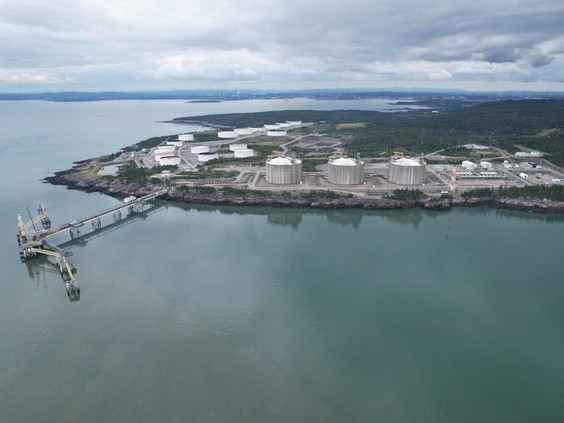
And out of this impasse the absurdity of an Australian oil tanker, the Maran Gas Hector, sailing 25,000 kms from Gladstone, Australia, across the Atlantic to New Brunswick's Saint John harbour where it docked and proceeded to unload its cargo to fill the need of the very province sitting atop a wealth of untapped oil reserves.  A decade ago four LNG export terminals were proposed for Canada's Atlantic coast, but the prospect failed to resonate. Leading to the shipping across a vast distance, of Australian natural gas. 
 
Unlike Canada, Australia has exploited its reserves for export since the 1980s as supercooled liquefied natural gas through its 10 LNG export terminals and thousands of kilometres of natural gas pipelines. As opposed to Canada's single LNG export terminal in Kitimat, British Columbia, just a year old, following a lengthy process of environmental reviews and legal confrontations, amidst civil environmental insurrectionists. 
 
https://smartcdn.gprod.postmedia.digital/nationalpost/wp-content/uploads/2026/02/used4.jpg?quality=90&strip=all&w=564&h=423&type=webp&sig=eQfhXrVex-T4dqJTQF3kuw
The only LNG terminal on the Canadian Atlantic coast, and it's to import LNG, rather than export it. Photo by Twelve O'Clock High Drone Services


Labels: , , , , ,

The Incomparable Israel-India Alliance

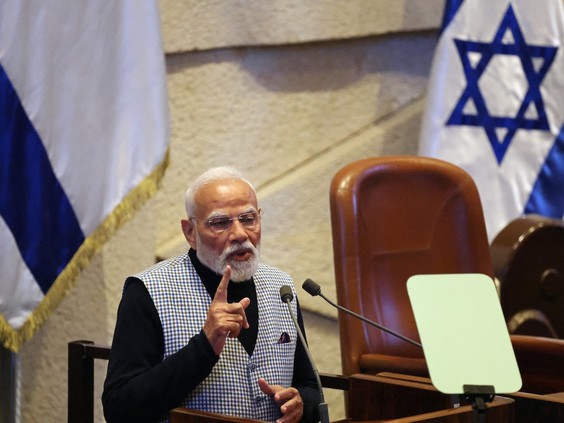
"It is a privilege and an honour for me to stand before this distinguished House. I do so as the Prime Minister of India, and as a representative of one ancient civilization addressing another."
"I bring with me the greetings of 1.4 billion Indians, and a message of friendship, respect, and partnership."
"India has also endured the pain of terrorism. We feel your pain. We share your grief. India stands with Israel, firmly with full conviction, in this moment and beyond."
"Like you, we have a consistent and uncompromising policy of zero tolerance for terrorism, with no double standards."
Indian Prime Minister Narendra Modi 
https://smartcdn.gprod.postmedia.digital/nationalpost/wp-content/uploads/2026/02/2262969052-1.jpg?quality=90&strip=all&w=564&h=423&type=webp&sig=ifV2QJ1n3e5TV3S9nYtI_w
India's Prime Minister Narendra Modi addresses the Israeli parliament, the Knesset, in Jerusalem on February 25, 2026. (Photo by ilia YEFIMOVICH / AFP via Getty Images)
 
Indian Prime Minister Narendra Modi just concluded his second visit to Israel. His first took place in 2017, becoming the first prime minister of India to visit Israel. He spoke of the acknowledgement of much in common, historically, culturally and politically between the two nations. In speaking of India's high alert over terrorism, addressing the Knesset, it is clear that Islamist terrorism that has kept Israel on guard since 1948, is the very menace that India too has faced, and from that very same year-before, when Pakistan divided from India and a mass exchange of population took place through partition.
 
The Partition offer made by the United Nations between Israel and those calling themselves Palestinians failed to conclude with two states side-by-side, when Israel gratefully and ebulliently took up the offer and the Arab Palestinians rejected it. That rejection has continued with each offer Israel has made through negotiations where concessions were never enough for the Palestinians demanding the ultimate concession of  Israel's dissolution and the land 'from the river to the sea' turned over to the Palestinians; land historically and ancestrally Judean. 
 
India and Pakistan continue to confront one another over the disputed border of Kashmir. India aspires to live in peace with its combative neighbour, while knowing that there will be eruptions of violence emanating from Pakistan into India. Internally, India hosts the third largest Muslim population globally as citizens, about 14 percent of its population. Distrust between the fractious nature of Muslim vs Hindu can flare at any time. India with its vast population base and huge ethnic/religious/ideological groups must also grapple with threats from its Sikh population that promotes a geographic schism in the Punjab called Kalistan. 
 
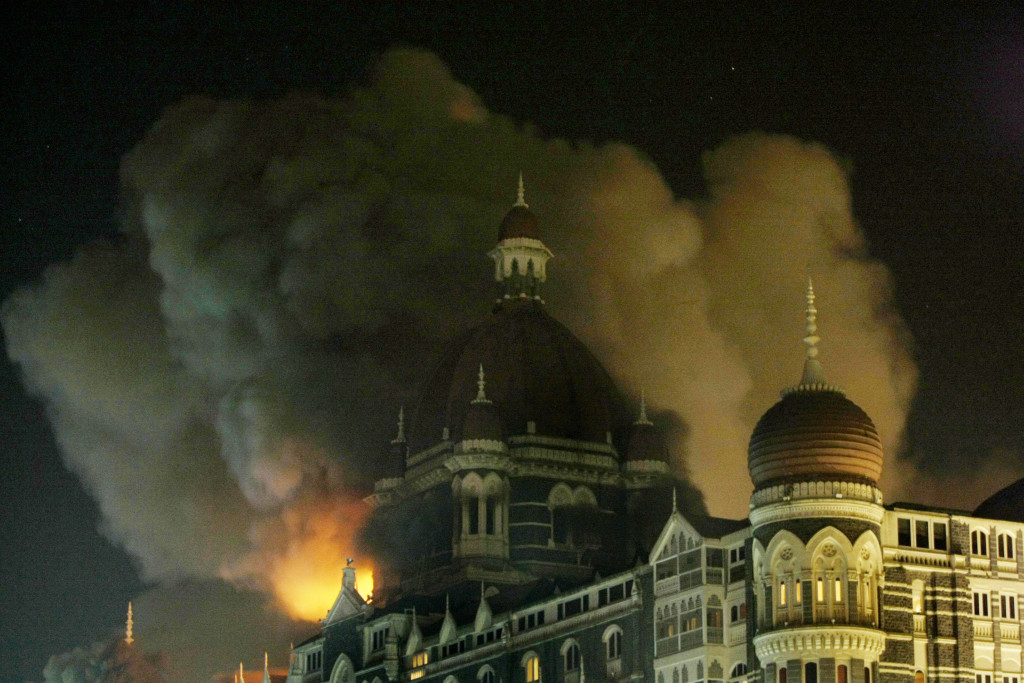
But it was a fundamentalist Islamist Pakistani group that launched a massive attack on India's financial hub in south Mumbai that brought home the extremist hatred of religious domination through jihad when a dozen coordinated attacks in 2008 shut the city down for three days while Indian security forces battled with murderous armed terrorists shooting and setting off explosives in a catastrophic scene of pandemonium and bloodshed, where in total 175 civilians, security personnel, and nine attackers, were killed. Bodies of many of the dead hostages showed signs of torture or disfigurement. 
 
https://www.pbs.org/wgbh/frontline/media/uploads/2015/11/1419184054_AP081127029528-1024x683.jpg
Thursday, Nov. 27, 2008, fire engulfs a part of the Taj Hotel in Mumbai, India. Teams of gunmen stormed luxury hotels, a popular restaurant, hospitals and a crowded train station in coordinated attacks across India’s financial capital,taking Westerners hostage and leaving parts of the city under siege. The terror lasted for three day which killed 195 people. (AP Photo/Gautam Singh)
"[India honours the ancient Jewish communities of India]: the Bene Israel of Maharashtra, the Cochini Jews of Keralam, The Baghdadi Jews of Kolkata and Mumbai, and the Bnei Menashe of the North East have enriched India."
"In my home state, Gujarat, there is a school set up by a Bene Israeli family -- Mister and Missus Best. It is an excellent school, and of course, it is called the Best School!"
Prime Minister Modi  
https://w2.chabad.org/media/images/1323/aQnL13232866.jpg?_i=_nF2BB495DED96754E4660F69A3A9F4712
Cochin Jews, c. 1900.
 
India is forced to arm itself in readiness for the prospect of defending itself against further violence from Pakistan. Like Israel, India is also a nuclear power ... as is Pakistan. Pakistan battles its own insurgent Islamists as it happens, as well as preparing itself for conflict with Afghanistan where skirmishes have already taken place between the two through accusations by Pakistan that Afghanistan is giving haven to Pakistan's Taliban that threaten Islamabad. The irony being that Pakistan had sheltered and its Intelligence Services had trained the Afghanistan Taliban.
 
According to the Stockholm International Research Institute, 34 percent of Israel's total arms exports between 2020 and 2024, valued at roughly $20.5 billion have gone to India. Israel supplies India with "missiles, seekers, radars, sensors, electronic warfare suites, UAV technologies, and a host of force multipliers." 
 
India represents one of the few geographies where persistent antisemitism has not made its way into the culture; Jews have lived safely in India for centuries; unlike the Jewish experience throughout Europe where diaspora Jews have lived for millennia. In India no pogroms threatened the security of Jews living there, no expulsions took place, nor state-institutionalized persecution. Much less ghettos imposed upon Jewish-Indian enclaves.  
 
Times of Israel
"Israel is often called the 'startup nation'." 
"Our aspirational spirit aligns naturally with Israel's innovation ecosystem. I see a lot of synergies in areas such as quantum technologies, semiconductors, and artificial intelligence."
"We are also working with Israel on creating cross-border financial linkages using our Digital Public Infrastructure." 
Prime Minister Modi 

Labels: , , , , ,

Friday, February 27, 2026

In Memory of the Fallen in a War of Criminal Attrition

https://i.cbc.ca/ais/864e4de0-4351-4ab9-8964-1395a80eba03,1771890379982/full/max/0/default.jpg?im=Crop%2Crect%3D%280%2C303%2C4241%2C2385%29%3BResize%3D860
People visit the graves of their relatives, who were killed during Russia's attack on Ukraine, as a large-scale light installation illuminates the Lychakiv cemetery in Lviv, Ukraine, on Feb. 23, 2026, marking the fourth anniversary of the full-scale Russian invasion. (Roman Baluk/Reuters)
 
"Looking back at the beginning of the invasion and reflecting on today, we have every right to say:We have defended our independence, we have not lost our statehood."
"[Russian President Vladimir Putin has] not achieved his goals."
"He has not broken Ukrainians; he has not won this war."
"I believe that stopping Putin today and preventing him from occupying Ukraine is a victory for the whole world. Because Putin will not stop at Ukraine."
"We'll do it [get our land back]. That is absolutely clear. It is only a matter of time. To do it today would mean losing a huge number of people - millions of people - because the [Russian] army is large, and we understand the cost of such steps. You would not have enough people, you would be losing them. And what is land without people? Honestly, nothing."
"And we also don't have enough weapons. That depends not just on us, but on our partners. So as of now that's not possible but returning to the just borders of 1991 [the year Ukraine declared its independence, precipitating the final collapse of the Soviet Union] without a doubt, is not only a victory, it's justice. Ukraine's victory is the preservation of our independence, and a victory of justice for the whole world is the return of all our lands."
Ukrainian President Volodymyr Zelenskyy 
https://www.vmcdn.ca/f/files/shared/feeds/cp/2025/02/0993367a5a21783cf511896c397a780d87fbcde26bb681abc64754b70f14b5ff.jpg;w=960
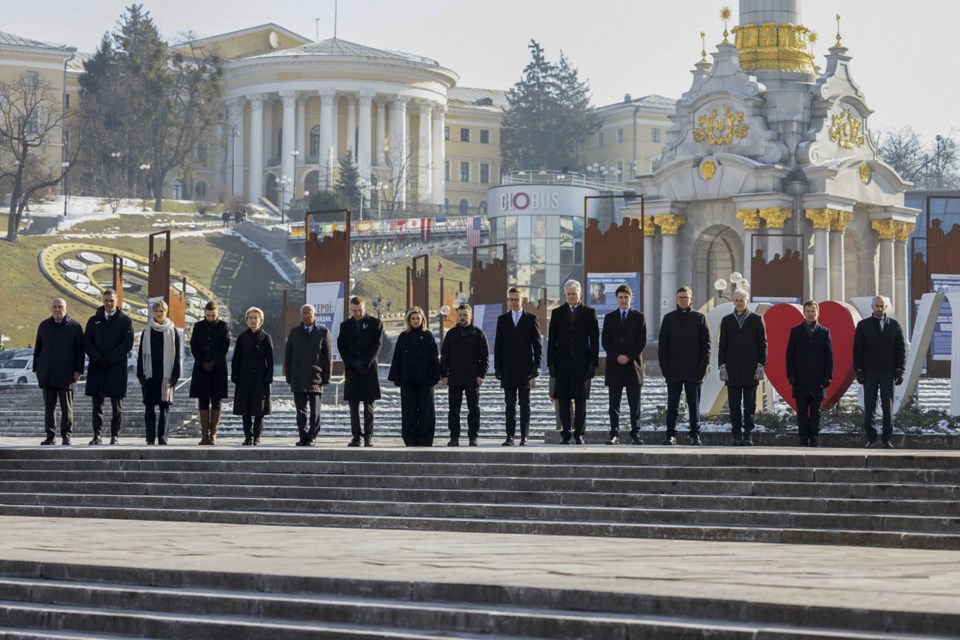
In this photo provided by the Ukrainian Presidential Press Office, European leaders attending the ceremony at the memorial to the fallen Ukrainian soldiers on Independence Square in Kyiv, Ukraine, Monday, Feb. 24, 2025. (Ukrainian Presidential Press Office via AP)
 
Over a dozen senior European officials arrived in Kyiv to help Ukraine mark the anniversary of the conflict imposed upon the country by Moscow. A conflict which has killed tens of thousands, a conflict that has disrupted life for millions of Ukrainians, both the internally displaced forced to find haven elsewhere within Ukraine and the millions more made refugees by the exigencies of war. Four years of conflict where a rabid aggressor has been held back by stout defence that morphed into a counter-offensive keeping the barbarians at bay.
 
Eastern European countries well know that if Ukraine falls, Putin's territory-hungry eye will look further into Russia's near-abroad, and they are on the menu. As it is, beyond well-placed concerns over the scale of Putin's territorial ambitions, the conflict has created instability in Russia's near-abroad target countries, feverishly supplying Ukraine with funding and war materiel, while at the same time modernizing their own conflict-imposed defence resources and strengthening ties with their neighbours.
 
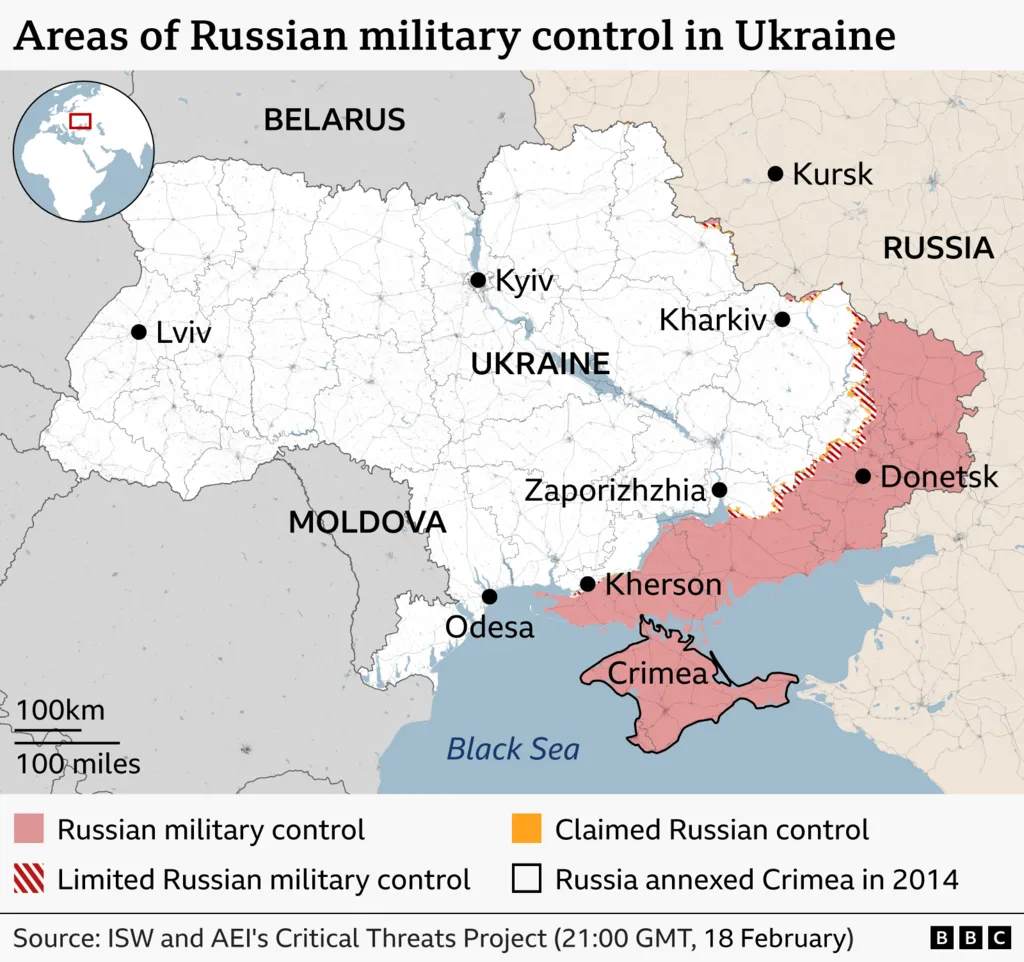
Russia, after initiating its 'special military operation'  managed to gain close to 20 percent of Ukrainian territory which Moscow has declared part of greater Russia, according to the Institute for the Study of War, while the past year of fighting has gained Russia a mere 0.79 percent of additional territory. Rather putting Putin's aims off kilter in his initial confident expectation that this would be a time-limited enterprise, tucking Ukraine back into Russia's pocket in a mere matter of weeks. 
 
Russia's aerial bombardments over the years have targeted Ukraine's cities throughout the country while Moscow keeps insisting it targets only military installations. Ukrainian civilians have been denied power and water time and again as basic civic infrastructure, including hospitals shopping centres and apartment blocks, become deliberate targets time and again in Moscow's efforts to demoralize Ukrainians. 
 
https://i.cbc.ca/ais/953c09e5-d9b8-4a60-8282-40d88e520e51,1771946932107/full/max/0/default.jpg?im=Crop%2Crect%3D%280%2C432%2C8298%2C4667%29%3BResize%3D860
A woman places flowers at the memorial to fallen Ukrainian soldiers in Independence Square to mark the fourth anniversary of Russia's full-scale invasion in Kyiv, Ukraine, on Tuesday. (Efrem Lukatsky/The Associated Press)
 
For its part, turning defence into offence, Ukraine has increasingly deployed long-range drones of its own technical design and increasingly more sophisticated and effective manufacture to strike Russian oil refineries, ports, bridges, ships, fuel depots and military logistics hubs well within Russia; over 1,000 kilometres beyond the border, reaching as far as Moscow. Negotiations led by the Trump White House have  yielded no relief as the war of attrition stretches toward its fifth year of combat.
 
Russia's demands of Ukraine feature the Donbas, the industrial heartland of eastern Ukraine mostly occupied by Russian Forces, while Ukraine continues to hold possession of a portion. For Russia to draw back its forces it demands that Ukraine comply with its demand to withdraw from the Donbas allowing 
Russia to annex it entirely as it did with the Crimean Peninsula in 2014. Ukraine must also surrender its weapons and reduce its armed forces, and never again attempt to join NATO; the conditions that Moscow seeks to impose.
 
Thousands of flags and portraits of the fallen in this war appeared at a memorial in Kyiv's central square. The Kremlin celebrated the fourth-year anniversary of its invasion when Kremlin spokesperson Dmitry Peskov stated that Moscow's resolute plans include the continuation of the invasion until Moscow's goals are accomplished; until Ukraine cedes vast areas of territory to Russia. 
 
 https://ichef.bbci.co.uk/news/1024/cpsprodpb/cc91/live/92ad03e0-1001-11f1-b048-c9424b2cf5fd.png.webp
  

Labels: , , ,

Thursday, February 26, 2026

Cultural Human Trafficking in Child-Sex Predation

SIU Director Joseph Martino said there are "no reasonable grounds" to believe the Peel police officers committed any wrongdoing in connection with the man's arrest and injury, saying that he was "satisfied" with the amount of force used, given the circumstances.
(Peel Regional Police)
"It's very surprising when you have an adolescent performing this. Whether it is an adult or a child, it's appalling."
"Human trafficking is such a psychologically and physically violent offence. I think it's one of the most harmful offences that's being perpetrated because of the trauma that survivors endure, sometimes for months or years."
"There is a demand. There is an interest in the community for people wanting to have  sex with children. We are doing proactive initiatives to prevent that."
"It takes a lot of guts for victims to come forward. We want them to come forward. They don't necessarily have to come forward to police, but talking to social services and getting themselves out of the place they've found themselves."
"Traffickers are using social media, like Snapchat, Instagram, TikTok, to communicate with young people to engage them and then offer opportunities to meet. And once they meet, they groom them."
"They provide them with gifts, they shower them with compliments, make them feel good about themselves and show them the good life."
"Then things change. The trafficker might say 'you owe me, and you have to do this to pay it back', or they might say, 'hey, can you do me this favour because I've been so good to you? And the favour might be to have sex with an older person for money."
"It is very much a psychological offence. They don't understand what they are getting themselves into. they think they're getting into a relationship with someone who loves them, but unfortunately, it is not true."
Det.-Sgt. Bob Hackenbrook, Peel Police Service Vice and Human Trafficking Unit 
 
This is happening. And what is  happening is not a reflection of what could be identified as 'Canadian values' in the sense that this type of social offence is not a common ingredient of the conventional Canadian psyche. It is also not a common occurrence within Canadian society. While predators exist everywhere that psychopaths can be found, the practise of stalking, grooming and trafficking young girls is a fairly recent phenomenon. And it is one that has a definite cultural background with racial dimensions. 
 
https://images.euronews.com/articles/stories/09/49/19/00/1366x768_cmsv2_4ab77c5e-c53e-5c23-857e-2b714c4d8ec6-9491900.jpg
The men in northern England were sentenced to jail terms from 12 to 35 years after sexually abusing and raping two girls from the age of 13.  AP Photo
 
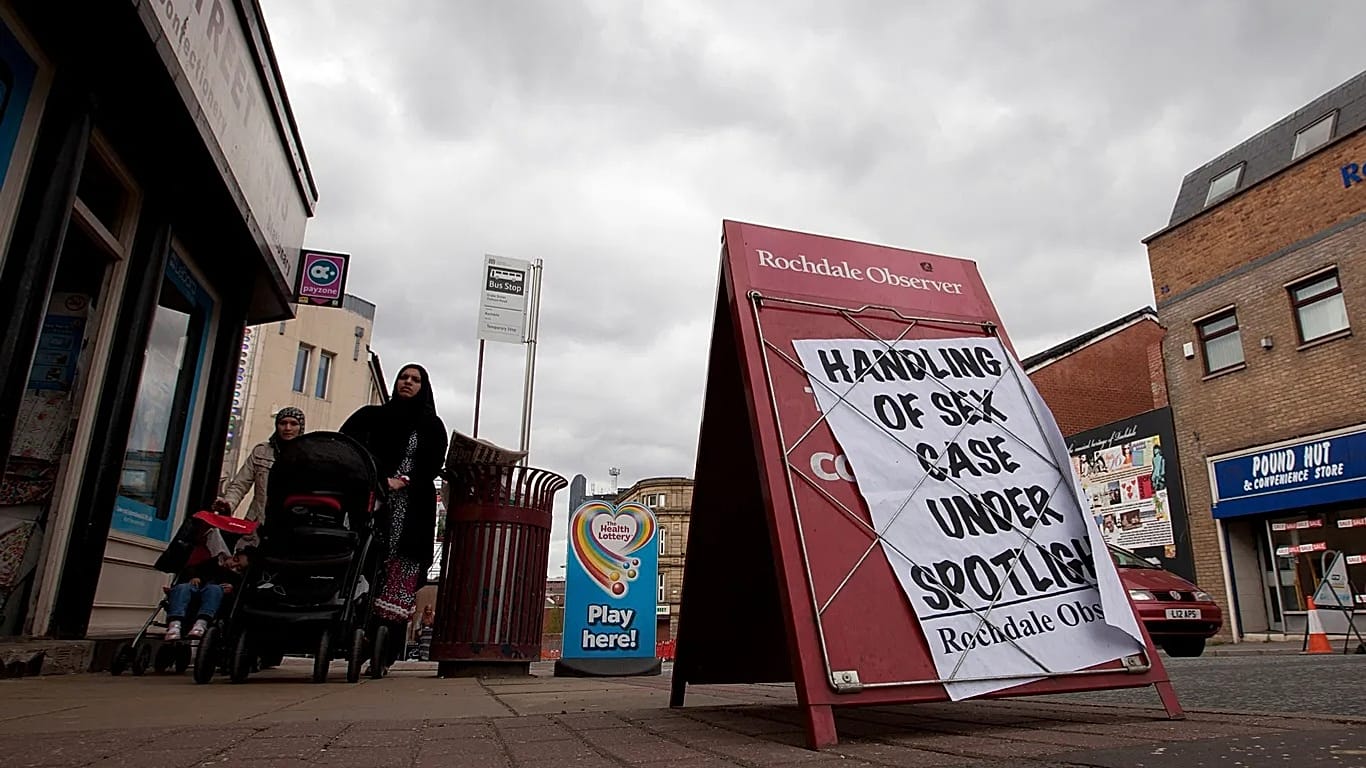
Grooming gangs are a common phenomenon in Britain, for example. Their prevalence and their tactics, their countless victims forced into the sex trade by unscrupulous monsters are acknowledged. Yet very little police action has taken place and the reason that this occurs is simple enough; an  unwillingness to confront the traffickers for fear of risk of being called out for racism. And that would be because this is a favoured tactic of 'racialized' people, for some of whom the practise has become business as usual.
 
https://ichef.bbci.co.uk/news/1024/cpsprodpb/cd15/live/c189b560-484b-11f0-ad73-b517cf483813.jpg.webp
Mohammed Shahzad, Mushtaq Ahmed and Kasir Bashir denied the offence charges brought against them in Britain   GMP/BBC
 
In the Toronto-area Peel Region, a 15-year-old boy has been accused of operating a child sex trafficking operation in and about the Toronto Metropolitan area, with girls as young as 11 years of age. Also arrested were three customers who Peel Regional Police have taken into custody to face sex charges. The police investigation revealed that girls aged 11 to 14 had been trafficked and sexually exploited. 
 
The suspects made use of coercion, manipulation and physical violence threats to influence and control the victims where violations of their human rights resulted in financial benefits to their exploiters. Peel Police found 32 victims under the age of 15, victimized through sex trafficking since 2022. Interest in child sexual abuse is a real and dangerous problem in Canadian communities, pointed out Det.-Sgt. Bob Hackenbrook, in charge of the Human Trafficking Unit. 
 
In an undercover operation last year dubbed project Juno,Peel police posted an advertisement offering sex with an underage teen that resulted in investigators facing a flood of eager calls amounting to an average of 100 such calls daily for several weeks. Police made 35 arrests on that occasion, on charges of communications for the purpose of having sex with a person under 18, by the time the operation was shut down. 

Peel has the highest percentage of racialized people in the Greater Toronto Area (GTA). 

  • 69% of people in Peel identify with a racialized group.
    • By comparison, just 34% of Ontarians and 27% of Canadians overall identify with a racialized group.
  • Since 2006, the racialized population in Peel increased 72%. 
"The demographics were astounding" said Officer Hackenbrook. From several Ontario cities and towns, businessmen, students, construction workers, retirees and a college teacher were among those responding. "It was very alarming. And a lot them were married, so their families got a rude awakening when they went to bail court the next day."  
The 15-year-old male offender in the current arrest, cannot be identified by law due to his age, despite that he is charged with two counts of trafficking in persons under age 18, three counts of procuring a person under age 18, two counts of receiving a benefit from human trafficking, two counts of material benefit from sexual services by a person under age 18, and three counts of exercise control, direction, or influence.
 
Three of his clients, Mohamad Omar Al-Saleh, 21, from Toronto, Mustafa Abdo 22, from Toronto, and Yousif Al-Gburi, 20 from Mississauga, each stand charged with sexual assault of a female under age 16, sexual interference, and obtaining sexual services of a person under the age of 18 for consideration. It is the minor who recruited/induced young girls into the sex trade, profiting from them, while the adult males were clients whose indecent contact violated the young girls' human rights. 
 
Mohamad Omar Al-Saleh, 21, from Toronto; Mustafa Abdo, 22, from Toronto; and Yousif Al-Gburi, 20, from Mississauga have all been arrested and charged in connection with a human trafficking investigation. (Peel Regional Police handouts)
 
Photographs of the three adults were released by police, but the Youth Criminal Justice Act forbids identifying a minor charged with a crime, leaving name and likeness out of the public eye. One of the young victims two years earlier had reached out for help, leading police to open an investigation. That there are additional victims seems likely to investigators who have reached out to anyone with information to contact police. 
 
Part of the modus operandi of these human smuggling operatives is to move their victims frequently to other locales, and to keep them from having any contact with friends and family. The situation of the growing prevalence of sexual predators and their abused victims has impelled Peel Police to host a provincial human trafficking symposium with the expectation that survivors, victim services providers, police, justice and social services officials, and politicians across Ontario will attend to discuss experiences and help to coordinate greater efforts to disrupt human trafficking.
 
There is in fact, a toll-free, around-the-clock Canadian Human Trafficking Hotline: 1-833-900-1010 


Labels: , , ,

Wednesday, February 25, 2026

Hargeisa, Republic of Somaliland


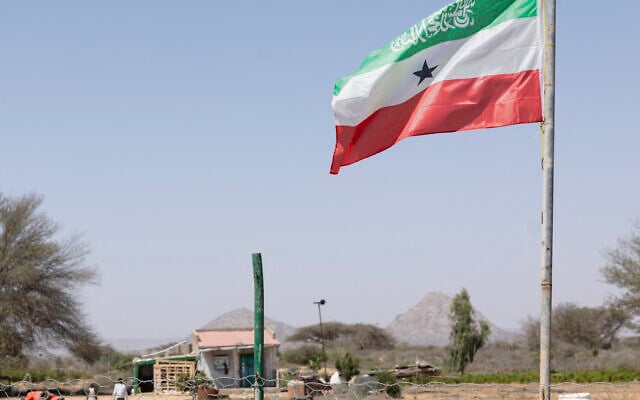
The flag of Somaliland seen at a fruit farm between the capital city of Hargeisa and Port city of Berbera, Somaliland, on February 19, 2026. (Tony KARUMBA / AFP)
"The recent recognition of Somaliland as a sovereign state by Israel, the first and only country to have done so in 34 years, has reignited international debate, drawing attention not only to a long-standing post-colonial anomaly but to the lived reality of the people of Somaliland. Too often reduced to a geopolitical abstraction, Somaliland is first and foremost a society that has spent more than three decades building stability, democratic institutions, and a shared civic identity despite lacking formal statehood."
"This unresolved status is inseparable from the legacy of colonialism. The modern borders of the Horn of Africa, like those of much of the continent, were drawn in European capitals with little understanding of, or regard for, the peoples who inhabited those territories. This externally imposed cartography fractured historical communities, fused incompatible ones, and laid the foundations for conflicts that persist to this day. Africa is not the empty reservoir of resources or the passive geopolitical playground it has been treated as throughout colonial, Cold War, and neo-colonial eras alike. It is a continent of diverse societies, rich histories, and deeply rooted cultural identities that have long been constrained by the political frameworks imposed from outside and by the continued influence of external powers."
"In this context, Somaliland’s situation is emblematic of what it means to be an unrepresented state today: functioning governance without recognition, democratic legitimacy without a seat at the table, and a population whose political will is acknowledged at home but ignored internationally. In a region marked by protracted conflict and chronic insecurity, Somaliland stands out not as a legal anomaly but as a community that has demonstrated resilience, coherence, and the capacity to govern, despite an international system still shaped by the colonial legacy that once defined it."
Elena Artibani, Academy Analyst Assistant, UNP Academy (Unrepresented Nations and Peoples Organization)
https://encrypted-tbn0.gstatic.com/licensed-image?q=tbn:ANd9GcR_4TvNuZ9s1S3E4a6FBZ9Cg6GCoo7WmW3nD-CnbimbPVcSTio33joen7NwsJZAxJXO61sZRmu_e7Cz4kPtTLLMgi4&s=19
Hargeisa, capital of Republic of Somaliland
 
 Somaliland is an authentically sovereign nation, not part of Somalia, and awaiting world recognition for its democratic credentials, its peaceful existence in the Horn of Africa surrounded by nations embroiled in conflict -- most particularly Somalia, a functionally unstable, violence-prone state. The Islamist groups that hunt down and kill other Muslims who reject the fundamentalist demands of Sharia law are a plague in Somalia, but are non-existent in Somaliland. The U.S. military recently conducted  an aggressive bombing campaign in Somalia against the world-threatening presence of jihadist-Islamist predators.
 
The U.S. Africa Command targeted 150 hits in Somalia to eradicate the presence of those dangerously militant terrorist groups. U.S. President Donald Trump is less than convinced of Somaliland's presence as a completely separate nation, aspiring to be recognized as the African continent's 55th sovereign country.
For its part, the state of Israel had no problem recognizing Somaliland as an independent sovereign nation, sharing democratic values of freedom and rule of law. Both countries use their natural resources and their people-power to meet their prosperous futures. 
 
And when Israel formally recognized Somaliland in response to its search for recognition from the global community, emphasizing its independence from Somalia, Israel was the first nation in the world to form an alliance with Somaliland, in full recognition. Almost instantaneously, the world responded, with China, France, Britain, Denmark, Russia and the African Union criticizing Israel's move of diplomatically legitimizing Somaliland's independence. Turkey, Iran, Saudi Arabia and Egypt made it clear that they deplored Israel's action verifying the Republic of Somaliland's right to declare itself independent of Somalia.
 
Hargeisa's street markets where large quantities of money that money changers stack around them without fear of theft.

Regional countries in the Horn are concerned with access to the Red Sea and the Gulf of Aden, considered among the most vital waterways worldwide for global shipping trade. Yemen's Houthi rebels linked to the Islamic Republic of Iran in its global Shiite jihad, have been particularly troublesome for global shipping in their hijacking of shipping vessels, in particular targeting any shipping that may have an Israeli component, linked to the Tehran-led Shiite terrorist axis supporting the Hamas invasion of October 7, 2023 in southern Israel where sadistic barbarism and mass slaughter led Israel to invade Gaza to eradicate Hamas terrorists.
 
According to analysts, Israel's recognition of Somaliland is being interpreted as a measure whereby the conflict with the Houthis can be mitigated. Israeli foreign policy expert Asher Lubotzky at the University of Houston in Texas, stated his interpretation that a greater Israeli footprint in Somaliland could assist in the deterrence of weapons smuggling by the Houthis into Yemen. Israel and Somaliland in their mutual recognition, however, are looking toward agreements in security, trade, technology and agricultural techniques.
 
According to Israeli Prime Minister Benjamin Netanyahu, the agreement with Somaliland reflected the spirit of the Abraham Accords, that series of agreements since 2020 that have established amicable relations between the Jewish state and Muslim-majority countries that include Bahrain, Morocco and the United Arab Emirates. Just as Israel defends Somaliland's right as a sovereign state conducting diplomacy, so too does the United States defend Israel's right to do likewise, even as the U.S. itself holds back yet from recognizing the Republic of Somaliland.  
 
Afar tribe cultural show in Hargeisa
 
Somaliland is a federal republic with a series of  semiautonomous regions. The country broke from Mogadishu in 1991 following a war of independence, during which Hargeisa, Somaliland's capital, and other cities were bombed by the Barre regime. Since then, support by the United Arab Emirates, and relations with Ethiopia and Taiwan have buoyed Somaliland's prospects for future prosperity. The UAE invested in the development of a modern port in Berbera on the Gulf of Aden in recent years. In response, Somalia retaliated by canceling all contracts with the UAE, a move in which it is Somalia that loses. 
 
China is enraged over Hargeisa's decision to maintain ties with Taiwan. Ethiopia, on the other  hand, signed a 2024 deal to build a naval facility on Somaliland's coastline, in exchange for recognition. 
 
Formalities and diplomacy have moved apace between Israel and Somaliland, with Israel's foreign minister, Gideon Saar, visiting Hargeisa in January. And according to Mohamed Hagi, Somaliland's minister of state for foreign affairs, Somaliland would soon join the Abraham Accords. Reciprocal embassies are shortly to be opened and business leaders in Israel are viewing investment possibilities with the Somaliland government.
 
On the cusp between rural tradition and urban modernity, donkey carts can still be seen on Hargeisa streets amidst vehicular traffic.
 

Labels: , , , , , , ,

Monday, February 23, 2026

Reducing the Nature of Nuclear Proliferation to the Status of State Profit

"[The documents raise] concerns that the Trump administration has not carefully considered the proliferation risks posed by the proposed nuclear cooperation agreement with Saudi Arabia or the precedent this agreement may set." 
"[The document contends that reaching a deal with the kingdom] will advance the national security interests of the United States, breaking with the failed policies of inaction and indecision that our competitors have capitalized on to disadvantage American industry and diminish the United States standing globally in this critical sector."
"Nuclear cooperation can be a positive mechanism for upholding nonproliferation norms and increasing transparency, but the devil is in the details."
"This suggests that once the bilateral safeguards agreement is in place, it will open the door for Saudi Arabia to acquire uranium enrichment technology or capabilities — possibly even from the United States."
"Even with restrictions and limits, it seems likely that Saudi Arabia will have a path to some type of uranium enrichment or access to knowledge about enrichment."
"It behooves Congress [to provide a check on the administration's power to strike an agreement with the kingdom and] consider not just the implications for Saudi Arabia, but also the precedent that this deal will set, and vigorously examine the terms of the proposed 123 Agreement." 
Kelsey Davenport, director for non-proliferation policy, Arms Control Association, Washington 
 
"[If Iran obtains the bomb], we will have to get one".
[A weapon would be necessary] for security reasons, and for balancing power in the Middle East, but we don't want to see that." 
Saudi Crown Prince Mohammed bin Salmon
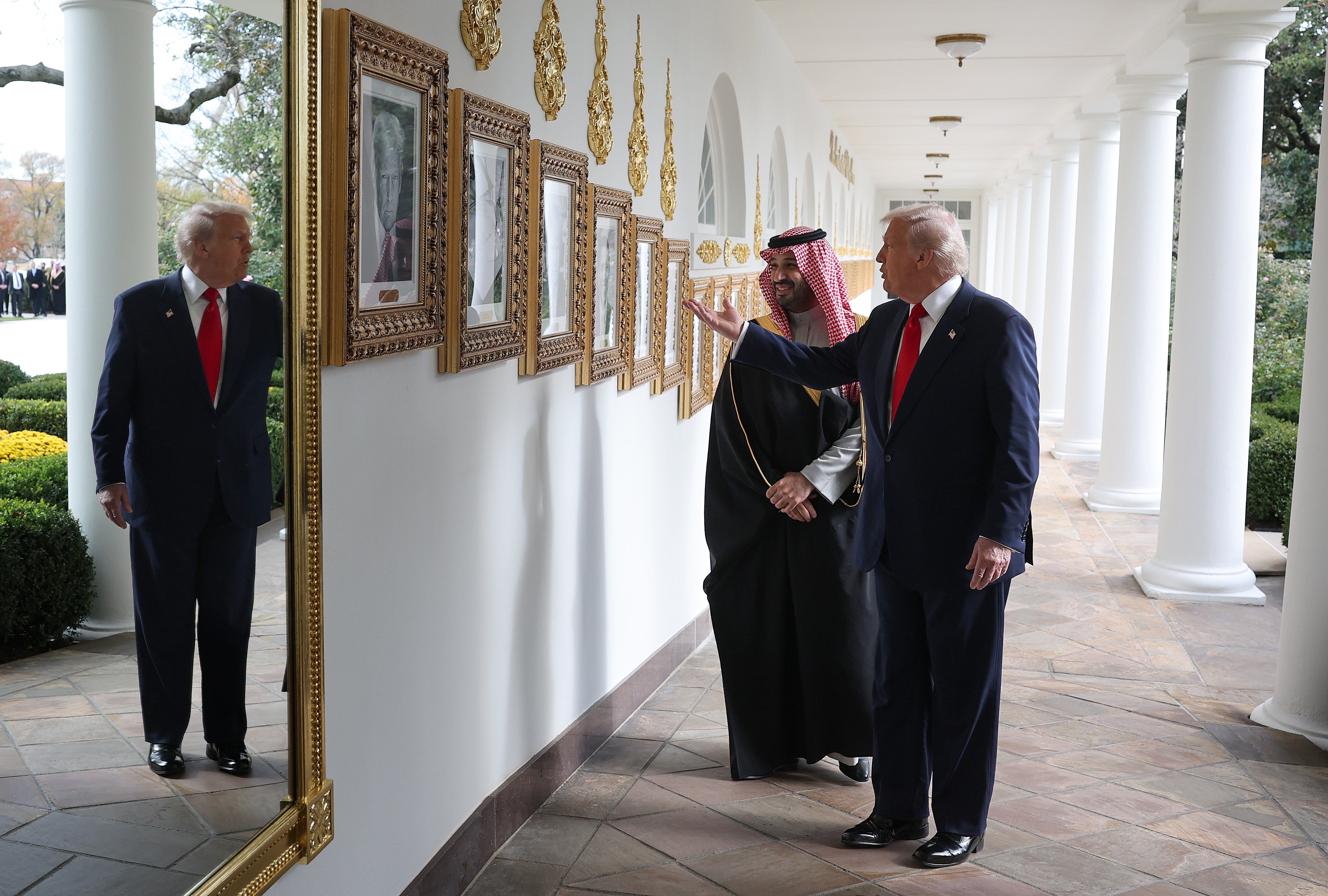
<p>President Donald Trump (R) shows Crown Prince and Prime Minister Mohammed bin Salman of Saudi Arabia the "Presidential Walk of Fame" as they walk on the colonnade at the White House on November 18, 2025 in Washington, DC</p>
President Donald Trump (R) shows Crown Prince and Prime Minister Mohammed bin Salman of Saudi Arabia the "Presidential Walk of Fame" as they walk on the colonnade at the White House on November 18, 2025 in Washington, DC   Getty Images
 
It could be done differently. There is the example of the United Arab Emirates neighbouring Saudi Arabia, which signed a '123 agreement' with the United States. With that agreement by the UAE and the U.S., with South Korean assistance the Barakah nuclear power plant will be built. The United Arab Emirates however, unlike Saudi Arabia, expressed no interest in achieving enrichment as part of its agreement. Instead it chose to opt for nuclear power generation for energy use, signing an agreement considered to be the 'gold standard' for nations seeking atomic power, according to nonproliferation experts. 
 

However, it seems the Trump administration has decided that Saudi Arabia could after all have some form of uranium enrichment under the proposed agreement with the U.S. as suggested by congressional documents. Raising proliferation concerns by arms control groups, in the midst of an atomic standoff between the Islamic Republic of Iran which has always denied its nuclear program would have a military component, now facing off against an American ultimatum to surrender all current and future prospects of nuclear research and production.

Any spinning centrifuges within Saudi Arabia, warn non-proliferation experts, could lead to a potential weapons program for the kingdom. A certain likelihood, given past assertions by Saudi Arabia's Crown Prince whose past statements were emphatic that should Tehran achieve the production of atomic bombs, he would pursue a similar program for Saudi Arabia. As it is, Saudi Arabia and Pakistan signed a mutual defence pact last year following Israel's attack on Qatar targeting Hamas officials.

Pakistan's own expertise in producing atomic bombs for its own arsenal could certainly ensure that under that mutual defence pact, a sharing of nuclear know-how could consolidate that pact. At the time of the signing, Pakistan's defence minister said as much when he declared that his country's nuclear program "will be made available" to Saudi Arabia should it be required. A declaration that some view as a threat meant to draw Israel's attention that it will not long remain the Middle East's sole nuclear-armed state.
 
The Trump administration, it seems, is aspiring for 20 nuclear business deals with world nations, one that includes Saudi Arabia, a deal that could be valued in billions for U.S. coffers. Perhaps the administration is that short-sighted it is incapable of looking beyond the wealth it could accrue to itself, to the situation as it appears to the non-proliferation crowd; lighting a match in the gas-saturated environment of the Middle East where conflicts are constant and a conflagration of immense significance could be enabled in an area where tribal and sectarian conflict and bloodshed are business as usual.
 
The United States views with its jaundiced eye competitors such as China, France, Russia and South Korea among those leading nations selling nuclear power plant technology. While the draft deal            would in theory have the U.S. and Saudi Arabia enter safeguard agreements with the International Atomic Energy Agency to include oversight of the "most proliferation-sensitive areas of potential nuclear co-operation", listing enrichment, fuel fabrication and reprocessing as potential areas of concern, there is the sobering example of years of fruitless negotiation with Tehran. 
 
https://assets.cfr.org/images/w_768/t_cfr_3_2/f_auto/v1758115503/IranNuclear_A/IranNuclear_A.jpg?_i=AA
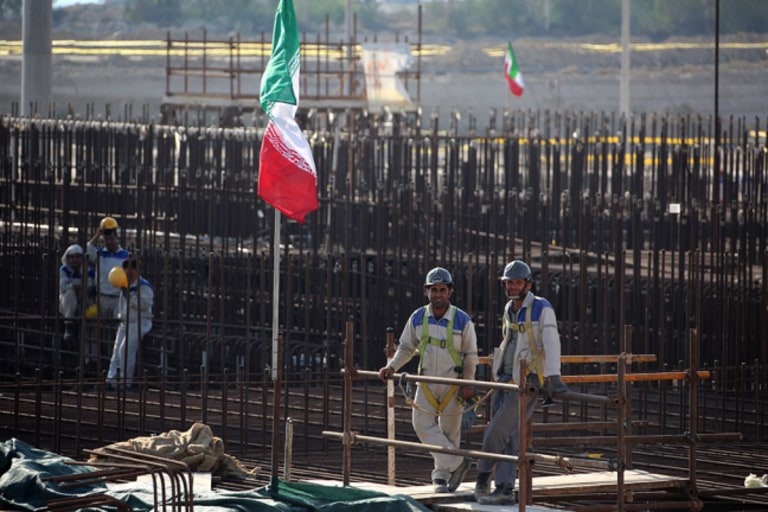
Workers on a construction site at Iran’s Bushehr nuclear power plant in November 2019. Atta Kenare/AFP/Getty Images
 

Labels: , , , , ,

DeLiberation Day in the United States of America

"Their decision is incorrect. But it doesn't matter because we have very powerful alternatives."
"Today, I will sign an order to impose a 10 percent global tariff under Section 122, over and above our normal tariffs already being charged."
"And we're also initiating several section 301, and other investigations to protect our country from unfair trading practices of other countries and companies." 
"I am absolutely ashamed [of some judges who ruled against me]; disloyal to our Constitution. Lapdogs."
U.S. President Donald J. Trump
 
"The Government reads IEEPA [International Emergency Economic Powers Act] to give the President power to unilaterally impose unbounded tariffs. On this reading, moreover, the President is unconstrained by the significant procedural limitations in other tariff statutes and free to issue a dizzying array of modifications at will."
"All it takes to unlock that extraordinary power is a Presidential declaration of emergency which the Government asserts is unreviewable."
"IEEPA's grant of authority to 'regulate ... importation' falls short. IEEPA contains no reference to tariffs or duties. The Government points to no statute in which Congress used the word 'regulate' to authorize taxation .. we  hold that IEEPA does not authorize the President to impose tariffs."
United States Chief Justice John Roberts
 
"The Trump tariffs amount to an average tax increase per U.S. household of $1,000 in 2025 and $1,300 in 2025."
"The Trump tariffs are the largest U.S. tax increase as a percent of GDP [0.54 [percent for 2026] since 1993."
Tax Foundation
The Supreme Court just struck down most of Trump’s tariffs. What’s next?
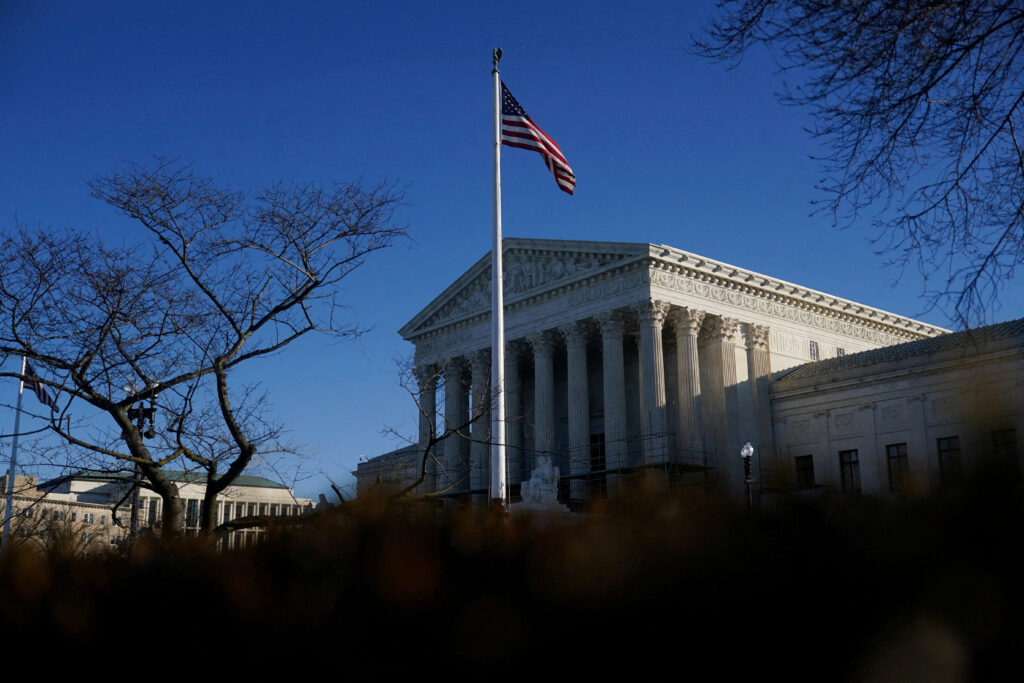
Supreme Court of the United States of America   Call it DeLiberation Day. On Friday, the US Supreme Court ruled in a 6-3 decision that the US president does not have the power to unilaterally impose tariffs under the International Emergency Economic Powers Act (IEEPA)  Atlantic Council
 
When Donald Trump took office in his first term at the 2017 White House he made it clear as a business real estate tycoon that the 'art of the deal' was his forte. His America First agenda and antagonism to world bodies, including those that regulate economics, international cooperation, Western alliances in defence sent a cautionary message abroad. However, it wasn't  until his second term at the helm of the most powerful nation on Earth that the quakes of his decision-making rumbled through the international community.
 
Declaring that the United States of America had too long propped up foreign nations, in a leadership role that had for too long been taken for granted by other nations who favoured riding on America's coattails, while failing to fairly contributing their share, the world was put on notice that the trust and reliance they had placed for the past 80 years on the leadership of the United States was at a troubling crossroad. Then came the hammerblow of Mr. Trump's rejection of global trade and investment that he felt favoured other countries over the well-being of the United States.
 
To correct that monumental assault on American economic sensibilities in trade imbalances, the surprising issue of sudden steep tariff announcements roiled the global financial world as friend and foe alike were placed on notice that the U.S. was no longer content to be the international community's rescuer in shoring up the economies of other countries that preyed on that of the United States. And to 'legalize' that impulsive decision to make enemies of friends and friends of enemies, Mr. Trump called upon the authority of a putative national emergency law.
 
Free trade suddenly became a dirty word in the United States along with free markets. The very drivers of enormous poverty reduction that rescued 2.3 billion people globally living below the poverty line in 1990, reducing that figure in 2025 to 831 million, even taking into account population increase."The proponents of quotas say 'Free trade is fine in theory but it must be reciprocal. We cannot open our markets to foreign products if foreigners close their markets to us"; a concept that the indomitable Milton Friedman responded to with: "The arguments sound reasonable. It is, in fact, utter nonsense. Exports are the cost of trade, imports the return from trade, not the other way around".  
 
https://i.cbc.ca/ais/381cac08-a901-4b80-a5a4-90074eb794c5,1771687466322/full/max/0/default.jpg?im=Crop%2Crect%3D%280%2C209%2C3936%2C2214%29%3BResize%3D860
Containers are stacked at the Port of Long Beach in California on Friday, the day the U.S. Supreme Court struck down President Donald Trump's tariffs. The refunds that do get issued as a result of the decision will take 12 to 18 months to roll out, experts estimate. (Damian Dovarganes/The Associated Press)
"The court's decision is welcome news for American importers, the United States economy, and the rule of law, but there's much more work to be done."
"Most immediately, the federal government must refund the tens of billions of dollars in customs duties that it illegally collected from American companies pursuant to an 'IEEPA tariff authority' it never actually had."
Scott Lincicome, Cato Institute 

Labels: , , , ,

Sunday, February 22, 2026

Canada's Overstretched Migrant Population Numbers

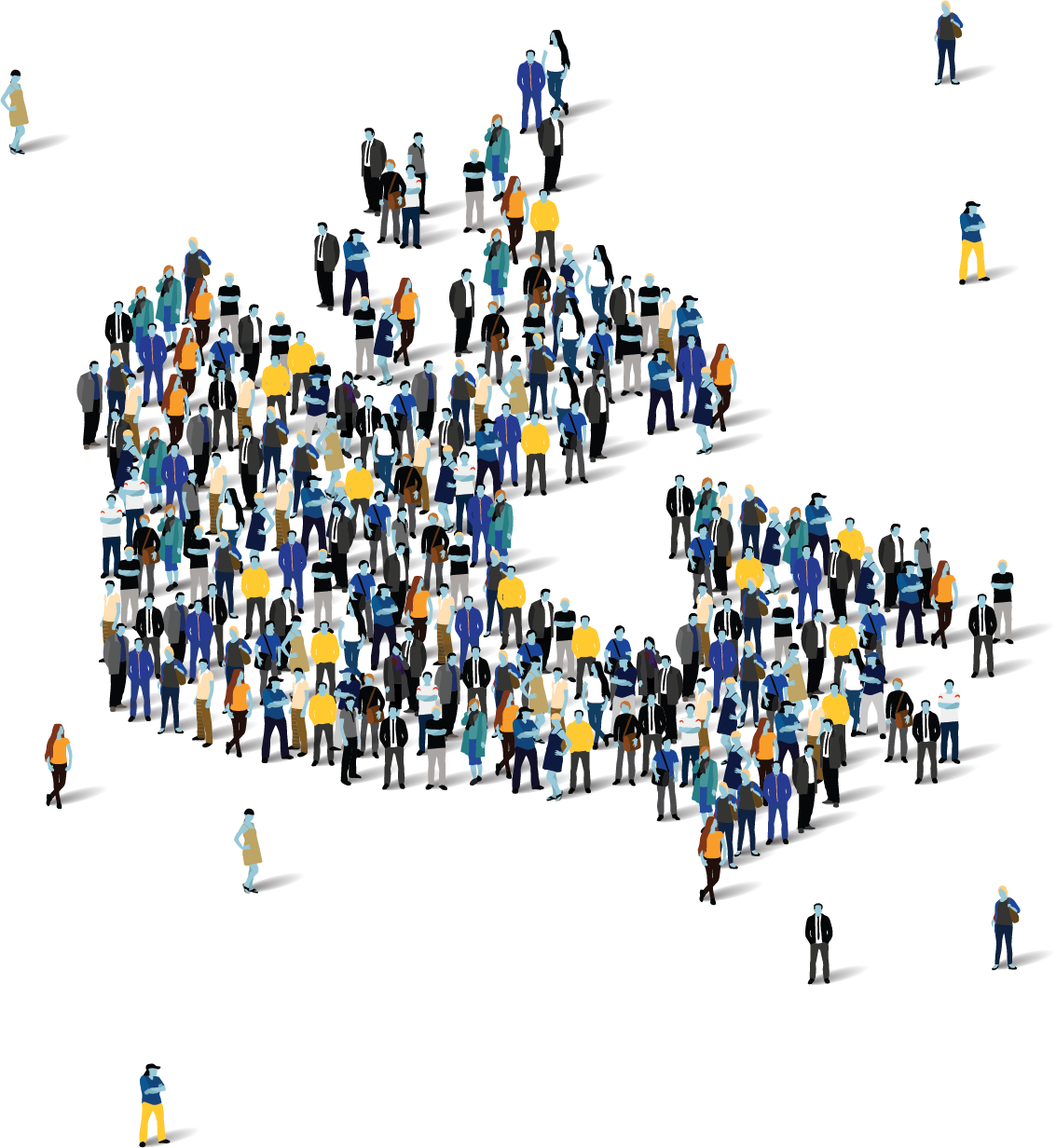
"Between January 1, 2019 and February 28, 2023 ... the Immigration Review Board accepted 24, 599 asylum claimants into Canada without questioning them."
"That means that a person from a country on the IRB's Country List can enter Canada, make a claim for asylum, and receive a positive determination in the mail, without being asked a single question."
"Some asylum seekers who present a security risk to Canada may be identified only through in-person questioning at a hearing. Careful questioning can reveal inconsistencies in complex or fabricated accounts."
"The provenance of documents can also be tested at a hearing by asking questions about them. There is no substitute for this process."
C.D. Howe Report. Author James Yousif, former director of policy, Immigration, Refugees and Citizenship Canada 
 
 
In coming months, two million temporary migrants in Canada will be losing status with the expiration of their visas. In response a campaign headed by a union has emerged, demanding that all of those involved be permitted to remain in Canada permanently. A new group labelling itself the United Immigrant Workers Front has announced plans for its inaugural rally to be held in Brampton, Ontario. Group organizers cited pending expiration of two million visas, expressing their belief that every one of them should have their permits extended, to open a "path to permanent residency"
 
"Let's build a political workers movement that fights for the interest of all workers regardless of citizenship status", a caption in a video posted to Instagram states, following a wave of demonstrations similarly calling for migrants on expiring visas to be kept in the country, that took place in Quebec. The provincial government is set to phase out its Programme de l'experience Quebecoise that previously fast-tracked international students and foreign workers toward permanent residency. A much more selective skills-based nominee program is set to replace it. 
 
As a result of this change in Quebec the Union of Quebec Municipalities, together with several business and labour unions are now leading a pressure campaign urging that the migrants be allowed to "continue their lives here". They, in turn are supported by many of Canada's largest unions and labour organizations publishing literature that demands millions of temporary migrants be given permission to remain in Canada. Shortly after the Liberal government spoke of its intention to minimize temporary migration rates, a communique titled "migrant workers in Canada deserve access to permanent residency and citizenship" was issued by the Canadian Labour Congress.
 
A pair of workers in overalls use equipment inside a manufacturing facility.
The difficulty of finding workers to fill jobs is leading some companies to hire refugees living internationally through the federal government's Economic Mobility Pathways Pilot, but the program's processing times are now increasing. (Sue Goodspeed/CBC)
 
Statistics Canada in 2022 tracked 1.4 million foreign nationals living in Canada as 'non-permanent residents'. By 2024 that number surged to 3.2 million, with temporary residents representing 7.5 percent of the entire population of Canada. This occurred when the federal government dropped quotas and restrictions on categories from foreign student visas to Temporary Foreign Worker admissions. At last count by Statistics Canada, temporary migrants number 2.8 million. 
 
In other words, about one in every 15 people in Canada is a non-permanent resident, whereas a decade earlier that figure was close to one in every 50. In admitting that skyrocketing temporary immigration's negative effects on civic society, with a scarcity of  housing, a burden on the social welfare network, and a strain on Canada's universal health care system, by November of 2025 the government stated that temporary migration "far exceeded our ability to welcome people and make sure that they had good housing and services".
 
In fact, the soaring price of housing has placed home ownership out of the bounds of all young Canadians. In addition to which employment prospects for Canadian youth have plummeted. Greater numbers than ever cannot access a family doctor. And hospital emergency rooms are overwhelmed, with fewer health care workers able to look after the medical needs of a soaring population. Even the 2025 federal budget stated that "unsustainable" immigration had "put pressure on housing demand" and crowded younger Canadians out of the job market.
 
https://imagedelivery.net/rCY_-t_NaBnc_UkEr8yoCA/a21dd580-2de9-4da2-62ef-28a782e41600/instory
Photo credit: 123RF
 
"Managed immigration growth is now helping to stabilize labour-market conditions and is  expected to support better outcomes for youth", the statement went on. The government now has altered its official goal to curb temporary migration so that non-permanent residents represent five percent of the total population in Canada; roughly two million in total. On the other hand, the reality is that Canada is limited in its capacity to remove temporary migrants who may refuse to voluntarily leave the country.
 
Canada Border Services Agency has a limited capacity to remove people who overstay their visas. Total removals last year came to about 22,000. Another 4,000 "inadmissible" people were refused entry. As for Immigration Citizenship and Refugees Canada, it has no official documentation on when temporary migrants leave the country. 
 
https://static01.nyt.com/images/2024/10/08/multimedia/17int-canada-population/00canada-immigration-08-wqpl-superJumbo.jpg?quality=75&auto=webp
Canada begins to shrink an overburdened population numbers
 

Labels: , , , , ,

Saturday, February 21, 2026

In Putin's Rapacious Territorial Sights

"To prevent the Ukrainian national movement from growing, the Russian state also banned Ukrainian organizations from 'both civil society and the body politic ... as a guarantee against political instability'."
"In 1876, Tsar Alexander II issued a decree outlawing Ukrainian books and periodicals and prohibiting the use of Ukrainian in theatres, even in musical libretti. He also discouraged or banned the new voluntary organizations and provided subsidies to pro-Russian newspapers and pro-Russian organizations instead."
"The sharp hostility to Ukrainian media and Ukrainian civil society later espoused by the Soviet regime -- and, much later, by the post-Soviet Russian government as well -- thus had a clear precedent in the second half of the nineteenth century.:
"Industrialization deepened the pressure for Russification as well, since the construction of factories brought outsiders to Ukrainian cities from elsewhere in the Russian empire. By 1917 only one-fifth of the inhabitants of Kyiv spoke Ukrainian."
"The discovery of coal and the rapid development of heavy industry had a particularly dramatic impact on Donbas, the mining and manufacturing region on the eastern edge of Ukraine. The leading industrialists in the region were mostly Russians, with a few notable foreigners mixed in: John Hughes, a Welshman, founded the city now known as Donetsk, originally called 'Yuzivka' in his honour. Russian became the working language of the Donetsk factories. Conflicts often broke out between Russian and Ukrainian workers, sometimes taking the 'most wild forms of knife fights' and pitched battles."
The Ukrainian Quest, Red Famine, Anne Applebaum 
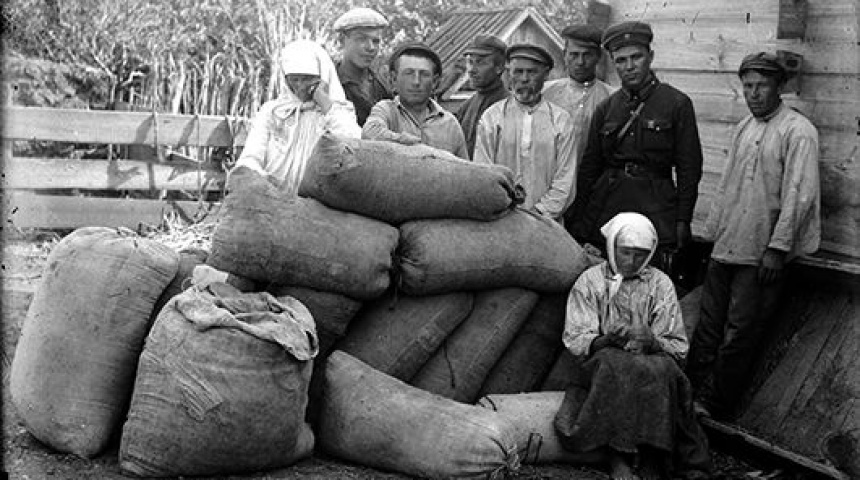
Селяни на фоні відібраних у них мішків з харчами
Mass starvation, Holodomor history, Holodomor Museum
 
Ukraine, as far as Russia has always been concerned, is merely a suburb of Russia. Russia's 'little brother' as it were. And Russia never hesitated to exploit the richness of Ukraine's natural resources for its own use, as it did during the dreadful period of the famine now known as the Holodomor, considered by modern historians to represent an early 20th century genocide. Ukraine was exploited by Russia, by Poland, by Germany, none of which considered it a nation, much less one that had any right or reason to be sovereign.
 
https://encrypted-tbn0.gstatic.com/images?q=tbn:ANd9GcQ39RRvGLiIrHI7yHEnLJ31SES9r-Gg5Y5CiSmgsJ4SPGu4g6HwzgR-h7M2heda66KO48YqW5RviAlUQbRhIiHimy3uv5xsjkR1WGT1Pgj7KA&s=10

In 2014, Moscow indulged Russian-speaking Ukrainian separatists, aiding them in armed hostilities against the government in Kyiv in their claims that the Donbas belonged to them, and as such remained an integral part of Russia. Russian troops disguised as separatists took the opportunity to occupy coveted Crimea and annexed it from Ukraine. Vladimir Putin waited another few years before embarking on a full-scale invasion of Ukraine in February of 2022.  
 
Since then, Russian troops have attacked and fought Ukrainian defenders of the Ukrainian homeland. The Kremlin is fond of stating that its missiles only target military sites, when in fact, over a period of four years, missile and drone attacks have targeted civilian sites, from hospitals and schools, domestic energy stations to apartment blocks, killing thousands of civilians.  Ukrainian cities and towns have been devastated by these massive night-time attacks, there are ruined and empty towns throughout the country with millions internally displaced and many millions more made refugees.
 
https://now.tufts.edu/sites/default/files/styles/xlarge_1920w_1280h/public/uploaded-assets/images/2025-01/250108_ukraine_war_year_two_lg.jpg?h=06f6671c&itok=l-wGKF2o

“I expect the war to continue until there is some sort of clear winner and loser on the battlefield,” says Oxana Shevel. Ukrainian artillerymen shooting 122 mm howitzer D-30 into Russian positions near Bakhmut, Donetsk region. Photo: Shutterstock 

"As long as there is an armed anti-Russia on Ukrainian territory, there can be no peace."
"I don't think anyone had any big hopes that the talks would end in success. The positions are very, very far from each other."
"The idea of territorial swaps for peace is not Russia's idea. It is Trump's."
Sergei Markov, pro-Kremlin political analyst  
Russian President Vladimir Putin's stated reason for invading Ukraine was the Russian obligation to save Ukraine from the neo-Nazi government in Kyiv that was planning to attack Russia. Internationally law-abiding Russia was embarked on a mission to rescue Ukrainians from the sinister bosom of their fascist government. Vladimir Putin's territorial-grab-lust has inspired Ukrainian pride in their nation. Rather than surrendering to the much larger, better-equipped military that Russia dispatched to an assumed month-long 'special military operation' to restore Ukraine to a Russian satellite, Kyiv and the Ukrainian military girded themselves and began their courageous response that moved from defense to counter-offense.
 
Now that U.S. President Donald Trump has decided to end the war with the use of his diplomatic skills after having insulted and verbally assaulted Ukrainian President Volodymyr Zelenskyy as the purported instigator of the conflict, ongoing 'peace talks' have gone nowhere, much to the dismay of the European powers that have stood foursquare in Ukraine's defense, supplying that doughty nation with war materiel, funding and political backing. The talks stall because Moscow demands that Ukraine withdraw its troops from the Donbas, not all of which Russia has conquered. Kyiv has no intention of doing so.
 
Ukrainian servicemen working drones   Photo source: Smoliyenko Dmytro/Ukrinform/ABACA 
 
Those who support the prospect of territorial exchanges imagine Russia could withdraw from some areas its troops occupies in exchange for Ukraine withdrawing its military from portions of the heavily fortified Donbas areas. During four years of full-scale war, Russia has failed in its determination to capture the entire area. For its part, Ukraine has become expert in the creation of sophisticated, relatively inexpensive-to-produce military drones, and has been able to send them, along with the medium-range ballistic missiles the former U.S. administration and its European allies have provided into Russia, hitting as far as Moscow.
 
While Vladimir Putin characterizes its bloody invasion costing tens of thousands of lives of Ukrainian servicemen and even greater numbers of his own military as sacrifices to his overweening territorial ambition as a noble enterprise, he speaks scathingly of Ukraine's 'terrorism' which successfully targets Russian maritime assets and bridges as well as penetrating inside Russian borders and hitting Russian oil assets close to Moscow. 
 
For his part, embattled Volodymyr Zelenskyy remains ever optimistic, his faith in his own people's resolve not to surrender their country to the rapacious whims of a bloody dictator, and his own steady steering of his nation's fortunes toward an end to the nightmare that Russia has engulfed them in, earns the admiration and the support of his neighbours who know that should Putin succeed in Ukraine, it will be only a matter of time that countries like Estonia, Latvia, Lithuania, Poland and Finland will be in Putin's sights.
 
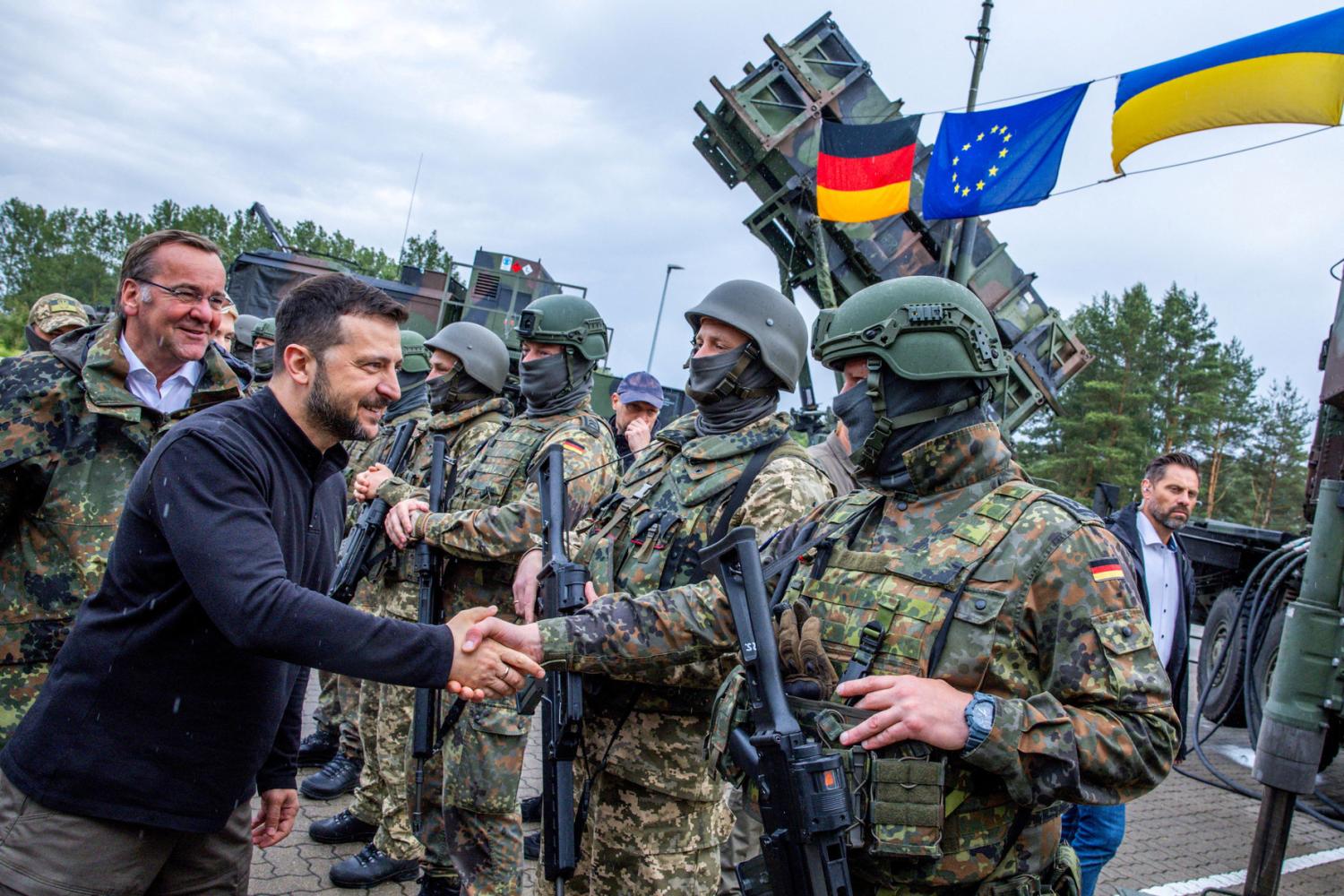
Ukrainian President Volodymyr Zelenskyy interacts with soldiers during his visit to a military training area to find out about the training of Ukrainian soldiers on the Patriot anti-aircraft missile system, at an undisclosed location, in Germany, June 11, 2024.
President Volodymyr Zelenskyy, congratulating his Ukrainian soldiers. Brookings Institute


Labels: , , ,

Follow @rheytah Tweet