Syrian Democratic Forces Subordinate to Al Joli's Military?
"Through international mediation to halt the attacks and violations
against our people in Aleppo, we have reached an understanding leading
to a ceasefire and the safe evacuation of martyrs, the wounded, trapped
civilians, and fighters from the Achrafieh and Sheikh Maqsoud
neighborhoods to northern and eastern Syria."
"]Now
we depend upon] mediators to uphold their promises to stop the
violations and work towards the safe return of the displaced to their
homes."
SDF commander Mazloum Abdi
"Violence
risks undermining the progress achieved since the fall of the Assad
regime and invites external interference that serves no party's
interests."
"We urge all parties
to exercise maximum restraint, immediately cease hostilities, and return
to dialogue."
"[Recent developments in Aleppo are] deeply concerning. [Washington's
objective] remains a sovereign, unified Syria — at peace with itself
and its neighbors — where equality, justice, and opportunity are
extended to all its people."
U.S. Special Envoy to Syria Tom Barrack
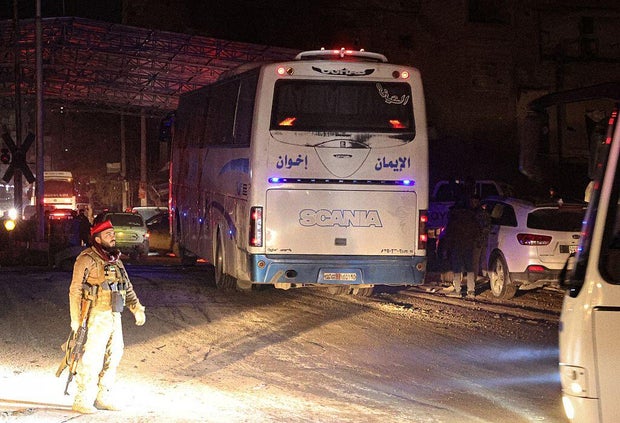
Buses carrying Kurdish fighters depart
Sheikh Maqsoud neighborhood under an evacuation agreement following army
operations, with a four-bus convoy leaving the area and heading toward
Tabqa, in Aleppo, Syria, on Jan. 10, 2026.Izz Aldien Alqasem/Anadolu via Getty Images
When
the Islamic State of Iraq and the Levant established its presence in a
third each of Syria and Iraq, terrorizing both countries and intent on
increasing the third of each territory that it had gained to eventually
establish a complete Islamist terror state, while it preyed on the
residents' fears of the occupiers' barbaric reign as it released 'public
relations' videos of beheadings of Westerners captured in the region of
their Caliphate, burned captured regional prisoners alive, living up to
their fearsome reputations as mass murderers, the Syrian and Iraqi
militaries fled in panic as ISIL steadily advanced.
While
the terrorist army went about hunting down, persecuting the ethnic and
religious minorities in the territories they occupied, killing and
abducting Yazidi men and women, striking lethally at Christians and
others, it was only among the Kurds that these desperate victims of
Islamist terror found protection from the death-strikes that stalked the
land, and haven where their lives would be protected.
As
for any campaigns to wrest territory away from the ISIL predatory
killers, and to protect the population from their ongoing terror
campaigns, it was the Kurdish militias, the Peshmerga and others who
confronted the Islamist hordes of terrorists. The U.S. recognized their
mettle and dedication to countering the universally dreaded Islamic
State operatives and their leaders, supporting the Kurds, even while
Turkey gave the Islamists cover, and focused on using their troops to
challenge the Kurdish presence both in Turkey and in Syria.
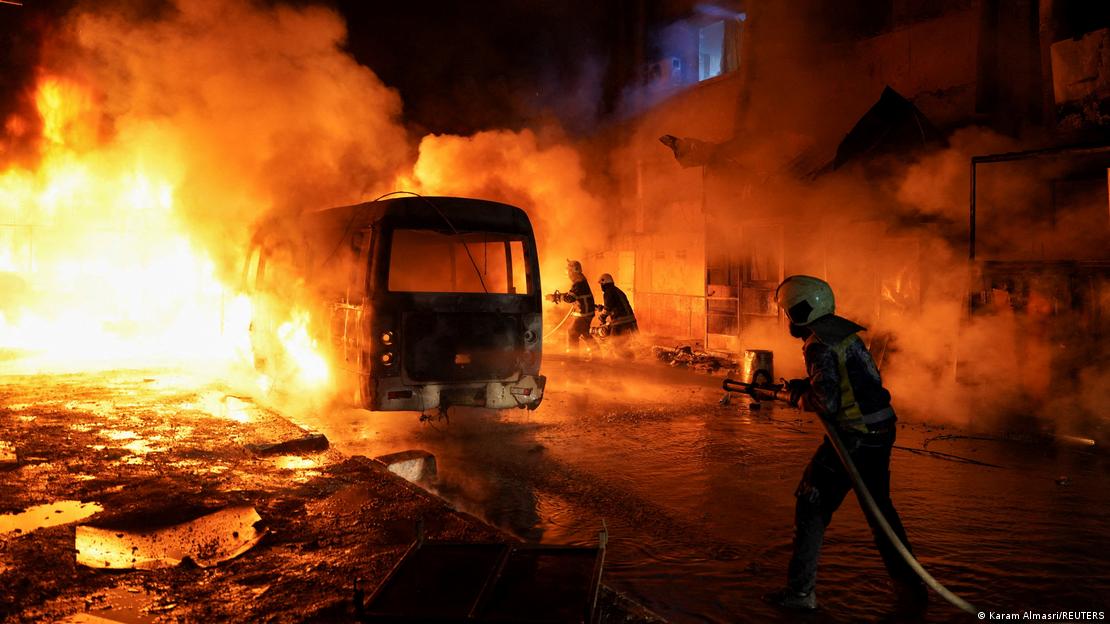
Security forces affiliated with
the Ministry of the Interior stand guard in the Ashrafieh neighbourhood,
which they have taken control of, according to the Interior Ministry,
following battles with the Syrian Democratic Forces, in Aleppo, Syria,
January 9, 2026. REUTERS/Karam al-Masri
When
the Islamic State was finally defeated, its Caliphate disbanded, its
operatives fanning out elsewhere to continue their ravenous hunt against
vulnerable populations elsewhere, heading to Afghanistan, to Africa, it
was the Syrian Democratic Forces that were left to imprison and guard
Islamic State fighters that had been taken prisoner, as well as their
Islamic State wives and children in camps like Al-Hol, holding mostly
foreign-sourced fighters in the hopes that their countries of origin
would repatriate them. Having served the purpose of saving the world
from an ever-expanding Islamic State curse, the Kurds are now left in
Syria to their own devices as a former al-Qaeda chief agent and ISIL
familiar presides over Syria.
The West
has abandoned all caution, set aside suspicion of a man dedicated to
Islamofascism suddenly transformed to a Syrian unifier, claiming that
since the ouster of former Syrian President Bashar al-Assad, it is time
for Syria to become whole, to heal itself, accept its minority
populations as fully equal in value with the majority Sunnis who under
Assad had been ruled by the minority Shiite Alawites. Believing the
former Islamist leader Abu Mohammad al-Julani, now transformed to
President Ahmed Hussein al-Sharaato have been legitimately changed to a peace-loving unified-Syrian-dedicated saviour, the West has embraced him.
Unfortunately
for the Syrian minorities formerly targeted by Islamic State, the new
Syrian military answerable to al-Sharaa and his government is comprised
in part of former Islamic State members whose Sunni sensibilities view
the minority Alawite population as ripe for revenge. Islamist Sunni
terrorist units aligned with the government's military have mounted
atrocities against Alawites and Christians, Druze and Kurds, reflecting a
true picture of Syria today. And now that discussions between the
government and the Syrian Democratic Forces to be integrated into the
Syrian military have bogged down with disagreements, government forces
have attacked to areas in Aleppo held by Kurds.
People evacuate from Sheikh Maksoud neighbourhood following collapse of an agreement between the Syrian government and the
Syrian Democratic Forces (SDF), in Aleppo, Syria, January 10, 2026.
REUTERS/Khalil Ashawi
Authorities
in Syria had evacuated residents from contested areas in Aleppo, as
violent clashes between government and Kurdish forces have resulted from
those disagreements. In essence, the 'government forces' comprised of
Islamist operatives have been attacking Kurdish-held neighbourhoods of
Sheikh Maqsoud, Achrafiah and Bani Zaide in 'targeted operations'
against the Syrian Democratic Forces. Under shelling by the Syrian army
targeting the Kurdish population of Aleppo, close to 140,000 people have
been displaced.
Mohamamad Ali, operations director with the Syrian Civil Defence in Aleppo explained "There's a large percentage of them [those displaced], with difficult medical issues, elderly people, women, and children".
Each side accuses the other of targeting civilian neighbourhoods and
infrastructure. Exchanges of shelling and drone strikes took place, with
tanks rolling into the contested neighbourhoods.
The
Damascus leadership under interim President Ahmad al-Sharaa continues
to comport itself with methods startlingly similar to those of Islamic
State in its relations with Syrian minority groups. Kurdistan, like
other areas of Syria, but different in that it is an autonomous region
dedicated to the Kurdish population, is receiving undue treatment by
government forces despite the March agreement with the SDF to merge with
the Syrian army, and differences in just how that will be accomplished
does not sit well with al-Sharaa, the Syrian unifier.
The renewed clashes in Aleppo have seen thousands of civilians flee the city in recent days.
The Islamic State Caliphate at Al Hol Camp, Kurdistan
"According to the investigation, Ms.Chouay allegedly travelled to Syria and Iraq to join the Islamic State terrorist group."
"In Syria, it is alleged she participated in terrorist activities in the name of the Islamic State."
"We have taken extensive measures to ensure they [the woman's two children] receive the proper support; at this point they are in the care of the CIUSSS (regional health board) and also the family has been solicited to take part in the response to ensure they get the best support possible."
RCMP Inspector David Beaudoin
On September 8th, two SDF members were killed in engagements with ISIS fighters in the camp during the operation.
"ISIS preys on the weak and disenfranchised and is trying to exploit
the conditions in the camp to help regenerate its forces," said General
Michael "Erik" Kurilla, commander of U.S. Central Command. “The
situation in al-Hol is an international crisis that requires an
international solution, and the only permanent solution is the
repatriation, rehabilitation, and reintegration of camp residents."
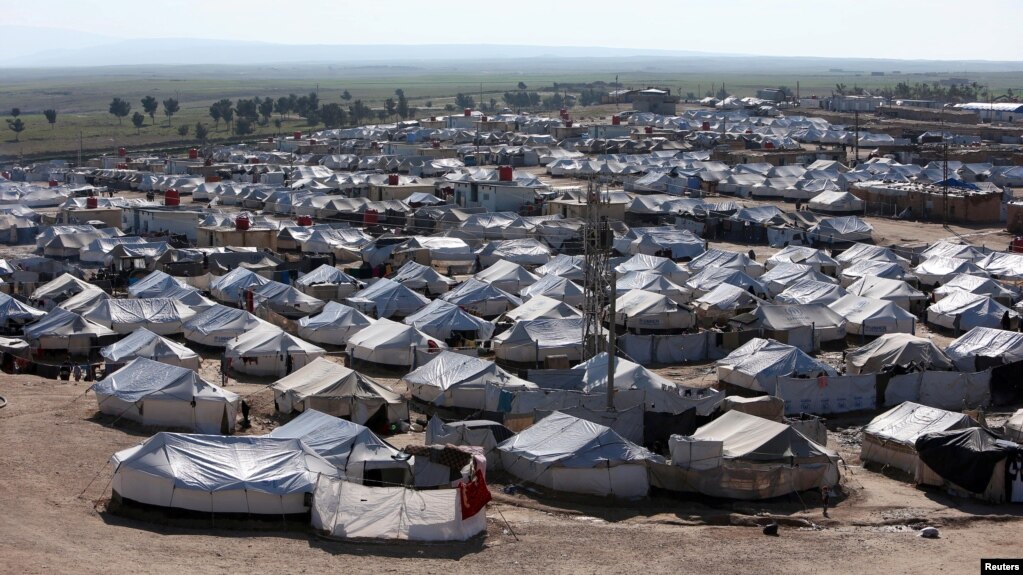
A general view of al-Hol displacement camp in Hasakah governorate, Syria, April 2, 2019.
The arrest, explained Inspector Beaudoin, resulted from an investigation by the force's integrated National Security Enforcement Team, ongoing since November of 2014. In November 2017 Chouay was identified as a member of Islamic State by the Syrian Democratic Forces and taken into custody, installed in in the Al Hol prison camp set up to contain family members of Islamic State terrorists. The male terrorist members of Islamic State were also taken prisoner but installed in a separate prison camp.
Both camps became hotbeds of Islamic State fundamentalist agitation. In the women's camp a hierarchy of committed Islamist females gained control of the camp to enact the same kinds of strict Sharia law and adherence to the concept of an Islamist caliphate that had prevailed before the Islamic State group had been ousted from the large swaths of territory they occupied in Iraq and Syria that they named the Islamic State Caliphate. In the women's camp, any women not completely committed to Islamic State were murdered by the unofficial and lethal camp controllers.
It is entirely likely that Oumaima Chouay, now back in Canada and under arrest, was one of those ISIL enforcers, with blood on her hands. The fact that she is a mother of two young children, both born in Syria, possibly in Raqqa which had become the ISIL Caliphate headquarters, saw some kind of empathy in her direction from outside sources. Concern for the welfare of the children, their well-being in the squalid, dangerous camp.
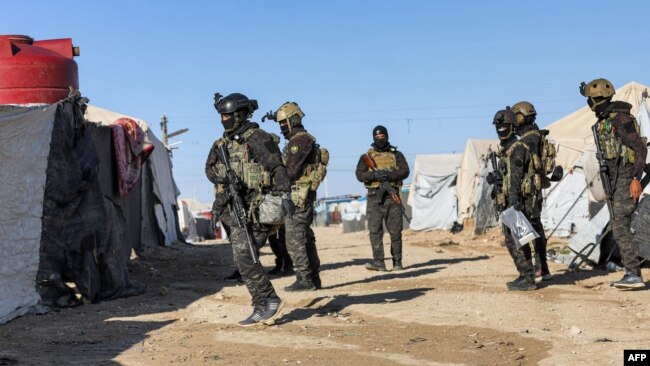
An image obtained from the media office of the
Kurdish People's Protection Units in Syria (YPG) March 29, 2021 shows
YPG forces conducting a security operation the previous day at the
Kurdish-run al-Hol camp.
The camp was operated for all those years by members of the Syrian Democratic Forces comprised for the most part of Kurds the only Syrian fighters that committed themselves to the overthrow and detainment of Islamic State terrorists, and supported by the U.S. military. Kurdistan had neither the manpower nor the resources to continue holding the Roj camp prisoners. They repeatedly appealed to the outside world to repatriate their citizens, since the camp held European, North American and Australian nationals as well as those from Syria and Iraq.
The Government of Canada finally heeded the appeal and made arrangements to repatriate Chouay, 27, from Quebec, and another Canadian, from British Columbia, Kimberly Polman. Polman spoke of mistreatment by Islamic State, of her disappointment and fears. Charges have not been laid against Polman and she has been given bail. Not so for Chouay, who has been charged with leaving Canada to participate in the activity of a terrorist group, participation in the activity of a terrorist group, providing property or services for terrorism purposes, and conspiracy to participate in the activity of a terrorist group.
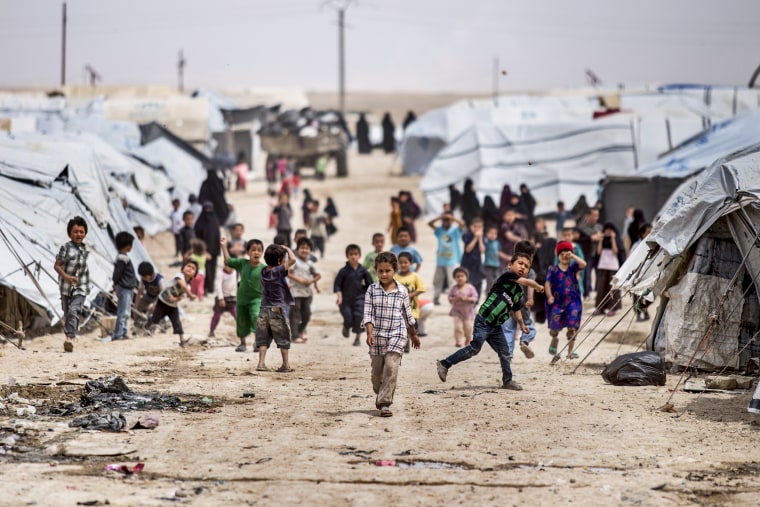
Children gather at the al-Hol camp, which houses families of ISIS members, in Syria's Hasakeh province in May 2021.Baderkhan Ahmad / AP file
Canada's federal police force thanked the Autonomous Administration of North and East Syria (Kurdistan) for "its cooperation and recognizes its efforts in providing care for the detained individuals under an extremely difficult security situation and adverse circumstances".
“The security situation in the camp is alarming with the reported
killings of 40 adults and two children since the start of the year, 16
of them during March alone."
“With nearly 40,000 Syrian and foreign children living in Al-Hol
camp, UNICEF calls upon the authorities in charge of the camp to secure
the safety of children and all residents in the camp."
“This recent increase in violence in the camp highlights the urgent
need for longer term solutions for children in al-Hol. Syrian children
should be safely reintegrated into their local communities and foreign
children should be repatriated to their countries of origin in a safe
and dignified way."
"I stopped eating almost a week ago. My body just can’t take this
anymore…this place guarantees you lost your sanity, your dignity, your
humanity one way or another…It’s exhausting trying to protect myself all
day, all night. I can’t do it anymore."
Kimberly Polman, 49, Canadian Camp Al Hol internee, Syria
"She was hoping she could go home, she was given reason to believe that
that might be the case from someone high up in the camp, especially
because of the snap election."
"She’s really
devastated [that she can’t come home], she’s been sick for a while, she
has broken teeth, she has kidney infections…she’s distraught and says
she doesn’t want to live anymore….it’s the last thing she has control
over."
"I am all for justice, and the choice she made has consequences beyond
anything that she could have ever imagined. But we don’t
have our Canadian citizenship on merit…even the most hardened criminals
and murderers are granted the rights of a Canadian citizen….they are
still human beings, they are still Canadians."
"I hate ISIS and everything that did, they stole my sister. But I believe that everybody can be redeemed if you give
them a chance, and that they should face justice when they get back…but
that doesn’t mean that they should be left to die out there."
Polman's sister, name withheld
"For over two years, dozens of Canadian ISIS suspects and their family
members have been unlawfully detained in locked desert camps and prisons
in northeast Syria."
"Most are young children who never chose to live
under ISIS. It’s deeply troubling that these
detainees and their families in Canada would have to resort to taking
their government to court to end this paralysis…"
"Prime Minister Trudeau
has the power to bring these Canadians home. He just needs to find the
moral courage to do so."
Farida Deif, Canada Director, Human Rights Watch
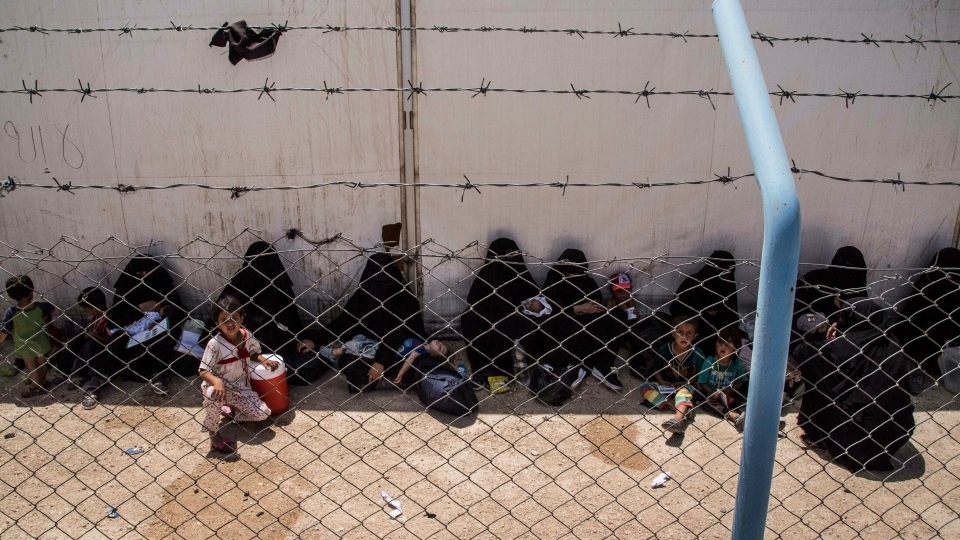
Women and children related to fighters of the Islamic State group wait
to board buses and trucks, leaving the overcrowded a an overcrowded
al-Hol camp to return to their homes on June 3, 2019, in Hasakeh
province, Syria. THE CANADIAN PRESS/AP, Baderkhan Ahmad
Eleven
families with Canadian citizenship who have relatives being held at the
Al Hol camp for relatives of members of the Islamic State of Iraq and
the Levant have appealed to the Supreme Court of Canada to order the
Canadian government to retrieve their relatives from the squalid camp
housing women and children in a repatriation move setting aside their
involvement with the Islamist terrorist fundamentalists whose litany of
vicious deadly atrocities shocked the world, but evidently not the women
who travelled from Canada to Syria to join ISIS and become 'brides' of
ISIS.
The
families, in the interests of maintaining anonymity, will not have
their names and identities published. Using a covering name of "Bring Our Loved Ones Home",
they are pursuing a law suit against Canada's government for refusing
to act on their appeal. Either to repatriate the Syrian-Canadian men who
travelled to Syria for the express purpose of joining ISIS and are
incarcerated in the Al Roj prison maintained by the Syrian Democratic
Forces, a Kurdish fighting group that would prefer to have the fighters
and the women detainees taken off their hands altogether.
The
Kurdish fighting groups were the only effective offensive against the
Islamic State terrorists. They offered protection to Shiite Muslims whom
the Sunni ISIS threatened, to the Christian and Yazidi minorities whom
they killed and enslaved, giving them haven in Kurdistan while
simultaneously battling the encroaching ISIS 'caliphate'. When their
collaboration with U.S. forces eventually led to the overthrow of the
ISIS stronghold in Raqqa the Syrian Democratic Forces ended up rounding
up and incarcerating ISIS fighters and their wives and children, holding them in separate camps.
US-led air strikes helped Kurdish and Arab fighters capture the IS stronghold of Raqqa Reuters
The
group's application describes camp conditions as "horrific", with "a
lack of clean water malnutrition, non-existent hygiene measures, an
acute shortage of medical care and facilities, violence and abuse". The
detainees, they point out, have never been charged with any offences,
and no trial dates have been noted. The government of Syria had
repatriated their own citizens from the camps and trials are ongoing,
the fate of the fighters who had captured a third of Syria for their
caliphate will no doubt suffer a fate similar to that they imposed on
those they took prisoner and committed atrocities upon from beheading to
crucifixion and other imaginative methods of death-dealing.
The Canadian families, most of whom arrived in Canada as refugees
escaping persecution in their Muslim home countries, state in their
filing: "The Canadian government has the ability to bring the unlawful
detention to the end and secure the release of the detained Canadians".
Characterizing the incarceration of Islamic State avowed Islamists as
'unlawful' is a bit of a puzzler to begin with. Universality of
solutions to rogue mass slaughterers is generally to sequester them to
ensure the safety of others rather than permitting them to remain at
large to continue their violent depredations.
It's also a little
difficult to evoke compassion for the plight of such human rights
abusers whose actions shocked the world when propaganda videos were
released of ISIS members exulting in the beheading of helpless prisoners
whose crimes were that they were not fundamentalist Islamist butchers,
but vulnerable outsiders for whom ISIS crimes represented an
assault on civilized universal mores of human behaviour. That they now
suffer the indignities of mass incarceration under less than hygienic
conditions is sad, but no tragedy.
The tragedy is
that of the children in the camp. Theirs was a tragedy when they were
born to ISIS parents to begin with, and later to be raised and taught
the values of fundamentalist Islamist principles of conquest and jihad.
They were born abroad, not in Canada. The older children up to age 14
who were taken by their parents to Syria to be part of the brave new
world of the Islamist caliphate were raised in the miasmic atmosphere of
a brutalized social order, many of them exposed to and urged to take
part in atrocities.
Islamic State adherents don't
flinch at human butchery. They caused innumerable deaths, focusing on
minority groups within their widening grasp as their geographic holdings
increased and they created a mass of desperate refugees, anxious to
escape death. Their victims include men, women and children. Just as the
detainees by the Syrian Democratic Forces represent men, women and
children -- who preyed on other human beings. These are people who share
a deviant and fundamental lack of social conscience.
Calling now upon the conscience of decent people to come to their rescue.
Children hold water containers in al-Hol camp, Syria, on January 8, 2020. (Goran Tomasevic/Reuters)
"We are one hundred percent sure that if they have the opportunity to escape from the prison, it will be very dangerous for us." "Holding these people here is not only a danger for Syria, it is a danger for the whole world." Can Polat, assistant warden, Kurdish-operated prison of 5,000
"The situation is pretty bad here, so if they could hurry up and decide. Months like this without knowing what is going to happen, people could start going crazy." "They could say these guys were terrorists before with ISIS but they are still human." 16-year-old ISIS prisoner from Mauritius
"I have a question. What is going to happen to us? Are the kids going to come out?" a boy from Suriname asked a reporter being escorted through Northeastern Syria's Kurdish-run prison system. Over 150 children, their ages mostly between 9 and 14 hailing from many countries whose parents brought them to Syria to become part of the ISIS caliphate are now orphans, their parents dead, some detained. It is where they have been held, jammed into crowded cells.
Boys in a crowded cell at the prison The New York Times
The prisons represents a humanitarian crisis that the outside world has little interest in. Sick and wounded men suffering from mental illness and malnutrition, their wounds given basic medical care, are crowded into large cells wearing the same kind of orange jumpsuits as those the Islamic State dressed their captives in before slaughtering them mercilessly with the most tortuously monstrous methods meant to shock the outside world through videos, into quaking terror.
When the Islamic State's caliphate collapsed in Syria, tens of thousands of men, women and children who had joined the self-proclaimed caliphate as citizens of a proposed brave new world of rancid terror streamed out of the fallen territory only to be gathered within squalid camps and crammed prisons the Kurdish-led militias were forced to operate as a strange kind of reward for their front-and-center action in defeating the jihadists.
With the Turkish military incursion threatening Kurdish forces, and forcing hundreds of thousands of Kurdish villagers to flee aerial bombing attacks and Syrian Sunni militias aligned with Turkey committing atrocities in their wake, Kurdish control over the prisons has lapsed and the fate of the huge detainee population in question, since most of their home countries have no interest in repatriating them, despite that the Kurdish forces lacked adequate resources to feed and house and guard them.
A volleyball game in the yard of the prison. The New York Times
There were 86 minors being held in one prison cell. They represented children from Syria, Iraq, Mauritius and elsewhere in the Arab and Western world whose parents had responded to the call to jihad from Islamic State. Prison conditions are crowded and squalid, increased even more so since hundreds of prisoners were moved from the battle zone. Kurdish fighters who acted as prison guards have departed to the front lines opposing Turkish entry to their towns and villages.
When ISIS lost its remaining Syrian territory in March, Kurdish fighters were suddenly in charge of close to 11,000 men and tens of thousands of women and children, forcing the Kurds to establish camps and a prison system. One quarter of the prisoners are Syrians, the rest from 29 other countries such as Iraq, Libya, Egypt, the Netherlands and the United States, languishing now in Mr. Polat's prison.
Prisoners played down their roles in the world’s most fearsome terrorist organization.
In the medical ward men with braces meant to hold their broken bones in place spend agonizing hours on thin mattresses. When the call to prayers comes many of them are too weak and injured to respond. In interviews with their Kurdish jailers prisoners denied being ISIS fighters, anxious to be enabled to return to their home countries or to receive amnesty in recognition of having disingenuously renounced the Islamic State.
The Kurdish authorities interpreted observed indications that led to the opinion that many of the minors had undergone ideological training as future fighters. Complicating plans to move the youngest of the children to rehabilitation centers was the Turkish incursion, leading to a lack of support to finalize the intention.
Suspected Islamic
State members, many of them badly injured from the final months of
battle earlier this year, in a crowded cell at a prison controlled by
Kurdish forces in northeast Syria. The New York Times
"[The Kurdish-led authority in the area declared a state of] general mobilization [before calling on its population to head toward the border] to fulfill their moral duty and show resistance in these sensitive historic moments." Syrian Democratic Forces
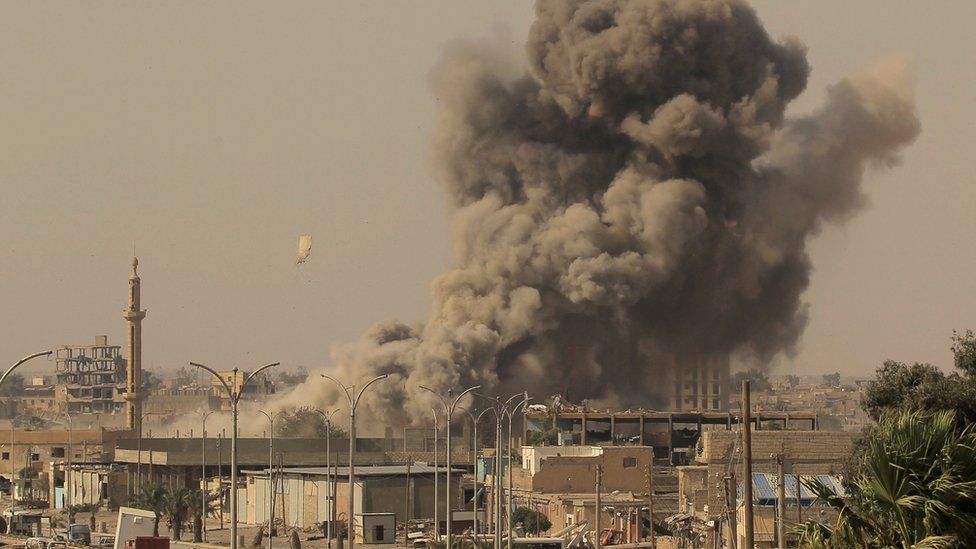
Smoke rising from targets inside Syria during bombardment by Turkish
forces at Ras al-Ein town, in Ceylanpinar, in Sanliurfa, Turkey on
October 10, 2019. Turkey has launched an offensive targeting Kurdish
forces in north-eastern Syria, days after the US withdrew troops from
the area. (Photo: Sedat Suna, EPA-EFE)
"It [the Turkish military operation] endangers our allies in the fight against terror, the [Syrian Democratic Forces]. It undercuts our efforts to defeat ISIS by drawing these SDF forces away from the battle in the south and frankly forcing our troops to focus on the military aspects of the invasion." “It creates tremendous insecurity for the entire region.”
“I’m
extremely distressed about this too. I’m right up there with the Saudis
and Bibi Netanyahu. This was a very big mistake and this has very big
implications for all of our security. I don’t know of anybody who isn’t
upset with it; a very, very dramatic, very, very dangerous situation.”
"[Since Sunday, there had been] various diplomatic exchanges that President
Erdogan has in various ways been involved on."
"[Trump is] trying to find common ground
to come up with a ceasefire, come up with a way to bridge the gap
between the [Kurdish People's Protection Units] wing of the [Turkish
Kurdistan Workers Party] and Turkey."
"[The President would] most
prefer [to do] a negotiated settlement."
Senior State Department official
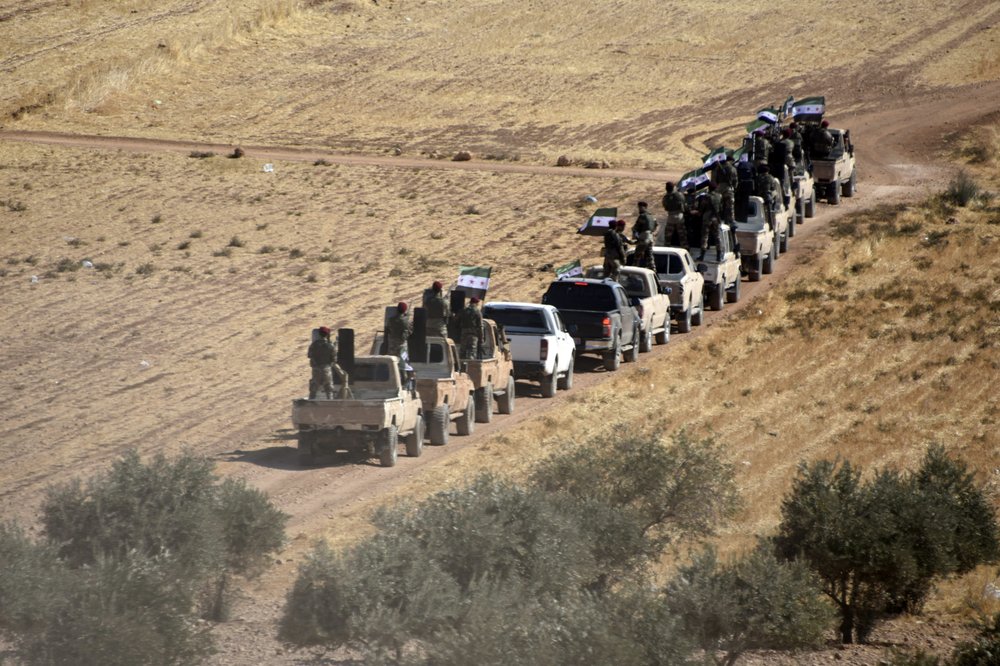
Turkey-backed FSA fighters are heading toward Syrian town of Tal Abyad
from Turkish border town of Akcakale, Turkey, Thursday, Oct. 10, 2019.
Turkish President Recep Tayyip Erdogan says that there have been 109
"terrorists killed" — a reference to Syrian Kurdish fighters — since
Ankara launched an offensive into Syria the previous day. (DHA via AP)
According to Recep Tayyip Erdogan, his military invasion of northeastern Syria is a humanitarian mission, to rid the area of what is effectively a "terror corridor" that just happens to exist on Turkey's southern border. What characterizes it as a haven for terrorists is the reality that the population is Kurdish, that the YPG, the people's protection units whose presence is to defend the interests of the Kurdish population, represents an intolerable thorn in the side of Erdogan who links them with his nemesis-militias, the Turkish PKK. All Kurds, by definition, are 'terrorists' to Erdogan.
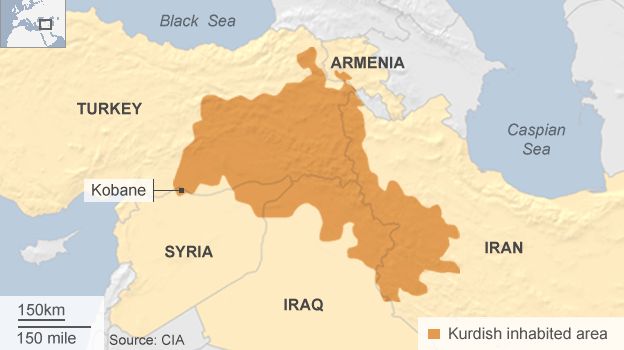
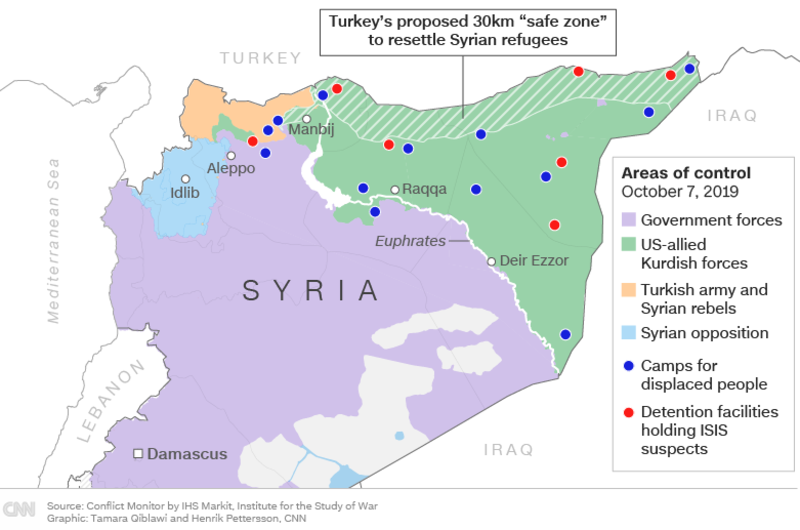
They are terrorists because they have the unmitigated gall to agitate for sovereignty in southeastern Turkey, their traditional, thousands-years-old heritage geography, part of greater Kurdistan, along with similar areas within the national boundaries of Syria, Iran and Iraq, all of whom refuse to consider surrendering their portions of the territory to its rightful inheritors. Turkey has wanted to invade northeast Syria for years, to establish a 'safe corridor' it would expunge of Kurds. Because U.S. troops were stationed there and because the YPG fought in tandem with the U.S. military, successfully countering Islamic State terrorists, Turkey was unable to make its move.
A previous incursion was temporary and inconclusive. This one has resulted from the Turkish president's furious demands that U.S. President Trump recall American troops to pave the way for military entry for Turkey. Trump considers Turkey an ally, a member of NATO, an important trading partner for the U.S. He leaned toward conciliation, and finally, on Sunday, agreed to Erdogan's demands to vacate U.S. troops; in effect leaving the Kurds, the true allies of the U.S., betrayed, exposed and vulnerable.
"The YPG don’t have heavy weapons (from the U.S.) that would be
useful against Turkish aircraft or tanks", a YPG source admitted. “The
heaviest weapons we got from the U.S. are some mortar shells, nothing
heavier. No missiles, no anti-aircraft weapons, no anti-tank", and against the second-largest standing military in NATO, of an estimated seven-hundred-thousand in uniform, there is an estimated 40,000 members of the YPG, prepared to fight guerrilla warfare-style, like ferociously-stinging mosquitoes against an elephant whose hide is impervious to stings.
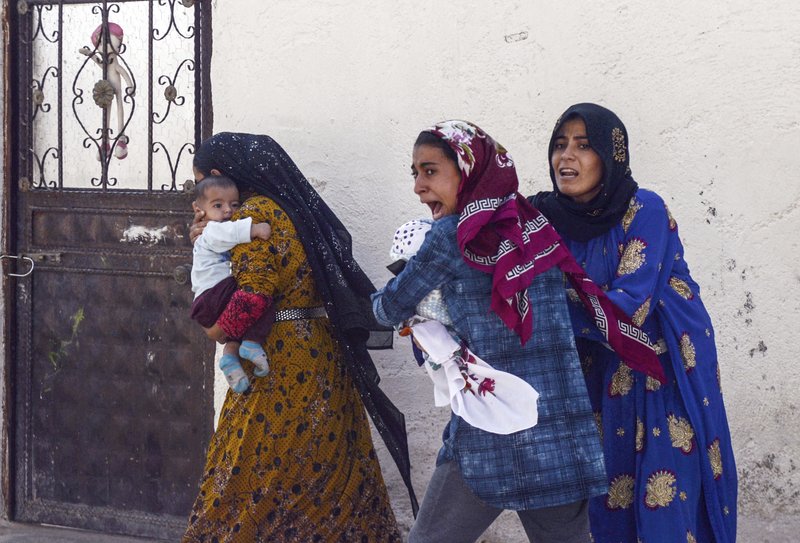
People run to take cover after mortars fired from Syria, in Akcakale,
Turkey, Thursday, Oct. 10, 2019. An Associated Press journalist said at
least two government buildings were hit by the mortars in Sanliurfa
province's border town of Akcakale and at least two people were
wounded.( Ismail Coskun/HA via AP )
Turkey named its military offensive an anodyne "Operation Peace Spring". An abuse of language matched by the naming of Erdogan's political party, the 'Justice and Development' Party. They have brought 'peace' and 'spring' to the corridor in northeastern Syria with air strikes, followed by Turkish howitzer fire to hit bases and ammunition depots of the Kurdish YPG militia. Any towns and villages that happen to be in the area will simply represent ancillary targets and injuries and deaths among civilians simply the cost of doing war in such a good cause.
The entry of Turkish troops along with their Syrian rebel allies followed with a land offensive against the YPG 'terrorists' is the order of peace-loving Erdogan. A total of 181 militant targets have so far been hit, according to the Turkish defence ministry. Explosions struck the Syrian town of Tel Abyad and the red flare of rockets could be seen fired into Tel Abyad, flames burning near and in the town. Civilians in huge numbers are in flight from the infrastructure carnage, hoping to preserve their lives.
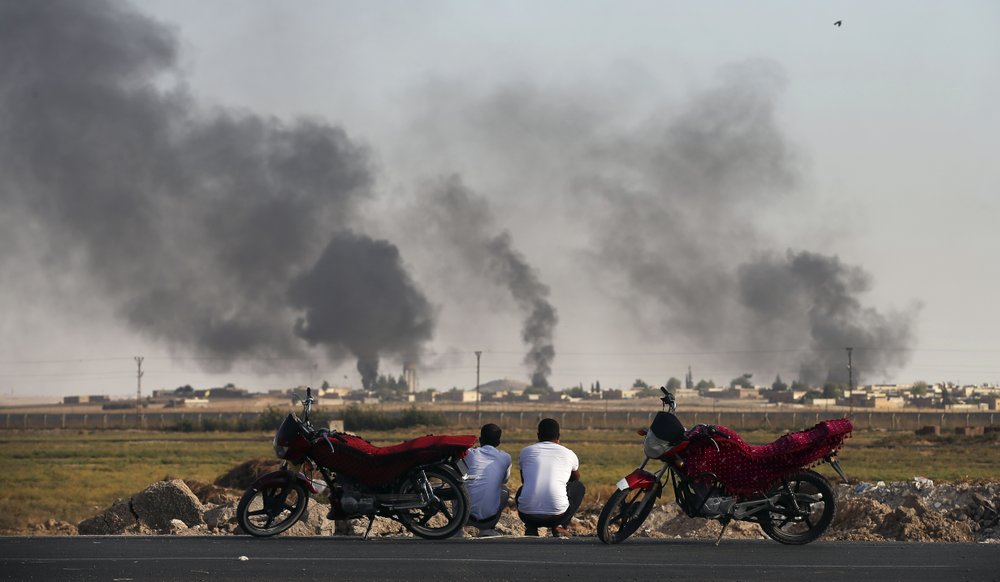
People in Akcakale Sanliurfa province, southeastern Turkey, at the
border with Syria, watch smoke billowing inside Syria, during
bombardment by Turkish forces, Thursday, Oct. 10, 2019. Turkey's foreign
minister says Turkish troops intend to move some 30 kilometers (19
miles) deep into northern Syria and that its operation will last until
all "terrorists are neutralized," a reference to Syrian Kurdish
fighters. (AP Photo/Emrah Gurel)
According to reports from the Syrian Democratic Forces, military positions and civilians in towns over 30 km inside Syria had also been hit. While mortar and rocket fire from Syria struck the Turkish border towns where no immediate reports of casualties have yet emerged. As for the Syrian regime, it had responded, when news first emerged of Turkey's intentions, that it was prepared to confront any Turkish aggression. Thus far, no signs however, that Syrian troops have presented themselves, nor flights over the region to share the skies over Syrian territory with Turkish warplanes.
The territory that was representative of at least one-third of Syria that formed part of the Islamic State caliphate is now in Kurdish control, simply because the Kurds were the only fighting forces capable of and determined to, defeat ISIL. And tens of thousands of ISIL fighters and family members are held in detention by the Kurds. Which, since the Turkish invasion, has seen operations against Islamic State come to a standstill.
A greater call for Kurdish defence operations has arisen, to counter the military invasion Turkey has put into motion, leaving the Islamic State prison camps in an unguarded state, with consequences certain to emerge. The U.S. training of Syrian Kurds meant to ensure that tens of thousands of SDF fighters would be capable of stabilizing the former Islamic State areas has also been disrupted. And, according to the SDF, "One of the prisons that ISIS detainees (are) held in was struck by Turkish airstrike".
"Training with the peshmerga was
ceased when it was no longer of any value in terms of the battle against
Daesh,:
"We have changed … partners,"
"They [Islamic State sympathizers] are not actively conducting operations but they could."
"We are still deeply involved in helping set conditions for the successful return of the population to Mosul."
Gen. Jon Vance, Chief of Canada’s Defence Staff
"During the high point of ISIS as a
threat, we put all our chips behind the Kurds because they were in the
best position to fight and the most willing to fight."
"But
if we’re training them now, we’re training a separatist movement." "We will need to monitor the situation very closely and find out if the
people we are training are becoming death squads, or were death squads.
[In that case], we would need to get out of business." Prof. Stephen Saideman, political scientist, Paterson Chair in International Affairs, Carleton University, Ottawa
A Canadian soldier directs Kurdish soldiers training near Erbil in northern Iraq in 2015.
Sean Kilpatrick/The Canadian Press
The Liberal government of Justin Trudeau had pledged to supply $9.5-million of military weapons to the Kurdish Peshmerga who had distinguished themselves as the only reliable fighting force in Iraq to face the Islamic State of Iraq and the Levant. Where the Iraqi military turned and fled the advance of ISIL, the Peshmerga held their ground and prevented them from entering Erbil, from massacring fleeing Iraqi Christians and Yazidis finding haven in Iraqi Kurdistan, protected by the Peshmerga.
The Peshmerga, the Kurdish fighting force of courage against stark adversity were universally admired. The U.S.-led coalition fighting Islamic State in Iraq in recognizing the fighting skills and determination of the Peshmerga committed military trainers and small arms to the Kurds to enable them to acquire modern fighting skills and capability in the use of more advanced weaponry than they were familiar with. ISIL had taken advantage of an immense store of weapons and vehicles the fleeing Iraqi military left behind, in Mosul.
That was four years ago when Islamic State emerged as a viral scourge and threat destabilizing the entire Middle East, sending its jihadi fascist tentacles well beyond the Middle East, to Africa and North America and Europe. The weapons destined to support the armoury of the Peshmerga were never delivered, though the Iraqi government had issued its permission. The Kurdish independence referendum intervened. The Kurds felt they had established a reputation, they had the support of NATO members.
They represented the original inhabitants of the land and across the Iraqi border to Syria, Iran and Turkey. They felt entitled to recognition and the only recognition that had real value to them would be that Kurdistan be declared a fully sovereign and autonomous state. Only if this were to be recognized by the international community, however, could that be accomplished. Turkey, Iraq, Iran and Syria would never acquiesce, and the outcome would be catastrophic. As it was, Iraq reacted instantly, making it clear that Kurdish aspiration for total autonomy would never be sanctioned.
A trench near the Christian town of Bartella marks the extent of Kurdish military control in northern Iraq.
Photograph: Cengiz Yar
When the Iraqi military moved in to take possession of the oil fields and areas that Kurds declared their own, part of their nascent independence, the Peshmerga melted away rather than risk a military confrontation with all the loss of life that would entail. Those weapons have been stored, collecting dust in warehouses in Montreal and Jordan. General Vance, Chief of the Canadian Forces, spoke of those arms never finding their way into Kurdish military service at this juncture, past the imbroglio of the independence bid.
The most successful fighting force in Iraq whose central role in arresting the advance of the jihadis of the Islamic State, driving them out of Iraq overplayed it hand. The Kurdistan government was convinced of its right to campaign for independence and to demand it of the world. And it was not wrong. But the world was not prepared to support them and in the process to take sides, wresting territory from four powerfully resistant countries who had no intention of sharing the geography despite Kurdish heritage.
The years that Canadian special forces took pride in working alongside the Kurdish fighters to provide military assistance was borne of recognizing the effectiveness of the Peshmerga as opponents of the Islamic State. Even while so doing, Canadian authorities were fully aware that in sharpening the fighting skills of the Peshmerga, Canada could conceivably be involved in a situation where it could be blamed for helping to prepare Kurdish ambition to become reality in the pursuit of independence that would unleash mass regional violence.
The Kurds deserve much, much better. But that better future has been forestalled. Their just entitlement doesn't appear to be anywhere on the near horizon and more's the pity.
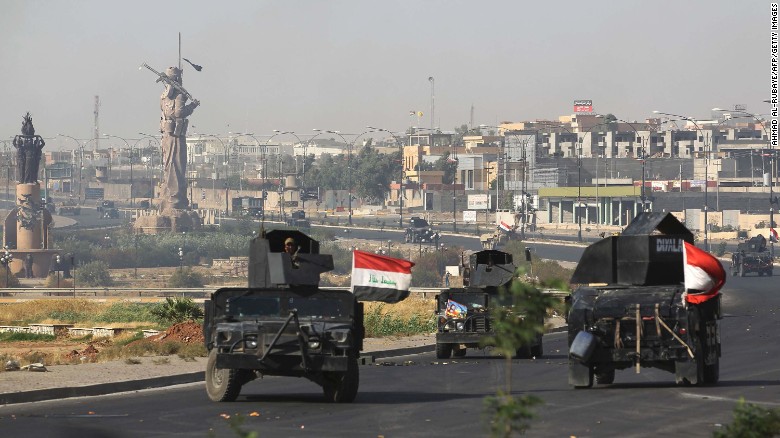
"Iraqi forces and Iranian-backed Popular Mobilization Forces [attacked in] a major, multi-pronged operation] deploying] U.S. military equipment, including Abrams tanks and Humvees." Kurdistan regional government, security council report
Iraqi forces advance to the center of Kirkuk during the operation against Kurdish fighters. CNN
Kirkuk was lost to Kurdistan as an object lesson in how two hostile nations conspiring together to defeat the aspirations of a courageous nation of unacknowledged sovereignty could be defeated by superior force of arms, threats and aligned enemies assembled in greater numbers to overwhelm the plans of those deserving of recognition but denied it. Kurdish Governor Majmaddin Karim had little option but to exit his post for the capital of autonomous Kurdistan.
Iraqis triumphantly waved national flags, minority Turkmen celebrated in central Kirkuk while the sectarian Shiite chants of conquest underscored the battle won by Iraq through the overwhelming presence of conjoined Shiites in denying the Kurds their birthright. The Popular Mobilization Forces, predominantly Shiite militia coalition serving Iranian purposes and policies were key to Iran's and Iraq's victory. The Kurds can recognize their oppressors through long exposure to the whims and vagaries of a fate that has kept them subservient to governments in Iraq, Syria, Turkey and Iran.
Peshmerga forces had little option but to withdraw from Kirkuk, holding back on their instinct to fight, once Baghdad issued its ultimatum. Columns of armoured vehicles and pickup trucks driven by Kurdish fighters left their positions around the contested city crowding roads jammed with Kurdish civilians fleeing the punishment they know would be theirs. "They cheated us and we've been betrayed", shouted Kawa Mustafa Mohamed. "I don't know where I'm going now but my father was killed by the Iraqis and I don't want that to happen to my family."
The situation is surely being celebrated by the Islamic State. The possibility of a new civil war where attention will turn on the protagonists, the Iraqis and their allies opposed to the Kurds. The very Kurds who were most successful in fighting the Islamic State groups that the Iraqi military fled in panic from. Disorganized bands of Kurdish gunmen, not part of the Peshmerga insisted they would defend the city. It was the Peshmerga whose generals were informed of an incipient bloodbath if they resisted the arrival of the Iraqi military and its allies.
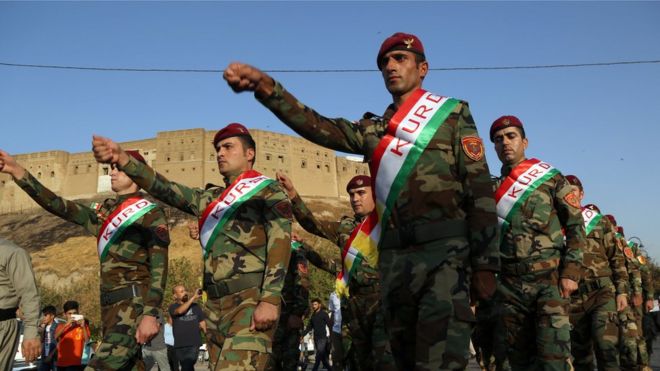
Two Kurdish soldiers ... Kurdistan 24
Kurdish forces took geography from the Islamic State, and have been in control of Kirkuk since 2014 after the federal forces fled, abandoning their defences and materiel as ISIL advanced across northern Iraq. Taking possession of Kirkuk, the Kurdish government exported oil from the oilfields of Kirkuk to the extent of 350,000 barrels of oil daily, contributing to their economy, making amends for Baghdad's failure to restore budget payments to the region.
"We assure our people in Kurdistan, and in Kirkuk in particular, that we are keen on their safety and best interest", announced Haider Al Abadi, Iraqi prime minister. Who among the Kurds believes that sanctimonious promise? First the punch of military force, then the economic squeeze.... Of an event that translated as a catastrophe for Kurdish sovereignty aspirations, the U.S. toward whom the Kurds represented their best, most effective allies in the fight against Islamic State, characterized the situation as a "misunderstanding."
"The greatest evil everywhere is ISIL. It's the defeat of Islamic State that is key. The trouble is, people in Iraq believe the fight against ISIL is over, and that it's focused in Syria, but there are still pockets in Iraq." Hamish de Bretton-Gordon, former British Army officer, Kurdish Peshmerga adviser
"Even as the world lines up against Kurdish aspirations for
sovereignty following Monday’s referendum, President Barzani has already
indicated a vote to secede does not imply a unilateral declaration of
independence, but will rather begin a process to afford Kurdish leaders a
democratic mandate to enter into peaceful negotiations with Baghdad. As
a practical matter, an independent Kurdistan bedecked in the full
rights and symbols of sovereign statehood is likely to still be many
years away."
"At the moment, however, we must lack no moral clarity in affirming
where our allegiances lie. The West should support the mandate the
Kurdish people are bestowing upon their leaders: to guide the peaceful
emergence of a confident Kurdistan, rather than the reinforcement of a
bad marriage destined to fail. The cause of Kurdish freedom is right and
just, and it is overdue that the West should say so." Shuvaloy Majumdar, Munk Senior Fellow, Macdonald Laurier Institute
"Kurdistan is not ready because economically, it is a mess." "I don't see independence happening. It's all about capability, not desire." Joost Hiltermann, Middle East specialist, International Crisis group
Iraqi Kurds wave the Kurdish flag as they
celebrate in the streets of the northern city of Arbil on September 25,
2017 following a referendum on independence.SAFIN HAMED/AFP/Getty Images
The Kurdish passion for nationhood lent an air of excited urgency to the call-up to the September 25 referendum to test the peoples' will to surmount anticipated difficulties to accomplishing that long-held dream of independence. A large, but not totally overwhelming proportion of those eligible to vote in Kurdistan turned out for the referendum, while others, uncertain, held back. Those who did venture to vote represented an overwhelming "yes" of 90 percent.
The wish is there, the will is there but the practical opportunity remains elusive. No one wants to contemplate the need for an armed struggle, essentially a civil war between Kurdistan and the country in whose geography is still sits, Iraq. The irony here is that socially, politically, even economically and institutionally, Kurdistan represents a model of fortitude, efficiency and tolerance, unique to the region. While Iraq represents the very opposite; without the intervention of NATO forces to support Iraq it would have dissolved entirely.
The competition between Iraq and Kurdistan to claim ownership of Kirkuk with its oil and gas resources represents an issue of huge uncertainty. That the Peshmerga forces of Kurdistan succeeded in routing Islamic State from Kirkuk is undeniable, just as it is without controversy to recognize that Iraqi forces melted in disarray when it was imperative that they stand and fight when ISIL marched its way first into Mosul then a good portion of the country to establish its Caliphate.
Only Kurdistan stood firm, opposing ISIL, rescuing the minorities, ethnic and religious that the ISIL forces threatened, persecuted and slaughtered, raped and enslaved. For their fighting courage and perseverance Kurds felt that at long last their need for total autonomy as a sovereign nation within their own heritage geography should be recognized. Kurdish political leaders anticipated the need for diplomacy and negotiations, but it is doubtful they might have predicted between them the depth of animosity their initiative aroused internationally with few exceptions.
The initial emotional euphoria after the referendum vote gave way to the reality of vociferous denials of their goals globally. Only one nation whose own struggle reflected that of the Kurds, supported their aspiration; Israel. Itself embattled in the region, surrounded by Islamist terrorist groups dedicated to the Jewish state's annihilation made it impossible for anything more than emotional, diplomatic support to be rendered.
Appealing to Baghdad, Kurdistan's President Massoud Barzani was rebuffed in his efforts for reasonable debate to come to a working agreement in recognizing a sovereign Kurdistan. Supporting Iraq's refusal to surrender a third of its territory along with oil revenues, are regional powers like Iran and Turkey, aided by Russia, which has faintly supported Kurdish ambitions, but stands in solidarity with Iraq, Iran and Turkey.
Iraq has called up the international community to help isolate Kurdistan by refusing to fly into its international airports; the closing of land crossings linking Kurdistan to the rest of Iraq is also threatened. Prime Minister Haider al-Abadi has been urged by Iraq's Parliament to send troops into the contested areas, while Turkey is threatening border crossing closings, halting the supply of goods and food.
Sudan and South Sudan present as a somewhat similar situation. One Muslim the other mostly Christian and Animist, and both riven with ethnic and tribal animosities. Arab-led Sudan has persecuted its Black Sudanese citizens; the atrocities committed by the government of Sudan against Darfurians a case in point. The world recognized South Sudan's independence as the world's newest 'nation'. One that has been beset with civil strife of a nature no less divisive and brutal than its former relations with Sudan.
Kurds have far too long suffered demeaning attacks against their right to human dignity and human rights. The violence levelled against Kurdish communities by previous Iraqi government forces, particularly under Saddam Hussein's Baathist military was horrendous, sweeping the land with fire and destruction, where chemical weapons were used to destroy countless lives. There is no humane reason why Kurds should continue to suffer assaults against their right to nationhood.
"I hope the northern Iraqi administration gathers itself together and
abandons this adventure with a dark ending ." "The moment we shut
the valve [for the pipeline through Turkey] it’s finished for them. [No country other than Israel
supports the] invalid, fraudulent] Iraqi Kurdish referendum on independence]." Turkish President Recep Tayyip Erdogan
"[The landmark vote represents a] historic and strategic mistake by the Kurdish leadership." "I
will not give up on the unity of Iraq, that is my national and
constitutional duty." "[The vote and its outcome] threatens Iraq, is a danger to the region." "We will take measures to safeguard the nation's unity and protect all Iraqis." Iraqi Prime Minister Haider al-Abadi
A Syrian Kurd takes a selfie in the northeastern Syrian city of Qamishli
on Tuesday, during a gathering in support of the independence
referendum in Iraq's autonomous northern Kurdish region. (DELIL SOULEIMAN / GETTY IMAGES)
Turkey remains the conduit for landlocked Kurdistan to export its oil. But Erdogan is bypassing the reality that Moscow has signed a deal with the Kurds for their oil production, and it is highly, hugely unlikely that Ankara is prepared to dispute Moscow over Kurdish oil exports. Empty bluff. What may not be so empty is the military option that Erdogan could always muster. And if it is done alongside Iraq's threat to use force to impede Kurdish sovereignty, a problem could arise. On the other hand, would Sunni Turkey ally itself with Shiite Iraq?
The independence referendum that the Kurdish leadership lauded as a long-awaited exercise in self-determination brought out a strong response in the Kurdish population, as an estimated five million Kurds went to the polls, determined to finally see themselves as a sovereign nation whose geographical rights to their heritage status would be internationally recognized. That intent is viewed as a hostile act by both Iraq and Turkey, fearing that their own Kurdish population will be emboldened, as will those in Syria.
Baghdad visualizes the unsupportable, a redrawing of its borders, with a significant portion of the country's oil wealth slipping away along with that changing border. Iran too has its own fears that the independence of Kurdistan will persuade their own long-suffering Kurdish populations to agitate anew for the same recognition from the international community. Though the international community has not responded positively, with the exception of one sole country whose own trajectory toward sovereign status was hard come by and remains contested.
The 'yes' vote will not immediately serve to bring independence to the region which won autonomy a short few years ago, after suffering horrendous violence from the previous Iraqi government ruled by Saddam Hussein. The referendum, carried resoundingly by the anxious assent of its residents has raised tensions and apprehensions of instability in Iraq and the larger Middle East. Which, in fact, is already in a semi-permanent state of tension and instability. Kurdistan above all, represents the success of regional stability, a bastion of human rights and democracy.
Intimidation is seen to be in order, as hours following the closing of polls across northern Iraq's Kurdish region, Baghdad's Defence Ministry announced a "large-scale" joint military exercise to take place with its neighbour, Turkey. Recep Tayyip Erdogan, the irascible Islamist that he is, had already threatened military intervention, while Iran held its own military exercises along their border with Iraq. The territory that Kurdish peshmerga captured fighting the Islamic State is considered by them as part of their territory.
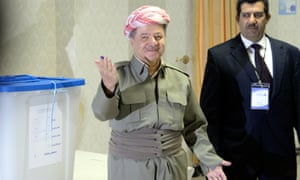
Kirkuk included, along with its petroleum resources, a bitter pill for Baghdad to choke on. Masoud Barzani has congratulated his people on asserting their determination to achieve independence, a long-held dream so dear to the hearts of the Kurds and so distant in the past, brought to a head with the referendum that succeeded in shouting out to the world that it is past time that justice be done. "We are ready to pay any price for our independence" calmly stated this world-class leader.
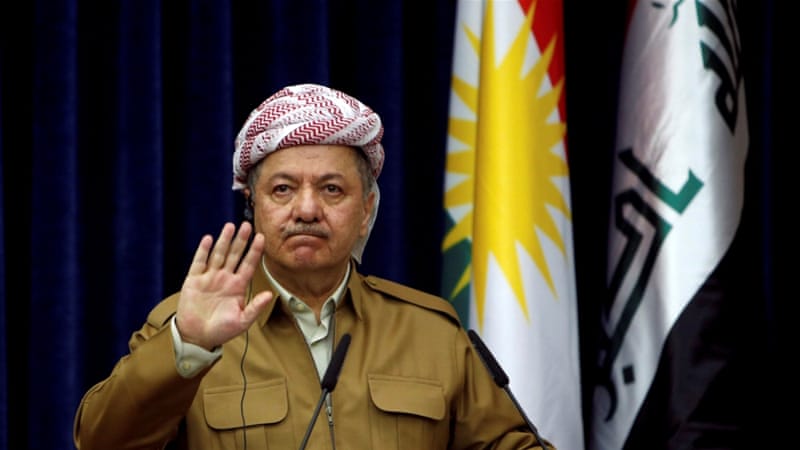
Iraq’s Kurdish leader, Masoud Barzani, appealed for ‘peace and dialogue’ and said: ‘Threats will solve nothing.’
Photograph: Depo Photos/REX/Shutterstock
"How
much progress have we really made if Iraq is so riven by internal
divisions that new civil wars erupt -- between Sunni and Shia, between
the Kurds and the central government, with ISIL, or its successors
taking advantage of the various schisms and weakness of Baghdad at every
turn?" Peggy Mason, former disarmament ambassador, Canada; president, Rideau Institute, Ottawa
"I don't think they're [government of Iraq] going to say, 'Sure, take the oilfields and Kirkuk and go your way." "It's not going to go peacefully." General Raymond Thomas, head, US. Special Forces Command
Marches in support of the vote took place in Irbil last week EPA
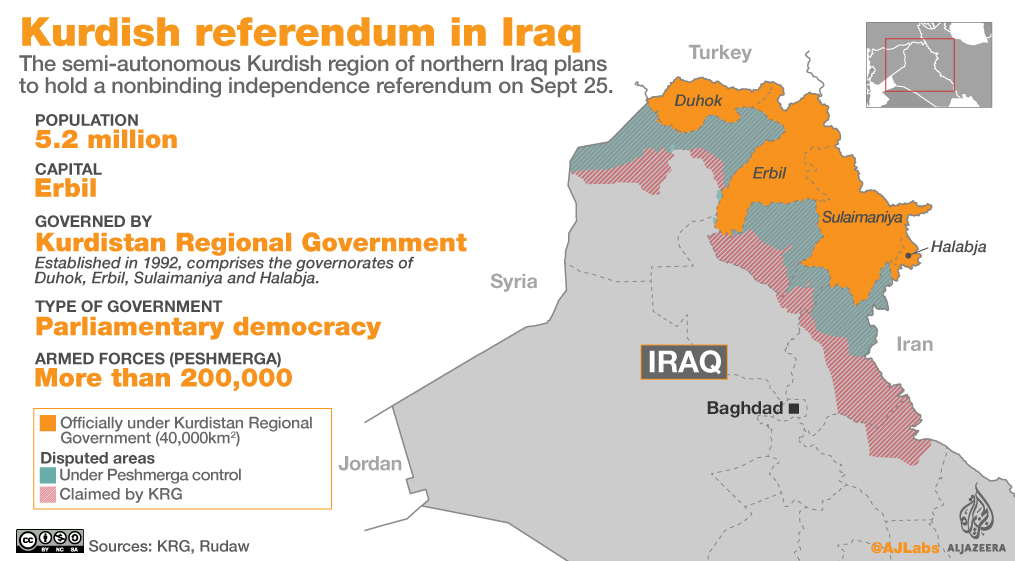
Kurdistan, the semi-autonomous and
historical region where Kurds in their tens of millions have always
lived had been bypassed by colonialist powers in apportioning
territorial limits and borders to satisfy the demands of Arab Muslims,
the majority population in the Middle East. The result has been that in
Iran, Iraq, Syria and Turkey, the Kurds have been denied statehood,
denied recognition of their heritage indigenous status, denied equality
and been subject to gross instances of human rights infringements by the
majority ethnic groups among whom they live.
In the
modern era where Arab states with their defined borders erratically
declared official by foreign interlopers whose 19th Century imperialist
arrogance saw fit to install, prejudice and discrimination against
minorities of ethnic, tribal, and religious groupings have run rife.
Kurds, on the other hand, appeared to have few problems accepting others
as equals deserving of equal treatment and security. More latterly they
have proven themselves on the battlefield when their militias were the
only groups capable of confronting the atrocity-laden excesses of Muslim
Arab jihadists.
In the regional and international
interests of combating the most recent of Islamofascist ideological
campaigns for conquest and the installation of a caliphate, the Arab
militaries of Iraq and Syria have failed spectacularly to defend their
own territories, allowing them to fall to the Islamic State predators.
Without the intervention of the West and later Russia, despite support
from a hegemony-consolidation-seeking Iran and its proxy militia
Hezbollah, it has only been the Kurdish peshmerga that could be relied
upon to beat back the incursion of the Islamic State.
NATO-member
countries have dispatched their military trainers to give support and
training to Iraqi and Kurdish militias. Canada has spent its years of
training with the Kurdish fighters. The Kurds have fought courageously
for their homeland, their territory, the geographic area that they claim
as their own and for which their aspirations to achieve statehood have
been focused on. A referendum is on the near horizon where Kurds will
vote formally in a democratic initiative for a declaration of
independence.
This initiative has alarmed NATO-member
Turkey which has fought an 'insurgency' launched by Kurds living in
Turkey in their ancestral lands which Turkey continues to claim as its
own. Neither Syria, nor Iraq is complacent about the potential for
signing over part of their territory to its rightful owners, much less
Iran. When Iraq had fallen apart after the removal of Saddam Hussein and
the U.S.-led coalition was attempting to guide the country into an
equal coalition of Sunni, Shia and Kurd in governing the country, it too
failed.
The Kurdish region was the only part of Iraq
that was capable of functioning with any degree of progress and
normalcy, offering security to its people, and giving shelter to
minority groups at deadly risk during the conflicts that erupted between
Islamist terrorists, Shiite militias and Sunni minorities, and the
threats to Christians and Yazidis and other minority groups were
answered by Kurdish shelter, the assurances that living among the Kurds
they would be safe.
In the years of turmoil brought on
by the rise of ISIL, the Kurds managed to claim areas of Iraq that have
been historically theirs through thousands of years of habitation before
national borders were drawn. They have also claimed 40 percent of the
geography's oil resources, along with Kirkuk; they are, after all, the
majority population in those areas. Canada has been providing military
training and equipment to Kurdish troops in northern Iraq for the past
three years pursuing the common goal of ousting ISIL.
Now
Canada sees itself in a quandary; not a new one, since the prospect of
an independent Kurdistan was always recognized as a future problem. But
the Canadian commandos who proudly wore Kurdish flags on their uniforms
have been instructed to remove them, after the U.S. issued its decree to
its troops that American special forces remove their Kurdish insignia
from U.S. military uniforms, bowing to Turkey's complaints of the
closeness to Kurds whom Recep Tayyip Erdogan considers "terrorists".
What
the U.S. and Canadian governments see in the near future is a crisis
unfolding, with Kurdish patience at an end and their determination to
finally rule their own roost paramount for their future, resulting in
the potential for civil war after the September 25 referendum results.
The U.S. has denied support to the Kurds at this critical time in the
evolution of their declaration of independent sovereignty, and Canada
appears on the cusp of responding in the very same way; separating
themselves from the very group they have most relied on to complete
their mission of destroying the power of Islamic State.
Insisting
at this point, when Islamic State has been virtually vanquished as far
as its territorial ambition is concerned, that unity is required to
ensure that the fight succeeds, no longer seems quite valid. Kurdish
independence is answering the question that Kurds are asking themselves: "If not now, when?", for 'when' is always far off on the horizon, and Kurds have finally decided to draw it in.
Ironically,
it is Israel and Israel alone, at this juncture that is finally giving
moral support and recognition of timeliness to Kurdish independence. One
semi-outcast struggling for survival supporting another. The enemies of
Israel -- Iran, Syria and Turkey -- are all now left with the concern
that their turn too will soon arrive when they will be forced to
surrender Kurdish ancestral land to the people who claim it as their
own.
Their denials reflect the very same rejection that Israel has always faced; a people returning to its roots.
We have done our best to be partners in Iraq; it has not worked. We believe this is the right time to allow the people of Kurdistan to exercise their democratic right, a right that people across the world have, to express their self-determination." "As a state that has its own province of Quebec that has exercised the right to hold a referendum, I think it would be difficult for Canada to deny that right to the people of Kurdistan. [Even though Iraq's situation is] a different kettle of fish." "Ottawa would never think to cut off the medicine supply to one of its provinces, even if it was a province that was a thorn in its side. We're trying to have an amicable divorce from Iraq. But this is not the same as Quebec having an amicable divorce from Canada." Bayan Sami Abdul Rahman, Kurdish diplomat, Washington
KRG President Barzani announced the decision over Twitter [File: Reuters]
There is no parallel that exists between the just right of Kurds to finally be able to establish their human right to declare a homeland of their own. What they are doing is simply on their own initiative because the international community has failed them, declaring that their ancient heritage, the geography that has always been their homeland, now be recognized formally, with secure boundaries and the expectation that their neighbours who have exploited and abused them, surrender their hold on land that is by historical right of possession, Kurdish.
Neither the British nor the French, both colonizers, were the original inhabitants of the land mass today known as Canada. Britain and France fought a war over which of the two would declare their control over Upper and Lower Canada. France, busy elsewhere, failed to concentrate on asserting its ownership, and Britain won that conflict, taking possession of the land mass that both had claimed. Britain was a generous winner, offering the French full recognition and freedom to practise their culture, their language as before, but under the aegis of British colonial possession. French Canada (Quebec) lacks the historical, legal, human rights cudgel at the core of Kurdish independence.
The Kurds have suffered dispossession, displacement, violence, humiliation and unending attacks where villages were gassed, people slaughtered, their animals and crops destroyed by the Iraqi government. Their security and human rights in Iran, Syria and Turkey were no less threatened and their persecution there too has been an intolerable humiliation for a proud and honourable people struggling to regain their Independence. It is due time. The September 25 referendum must be supported by the West, which in the first place created the problem, allotting Kurdish land elsewhere than to the Kurds.
Now, the Kurdistan Regional Government in Erbil is prepared to launch its legal right to seek a mandate from its people. Iraq's central Baghdad government seems to have no intention of making the official decision to acquiesce at long last in recognition of a just solution to an unjust situation, in agreeing to Kurdistan's full and final separation beyond autonomy to full sovereignty. Tensions, under the circumstances are taut; Kurdistan is determined and Iraq equally so.
Iraq proved itself unequal to the task any country faces of successfully defending itself against an invasion. A large swath of Iraq remains in the hands of a shrinking Islamic State caliphate. It is that part of its geography that Iraq's government should focus on entirely. And in recognition of the fact that without the Peshmerga forces meeting Islamic State militias in combat the geography still controlled by Baghdad would have shrunk even further, its government should prepare itself to admit the morality of surrendering to Kurdistan's destiny as a free and independent nation.
As for Canada, it should summon the courage of its convictions that justice should prevail, and not cower in the shadow of other Western governments like the United States, sending up cautions about destabilization should Kurdish independence be challenged by conflict. If enough deserved support were to be expressed among those nations whom Kurds should be able to rely upon, the collective support could sway Iraq in favour of agreement.
That Iran in its great malevolence, Syria, in its noxiously destructive state, and Turkey in its pathological hatred for Kurds and their desire for independence witness the proceedings with clenched teeth and an assured reaction of dissent and violence is a given. But the Kurds have proven themselves resourceful, determined and impressively worthy of any and all support by the West and NATO countries (with the notable exception of Turkey). Rejection of Kurdish aspirations to national statehood would represent a surrender to negation of human rights.
There is more than enough of that in the United Nations where the worst human-rights abusers on the planet find their comfortable niches on various councils sitting in judgement on those nations of the world that respect human rights and just and lawful nationhood.
This represents a general opinion site for its author. It also offers a space for the author to record her experiences and perceptions,both personal and public. This is rendered obvious by the content contained in the blog, but the space is here inviting me to write. And so I do.






/arc-anglerfish-tgam-prod-tgam.s3.amazonaws.com/public/VQ63VFPE55DX7PYBQMAFZ4NULM)