"We were not very pleased by the request, but it's an open conference.The answer was quickly taken -- Yes."
"We want to promote contact between different cultures and different knowledge and people with different perspectives."
"I
think it's all good that countries are talking to each other. If there
are contacts between militaries of different countries, even if they're
adversaries, it's good to have channels of communication."
Professor Pierre Jolicoeur, Royal Military College Kingston, Ontario
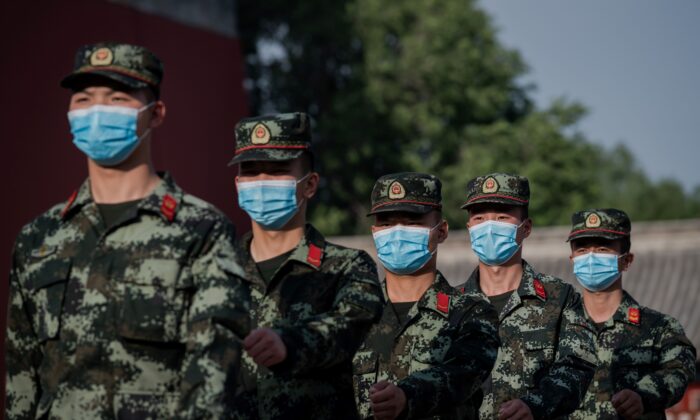
People's Liberation Army (PLA) soldiers march next to the entrance to
the Forbidden City (L) after the opening session of the National
People's Congress (NPC) in Beijing on May 22, 2020. (Nicolas Asfouri/AFP
via Getty Images)
Bejing
has a habit of covertly seeking information, from scientific to
manufacturing to state secrets from developed countries of the west in
the interests of hastening its own advances in science, technology,
medicine, and manufacturing. By whatever means possible, either through
cybertechnology or installing Chinese expatriates living elsewhere
burdening them with a commitment to furthering the interest of their
nation of birth and alternately convincing non-Chinese to act on
Beijing's behalf.
China
is a huge country with the world's largest population. Investors and
business interests from abroad are keenly interested in the prospective
market that the huge population represents. Beyond cheap labour that
enabled China to scoop up the world's manufacturing and export crown,
outsiders are drawn to the country for the potential they hope to reap
in expanded business opportunities. But there too, Beijing has its
demands, that trade secrets be open to China as a condition of setting
up shop in China.
China
does not recognize copyright and is infamous for stealing designs and
producing counterfeits for a market eager to accept cheap look-alikes,
be it designer label clothing or luxury-brand watches. China today is
not the China of yesterday. It has bounded by great leaps over the backs
of slower, more consciously law-abiding international nations'
corporations to infiltrate a presence, move up an executive ladder and
abscond with trade secrets to become a competitor and ultimately
outcompete and distroy its source.
“Several
interactions [occurred between Chinese military jets and the RCAF’s
patrol aircraft flying in international airspace near Japan.]"
"In some instances, the RCAF aircrew felt sufficiently at risk that
they had to quickly modify their own flight path in order to increase
separation and avoid a potential collision with the intercepting
aircraft.”
Department of National Defence
Its
rocketry technology has now advanced to the stage where it is busy
building its own space laboratory, sending up its own satellites for
global intelligence gathering. Investing in the cultivating of rare
earth properties to become a major stand-alone possessor of assets that
control areas of the technology market. Its long tentacles of control
have reached into the West to interfere in politics at the most basic
levels to the most sophisticated.
Beijing
knows how to take actions that make other nations sit up and take
notice.You can't help noticing after all, when your citizens are
suddenly arrested and imprisoned and given stiff incarceration sentences
on the pretense of planning to harm China's security. As was done to
Canadians Michael Kovrig and Michael Spavor when Huawei executive Meng
Wanzhou was taken into custody in Canada on an extradition request from
the U.S.
Exceedingly
strained relations between Canada and China became more tense as two
years passed and the two remained in Chinese prisons on sedition
charges. Other Canadians were given death sentences for drug running by
specially convened courts. Meng was Chinese royalty. When she struck a
deal with the U.S. to return to China, the two Michaels were released
after close to three years. Soon after came the Royal Military College
turn as host of the annual conference of the International Society of
Military Sciences; national defence universities from ten
democracies...Canada the Netherlands and Portugal among them.
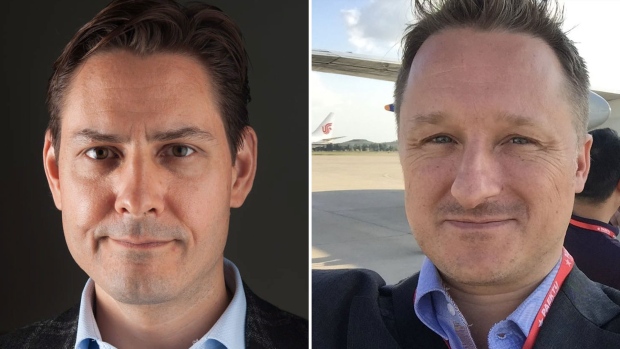
Michael Kovrig and Michael Spavor are back in Canada, after nearly three years of detention in China, September 25, 2021.Photo by Prime Minister Justin Trudeau/Twitter
Then
came a request from the Peoples Liberation Army military science
academy to allow their members to attend the conference. A conference
the Chinese armed forces had attended in 2018 in Warsaw and 2019 in
Vienna with some of its high-ranking military officers in attendance.
The Royal Military Academy conference theme was "resilience and cohesion in the face of new forms of disruption", with one session dealing with "China and Russia's information space attacks on democracy".
The
request moved from the RMC to the Department of National Defence and
the office of the Deputy Minister of Defence before it was sent back
down to the Royal Military College with no recommendations for or
against. At the meeting, discussions of open-source information
available to anyone, representing no matters of high sensitivity; the
conference held through the internet where invitees could Zoom in.
That
was late 2020, but before then, Chinese soldiers were present in Canada
to participate in winter military exercises under an accord signed by a
previous government in 2013. At that time top military leaders in
Canada felt the arrangement should be cancelled, urged by the United
States. Canada's Department of Foreign Affairs urged against cancelling
the arrangement, expressing concern it might sour relations with China
at a time that Canada was attempting to free the two Michaels from
Chinese prisons.
The
2020 conference was an open academic event, an unclassified level with
"broad international representation". Finland for one had organized a
panel discussion on military technology from a "conceptual"perspective
based on open-source material.
"[Leaving engagement with China to the discretion of various federal departments leads to] chaos."
"We’ll have chaos as long as individual departments and the [CAF] run their own [self-serving] China policies."
"As long as China is engaging in genocide/crimes against humanity, Ottawa should tell the PLA to stay home."
Canada’s former ambassador to China David Mulroney
"The
federal government has no choice but to announce that Huawei will not
be allowed [given Chinese national security laws and the United Ststes'
position on Huawei]."
"This would be an easy way to demonstrate to the Americans that we are taking security questions related to China seriously."
Guy Saint-Jacques, former Canadian ambassador to China
"All of our key allies have banned Huawei gear [banning Huawei is a] no-brainer."
"I
don't think I would expect a lot of immediate dramatic reaction on
China's part, just simply because the Olympics are coming up. And China
wouldn't want to do anything that would rock the boat."
"And
so if you're going to pull a band-aid off, you might as well do it now
[since Canada-China relations are at such a low ebb in any event]."
David Welch, professor of political science, University of Waterloo
"[Going
the same route as our Five Eyes allies who have taken action to block
or restrict Huawei equipment is] of critical importance."
"All
of the members have to have roughly the same perspective on the
security of their broader infrastructure networks. But there's also the
kind of political symbolic perspective. It would have been significant
had ... one of the members of the Western alliance sort of broken ranks
and embraced Huawei when everyone else was rejecting it."
"If
we don't ban Huawei gear, it's very likely our Five Eyes allies will
say, all right, you can't participate in the same way that you've been
participating because there are potential leaks in your communications
infrastructure."
Kim Nossal, professor emeritus of international relations, Queen's University
The Huawei brand logo is seen on a building in the sprawling Huawei
headquarters campus in Shenzhen, China, Saturday, Sept. 25, 2021. (AP
Photo/Ng Han Guan)
"[In
the time period since the government's 5G security review was first
announced in 2018], existing rules have remained in effect, and so we
have continued selling network equipment -- several hundred million
dollars worth -- to Canadian operators."
"Most
Canadian cities and provinces have had Huawei equipment in their
networks for many years, without incident. Indeed, we are proud of our
security record in Canada."
"For
years, Huawei equipment has been closely and routinely scrutinized by
the government and its security agencies. There have been no security
incidents -- none -- relating to Huawei equipment in Canada."
Alykhan Velshi, vice-president of corporate affairs, Huawei Canada
Through
the last few years with Canada and the world at large grappling with
Beijing's 'hostage diplomacy' whereby the regime whose rage is readily
piqued, decides to take a foreigner into custody charging them with
exploitation or drug smuggling or more commonly, sabotage, in reaction
to what the Communist Party of China sees as an affront to China's
dignity, as punishment for lack of respect and discretion, two Canadians
spent almost three years in prison following the arrest on an
extradition warrant by the U.S. for Huawei's CFO.
Countries
the world over have condemned China for its violently harsh treatment
of its minority Uyghur population in Xnjiang, along with the persecution
of Tibetans. Its territorial claims to disputed areas of the South
China Sea and its actions in Hong Kong denying its agreed-upon
semi-autonomy to quash its aspirations in democracy, alongside its
threats to Taiwan have not endeared China to much of the world. Under
President Xi Jinping with his ruler-for-life ambitions The CCP has
become increasingly belligerent.
Its
Belt and Road initiative to gain it greater trade advantages and
financially obligating impoverished countries in Africa and the Middle
East in indebtedness to the massive infrastructure loans in pursuing the
widespread, China-advantageous old Silk Road spells out Beijing's route
to the future as a world power. But for the West in particular, it is
China's ongoing cyber-spying in intelligence gathering and exploiting of
corporate and military secrets through cyber surveillance and rogue
cyber-warfare that disturbs the free world.
Of
the Five Eyes intelligence coalition comprised of Britain, New Zealand,
Australia the United States and Canada, only Canada's government alone
has failed to declare that its 5G national communications upgrade would
exclude Huawei. Canada has made no response whatever to China's constant
interference in internal Canadian affairs, its covert infiltration of
Canadian society, academia, corporate business, and politics. Nor the
moves Beijing has taken to punish Canada for its Meng Wanzhou detainment
through halting its imports of key agricultural products.
Despite
all the diplomatic 'tiger' slings and arrows Beijing has directed
Canada's way, the Trudeau government has continued to tread lightly,
absorbing the insults while abstaining from taking counter actions
itself. China has warned Canada of 'consequences' should Huawei not be
included in its 5G upgrade. Canada quavers, China emits bellicose
threats. Huawei has been banned in the West's communications systems a
little late in the day, but later is better than not at all.
The
fear that Huawei equipment in the next-generation wireless networking
risks security is a well-founded caution, particularly in view of
China's laws stating that companies with any state connection -- as
almost all have -- are legally obligated to cooperate with China's
intelligence services. China appeals to its expatriate community's
loyalty to China, to be faithful to their country of origin by willingly
cooperating with Chinese intelligence as well.
In the arguments for banning Huawei by Canadian China experts, former Ambassador Saint-Jacques predicts China would "probably retaliate by banning one of our exports",
or some such similar and symbolic measure of its displeasure with
Canada. Pointing out that to do so would mean selecting a product they
would be able to obtain elsewhere, something fungible, so that China
would not deprive itself and its population of badly needed products
like pork and soya. With agri-foods "there is a limited number of countries where they can source their products", he points out.
Large
Canadian telecoms would not be impacted deleteriously by the Huawei
ban, since having pro-actively moved independently, to change to Nokia
products while awaiting a government decision, to build their 5G
networks with equipment from other sources. There "seems to be a lot of agonizing over a decision which, in effect, has already been made" by Canada's large telecoms, noted Fen Hampson, professor of international affairs at Carleton University.
The
situation will hit other, smaller telecom companies who will be faced
with the expense and work of removing Huawei equipment from their
existing infrastructure, and whether government would be prepared to
underwrite their costs. Even for the leading wireless carriers the cost
of removing Huawei equipment would land in the hundreds of millions of
dollars. As Telus informed government in3018,
"a full ban on Huawei for 5G will force operators to replace their
existing 4G Huawei equipment -- an expensive and complex proposition
over an elongated time frame".
Should
the Trudeau government finally proceed with banning Huawei, national
and cybersecurity experts warn that prohibition of Huawei equipment
won't alone ensure securing Canada's 5G networks against cybertheft and
intrusion. Toronto-based Citizen Lab's reported cautioned that banning
Huawei "will
not solve the issue of foreign operators conducting espionage,
disruption, or attack operations against the Government of Canada,
private companies, or private persons who rely on non-Huawei equipment."
Meng Wanzhou delivers a statement to members of the media as she exits provincial court in Vancouver, Canada, on Sept. 24.Photographer: Jimmy Jeong/Bloomberg
"[Security concerns go beyond Huawei]; All 5G equipment has terrible cybersecurity flaws."
"China doesn't need Huawei to hack us."
"China can hack us right now."
"Banning Huawei doesn't make us safe."
Stehanie Carvin, associate professor of international relations, Carleton University
Infiltrate, Purloin, Recruit : Blueprint for Success
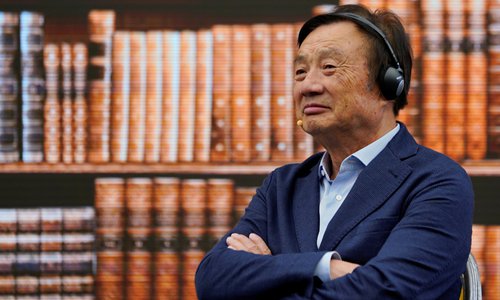
Ren Zhengfei, Huawei Founder
"We
must turn the graduate schools of North America into a recruitment
centre, looking at graduate theses, going out to find talent and
drinking coffee."
"This
is not just the heads of institutes but all levels of experts,
attracting scientists, professionals, current students -- go have coffee
with them, and while connecting develop a resonance."
"We
must hire some 'high noses' with 'foreign firepower' and within three
to five years move steadily from the previous 'Eighth Route Army'
towards globalization."
Ren Zhengfei, founder, Huawei Communications, China
"Canada is known around the world for its skilled, educated and diverse workforce. That's why we recruit here."
"Other companies may have cut back on hiring during the pandemic, but not us."
"We now have more than 1,500 employees in Canada, the highest in our 13-year history here."
Alykhan Velshi, Huawei spokesman in Canada
Huawei's idea of recruiting in Canada is partly a response to the U.S. issuing fewer student visas to Chinese citizens.Photo by NICOLAS ASFOURI/AFP via Getty Images
"Canada
is very much out of sync with our allies and I think China can use that
as a wedge to try to weaken the western alliance and improve their own
position in Canada and internationally. It's a big worry."
"The
U.S. administration of both Trump and Biden have said that if Canada
does allow the Huawei 5G technology into [Canadian] telecommunications,
this will imperil the ability of the U.S. to share intelligence in the
Five Eyes [intelligence group; Canada, U.S., New Zealand, Australia,
United Kingdom], through which Canada is a net consumer of intelligence.
This is very troubling. The idea that Canada might be seen as an
unreliable partner for security related issues is distressing."
"The
Chinese government treating Ms.Meng not simply as the chief financial
officer of a large corporation but really as a key element in the
regime, really underlines how integrated Huawei is into the Chinese
communist Party regime."
"The
fact that they so explicitly linked the two Michaels to Ms. Meng --
without even trying to hide that -- is really indicative of how
integrated Huawei is in the Chinese military and security apparatus."
Charles Burton, senior fellow, Macdonald-Laurier Institute, former counsellor, Canadian Embassy, Beijing
Huawei['s
founder, Ren Zhengfei, saw fit to lecture his company's executive level
employees on the merits of considering North American high-tech
graduates as useful recruits to China's premier global
telecommunications giant in its rush to storm the international
communications market. By persuading North American graduates of the
benefits of joining a world giant in communications the damage wrought
by the U.S. in diminishing the number of student visas to Chinese
students could be ameliorated.
Predicting
an ongoing steady decrease in the number of talented Chinese returning
from graduating at U.S. universities to China he emphasizes that Huawei
is approaching a "critical moment for its survival and development".
Odd, how history repeats itself. Chinese communications technology
graduate students joined the workforce at Canada's premier, hugely
successful Nortel Telecommunications giant with successful international
connections. Many of those same students who had integrated into the
Nortel workforce are now senior managers at Huawei.
Canada's
Nortel was destroyed when its classified and secret strategies,
technical advances and global connections were somehow infiltrated and
the company was destroyed while its trade secrets and client base along
with former communications engineers ended up working for a new Chinese
telecommunications company, Huawei. Once again Huawei is engaged in what
the Chinese seem to do best; seek out the visionary talent of various
nations and their workers.
Of
course Huawei is not alone in the international world of corporate
interests, all of whom recruit worldwide. China's history of hiring
scientific and technologically-inclined minds is exemplified by Huawei's
presence in Canada where it established a large R&D operation.
Jonathan Calof, University of Ottawa business professor, added that
Huawei Wireless's chief technology officer Wen Tong, had been head of
Nortel's network technology laboratories.
China's
propensity and success in siphoning scientific expertise and knowledge
away from the West is well established. A private company that is
strategically vital to the Chinese Communist Party; as the CCP expands
internationally, so too does Huawei.
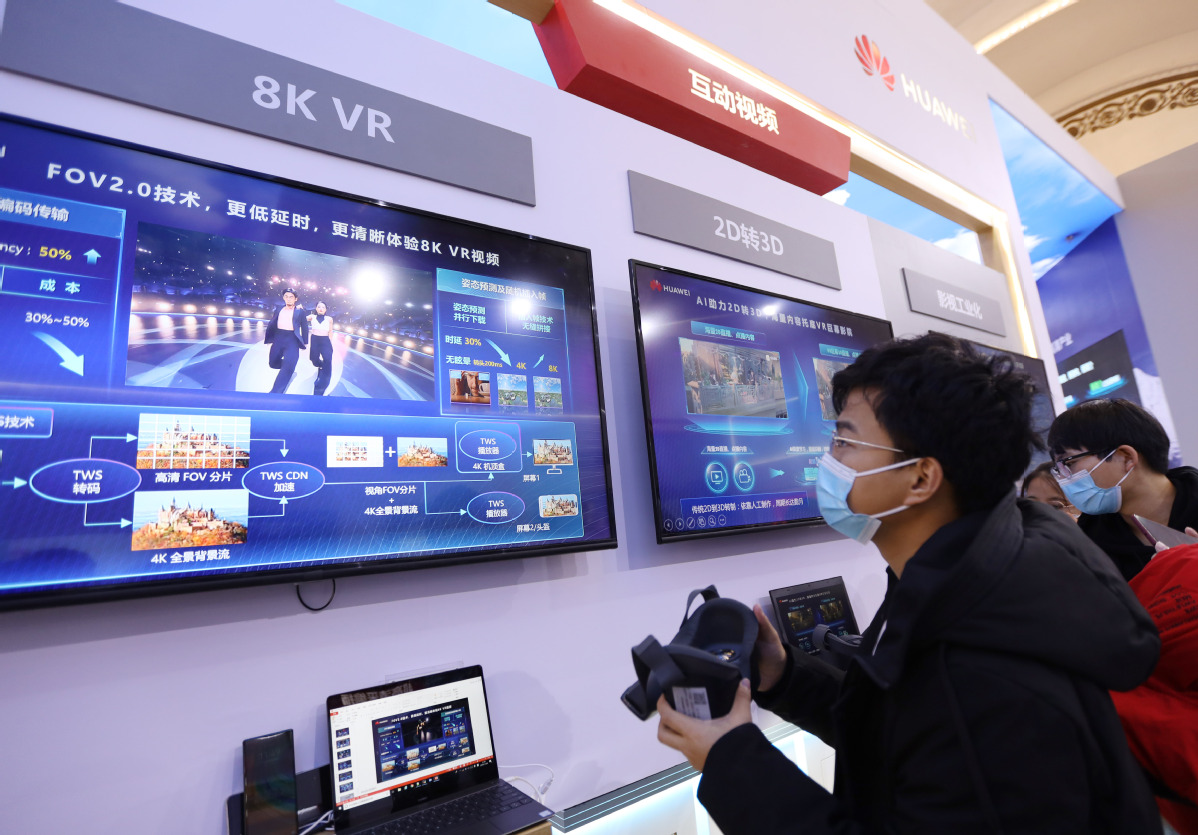
Visitors look at descriptions of Huawei products during an expo in Beijing. [Photo provided to China Daily]
"One
would hope that at this point, with Meng home, China would see no
further point in threatening to execute [Robert] Schellenberg."
"It would be seen as killing someone out of pure spite."
Donald Clarke, expert on Chinese legal system, George Washington University
"I'm pretty sure that Ambassador [Dominic] Barton must have raised the case of Schellenberg."
"[But] I would not be surprised if the Chinese took advantage of the situation to ask a few things from Canada."
Guy Saint-Jacques, (former) Canadian ambassador to China
"In
the two Michaels' case, Canada had the U.S. as leverage. It didn't have
anything else. But for Schellenberg, it doesn't have any leverage. So I
don't know what we can do."
"China would expect something in return [for sparing the Canadian's life]. I don't feel we should be offering much in return."
Wei Cui, professor, expert, Chinese legal system, University of British Columbia
Canadian Robert Schellenberg during his retrial on drug trafficking charges in Dalian, China, January 14, 2019.Photo by Handout/Intermediate Peoples' Court of Dalian/AFP/Getty Images
Meng
Wanzhou, the CFO of Huawei and its founder's daughter has now been
released by a Canadian court, no longer held for extradition to the
United States on a state department warrant for misleading a U.S. bank
on Huawei's ties to a company that broke American sanctions against
Iran, as a result of an arranged plea bargain where she admitted guilt,
but would not face a trial, charges dropped. She is back in China, feted
for her courage in luxuriating in one of her Vancouver mansions.
The
two Canadians, former diplomat Michael Kovrig and businessman Michael
Spavor have also been released from their 11-year sentences for
'espionage', arrested and imprisoned the week that Ms.Meng was detained,
in a blatant display of Beijing's embrace of 'hostage-diplomacy'. While
they were in the custody of the benevolent Chinese prison system for
almost three years, the Liberal government of Justin Trudeau did nothing
to counter China's belligerent aggression.
PM
Trudeau saw his prized aspiration for a trade deal with China evaporate
long before this episode in a trip to China where he expected to sign a
trade deal, and was summarily dismissed by China's vice-president and
sent packing. During the recent Canadian federal election campaign in
mid-September, China blatantly interfered with the election, with
explicit warnings delivered by China's ambassador to Canada that
election of a Conservative-led government would cost Canada dearly.
The
Liberal government hesitates to enrage China by taking steps to counter
its hostile punishment of Canadians and the Canadian export-to-China
market. A decision whether or not to allow Huawei to take part in
Canada's 5G upgrade, has been delayed in the wake of Beijing's warnings
that Huawei should be a player. Canada, as one of the members of the
"Five-Eyes" security/intelligence group comprised of Australia, New
Zealand, the United Kingdom and United States is the only member that
has yet to exclude Huawei from Canada's networks.
Canada's
telecommunications companies have themselves taken the initiative,
shunning Huawei materials, opting for international competitors to take
its place in their communications networks. The shoe has not yet been
dropped. And there are consequences. There are other Canadians in
Chinese prisons; Huseyincan Celil, a Chinese-born Uyghur arrested on a
trip to Uzbekistan, extradited to China and sentenced on charges of
espionage to life in prison.
Another
is Robert Schellenberg who appealed his 15-year sentence for drug
smuggling only to see the justice authorities summarily change his
sentence to execution. Another blow to Canada through abuse of yet
another Canadian citizen meant to persuade Canada to see the error of
its ways. It doesn't help his case that Schellenberg had a record in
Abbotsford, British Columbia as a drug dealer. Formerly an oilsands
worker, he spent two years in a Canadian prison for trafficking cocaine
and heroin.
He
was arrested on a trip to China where he states he was set up by a
translator, arrested and prosecuted for involvement in smuggling 200
kilograms of crystal meth to Australia. He appealed his death sentence
just as he had appealed his original 15-year-imprisonment sentence, and
to no avail; it was upheld on appeal a month ago. He would not be the
only Canadian executed under China's drug laws in the past.
And
there are three other Canadian citizens facing death for drug offences.
The Supreme People's Court reviews all death sentences prior to being
carried out, but the court almost always confirms executions. There is
irony here aside from the fact that Beijing has struck out on so many
fronts to punish Canada for its arrogance in upholding Western law and
justice.
The
world outside China is reeling under the onslaught not only of the
Wuhan virus, but lab-produced opioids courtesy of China. Fentanyl and
Carfentanil are cutting a swath of death-by-overdose, picking up the
slack any time SARS-CoV-2 recedes.
Canadian Robert Schellenberg during his retrial on drug trafficking charges in Dalian, China, January 14, 2019.Photo by Handout/Intermediate Peoples' Court of Dalian/AFP/Getty Images
Beijing's Gratuitous Hostage Diplomacy as Tutelage
"In
a dispute over the Senkaku Islands in 2010, China detained four
Japanese citizens, and the government in Tokyo caved in to get their
citizens back. Since then, nine Japanese citizens have been imprisoned
in China on alleged espionage charges, with one given a 12-year
sentence."
"In
2013, former British journalist and corporate investigator Peter
Humphrey was detained and forced to make televised confessions."
"Swedish
activist Peter Dahlin was detained for 23 days in 2015, forced to
confess, and then expelled from China, as were British and French
activists. The previous year, Swedish publisher Gui Minhai and U.K.
bookseller Lee Bo were kidnapped in Thailand and Hong Kong
[respectively], taken to China, forced to replace their ciizenships with
Chinese, and are still incarcerated there.""Similarly, in 2017,
Chinese-Canadian billionaire Xiao Jianhua was kidnapped in Hong Kong and
is still detained in China."
"In
2018, Canadian brothers Chen Zhiheng and Chen Zhiryu were arrested in
China and forced to give televised confessions aimed at compelling the
extradition of a Chinese billionaire who was seeking asylum in the U.S."
"In
August 2020, Beijing detained prominent Australian TV business anchor
Cheng Lei of English-language CGTN, accusing her of endangering China's
national security in what is seen as one of the many acts of retaliation
for Australia's call for an investigation into the origins of COVID-19.
Three weeks later, two Australian journalists were questioned by the
Ministry of State Security regarding Cheng and fled China fearing
detention."
"Michael
Kovrig and Michael Spavor are not the first to be held hostage in
Beijing. The execution sentences for the drug offences of Canadians
Robert Schellenberg, Fan Wei, Xu Weihong and Ye Jianhui tracked closely
the steps in Meng Wanzhou's court hearings."
"Sun Qian, a Falun Gong practitioner, recently renounced her Canadian citizenship and was given an eight-year sentence."
Margaret
McCuaig-Johnston, senior fellow, China Institute, University of
Alberta, senior fellow, Institute for Science, Society and Policy,
University of Ottawa
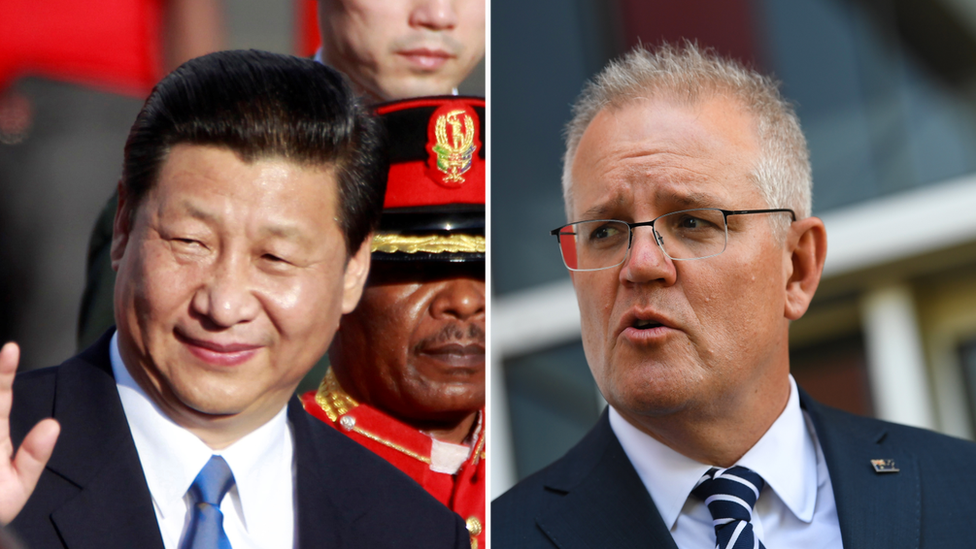
Xi Jinping and Scott Morrison appear to be not seeing eye to eye these days Reuters/EPA
Cross
China in any measure, displease the Chinese Communist Party in Beijing,
and pay the consequences. Consequences begin with diplomatic relations
stiffening, cautionary warnings and citizen-abductions, then proceed
onward with threats, and trade exclusions, all for the purpose of
'teaching a lesson' in Chinese-style diplomacy to nations incautious
enough to arouse the anger of Beijing and Xi Jinping who doesn't take
what he perceives as slights against China lightly. Chinese diplomats
have been given permission to play hardball, bluntly warning from their
foreign missions that displeasing China is harmful to those naive enough
to think they can stand up to the global colossus.
Despite
which, some countries do have a spine, don't take kindly themselves to
being threatened, much less having their citizens abducted and charged
spuriously with 'espionage' and 'harming China's security'. Canada is
not one of those countries with the courage of their stated convictions,
under its current prime minister. Since the arrest and detention of
China's communication giant Huawei's chief financial officer, Meng
Wanzhou, daughter of the company's founder on an extradition request by
the U.S. justice system, China and Canada have been on a collision
course.
China's
ship of state is larger, heavier, more dangerous than Canada's
lightweight canoe and has inflicted quite a bit of economic and
diplomatic damage as a form of tutelage to a recalcitrant deckhand by a
stern captain of enterprise. Mere days after Ms.Meng's detention, the
two Michaels were arrested and a year later charged with espionage,
interrogated nightly into their second year of imprisonment, while
Ms.Meng lives in her two luxury Vancouver mansions, awaiting her final
extradition hearing.
The flag of the People's Republic of China files at the Embassy of China in Ottawa, on Friday, Nov. 22, 2019. (Justin Tang/CP)
Two
years into a standoff between China and the U.S. with Canada wedged
firmly in the middle, the U.S. Department of Justice appears prepared at
this juncture to discuss dropping criminal proceedings against Ms.Meng
in exchange for an admission of guilt. Ms. Meng has protested
consistently that she has done nothing that would incriminate her in the
view of the U.S.; a hapless victim of trade disagreements between China
and the U.S. There seems to be a whiff of Chinese extraction of
admissions of guilt in the process the U.S.Justice Department is now
pursuing.
If
she is guilty of an indictable offence and China protests by
imprisoning two innocent Canadians, their lives have been forfeited in
the loss of two years, but the matter is seen as trivial enough to
forego criminal proceedings to extract a confession? China's ambassador
to Canada, like his recent predecessor has been insultingly coercive in
his diplomatic role. And has assured Ms.Meng she has been "wrongly detained ... We expect you to go back home safe and sound at an early date", he informed her.
The Huawei website posted a dispatch from Ms.Weng a year ago where she wrote: "It
is so slow that I have enough time to read a book from cover to cover. I
can take the time to discuss minutiae with my colleagues or to
carefully complete an oil painting". This, while
Michael Kovrig and Spavor languish in a tiny cell where the lights are
never turned off, and guards stare them down continually, but for those
night-time hours when extensive interrogations occur; spirit-breaking
and contemptuous of human rights.
Back
in January when the global community was informed of a virus outbreak
that China was struggling to contain, Canada shipped face masks and
ventilators to China in a gesture of goodwill. When Canada was in turn
hit by the same Wuhan-erupted virus that escaped China, in April two
Canadian planes arrived in China to retrieve medical supplies Canada had
contracted for, but had to return to Canada empty, the supplies not
forthcoming. Taiwan donated 500,000 medical masks to Canada in a
goodwill gesture.
At
a later date when Canada finally received medical face masks from China
the shipment turned out to be utterly worthless, defective and
unusable. Months later, a Chinese-based biochemical company that used a
Canadian formula as a base for its research for a vaccine and whose
scientists had been trained in Canada, made a deal with the National
Research Council in Ottawa to jointly develop and test a vaccine. The
partnership with CanSino fell through when Chinese customs authorities
stopped an anticipated shipment of samples for clinical trails in
Canada.
Fred Dufour-Pool/Getty Images
Through
all of this, Beijing has been anticipating that Canada will approve
Huawei's participation in Canada's 5G communications upgrade. As a
member of the Five Eyes intelligence group that includes the United
States, Great Britain, New Zealand and Australia, Canada is the sole
member that has not yet declared Huawei's role to be extraneous to their
needs given its close relations with Beijing and that its founder was
an elite member of the Peoples' Republic of China military complex.
Beijing's expertise in cyber-espionage is undeniable.
Australia,
whose trade with China is many times greater than that of Canada and
which stands to lose far more than Canada in defending itself against
Beijing's bullying, has taken steps to put a stop to Chinese influence
operations internally in Australia. That includes infiltration of
politics, universities and corporations. Huawei's 5G aspirations have
been banned, sensitive Chinese investments have been blocked on national
security grounds, and internationally 'unlawful' Chinese expansion in
the South China Sea has been loudly condemned.
Australia
has called out Beijing's Hong Kong abuses, and that of its
're-education' of millions of Chinese Muslim Uyghurs in Xinjiang. It has
joined "Quad" military drills with the United States, India and Japan.
Sweden, with one-third of Canada's population, with 4.7 percent of its
exports sent to China has banned Huawei and terminated Confucius
Institutes installed in universities, the Beijing channel for propaganda
meant to brainwash susceptible students.
Canada
has no long-term strategy to deal with the increasing disregard evinced
by Beijing for the rights of foreign nationals. Where Chinese-Canadians
are aggressively harassed within Canada. China's arbitrary detentions
will continue unabated as long as nations targeted by Beijing for
'correction' of their wayward policies are unable to speak with one
voice condemning the bullying and patronizing diplomacy alongside trade
weaponry. And where other countries have stood up to Beijing, Canada
has consistently failed to.
Chinese Hostage Diplomacy, Canada's Meek Capitulation
"In my view, if the alliance was strong, the next time China embarked on hostage diplomacy, they would understand they have to change the way they do business."
Guy Sainte-Jacques, former Canadian ambassador to Beijing
"We will continue to challenge China when it comes to human rights being violated ... and cooperate on global challenges like climate change, because there is no easy path forward without China."
Canadian Foreign Minister Francois-Philippe Champagne
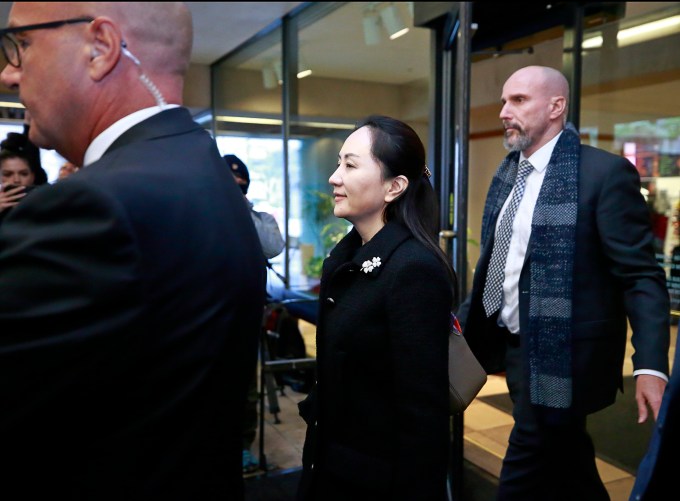
Huawei Technologies Chief Financial Officer
Meng Wanzhou is escorted by her security personnel as she leaves court
during a break for lunch on the first day of her extradition trial on
January 20, 2020 in Vancouver, Canada. (Photo by Jeff Vinnick/Getty
Images
With the enforced detention on charges of espionage of two Canadians, Michael Kovrig and Michael Spavor, an ex-diplomat and entrepreneur respectively running into two years' imprisonment as a ploy by Beijing to force Canada into releasing Huawei's CFO, held in Canada under an extradition warrant issued by the United States, China and Canada have been at a stand-off in relations with Beijing imposing restrictions on commodity imports from Canada, and Canada reciprocating by attempting subtle pacification.
At the same time, urging its fellow democracies to place diplomatic pressure on Beijing to release the two Canadians, and resisting Beijing's efforts to force the release of Meng Wanzhou who flits from one to the other of her two Vancouver luxury mansions which she is confined to, awaiting extradition proceedings. A multilateral effort has been launched by Canada to address China's 'hostage diplomacy' that has fated two other Canadians with death sentences, accused of drug smuggling.
A former Canadian ambassador to Beijing speaks of the arbitrary detention discussions as an opportunity for collegial countries to impose automatic sanctions that all signatory nations would apply when China or any other country advanced their cause whatever it might happen to be, through taking hostages, to be released once their goal has been achieved.
The U.S., U.K., Germany, Australia, France, Denmark, Estonia, Latvia, Lithuania and Spain have all spoken out publicly condemning the detention of Kovrig and Spavor, and it is likely they would form the backbone along with Canada of any new alliance on arbitrary detention. Certainly the Canadian public has a fresher view of their country's relations with the Asian giant.
Michael Kovrig (left) and Michael Spavor (right) are seen in this composite image. One of Canada's most controversial ex-ambassadors to China says he
repeatedly tried to improve the living conditions of Michael Kovrig and
Michael Spavor after their imprisonment in the People's Republic almost
two years ago.
A newly released poll by the Asia Pacific Foundation reveals that impressions by the Canadian public of China are at an all-time low since 2010 when the same questions were asked, eliciting the response currently that Beijing's economic sweep of the world represents a threat not an opportunity as was once viewed. There are rumours that Canada is considering a pivot away from China, where once it viewed a free trade deal with the trade colossus as an achievably rewarding goal.
Minister Champagne's opinion was stated at the opening of a proposed new committee, stating the obvious, that relations with China are "complex and multi-imensional" with China "increasingly prepared to throw its weight around", so that like-minded countries have a need to defend themselves and uphold a rules-based international order. At the same time Canada is cautious about the risk of further offending Beijing and the cost inherent in so doing.
Trade looms large in the positives seen in Canada-China relations, as does the financial reward accruing to Canada through continued Chinese tourism in Canada and Chinese students studying in Canadian universities, to the point of being willing to overlook China's subversive interference in Canadian society, politics and the educational system, much less the crisis that has developed with the two detained Canadians languishing in a Chinese prison.
"To those who are seduced by this one-dimensional view [of resorting to the same 'tough talk' with China as Beijing's ambassadors have been indulging in with respect to Canada], I say this: While it is easy to be tough, let's consider to be smart", said Canada's Foreign Affairs Minister Champagne. While he thinks it is 'smart', critics of Canada's position vis-a-vis China's bullying would replace that with 'mealy-mouthed'.
But par for the course for a country that hasn't the courage of its presumed convictions.
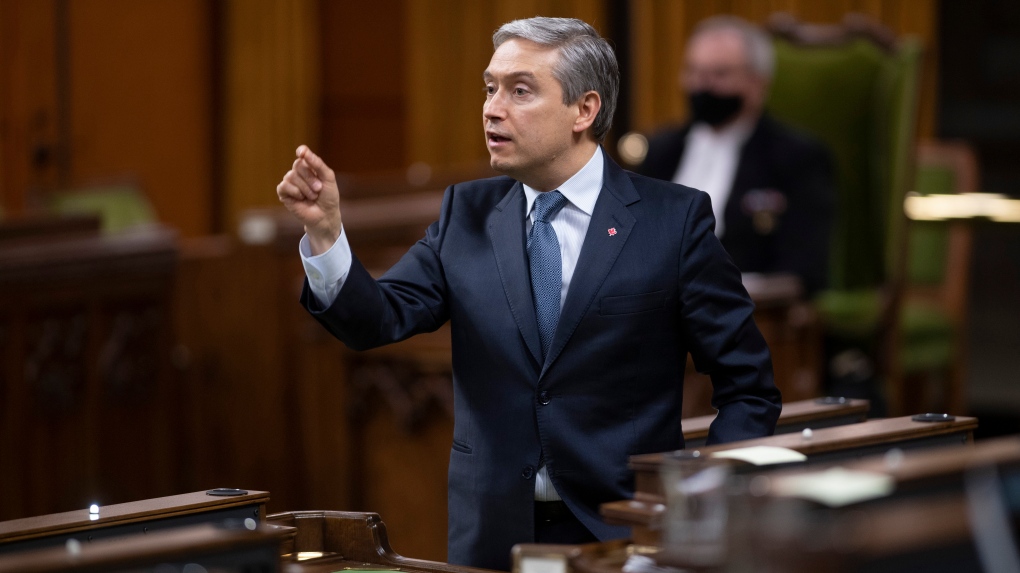
Foreign Affairs Minister Francois-Philippe Champagne responds to a
question during Question Period in the House of Commons Monday November
23, 2020 in Ottawa. (THE CANADIAN PRESS / Adrian Wyld)
"We
won't be compromising on the fact that we'll set what our foreign
investment laws are, or how we build our 5G telecommunications networks,
or how we run our systems ... that are protecting against any
interference."
"We
will always set our own laws and our own rules according to our
national interests -- not at the behest of any other nation, whether
that's the U.S. or China or anyone else."
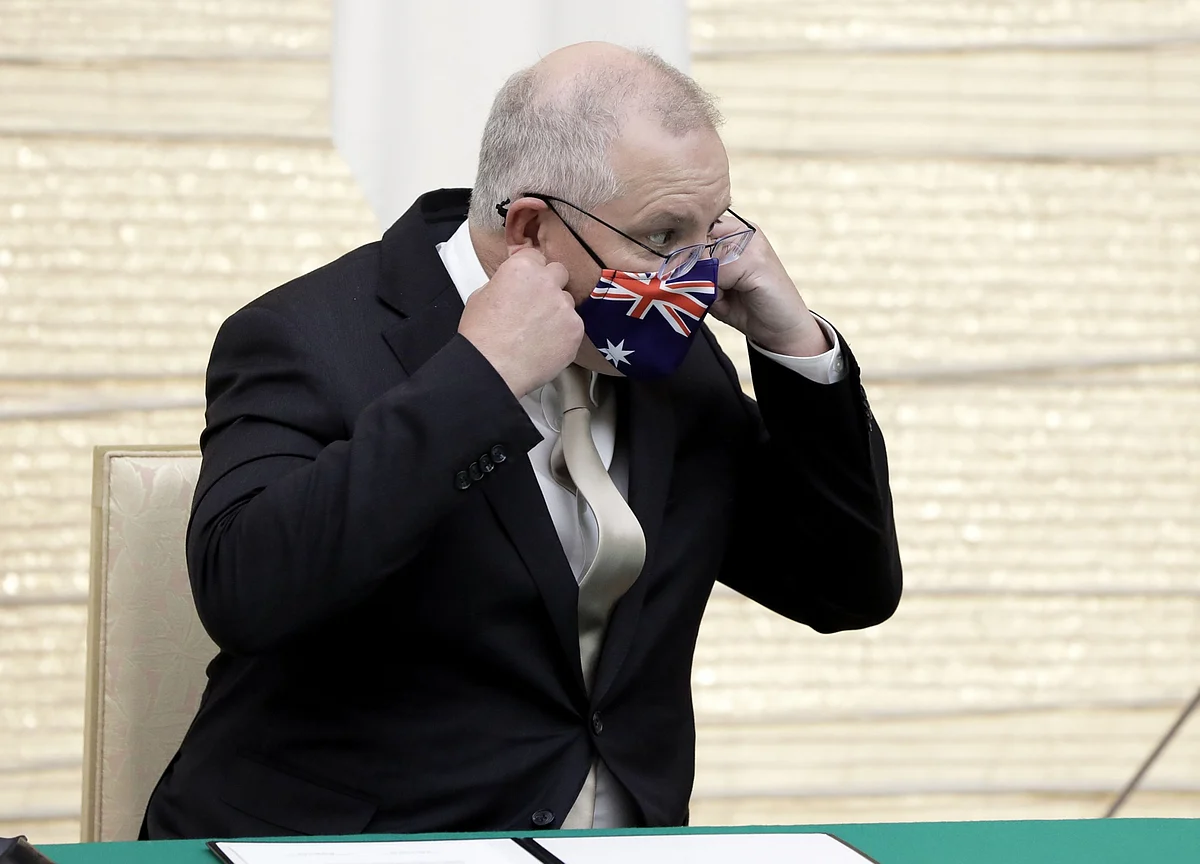
Australian Prime Minister Scott Morrison
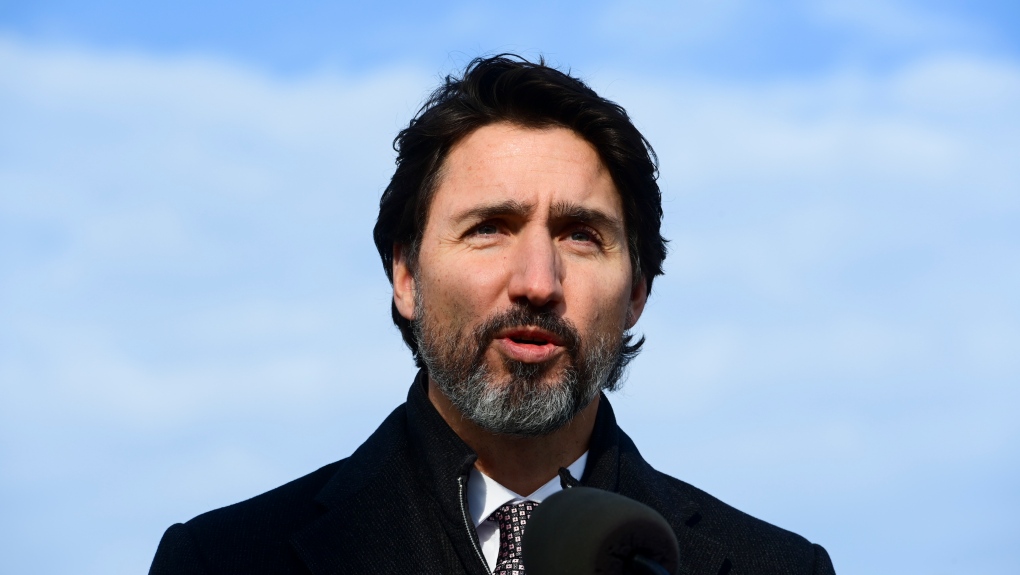
Prime Minister Justin Trudeau CP/Sean
Kilpatrick
"Do
I regret that Canada followed its laws? Do I regret that Canada lived
up to a long-standing extradition treaty with our closest ally?
Absolutely not."
"Canada
is a country of the rule of law. And obeying those laws can't just be
when it's convenient or when it's easy. If you're a country of the rule
of law, if you're a country of values, you need to stick up for those.
And that's exactly what we're doing."
"In
the face of pressure and increasingly coercive moves by one of the
world's great powers, I think that really highlights at which point we
need to be working together as allies, as neighbours, as friends, as
countries."
"Very
few countries could stand up on its own to a superpower, to a great
power. But working together in alignment, we can make sure there is a
recognition that the path that China is choosing to take right now is
probably not going to be as effective -- even for them -- as they think
it will."
Canadian Prime Minister Justin Trudeau
"[The
government must] make a decision on Huawei's involvement in Canada's 5G
network within 30 days [and] develop a robust plan, as Australia has
done, to combat China's growing foreign operations here in Canada and
its increasing intimidation of Canadians living in Canada [within 30
days]."
House of Commons Opposition Conservatives
"We are aware that China is, and will remain, an important commercial partner for Canada."
"China
is also a significant source of tourists and students to Canada, and
brings economic and enriching social benefits across our nation."
Foreign Minister Francois-Philippe Champagne
Sing4DemocracyHK protest outside the Court of Final Appeal in Hong Kong (Anthony Wallace/AFP/Getty Images)
Australia
and Canada have displeased China mightily. China awaits both countries
to come to their senses and that would entail sincerely apologizing to
Beijing for their intransigent wrong-headed views on China regarding
many issues, inclusive of Hong Kong, Uighurs, Huawei, Chinese
benevolence, Chinese cyber espionage, copyright infringement, and above
all, COVID-19. Beijing's release this week of a list of 14 grievances
with Australia put matters out in the open down under when a Chinese
official spoke on record to an Australian reporter: "China is angry. If you make China the enemy, China will be the enemy."
According
to Australian sources the list of grievances includes instigating an
investigation in the United Nations regarding the spread of COVID-19 at
the turn of 2020, cancelling Chinese student visas as a COVID-aversion
safety measure, blocking Chinese investments in Australia, leading
international focus on violation of human rights by China and the
banning of Huawei from contributing to the Australian 5G
telecommunications network upgrade. All hostile actions guaranteed to
poison relations between China and Australia; the latter the aggressor,
the former the victim.
Australia's
Prime Minister made it abundantly clear that Australia's sovereign
decisions are not up for discussion much less explanation or apology to
the world's number one natural resources-hoarder, trade colossus, and
cybertheft expert. Australia puts its words into action and lives with
the consequences, unwilling to be bullied and coerced into pleasing or
pleading with the Chinese Communist Party for concessions and
forgiveness.
G20 Leaders photo, Riyadh on Friday.Getty Images
Canada's
Prime Minister enjoys grabbing the limelight as a victim whose defence
of justice and the rule of law has occasioned Beijing's wrath and
imprisoned two innocent Canadians for the past two years, charged with
threatening China's security, in retaliation for the detention of Meng
Wanzhou, CFO of Huawei, on a U.S. extradition request. Canada has
appealed to other APEC nations to support Canada in a joint rejection of
Chinese bullying in the hopes that Xi Jinping would be confronted at
this weekend's G20 Saudi-hosted virtual gathering.
But
is Canada prepared to go it alone, to stand up for its sovereign
rights as its Prime Minister boasted? It remains the only Five Eyes
intelligence-sharing nation to leave open the question of whether Huawei
will be included in Canada's 5G telecommunications upgrade, fearful of
Beijing's explosive wrath, whereas Australia, New Zealand, the United
Kingdom and the United States have all clearly stated their positions to
shut out Huawei citing obvious security reasons.
Canada,
on the other hand, saw fit to award a standing offer for conveyor-style
X-ray machines to Nuctech, a Beijing based company partially owned by
the Chinese government, once operated by the sun of the former General
Secretary of the Chinese Communist Party. Canadian, American and British
companies all competed for the standing offer, but it was Nuctech who
won the tender including delivery, installation, operator training and
software training at Canadian embassies located world-wide.
It
was only when a national newspaper broke the news of the contract that
the federal government committed to a review once the contract was
exposed, and ultimately decided not to buy Xray machines for Canadian
embassies from the controversial Chinese firm. But it turns out that the
Canadian Border Services Agency had already bought and installed
Nuctech X-ray machines:
"We
have a number of mitigating interventions that we put in place around
this technology. One of the first ones is obviously to keep it
disconnected from our networks and from any Government of Canada
networks ... the second is (anyone) affiliated with any of our suppliers
would be screened through security processes and would be escorted on
site if they were present in our facilities", explained the vice-president of the CBSA;s intelligence and enforcement branch.
Why
go through all this rigamarole necessitated by the use of the machines
to begin with? To do otherwise, it would seem, would be to offend
Beijing. Who could easily retaliate as they have done with holding two
Canadians they've charged with espionage as hostages to force the
release of the Huawei executive. China also flexed its trade muscles
when it refused Canadian pork exports and canola products, both
commodities that enjoyed a heavy trade prior to the Huawei affair.
All
of this in light of Canada's Communications Security Establishment's
Canadian Centre for Cyber Security releasing a new report in which
Russia, North Korea, Iran and China are listed as cybersecurity threats
to Canada. An earlier report by the National Security and Intelligence Committee of Parliamentarians pointed out that China and Russia are using their diaspora, undercover agents and
groups based on Canadian campuses as part of "significant and sustained"
foreign interference campaigns in Canada, according to a redacted
intelligence report.
"The committee believes that these states target Canada for a
variety of reasons, but all seek to exploit the openness of our society
and penetrate our fundamental institutions to meet their objectives."
"They
target ethnocultural communities, seek to corrupt the political
process, manipulate the media, and attempt to curate debate on
post-secondary campuses."
"Each of these activities poses a significant
risk to the rights and freedoms of Canadians and to the country's
sovereignty: they are a clear threat to the security of Canada."
"[This] so-called genocide [is] a rumour and a farce
fabricated by some anti-Chinese forces to slander China."
"Its
groundless statement [committee report] is full of lies and
disinformation. {Parliamentarians would do well to] avoid doing any
further damage to China-Canada relations."
"This is blatant
interference in China's internal affairs and reflects those Canadian
individuals' ignorance and prejudice. China firmly deplores and rejects
that."
"[The installations are] vocational training and education
centres [where religious] extremists [are educated in the] national
common spoken and written language, legal knowledge, vocational skills
and de-radicalization."
"The aim is to eliminate the root cause of terrorism and extremism."
Zhao Lijian, spokesperson, Chinese foreign ministry
In this photo, a guard tower and
barbed wire fence surround a detention facility in the Kunshan
Industrial Park in Artux in western China's Xinjiang region. (Ng Han Guan/AP Photo)
"Belgium has been 100 percent reliant on Chinese vendors for its radio networks -- and people working at NATO and the EU were making mobile phone calls on these networks."
"The operators are sending a signal that it's important to have access to safe networks."
John Strand, independent Danish telecom consultant
"This is the outcome of a tender organized by operators and the result of the free market."
"We embrace fair competition, the most diversified a supply chain the more competitive it becomes."
Huawei spokesperson
“If an operator wishes to have a competitive tendering process with a
few vendors, then Samsung is likely to be [in] contention if companies from
China [Huawei and ZTE] are excluded."
“Samsung benefits from being based in South Korea that had very early
5G launches on all three operators in April 2019, high average 5G
download speeds averaging over 300Mbps as well as high 5G adoption
rate."
“The 5G services we see today are based on early versions and users’ experience will leap forward in the coming years.The race to 5G is a marathon that will last for years to come …
vendors must ensure they are ahead in enabling fantastic experiences
throughout the 5G era."
Ian Fogg, vice president,
analysis, UK-based research group Opensignal
"[Samsung is catching up further as Huawei loses out on new mobile
broadband opportunities in Japan, India, Korea and in parts of Europe]. Some of this is already showing up in the numbers … with
particularly Ericsson, Nokia, and Samsung benefitting in some markets …
Huawei’s market share outside of China has stabilised and it is possible
these trends might have differed without the US government
interference."
"[Although Huawei is losing some ground], it will not be easier to fill its shoes. Huawei is a technology leader with a very deep and broad mobile
infrastructure equipment and services portfolio addressing not just the
use cases of today but also of tomorrow."
Stefan Pongratz, 5G expert, vice president, Dell’Oro Group
By November last year, Samsung had more than 2,800 declared 5G patents, second only to Huawei that had 3,325 patents. Bloomberg
In Belgium, Orange and Proximus selected Nokia's involvement in building 5G networks, dropping Huawei -- with U.S. pressure to exclude the Chinese communications technology giant from supplying key telecommunications equipment -- moves among the first by commercial operators in Europe to exclude Huawei from next-generation networks. Months of diplomatic pressure from Washington warning that Huawei equipment could be a portal for Beijing's infamous surveillance intrusions.
Brussels is home to the NATO alliance and the executive and parliament of the European Union, all reason enough for concerns expressed by American intelligence agencies. "This is the latest example of evaporating Huawei deals and further confirmation of this worldwide momentum toward trusted vendors", pointed out the U.S. Undersecretary at the State Department for economic growth, energy and the environment.
As the world's largest telecoms equipment supplier, Huawei emphatically denies U.S. allegations of surveillance involvement of other nations' state secrets and classified business espionage that Beijing is so famous in excelling at. It has been vociferously defensive over calls to ban the company from international 5G upgrade contracts. Huawei has supplied telecommunications equipment to Belgium for over a decade, but it signalled its acceptance of the decision to seek services elsewhere.
A worker uses a
remote control system supported by 5G to control a crane located in
Hunan, during the Huawei Connect Conference in Shanghai last month. AFP
One mobile carrier in Belgium has been left to decide which supplier it will select for its next mobile networks. Liberty Telenet relies on equipment produced by China's ZTE, planning to announce its 5G decision in the first half of 2021, according to a spokeswoman. Nokia has been boosted by the deals to supply radio gear to Orange Belgium and Proximus after its struggle to make some headway in the 5G market. "I have tried to become RAN [radio access network] supplier to Orange Belgium since 2003 when the company was still Mobistar. Here we are, finally", president of Nokia Mobile Networks, Tommi Uitto, tweeted.
Ericsson was chosen by Orange Belgiumand Prximus to supply the core of their 5G networks just as EU members have been increasing their scrutiny of high-risk vendors, subjecting Huawei's governance and technology to critical examination, an outcome likely to lead other European operators to strip Huawei equipment from their networks, according to analysts. The major beneficiaries of the challenges facing Huawei have been Nokia and Ericsson.
A bit reminiscent of Huawei's startling rise to prominence in the world of global communications, when it gleaned critical data and mined the infrastructure of Canada's then-prominent world-leader in communications technology, Nortel, hiring its former Chinese national work teams, leading to Nortel's downfall. One might say this is just desserts coming home to roost. From Bell Canada and Telus Corp. in Canada, to BT in Britain, the Nordic companies are taking market share from Huawei.
Telefonica UK is prepared to replace the less than one percent of Huawei kit in its network, and has contracted with Nokia to provide data management software, completing Britain's transition from Huawei dependence to Huawei exclusion. New Zealand long since made its decision to exclude Huawei as did Australia. Of the Five Eyes intelligence partnership, only Canada lags behind in failing to issue an official statement that Huawei will not be involved in its 5G upgrade.
Technicians
are roped up as they install 5G antennas. The new network is expected to
carry 35 per cent of mobile data traffic globally by 2024, according to
Ericsson. Reuters
"This is a challenge to all free people and open economies of the world."
"This is not just about technology but about trade and economics. The biggest driver for economies in the future is technology."
Rajeev Chandrasekhar, Hudson Institute conference
Huawei 5G upgrade infrastructure
Allowed:
Angola, Argentina, Armenia, Austria, Bahrain, Bangladesh, Belarus,
Brazil, Cambodia, China, Cyprus, Egypt, Estonia, Faroe Islands, France,
Germany, Hong Kong, Hungary, Iceland, Indonesia, Iraq, Italy,
Kazakhstan, Kenya, Kuwait, Latvia, Malaysia, Maldives, Mauritius,
Moldova, Monaco, Mozambique, Myanmar, Nepal, Netherlands, Oman,
Pakistan, Papua New Guinea, Philippines, Poland, Portugal, Qatar,
Russia, Samoa, Saudi Arabia, Serbia, Slovakia, South Africa, South
Korea, Spain, Turkey, United Arab Emirates, Uzbekistan
Banned:
Australia, Japan, New Zealand, United Kingdom, United States
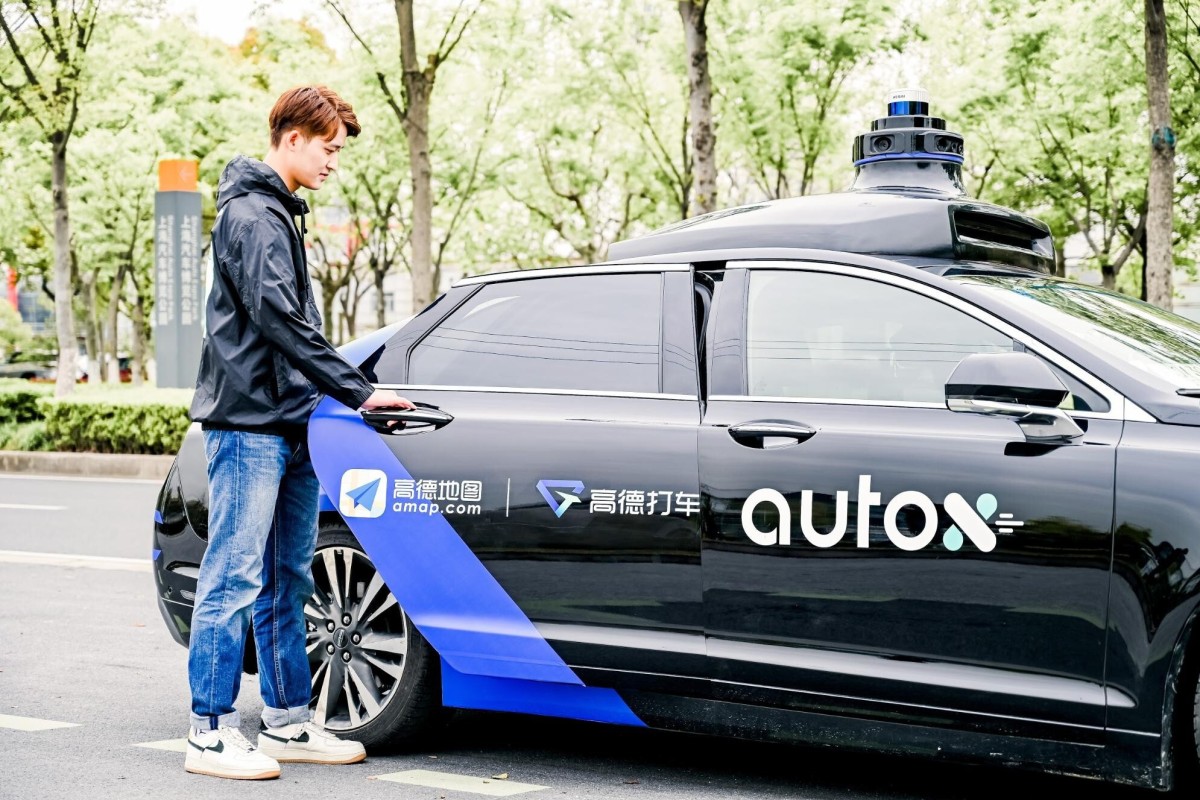
Chinese
autonomous driving start-ups are looking for cost-efficient ways to
achieve large-scale adoption of the technology. Chinese
telecoms giant Huawei has formed a team to focus on developing low-cost
multichannel lidar sensors with the goal of making the technology
affordable enough for all smart vehicles. Photo: Handout
Canada
now remains the sole member of the Five Eyes intelligence alliance that
includes Australia, New Zealand, the United Kingdom, and the United
States that has not yet announced a decision with respect to permitting
Huawei the telecom giant that Beijing considers its leading
telecommunications instrument to bind the world into a Chinese-connected
interconnectivity web as it seeks to dominate world technology,
effectively yanking it out from under the influence of the U.S. whose
technology pioneered the Internet and everything that flowed from it.
Canadian
public opinion is dead set against allowing Huawei access to Canada's
5G upgrade. Beijing's bullying tactics in threatening Chinese Canadians
who are loyal to their adopted Canadian citizenship when they dare
criticize the Chinese dictatorship, its crackdown on Hong Kong
democratic freedoms, its 're-education' camps for a million Chinese
Muslims in Xinjiang province, the abduction and imprisonment of two
Canadians charged with espionage, its agricultural trade war with
Canada, all reason enough.
But
the government of Prime Minister Justin Trudeau remains mired in
placatory overtures toward Beijing, unwilling to state unequivocally
that along with the other four members of the Western intelligence
alliance, Canada too will opt out of giving Huawei the green light it is
waiting for. Huawei's Canada-based management went so far as to put
together a guarantee, a "no-spying" agreement to put to rest concerns
that Huawei's involvement in Canadian communications infrastructure will
give it a spying portal.
Canada
has had previous experience with the Chinese penchant for industrial
espionage, when Chinese technicians hired by Canada's then-global
communications giant Nortel, spirited classified data into China, and
those former employees then helped to set up China's counterpart of
Nortel based on technique acquired and purloined information on
structure and research, giving birth to Huawei. Nortel died a painful
death as a result of the competition based on its own R&D, and
Huawei made its way into the world at large.
Mr.Chandraselchar,
a tech entrepreneur, and member of India's Parliament, led India's
Huawei ban along with banning hundreds of other Chinese software,
spurred in no small part by China's aggression against India on their
disputed Himalayan border. The military alliance including India, Japan,
Australia and the United States occupy the agenda in concerns over
Beijing's long-range plans of world conquest, part of which is its Belt
and Road initiative, an investment of immense proportions effectively
tying countries from Europe, Africa and Asia in bondage to China, unable
to pay off Chinese investment.
The
future is destined for hyper-automation linkage with trillions of
internet-connected devices -- all of which Huawei intends to have a
connection with and ultimately control using whatever methods work,
from subsidies to takeovers eliminating rivals, to rise unequalled in
reach and power. And Huawei has succeeded to the extent that it now has a
majority of global nations in the process of adopting some or part of
Huawei's networking technologies.
In 2017, a report published in the United States concluded that "Chinese theft of American (intellectual property) currently costs between $225 billion and $600 billion annually".
Leading Washington to ban any American technologies from being accessed
by Chinese tech companies, leaving the abusive trade bully that Beijing
has become to continue engaging in its global dominance war but denying
access to critical U.S.-produced technologies and urging other
countries to proceed with caution in business with China.
"Meanwhile, Huawei has a baked-in 5G advantage in Europe, where it
already has helped build out extensive 4G networks. That means countries
that opt for faster and cheaper 'non-standalone implementation' —
building out the first wave of 5G on top of existing 4G infrastructure —
have to incorporate at least some Huawei equipment or begin the
expensive and complex task of extricating Huawei from their 4G networks,
analysts say."
"'That's why 4G is quite important to 5G
implementation. It's also why you see pushback from countries like the
U.K.', says Nikhil Batra, a senior research manager at research firm IDC
in Australia."
This represents a general opinion site for its author. It also offers a space for the author to record her experiences and perceptions,both personal and public. This is rendered obvious by the content contained in the blog, but the space is here inviting me to write. And so I do.